
I tested six popular hanging closet shelves so you can pick the right organizer for closets, nurseries, dorms, or RVs. Each pick balances capacity, build, and ease of installation.
I’ve spent time installing and living with a range of hanging closet shelves in closets, nurseries, and tiny RV spaces. In this roundup I focused on how much each unit actually holds, how sturdy the hanger is, and whether installation was fuss-free.
You’ll find a mix of over-the-door pocket organizers and rod-hanging shelf units here. I prioritized options that stay put, maximize vertical space, and keep frequently used items easy to grab.
I compared these organizers by how they felt under daily use: pocket visibility, shelf depth, hanger stability, and whether the materials tolerated repeated loading without sagging or tearing.
1. Simple Houseware 6-Pocket Clear Window Door Organizer – Best for Visible Small-Item Storage
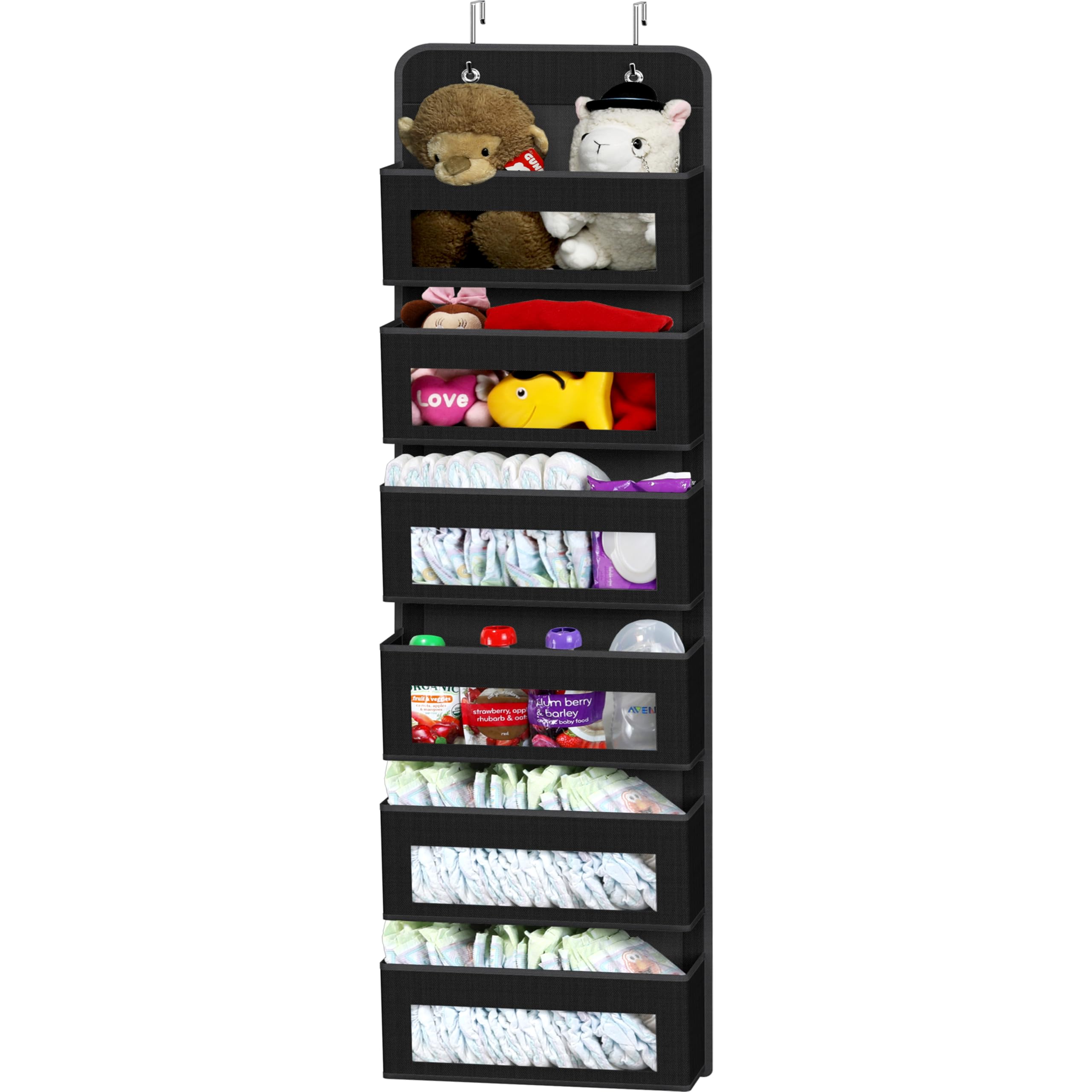
A clever over-the-door pocket organizer with six extra-large, clear-front pockets for grab-and-go items.
Why I picked it: Big transparent pockets make it easy to find items quickly without digging.
Best for: Nurseries, toiletries, wipes, small linens, and travel gear behind doors.
Affordable and great value for small-space organization.
Pros
- Large transparent pocket windows
- Extra-large tapered pockets
- No-tools installation
- Fits standard doors
- Compact footprint, big capacity
Cons
- Not meant for heavy items
- Some units have a strong out-of-box smell
My take
I used this behind bedroom and nursery doors to clear clutter off surfaces, and the clear windows were the biggest time-saver — I could spot wipes, lotions, or a specific burp cloth at a glance.
The pockets are unusually deep at the top thanks to the tapered design and the unit measures roughly 13 inches wide by 52 inches tall, which fits most doors without intruding into the room. The metal hooks hold it securely so doors open and close without the organizer ripping free.
It’s not a heavy-duty shelf, so I avoided loading bottles that would strain the fabric. For diapers, wipes, small toiletries, and baby gear it worked exactly as intended. My only gripe was a chemical-like smell out of the box on one sample; airing it out or spraying lightly fixed that for me.
2. Simple Houseware 5-Shelf Hanging Organizer – Best for Taller Shelf Height
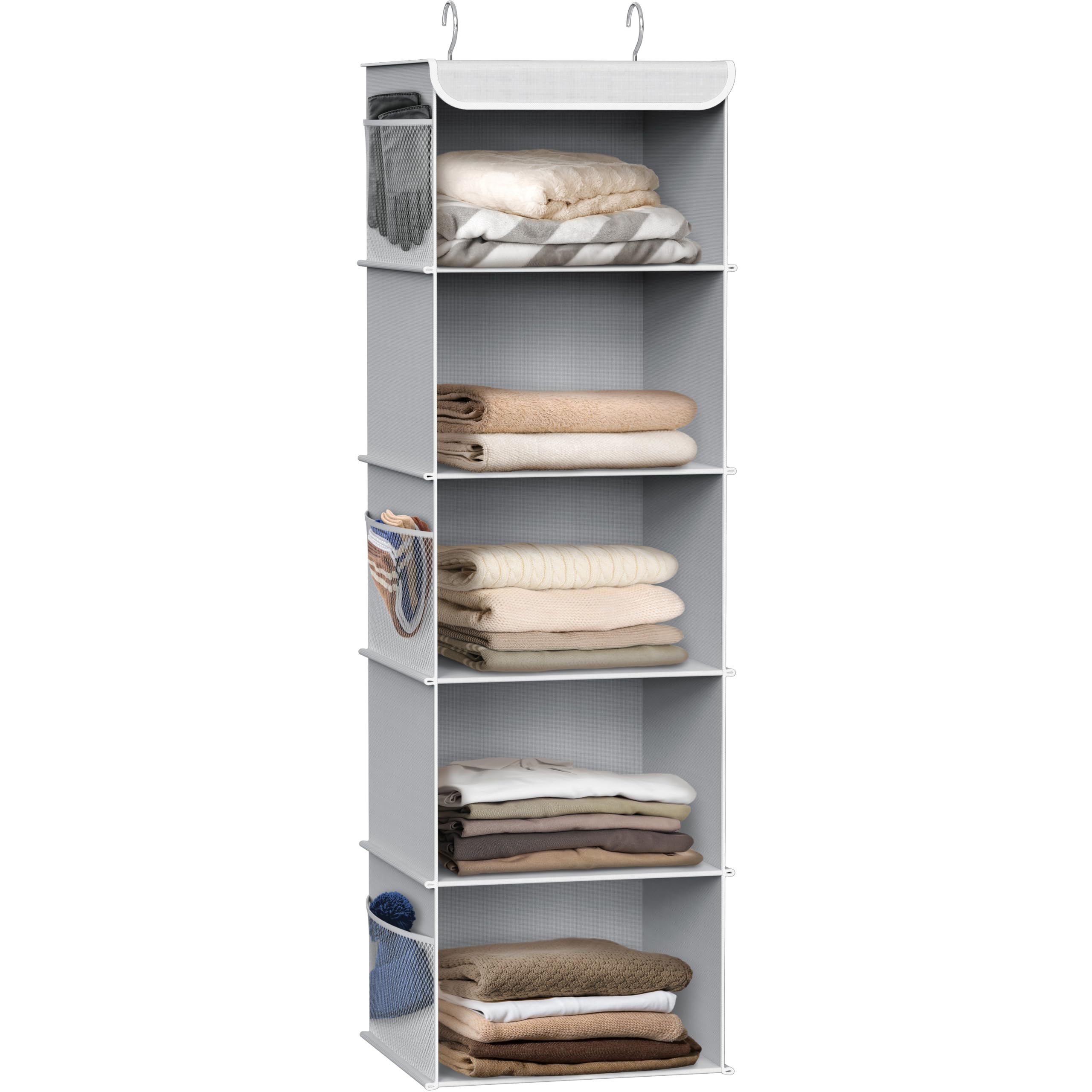
A rod-hanging organizer with five tall fabric shelves and side mesh pockets for smaller items.
Why I picked it: Taller bins and side pockets make it versatile for folded clothes and accessories.
Best for: Folded shirts, jeans, sweaters, and organizing small accessories.
Budget-friendly with good shelf height for folded clothing.
Pros
- Tall shelf bins
- Six side mesh pockets
- Hangs on standard rods
- Simple two-hook system
Cons
- Top hanger can bend under heavy load
- Fabric may rip if overloaded
My take
When I needed extra folded storage I hung this on my closet rod and immediately gained five usable cubbies. Each bin is about 12 inches square with generous height, so I could stack jeans and tees without them spilling out.
The side mesh pockets were great for socks and belts, keeping small things off the floor. Installation is just two hooks over the rod, which is fast but also the place where the unit shows its limits: if you cram adult-heavy sweaters into every shelf the hanger can begin to bend.
I kept weight moderate and the organizer lasted through regular use. For me it was a solid, no-frills way to add vertical storage on a tight budget.
3. GRANNY SAYS 3-Shelf Hanging Organizer – Best Compact Option
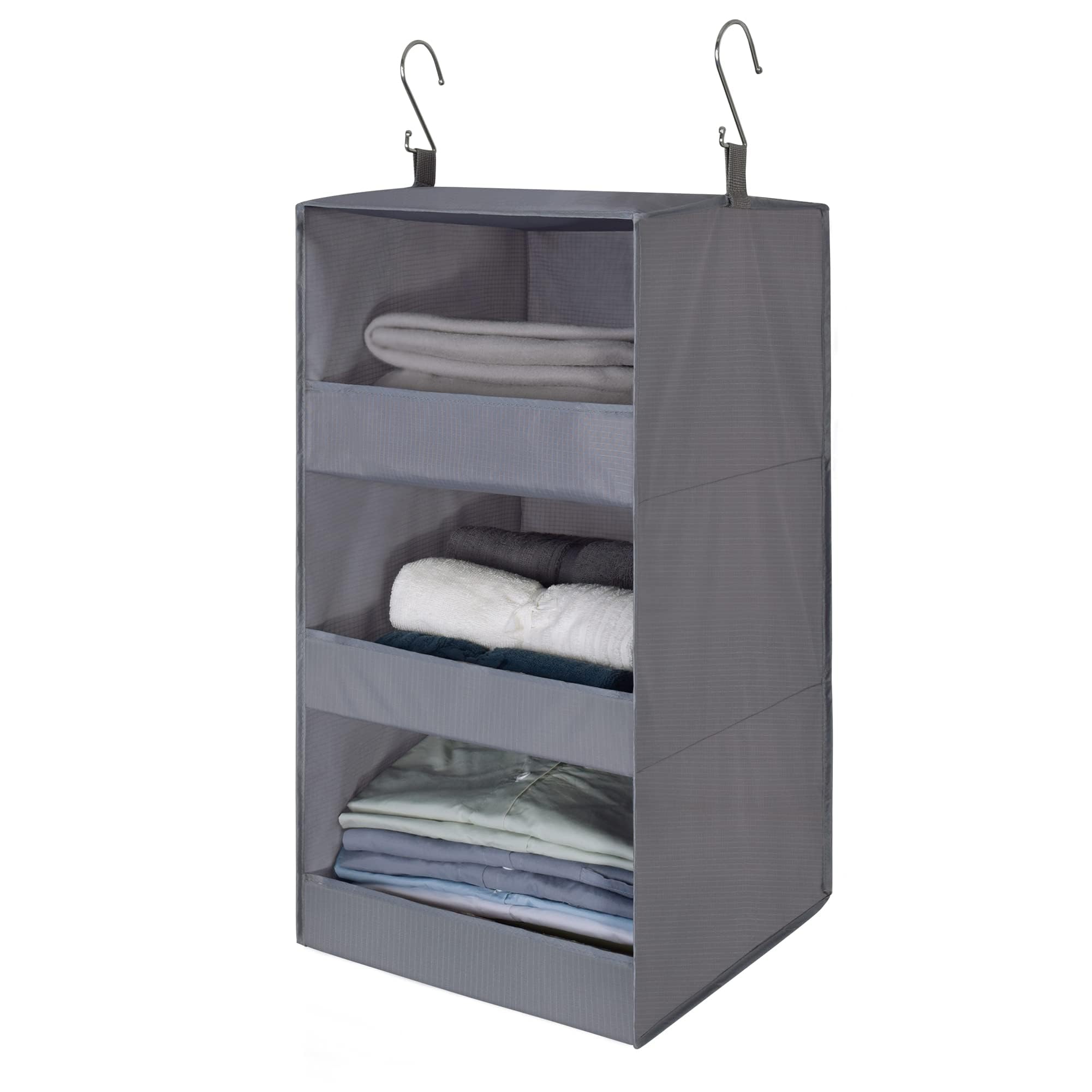
A compact, collapsible three-shelf unit with removable boards for extra support and easy washing.
Why I picked it: Removable support boards and machine-washable fabric make it practical for messy spaces.
Best for: Nursery closets, RVs, and small wardrobes needing a compact solution.
Very affordable and portable for travel or temporary setups.
Pros
- Removable durable support boards
- Machine washable
- Quick to assemble
- Front strip prevents items sliding
Cons
- Limited vertical capacity
- Feels flimsy with heavy items
My take
I use this narrow three-shelf organizer in a small closet and in an RV where every inch counts. It’s roughly 24 inches tall with three shelves each just under 8 inches high, which works perfectly for shirts, pajamas, and baby linens.
The removable boards make a real difference — I was able to press heavier folded items into the cubes without noticeable sag. When it’s time to move or wash it collapses flat, and I’ve thrown it in the machine (after removing boards) without issue.
This isn’t a heavy-duty shelf unit; I treat it like lightweight furniture and it has performed exactly as expected for that use.
4. ZOBER 5-Shelf Hanging Closet Organizer – Best for Breathable Storage
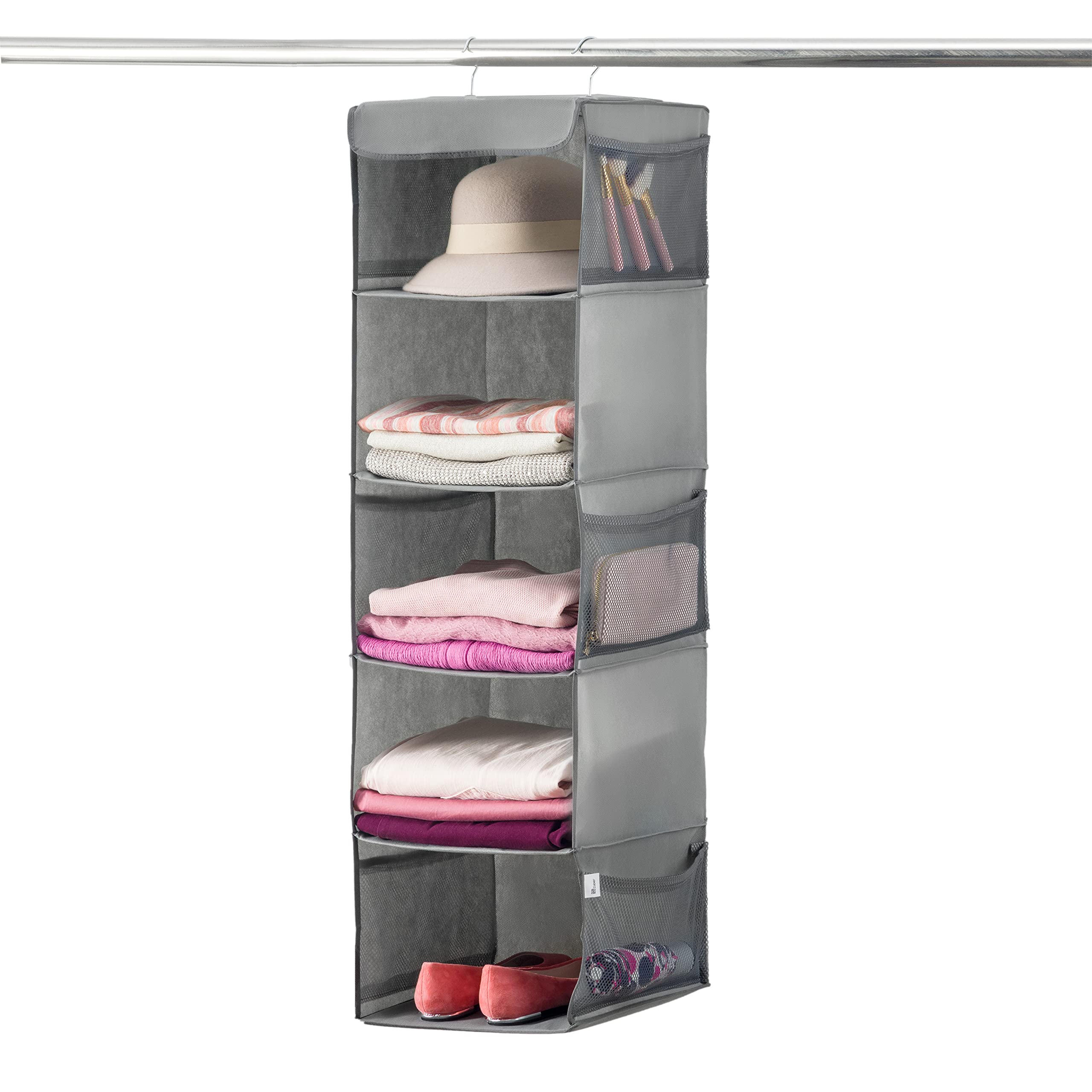
A 5-shelf hanging organizer built around a metal frame and breathable polypropylene fabric that supports modest loads.
Why I picked it: Sturdy metal frame and breathable material keep folded clothes fresh and supported.
Best for: Sweaters, jeans, shoes, and seasonal clothing storage.
Inexpensive choice with a sturdier feel than many fabric-only options.
Pros
- Metal frame support
- Breathable polypropylene
- Supports up to 15 lbs per unit
- Includes six exterior mesh pockets
Cons
- Not for very heavy items
- 12-inch width limits bulky stacks
My take
I hung this 12-inch-wide unit in a shallow closet and it made a noticeable dent in the piles of sweaters and tees that used to sit on the floor. The metal frame wrapped in polypropylene gives it more structure than fabric-only shelf organizers, and it handled several sweaters per shelf without sagging.
The six exterior mesh pockets are useful for socks, slippers, and accessories, and the unit installs in seconds with the included stainless-steel hooks. I treated the 15-pound capacity as an upper limit and distributed weight evenly, and it worked reliably during daily use.
5. MAX Houser 6-Tier Hanging Shelf Organizer – Best for Maximum Vertical Capacity
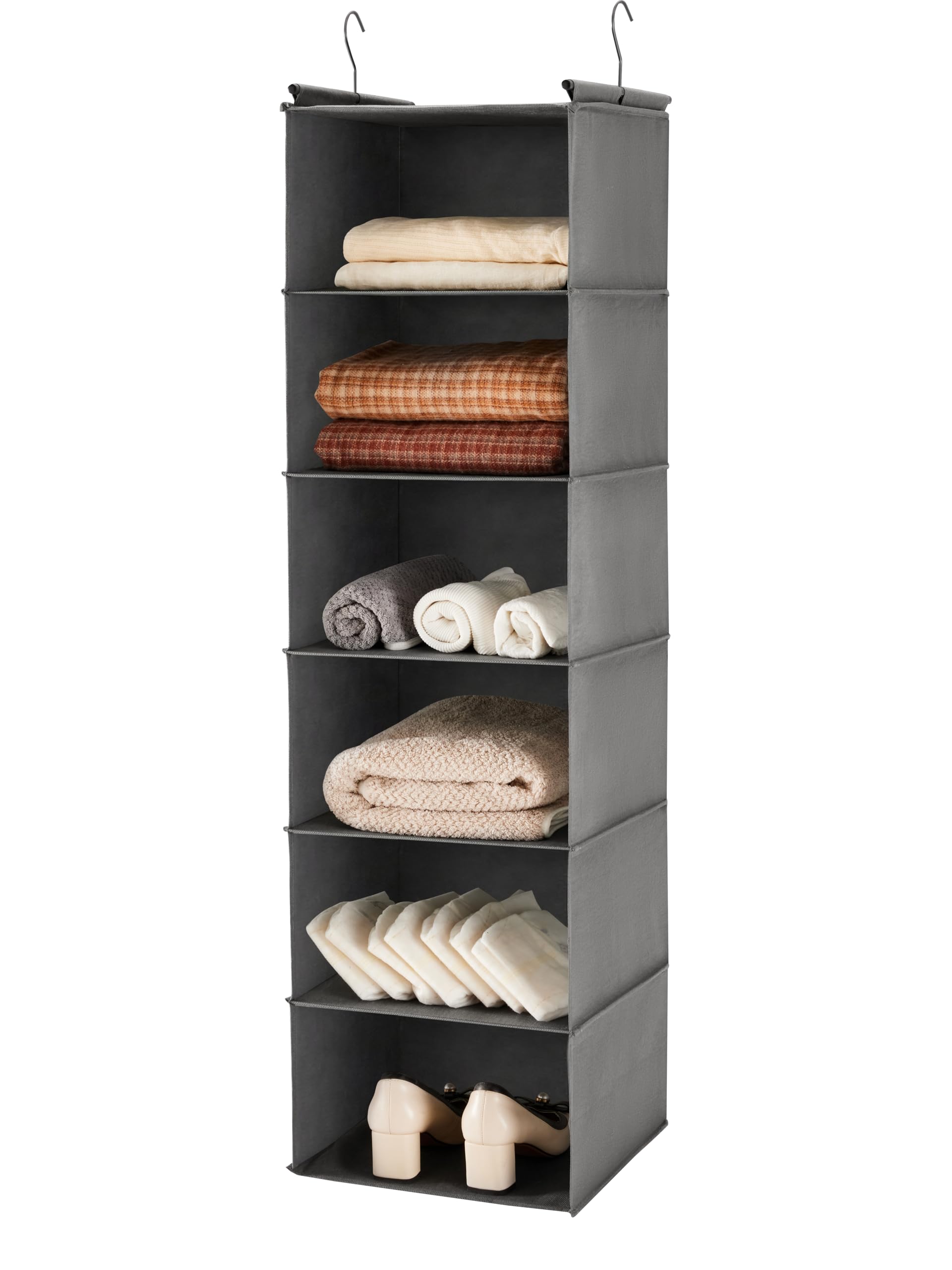
A six-tier hanging shelf built for high-capacity vertical stacking and long-term durability.
Why I picked it: Six roomy tiers maximize vertical real estate for clothes and shoes.
Best for: Dorm rooms, college closets, and small closets needing many shallow shelves.
Affordable, durable choice for heavy rotation use.
Pros
- Six roomy shelves
- Strong hanging hooks
- Folds flat for storage
- Durable stitching and material
Cons
- Not designed for very heavy single items
- Top hanger stability is critical
My take
I kept one of these in a college dorm and later in a small closet at home — it survived multiple moves and stayed useful. Each cubby is easy to access and fits folded clothes, shoes, or accessories without needing extra bins.
The hook construction felt solid on my closet rod and the fabric and stitching held up to regular use. I didn’t notice any strong chemical smell on arrival, and I appreciated the way the unit folded flat for storage between uses.
My best tip is to make sure the top hanger is secured and to avoid loading every shelf with overly heavy items; the unit shines when it holds distributed, moderate-weight loads.
6. Univivi 6-Layer Over-Door Organizer – Best for Large Over-Door Capacity
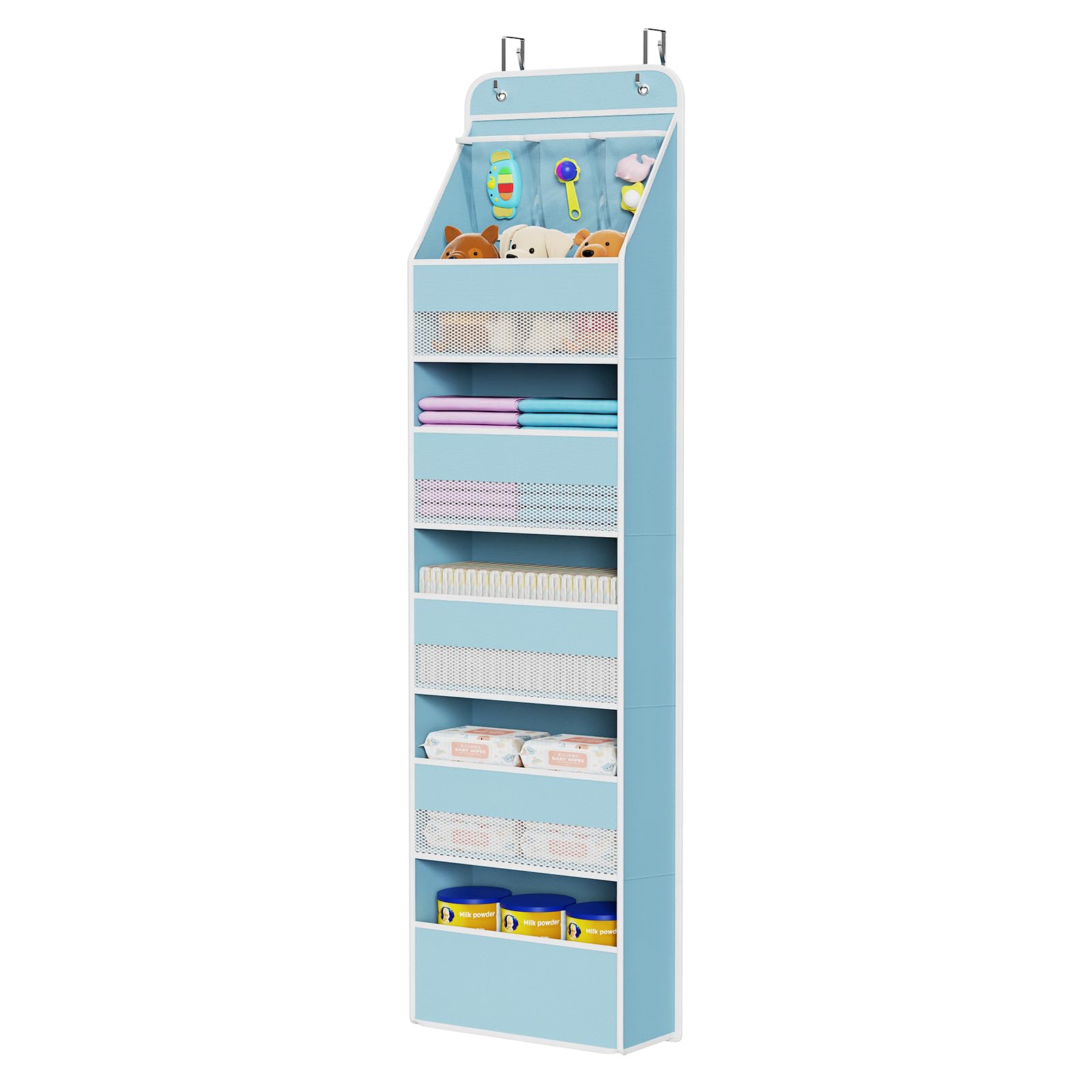
A high-capacity over-the-door organizer with large PVC mesh pockets, reinforced supports, and adjustable hooks for a snug fit.
Why I picked it: Very large compartments and included bottom plates make it surprisingly sturdy for over-the-door storage.
Best for: Baby essentials, pantry items, towels, and bathroom storage behind doors.
A mid-range option with reinforced supports for heavier daily use.
Pros
- Extra-large compartments
- Mesh windows for airflow
- Adjustable metal hooks
- Bottom plates for stability
Cons
- Can tilt if weight is uneven
- Door handles may interfere
My take
I installed this on an interior closet door to hold a mix of pantry items and baby supplies and was impressed by how much it swallowed up. The compartments are deeper and taller than many competitors, and the mesh windows made it easy to spot what I needed.
The unit ships with thickened metal hooks and bottom plates that help it sit flush against the door — an important detail when you pack it full. I did notice a slight left-right tilt if I loaded one side heavier than the other, so I kept my heavier items balanced across pockets.
One practical note from my setup: if your door has an inner knob or handle it can block closure. I solved that by moving the organizer to a door without inner hardware, but it’s something to check before you buy.
How I Choose Hanging Closet Shelves
What to prioritize
I look first at how you’ll use the organizer: quick-visibility pockets for toiletries, deep cubes for folded clothes, or many shallow shelves for shoes. Match function to the space and daily routines.
Hanger stability is my second concern. If the top hanger bends or the hooks shift, the whole unit loses usefulness quickly.
- Pick clear-window pockets for items you grab often.
- Choose removable support boards if you plan to store heavier folded clothes.
- Verify hook type for your door or closet rod before buying.
Size and weight capacity
Measure your door or closet rod first. A 12-inch-wide organizer is common, but depth and height vary and determine what actually fits.
I never load an organizer to the manufacturer’s absolute maximum — distributing weight across shelves extends longevity.
- Measure door thickness for over-the-door hooks.
- Allow clearance so doors close freely.
- Spread heavy items across multiple shelves.
Material and maintenance
Fabric organizers can be lightweight and washable, while polypropylene and metal-framed units hold structure better. I chose washable units where I expected spills or baby gear.
If odor is a concern, air the unit before use and check whether supports are removable for washing.
- Prefer removable boards for washable fabrics.
- Air out new fabric organizers to reduce smells.
- Metal-framed options resist sagging better.
Installation and door compatibility
I test fit hooks and check for inner door handles that might block closure. Adjustable hooks and bottom plates improve a snug fit.
For closet rod units, confirm the rod will support the combined weight of the hanger plus contents.
- Adjustable hooks work best for varying door thickness.
- Use bottom stabilizers if included to prevent swinging.
- Consider adding a shelf under heavy cubbies for extra support.
Frequently Asked Questions
Will an over-the-door organizer fit my door?
I measure my door thickness and check the hook specifications first. Many organizers include adjustable hooks for standard doors, but doors with interior knobs or special hardware can prevent closure without changing the handle or choosing a shallower unit.
Can these organizers hold heavy sweaters or shoes?
I treat most fabric organizers as moderate-capacity solutions. Metal-framed or units with removable support boards handle heavier folded clothing better. For shoes or heavy stacks, distribute weight and avoid filling every shelf to the limit.
How do I reduce a new organizer’s smell?
I air fabric organizers outside for a day or two before use and, where possible, remove support boards and machine wash according to instructions. A light fabric spray or airing usually removes any chemical odor quickly.
Final Take
I found organizers suited to specific needs: clear-pocket units for quick visibility, multi-tier shelves for maximal vertical capacity, and reinforced units for heavier folded clothes.
If I had to pick one all-around performer, I’d favor a reinforced shelf with removable boards for balance between capacity and durability. Match the model to the items you use every day and check hook compatibility before you buy.
