
I tested five popular cloths — Swedish dishcloths, flour sack towels, microfiber, and cotton terry — and share which I reach for for spills, polishing, and everyday cleanup.
I’ve worked through stacks of cloths at home and in my test kitchen, and I’m sharing the handful I keep coming back to. Each of these options solves a different problem: heavy spills, glass polish, drying pans, or an eco-conscious alternative to paper towels.
Below I explain why I picked each one, what I use it for most often, and the practical downsides I ran into while using them day to day.
I compared absorbency, drying behavior, durability after machine washing, and versatility across kitchen and household tasks to decide where each cloth fits in my routine.
1. Swedish Wholesale Reusable Dishcloths (10-Pack) – Best Overall
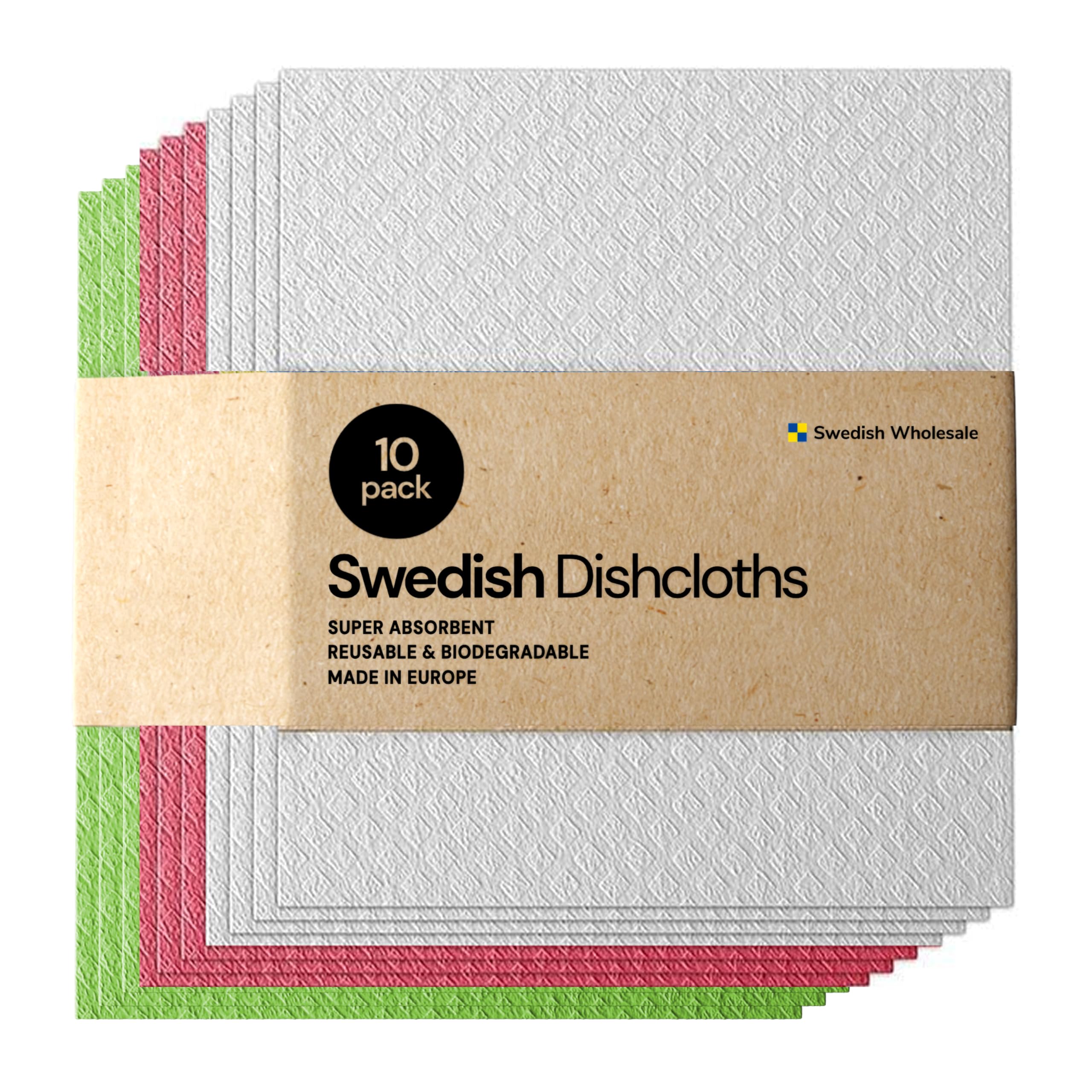
Cellulose-and-cotton reusable cloths that absorb a surprising amount, dry stiff for hygiene, and replace many paper towels in my kitchen.
Why I picked it: Powerful absorbency and versatile cleaning that replaces paper towels.
Best for: Big kitchen spills, wiping counters, plate cleanup, everyday messes.
A solid value for a 10-pack that lasts many months.
Pros
- Absorbs about 15x its weight
- Wring-to-dry like a sponge
- Machine washable and low-odor
- Reusable — replaces many paper towels
Cons
- Stiff when dry (must wet to soften)
- Not meant for heavy scrubbing
- Aesthetic isn’t decorative once dry
My take
These Swedish-style cloths became my go-to for general kitchen cleanup. I always wet them before use so they soften and act like a flat sponge — excellent for soaking up puddles or wiping counters clean in a single pass.
I appreciate how easily they wring out and how completely they dry stiff, which I find more hygienic than damp sponges. I run them through the dishwasher or washing machine; they come out ready for another round and keep working for months with regular care.
They’re not a scrubbing tool. When I need to tackle stuck-on grime I switch to a scouring pad, but for spills, plates, and quick wipes these outperform paper towels and save a lot of waste.
One quirk: when heavily sudsy and very wet, I sometimes see faint streaking on shiny countertops, so I give those areas a final dry with a separate cloth. For most chores, though, their absorbency and ease of laundering make them indispensable in my kitchen.
2. Utopia Kitchen Flour Sack Towels (12-Pack) – Best for Large Jobs
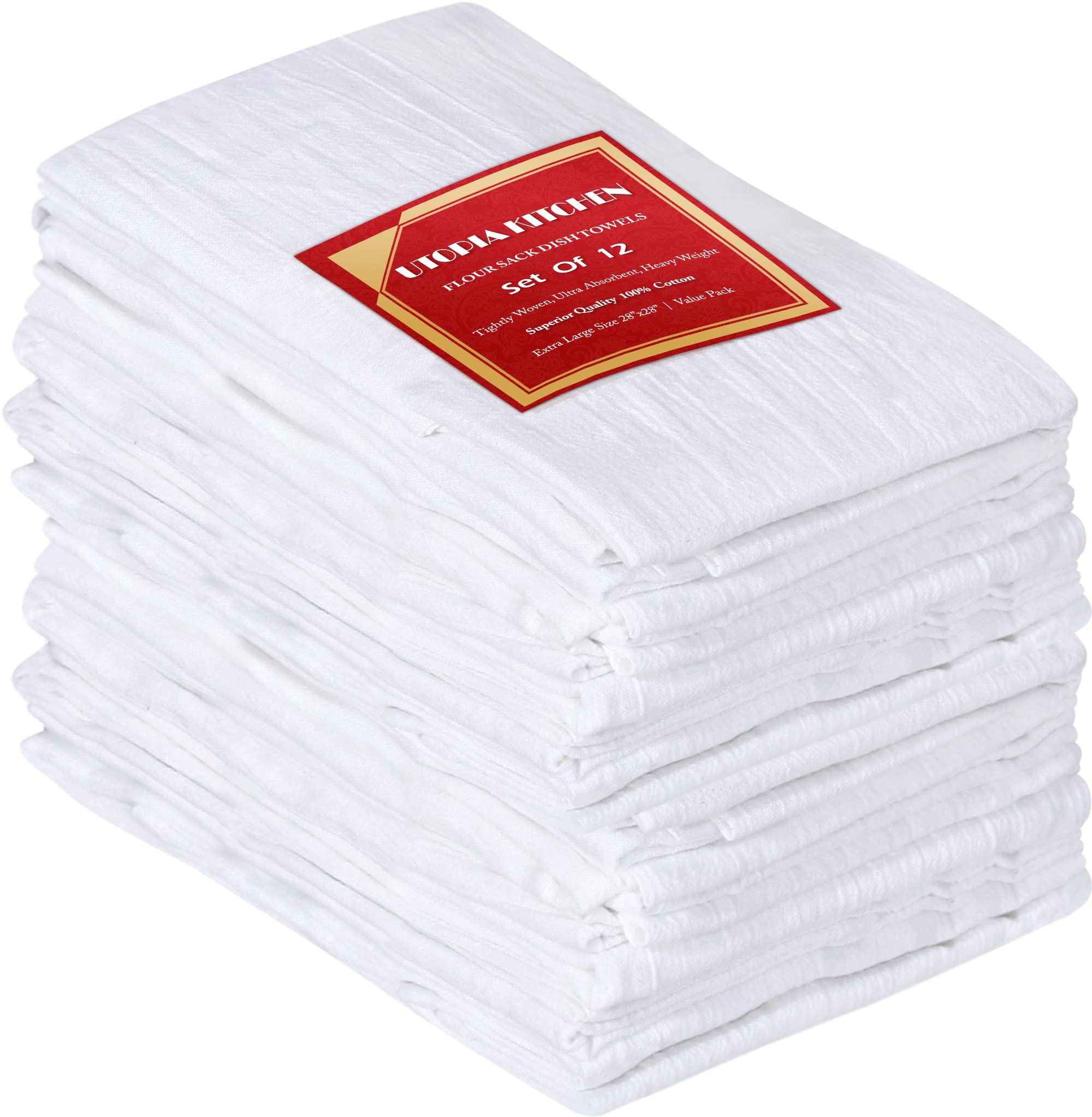
Big 100% ring-spun cotton towels that dry quickly, are lint-minimal, and double as strainers, cheese cloth, or dish drying towels in my home.
Why I picked it: Huge, lint-free cotton that handles drying and food prep tasks.
Best for: Drying dishes, straining, covering dough, soaking up large spills.
Excellent quantity-to-performance ratio for a 12-pack.
Pros
- Large 28 x 28 size
- 100% ring-spun cotton
- Lightweight and lint-minimal
- Multipurpose — food prep to drying
Cons
- Can fray after many washes
- Thin for users who prefer heavy cloths
My take
When I need a big towel, these flour sack cloths deliver. They’re lightweight yet highly absorbent and great for drying multiple plates or draping over a bowl while dough rises.
I use them for rinsing and draining spinach, as an impromptu cheese strainer, and as a large drying surface for cookware. They don’t leave lint behind the way some cheap towels do, so glass and ceramics come out dry and streak-free.
They do benefit from an initial wash to set absorbency, and over very long service some fraying can appear at the edges. For the price and versatility, though, I keep a stack on my shelf at all times.
3. MR.SIGA Microfiber Cleaning Cloths (24-Pack) – Best for Glass & Electronics
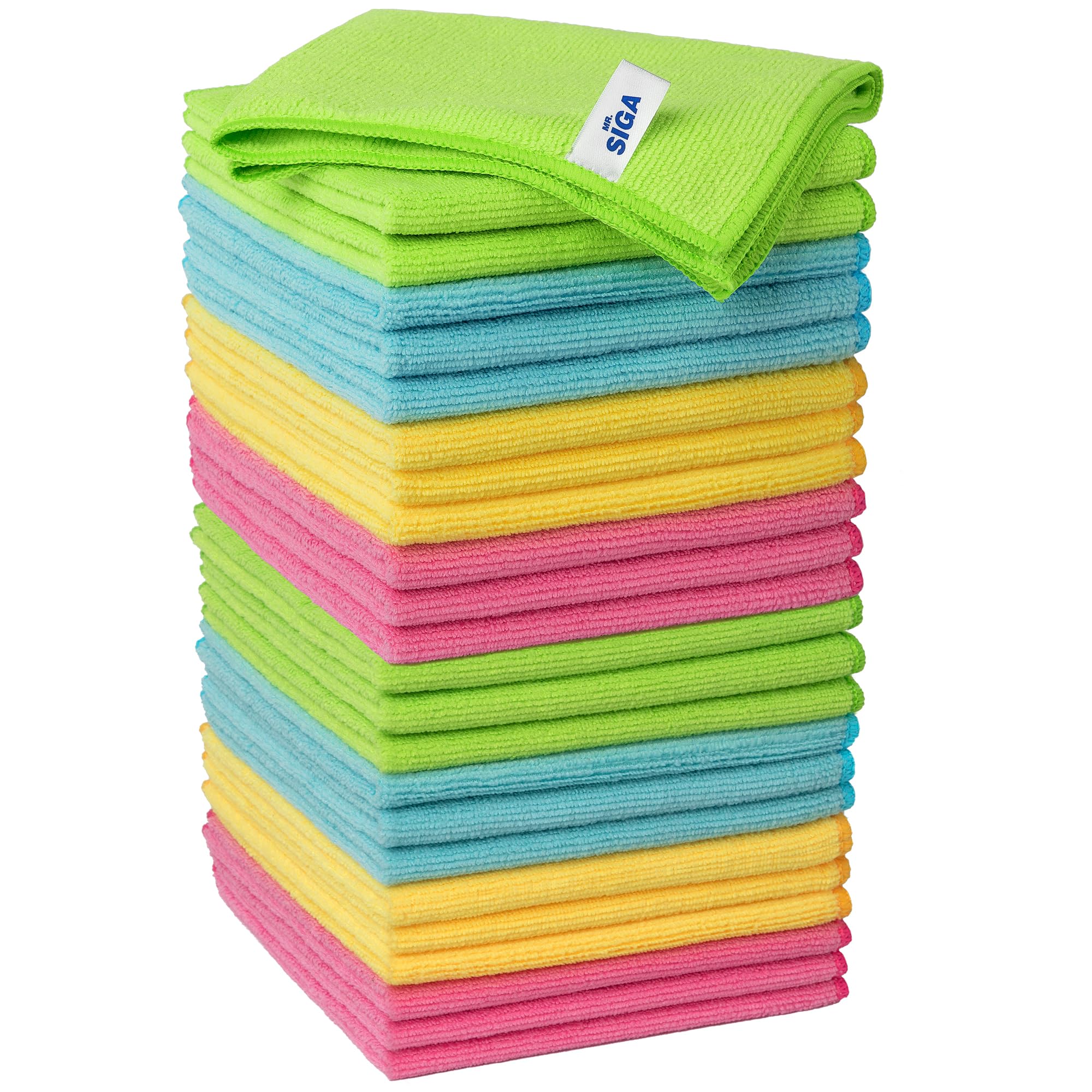
A bulk set of soft, lint-free microfiber cloths that leave glass and stainless streak-free and hold up to frequent washing.
Why I picked it: Soft, streak-free microfiber that’s gentle on delicate surfaces.
Best for: Polishing glass, stainless, electronics, mirrors, and cars.
Strong value for a 24-pack microfiber set.
Pros
- Ultra soft and scratch-free
- Lint-free and streak-free finish
- Durable stitching and reinforced edges
- Color-coded for task separation
Cons
- Synthetic material (not cotton)
- Less absorbent for large liquid spills
My take
Microfiber is my preferred tool for glass, chrome, and screens, and this pack gives me plenty of cloths to rotate through the house. They feel silky, remove fingerprints, and leave mirrors and windows clear without streaks.
The reinforced edges hold up well after many washes; I’ve kept earlier sets for years and they still perform. I also like using different colors for kitchen, bathroom, and automotive tasks to avoid cross-contamination.
These aren’t designed as a first-choice for mopping up huge spills — cellulose cloths or towels handle those better — but for polishing and general surface cleanup they’re indispensable.
4. SUPERSCANDI Swedish Dishcloths (10-Pack) – Best Eco-Friendly
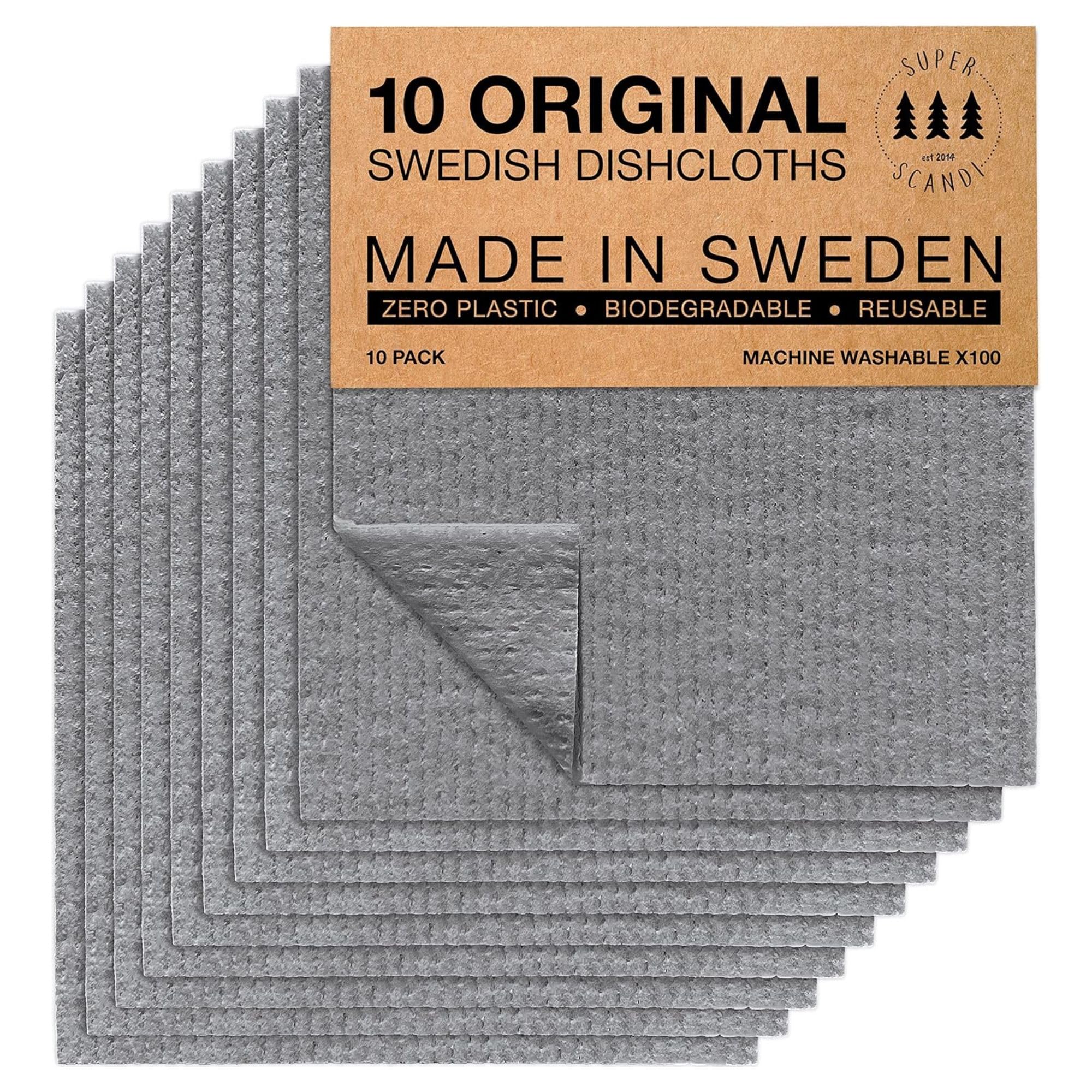
Compostable Swedish-style cloths made from softwood pulp and recycled cotton that soak up liquid well and fit an eco-focused kitchen.
Why I picked it: Biodegradable cellulose blend that performs like a sponge and composts at end of life.
Best for: Eco-conscious kitchens, everyday spill cleanup, and replacing paper towels.
A good mid-range eco option for reusable dishcloths.
Pros
- 100% biodegradable and compostable
- Absorbs up to 20x its weight
- Dishwasher and washing-machine safe
- Food-safe and plastic-free
Cons
- Stiff until wetted
- Limited color/options in this pack
My take
I switched to these when I wanted a plastic-free alternative to microfiber. They feel like stiff paper at first, but once damp they become very absorbent and behave like a flat sponge — excellent for wiping counters and mopping up kids’ spills.
Washing is straightforward: I toss them in the washer or dishwasher and they come back ready for duty. Over months of use they’ve remained durable and useful, and I like that when they finally wear out they’re compostable rather than adding plastic to landfill.
If you’re used to microfiber you’ll need a short adjustment period, but for cleaning with minimal detergent and easier rinsing, these have become one of my favorite options.
5. Sticky Toffee Oeko‑Tex Cotton Dishcloths (8-Pack) – Best Cotton Terry
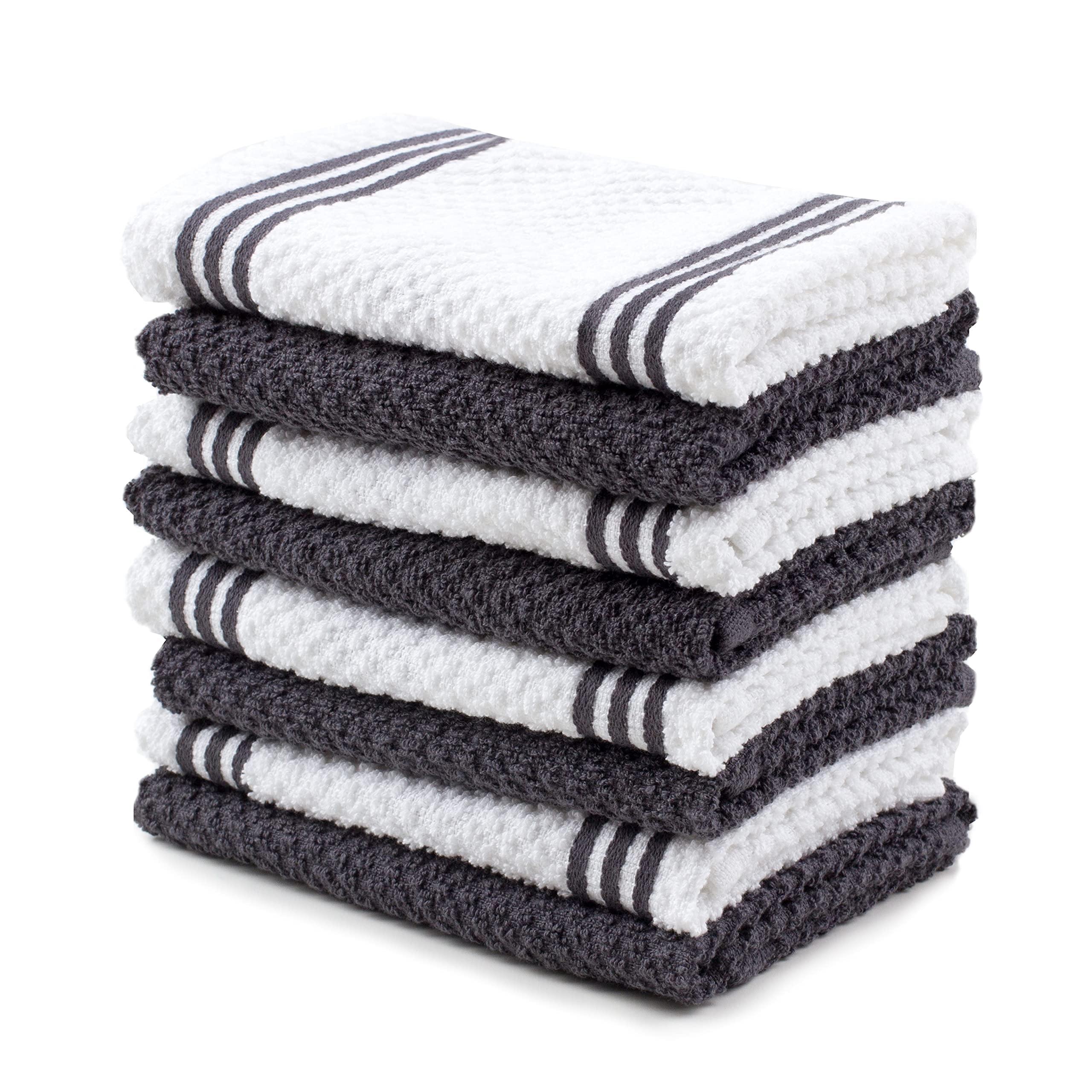
Thick Oeko‑Tex certified cotton terry cloths that soak up water quickly and feel gentle on hands and dishes.
Why I picked it: Thick, OEKO‑TEX cotton for absorbent, durable everyday use.
Best for: Drying dishes, hands, and heavy-duty kitchen tasks.
Affordable, high-quality cotton terry pack.
Pros
- 100% Oeko‑Tex certified cotton
- Popcorn terry for strong absorbency
- Machine washable and dryer safe
- Good pack size for rotation
Cons
- Bulkier to store
- Drying towel may be thinner than expected
My take
These cotton terry cloths are my pick when I want something soft but thirsty. The popcorn terry soaks up water quickly and handles drying dishes or hands without leaving fibers behind.
They wash and tumble dry well, and the Oeko‑Tex certification gives me confidence about fabric safety. I keep a set near the sink and another in my prep area — they’re heavy enough for tougher chores but still gentle on glass.
If you prefer very thin cloths for layering, these can feel a touch bulky, but for everyday absorbency and durability they’re exactly what I reach for.
How I Choose the Right Cleaning Cloth
Material Matters
I pick cellulose-and-cotton blends when I want sponge-like absorbency and easy wringing. They’re unbeatable for big spills.
For polishing and delicate surfaces I use microfiber because it’s lint-free and leaves no streaks. Pure cotton (flour sack) is my go-to for food prep and large drying jobs.
- Cellulose/cotton: very absorbent, wrings dry, dries stiff (good for hygiene).
- Microfiber: streak-free polishing, less absorbent for massive spills.
- 100% cotton: versatile, heat-tolerant, great for food prep and straining.
Size & Weave
I match size to task: 12×12 or 10–12 inch squares for everyday sink use; large 28-inch flour sack towels for drying pans or covering dough.
Weave affects feel and absorbency — terry holds more liquid; thin flour sacks dry quickly and drape well for food tasks.
- Terry: high absorbency, bulkier storage.
- Flour sack: large coverage, lightweight, quick-drying.
- Swedish-style: compact, highly absorbent when wet, easy to wring.
Care & Longevity
I wash cloths regularly. Microfiber and cotton hold up well to machine washing; Swedish dishcloths tolerate the dishwasher and many wash cycles.
Avoid fabric softener on microfiber — it reduces effectiveness. I air-dry cellulose cloths flat sometimes to preserve shape, but tumble drying on low works for most cottons.
- Machine wash safe: check label and avoid softeners for microfiber.
- Air dry cellulose cloths sometimes to keep their texture.
- Rotate cloths to extend lifespan and reduce odor build-up.
Environmental Impact
I consider compostable Swedish-style cloths when I want a low-impact option that performs like a sponge. Replacing paper towels with reusable cloths is one of the easiest waste reductions I’ve made.
Microfiber performs well but is synthetic — I reserve it for tasks where its streak-free finish matters most.
- Choose biodegradable blends if composting is important to you.
- Reuse and wash rather than disposing after single use.
- Balance performance needs with material impact.
Frequently Asked Questions
Can I wash Swedish dishcloths in the dishwasher?
Yes — I run mine in the dishwasher or washing machine and they come back ready to work. I avoid high-heat cycles when I want maximum longevity, but they tolerate regular machine washing.
Do microfiber cloths leave lint on glass?
In my experience microfiber is the best material for glass and electronics — it leaves virtually no lint or streaks when used dry or slightly damp.
Are flour sack towels good for food prep?
Absolutely. I use flour sack towels for straining, covering dough, and drying produce because they’re lint-minimal and food-safe cotton.
How should I store thick terry cloths so they dry between uses?
I hang terry cloths to air between uses or lay them flat when possible. Good airflow prevents damp odors and extends time between washes.
Final Take
I keep a rotation of these cloths: Swedish-style for spills, flour sacks for big jobs and food prep, microfiber for glass, and terry for heavy absorbency.
Pick one or two that solve your most common chores and I guarantee your cleanup routine will feel simpler and more effective.
