
I tested eight cue racks — wall-mounted, floor stands and portable holders — to find the sturdiest, most practical ways to store cues and accessories without damaging my sticks or crowding the room.
I keep my cues in rotation, so I’ve tried multiple racks to protect shafts, save floor space, and tidy my game room. In this roundup I focus on build quality, ease of installation, cue protection, and useful extras like ball storage, drink holders, and score counters.
My goal was simple: find racks that make my gear easy to grab, keep sticks from leaning on walls, and match a variety of budgets and room layouts.
I compared size, materials, mounting hardware, accessory storage, and how well each rack protects cue finishes and prevents wobble or falling.
1. Fat Cat 6-Cue Wall-Mounted Hardwood Cue Rack – Best Budget Wall Rack
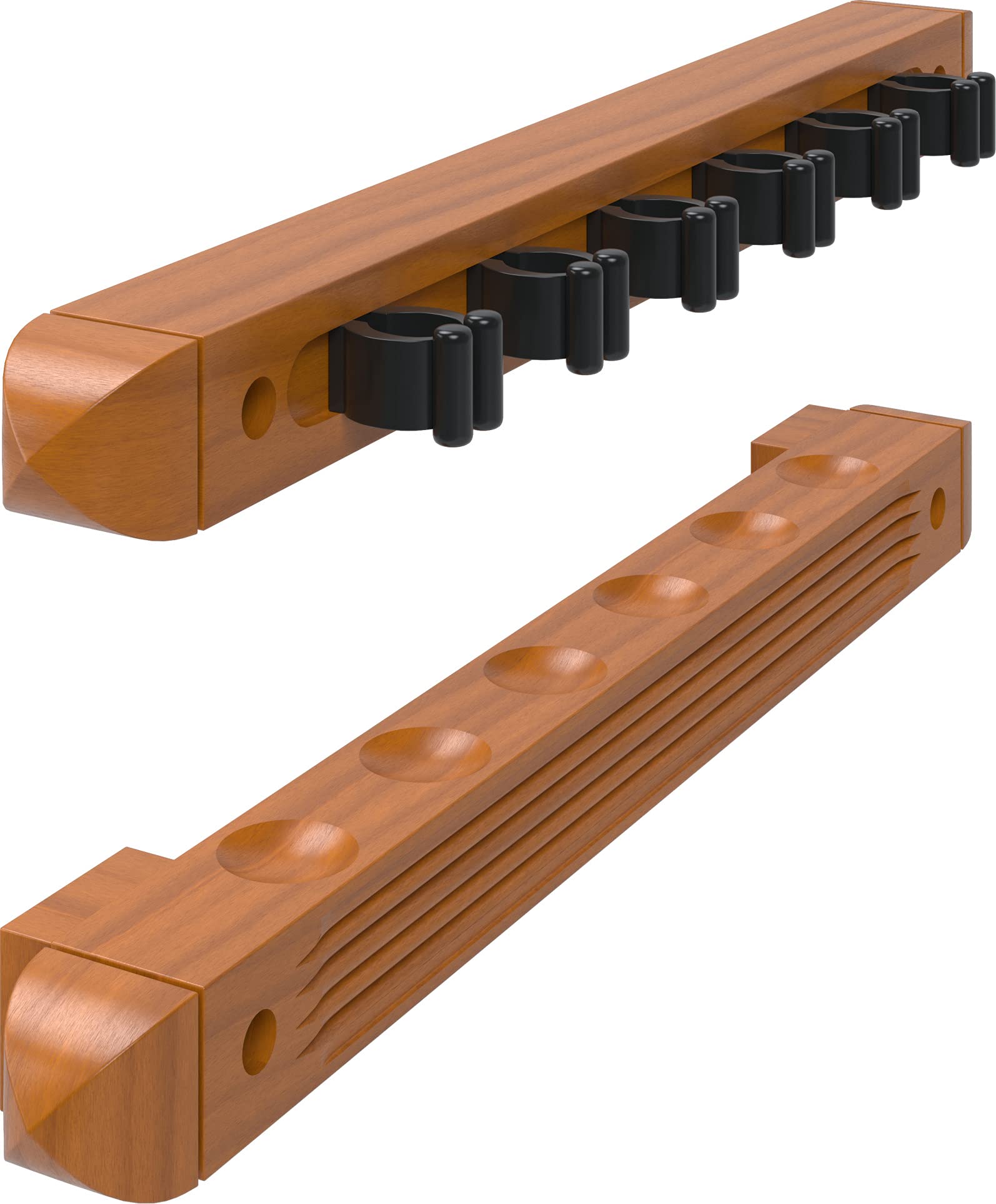
A compact, two-piece hardwood wall rack that holds six cues, installs quickly, and gives a clean, classic look.
Why I picked it: Simple, sturdy wall rack that installs fast and protects cues without taking up floor space.
Best for: Players who want a no-fuss, space-saving wall rack for six cues.
An affordable entry-level wall rack that delivers solid hardwood looks.
Pros
- Classic hardwood finish
- Holds six cues securely
- Includes mounting hardware
- Compact two-piece design
Cons
- Basic feature set
- No accessory storage
My take
I installed this Fat Cat rack in under 15 minutes using the included hardware and was immediately happy with how it cleaned up my game room. The hardwood finish looks refined next to my table and the two-piece design made alignment forgiving on uneven walls.
Cues sit snugly in the bottom cups and snap into the top clips without wobbling. It’s a simple solution that keeps shafts off floors and avoids chalk scuffs on baseboards.
If you want a straightforward, attractive rack for six cues and you don’t need ball or accessory storage, this is the one I reach for.
2. ISZY 8-Cue Floor Stand with Ball Storage and Accessories – Best Corner Floor Stand
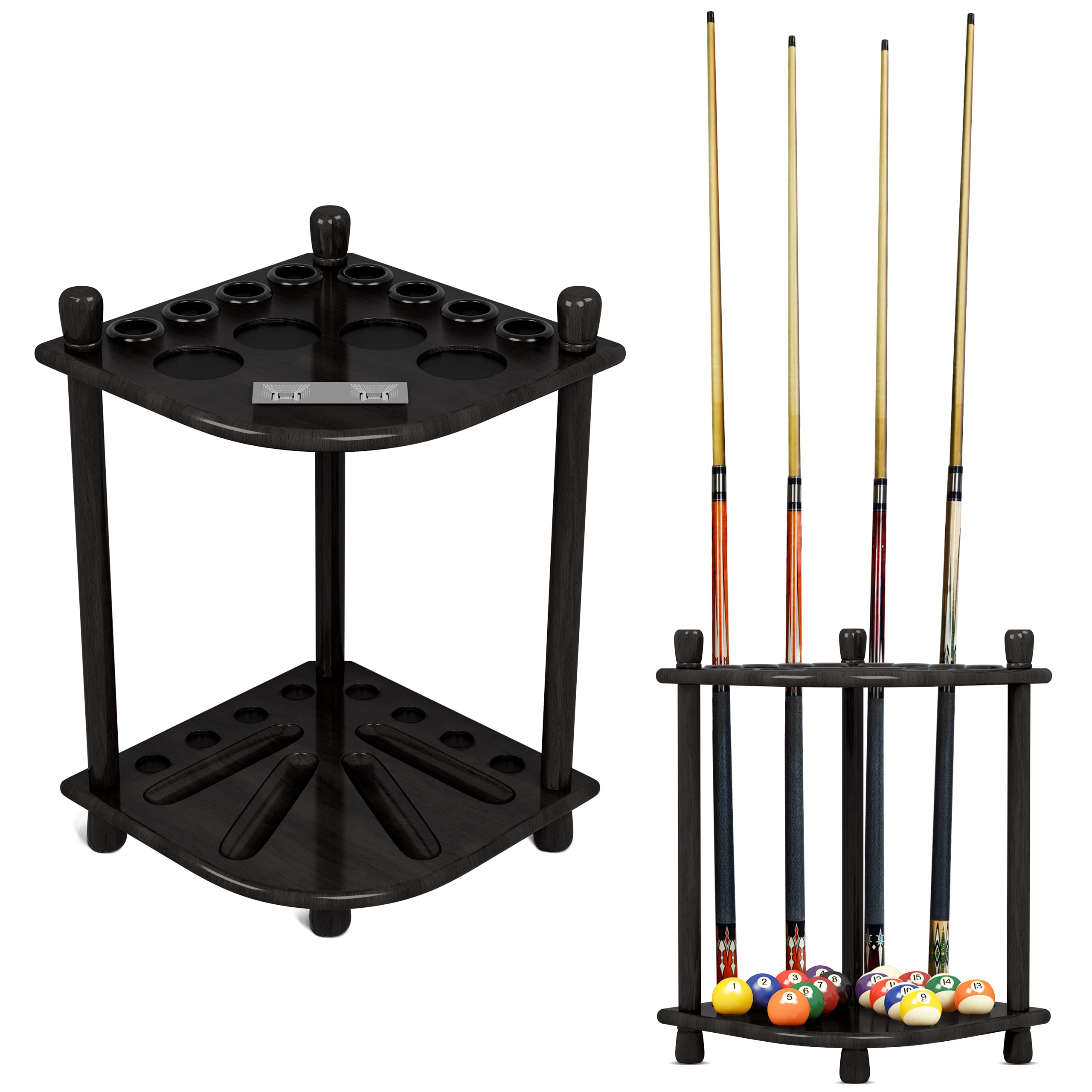
A tall floor stand that holds eight cues, stores balls, and adds built-in score counters and drink holders for casual play.
Why I picked it: I liked the all-in-one floor stand that kept cues, balls, and accessories together without drilling into walls.
Best for: Players who prefer a freestanding rack with accessory features in a corner or by the table.
A midrange floor stand offering many accessories for the money.
Pros
- Holds eight cues
- Ball storage built in
- Four score counters
- Drink holders included
Cons
- Takes floor space
- Assembly required
My take
I picked the ISZY floor stand when I didn’t want to mount anything to the wall, and it fits neatly in a corner while keeping everything I need within reach. Assembly was straightforward and the finished unit looks smart in my game room.
The score counters and drink holders are surprisingly useful during casual sessions, and the ball storage keeps loose balls off the floor. It’s sturdy enough for daily use and easy to move if I rearrange the room.
If you want a freestanding solution that doubles as a small accessory station, this stand earned a permanent spot in my setup.
3. Flintar Solid Hardwood Wall Cue Rack (6-cue, 16-ball) – Best Premium Wall Rack
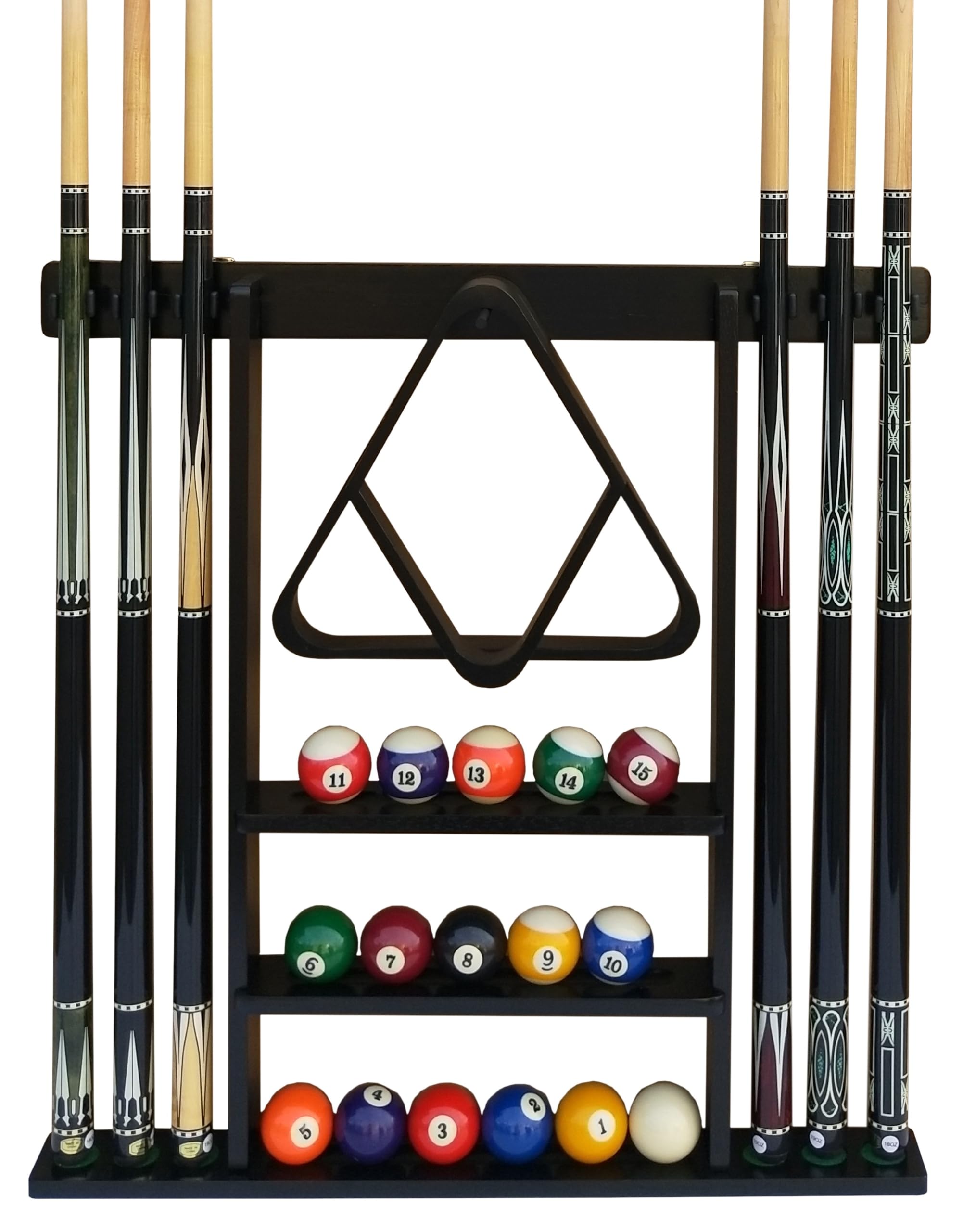
A furniture-grade solid hardwood wall rack finished with multiple coats, offering elegant looks and secure direct-mount hardware.
Why I picked it: Real solid hardwood and improved mounting hardware gave me confidence this rack would stay solidly attached over time.
Best for: Players who want a premium, furniture-quality wall rack with ball storage.
A higher-end option that prioritizes solid construction and finish.
Pros
- Solid hardwood construction
- Holds six cues and 16 balls
- Direct wall-mount hardware
- Rich, multi-coat finish
Cons
- Top clips can crack
- Replacement clips may be needed
My take
The Flintar rack feels like furniture rather than a budget accessory: the solid hardwood and three-coat finish give the unit real presence on my wall. I used the included L brackets to hard-mount it to studs and it sat rock-solid afterward.
One caveat I experienced: the cue clips can be brittle on some units. When a clip cracked I contacted the seller and they sent replacement clips quickly, which kept the rack in service without hassle. If you plan to use heavy or oversized shafts, consider swapping to larger clips as I did.
Overall, I think this is the best choice when finish quality and secure mounting are priorities.
4. CROWN ME Portable Weighted 3-Cue Holder – Best Portable Holder
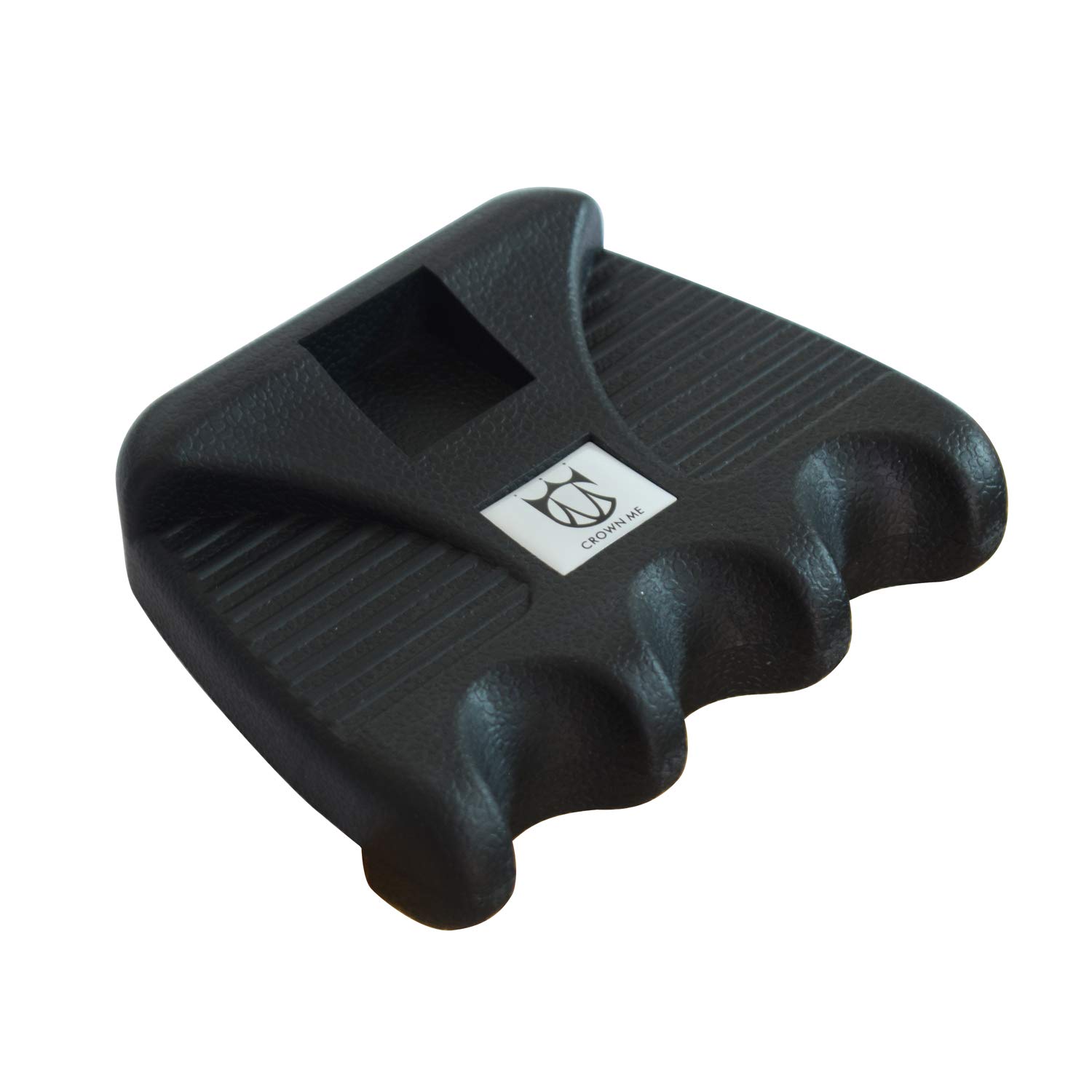
A small, heavy rubberized cue rest that clamps to table edges or sits on a flat surface and holds two to three cues securely.
Why I picked it: The weight and rubber coating made it the most reliable portable holder I used for short sessions.
Best for: Players who need a non-permanent, portable cue rest for the table edge.
A very affordable, compact solution for portable cue storage.
Pros
- Portable and non-slip
- Durable rubber coating
- Weighted and stable
- Simple to use
Cons
- Limited cue capacity
- Not a decorative piece
My take
This weighted CROWN ME holder became my go-to during impromptu games and when I didn’t want to drill into walls. I can set it on the table edge or move it to a chair, and it won’t slide or tip when I drop a cue into it.
The rubberized finish protects shafts and the weight gives confidence even when people toss sticks toward it. It’s function over form, but that’s exactly what I wanted for portability.
If you need a reliable temporary resting spot for two or three cues, this is the compact solution I prefer.
5. XCSOURCE 8-Cue Solid Pine Wall Rack – Best Solid Wood 8-Cue
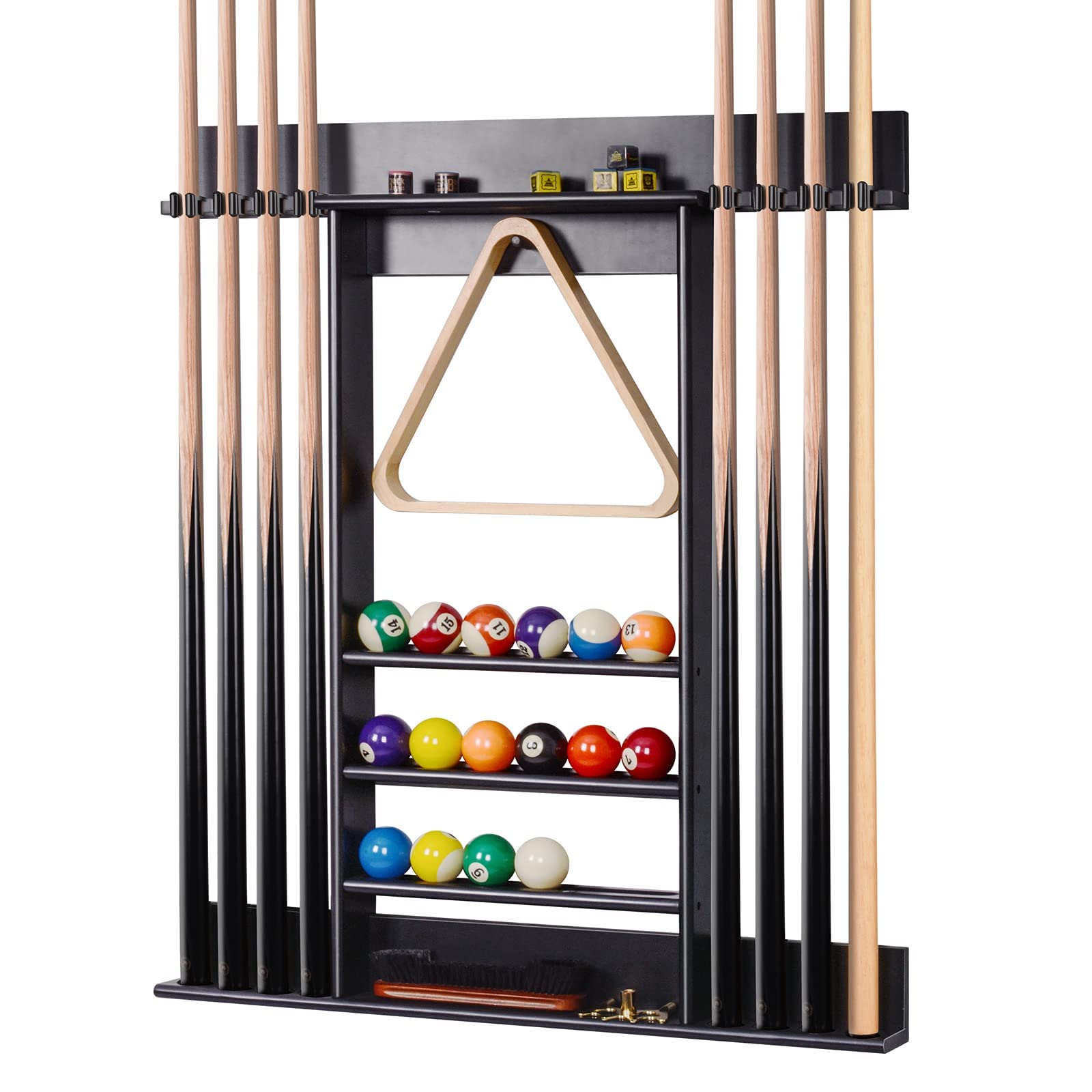
A sturdy wall-mounted solid pine rack that holds eight cues, offers grooves for ball storage, and includes shelves for accessories.
Why I picked it: Solid pine construction and thoughtful accessory shelving gave me a roomy, robust rack for a busy game room.
Best for: Players who want maximum cue capacity on the wall plus extra accessory storage.
A mid-to-higher option with solid-wood construction and useful shelving.
Pros
- 100% solid pine wood
- Holds eight cues
- Accessory shelves included
- Grooves for ball storage
Cons
- Clips are a bit tight initially
- Triangle peg placement odd
My take
I appreciate the build quality on the XCSOURCE rack — the pine feels solid and the finish fits my decor. Once mounted, it keeps eight cues secure and the built-in shelves are handy for chalk and a brush.
The cue clips were tight when new and required a little extra pressure to snap sticks in, but they loosened up with regular use. The triangle peg is placed a touch high for some racks, so I shifted how I hang my triangle to make it sit properly.
For anyone needing lots of cue space and some accessory shelving, this rack checked all the boxes in my room.
6. Billiards Xpress Wall Rack with 16 Ball Holders – Best All-in-One Wall Rack
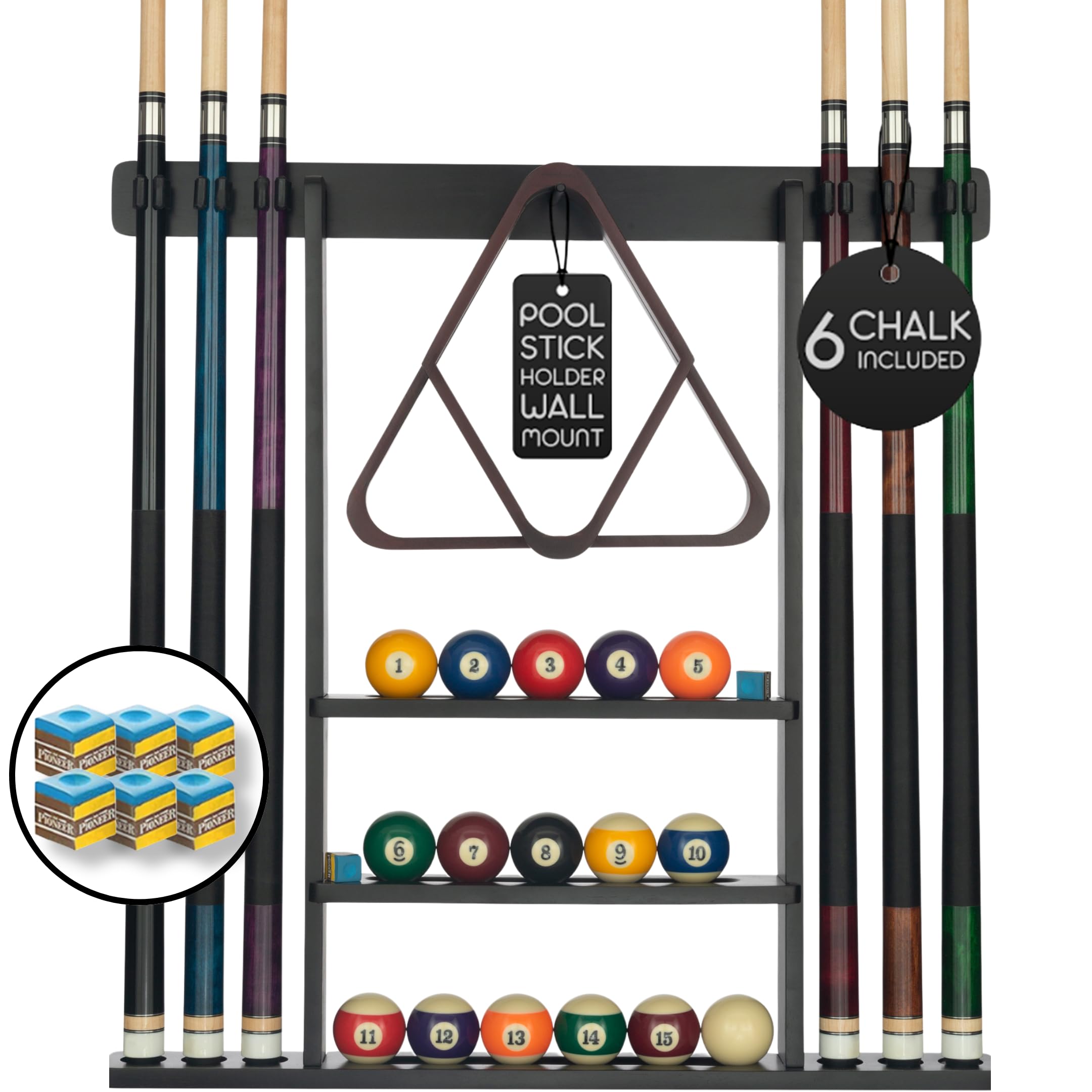
A well-featured wall rack that stores six cues, 16 balls, a triangle, and includes larger clips and rubber pads to protect cue finishes.
Why I picked it: It offered comprehensive storage and protective features that stopped my shafts from getting nicked.
Best for: Players who want combined cue, ball, and accessory storage with cue protection.
A feature-packed wall option that balances value and protection.
Pros
- Holds cues and 16 balls
- Rubber pads protect shafts
- Larger clips secure cues
- Includes bonus chalk
Cons
- Assembly instructions could be clearer
- Measure ceiling clearance before mounting
My take
I bought this rack to stop leaning cues from marking the walls and it delivered: the rubber circle pads and larger clips hold sticks gently but firmly. After mounting to studs, the whole unit felt very secure.
Assembly was straightforward for someone handy, though the instructions could have had clearer step-by-step photos. The included chalk was a nice surprise and the extra protection around the clips makes a tangible difference on cue finishes.
If you want a comprehensive wall storage system that prioritizes protecting your cues, this is the rack I recommend first.
7. Oak Wall Mount Pool Cue Rack (6-cue) – Best Oak Wall Rack
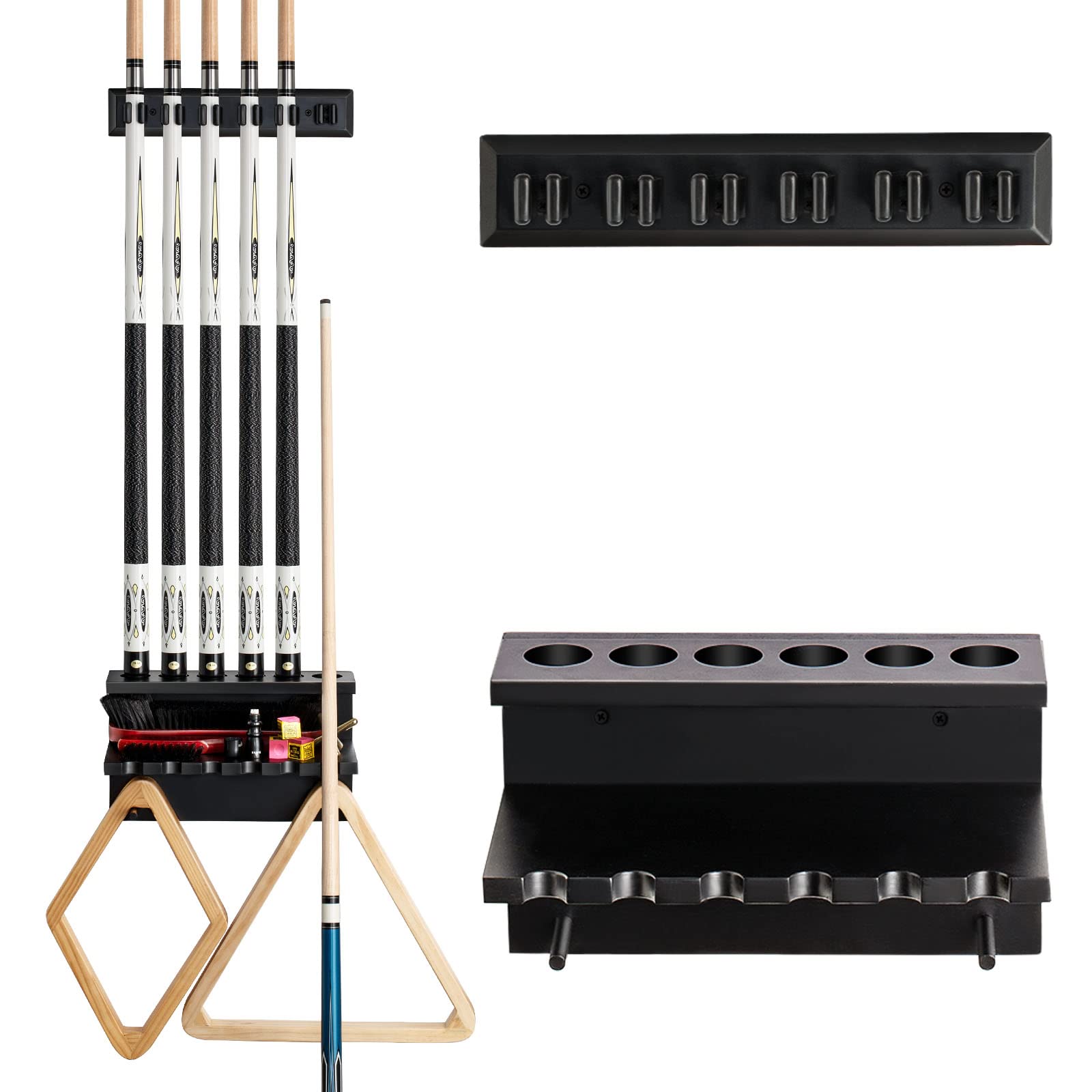
A straightforward oak wall-mounted rack that emphasizes solid oak construction and simple installation for six cues.
Why I picked it: The 100% oak build and clean design fit my room and felt like a long-lasting option.
Best for: Players wanting a classic oak rack for six cues with quick installation.
A solid-wood choice that emphasizes durability and a refined look.
Pros
- 100% oak construction
- Holds six cues
- Easy installation
- Elegant finish options
Cons
- Basic mounting hardware
- Plastic anchors feel lightweight
My take
This oak rack blends into my game room and gives a traditional look I prefer. Installation was fast and the unit felt sturdy once secured, though I swapped the included anchors for heavier anchors where I could.
It’s a simple, reliable solution if you want an oak rack without extra bells and whistles. The cue slots hold sticks neatly and the compact footprint leaves plenty of room around the table.
I recommend upgrading anchors if you plan to hang heavier cue collections, but otherwise this oak rack is exactly what I expected.
8. ISZY 10-Cue Floor Stand with Ball Storage – Best Floor Stand 10-Cue
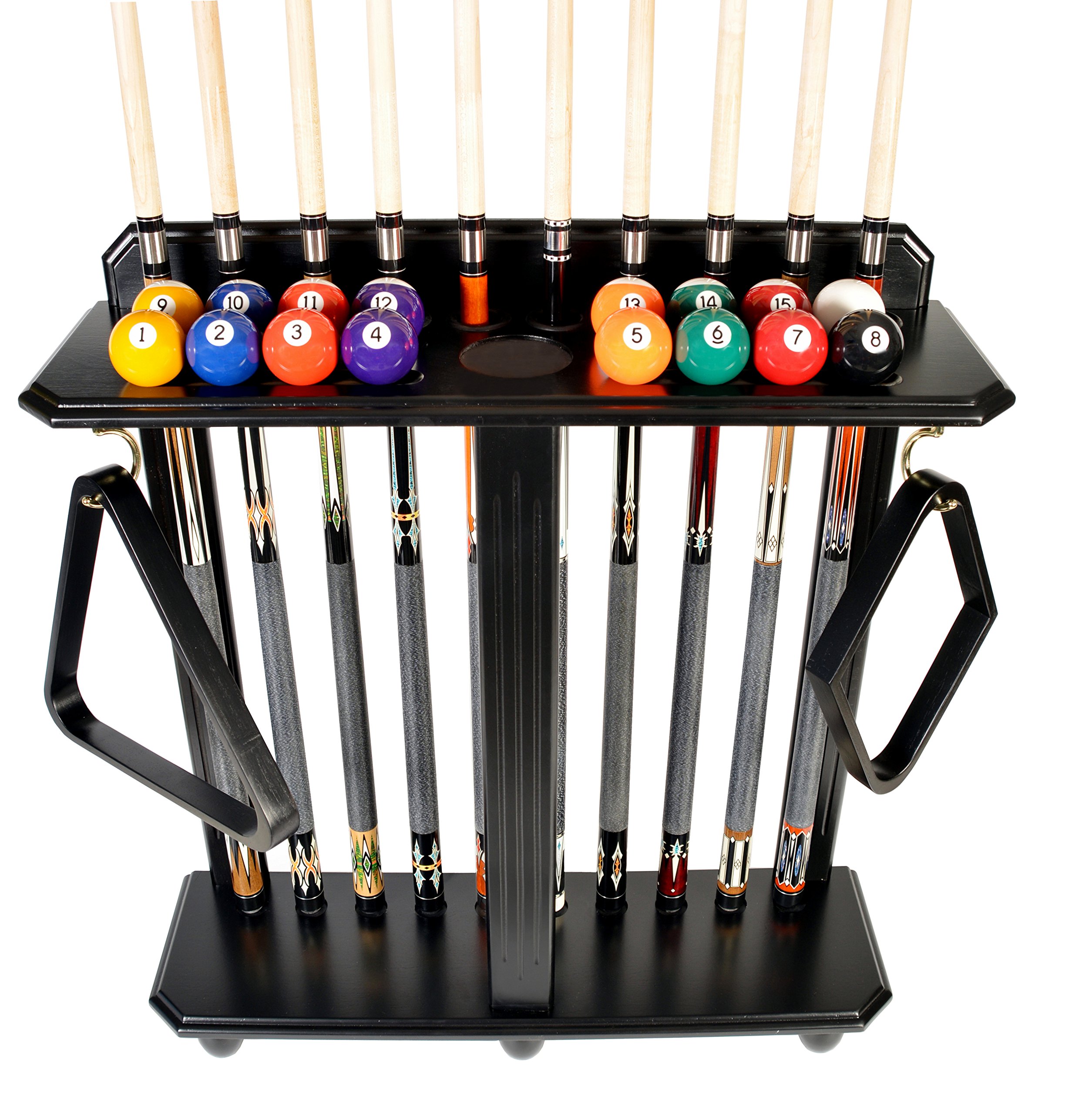
A larger free-standing floor unit that holds up to ten cues, stores a full set of balls, and includes a drink holder and optional revolving base.
Why I picked it: I needed a high-capacity, movable rack and this floor stand gave me ten-cue storage without permanently mounting anything.
Best for: Players who want a high-capacity freestanding rack that can be moved as needed.
A roomier floor stand that balances capacity with freestanding convenience.
Pros
- Holds ten cues
- Full ball storage
- Freestanding and movable
- Built-in drink holder
Cons
- Assembly holes can be misaligned
- Some wobble unless corrected
My take
I chose the ISZY 10-cue stand when I needed maximum capacity without drilling into walls. It assembled quickly and looks substantial in my space, holding ten cues and the balls in a tidy footprint.
A few assembly details required attention: some pre-drilled holes were tight and I had to clean them out, and one foot didn’t thread perfectly, which I corrected to remove wobble. The unit can revolve, but you may need to adjust how the bottom track is assembled so it spins freely.
Overall I like having a movable rack that holds a large collection and keeps everything at hand during long sessions.
How I Choose a Cue Rack
Capacity and Layout
I start by deciding how many cues I need to store and whether I want wall-mounted or freestanding storage. Wall racks save floor space and create a cleaner look, while floor stands give mobility and higher capacity without drilling.
Think about where cues will sit relative to the ceiling and table — measure before you mount so cues don’t hit the ceiling.
- I pick wall racks for tight rooms and floor stands for flexibility.
- I always measure ceiling clearance before mounting high racks.
Materials and Cue Protection
I prefer solid hardwood or solid pine for longevity and appearance. MDF or thin plywood can work, but I expect less durability over years of use.
Rubber pads, felt, or larger clips are small features that make a big difference protecting shaft finishes; I choose racks that include those elements or allow for upgraded clips.
- I choose solid wood for long-term durability.
- I prioritize racks with rubber/felt pads or large clips.
Mounting and Installation
I look for racks that include direct mounting hardware like L-brackets and clear instructions. If anchors or plastic hardware are included, I often replace them with heavy-duty anchors or mount into studs for extra security.
For free-standing racks, I pay attention to the base and feet to avoid wobble and make sure it sits level on my floor.
- I mount to studs when possible for the most secure install.
- I check for clear instructions and spare clips or parts.
Accessories and Extras
I value built-in ball storage, chalk slots, drink holders, and score counters if they match how I play. They aren’t essential, but these extras keep the table clear and streamline sessions.
If accessory storage isn’t built in, I consider whether I have room nearby for a small shelf or bin.
- I like racks with dedicated ball or chalk storage.
- I find drink holders handy when I host casual games.
Frequently Asked Questions
Do I need to mount a rack to studs?
I prefer mounting heavy or loaded racks to studs for maximum security. For lighter racks or when studs aren’t available, I use high-quality wall anchors rated for the load.
Will clips or pads damage my cue finish?
I look for rubber or felt pads and larger clips; they distribute pressure and reduce mark risk. If clips feel tight, I break them in gently or replace with larger clips to protect shafts.
Are freestanding racks stable enough?
I find well-built floor stands stable if assembled correctly and placed on a level surface. Check feet and tighten any loose fasteners to eliminate wobble.
Can I store different cue lengths in the same rack?
I mix lengths in most racks, but for extreme short or long cues I adjust spacing or use a two-piece rack design so sticks don’t rub or hit the ceiling.
Final Take
I kept capacity, cue protection, and installation in mind when choosing the right rack for my space. The Fat Cat is my go-to simple wall solution, the Billiards Xpress balances protection and storage, and the ISZY floor stands give the most capacity without drilling holes.
Pick the style that matches your room and how you play — mount to studs when you can, prioritize rubber or felt protection for shafts, and enjoy having a neat, damage-free cue collection.
