
I tested corded, cordless, and attachment-style edgers to find tools that make clean, repeatable edges without a lot of fuss. These picks balance power, control, and ease of use for sidewalks, driveways, and garden beds.
I spend a lot of time edging sidewalks and beds, so I look for blades that cut straight, controls that reduce fatigue, and designs that don’t stall or clog. Over dozens of jobs with these tools I noticed clear trade-offs between raw power, portability, and simplicity.
This roundup groups the edgers I’d reach for depending on the job: a lightweight corded unit for quick cleanups, a battery edger when I want no cords or fumes, a heavy-duty option for compacted soil, and useful attachments if you already own a compatible tiller.
I compared motor type, blade size, depth controls, and how each tool behaved on real curbs, compacted dirt, and thick overgrowth to determine which one fits each use case.
1. WORX 7.5in Electric Lawn Edger & Trencher – Best Lightweight Corded
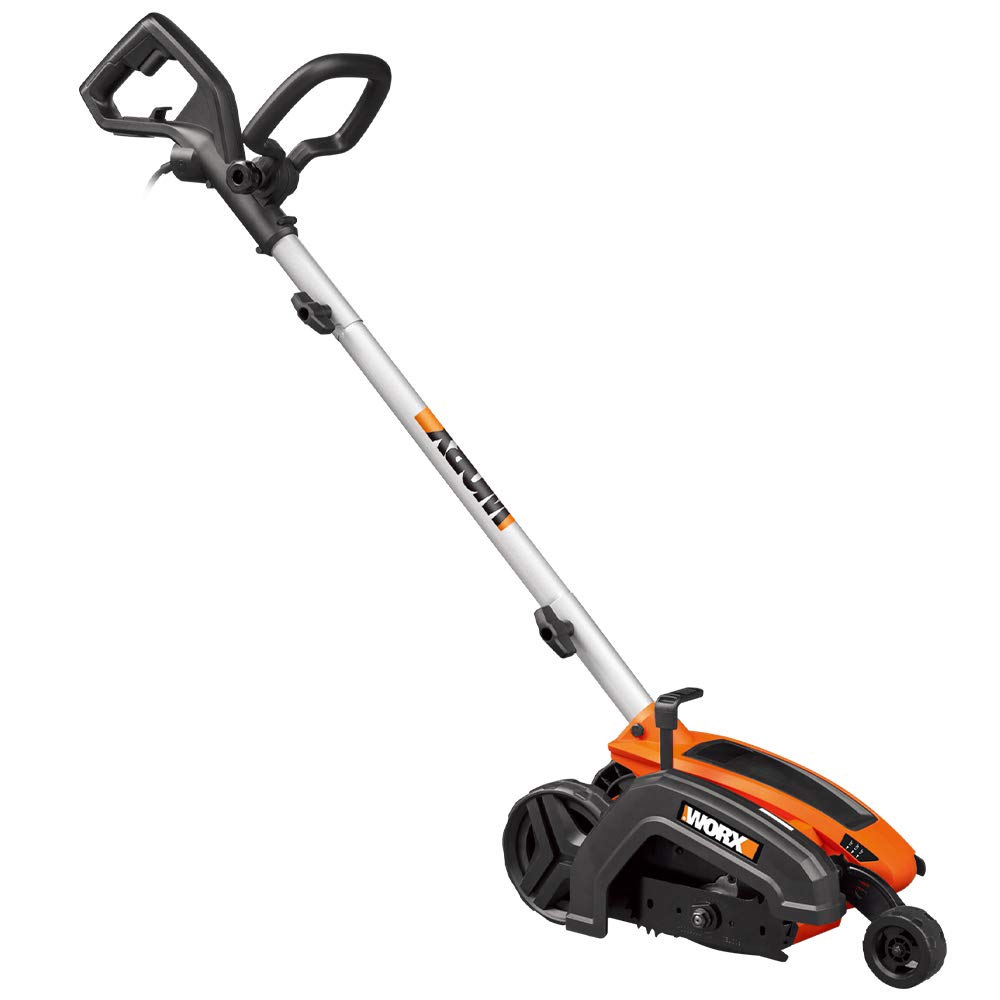
A surprisingly powerful, featherweight corded edger that makes clean lines and shallow trenches without the fuss of gas.
Why I picked it: I appreciated its 12 Amp motor and 7.5" steel blade in a tool that’s easy to push and store.
Best for: Quick sidewalk and driveway edging where steady corded power beats battery limits.
Very affordable for a corded unit with professional-looking results.
Pros
- Lightweight and easy to maneuver
- Strong 12 Amp motor for its size
- Three depth settings
- Cutting line guide for straighter edges
Cons
- Requires extension cord management
- Can be loud and throw debris
- Shaft angle may feel awkward for taller users
My take
I was skeptical that a corded edger could match the oomph of a small gas unit, but this WORX surprised me. The 12 Amp motor spins the 7.5" serrated steel blade fast enough to cut neat edges and make shallow trenches for wire. Pushing it along sidewalks and driveways felt effortless because the tool is very light.
On dense or wet turf I found myself clearing clumps from the blade more often, so I schedule edging for dry conditions when possible. The cutting line indicator genuinely helps keep a straight track, and the adjustable shaft and D-grip make it tolerable for different heights, though taller users will lean a bit.
Because it’s corded you get steady power without charging, but you do need to watch the cord path closely. I always wear eye protection when using this unit — it can kick up rocks and debris — and I appreciate how easy it is to clean and replace the blade when needed.
2. Greenworks 60V 8in Brushless Cordless Edger (Battery Included) – Best Cordless with Battery
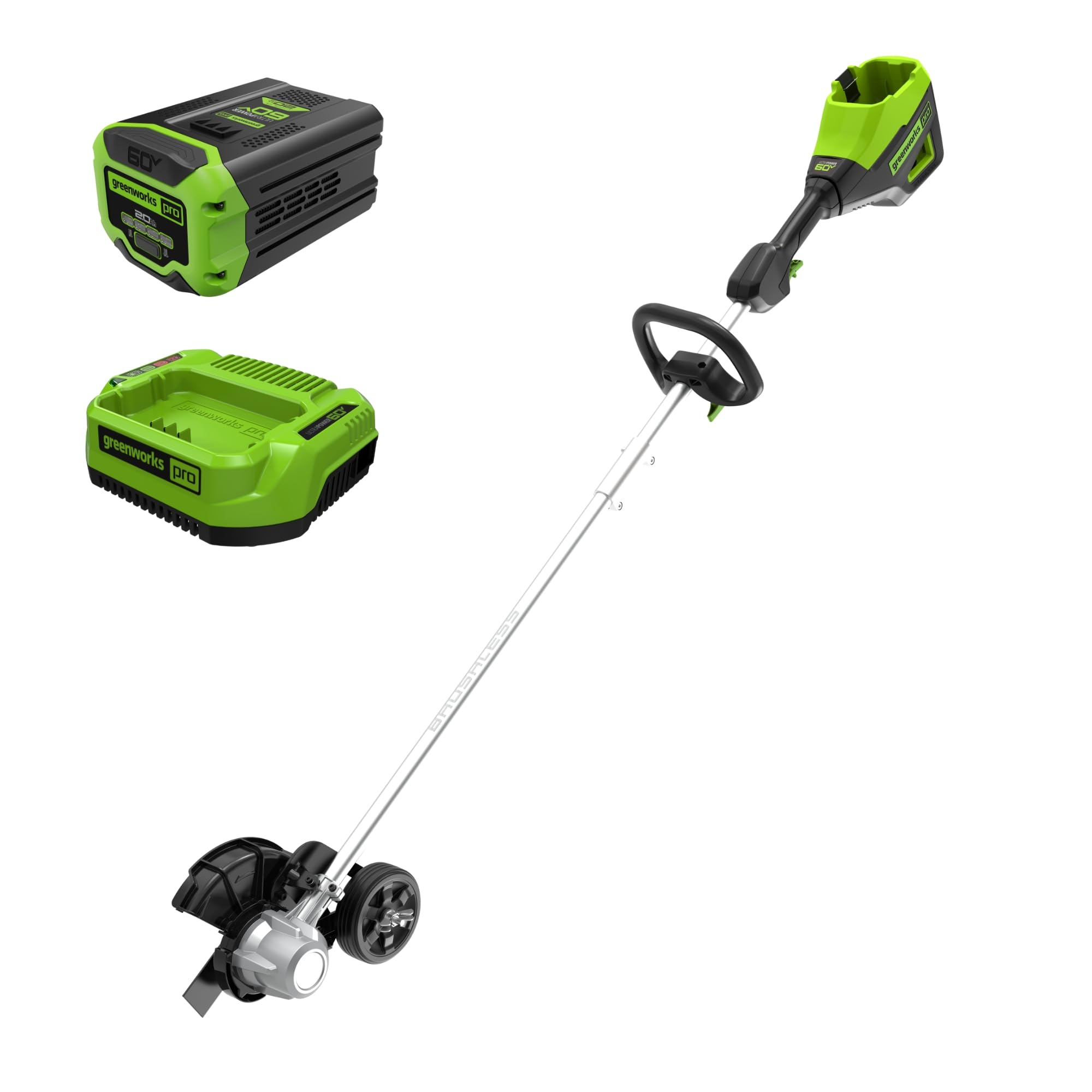
A solid 60V brushless edger that balances power and runtime with the convenience of a battery and included charger.
Why I picked it: I liked the brushless torque, tool-free depth adjustment, and that Greenworks includes a battery and charger.
Best for: Homeowners who want cordless convenience for medium yards without sacrificing cut quality.
A midrange cordless package that includes battery and charger for turn-key use.
Pros
- Brushless motor for more torque
- Tool-free depth adjustment
- Includes battery and charger
- Lightweight and easy to handle
Cons
- Battery weight becomes noticeable on long jobs
- Not as powerful as heavy gas units
- Charger quirks reported by some users
My take
I appreciated how quickly the 60V brushless motor delivered clean edges; the 8" steel blade slices through regular lawn grass and weeds with steady power. The tool-free depth adjustment made mid-job changes fast when I switched between sidewalk edges and garden beds.
Runtime depends on battery capacity, but the included 2.0Ah pack is enough for most small-to-medium yards. For larger jobs I switched in a higher-capacity pack and didn’t miss a beat.
The brushless design runs quieter and feels less stressed than older brushed motors, and ergonomics kept my fatigue low over longer edging sessions. If you want cordless convenience and a package that’s ready out of the box, this one fits that bill.
3. Greenworks 40V 8in Brushless Edger (Tool Only) – Best Lightweight Battery-Platform
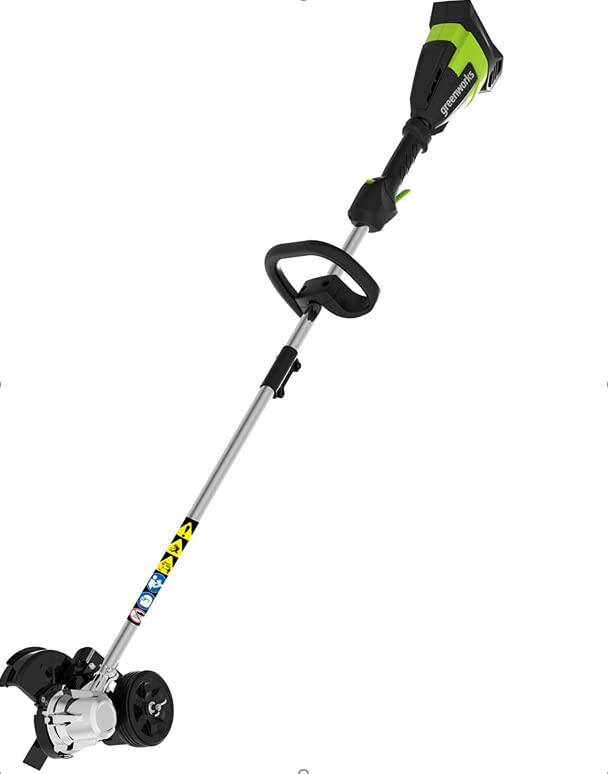
An ultra-light, tool-only brushless edger that’s easy to swing around a yard if you already own Greenworks 40V batteries.
Why I picked it: Its light weight and quiet brushless motor make it an effortless option for routine edging.
Best for: Users with existing 40V batteries who want a low-fatigue edging tool.
Good value if you already own batteries from the same platform.
Pros
- Ultra-light and low vibration
- Tool-less depth adjustments
- Quiet brushless operation
- Easy to start and maintain
Cons
- Battery not included
- Struggles with very thick, tall weeds
- Safety trigger design can tire the hand
My take
I’ve been swapping Greenworks 40V batteries among my yard tools for convenience, and this edger fits that system well. Its lightweight construction makes edging less tiring, and the curb wheel helps keep a consistent line along driveways.
When I pushed it into very tall, dense patches the motor had to run at full throttle, and I ended up making multiple passes. It won’t replace a high-displacement gas machine for heavy, overgrown jobs, but for regular maintenance it’s fast and predictable.
A couple of ergonomic quirks stood out — the safety engagement felt fatiguing at first — but after a short break-in period the comfort and low vibration sold me on keeping this tool in the garage.
4. BLACK+DECKER 7.5in Electric Edger & Trencher – Best Two-in-One Trenching
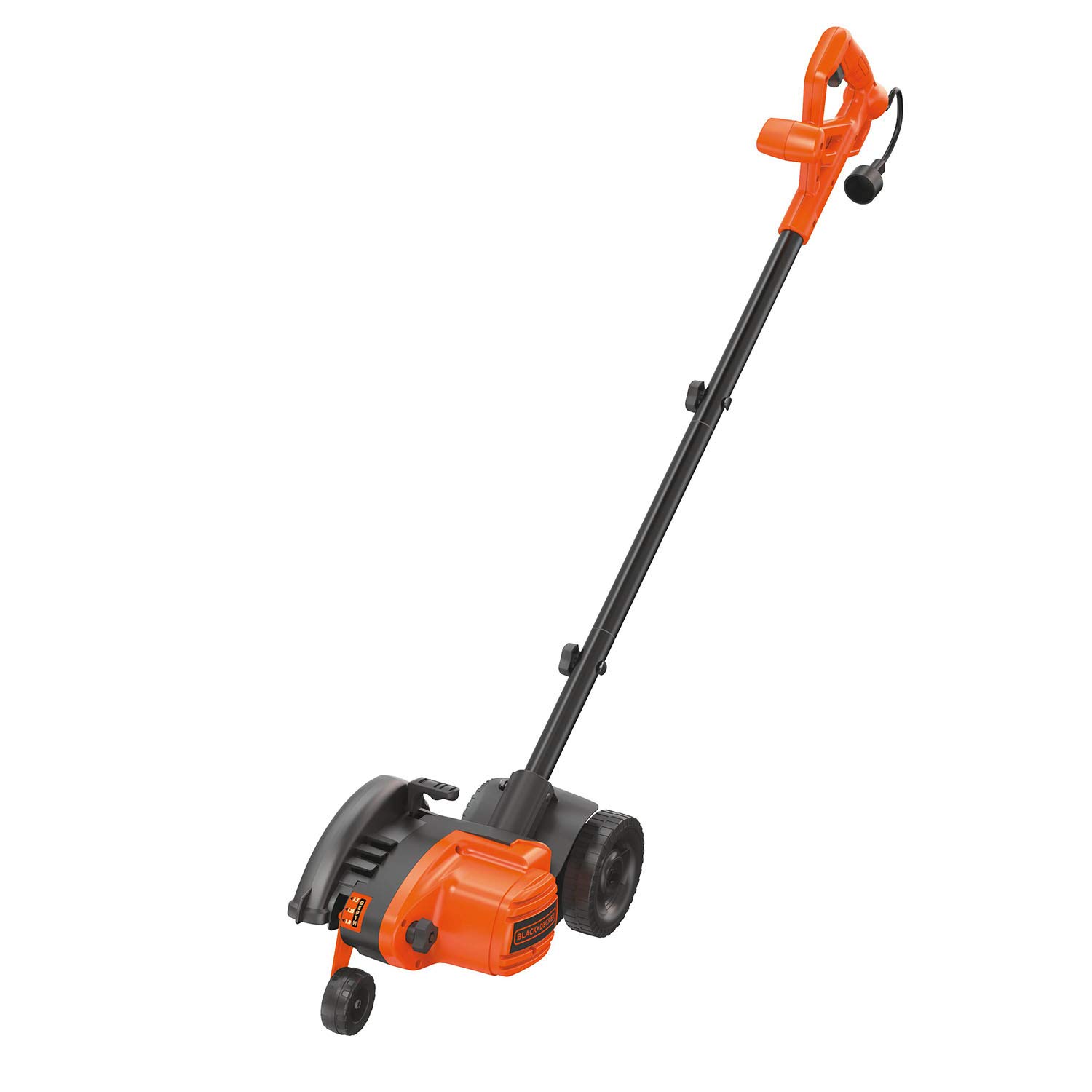
A reliable corded two-in-one that shifts from edging to trenching with minimal fuss, useful for installations and tidy borders.
Why I picked it: I relied on its quick conversion between edge and trench and the three-position depth control for versatility.
Best for: DIY landscaping tasks that require both clean edges and shallow trenches for irrigation or wire.
A practical corded choice that trades batteries for steady extension-cord power.
Pros
- Two-in-one edging and trenching
- High-torque 12 Amp motor
- Three blade depths
- Pull-up edge guide for accuracy
Cons
- Limited by cord length
- Can be noisy
- Requires occasional blade cleanout
My take
I used this BLACK+DECKER when I needed both neat edges and shallow trenches for an irrigation run, and its quick mode switch saved me time. The 12 Amp motor had enough torque to cleanly cut along concrete and dig narrow trenches without the hassle of a gas engine.
Handling is straightforward thanks to the right- and left-hand assist grips and the pull-up edge guide keeps the blade aligned for tidy borders. Keep in mind you’ll be managing an extension cord, but for most residential jobs that’s a small trade-off for continuous power.
Cleaning the guard access door makes blade maintenance simple after jobs that kick up a lot of soil, and I found the unit durable enough for seasonal use.
5. Greenworks 80V 8in All‑Terrain Brushless Edger – Best for Tough Terrain
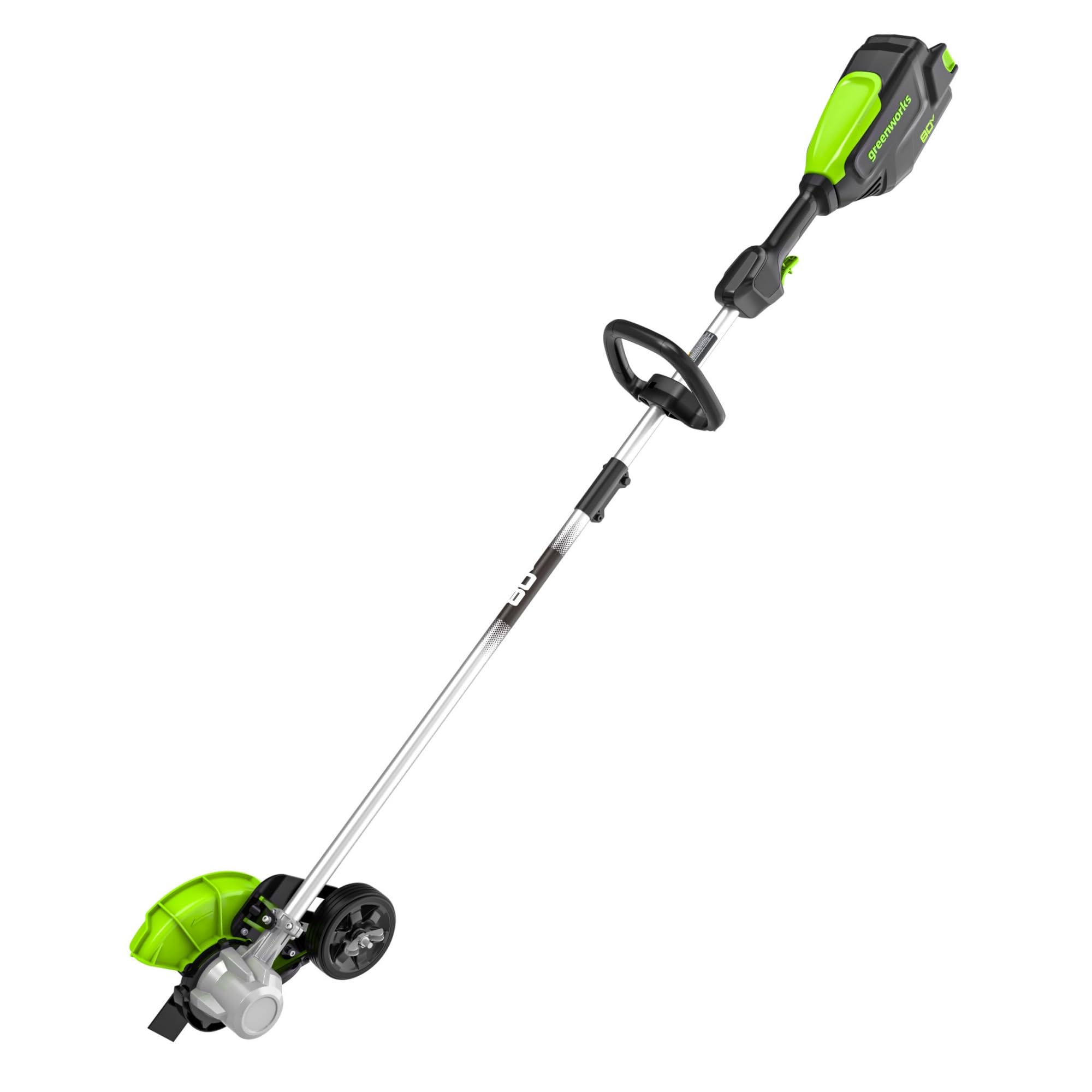
My pick for heavy-duty edging: deep cuts, rugged blade, and features engineered for slopes and rough borders.
Why I picked it: I valued the 2.25" max depth, rugged steel blade, and pneumatic turf tires that tame uneven ground.
Best for: Rocky borders, compacted soil, and steep or uneven yards where deeper, more powerful cuts are needed.
A higher-tier cordless option built for demanding trimming, worth the investment for tough yards.
Pros
- Pro-grade 8" steel blade
- 2.25" maximum cutting depth
- Pneumatic turf tires for rough ground
- Brushless motor with high torque
Cons
- Battery and charger sold separately
- Blade can wear faster near concrete
- Heavier with battery installed
My take
This 80V Greenworks model is the one I reach for when the ground is compacted or the edge hasn’t been touched in years. The deep 2.25" setting lets me make a single-pass trench where lesser edgers would need multiple passes.
On uneven or sloped terrain the pneumatic turf tires and balance system kept the blade tracking straight; that tri-grip handling really reduced forearm strain during longer sessions. It felt every bit as capable as a mid-level gas edger, but with the instant starts and lower noise of a battery tool.
A heads-up: when edging right beside concrete the blade material will take wear faster, so I keep a spare blade on hand. Overall this one earned its place when I needed power without dragging a generator or fuel around.
6. Mantis 3222 Border Edger Attachment – Best Attachment for Mantis Tiller
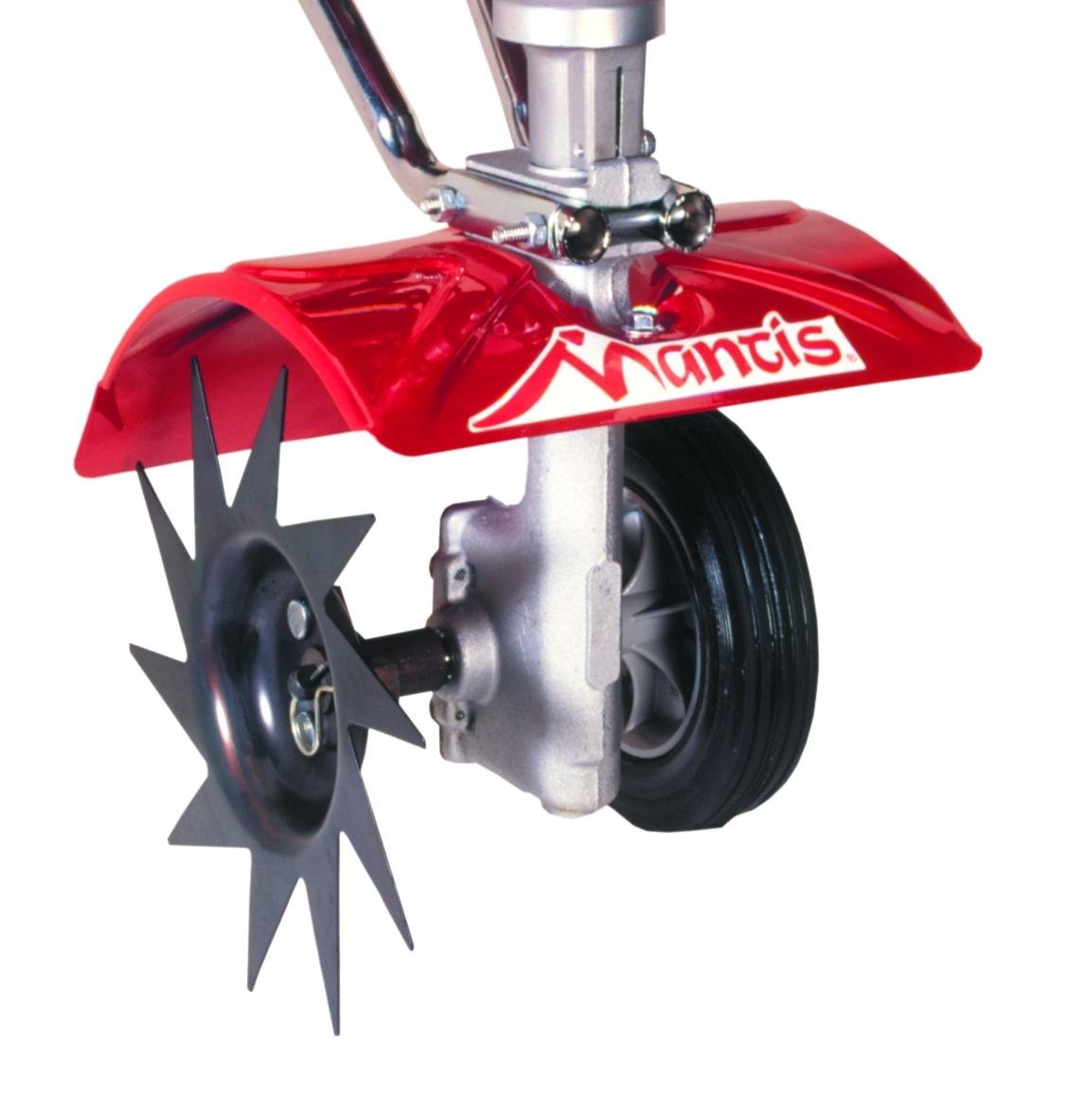
A simple, effective edging blade that turns a compatible Mantis tiller into a fast border edger.
Why I picked it: I picked it for how quickly it converts my Mantis tiller into a dedicated edger without complex tools.
Best for: Mantis owners who want to add edging ability without buying a separate edger.
A very affordable accessory compared with a dedicated edger.
Pros
- Easy on/off attachment
- Creates clean 3–4 inch deep edges
- Saves time vs manual edging
- Made in the USA
Cons
- Tiller sold separately
- Not compatible with some Mantis models
- Limited to Mantis power and handling
My take
I installed this attachment on my Mantis tiller and it turned a time-consuming manual chore into a fast one. Dragging the attachment along concrete produced a crisp 3–4 inch deep border with minimal effort.
The tool-less swap between tiller tines and the edger blade is genuinely convenient — I went from cultivating to edging in minutes. It worked best when I pulled it backward along the edge rather than forcing it forward.
If you already own a compatible Mantis tiller this is one of the most cost-effective ways I’ve found to gain professional-looking borders without buying a whole new machine.
7. CRAFTSMAN 20V Cordless Edger (Bare Tool) – Best Lightweight Cordless
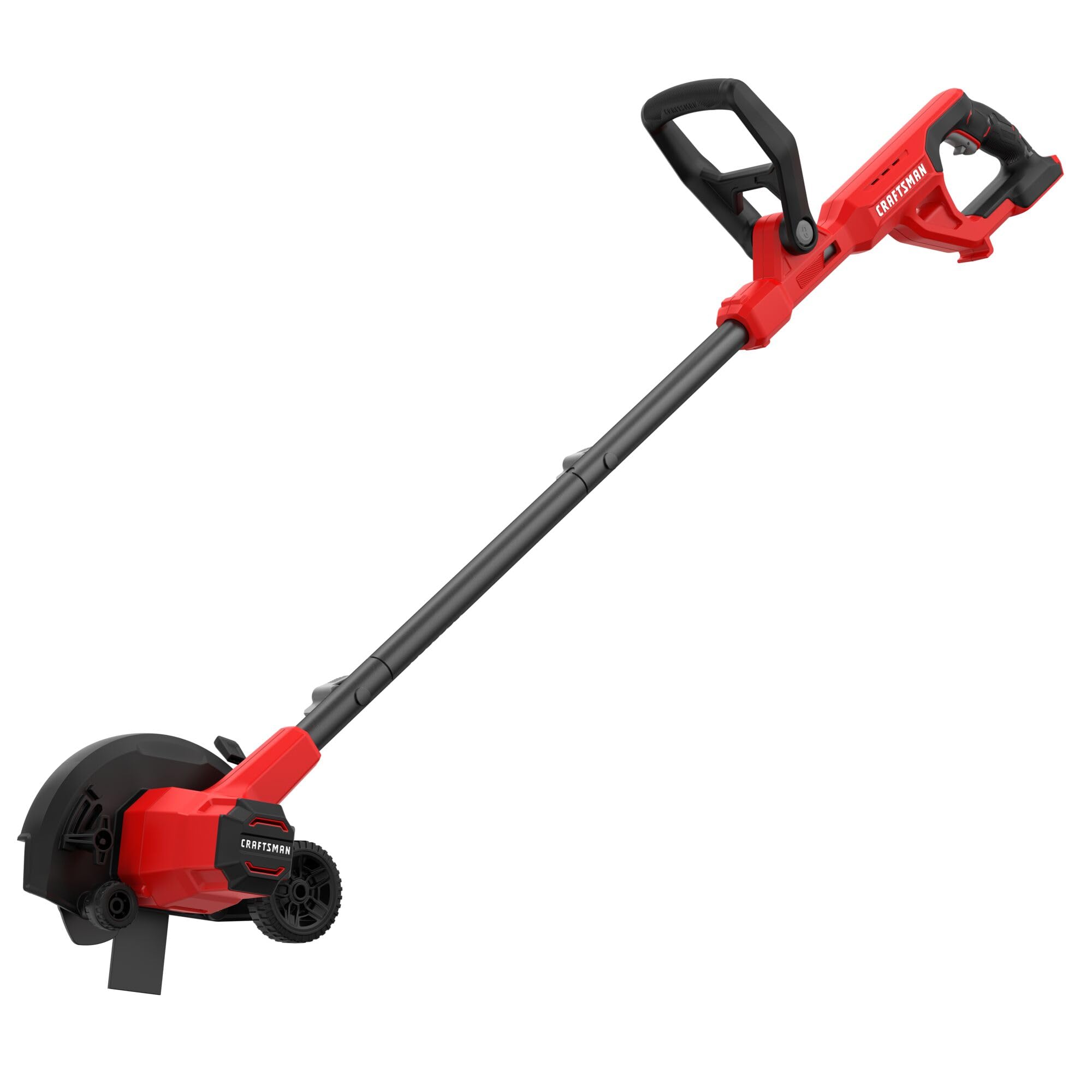
A compact, nimble cordless edger that’s simple to use and stows easily when space is tight.
Why I picked it: I liked the low weight and compatible V20 battery platform for tool ecosystem convenience.
Best for: Small yards and frequent touch-up edging where portability and storage matter.
A good budget-friendly cordless option if you already have V20 batteries.
Pros
- Very lightweight (about 8 lbs)
- Integrated edge guide for straight cuts
- Pivoting handle for comfort
- VESATRACK-compatible storage hook
Cons
- Battery sold separately
- Consumes batteries on hard ground
- Some units arrive with cosmetic marks
My take
This Craftsman unit is the kind of tool I grab for routine edging because it’s light and easy to wheel around the yard. The integrated edge guide keeps me lined up along sidewalks and driveways.
When the ground is soft or grass is well maintained this tool sails through the job; on very hard soil it drinks battery power, so I keep a spare pack for big jobs. The V20 platform compatibility is handy if you already own Craftsman batteries.
Storage is a breeze thanks to the VERSATRACK hook — it tucks into my garage neatly. For a bare tool that’s cheap to add to an existing kit, it’s one of the more practical edging tools I’ve used.
How I Choose an Edger
Power Source: Corded, Battery, or Attachment
I decide by job size and mobility needs. Corded units give uninterrupted power for small-to-medium yards but force cord management. Battery edgers provide freedom and quieter operation; choose higher-voltage platforms for tougher turf. Attachments are the most economical if you already own a compatible tiller.
- Corded: steady power, low maintenance, limited by extension cords
- Battery: cordless convenience, quieter, choose brushless motors for torque
- Attachment: cost-effective if you own the host machine
Blade Size and Cutting Depth
I match blade size and depth range to the task. An 8" blade gives better trenching and curb work than a 7.5" blade. If I need to cut through compacted soil or roots, I favor models with deeper settings and a robust steel blade.
- 7.5"–8" blades suit most residential tasks
- Deeper settings (1.5"–2.25") are essential for neglected or compacted edges
- Tool-free depth adjustment saves time on the job
Comfort and Control
I look for comfortable handles, adjustable shafts, and wheels or curb guides that help keep a consistent line. Lighter tools reduce fatigue, but weight can help stabilize an edger when cutting deep.
- Adjustable shafts and D-grips improve ergonomics
- Curb wheels or guidance lines make straighter edges
- Balance between lightness and enough weight to hold blade depth
Durability and Maintenance
A steel blade and accessible guard make maintenance easier. For battery tools, choose a brand with a compatible battery ecosystem so you can swap packs across tools and avoid redundant chargers.
- Choose steel blades for longevity
- Check guard access for easier cleaning
- Stick with one battery platform when possible
Frequently Asked Questions
Can I use an edger on wet soil?
I avoid edging in wet conditions whenever possible because mud clogs blades and reduces cutting efficiency. When I must work wet ground I plan on more frequent blade cleaning and slower passes.
How deep should I cut for a clean edge?
For most sidewalks and driveways I set the blade between 1" and 1.5" for a crisp line. If I’m redoing an overgrown border or installing edging, I use deeper settings (up to 2"+ on heavy-duty models).
Are batteries from one Greenworks/CRAFTSMAN/60V platform interchangeable?
I keep batteries to the same brand and voltage platform to ensure compatibility. Greenworks 40V and 80V batteries are not interchangeable, so double-check your platform before buying a tool-only unit.
Final Take
My short list covers the most common edging needs: a lightweight corded unit for fast touch-ups, cordless options when I want quiet and mobility, a rugged 80V model for tough terrain, and an attachment that leverages an existing tiller.
If I were choosing one all-around tool for routine homeowner use, I’d pick a brushless cordless that matches the batteries I already own. For heavy or infrequent deep edging, I recommend the higher-voltage, pro-style option.
No matter which I use, my priorities stay the same: a sharp steel blade, dependable depth control, and reasonable ergonomics so edging is quick and repeatable.
