
I tested popular corner guards and edge bumpers to find the options that balance protection, adhesion, and looks. Here are the guards I actually installed and trusted around my home.
I spent time installing and living with several types of corner guards so I could see how they perform day-to-day. I focused on how discreet they look, how well they absorb impact, and whether the adhesive stayed put on different finishes.
In short: clear PVC bumpers are the least obtrusive and cushion well for low- to moderate-activity kids, while dense foam edge guards handle heavier impacts and long runs of trim. I included options that let you prioritize appearance, coverage, or heavy-duty protection.
I use clear PVC guards where I want the furniture to remain visually unchanged, and foam L-strip systems when I need long coverage or tougher shock absorption. Adhesive strength and finish compatibility were the deciding factors for me.
1. Clear Corner Protectors – Best Overall
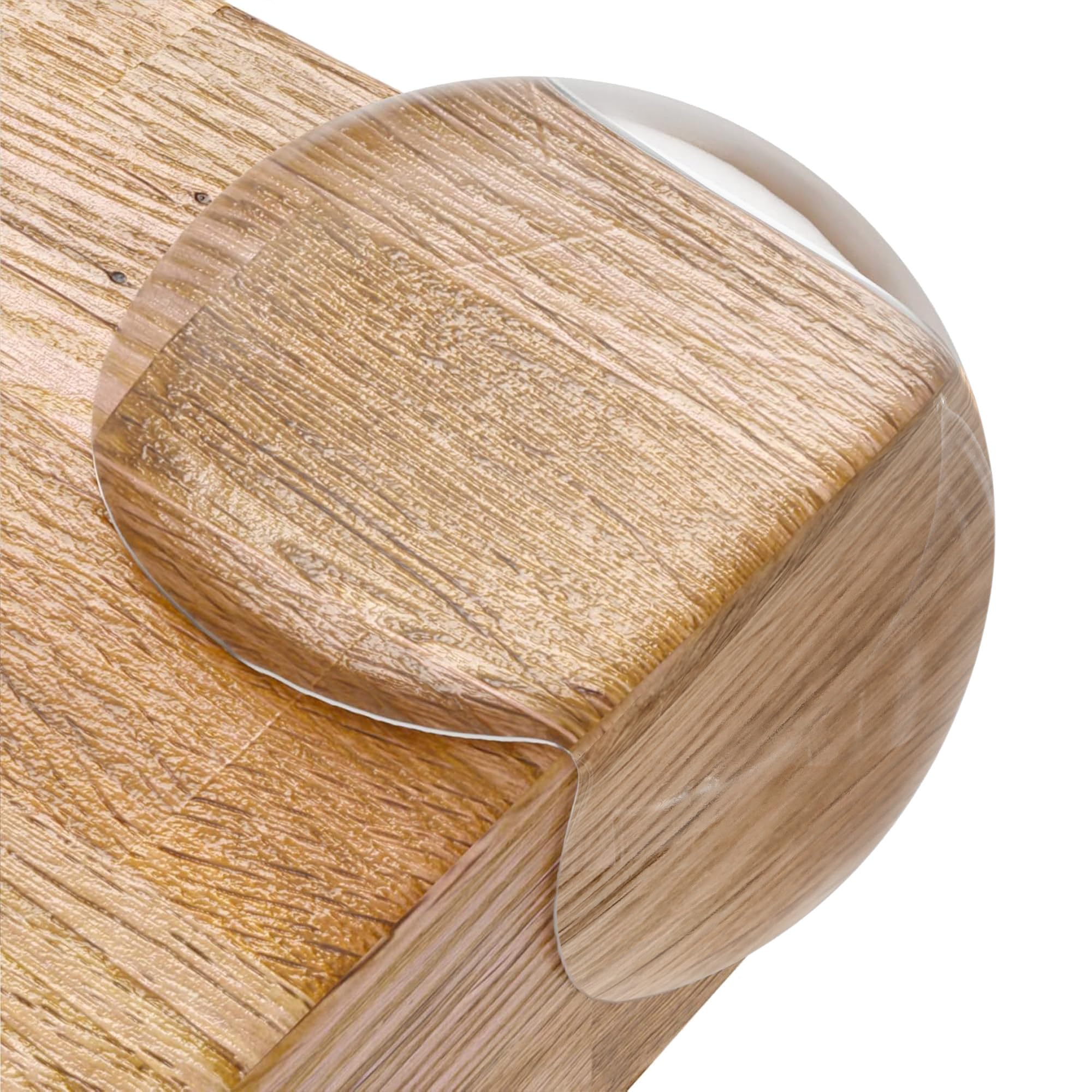
I chose these clear, spherical PVC bumpers when I wanted discreet protection that still cushions impact and resists discoloration.
Why I picked it: Near-invisible look with dense PVC cushioning and three adhesive pieces per corner for better hold.
Best for: Homes where aesthetics matter but corners still need dependable padding.
Affordable, good value for a full set of discrete guards.
Pros
- Near-invisible on most furniture
- Dense PVC absorbs impact well
- Non-toxic materials
- Three-piece adhesive for each corner
Cons
- Active toddlers can rip them off
- Smaller coverage for very large corners
My take
I installed these clear corner bumpers around my living room and appreciated how little they changed the look of my furniture. The spherical PVC feels firmer than the ultra-squishy foam alternatives, which helped the adhesive stay put and actually absorb knocks instead of flattening.
Application was straightforward: each corner gets three pre-cut adhesive pieces, which I found more secure than two-piece kits. The material is labeled non-toxic and resists yellowing, so I didn’t worry about discoloration over time.
Where they fell short for me was with a very curious, hands-on toddler—she was able to peel several off when she got persistent. For low-activity rooms and older kids these are my go-to, but I’d pair them with stricter supervision or supplementary anchoring if toddlers will be pulling at them.
2. Roving Cove HeftyFit Edge & Corner Guards – Best for Large Edges
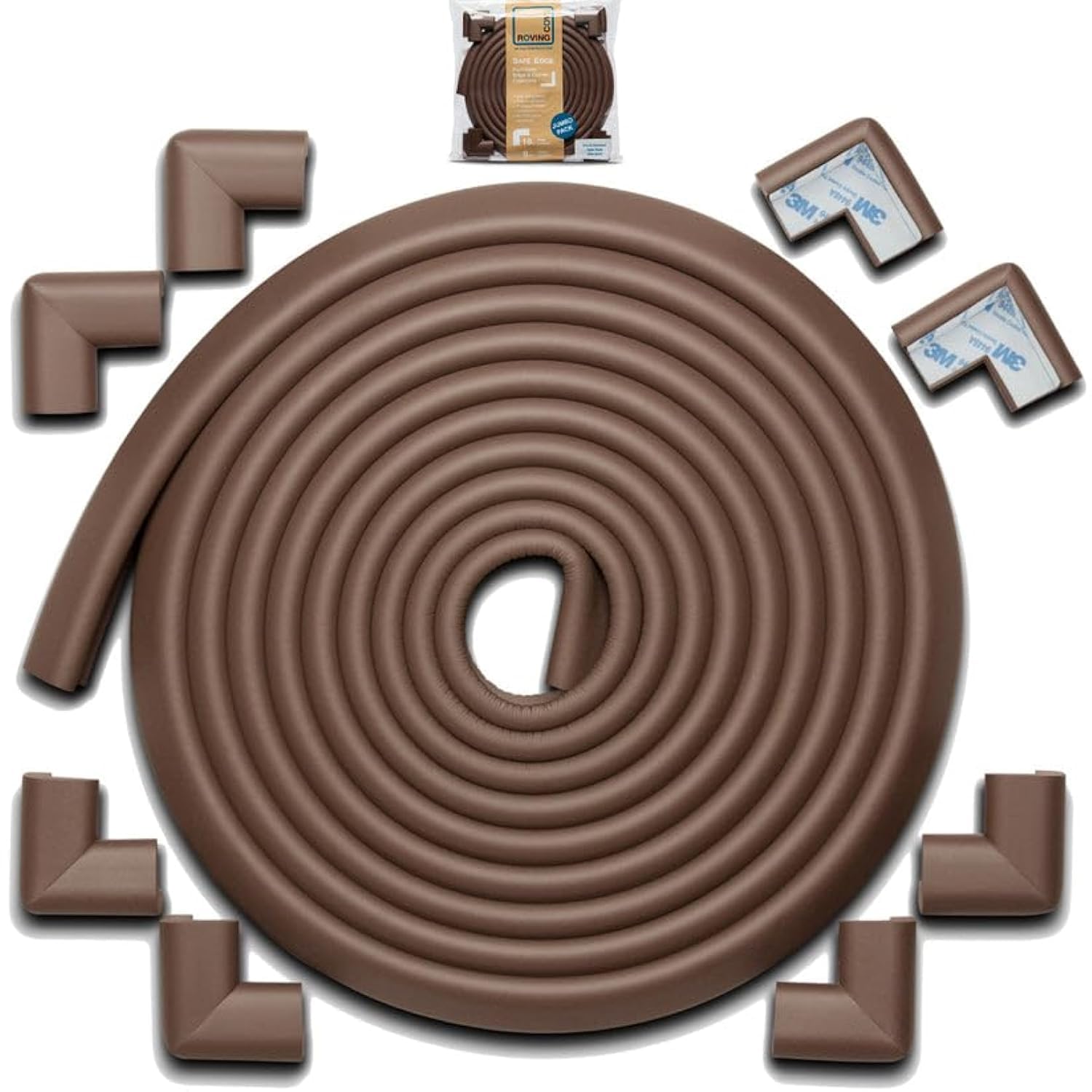
I picked this heavy-duty foam system when I needed long runs of edge protection plus corner bumpers in a matching color.
Why I picked it: High-density foam with generous length and 3M tape for industrial-strength adhesion.
Best for: Fireplaces, coffee tables, and long table edges where heavy impact protection matters.
A more premium option that buys heavy-duty coverage.
Pros
- Long coverage for multiple edges
- High-density foam cushions big impacts
- Includes 3M double-sided adhesive
- Color options blend with wood tones
Cons
- Requires cutting for precise fits
- Adhesive can pull finish on delicate surfaces
My take
When I needed to protect a coffee table and a fireplace hearth, this Roving Cove kit covered both without piecing together tiny strips. The foam’s density (Shore A 20-N) is noticeably firmer than typical foam bumpers, and it really softens tumbles and slams.
The kit ships as a long coil, so I cut it to the lengths I needed and used the included 3M tape for a secure bond. That tape held extremely well—so well that I removed a strip later and had to touch up paint on one doorframe, which is worth keeping in mind for delicate or unfinished surfaces.
I did notice a few shipping creases where the coil had indents, but those relaxed after installation. For coverage and impact absorption this is the option I rely on when aesthetics can take a back seat to performance.
3. Clear PVC Corner Protectors – Best Discreet Option
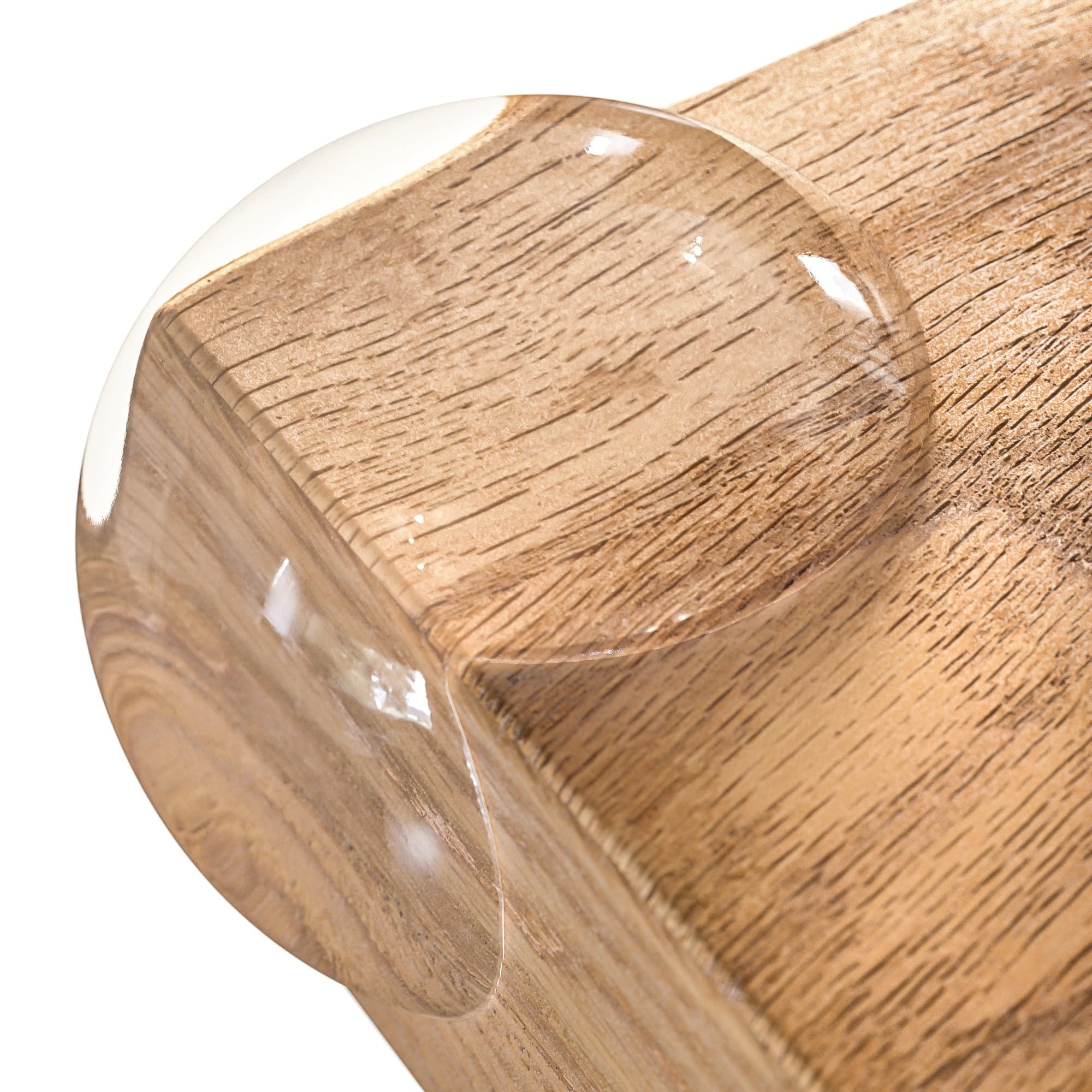
I recommend these clear PVC guards when you want discreet protection with a strong adhesive footprint and easy, furniture-friendly removal.
Why I picked it: Strong three-sided adhesive and PVC density that absorbs shock without being obvious.
Best for: Bedrooms, playrooms, and areas where blending into furniture is important.
Affordable and focused on low-visibility protection.
Pros
- Discreet, transparent look
- Adhesive covers three undersides
- Heats off cleanly for removal
- Good shock absorption
Cons
- Protective backing is hard to peel
- Shows up on very dark finishes
My take
I installed these on bedside tables and the clear finish made them nearly invisible in low light. The PVC cushions well—enough to spare a little one a bruise—while keeping the furniture’s style intact.
The adhesive strategy impressed me: it covers all three undersides, so once stuck the pieces don’t twist or shift. If you ever need to remove them, warming the adhesive with a blowdryer made removal painless and left no visible damage on my sealed surfaces.
The main annoyance was the paper backing; it’s fiddly to remove cleanly and took a minute of extra effort on each piece. Also, on very dark veneers the guards are more noticeable than on light wood or glass.
4. Roving Cove HeftyFit Corner Protectors – Best Small Pack for Dark Furniture
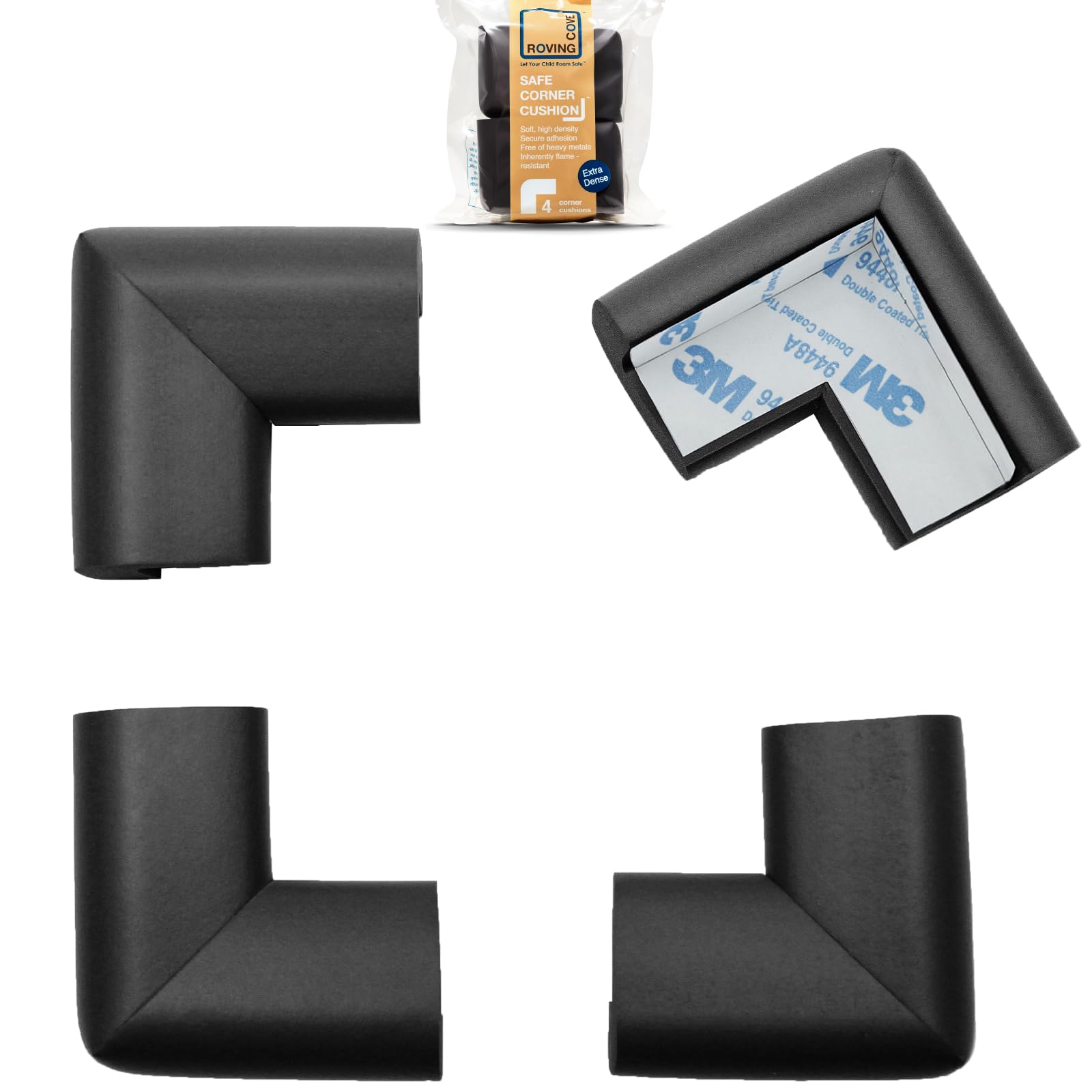
I recommend these pre-taped large corner guards when I need a compact set that blends with dark furniture and provides dense impact cushioning.
Why I picked it: Pre-taped, dense foam corners in an onyx tone that match dark wood and stone.
Best for: Dark tables and occasional use where you only need a handful of corners covered.
Budget-friendly small pack for targeted protection.
Pros
- Pre-taped for fast installation
- Dense foam absorbs shocks well
- Onyx color blends with dark furniture
- Sturdy adhesive holds firmly
Cons
- Only four corners per pack
- Not recommended for antiques or delicate veneers
My take
I used this four-pack on an ebony console and liked how neatly the onyx foam matched the finish. The corners arrived pre-taped, which saved time and reduced alignment headaches.
The foam’s density felt premium and did a solid job on impact—walking into that console no longer hurt. Adhesion was strong; when I later removed one to reposition it, I took extra care because the tape can lift delicate finishes.
For a small project or touch-up protection on dark furniture, these are convenient and effective. If you need whole-room coverage, pair them with an edge kit instead of buying multiple four-packs.
How I Choose Corner Guards
Materials and Impact Performance
I look first at the material: dense PVC offers discreet protection and resists bites and discoloration, while high-density foam gives better energy absorption over long edges.
For tables and fireplaces I favor foam L-strips; for nightstands and decorative furniture I prefer clear PVC caps.
- PVC: discreet, firmer, resists yellowing
- Foam: thicker feel, better for big impacts
- Check density, not just thickness, for shock absorption
Adhesion and Finish Safety
I always check what adhesive is provided and whether the product recommends heat for safe removal. Strong 3M tape sticks reliably but may lift paint or veneer on delicate surfaces.
If I’m protecting antique or unstained wood, I either skip tape entirely or test a small hidden area first.
- 3M tape = strong bond, may damage delicate finishes
- Look for full-coverage adhesive under the guard
- Use a blowdryer to soften adhesive for safer removal
Coverage and Installation
I choose edge-strip kits when I need continuous coverage and corner caps when I only need targeted protection. Kits that include extra tape or pre-cut pieces save time.
Cutting foam to length is inevitable—practice a straight cut on scrap before the final piece.
- Edge strips cover long runs; corner caps protect single points
- Pre-taped corners speed installation
- Measure twice, cut once for neat seams
Appearance vs Durability
When looks matter, clear PVC wins. When durability matters, I choose dense foam. I weigh both against the child’s activity level and the furniture finish.
For active toddlers who pull and explore, consider combining types: PVC on decorative pieces and foam where rougher play happens.
- Pick clear guards for low-visibility needs
- Choose foam for playrooms and heavy-use areas
- Mix-and-match by room for best results
Frequently Asked Questions
Will these guards damage my furniture when removed?
I’ve removed both PVC caps and foam strips; the safest approach is to warm the adhesive with a blowdryer and peel slowly. Strong 3M tapes can lift paint or thin veneer, so I test a hidden spot first and avoid using them on antiques.
Which type holds up best against toddlers who pull and tug?
In my experience, high-density foam attached with quality 3M tape stays put better than small clear caps when a toddler is actively pulling. Very determined kids can still peel off small caps, so for active toddlers I prioritize foam edges or additional anchoring.
Can I paint over foam edge guards to match my furniture?
I don’t recommend painting child-safety foam—paint can stiffen the material and affect its cushioning. Instead, I select a color that blends with the furniture or use discreet clear guards where appearance is critical.
Final Take
I kept aesthetics, adhesion, and activity level in mind when choosing these guards. Clear PVC pieces work best where I want protection without changing the look, while dense foam strips are my choice for heavy use and large surfaces.
If I had to pick one go-to for general household childproofing, I’d combine a clear-corner option for decorative furniture and a foam edge kit for play areas and the fireplace. That approach gave me the best balance of protection and appearance in my home.
