
I tested a range of pre-stretched canvases and panels so you can pick the right surface for studio work, classes, or practice. Here are the options I reach for most often.
I spend a lot of time painting large pieces, teaching sessions, and doing quick studies, so I look for canvases that arrive ready to use and stand up to real studio techniques.
In this guide I compare stretched canvases and canvas panels across size, weight, build, and how they handle oil and acrylic. I used each product in the kinds of projects I normally paint—impasto work, thin glazes, portrait studies, and practice pieces—so the notes below come from hands-on experience.
If I want a deep, gallery-ready edge and heavy impasto I reach for the heavier stretched canvases with solid pine or Swedish pine frames. For classes and quick studies I prefer rigid panels or small stretched pieces that are inexpensive and easy to store. I also look at gesso weight: 8 oz or 10 oz priming gives a noticeably more toothy, paint-friendly surface than lighter priming, while MDF-backed panels prevent warping at the expense of a bit less surface give.
1. PHOENIX 18×24 Stretched Canvas (2-Pack) – Best for Large Canvases
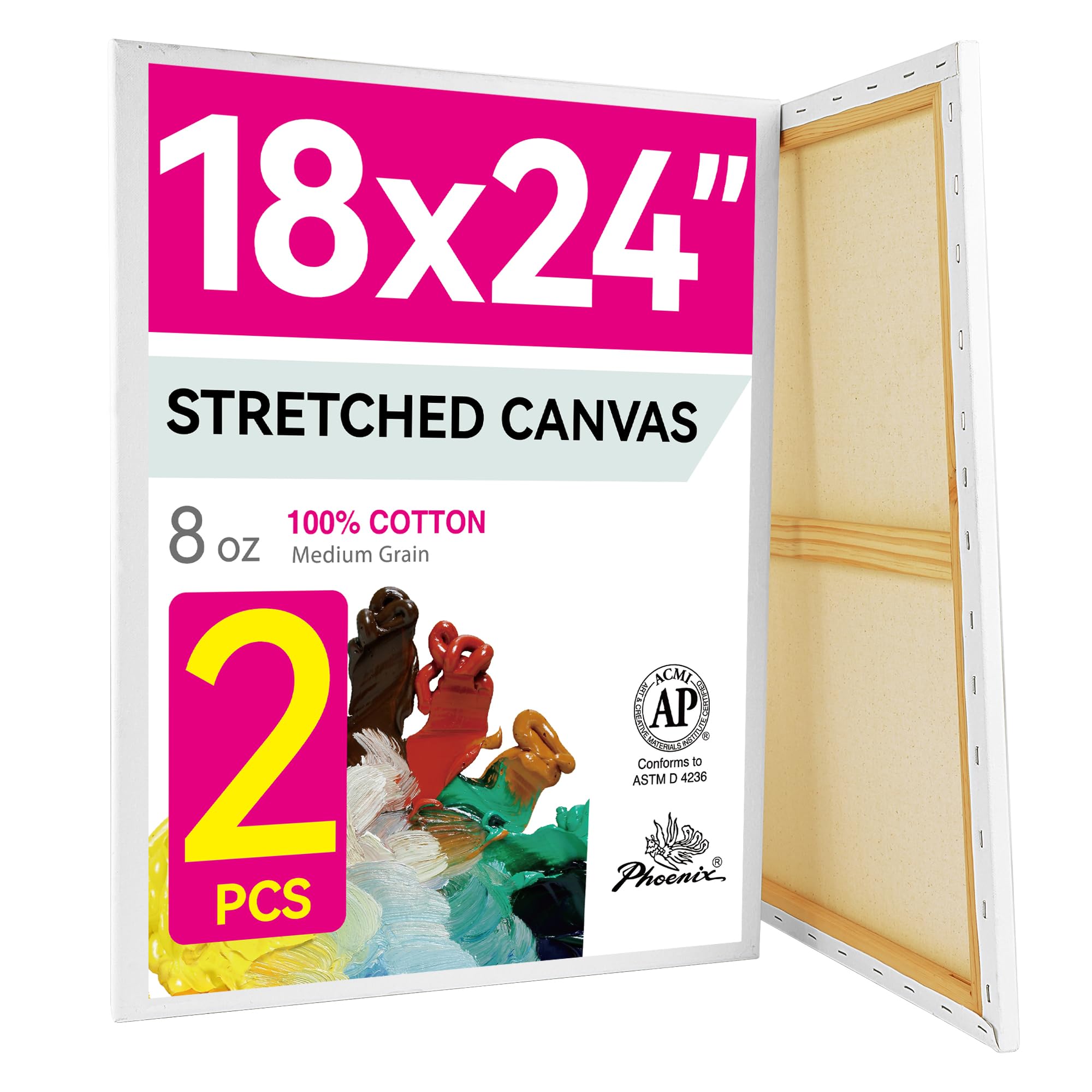
A pair of 18×24 cotton canvases with 8 oz triple-primed gesso and pine stretcher bars—good for big acrylic and oil pieces.
Why I picked it: I wanted large, ready-to-paint canvases with heavy priming and a reliable stretcher, and this pair delivered both.
Best for: Large oils, acrylics, impasto, and pouring work that needs a sturdy surface.
Strong value for full-size stretched canvases.
Pros
- 100% cotton medium grain
- 8 oz triple-primed surface
- Sturdy pinewood stretcher
- Back-stapled, clean edges
Cons
- One shipment I received had a damaged canvas
- Heavier to store and ship
My take
These 18×24 canvases are what I reach for when I need a big, reliable surface. The cotton has a medium grain that lets paint sit with good tinting strength, and the 8 oz gesso gives the tooth I want for both oils and acrylics.
The frames are pine with mortise-and-tenon style corners and the canvases arrive tightly stretched. I appreciate the back-stapled finish because it keeps the sides neat if I plan to frame the work rather than gallery-wrap.
They come vacuum packed and are easy to store in a studio. My only real hiccup was one canvas arriving torn in one shipment, so I inspect large canvases on delivery. Overall, these work well for impasto, pouring, and larger studio pieces.
2. Arteza 6×6 Cotton Canvas Panels (14-Pack) – Best Canvas Panels
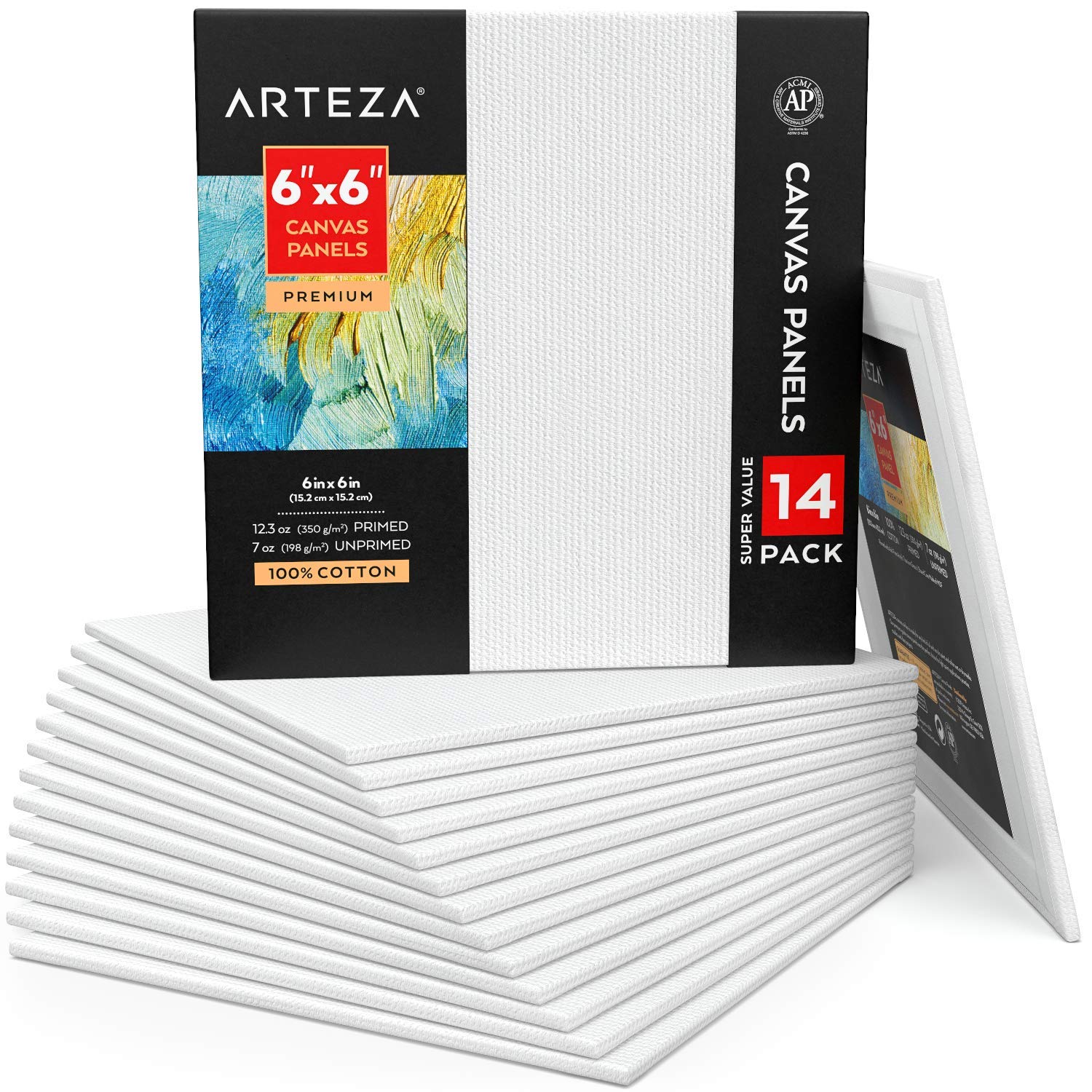
Wrapped cotton canvas over MDF cores—rigid, inexpensive, and great for classes and quick studies.
Why I picked it: I wanted a rigid, warp-resistant surface for classes and practice pieces, and the MDF-backed panels give me that without the bulk of framed canvases.
Best for: Workshops, craft projects, beginners, and studies that don’t use heavy wet techniques.
Very budget-friendly for group use and practice.
Pros
- 100% cotton face
- Rigid MDF core
- Individually wrapped
- Lightweight and stackable
Cons
- Can buckle with heavy moisture
- Canvas can lift from backing if overworked
My take
I use these panels when I teach and during quick practice sessions because the MDF core keeps each piece flat and ready to display. Brushes glide over the cotton wrap and the panels are predictably sized.
They’re not ideal for pour painting or very wet techniques—too much moisture can make a panel buckle or detach the canvas from the backing—so I add an extra coat of gesso when I plan to work very wet.
For crafts, kids, and low-cost practice sessions these panels are hard to beat. They feel consistent and save me from hauling stretched frames for every small exercise.
3. Arteza 10×10 Stretched Canvas (8-Pack) – Best Small Squares
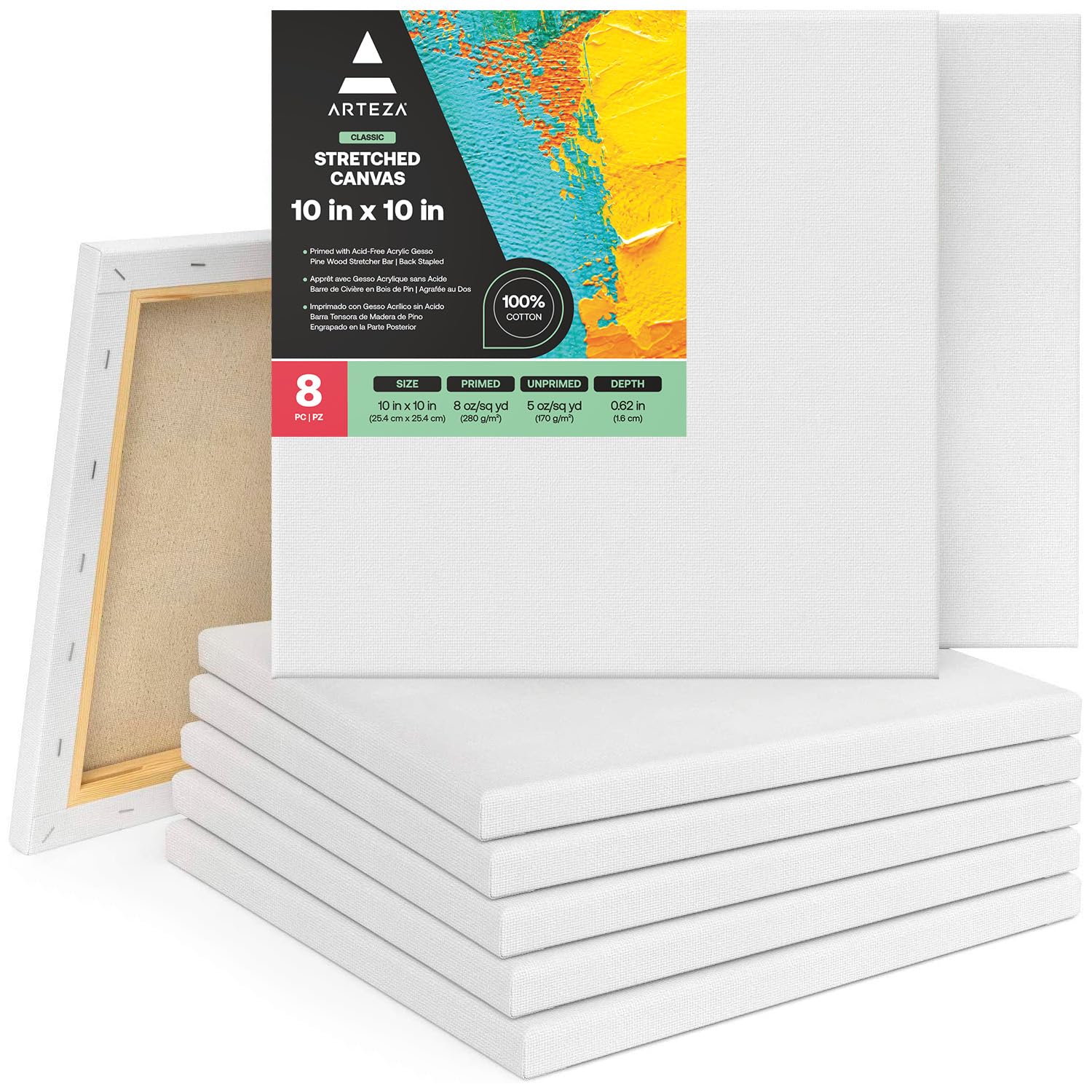
Compact 10×10 stretched canvases with 0.6-inch profile and 8 oz gesso—great for small scenes and gift pieces.
Why I picked it: I wanted a consistent small-square format for a series of studies and these came pre-primed and ready to go.
Best for: Small paintings, gift pieces, and series work where consistency matters.
Good midrange option for small stretched canvases.
Pros
- Pre-primed with 8 oz gesso
- Sturdy pinewood frame
- Consistent square format
- Good for gifts and small series
Cons
- Small size limits large compositions
- 0.6" profile is relatively shallow
My take
These 10×10 squares are my go-to when I want to produce a set of cohesive miniatures. The pre-coating of gesso is generous enough that I can start painting immediately, and the cotton surface holds color nicely.
The frames are tight and the canvases stand up to repeated brushwork. One pleasant surprise: a few sets I used included small easels that make displaying finished minis effortless.
They’re not built for large gestures, of course, but they’re excellent for portraits, small landscapes, or giving away finished pieces.
4. Fixsmith 11×14 Stretched Canvas (8-Pack) – Best Value Pack
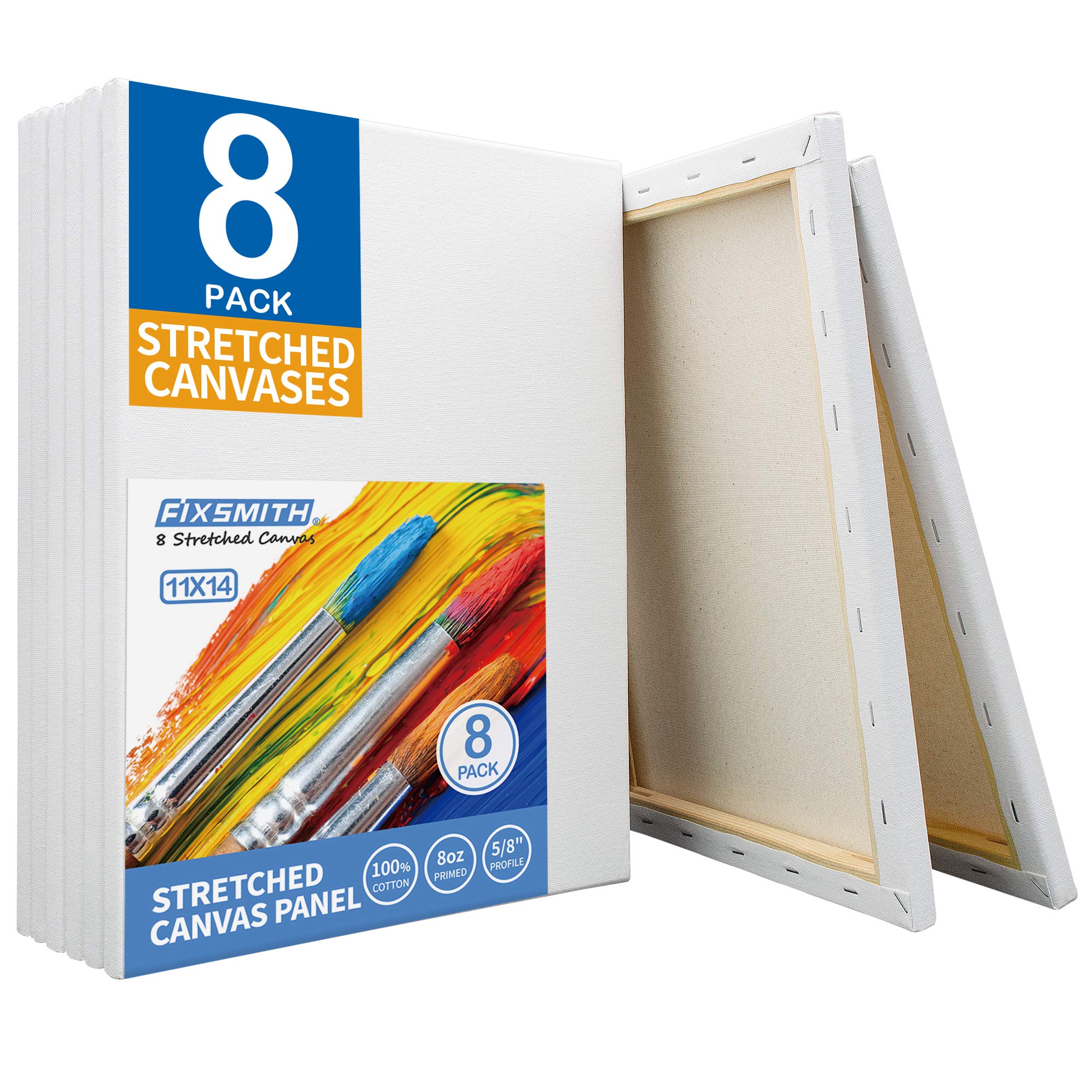
An economical multi-pack of 11×14 cotton canvases with 8 oz gesso—consistent and classroom-friendly.
Why I picked it: I wanted an affordable bulk pack that still felt solid; these struck the right balance for teaching and personal use.
Best for: Classroom sets, hobbyists, and anyone who needs several ready-to-use canvases.
Cost-effective bulk option without sacrificing basic quality.
Pros
- 100% pure cotton surface
- 8 oz triple-primed gesso
- Tightly stretched and stapled
- Good bulk value
Cons
- Simple finish—better for framing
- Not a gallery-depth profile
My take
I turn to this pack when I need multiple identical canvases for a class or a run of studies. The cotton feels natural under the brush and the gesso is sufficient for both oils and acrylics.
Frames arrive tightly stretched and ready to hang or frame. The finish is straightforward—these are workhorse canvases rather than premium gallery wraps, but they save time and expense when I need numbers.
Fixsmith’s guarantee also gives me confidence when ordering in bulk for teaching sessions.
5. GOTIDEAL 24×36 Stretched Canvas (2-Pack) – Best for Large Format
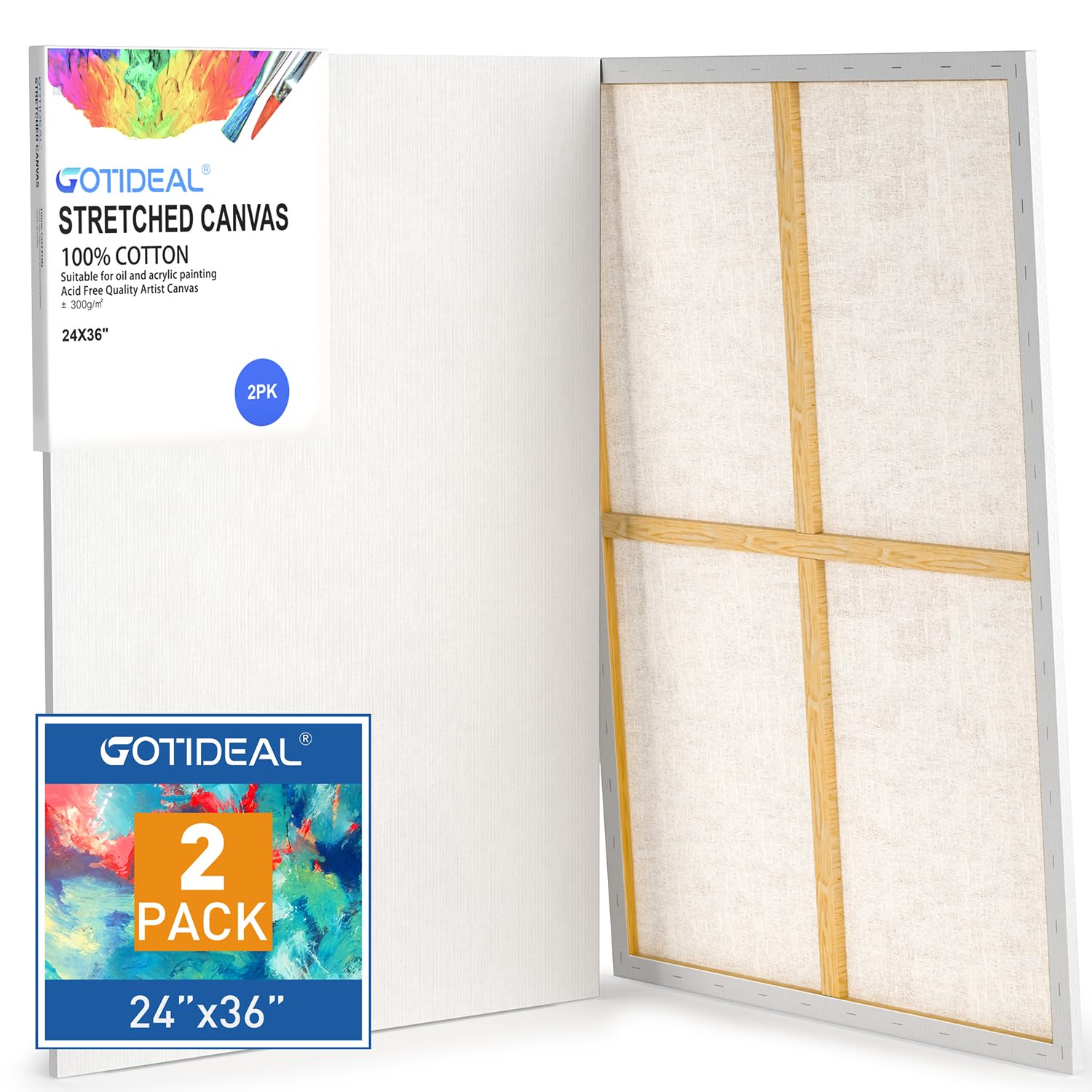
Very large 24×36 cotton canvases stretched over Swedish pine and pre-primed—ideal for statement pieces and portraits.
Why I picked it: I needed a dramatic format for portraits and larger compositions and this pair gives real scale with a pre-primed surface.
Best for: Portraits, large landscapes, and statement studio work.
Good value for very large stretched canvases.
Pros
- Huge 24×36 format
- 100% cotton, pre-primed
- Swedish pine stretcher
- Well-suited to portraits
Cons
- Surface can be scratched if handled roughly
- Bulky to store and transport
My take
When I want scale, I pick these 24×36 canvases. The cotton surface is ready to accept heavy brushwork and the Swedish pine frame keeps the panel flat as I build layers.
They work well for both oils and acrylics; I’ve used them for portraits and medium-detail landscapes. One downside: the large primed surface is more vulnerable to nicks in transit, so I handle and store them carefully.
Overall they’re a practical way to jump into large-format work without stretching my own canvas.
6. Arteza 6×6 Stretched Canvas (12-Pack) – Best Mini Set
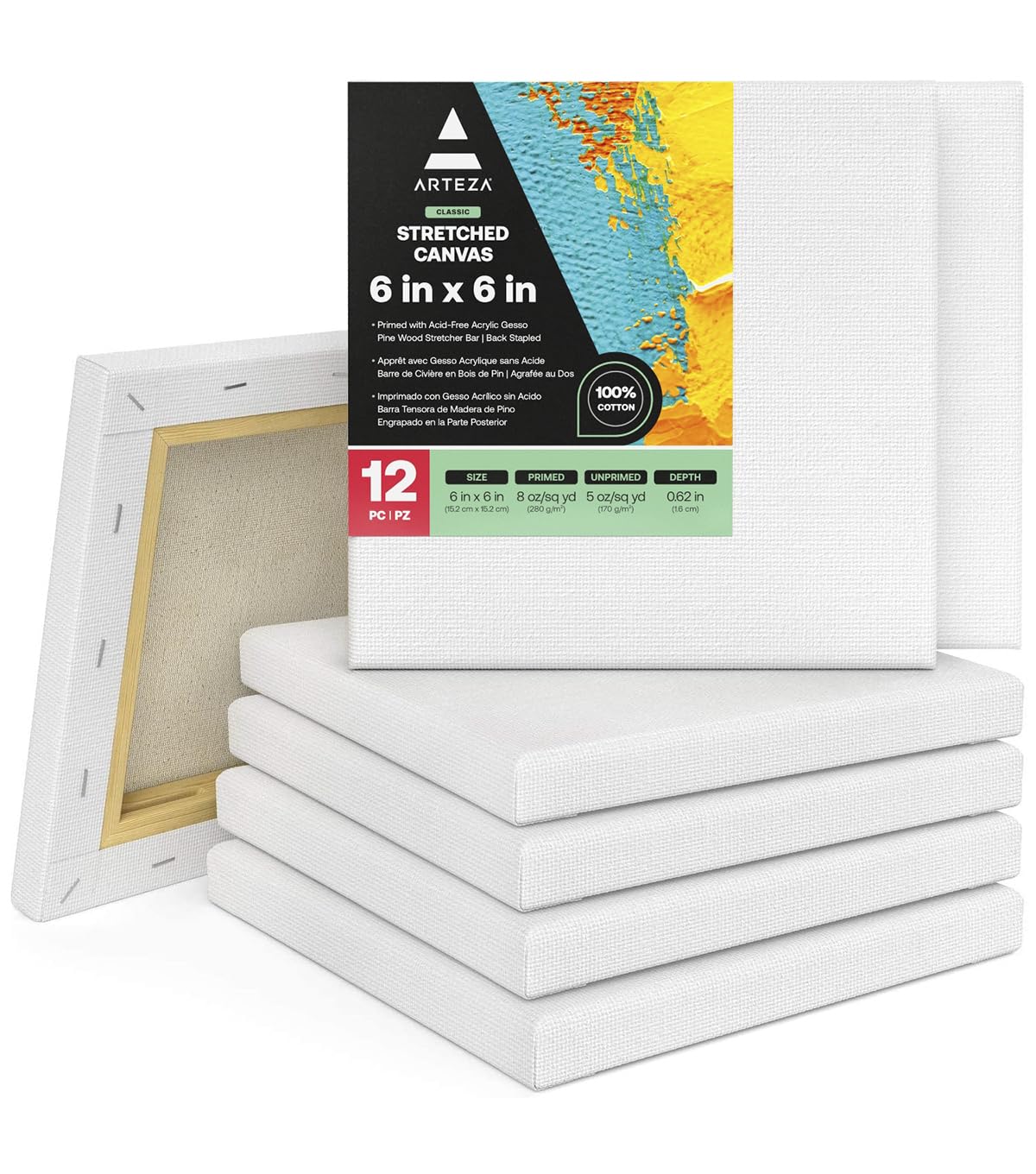
Twelve small 6×6 stretched canvases with 0.6-inch profile and 8 oz gesso—compact, affordable, and ready for quick studies.
Why I picked it: I wanted a regular supply of mini canvases for warm-ups and fast experiments, and this set keeps me stocked.
Best for: Impromptu studies, practice, and impasto experiments.
Great budget option for frequent practice.
Pros
- Pack of 12 small canvases
- Pre-primed with 8 oz gesso
- Sturdy pinewood frame
- Compact and portable
Cons
- Coarse texture limits fine detail
- Absorbs paint quickly without extra prep
My take
These small canvases are my go-to for warming up and trying techniques. The cotton weave is coarse, which I love for impasto but I add a thin white base when I want finer brushwork.
They’re pre-primed so I can paint as soon as I open them; that convenience is why I keep a stack in my studio. If you want smoother detail, a quick extra coat of gesso and a light sanding helps.
For the price and quantity, they’re a dependable choice when I’m working through ideas quickly.
7. 24-Pack Mixed-Size Cotton Canvas Panels – Best Variety Pack
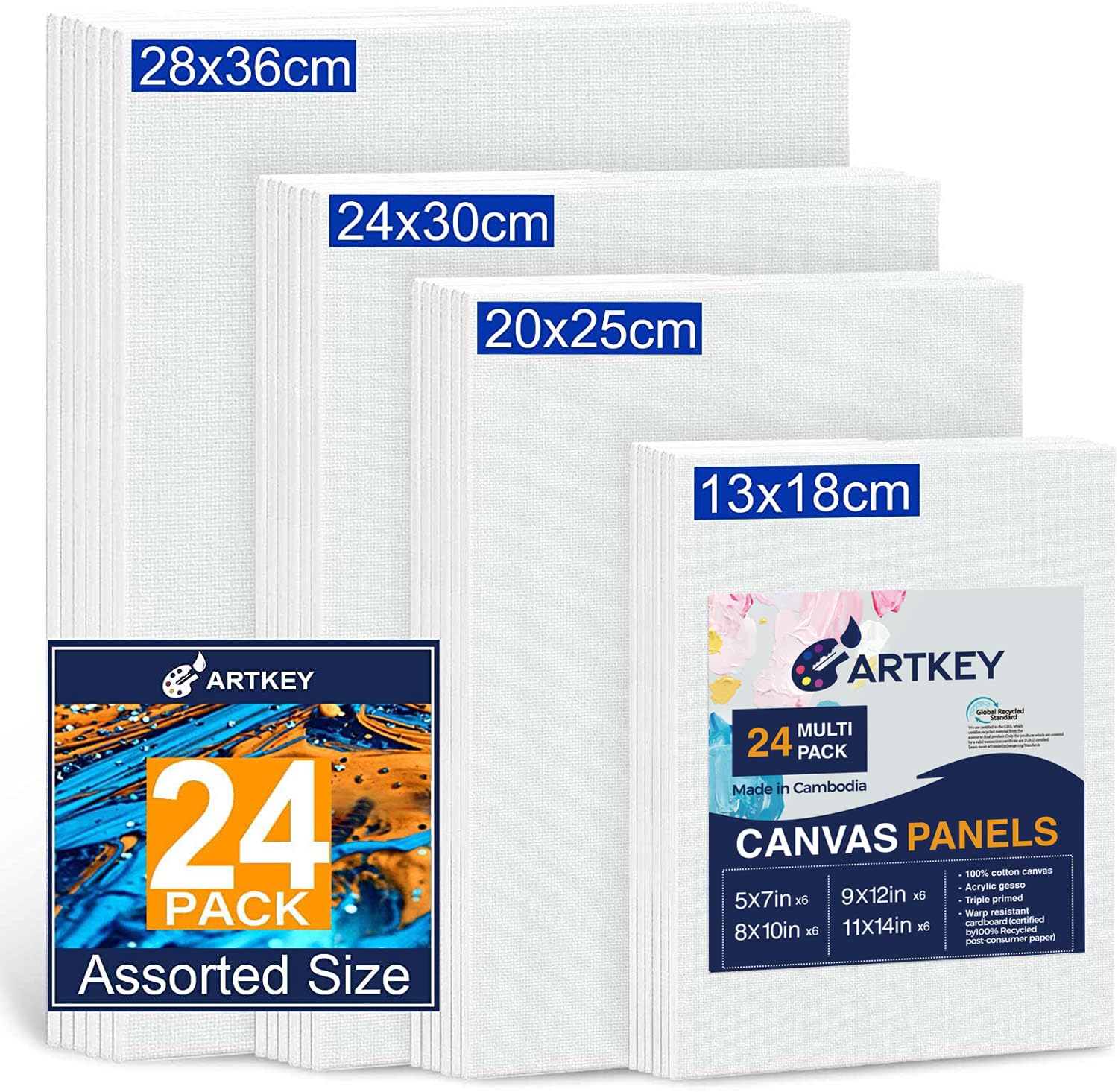
A multi-size pack of cotton, triple-primed canvas panels (5×7 up to 11×14)—flexible for paint parties, classes, and mixed projects.
Why I picked it: I needed assorted sizes for group activities and mixed-format projects, and this set covered most of the bases.
Best for: Paint parties, mixed projects, and classroom use where multiple sizes are helpful.
Excellent for workshops and group sessions.
Pros
- Assorted sizes in one pack
- 10 oz primed surface
- Rigid, flat board support
- Good value for group use
Cons
- Primer can be uneven on some panels
- Not for highest-end gallery work
My take
I keep a set of mixed-size panels for workshops and paint nights because the variety saves me from buying multiple single-size packs. The 10 oz priming gives a toothier surface than lighter priming, which many students and crafters like.
Panels are hand-stretched and glued over heavy boards, so they resist curling and are easy to display. Some pieces had uneven primer texture, so I sometimes add a quick skim coat before detailed work.
They aren’t my choice for archival gallery pieces, but they’re ideal for practice, parties, and teaching.
How I Choose Pre-Stretched Canvas
Material and Priming
I always check whether the surface is 100% cotton or a cotton/linen mix. Cotton gives consistent texture and pigment absorption, while linen is finer and more expensive.
Gesso weight matters: heavier priming (8 oz or 10 oz) creates a more robust, toothy surface that handles both acrylic and oil without sagging.
- Choose 8–10 oz primed canvases for impasto and layering.
- Panels with MDF cores resist warping for wet techniques when properly primed.
Frame Depth and Construction
I look at stretcher thickness and corner joinery. Mortise-and-tenon or well-made lap joints mean the frame will stay square as I build paint layers.
Shallow profiles are fine for framing; deeper profiles are better if I want to finish edges and display without a frame.
- 0.6" profile is fine for small work; 5/8" and deeper for sturdier edges.
- Swedish or kiln-dried pine stretchers resist warping over time.
Panels vs. Stretched Canvases
I use panels for classes, demonstrations, and projects where I need flat, warp-resistant surfaces. Panels are lighter to transport and stackable.
Stretched canvases give me the tactile response and flexibility I want for large studio pieces and heavy paste techniques.
- Panels: better for wet techniques only if adequately primed.
- Stretched canvases: better for gallery presentation and heavy impasto.
Practical Studio Tips
I always inspect new canvases on arrival—look for tears and loose staples before you start. Large formats are more likely to suffer in transit, so I handle them carefully.
If I plan fine detail, I sometimes add a quick skim coat of acrylic gesso and sand lightly to smooth the tooth.
- Store large canvases vertically and away from direct sun.
- Add an extra gesso coat for very wet techniques or extremely smooth finishes.
Frequently Asked Questions
Are pre-primed canvases ready to use for oil and acrylic?
Yes—I use pre-primed canvases straight from the package for both oils and acrylics. Heavier priming (8–10 oz) performs best for oils and impasto; for very smooth detail I’ll add a thin extra gesso layer.
When should I choose panels over stretched canvases?
I choose panels for classroom work, travel, and projects that need flat, warp-resistant support. For large, gallery-intended pieces or heavy texture I prefer stretched canvases.
How can I prevent panels from buckling with wet techniques?
I seal the board edges, add a couple of gesso coats to the painted surface, and allow full curing between layers. For very wet pours I pick a rigid, thicker panel or a well-stretched, deep-profile canvas instead.
Final Take
I’ve tested each of these surfaces in the studio and in class: choose large stretched canvases for scale and structure, small stretched pieces for series and gifts, and panels when you need rigid, inexpensive surfaces.
Keep priming, stretcher quality, and the planned technique in mind and you’ll get consistent results. I rotate between these picks depending on whether I’m teaching, practicing, or finishing gallery work.
