
I tested six foam sheet packs for making faux flowers, craft petals, cosplay details, and rigid display pieces. Here are the ones I reached for again and again depending on scale, durability, and color needs.
I tried a variety of foam sheets to find what actually works when I make faux flowers, craft petals, classroom projects, and prop details. Different foam types suit different jobs: thin, pliable EVA for delicate petals; high-density EVA for heat shaping and wear; and rigid EPS boards for structural backdrops and bases.
This guide focuses on practical uses I encountered in the workshop: ease of cutting, color consistency, how the material accepts glue and paint, and whether a sheet keeps its shape under heat or stress. I’ll point you to the right pack depending on project size and technique.
If I need shape retention and heat forming I reach for the high-density EVA. For a huge color range I choose the large multi-packs. When I want a stiff, paintable base for displays I grab the EPS boards.
1. MEARCOOH EVA Foam Sheets (104-Pack) – Best Value Pack
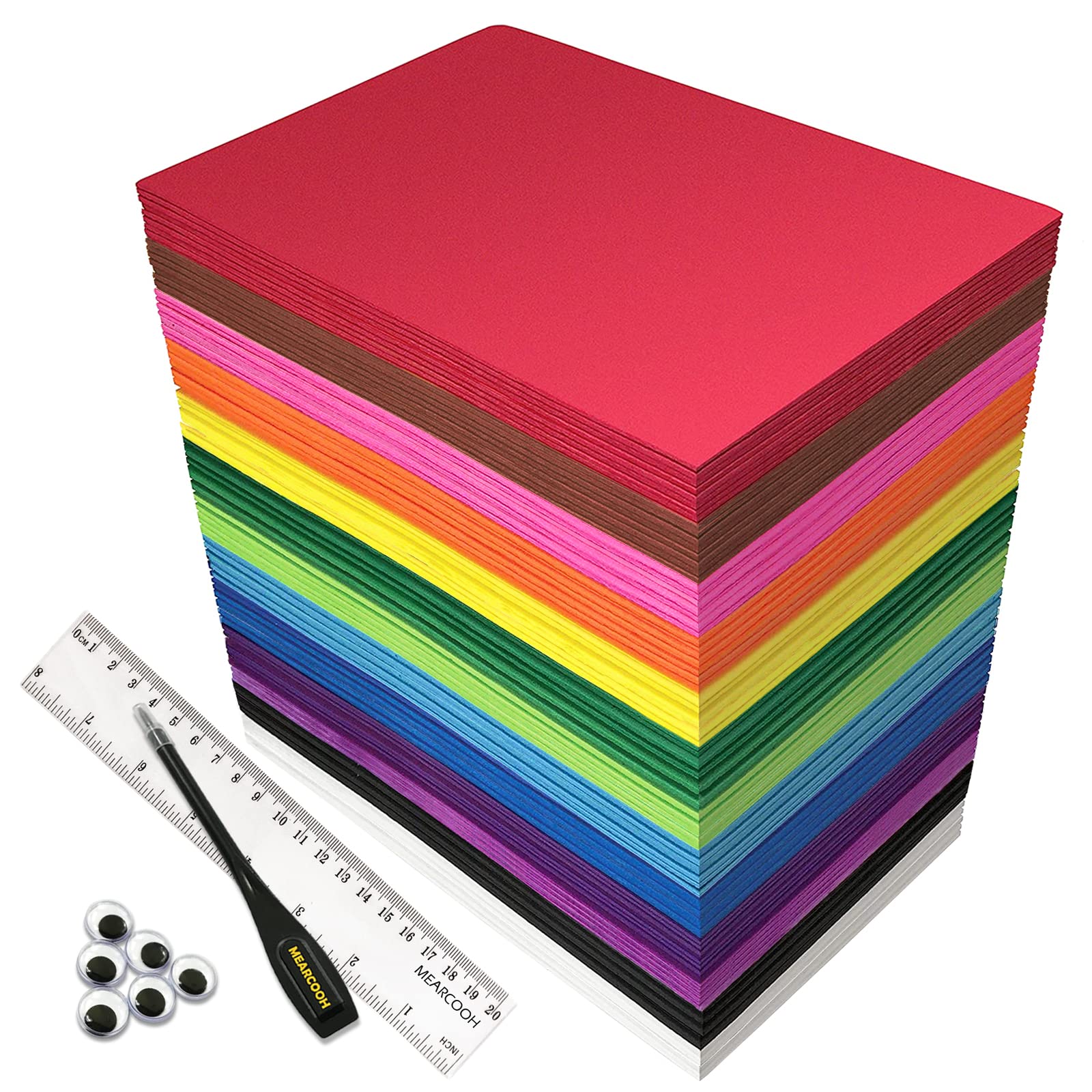
Massive 104-sheet assortment in 13 colors, thin EVA sheets that cut easily and stretch into petals and decorations.
Why I picked it: Huge color quantity for big classes and multi-piece projects.
Best for: Bulk craft sessions, party projects, and classroom activities.
Extremely economical per sheet for large projects.
Pros
- Very large sheet count
- Wide color assortment
- Easy to cut with scissors
- Soft, pliable EVA
Cons
- Sheets are fairly thin
- Not intended for structural uses
My take
I keep this 104-pack on hand when I need lots of petals, leaves, or decorative elements without stopping to reorder. The 13 colors give me variety for layered florals and party décor.
The foam has a soft, easy-to-cut feel that makes quick petal shapes simple with scissors or a craft knife. I appreciate that the sheets are low-porosity and don’t feel crumbly while I work.
Because the sheets are on the thinner side, I used them for delicate flowers and layered accents rather than base structure. For anything that needed more body I doubled or tripled layers and glued them together.
In short, this is my go-to when quantity and color variety matter more than thickness or rigidity.
2. Horizon Group USA Foam Sheets (30-Pack) – Best for Beginners
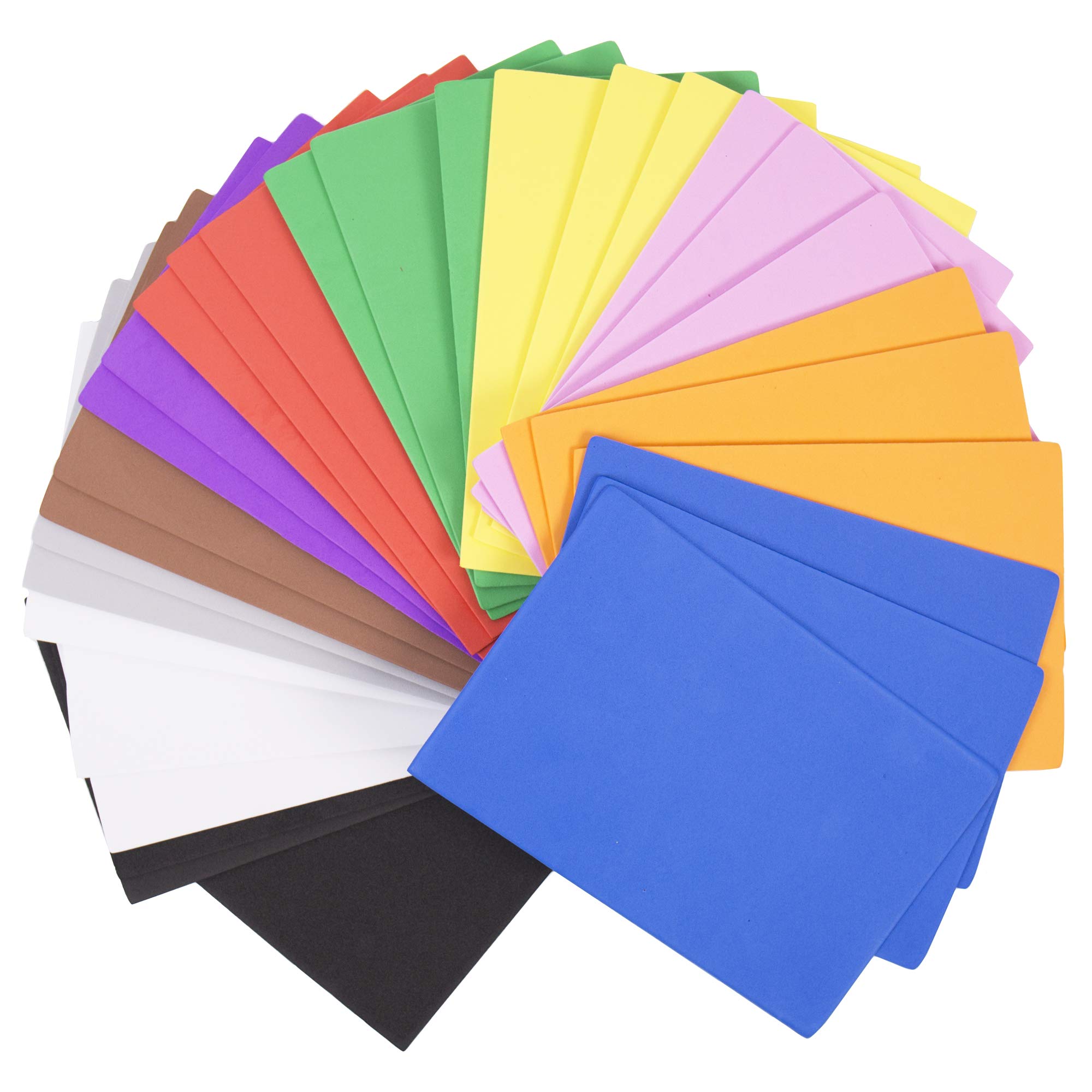
Thirty 5.5 x 8.5-inch sheets in bright rainbow colors at roughly 2mm thickness — easy for kids and quick projects.
Why I picked it: Perfect size and thickness for simple cut-and-glue work.
Best for: Children’s crafts, school activities, and quick embellishments.
Budget-friendly, kid-friendly multipack.
Pros
- Bright, consistent colors
- Ideal 5.5 x 8.5 inch size
- 2mm thickness for easy cutting
- Floats and is pliable
Cons
- Not very thick for heavy use
- Occasionally a light initial odor
My take
I used this pack with my son for a handful of crafts and found the size and 2mm thickness just right for little hands. The sheets cut cleanly and stick well with school glue or hot glue.
The rainbow selection makes layering colorful petals and simple shapes straightforward, and the material is pliable enough for gentle curls and bends.
For classroom sets or rainy-day projects these sheets are easy to work with and keep the workflow moving without overcomplicating tools or techniques.
3. Better Office EVA Foam Sheets (100-Pack) – Best Color Variety
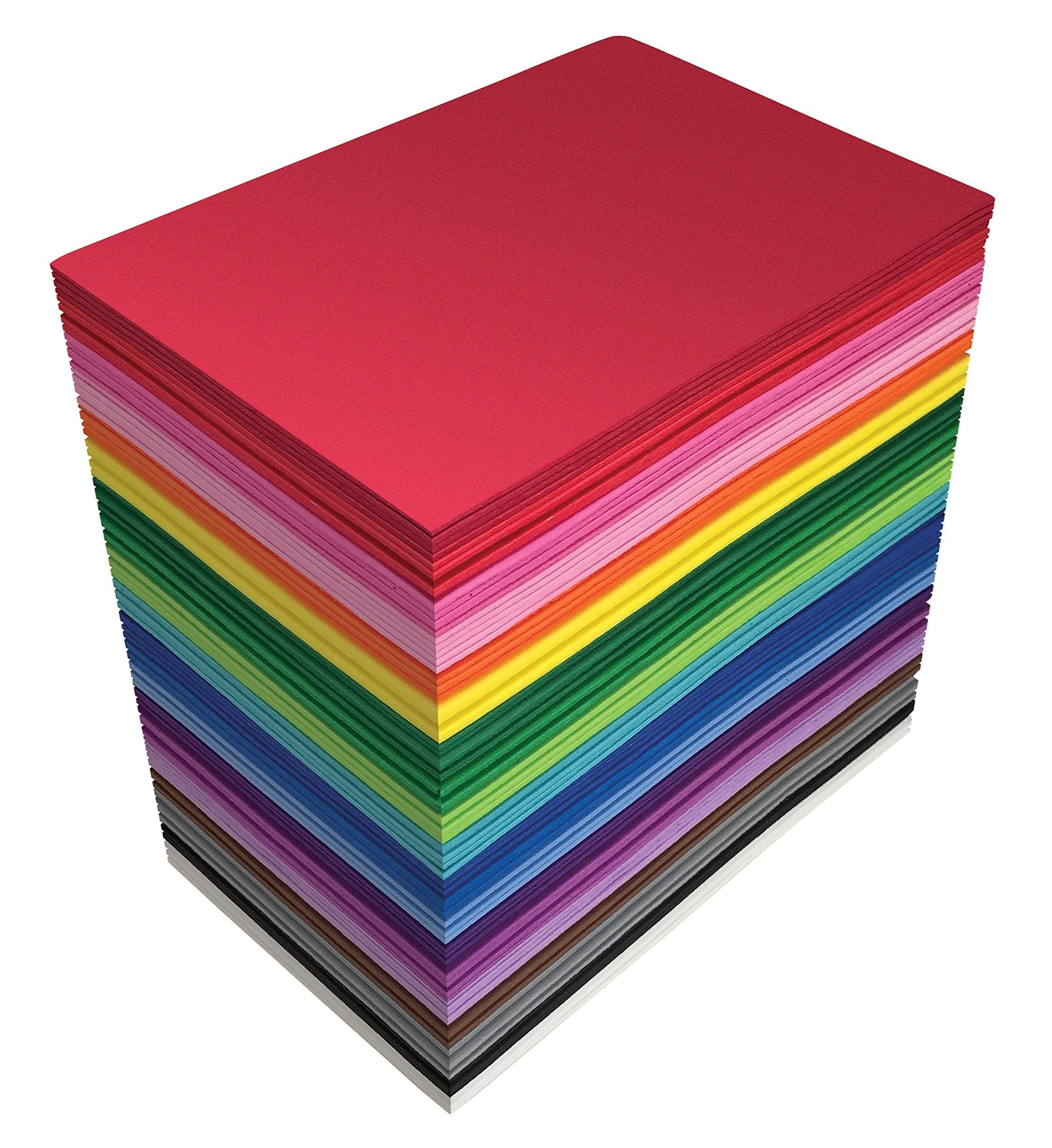
100 sheets across 20 colors, 2mm thickness — a versatile kit when you need specific hues and steady supply.
Why I picked it: Twenty colors let me match palettes precisely.
Best for: Educational games, teaching aids, and multi-color builds.
Good value for a wide color range.
Pros
- Extensive 20-color palette
- Consistent color across sheets
- Convenient small sheet size
- Easy to cut and glue
Cons
- Thin for heavy-duty projects
- No adhesive backing
My take
I rely on this pack when I’m making learning tools or projects that require many specific colors. Having five sheets of each hue saves time when I need repeats.
The 2mm thickness is ideal for letters, die-cut shapes, and layered flowers — it’s thin enough to trim cleanly but sturdy enough to hold glued layers.
Because the sheets don’t have adhesive backing I can control where glue goes, which is handy for precise assembly and mixed-media crafting.
4. The Foamory High-Density EVA Foam (2mm) – Best for Shaping
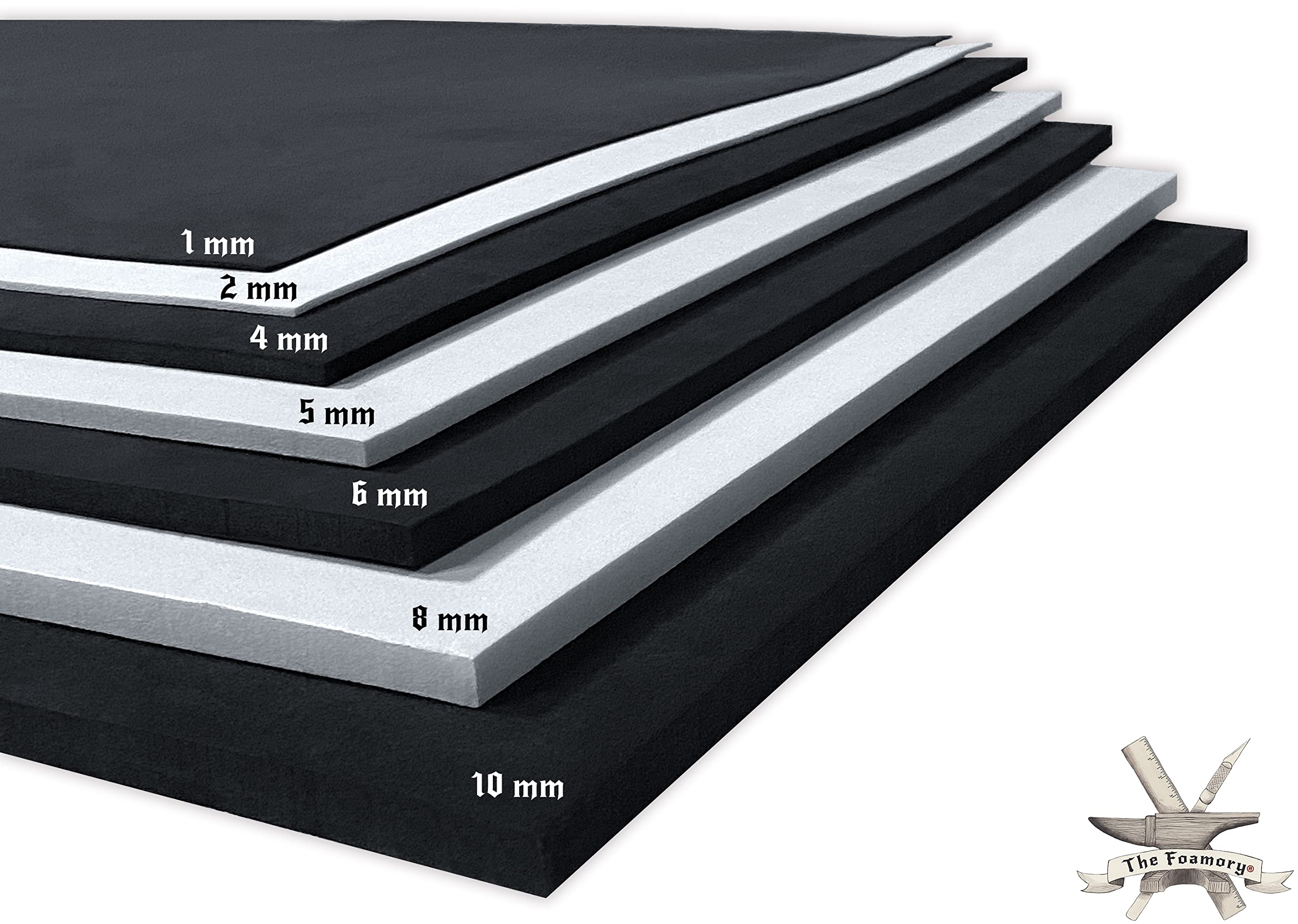
High-density, closed-cell EVA with strong shape retention, textureless faces, and a large 14 x 39-in cut — built for heat shaping and durable wear.
Why I picked it: High density and retention let me heat-shape and finish durable pieces.
Best for: Cosplay details, wearable props, and pieces that need lasting shape.
A premium option for performance and durability.
Pros
- High-density, shape-retaining foam
- Smooth, textureless surfaces
- Large single-sheet cuts
- Works with heat shaping
Cons
- More expensive feel
- Thinner sizes require layering for bulk
My take
When I need parts that keep their profile under heat or repeated handling, I turn to this high-density EVA. It sands, cuts, and glues in a way that feels professional.
I used thinner and thicker cuts for prototype insoles and even minimal motorcycle seat projects — the material stitched and sanded without tearing. For costume pieces I heat-formed edges to reduce seams and get cleaner joins.
If I’m building something wearable that has to look crisp after contouring, this foam is the one I reach for.
5. Silverlake EPS Foam Boards (11x17x0.5) – Best for Structure
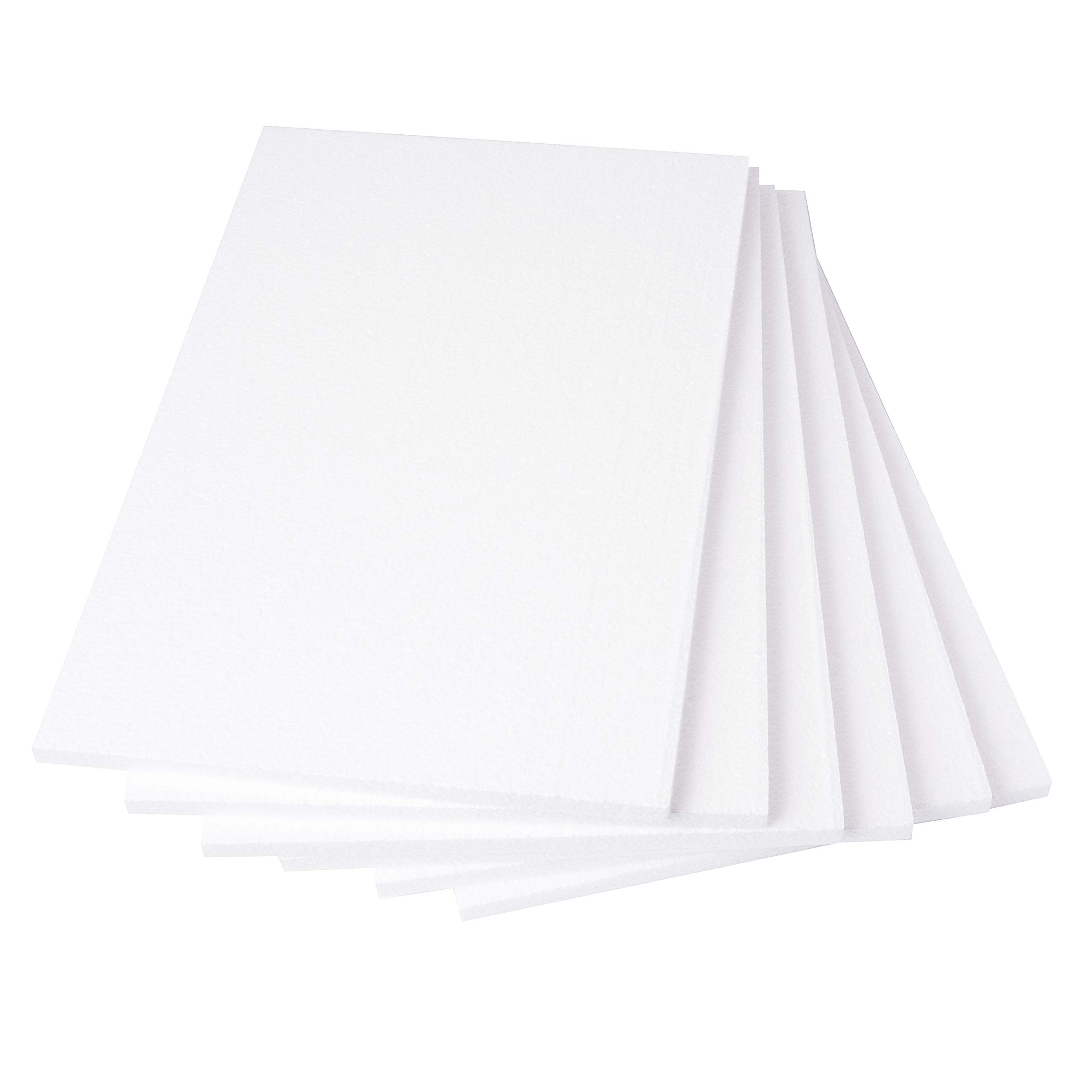
Rigid, professional-grade EPS boards that sand, paint, and mount cleanly — better for bases, backdrops, and structural pieces.
Why I picked it: Rigid, paintable surface for displays and bases.
Best for: Dioramas, architectural models, signage, and mounted displays.
Premium rigid boards for presentation work.
Pros
- Dense, rigid EPS board
- Smooth paintable surface
- Cuts clean with a hot-wire
- Good for mounting and modeling
Cons
- Can dent during shipping
- Not flexible for shaping
My take
I use these boards when I need a flat, stable base — they accept water-based paint and glue nicely and sand to a clean edge. They make mounting displays and making diorama backdrops fast.
A few sheets can arrive with minor dents, so I keep extra on hand for precision builds. For outdoor, covered installations they’ve held up well.
When a project requires structure rather than flexibility, these are my first choice.
6. Do²ping Craft Foam Sheets (10-Pack) – Best Small Pack
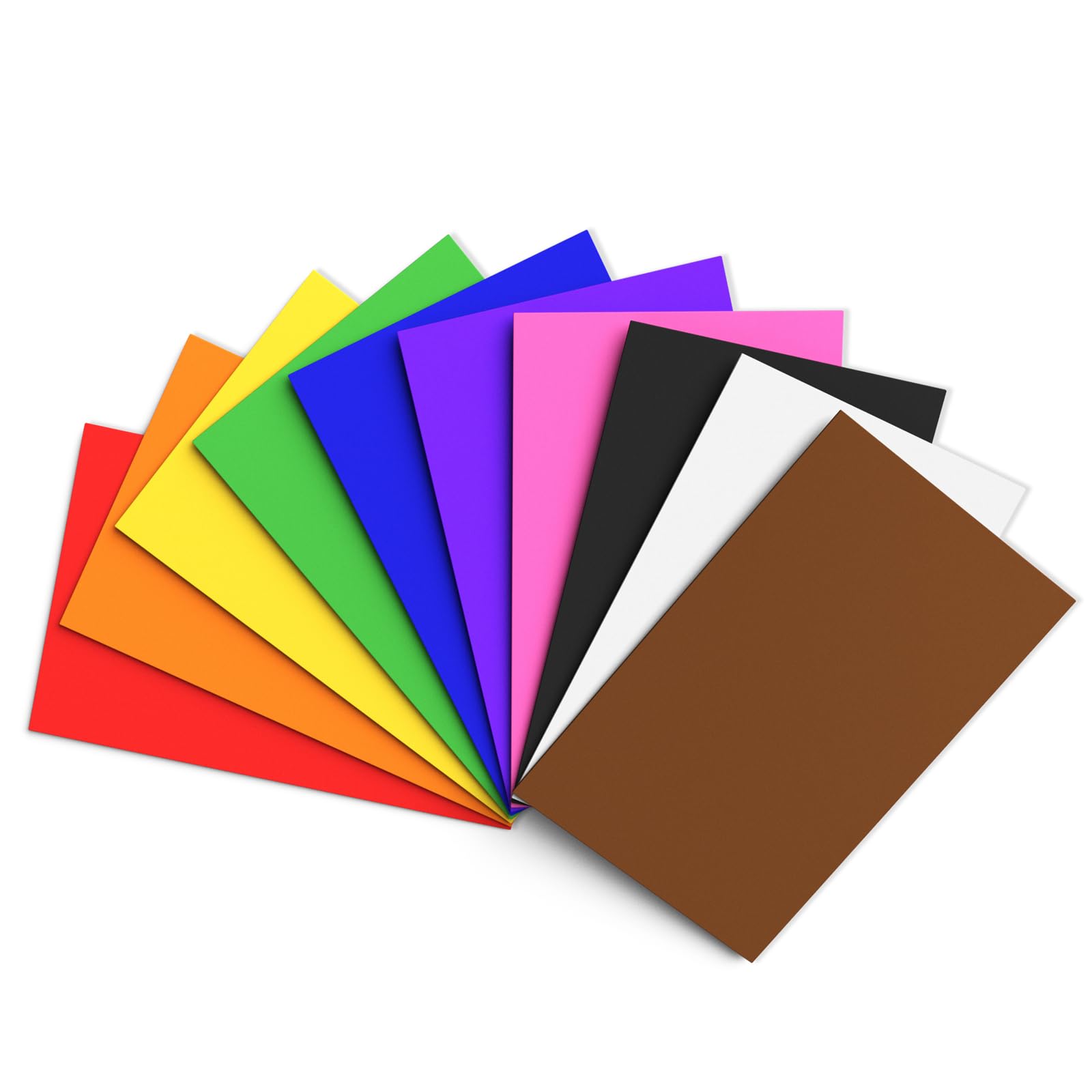
Compact 10-sheet pack in 10 colors — small, flexible sheets that store easily for quick accents and small crafts.
Why I picked it: Compact selection for quick runs and small details.
Best for: Accents, small decorations, and sampling before buying larger packs.
Very budget-friendly for small needs.
Pros
- Compact, easy-to-store pack
- Good color mix for accents
- Thin and pliable
- Works with scissors and simple tools
Cons
- Limited quantity
- Thin for structural parts
My take
I reach for this small pack when I only need a handful of colors for accents or when I’m testing a color combo before committing to a larger buy.
The sheets are thin and easy to shape; I used them for small costume details like brows and lashes and they held their form well once glued.
If you want a starter kit or a compact set to toss in a craft tote, this is exactly that.
How I Choose Foam Sheets
Thickness and Density
I always match thickness and density to the task. Thin 2mm EVA is great for petals and kids’ crafts; high-density EVA is what I reach for when pieces need to hold heat-formed shapes or survive wear.
Rigid EPS boards give me the structural support I need for bases, mounts, and painted scenery.
- Thin (1–2mm): best for delicate petals and paper-style cuts.
- Mid (3–5mm): good for layered flowers and moderate shaping.
- High-density EVA: ideal for heat shaping and wearable props.
- EPS foam boards: choose for rigid, paintable surfaces.
Sheet Size and Pack Quantity
I pick large multi-packs when I’m producing many items or teaching a class. Single large sheets or wide cuts save time when I need fewer seams.
Smaller packs are my go-to for sampling and small-scale work.
- Lots of sheets = best for bulk projects and classrooms.
- Large single sheets = fewer seams in bigger pieces.
- Small packs = trialing colors or quick accents.
Cutting, Gluing, and Shaping
I use scissors and craft knives for basic cuts; a heat gun lets me curve EVA for petals and prop edges. For rigid foam boards, hot-wire cutters and sanding give the cleanest edges.
For adhesives I rely on hot glue for quick bonds, contact cement or strong adhesives for permanent joins, and flexible glues when pieces need to flex.
- Scissors/craft knife: fine for thin EVA.
- Heat gun: for shaping and edge blending on EVA.
- Hot-wire cutter: best for precise EPS shaping.
- Contact cement/E6000: for durable joins on dense EVA.
Color and Finish
I favor packs that have consistent color across a sheet because it saves time when I’m layering or painting edges.
EPS boards take water-based paint well; EVA accepts acrylics but I often seal edges to avoid soak-through on lighter tones.
- Check color consistency across the sheet surface.
- Test paint on a scrap before committing to the whole piece.
- Seal cut edges if you need a uniform look.
Frequently Asked Questions
Can these foam sheets hold real flower stems?
No — these EVA craft sheets and EPS boards are closed-cell and not designed as wet floral foam. I use these materials for faux flowers and artificial stems; for fresh-flower arranging you’ll want a water-absorbent floral foam designed for live stems.
What tools and glues work best with foam sheets?
I use sharp scissors or a craft knife for thin EVA, a heat gun for shaping, and a hot-wire cutter for EPS. For adhesives, hot glue works for quick assembly; contact cement or strong adhesives like E6000 are my choice for durable joins on high-density pieces.
Can I paint these foams?
Yes. EPS boards accept water-based paints very well. I paint EVA with acrylics and often seal edges for a cleaner finish. Always test on a scrap first to confirm coverage and adhesion.
Which foam should I use for wearable costume pieces?
I prefer high-density EVA for wearable parts because it heat-forms and holds shape. Thin EVA is good for decorative overlays, but for structural costume elements pick a higher-density sheet and plan for layered construction.
Final Take
I choose foam based on whether I need flexibility, structure, or sheer quantity. For large batches of petals I favor the big MEARCOOH or Better Office packs; for kids’ activities the Horizon 30-pack is a reliable simple solution.
When I need pieces to keep a shape or survive wear, the Foamory high-density EVA is my top pick, and for rigid mounts and painted backdrops the Silverlake EPS boards are indispensable.
Pick the sheet that matches the work: thin and pliable for detail, dense for shaping, and rigid for structure — that approach keeps my projects looking intentional and makes assembly faster.
