
I tested a range of potting mixes and amendments to find blends that deliver reliable drainage, the right nutrient profile, and easy repotting for houseplants, outdoor containers, and succulents.
I spend a lot of time repotting, propagating, and tending both indoor and outdoor container plants, so I compare soil mixes constantly.
For this roundup I focused on texture, drainage, nutrient longevity, and how mixes behave under real watering schedules—plus which products reduce common problems like gnats and compaction.
Below I list the mixes I reach for most often, from lightweight indoor bags to nutrient-dense organic blends and the simple amendments I use to customize every pot.
I grouped options by use: indoor houseplant mixes, outdoor container blends, fast-draining cactus mixes, moisture-control formulas, and soil amendments so you can match the mix to your plants.
1. Miracle-Gro Indoor Potting Mix – Best for Indoor Houseplants
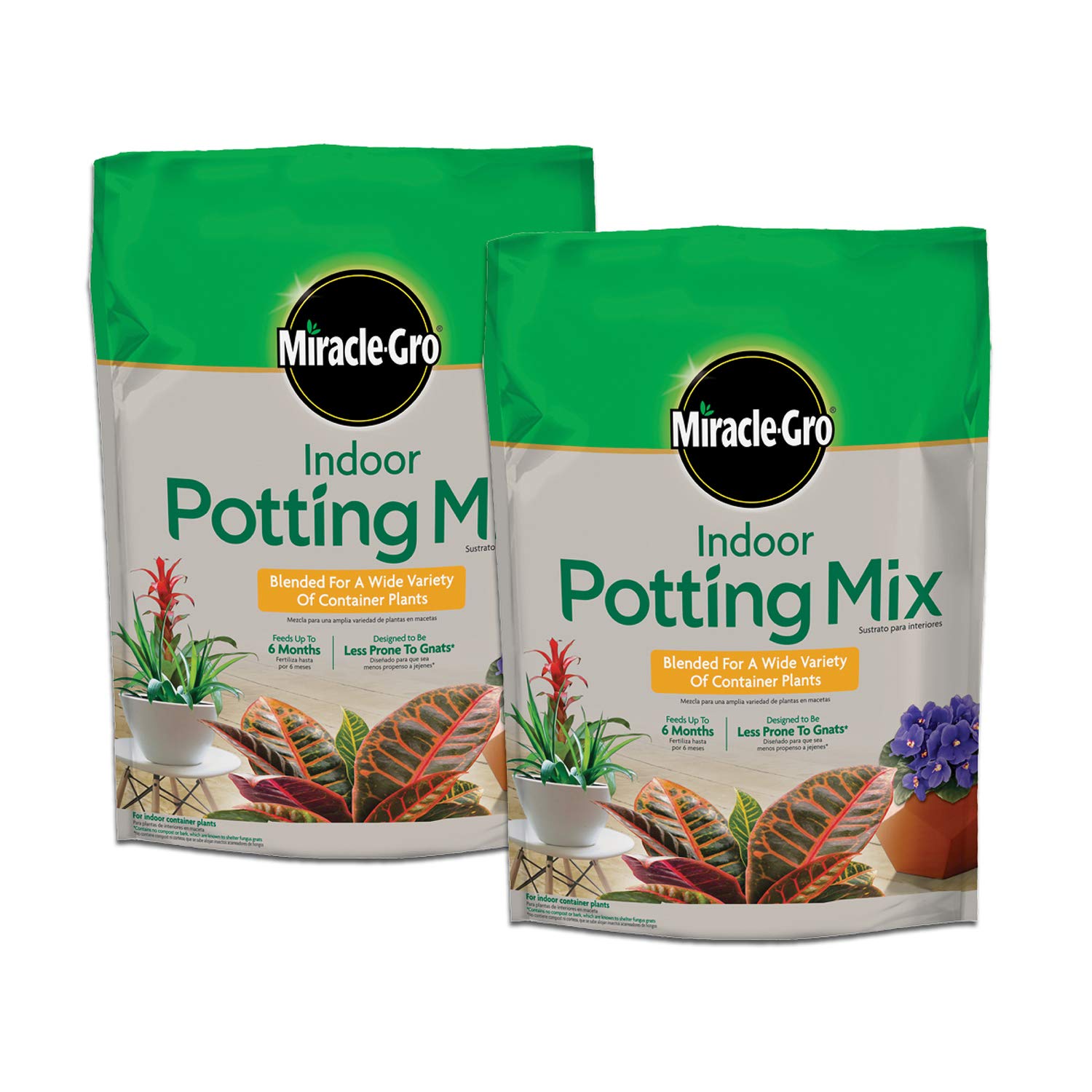
A light indoor-focused mix with coconut coir, built-in feed, and a formula designed to be less prone to fungus gnats.
Why I picked it: Indoor-specific coir blend that feeds and re-wets reliably without compost or bark.
Best for: Houseplants, tropicals, foliage and flowering indoor pots.
Good value for a multi-bag bundle.
Pros
- Feeds up to six months
- Coconut coir helps re-wet soil
- Formulated to be less prone to gnats
- Light, easy to work with
Cons
- Not ideal for heavy outdoor use
- Can compact over time in tightly packed pots
My take
I keep this indoor potting mix on my shelf for most repots because the coconut coir makes it easy to re-wet and I don’t have to fight dust or a gummy surface after watering.
The built-in feed lasts through multiple weeks of establishment, and in my experience plants settle into it quickly—leaves perk up and rootballs breathe better than in old garden soil.
I appreciate that the formula omits compost and bark, which has cut my fungus gnat headaches compared with other indoor mixes; still, I always allow the surface to dry between waterings for the best results.
Each bag fills several small pots, so it’s a convenient option when I’m repotting a batch of 4–6-inch houseplants at once.
2. Miracle-Gro Potting Mix (Container Plants) – Best for Outdoor Containers
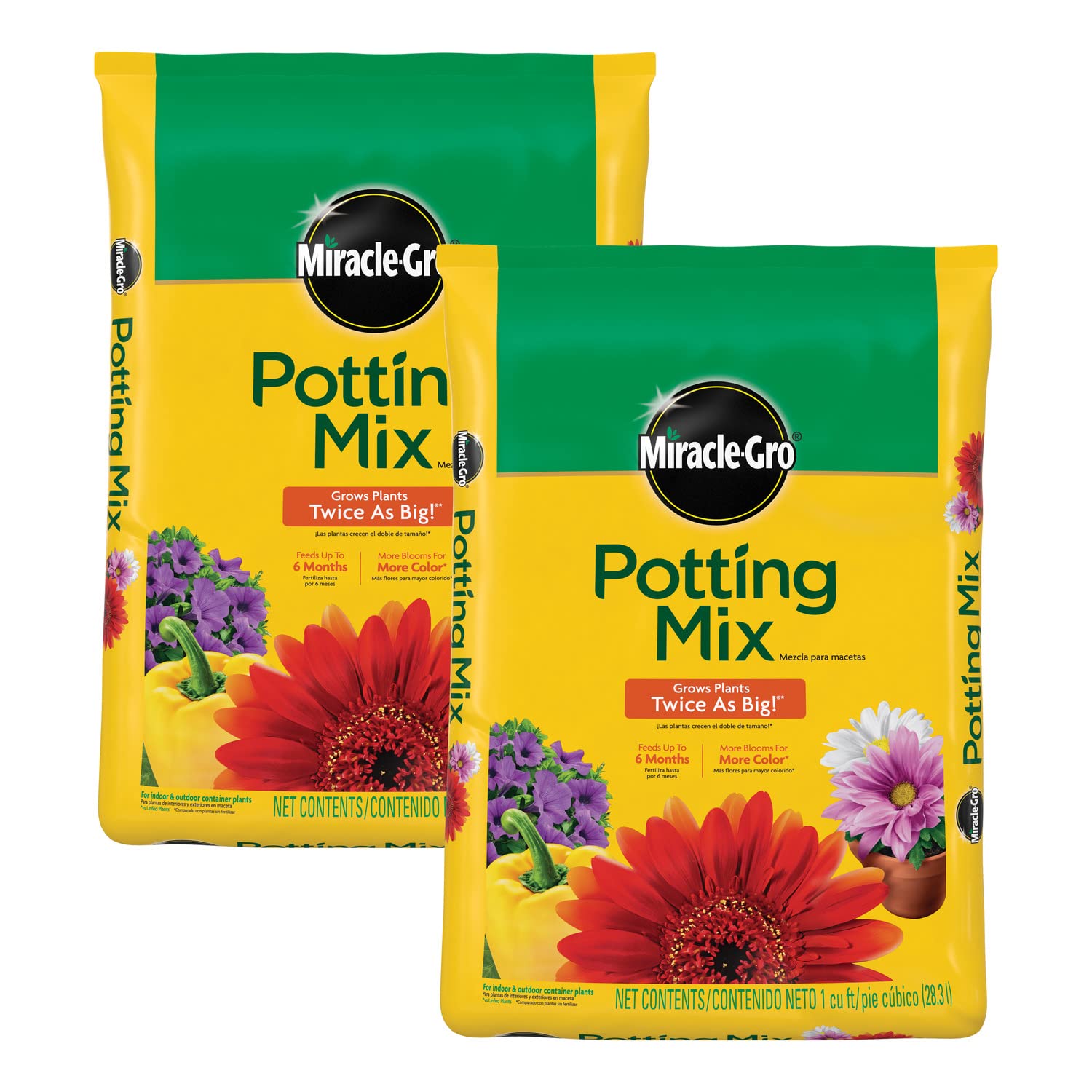
An all-purpose container mix designed to support outdoor flowers, vegetables, shrubs and large pots with a long-lasting feed.
Why I picked it: A reliable outdoor container mix that encourages bigger growth and more blooms.
Best for: Large outdoor containers, flowering baskets, and vegetable pots.
Midrange cost for larger bag sizes.
Pros
- Feeds up to six months
- Promotes bigger, fuller plants
- Suitable for many container crops
- Light and workable texture
Cons
- A bit pricey for frequent use
- Too moisture-holding for succulents
My take
When I pot up patio planters and vegetable containers I reach for this potting mix because it’s formulated specifically for outdoor containers and the plants respond quickly.
The fertilizer component helps flowers produce more color and vegetables get a strong start, and the texture stays workable after watering rather than turning into a dense clump.
I find it particularly helpful for 10–12-inch pots where nutrient longevity matters; for succulents I switch to a faster-draining blend or amend with perlite.
3. Miracle-Gro Cactus, Palm & Citrus Mix – Best for Succulents & Cacti
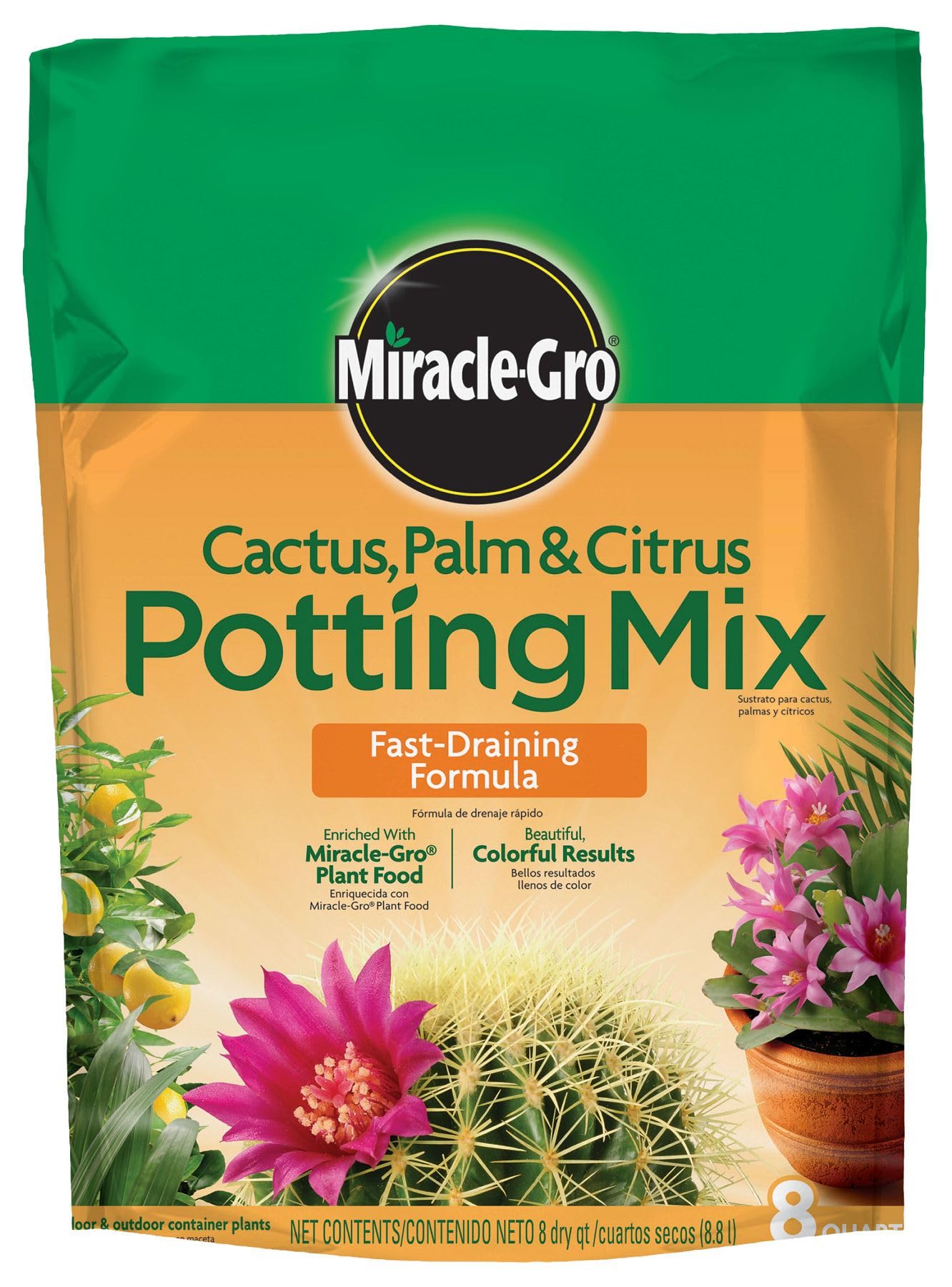
A fast-draining mix with sand and perlite, enriched with plant food and tuned for succulents, citrus, and potted palms.
Why I picked it: Fast-draining, sandy formula that prevents soggy roots for drought-tolerant plants.
Best for: Cacti, succulents, potted palms, and container citrus.
An affordable specialist mix.
Pros
- Excellent drainage
- Contains sand and perlite
- Enriched with plant food
- Works indoor or outdoor
Cons
- Can arrive broken up from shipping
- Not for moisture-loving species
My take
I use this mix whenever I’m potting succulents or citrus because the sand and perlite speed drying and keep roots from staying wet between waterings.
Seedlings and cuttings settle in well, and my succulents show faster growth and fewer rot issues than when I’ve used a standard potting mix.
Bags sometimes arrive more crumbly than store-bought sacks—I find that’s usually a shipping artifact and it still performs exactly as intended in the pot.
4. Miracle-Gro Indoor Potting Mix (Single Bag) – Best Single-Bag Indoor Option
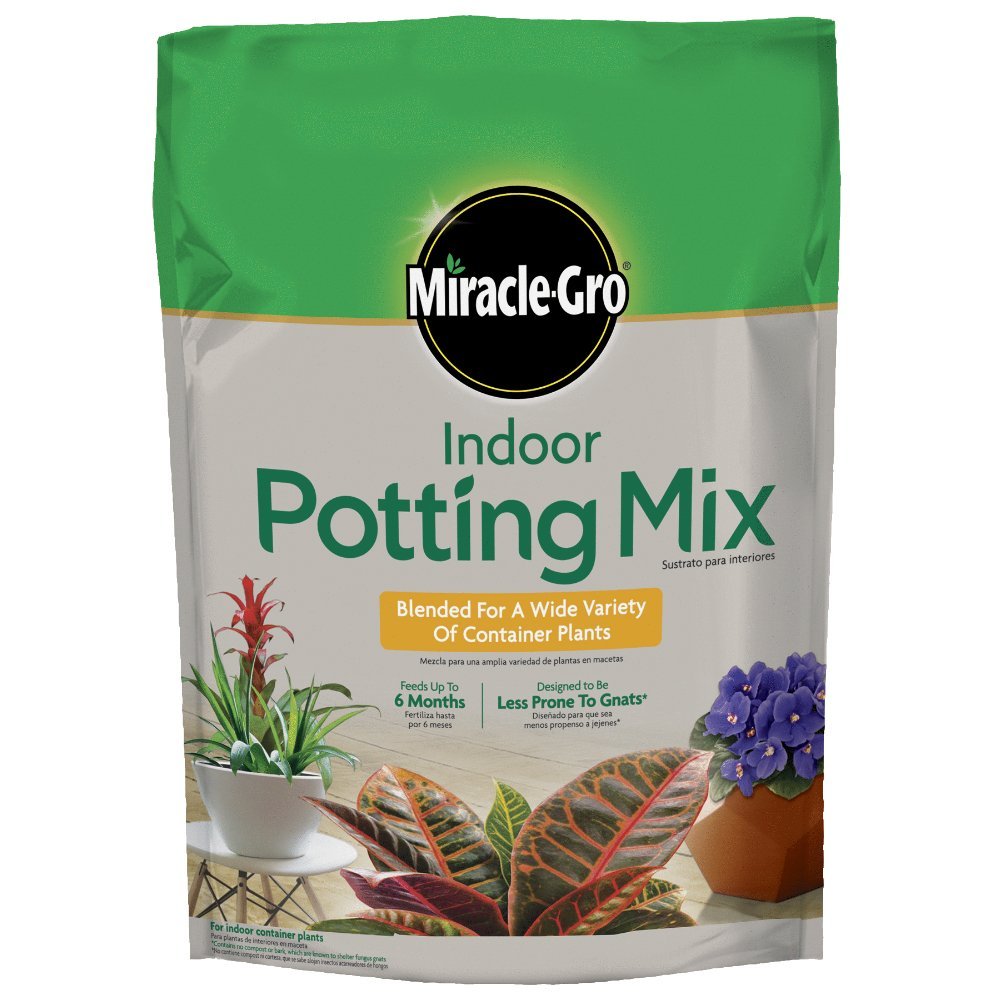
The single-bag version of Miracle-Gro’s indoor mix — lightweight, coir-based, and aimed at houseplant use with built-in feed.
Why I picked it: Handy single-bag for small repots and beginners.
Best for: Small houseplants, seedlings, and single repotting jobs.
Budget-friendly single bag option.
Pros
- Light and fluffy
- Good for seedlings
- Coconut coir helps re-wet soil
- Convenient single bag
Cons
- Can hold too much moisture if overpacked
- I’ve seen surface fungus occasionally
My take
This single-bag indoor mix is the one I grab when I’m doing a few houseplant repots or starting seeds; it’s easy to handle and not overly dusty.
I do a 50/50 mix with cactus soil when I want more drainage for larger pots, and I’ll also add a spoon of perlite for extra aeration on heavy-rooted plants.
On a few occasions I observed a slim surface fungus layer if a pot was overwatered; letting the top dry and improving airflow cleared it quickly.
5. FoxFarm Ocean Forest Potting Soil – Best Nutrient-Dense Mix
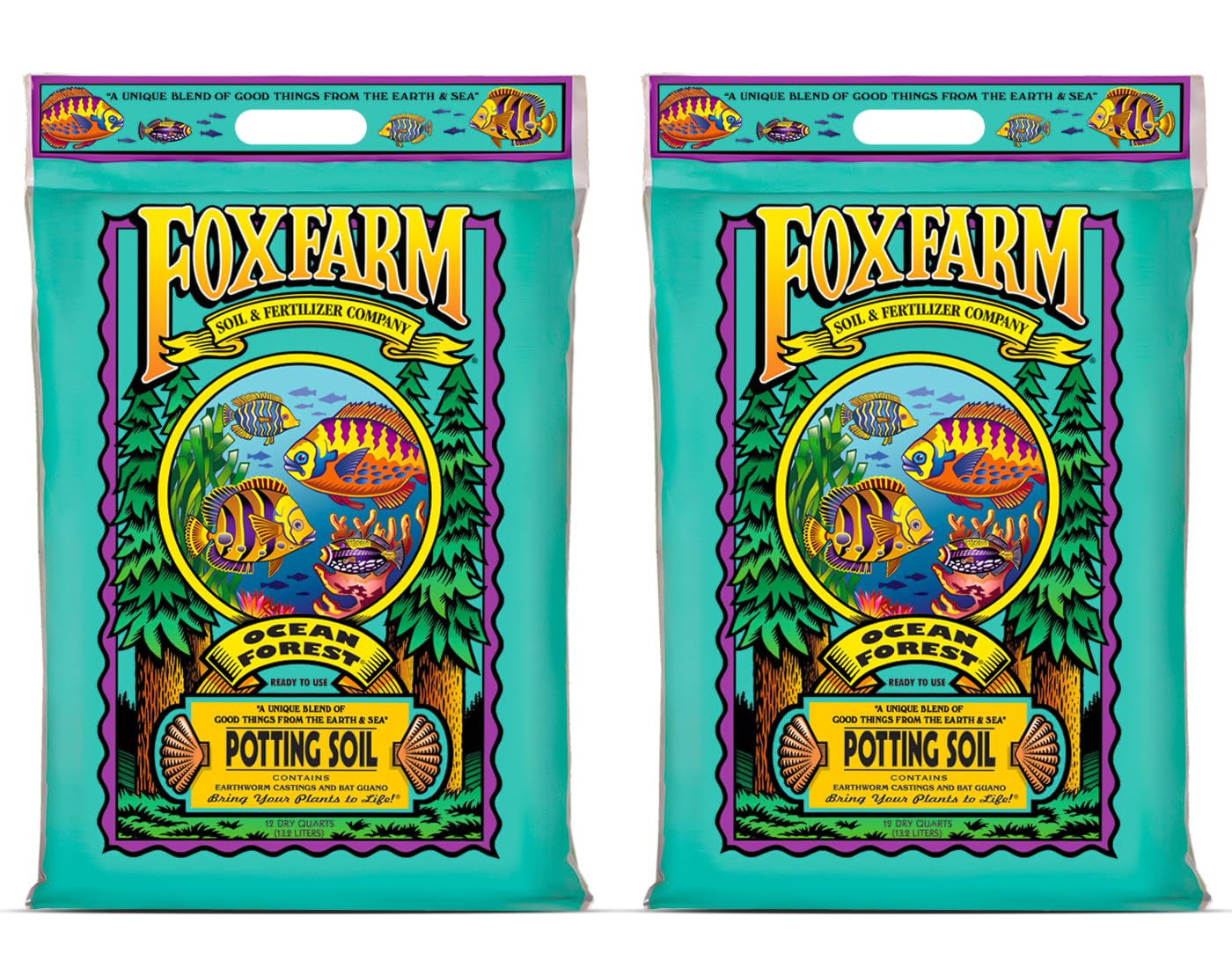
A rich, ready-to-use blend packed with fish and crab meal, earthworm castings, and bat guano for vigorous growth and organic nutrition.
Why I picked it: A nutrient-dense, ready-to-use soil that consistently drives vigorous growth.
Best for: Container gardens and indoor plants needing a nutrient boost.
Premium pick worth the splurge for growth results.
Pros
- Very nutrient-dense
- Light, aerated texture
- Ready to use straight from bag
- Produces vigorous growth
Cons
- Can attract gnats indoors
- Scent may attract wildlife outdoors
My take
Ocean Forest is my go-to when I want an immediate nutrient lift—seedlings, houseplants, and outdoor containers all respond with greener, faster growth.
The blend’s aged forest humus, peat moss, and loam create a light texture that still retains moisture in the root zone without collapsing into mud.
I do watch gnats more closely when I use this indoors because the high organic content can be attractive; outdoors or in a greenhouse it’s unbeatable for vigorous container crops.
6. Miracle-Gro Moisture Control Potting Mix – Best for Moisture Control
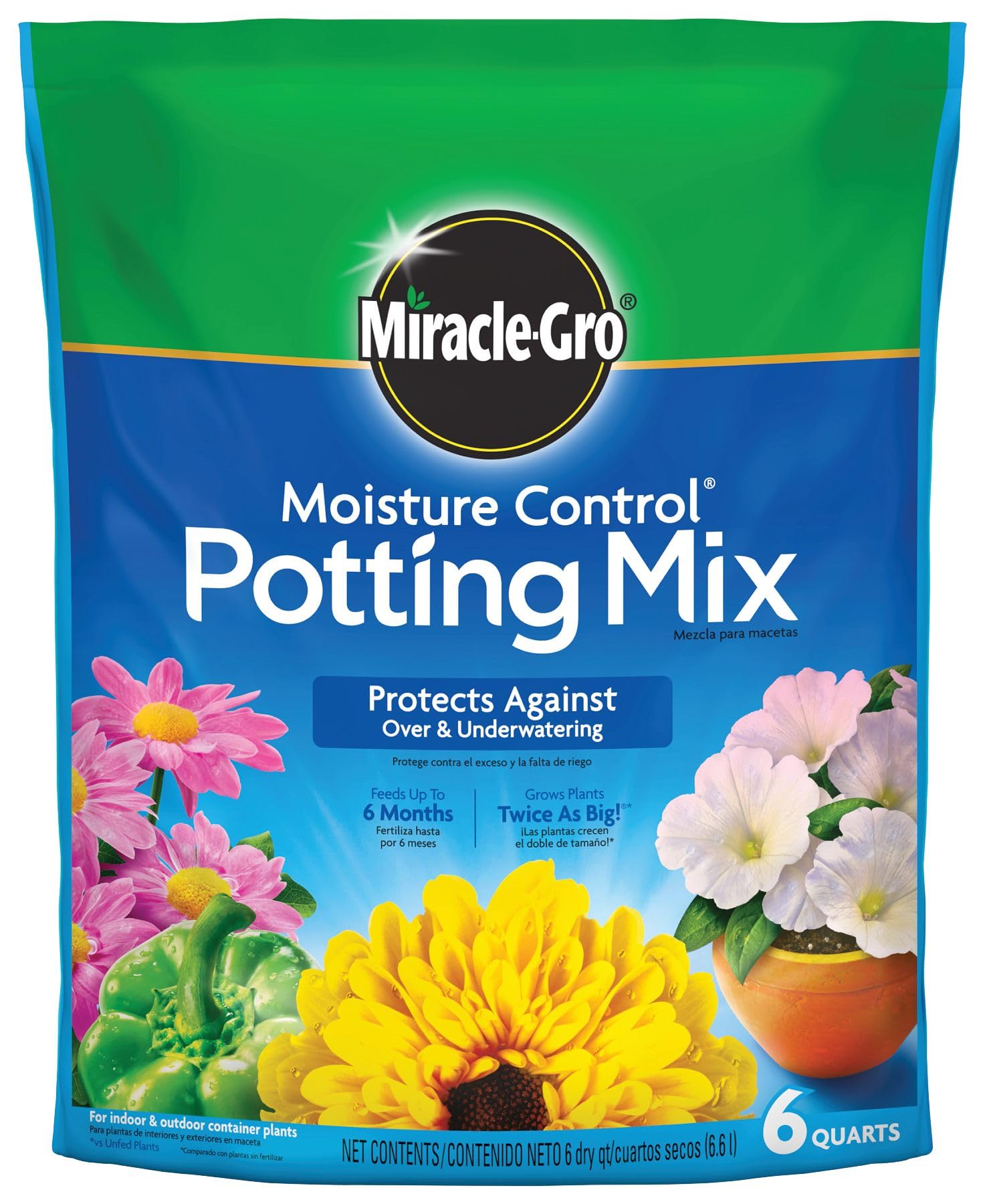
AquaCoir formula that absorbs more water and protects plants from over- and under-watering, with extended feed.
Why I picked it: Designed to buffer watering mistakes and keep moisture more even.
Best for: Containers subject to inconsistent watering and thirsty annuals.
Practical midrange choice for moisture-prone spots.
Pros
- AquaCoir holds more water
- Buffers over- and under-watering
- Feeds up to six months
- Good for many container types
Cons
- May retain too much water for succulents
- Feels dense when fully saturated
My take
I reach for this moisture-control mix for planters that get irregular watering—porches, entryway pots, and beginner containers where daily care is inconsistent.
In my experience it keeps plants lush through dry spells without needing constant watering, but I avoid it for succulents and anything that demands rapid drying.
It has a denser feel when wet, so I try not to overpack pots and I still rely on good drainage holes to prevent waterlogging.
7. Miracle-Gro Perlite – Best Soil Amendment
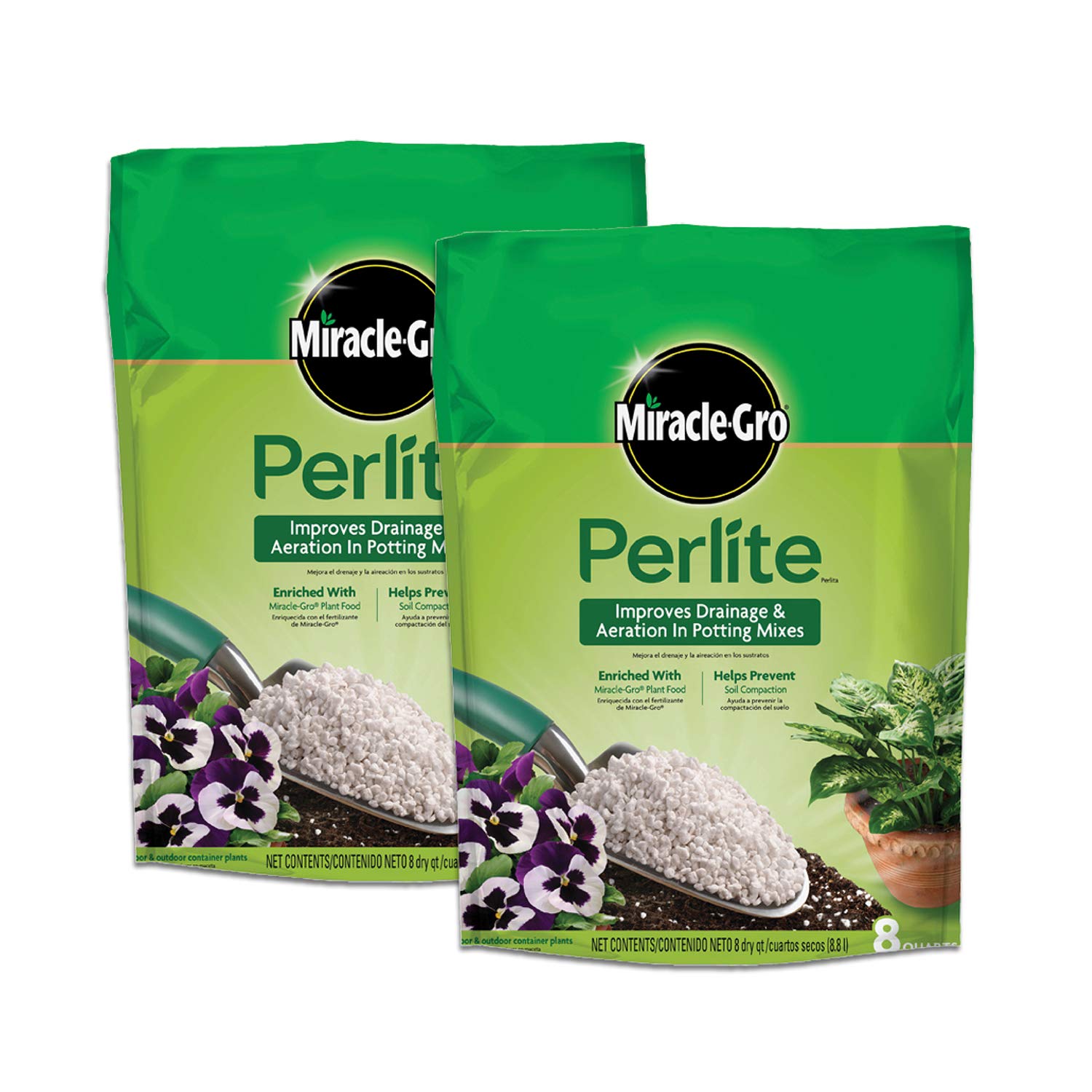
A lightweight, airy amendment enriched with plant food that I use to improve drainage and prevent compaction in mixes.
Why I picked it: The simplest way I improve drainage and aeration in any potting mix.
Best for: Amending heavy soils, succulents, and starting cuttings.
An affordable way to upgrade any mix.
Pros
- Improves drainage and aeration
- Consistent particle size
- Helps prevent soil compaction
- Useful for cuttings and bulbs
Cons
- Can be dusty if granules break
- Bag is not always resealable
My take
I keep perlite on hand and add it at roughly 10–30% to mixes depending on how much drainage I need; for succulents I often push the percentage higher.
The pieces are consistent and lighten a dense bagged potting soil immediately, which reduces my risk of root rot in indoor plants.
A quick storage hack I use is to cut the top of the bag and use the strip as a tie to reseal it; that keeps the perlite cleaner and less dusty between projects.
8. FoxFarm Ocean Forest Potting Soil (1.5 cu ft) – Best Large Bag Option
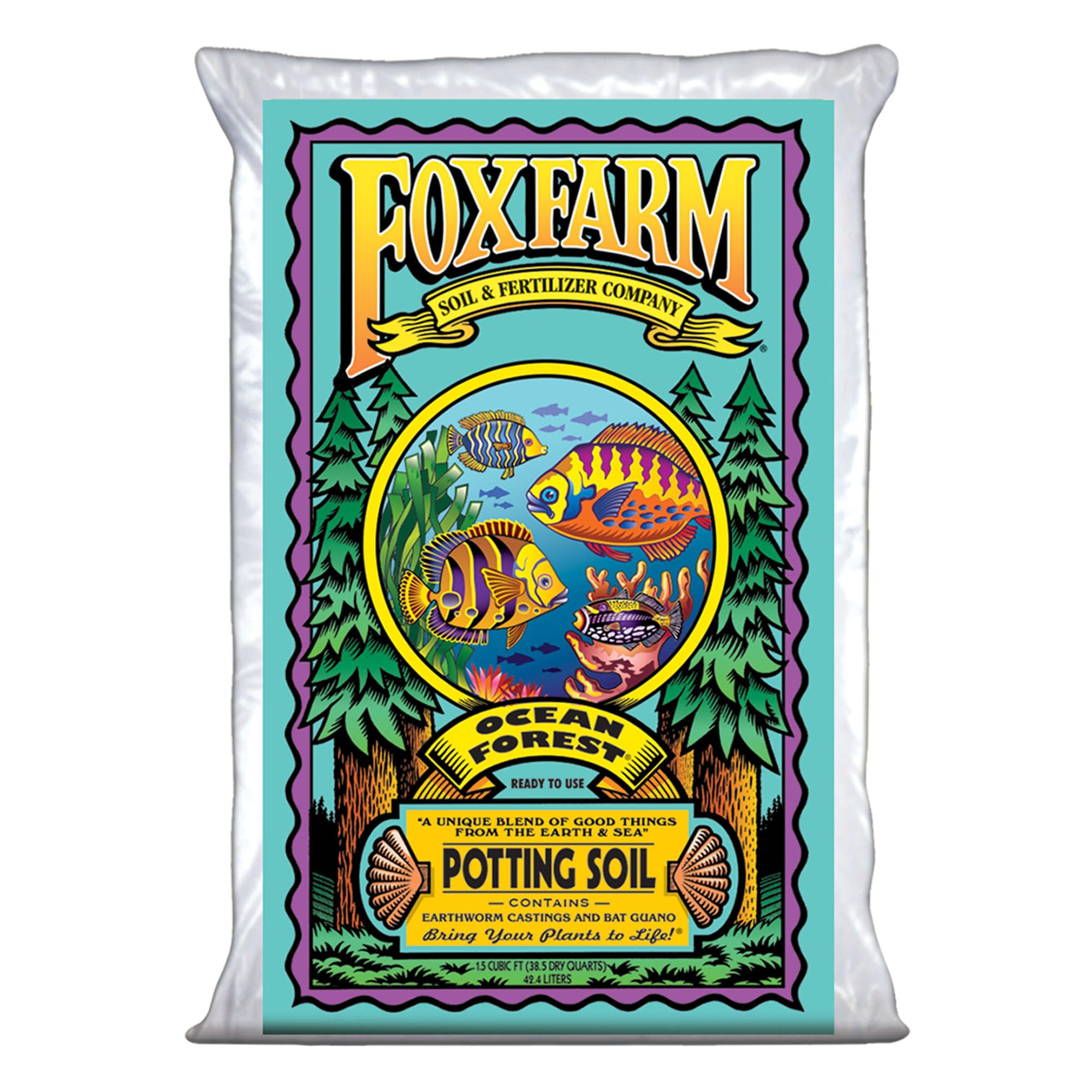
The larger, pH-adjusted Ocean Forest bag that gives the same rich, sea-and-forest nutrient profile at a scale for multiple repots or greenhouse use.
Why I picked it: pH-adjusted, nutrient-rich soil in a larger size for heavy use.
Best for: Greenhouses, multiple repots, and large container projects.
Premium larger-bag option for serious growers.
Pros
- pH adjusted for nutrient uptake
- Rich organic amendments
- Large bag for multiple pots
- Ready to use
Cons
- Attractive to pests outdoors
- Heavier to move and lift
My take
For projects where I need several pots filled or a greenhouse refresh, the 1.5 cu ft Ocean Forest bag gives me a consistent, nutrient-rich medium without mixing.
I value the pH adjustment—plants that had struggled with yellowing bounced back after a repot into this soil and showed faster recovery than with generic mixes.
Because it is so rich, I monitor indoor use for gnats and use careful surface drying; outdoors it’s a go-to when I want a strong, immediate growth response.
How I Choose a Potting Mix
Key factors I consider
Texture and drainage: I check whether a mix is light and airy or dense. Succulents need fast drainage; tropical foliage likes more moisture retention.
Nutrient longevity: Built-in fertilizer that feeds for a few months saves me time. For long-term containers I still top up with liquid feed during the season.
Special features: I look for moisture-control formulas when watering is inconsistent and indoor formulas that avoid compost or bark if gnats are a concern.
- Match drainage to your plant (succulents vs. tropicals).
- Use perlite or sand to lighten heavy mixes by 10–30%.
- Choose moisture-control mixes for inconsistent watering.
- Pick nutrient-dense soils for seedlings and heavy feeders.
- Buy larger bags if you’re repotting many plants.
Frequently Asked Questions
Will a gnat-resistant mix guarantee no gnats?
No mix guarantees zero gnats, but I reduce them by using indoor-specific mixes (no compost or bark), letting the surface dry between waterings, and adding perlite to improve drying. If gnats appear I use sticky traps and surface treatments to break the life cycle.
Can I mix perlite into any potting soil?
Yes — I add perlite to most bagged soils to improve aeration. For houseplants I usually add 10–20%; for succulents I’ll add 20–40% depending on how fast I want the mix to dry.
Which mix should I use for succulents?
I use a dedicated cactus and succulent mix or take a standard potting mix and amend it heavily with perlite and coarse sand until it drains quickly.
Is FoxFarm safe to use indoors?
I use FoxFarm indoors, but because it’s very nutrient-rich I watch for gnats and ensure good airflow. Outdoors it’s excellent, but the organic scent can attract wildlife in rural settings.
Final Take
I choose a soil mix by matching texture and nutrient profile to the plant’s needs: lightweight, coir-based indoor mixes for houseplants, fast-draining cactus blends for succulents, and nutrient-dense Ocean Forest for a serious growth boost.
If you’re unsure, start with a small bag of the appropriate type and adjust with perlite or compost as you learn each plant’s preferences.
Happy potting—once you find the right mix, repotting becomes a quick way to revive a collection and keep plants thriving.
