
I spent time using and comparing eight propane tank and tank-top heaters across patios, garages, and job sites. Here are the models I relied on for spot heat, portable warmth, and heavy-duty forced air.
I tested a range of propane tank heaters so I could recommend the right tool for different jobs: tall patio towers, compact indoor-safe buddies, tank-top radiant heads, long-run single heads, and a heavy-duty forced-air unit for big spaces.
My testing covered ease of setup, heat output in real conditions, portability, safety features, and how well each unit integrated with standard propane cylinders. I also evaluated tank choices for storage and longer run time.
If you want reliable heat for evenings on the patio, a warm workshop, or a portable heater for camping and emergencies, I’ll walk you through which option worked best for me and why.
Across these picks I compared portability, usable heat radius, safety features (tip-over and ODS where applicable), and how each heater connects to standard tanks. I prioritized real-world performance—how quickly each unit produced usable warmth and how easy it was to place or move into position.
1. Amazon Basics 46,000 BTU Patio Heater – Best Overall
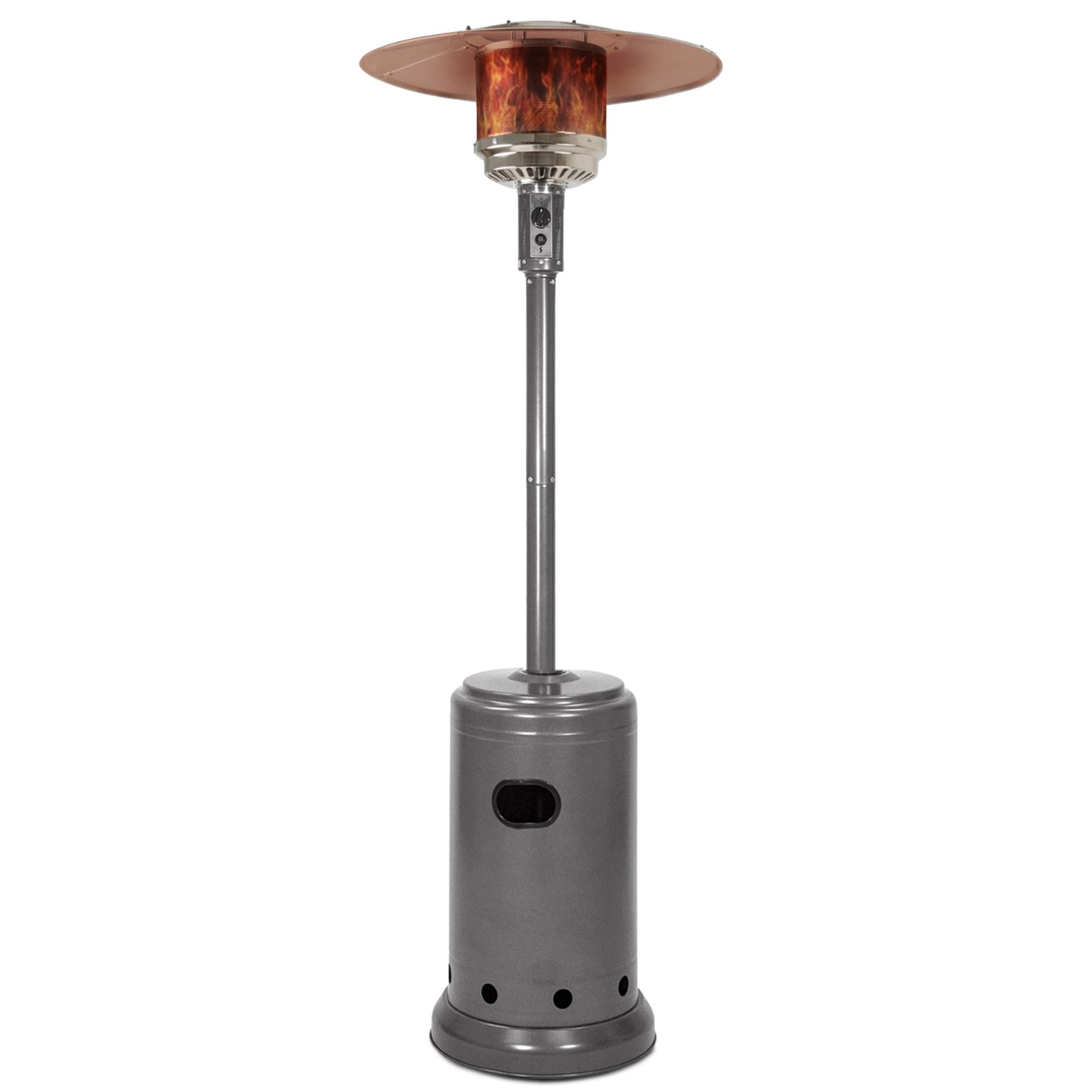
A tall, wheeled patio heater that put out strong radiant heat and felt solid on my deck.
Why I picked it: High output, wheels for portability, and tilt auto-shutoff for safety.
Best for: Large patios and restaurant-style outdoor spaces.
A budget-friendly option for a commercial-style patio heater.
Pros
- Strong 46,000 BTU output
- Easy one-touch ignition
- Wheels for repositioning
- Adjustable heat control
Cons
- Base wheel assembly feels flimsy
- Requires a 20 lb tank (not included)
My take
I own multiple Amazon Basics patio heaters and use them on cool evenings to extend outdoor time. These towers crank out a lot of heat and warm a 9-foot radius in my setup, which turned chill nights into comfortable ones.
Assembly took me about an hour and a half the first time; instructions are clear and hardware is well labeled. The one-touch ignition and adjustable temperature knob make lighting and dialing in comfort quick and predictable.
The tilt safety auto-shutoff and the included chain to secure the tank gave me confidence when I left the heaters running while hosting. I added a water-filled base for stability and a heat shield when wind was an issue.
My only gripe is the wheel bracket, which can feel a little flimsy when lifting the base. That hasn’t stopped me from moving them around, but I treat the wheels gently when the unit is full-height.
2. Mr. Heater Little Buddy 3,800 BTU – Best Portable Indoor
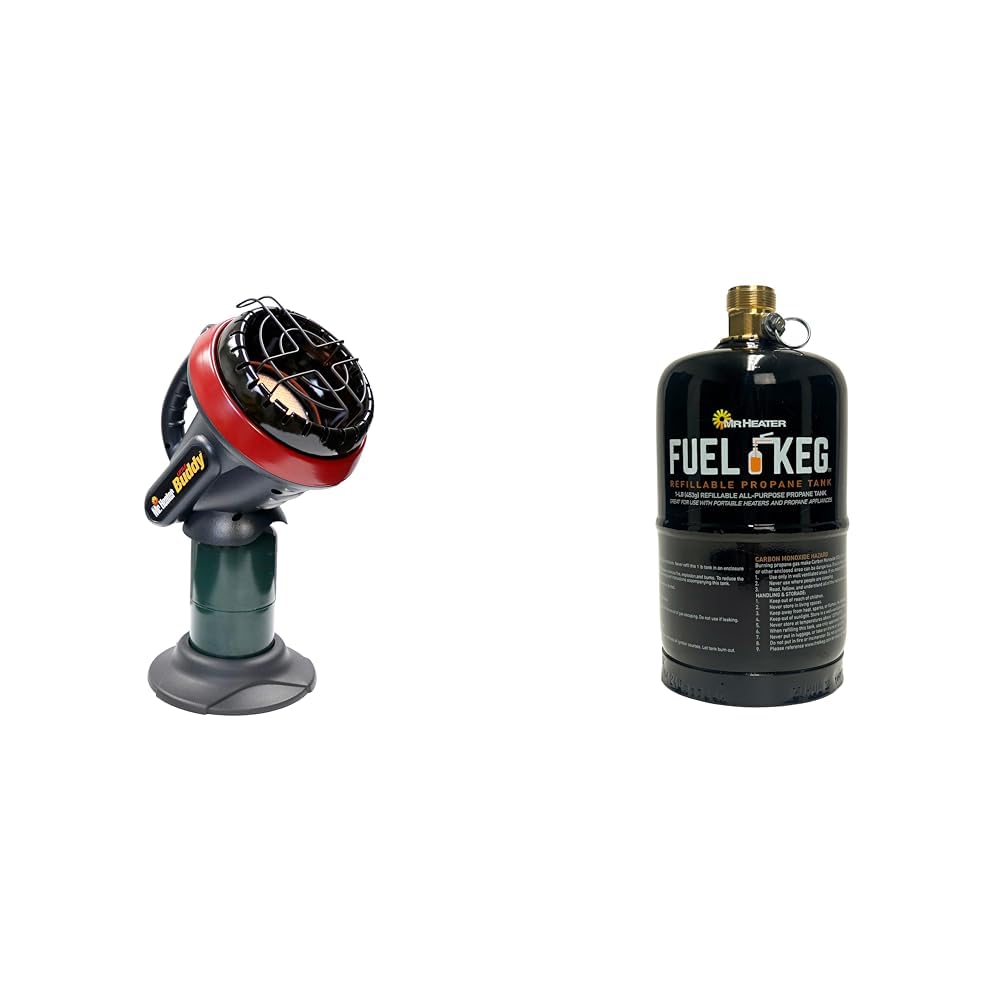
A compact, indoor-safe propane heater paired with a refillable 1 lb tank—great for small spaces and portability.
Why I picked it: Indoor-safe sensors plus a refillable tank make it versatile and low-waste.
Best for: Small rooms, campers, hunting blinds, and emergency use.
A practical, lower-cost portable solution with refillable tank option.
Pros
- Indoor-safe ODS and tip-over shutoff
- Lightweight and portable
- Refillable 1 lb tank included
Cons
- Limited to small spaces
- Runs several hours on a single canister
My take
I keep the Little Buddy in my camper and use it for quick warm-ups and occasional emergency heat. The built-in oxygen-depletion sensor and tip-over shutoff provide peace of mind for short-term indoor use.
The heater delivers a steady 45-degree heating angle that noticeably warms spaces up to about 95 square feet. I tested it in a small blind and in a van, and it raised comfort levels quickly without fuss.
I appreciated the refillable 1 lb propane tank in the bundle; it reduces waste compared with disposable cylinders and is easy to refill with the separate kit. When the canister runs low, swapping or refilling is straightforward.
If you plan to sleep with the unit running, I treat it as a supplemental heat source and follow ventilation and safety recommendations closely.
3. Mr. Heater 45,000 BTU Tank-Top Radiant Heater – Best for Garages & Workshops
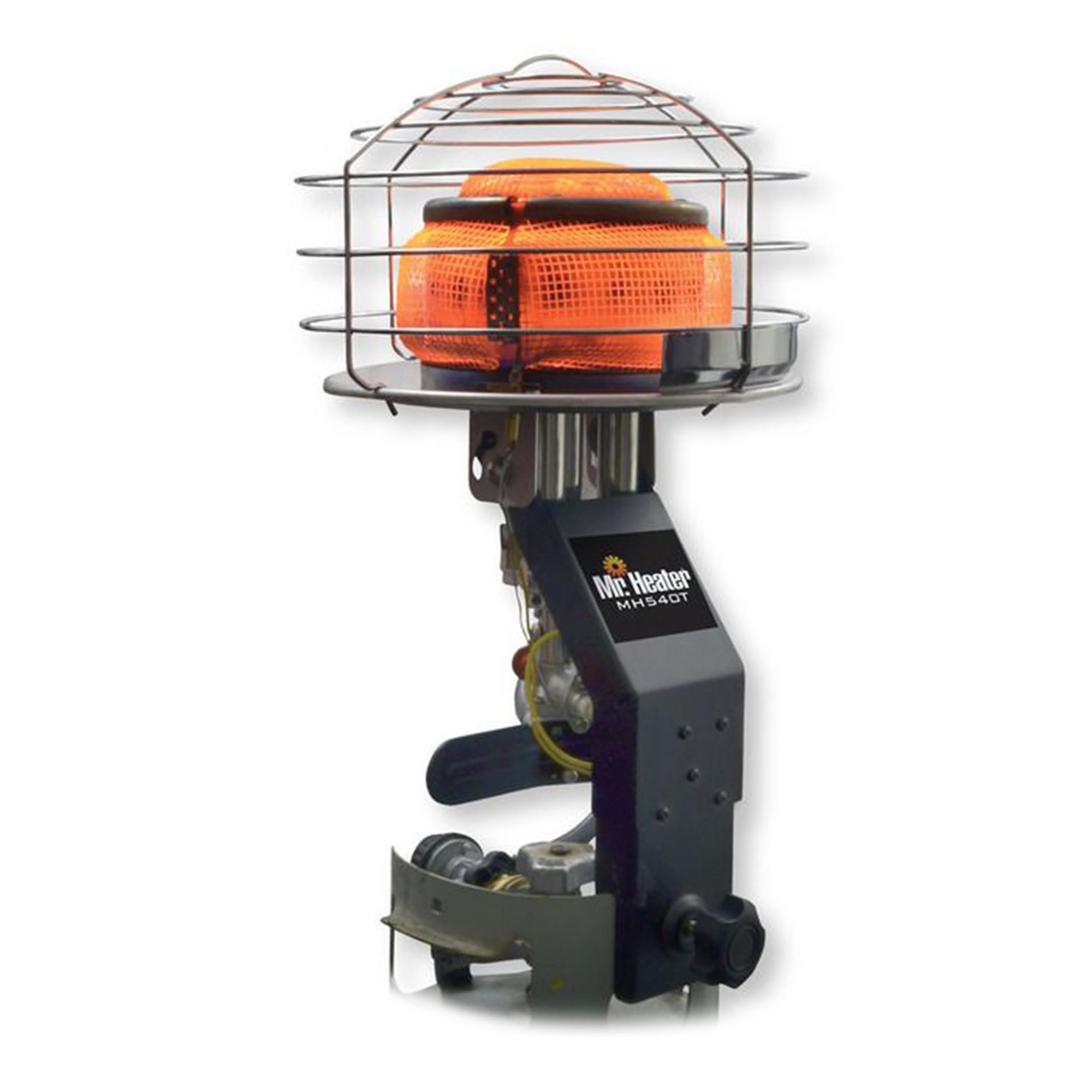
A heavy-duty tank-top radiant heater that mounted directly to a 20 lb tank and warmed my garage fast.
Why I picked it: Mounts on standard tanks, multi-output settings, and durable build.
Best for: Garages, workshops, and outdoor work sites.
A cost-effective choice for high BTU, tank-mounted radiant heat.
Pros
- Mounts on 20 lb tank
- Three heat settings
- Solid, heavy-duty construction
Cons
- Initial lighting takes longer
- Some initial odor on first use
My take
I used this tank-top unit in my two-car garage and was impressed by how quickly it shifted the space from cold to comfortable. Mounting it directly to a 20 lb tank makes it extremely portable and simple to deploy.
The three-position regulator (high/medium/low) lets me tailor the output to tasks—full power for quick warming, lower settings when I’m working close to the heat source. Run time on a 20 lb tank is long enough for extended projects.
The first lighting can be a bit fussy as the mantle reaches full glow, but once that initial burn-in is done ignitions are fast. The unit feels heavy-duty and built to last, which I appreciated while using it around tools and workbenches.
4. Dura Heat TT-360 Tank-Top Heater – Best Low-Profile Radiant
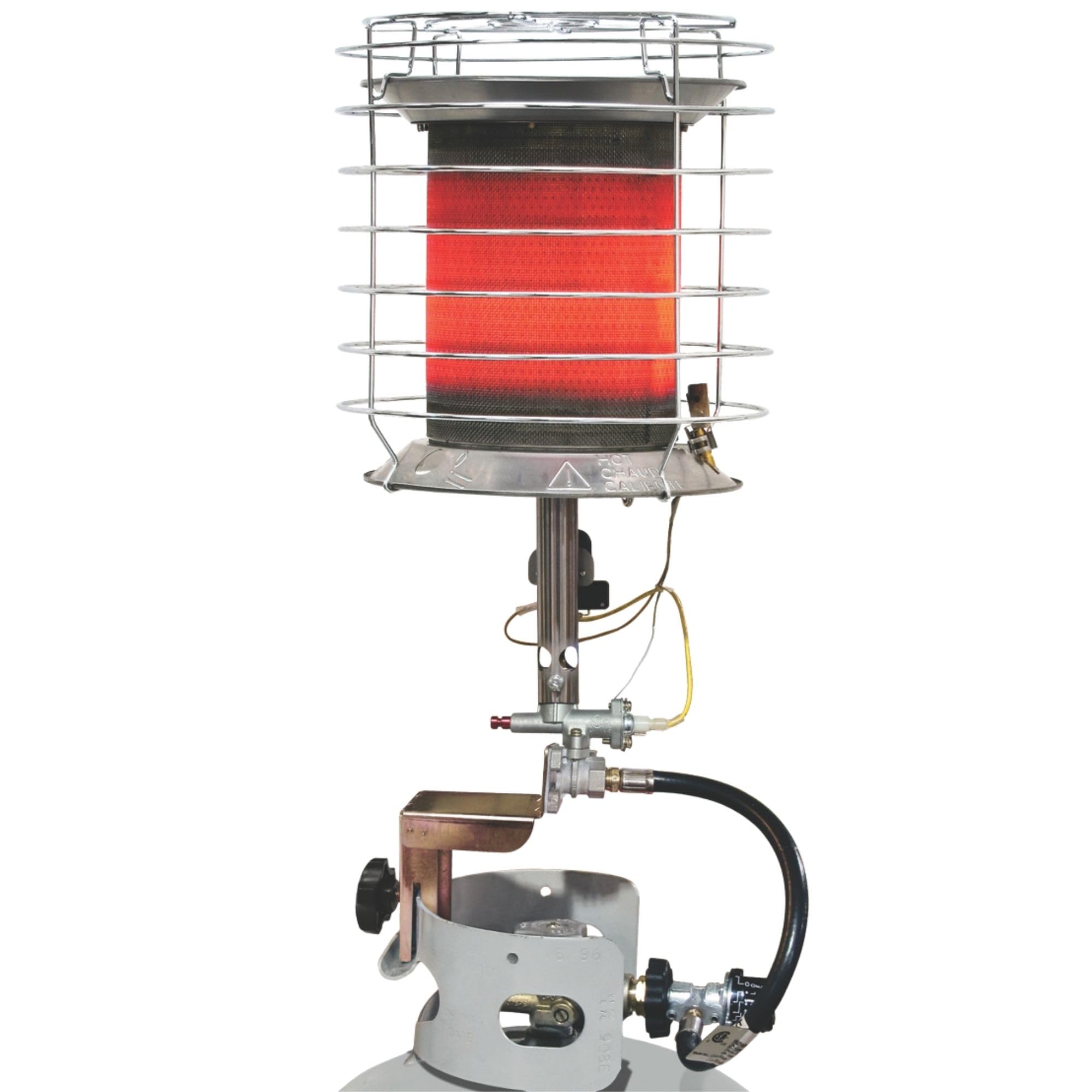
A compact 360-degree tank-top radiant unit that worked well on covered patios and close-range outdoor seating.
Why I picked it: Low-profile radiant pattern and simple, quiet operation.
Best for: Covered patios and lower-mounted radiant heat needs.
Affordable option when you need broad, low-mounted radiant heat.
Pros
- 360-degree radiant coverage
- Quiet infrared heat
- Variable heat output
Cons
- Can struggle in windy conditions
- Match-light ignition only
My take
I used the TT-360 under a covered patio where its lower radiant throw felt more direct and comfortable than a tall tower. The compact footprint allowed me to place it close to seating without obstructing sight lines.
Lighting takes a little practice—hold the match and the gas until the mesh warms up—but once lit the heater runs quietly and produces pleasant infrared warmth. I ended up buying a second for more even coverage across a larger patio.
As with other tank-top units, I kept it on a flat, stable surface and avoided use in high wind. For covered outdoor areas it’s a very practical, low-profile solution.
5. Mr. Heater MH30T Double Tank-Top Heater – Best Double-Head Heater
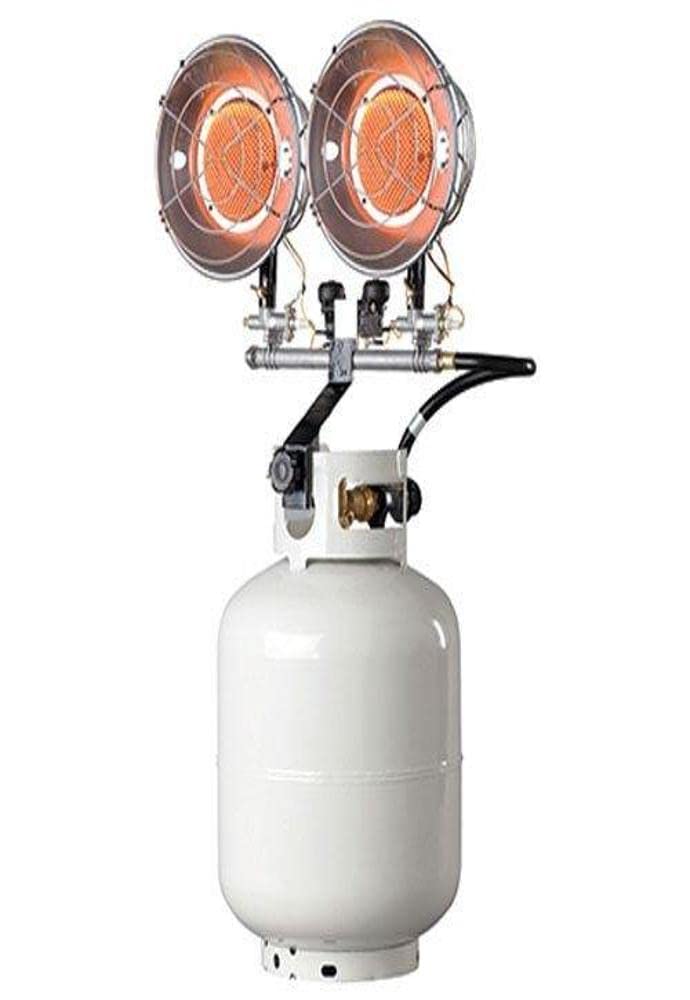
A two-head tank-top unit that directs intense, efficient radiant heat to a focused area.
Why I picked it: Two heads for directional warmth and efficient radiant output.
Best for: Targeted outdoor heating and work areas needing focused heat.
A practical midrange option for concentrated radiant heat.
Pros
- Dual heating heads
- Connects to 5–20 lb tanks
- Efficient radiant heat
Cons
- Directional heat requires aiming
- Match-lighting can be fiddly
My take
I turned to the MH30T when I wanted a compact yet powerful solution for a specific work zone. The two heads let me aim heat exactly where I needed it—behind my workbench or toward an open doorway.
Ignition is straightforward but requires a match; once running the unit is efficient and surprisingly powerful for its size. I appreciated that it accepts a range of cylinder sizes, which gives flexibility for longer run times or portability.
Because the heat is directional, I found it more efficient than a large patio heater at warming one workspace without heating surrounding areas.
6. 15,000 BTU Single Tank-Top Radiant Heater – Best Long-Run Single Head
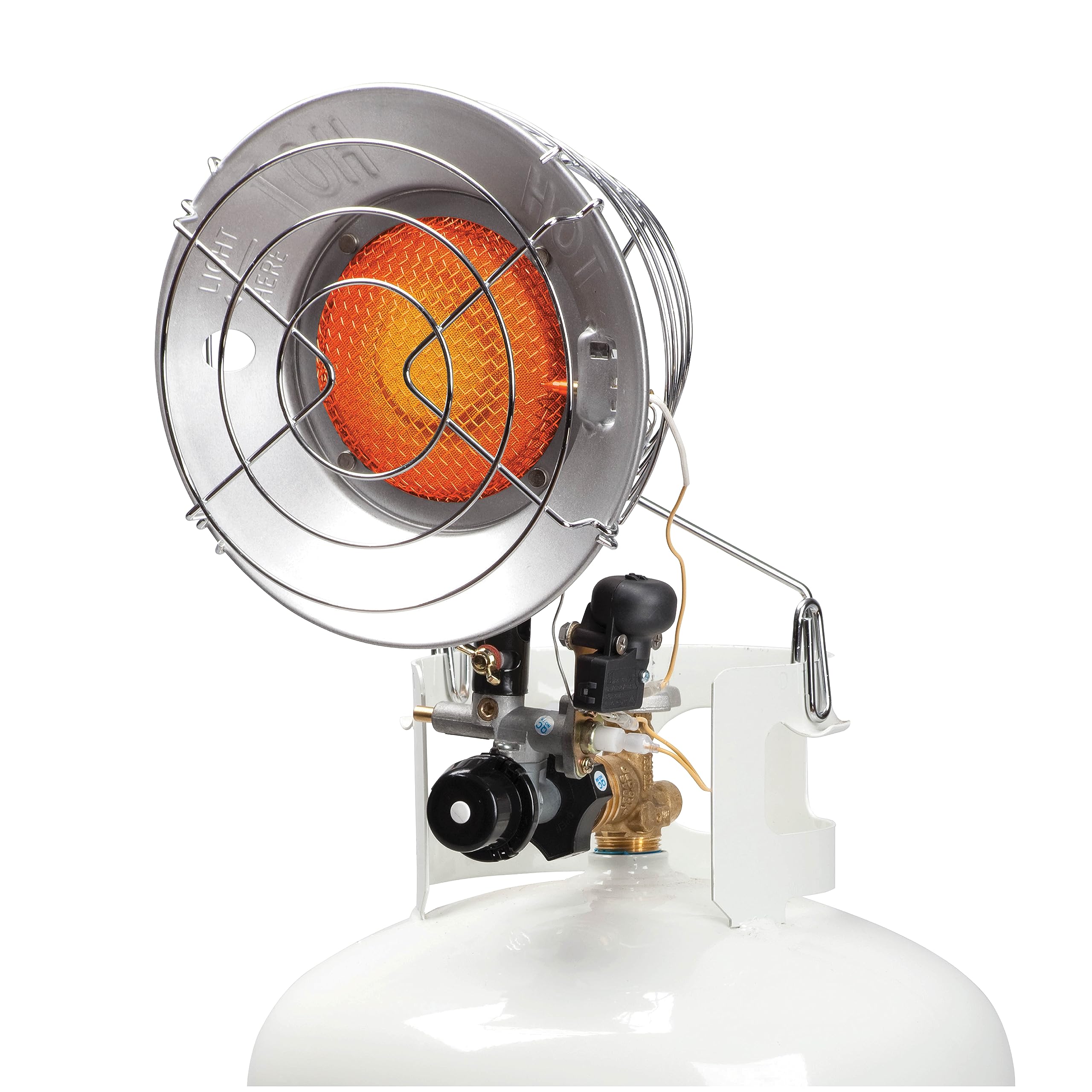
A modest single-head tank-top heater that delivered quiet, long-run radiant warmth for sheds and small outdoor gatherings.
Why I picked it: Long run time and conservative heat—ideal for prolonged use.
Best for: Sheds, small greenhouses, and all-night coverage.
A low-cost pick with excellent fuel efficiency and runtime.
Pros
- Quiet operation
- Long run time on 20 lb tank
- Three heat settings
Cons
- Lower overall output
- Manual match-light ignition
My take
I rely on this single-head unit when I need heat that lasts through the night. Its lower BTU output is perfect for keeping sheds, greenhouses, or an uncovered deck slightly above freezing without burning through propane quickly.
The high/medium/low settings give me control over fuel use, and I routinely get long runtimes from a single 20 lb cylinder. It’s simple to use and compact to store when not needed.
My only minor complaint is that it’s a basic, match-lit design—fine for the workshop, but I keep a piezo lighter on hand to make starts easier.
7. Flame King 40 lb Propane Cylinder – Best Tank for Heaters
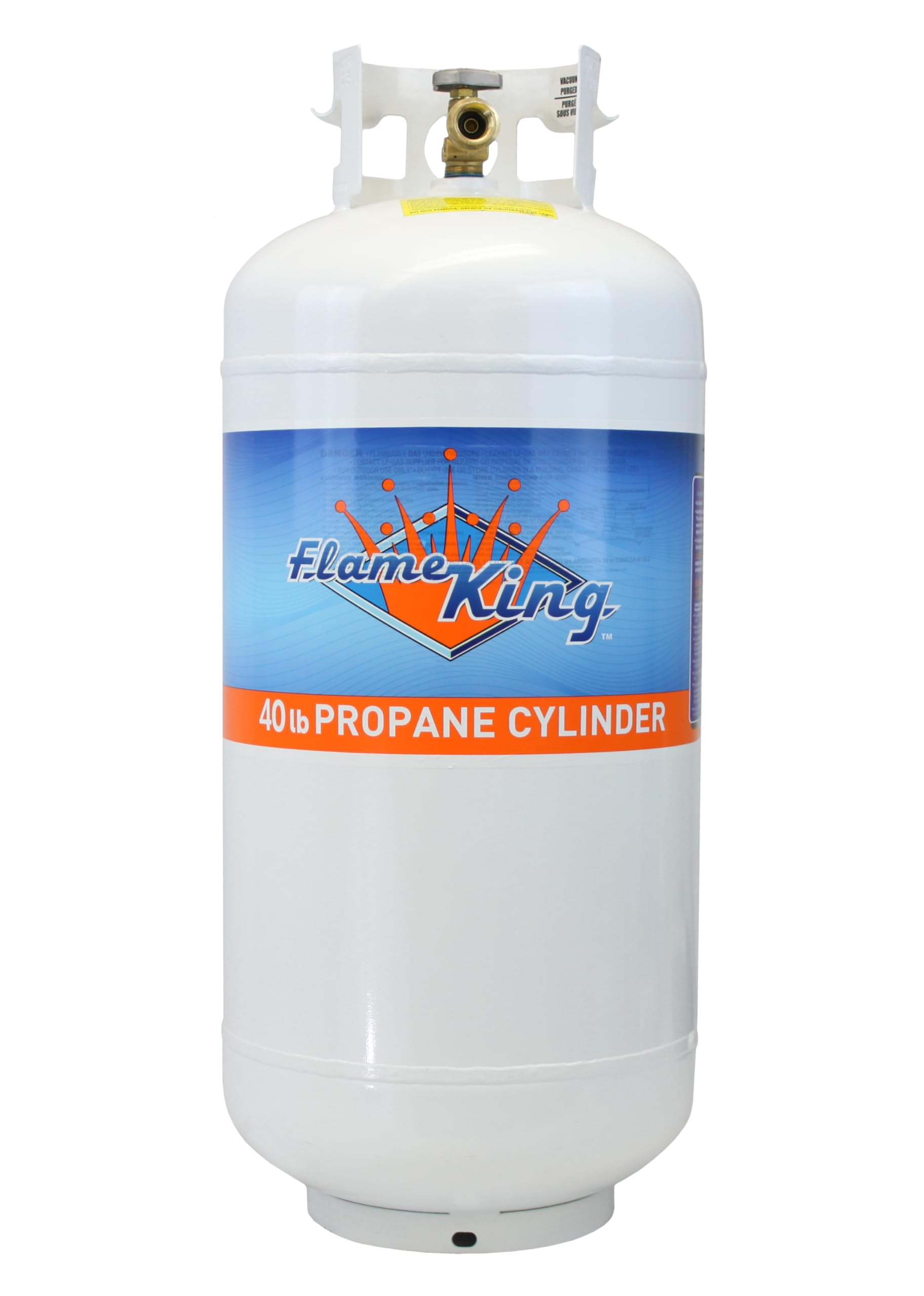
A heavy-duty 40 lb refillable tank I used to extend runtime for tank-top heaters and keep a clean supply for emergencies.
Why I picked it: DOT-tested, OPD valve, and substantial capacity for longer run times.
Best for: Extending run time for heaters and stationary outdoor kitchens.
A longer-run investment that reduces refill frequency.
Pros
- DOT and hydrostatic tested
- OPD overfill protection valve
- Large capacity for extended run time
Cons
- Heavier when filled
- Requires proper handling and storage
My take
I switched to a 40 lb Flame King cylinder when I wanted fewer refill trips and longer continuous heat during winter projects. The tank feels solid and the valve operates smoothly when I connect heaters and regulators.
Because it includes an OPD valve, refilling has been straightforward at standard fill stations. The heft when full is noticeable, so I plan placement before filling and use a dolly when I need to move it.
If you run a tank-top heater frequently or want a larger emergency supply, a 40 lb cylinder eliminated the constant swap of 20 lb tanks for me.
8. Remington 60,000 BTU Forced Air Heater – Best for Large Spaces
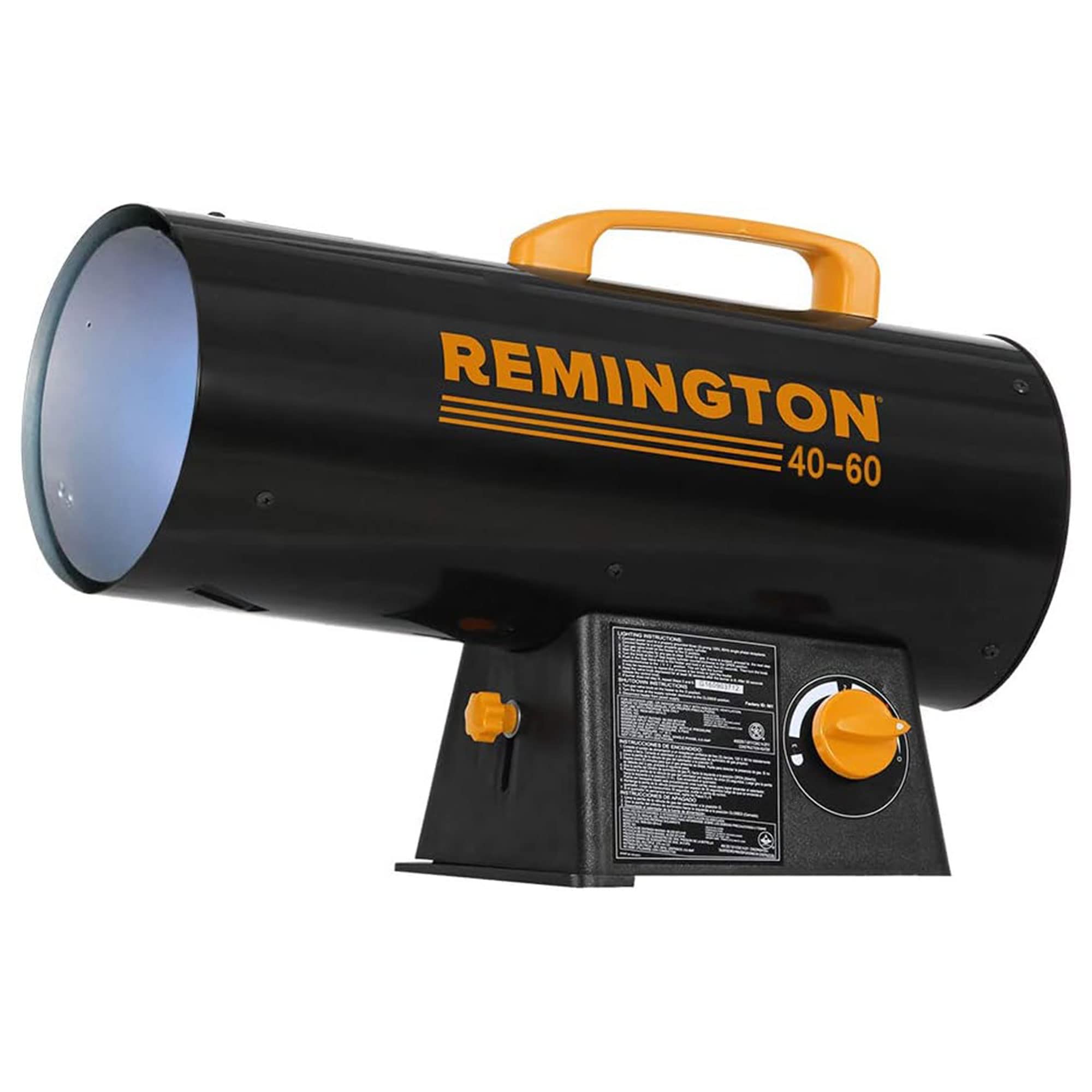
A forced-air workhorse that delivered rapid heat for large, open spaces like workshops and job sites.
Why I picked it: High BTU forced air warms large spaces quickly and includes an electronic igniter.
Best for: Large garages, workshops, and ventilated construction spaces.
A more robust, higher-output option for big areas.
Pros
- 60,000 BTU forced-air output
- Electronic ignition and adjustable height
- Included hose and regulator
Cons
- Very loud in operation
- Requires ventilated or open spaces
My take
I used the Remington forced-air heater for big, drafty spaces where radiant heads can’t keep up. It blew hot air fast and made a big workshop feel workable within minutes.
Setup was straightforward—the included 10-foot hose and regulator made connection to a 20 lb tank easy, and the electronic ignition started reliably. Variable heat settings and height adjustment helped me direct warmth where I needed it most.
This heater is loud—fine on a noisy job site, but not ideal for conversation-heavy areas. I always used it only in well-ventilated or open spaces because of the forced-air design.
How I Picked and What I Look For
Matching heater type to the space
I decide between radiant tank-top heads, tall patio towers, and forced-air models based on where I need heat. Radiant tank-top heaters are efficient for spot warming and workshops. Tall patio heaters distribute more ambient warmth for seating areas, and forced-air units are my choice for large, uninsulated spaces where speed matters.
- Choose radiant for focused, directional warmth
- Pick patio towers for seating-area ambiance
- Select forced-air for large, ventilated spaces
Safety and ventilation
I always check for tip-over shutoffs, oxygen-depletion sensors (for indoor-rated units), and secure tank connections. I only run indoor-safe models in enclosed spaces and keep forced-air or tank-top units in ventilated areas or outdoors to avoid accumulation of combustion byproducts.
- Confirm ODS for indoor use
- Use tip-over protection on portable units
- Ensure adequate ventilation for forced-air heaters
Fuel capacity and runtime
I balance output and runtime. A high-BTU heater heats faster but burns fuel faster, so I pair powerful units with larger cylinders when possible. For overnight or extended sessions, a 40 lb or 20 lb tank reduces swaps compared with 1 lb disposable cylinders.
- Match BTU to task to avoid waste
- Use larger tanks for extended runtime
- Consider refillable 1 lb options for portability
Portability and placement
I look at weight, wheels or handles, and base stability. Tall towers with wheels are easy to position but need stable bases; tank-top units are compact and fit under workbenches but must sit flat and upright to operate safely.
- Wheels help but inspect base construction
- Tank-top units need flat, stable placement
- Plan tank location before filling heavy cylinders
Frequently Asked Questions
Can I use a tank-top heater inside my garage or tent?
I only use tank-top heaters outdoors. Some compact models are rated for indoor use because they include oxygen-depletion sensors; I only run those indoors and follow the manufacturer’s ventilation guidance.
How long will a 20 lb tank run a tank-top heater?
Run time varies by BTU and heat setting. From my use, high-output tank-top units typically run several hours on a 20 lb cylinder, while lower-output single-head units can last much longer.
Are forced-air propane heaters safe for indoor use?
I use forced-air models only in well-ventilated or open spaces. They produce strong heat but also require ventilation and mindful placement because they move combustion air through the space.
Final Take
I picked heaters here to cover the main ways I use propane heat: tall towers for patios, compact indoor-safe portability, tank-top radiant heads for workshops, and forced-air for big, ventilated areas.
If I want quick personal warmth in a small space I reach for the Little Buddy. For a durable, all-around patio solution I rely on the Amazon Basics tower. For shop work and efficient spot heat, the tank-top radiant options have been my go-to.
Think about where and how long you’ll run the heater, match BTU and tank size accordingly, and prioritize the safety features that fit your use case. With the right match, propane heat is a simple, effective way I extend outdoor seasons and stay productive in cold weather.
