
I tested a range of propane heaters and accessories — from pocket-sized Buddy heaters to high-output forced-air units — and I’m sharing the options I relied on to warm garages, workshops, and patios.
I spent time with a variety of propane heaters and the accessories that make them work in garages and workshops. My goal was to find dependable options for small spaces, large shops, and outdoor patios, plus the hookups and power adapters that keep them running smoothly.
In this roundup I focused on real-world performance: how quickly each unit produces usable heat, how easy it is to set up and move, and which safety features matter most when you’re working in a closed or semi-enclosed space.
Below I explain which tool I’d pick for each use case and why — including compact Buddy heaters, high-output tank-top and forced-air units, a commercial patio model, and the essential hookups and accessories I used while testing.
I compared portable radiant heaters, tank-top radiant models, forced-air units, a commercial patio heater, and the installation accessories I used to get them running. My picks favor reliability, safety features, and practical performance for garage use.
1. Mr. Heater One-Stop Gas Hook-Up Kit – Best Hook-Up Kit
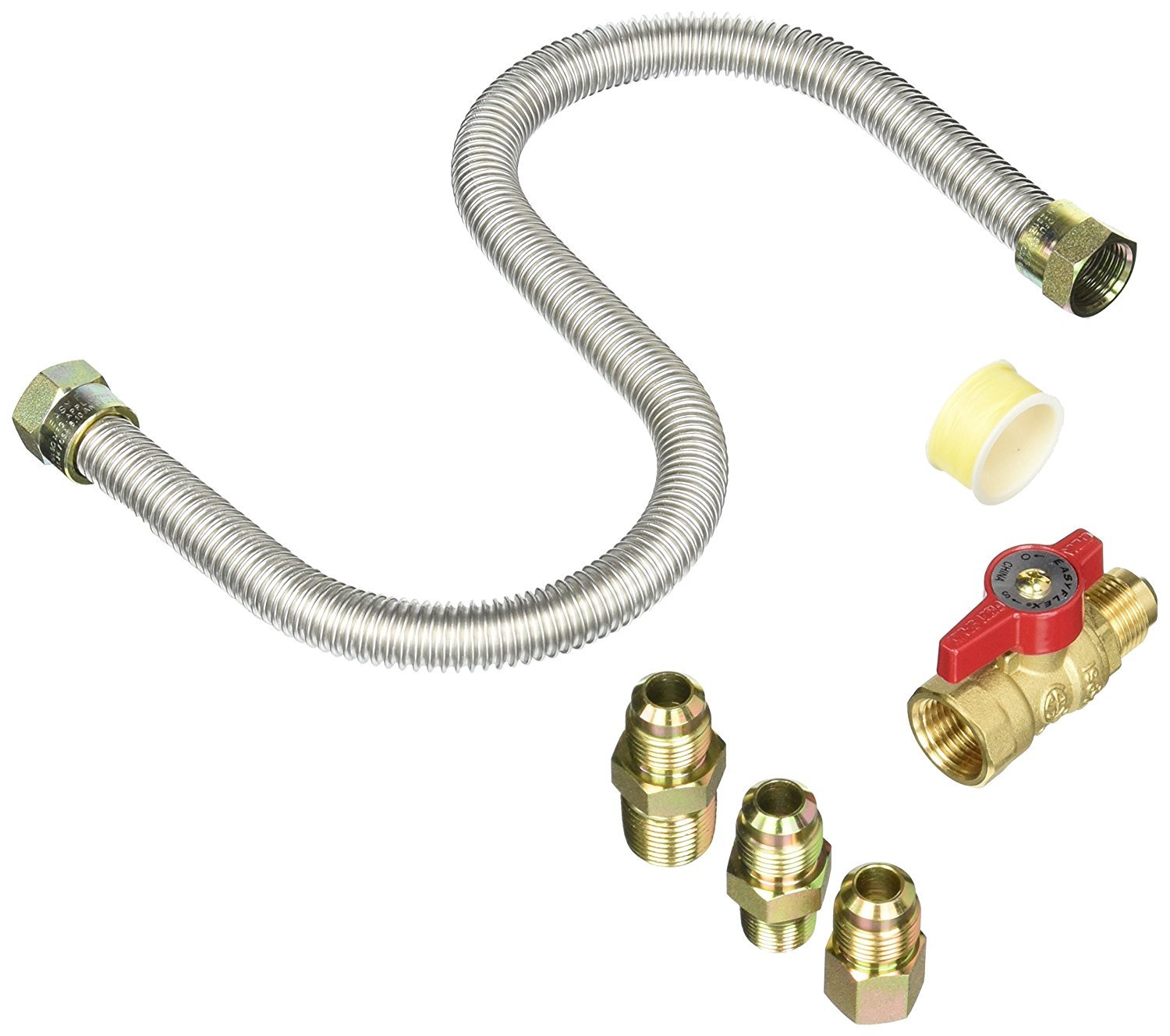
I kept one of these kits on hand whenever I needed a quick, steel gas connection for a garage or wall-mounted heater.
Why I picked it: Complete five-piece kit with flexible line and shutoff valve.
Best for: Connecting garage heaters to a propane or natural gas supply.
Affordable connection kit for most heater installs.
Pros
- Includes 18-inch flexible gas line
- On/off valve for easy servicing
- Five-piece set covers common hookups
- Steel construction
Cons
- May still need additional fittings
- I prefer to add my own sealing material
My take
This kit gave me everything I needed for basic appliance hookups: an 18-inch flexible gas line, three couplings, and a shutoff valve that’s handy for summer storage or servicing. The steel hardware feels solid.
In my installs I used gas-rated pipe dope instead of the provided tape and had no leaks. Be prepared: depending on your heater and piping, you might still need an extra fitting or two from a hardware store.
The cut-off valve alone has saved me time when I’ve needed to isolate a unit for maintenance. Overall, this is a compact, practical kit to keep in the garage toolbox.
2. Mr. Heater Big Buddy 18,000 BTU – Best Portable Heat
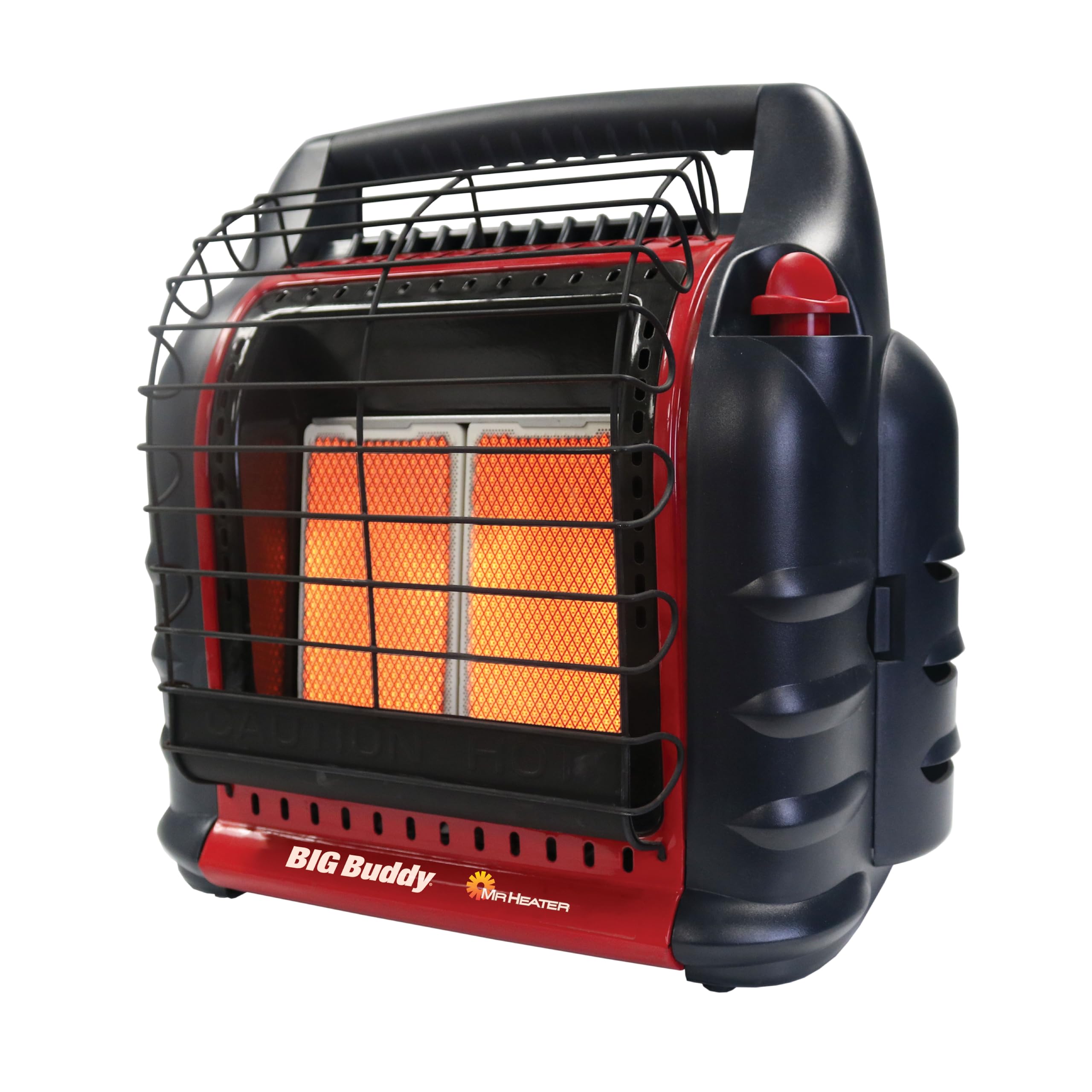
When I needed flexible, indoor-approved heat for a small garage or deck, the Big Buddy’s radiant output and safety systems were my go-to.
Why I picked it: Indoor/outdoor approval, three heat settings, and ODS safety.
Best for: Small garages, covered decks, and quick spot heat.
A solid midrange portable heater.
Pros
- Three heat settings for control
- Approved for indoor and outdoor use
- Swivel regulator for easy setup
- Registered safety systems (ODS, tip-over)
Cons
- Heat stays close to the unit
- Optional hose required for 20 lb tank
My take
I relied on the Big Buddy when I needed portable warmth without a permanent installation. The unit runs at 4,000, 9,000, or 18,000 BTU so I dialed output to the situation and appreciated how quickly it felt warm nearby.
Setup is simple: it takes two 1-lb cylinders or, with the accessory hose, a 20-lb tank. The swivel regulator makes the connection straightforward and the infrared-style radiant heat is noticeably comfortable when I’m standing near it.
A couple of practical notes from my time with it: most of the heat radiates around the unit and upward, so I used a small fan when I needed more even floor-level warmth in my garage. The built-in safety systems gave me confidence using it indoors with ventilation and a CO detector.
3. Mr. Heater 45,000 BTU Tank-Top Radiant Heater – Best for Big Garages
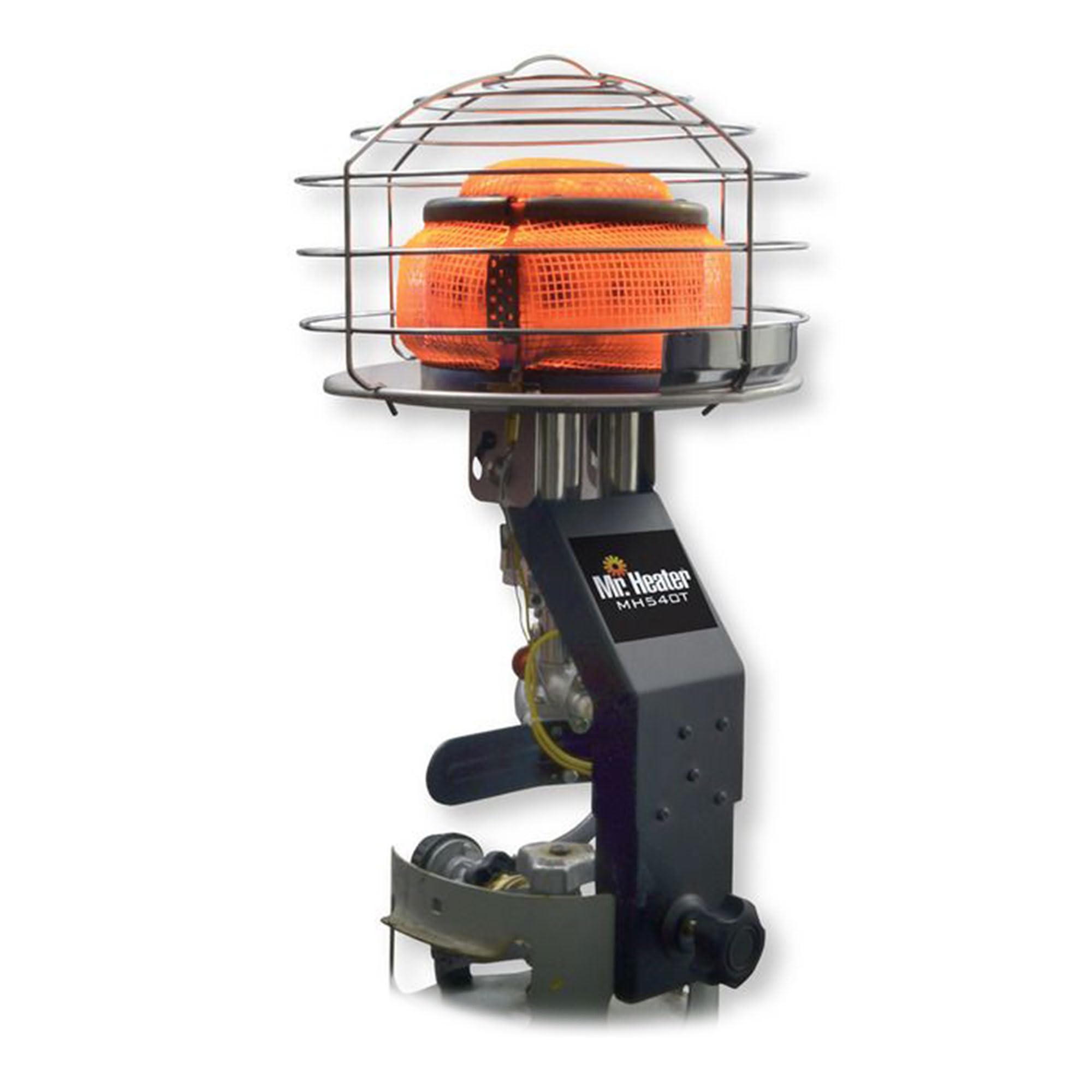
For fast, heavy-duty radiant heat in a two-car garage or workshop, this tank-top unit delivered the most usable warmth per square foot in my tests.
Why I picked it: Mounts directly to 20 lb tank and offers multi-directional heat.
Best for: Larger garages and workshops needing strong radiant heat.
High-output value for the heat it delivers.
Pros
- Very high heat output
- Mounts directly to 20 lb tank
- Three output settings
- Multi-directional bracket
Cons
- Outdoor use only
- Initial burn-in can smell
My take
This tank-top heater is built like a workhorse — solid, heavy, and easy to mount to a standard 20 lb grill tank. I used the three-position regulator to move from 30,000 to 45,000 BTU and appreciated how much quicker the garage reached comfortable working temperatures compared with my old wood stove.
The first light requires a bit of patience while the mantle warms to full glow, but subsequent starts are quick. I did notice a faint odor during the first use; that faded after a short break-in period.
Because the heat is radiant and strong, it warms people and tools efficiently without taking up much floor space. This was my top pick when I needed raw output for a larger, uninsulated workshop.
4. EAST OAK 50,000 BTU Patio Heater – Best Patio/Commercial
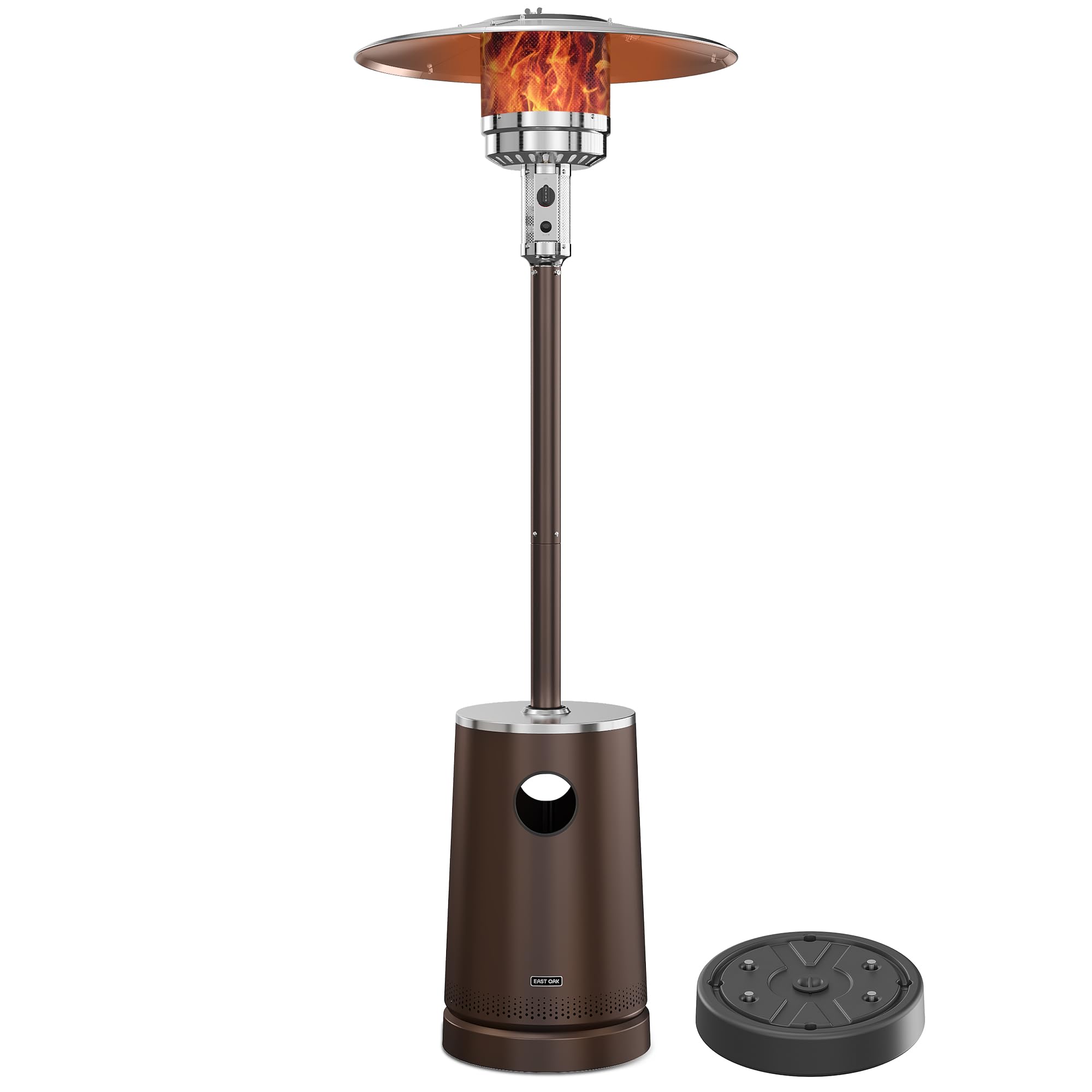
When I wanted a polished outdoor solution that looks good and heats a group, this patio heater combined high output with useful features like a table top and wheels.
Why I picked it: 50,000 BTU, double-layer stainless burner, ETL/CSA certified.
Best for: Outdoor patios, entertaining spaces, and light commercial use.
A more premium outdoor heater with extra features.
Pros
- High 50,000 BTU output
- Double-layer 304 stainless burner
- Built-in round table
- Tilt and flame-out protection
Cons
- Not for indoor use
- Base paint can fade in prolonged sun
My take
I put this unit on my patio when I needed a heater that both performed and looked right for guests. The 50,000 BTU head spreads heat in a large radius and the built-in table made it convenient for drinks or small items.
Construction felt solid and the double-layer stainless burner gives me confidence about long-term durability. The one-touch igniter is quick and the adjustable control knob made it straightforward to tune output.
After a few seasons in full sun I noticed slight fading on the base finish, but the heater otherwise kept performing. When I had a burner issue, I contacted the company and they sent a replacement assembly quickly — that made getting back in service painless.
5. Mr. Heater MH9BX Portable Buddy + 10-ft Hose – Best Small Space
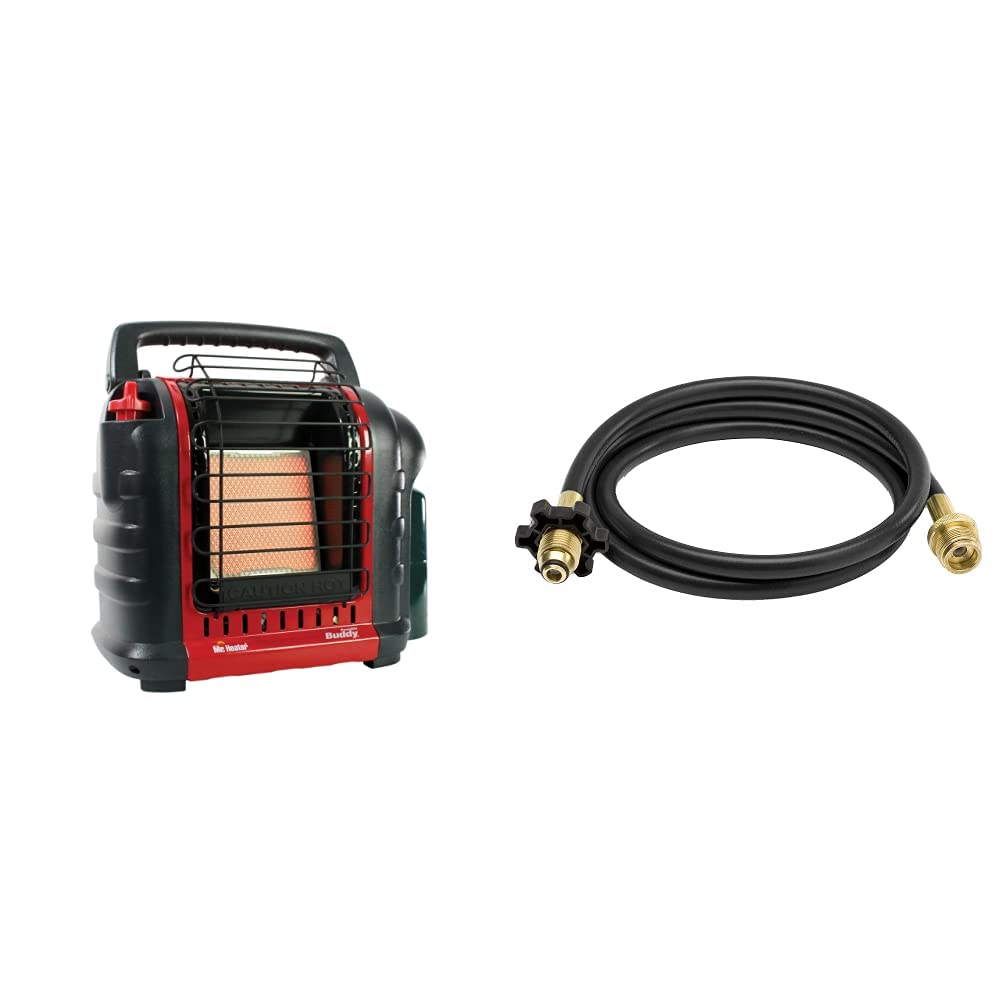
For tight garages, tents, or emergency backup I relied on the compact Buddy and the included 10-foot hose to stretch runtime from a small cylinder to a larger tank.
Why I picked it: Compact, indoor-approved Buddy heater plus 10-ft hose for tank hookup.
Best for: Small garages, tents, and emergency backup heat.
Economical bundle for portable heating needs.
Pros
- Very portable and lightweight
- Auto shut-off safety features
- Can connect to 20 lb tank with included hose
- Five-minute ignition
Cons
- Can overheat very small enclosed spaces
- Limited absolute output for large areas
My take
This little Buddy surprised me with how much heat it produces for its size. I used it in an insulated shed and in a small garage and it warmed the space quickly on the higher setting.
The oxygen depletion sensor and tip-over shutoff made me comfortable using it as a short-term indoor solution, and the 10-ft hose lets me hook it to a remote tank so I’m not swapping tiny 1-lb cylinders constantly.
For overnight or long-duration use I monitored ventilation and kept a CO detector nearby, but for short sessions and emergencies the Buddy is reliable, compact, and easy to carry.
6. LotFancy 6V Power Adapter for Big Buddy – Best Accessory: Power Adapter
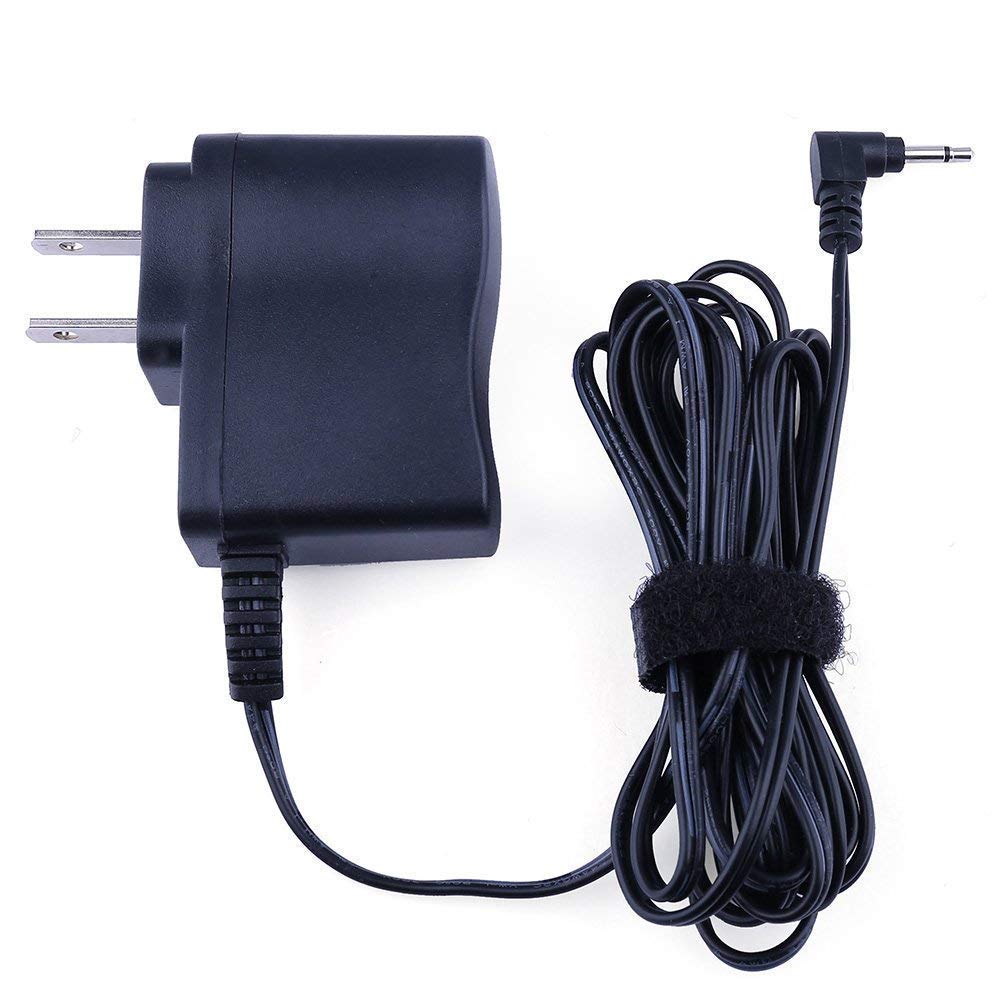
I swapped the Big Buddy’s batteries for this UL-listed adapter to keep the built-in fan running from AC power and remove the battery worry.
Why I picked it: Provides steady 6V power for the Big Buddy fan, long cord.
Best for: Big Buddy owners who want continuous AC power for the fan.
Low-cost, practical accessory.
Pros
- UL listed for safety
- Long 5.75 ft cord
- Eliminates need for batteries
- Right-angle jack fits well
Cons
- Not a USB plug
- Only for compatible Big Buddy models
My take
I plugged this adapter into my Big Buddy and the fan came to life immediately — no batteries required. The fit is secure and the cord length gave me flexibility on placement.
It’s UL-listed and felt well made; using it eliminated small battery changes and made longer sessions more convenient. Just double-check compatibility with your model before ordering, since it doesn’t work with the smaller Buddy series.
7. Mr. Heater MH60QFAV 60,000 BTU Forced-Air Heater – Best Forced-Air / Jobsite
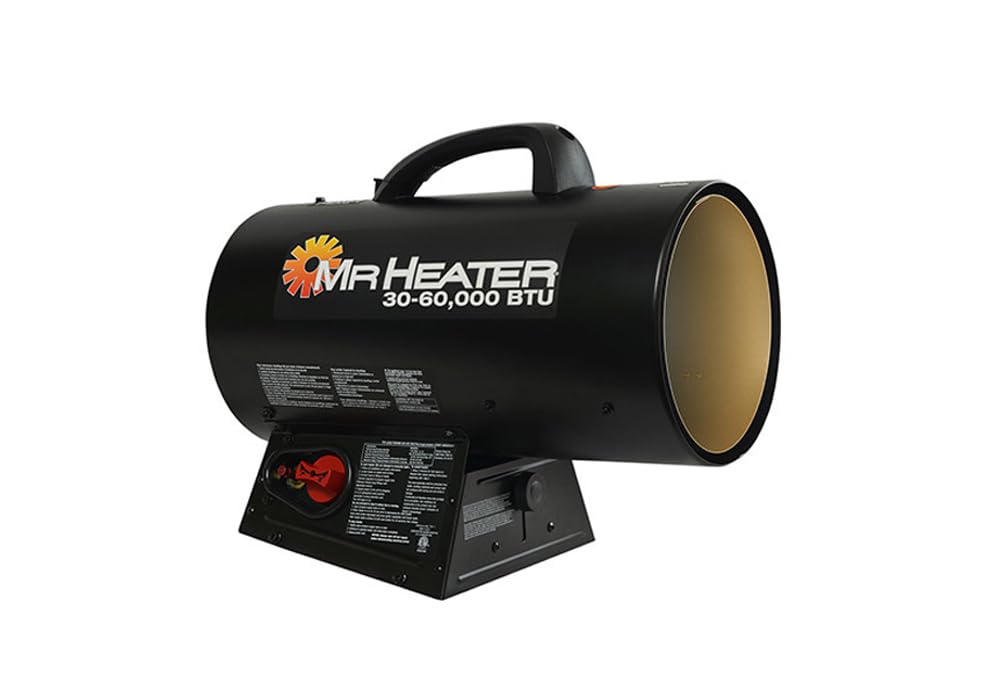
When I needed sustained, distributed heat for a large uninsulated garage or jobsite, the forced-air MH60QFAV was the unit I reached for.
Why I picked it: High output with continuous ignition and quieter blower technology.
Best for: Large workshops, garages, and jobsite heating tasks.
Professional-grade option for big spaces.
Pros
- Up to 60,000 BTU output
- QBT tech reduces noise
- Continuous ignition
- Heats very large areas
Cons
- Requires ventilation in enclosed spaces
- Igniter runs continuously (audible)
My take
I used the MH60QFAV to warm a 12×20 uninsulated workshop and it performed beyond expectations, bringing the space up to comfortable levels quickly and maintaining steady heat on the low setting.
The continuous ignition does make a faint ticking sound, but the quieter blower technology keeps it less intrusive than older forced-air units. The variable output helped me match heat to the task, and the included hose and regulator simplified setup.
A strong reminder from my testing: forced-air units like this need ventilation and CO monitoring if they’re used in closed garages. When used safely, this is the unit I trust for large, cold workspaces.
8. Mr. Heater Big Buddy Carry Case – Best Carry Case
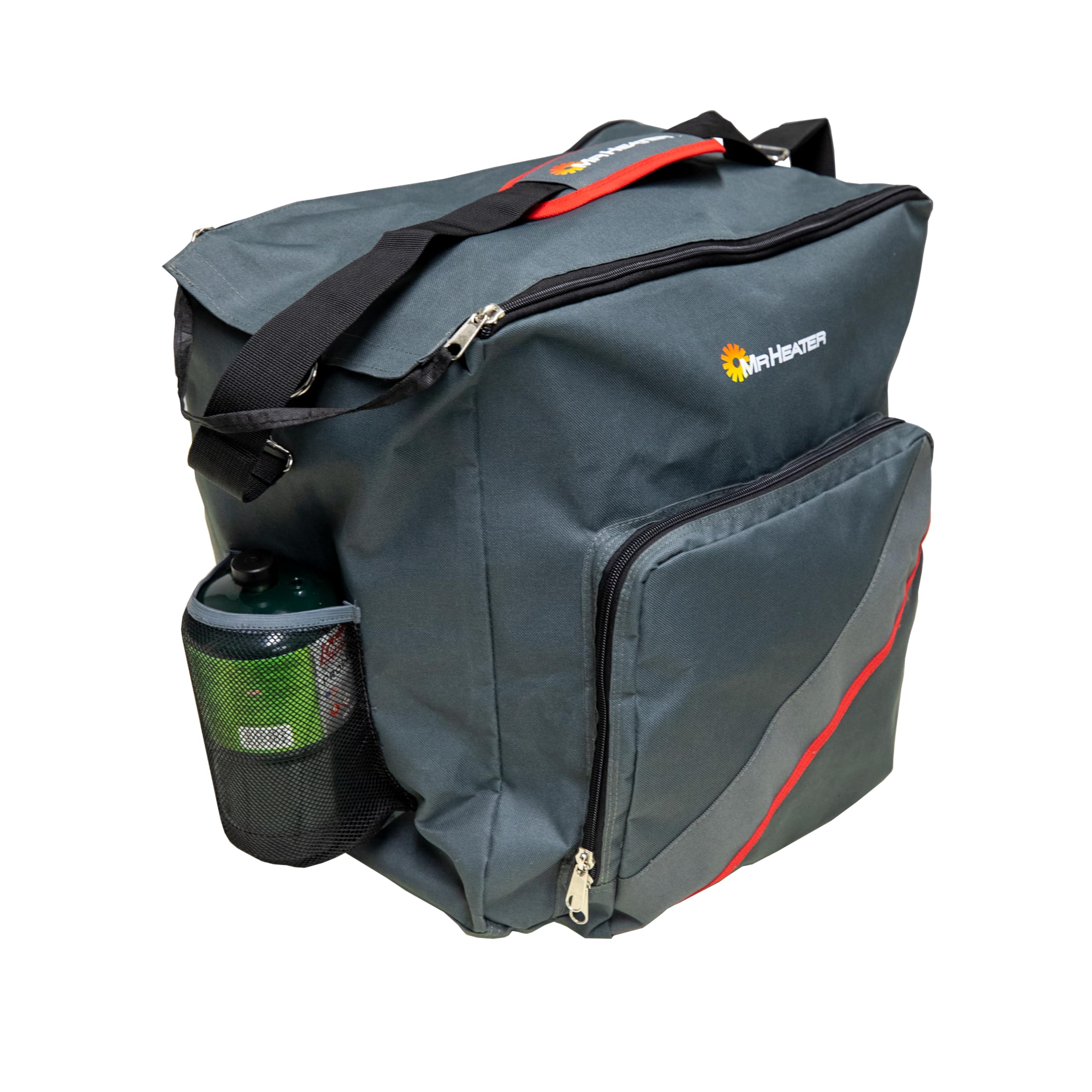
I kept one of these carry cases to protect and transport Big Buddy heaters, hoses, and spare cylinders between trips and storage.
Why I picked it: Sturdy, roomy case with pockets and padded strap.
Best for: Storing and transporting Big Buddy heaters and accessories.
Inexpensive protection and organization.
Pros
- Padded shoulder strap
- Roomy pockets for hoses and cans
- Durable construction
- Quick access to propane cylinders
Cons
- A bit oversized for smaller buddies
- No rigid handle
My take
This official carry case fits a Big Buddy plus hoses, regulators, and extra canisters with room to spare. The interior pockets keep accessories organized and the padded strap makes it easy to carry between jobs.
I also use the case to store the heater when it’s not in use; it prevents dust buildup that can affect igniters. For anyone who moves their Buddy around, this is a simple and useful protective solution.
How I Picked These Propane Heaters
Key factors I looked at
I prioritized safety features, usable heat delivery, and setup flexibility when testing heaters for garages and workshops.
Safety: I only considered units with oxygen depletion sensors (ODS), tip-over shutoffs, or certified safety listings when indoor use was implied.
Heat delivery: I tested how quickly a heater produced usable warmth where people work — radiant units warm tools and bodies directly, while forced-air units move heat around larger spaces.
- Output: Match BTU range to your garage size; higher BTUs for large, uninsulated shops.
- Type: Radiant (Buddy, tank-top) for spot heat; forced-air for whole-space warming.
- Fuel hookup: Decide between small disposable cylinders or a 20 lb tank and get the appropriate hose or kit.
- Accessories: Consider a power adapter for fans and a carry case for storage and transport.
- Safety gear: Always use CO detectors and provide ventilation when using propane in enclosed or semi-enclosed spaces.
Practical setup tips I follow
I always plan my connections before installing: sketch the connections, check thread sizes, and confirm whether I need male/female or flared fittings.
I seal connections with gas-rated Teflon or pipe dope rather than relying on non-rated tape. After any hookup I pressure-check for leaks before regular use.
- Ventilation: Crack a window or run an exhaust fan when using in a garage.
- Run time: Use a hose to connect to a 20 lb tank if you want longer runtime than disposable cylinders.
- Placement: Keep combustibles well away; follow manufacturer clearance recommendations.
- Maintenance: Store heaters covered and keep carry cases to prevent dust and igniter issues.
Frequently Asked Questions
Can I use these propane heaters safely inside my garage?
I use some models indoors only with proper ventilation and a CO detector in place. Buddy series heaters with ODS and tip-over shutoffs are the safer choices for short-term indoor use; high-output tank-top and patio models are intended for outdoor use and should not be run in enclosed spaces.
Do I need a special hose or kit to connect a heater to a 20 lb propane tank?
Yes — many portable units run on 1-lb canisters by default. I add a dedicated hose or a universal hookup kit to connect to a 20 lb tank for longer runtime. Confirm thread types and regulator compatibility before connecting.
Which heater type warms a garage fastest?
In my experience, high-output tank-top radiant heaters and forced-air units deliver the fastest, most noticeable warmth. Radiant models heat people and tools quickly while forced-air units raise overall air temperature across a larger area.
Final Take
If I need quick spot heat in a small garage, I reach for a Buddy-style heater or the compact Big Buddy. For larger or uninsulated workshops I prefer the tank-top or forced-air units for their higher output.
Hookup kits, hoses, and accessories like a power adapter and carry case make a big difference in convenience and runtime — I recommend planning those purchases alongside the heater itself.
Above all, I prioritize ventilation, a CO detector, and the built-in safety features each unit offers. With those precautions in place, each of these picks has a clear role depending on the size of your space and how you work.
