
I tested five fire pit spark screens across sizes and materials so I could recommend dependable, safe options for backyard fires, camping, and portable stoves.
I’ve spent evenings testing spark screens on backyard pits, portable stoves, and at campsites to find options that actually contain embers while letting the fire breathe.
This roundup covers heavy-duty mesh lids, hinged large screens, a stainless nesting shield for Solo-style pits, and budget-friendly replacements so you can pick the right fit for your setup.
In my experience the main trade-offs are size and access versus portability and corrosion resistance: larger hinged screens make tending big fires easy, stainless shields travel and resist rust, and compact mesh lids are the simplest, most affordable protection for standard pits.
1. Sunnydaze 24-Inch Heavy-Duty Fire Pit Screen – Best Overall
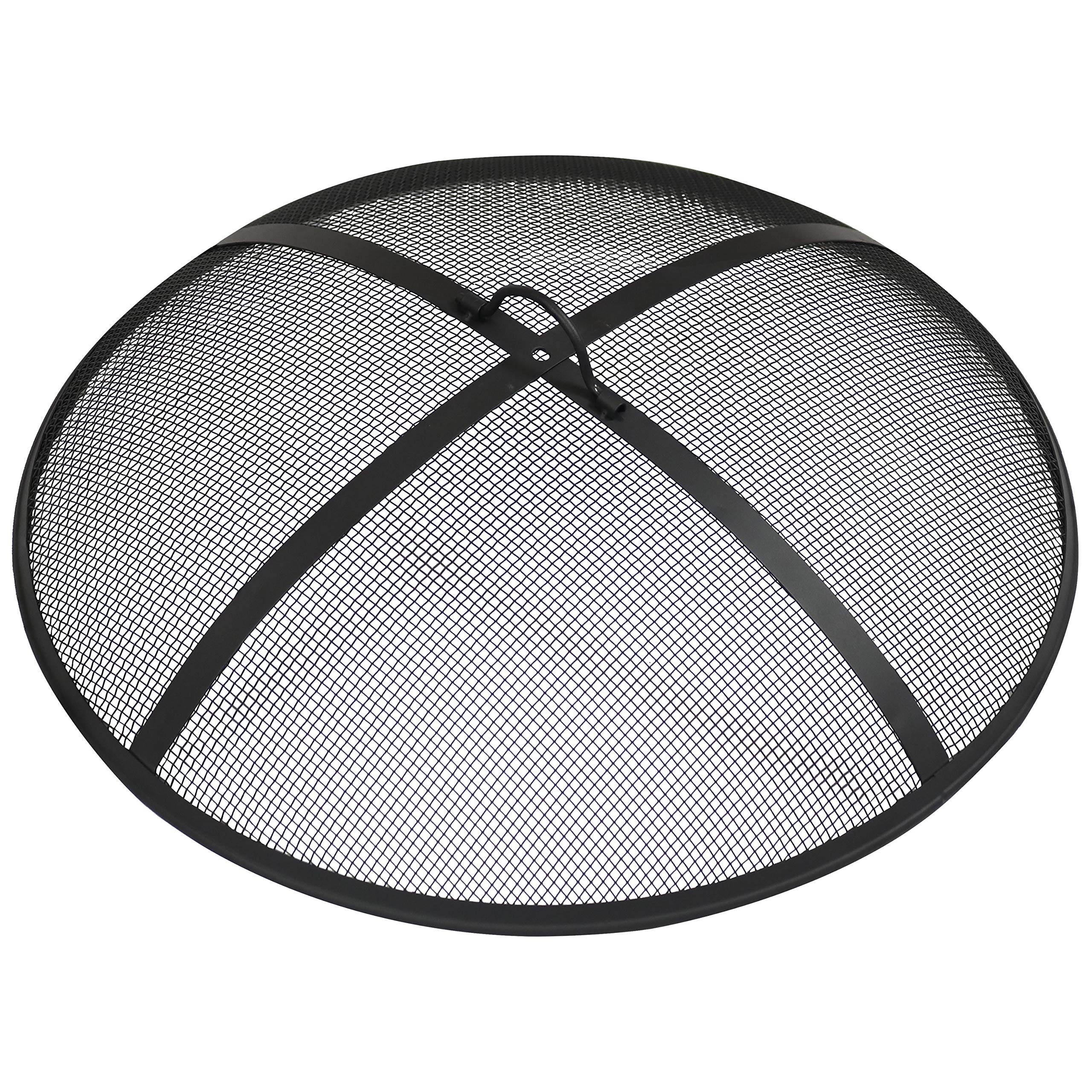
A straightforward 24" spark screen with a 0.7 mm steel frame and easy-lift top handle that fits standard 24-inch pits and keeps embers contained.
Why I picked it: Strong frame, right size for 24" pits, no assembly, and a useful lift handle.
Best for: Owners of 24-inch backyard fire pits who want reliable ember protection.
Affordable midrange option for most backyard setups.
Pros
- Sturdy 0.7 mm steel frame
- No assembly required
- Easy-lift handle
- Keeps sparks contained
Cons
- Paint can discolor with heavy use
- Sized only for 24-inch pits
My take
I use this screen on my 24-inch pit when I want simple, effective protection; it slips on easily and the top ring makes removal quick even when it’s hot.
The 0.7 mm frame and woven mesh feel robust and, after a couple of seasons of regular fires, it has held up well in my backyard climate.
One thing I learned the hard way is that painted metal will change color with really hot burns; the coating can flake where flames contact it most.
For me it’s the right blend of durability and convenience — I’d choose this when I want dependable coverage without fiddly setup.
2. Sunnydaze 40-Inch Round Fire Pit Screen – Best for Large Pits
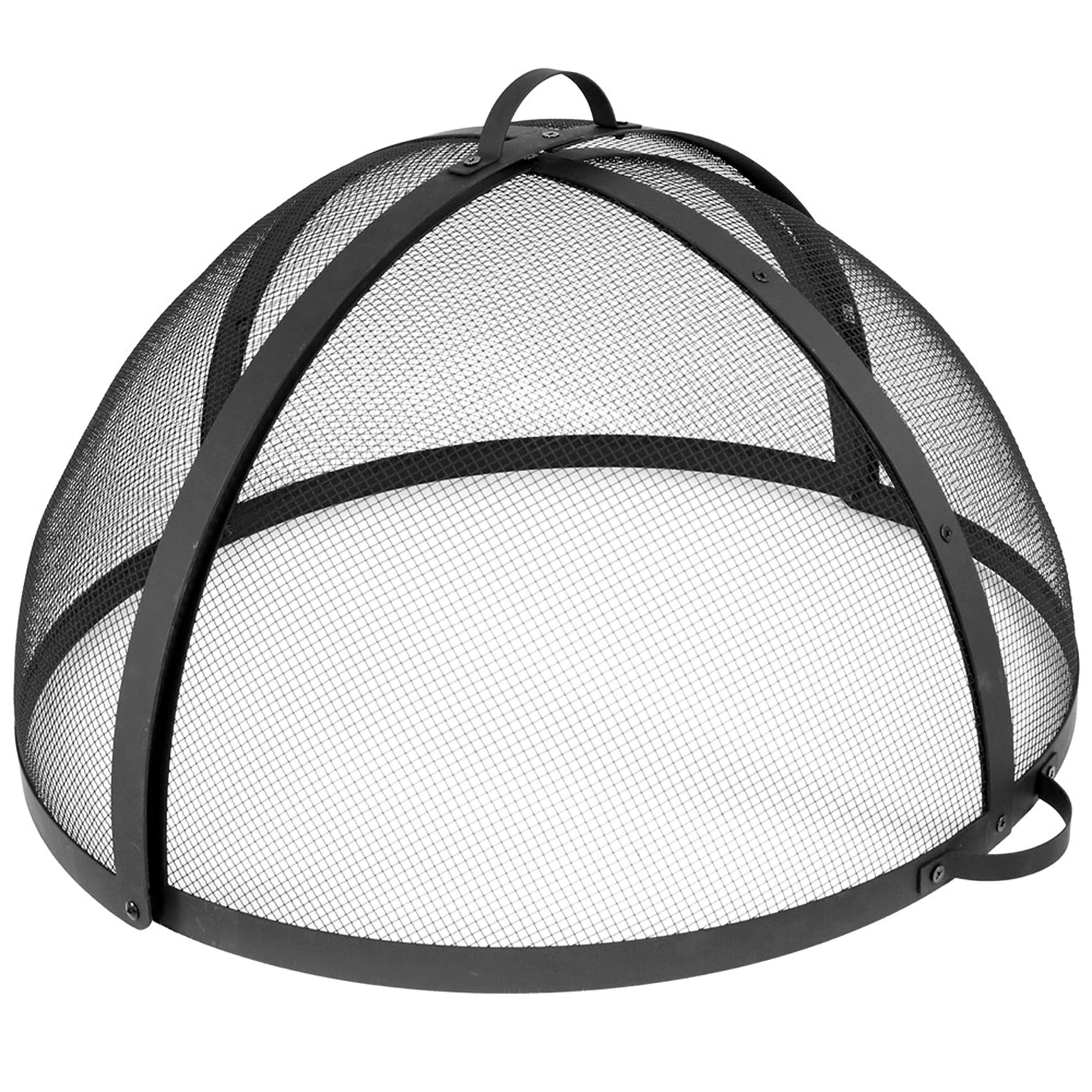
A heavy 40" mesh screen built for big fire rings with a hinged side door so I can add wood without removing the whole cover.
Why I picked it: Wide coverage and a hinged access door that makes tending a large fire much easier.
Best for: People with 39–40" fire pits who want convenient wood access.
Higher-cost but reasonable for large-size protection.
Pros
- Hinged side access door
- Durable 0.7 mm construction
- Maintains airflow
- Substantial weight for stability
Cons
- Heavy to lift
- Can rust if left exposed
My take
When I switched to a larger pit, this 40-inch screen solved the problem of adding logs without wrestling a full lid off — the hinged panel is exactly what I needed.
It’s a solid, heavy piece that feels like it’ll stay put in breezy conditions, and the mesh keeps airflow good so the fire stays lively.
I did leave mine uncovered for a season and saw some surface rust develop, so I now store it under a cover between uses to extend its life.
If you want a big, user-friendly screen for a wide ring, this one balances weight and access better than lighter covers I’ve tried.
3. Solo Stove Bonfire Shield – Best Portable
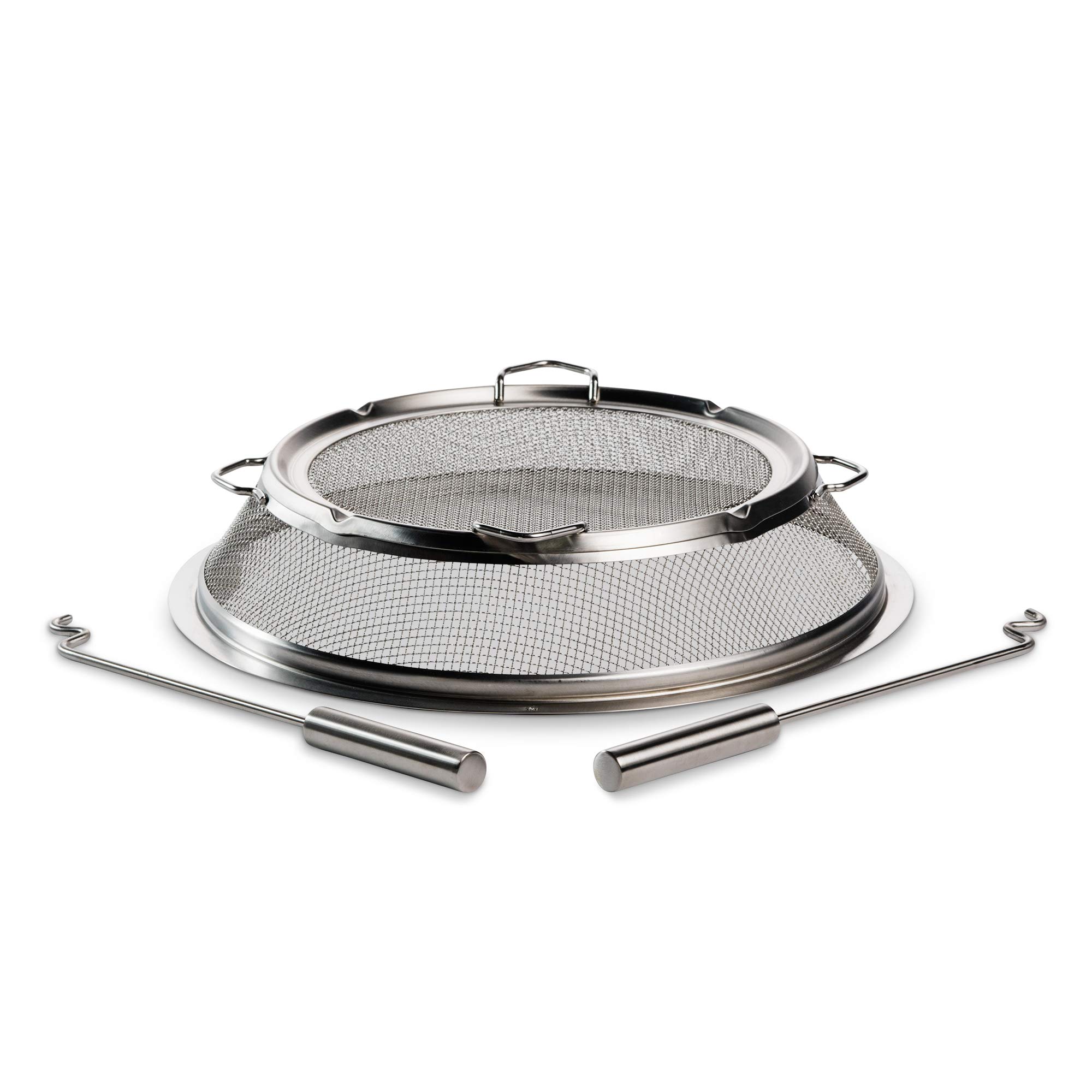
A two-piece 304 stainless steel shield that nests inside Solo-style burn chambers, includes removal tools, and is built for portability and deck-safe fires.
Why I picked it: 304 stainless construction and nesting design make it the most portable, corrosion-resistant shield I tested.
Best for: Camping, tailgating, decks, and anyone using a Solo-style portable stove.
Premium stainless option focused on longevity and portability.
Pros
- 304 stainless steel
- Nests inside burn chamber
- Two-piece design for tending
- Includes removal tools
Cons
- Designed mainly for Solo-style pits
- Pricier than simple mesh lids
My take
I bring this shield on trips because it nests inside my Solo-style stove and doesn’t add bulk to my pack.
The 304 stainless resists corrosion far better than painted steel, so I feel comfortable using it on decks and in damp conditions.
The two-piece layout and included tools let me tend the fire without removing the whole shield, which makes adding fuel easy and safe.
For portable use and places where rust is a concern, this is the option I reach for first.
4. Good Directions 27-Inch Fire Pit Screen – Best Value
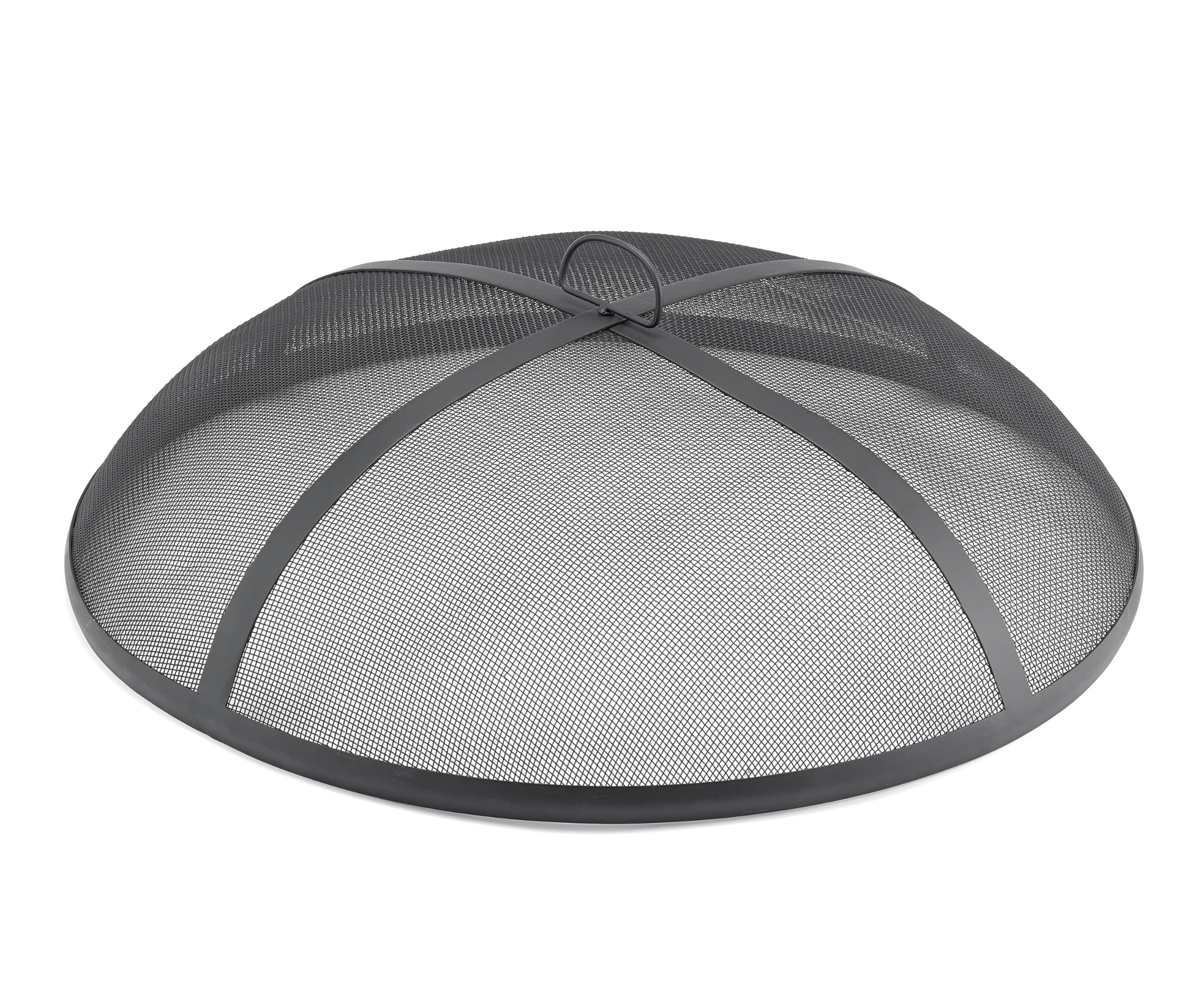
A tightly woven .7 mm mesh screen on 20-gauge steel with a high-temperature paint finish and a convenient lift handle — a solid replacement option.
Why I picked it: Good materials and a fair warranty make this a cost-effective, reliable replacement screen.
Best for: Budget-minded owners of mid-size pits who need a dependable replacement.
Budget-friendly choice with solid materials.
Pros
- Intricate .7mm mesh
- High-temp paint finish
- 1-year warranty
- Convenient handle
Cons
- Mesh may warp under extreme heat
- Handle holes may need washers
My take
I picked this as a replacement on a mid-size pit and I appreciated the tight weave — it keeps embers in while still letting the fire show through.
Assembly was straightforward, though I did end up using washers to stabilize the handle bolts so they wouldn’t slip through the factory holes.
After very high-heat burns the mesh can darken and in extreme cases warp, but for typical backyard use it’s a durable, economical option.
Overall it’s a practical buy when I want good protection without overpaying.
5. Sunnydaze 30-Inch Reinforced Fire Pit Screen – Best Mid-Size
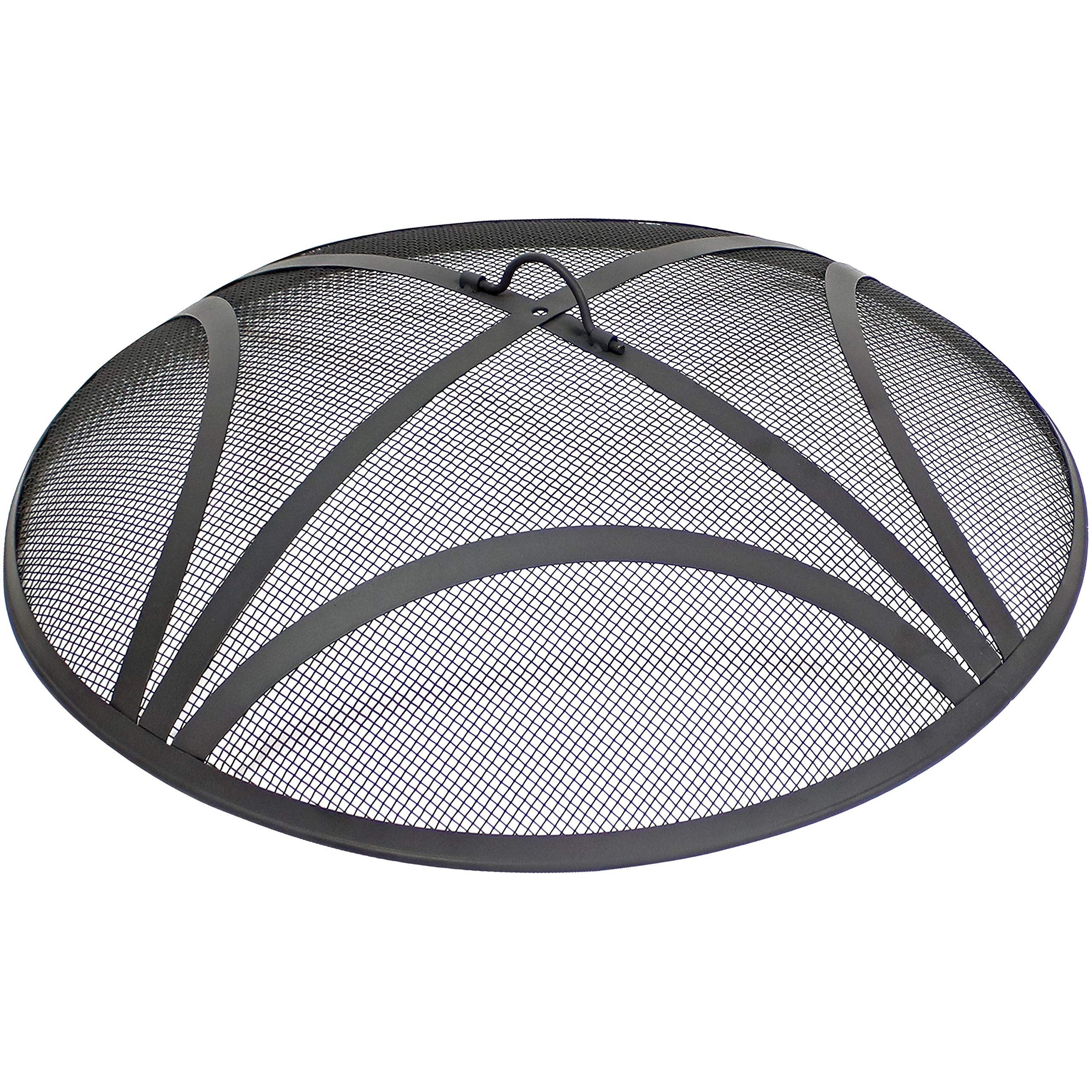
A reinforced steel, fine-mesh screen sized for ~30" pits that focuses on airflow and a clean appearance while keeping sparks contained.
Why I picked it: Fine mesh and reinforced construction strike a balance between looks, airflow, and ember control.
Best for: Owners of 30-inch pits who want a nicer-looking, functional cover.
Priced above budget screens but offers better build and finish.
Pros
- Fine mesh for steady airflow
- Reinforced steel construction
- Attractive finish
- Easy top-lift handle
Cons
- Can show rust if left uncovered
- Handle becomes very hot
My take
I like this screen for a mid-size pit when appearance matters — the finish looks cleaner than most entry-level lids.
It keeps sparks controlled while letting enough air through that my fires burn evenly.
I did notice some surface rust after exposure to rain when it was left uncovered, so I now keep it under a waterproof cover between uses.
The handle heats up quickly, so I always use a poker or glove to remove it. Still, it’s the screen I choose for evenings when I want both style and function.
How I Choose a Fire Pit Screen
Size & Fit
I always measure the inner diameter of my pit before buying a screen — a screen should sit comfortably on the rim without forcing or leaving large gaps.
If a screen lists a range (for example 39–40 inches), check whether it uses hinges or an offset so it will seat properly.
- Measure across the top of the bowl or ring, not the outer stonework.
- Allow a little extra clearance if your pit liner isn’t perfectly round.
Material & Durability
I prefer stainless if I need long-term corrosion resistance, especially near coastlines or for portable gear that sees wet storage.
Painted steel offers good value but will eventually discolor and can rust if left exposed.
- 304 stainless resists rust best.
- 0.7 mm frames are a practical thickness for backyard screens.
Access & Usability
Hinged doors or two-piece shields make tending fires far easier; I don’t want to lift a heavy lid every time I add wood.
Look for solid handles and practical removal methods — a hot metal ring needs a poker or heat glove for safe handling.
- Hinged access for large pits.
- Top rings and handles simplify removal.
Maintenance & Storage
I extend a screen’s life by covering it or storing it indoors when not in use.
Regularly brushing out ash and avoiding chemical cleaners preserves coatings and metal integrity.
- Store under a waterproof cover between seasons.
- Touch up exposed steel with high-temp paint if desired.
Frequently Asked Questions
Will a fire pit screen prevent all sparks from escaping?
I find that a properly sized mesh screen greatly reduces flying embers, but no screen is an absolute barrier — very large sparks or logs popping can still produce small escapees, so I always keep a safe perimeter and a water source nearby.
How do I prevent rust on my fire pit screen?
I prevent rust by keeping the screen covered when not in use, storing it dry during off-seasons, and choosing stainless for coastal or high-humidity environments.
Can I add logs without removing the screen?
If a screen has a hinged door or two-piece shield I add wood without removing the whole cover; otherwise I lift the screen with a poker or heat glove to avoid burns.
Is stainless steel worth the extra cost?
For me stainless is worth it when I need corrosion resistance or plan to leave the screen outside uncovered; it lasts longer and looks better over time.
Final Take
I rely on the right screen for the job: compact mesh lids for standard pits, hinged large screens for big rings, and stainless nested shields for portable stoves and deck use.
Choose based on size, material, and how you tend the fire — I’ve summarized the options that performed best for me so you can pick the one that matches your setup and habits.
