
I tested a range of stationary sprinklers — oscillating, traveling, and spot models — to find dependable options for every yard size and watering need.
I spent time using oscillating, traveling, and metal spot sprinklers across different yard sizes and water pressures so I could recommend the right tool for each job.
My aim was practical: pick sprinklers that make watering easier, stay put, and give predictable coverage without wasting water.
I compared oscillating models for even lawn coverage, a traveling sprinkler for large open areas, and metal spot heads for targeted watering; choose based on yard size, water pressure, and how hands-off you want the watering to be.
1. Eden Turbo Oscillating Sprinkler – Best Overall
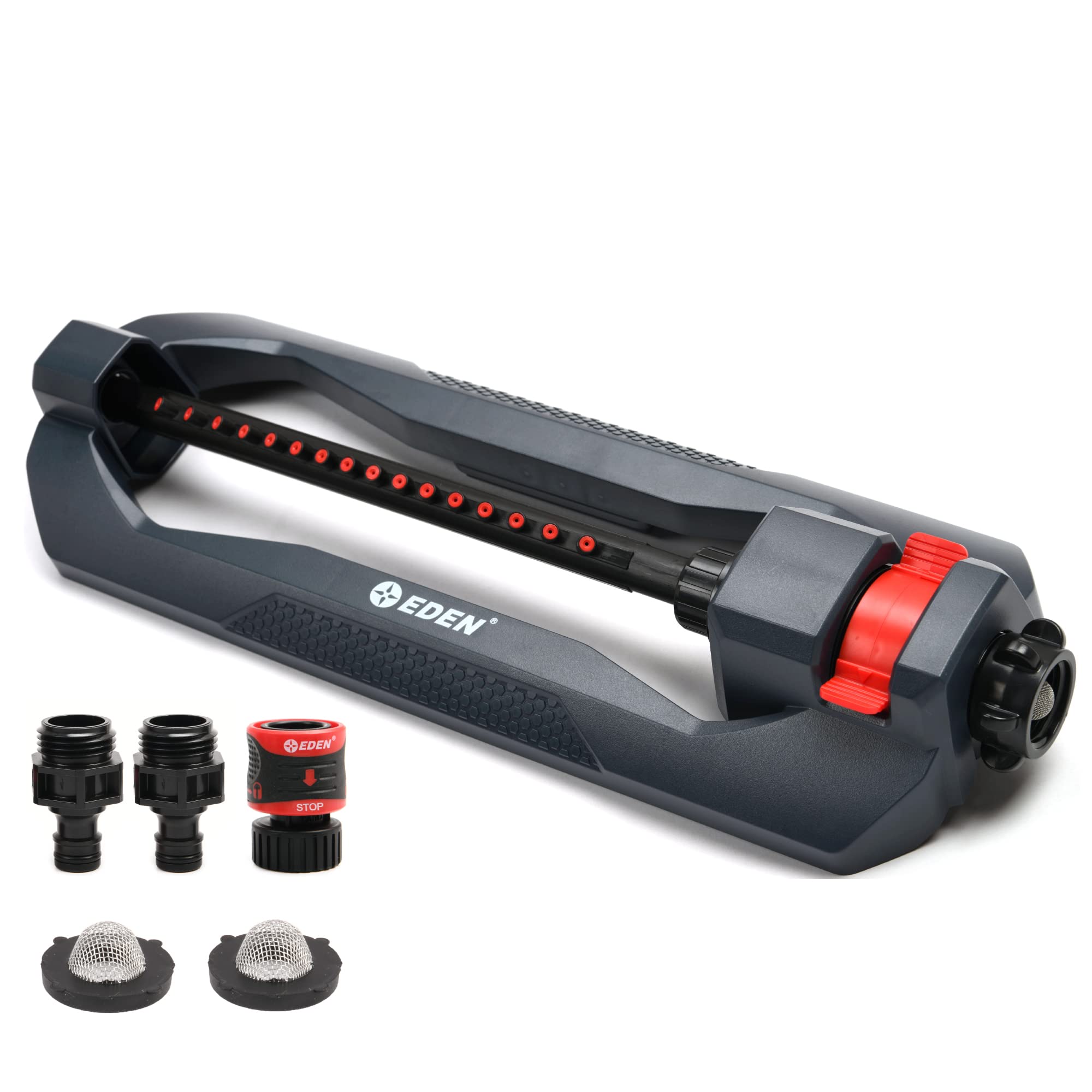
I liked the Eden for wide, even coverage and easy-range adjustment; the turbo drive and 16 nozzles deliver steady spray and the weighted base keeps it stable.
Why I picked it: Consistent coverage across medium lawns and intuitive range controls.
Best for: Medium lawns, mixed flower beds, and vegetable gardens needing even coverage.
Budget-friendly with solid feature set.
Pros
- Covers a large rectangular area
- 16 clog-resistant nozzles
- Sealed turbo drive motor
- Weighted, stable base
- Includes quick-connect hardware
Cons
- Mostly plastic construction
- Limited sideways width control
- Can require occasional nozzle cleaning
My take
I used the Eden Turbo Oscillating Sprinkler across a medium lawn and appreciated how evenly it distributes water. The 16 precision nozzles and turbo drive give a steady, reliable spray whether I set it narrow or full-length.
Adjusting coverage is straightforward — the sliding tab range controls let me dial in length quickly without fiddling. I did notice there’s less fine control over the sideways spread, so it can reach fences if I’m not careful with placement.
The weighted base keeps the unit from tipping and the built-in cleaning tool makes nozzle upkeep simple. I also liked the included quick-connect starter set; the 360-degree swivel reduced hose kinking during use.
Materials lean plastic, so while it’s durable for regular use I’d avoid leaving it out in extreme conditions for years. For the price and performance, it’s my go-to oscillating choice for most yards.
2. Nelson RainTrain Traveling Sprinkler – Best for Large Yards
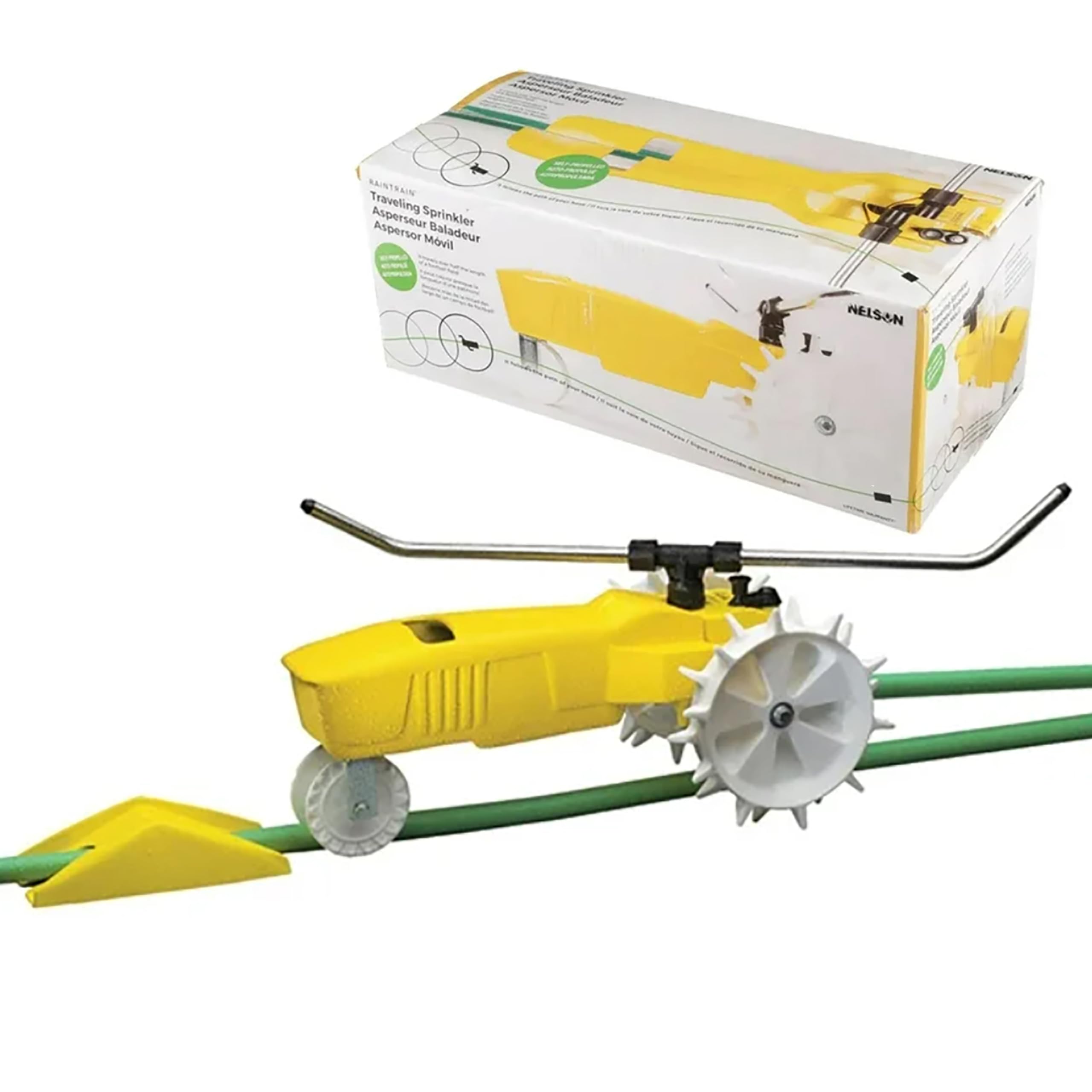
I turned long, open lawns into a hands-off watering routine with the RainTrain; cast-iron build, multiple speeds, and automatic shutoff make it ideal for big areas.
Why I picked it: Travels the hose to water very large areas with minimal supervision.
Best for: Very large, open lawns where I want to set-and-forget watering.
Higher upfront cost but built for heavy use.
Pros
- Covers very large areas
- Three speed settings
- Durable cast-iron body
- Automatic shutoff on ramp
Cons
- Heavy to move
- Can be temperamental without proper hose size
- Occasional gearbox maintenance
My take
When I needed to water a very large lawn, the Nelson RainTrain made the task effortless: I set it at the start of a long hose and let it travel the length, turning water into a uniform soak as it moved.
The cast-iron construction feels substantial and built to last, and the three-speed option gives me control over saturation and movement. The automatic shutoff on the ramp is a simple, effective way to stop water flow at the end of the run.
A couple of practical notes from my time with it: it's heavy to carry, and I found that using a wider hose (5/8") reduces pressure loss on long runs. I’ve done a gearbox repair after years of hard service, so expect occasional maintenance over the long haul.
For any large, open space where installing an in-ground system isn’t practical yet, this traveling sprinkler saves me many hours of manual moving.
3. Gardena AquaZoom Compact Sprinkler – Best Precision Oscillating
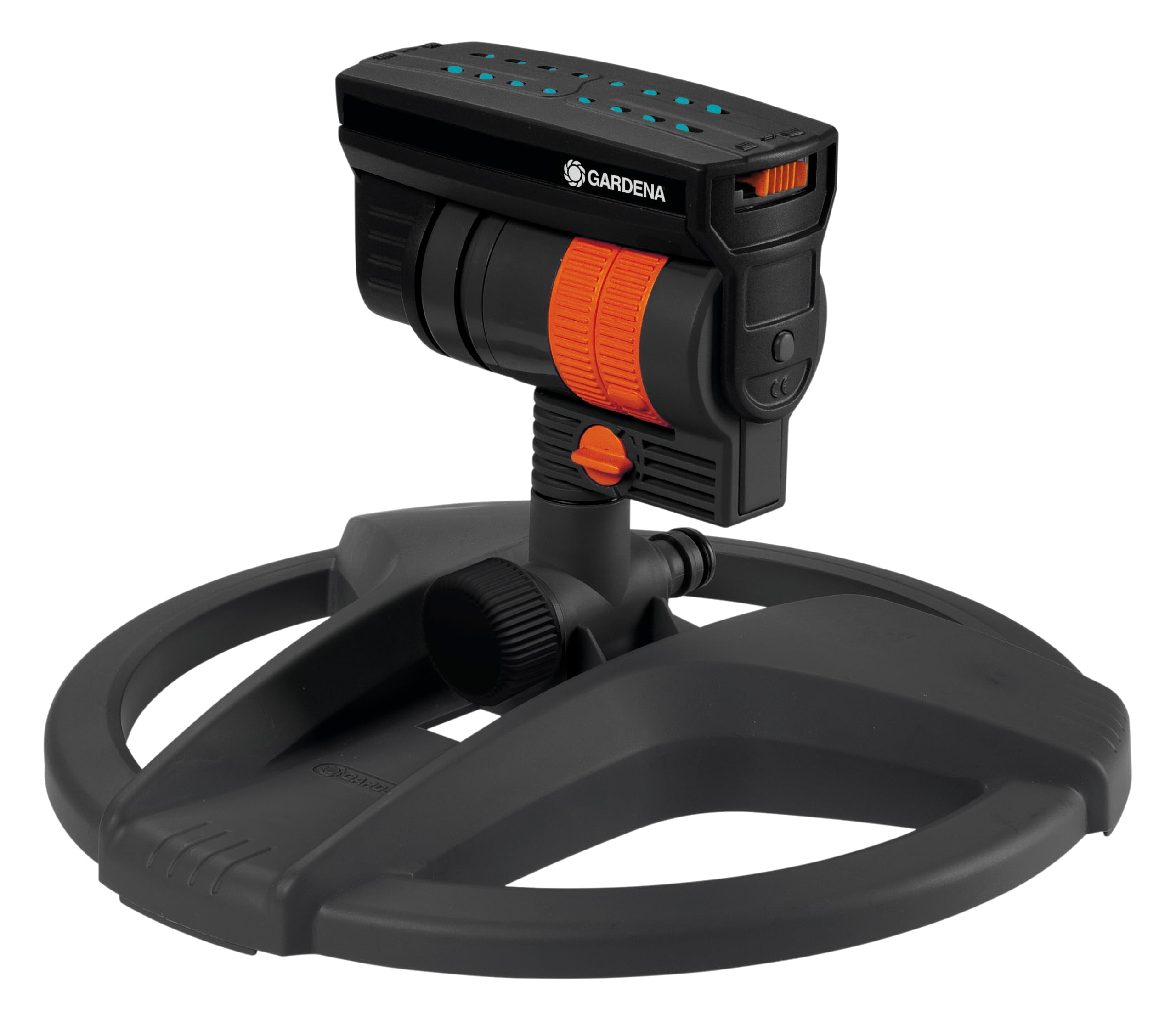
I relied on the Gardena when I wanted fine, repeatable coverage for beds and smaller lawns; the range and width are infinitely adjustable and the soft nozzles are easy to clean.
Why I picked it: Precise range and width adjustments for targeted, even watering.
Best for: Vegetable beds, flower borders, and smaller lawns needing precise coverage.
Mid-range — pays off with build quality and warranty.
Pros
- Fine, infinite range adjustment
- Built-in removable filter
- Soft, easy-to-clean nozzles
- Frost and UV resistant
Cons
- Smaller coverage than large oscillators
- Occasional missing connector in packaging
My take
I turn to the Gardena AquaZoom when I need exact control over both throw and spread. The incremental adjustments let me tune watering from a few metres up to its maximum without overspraying paths or beds.
Built-in filter and soft rubbery nozzles simplify maintenance — dirt doesn't clog the head as easily and cleaning is quick. The unit's frost- and UV-proof construction means I’ve left it outside across seasons without worry.
The quality feels a step up from lower-cost oscillators, and the longer warranty reflects that. If you prize precision over sheer area coverage, this is the model I choose for tighter spaces.
4. Gilmour Circle Spot Sprinkler – Best Value Spot Sprinkler
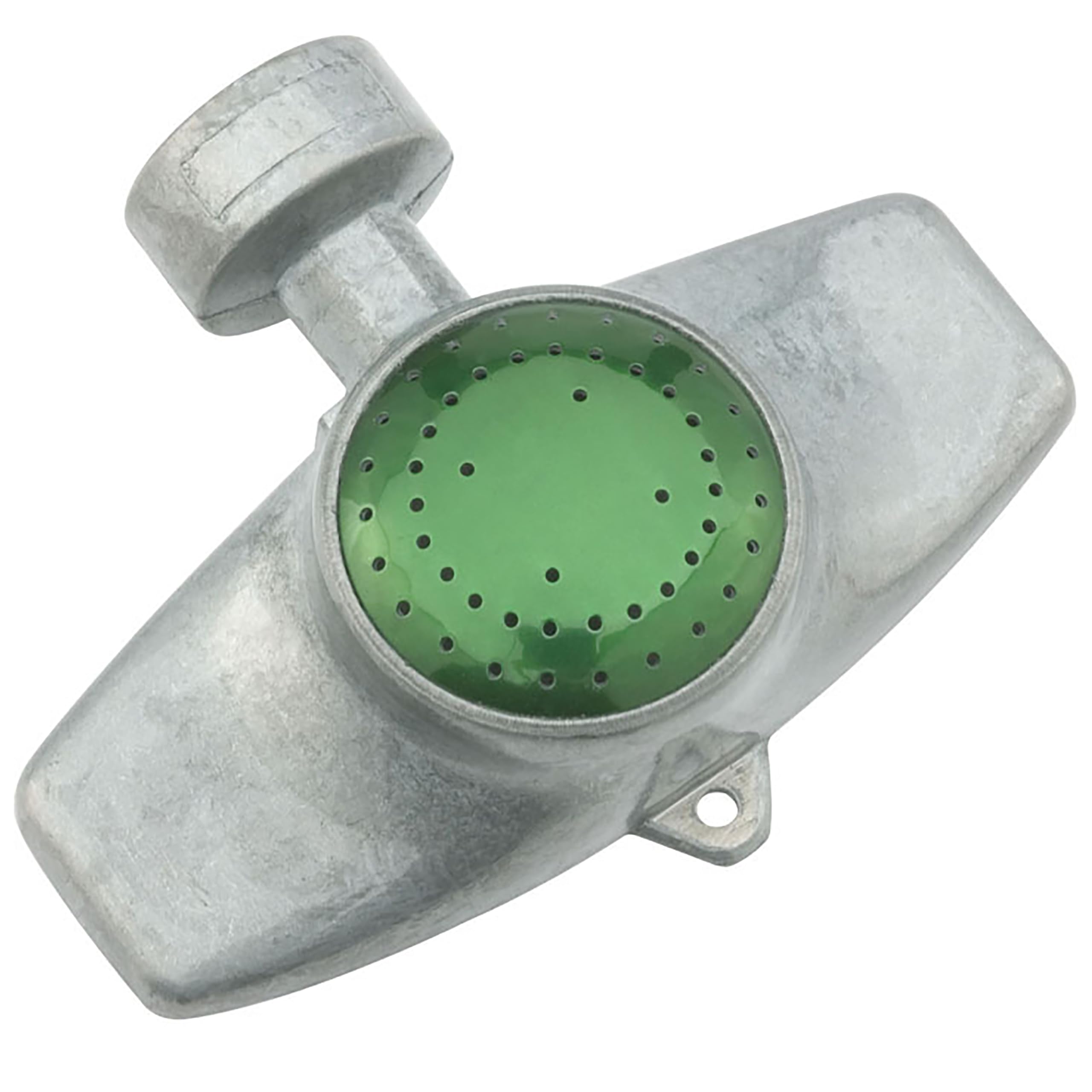
I use the Gilmour for small trouble spots and seeded areas; metal construction and a gentle fountain-like spray make it a dependable, inexpensive solution.
Why I picked it: Simple, metal construction that holds position and waters gently.
Best for: Spot-watering small areas, new seed, and low-pressure locations.
Very affordable basic spot sprinkler.
Pros
- Sturdy metal construction
- Gentle, fountain-like spray
- Works well at low pressure
- Good value
Cons
- Small coverage area
- Needs repositioning for larger lawns
My take
For compact spots and stubborn brown patches, I rely on the Gilmour circle sprinkler. It gives a gentle, fountain-style spray that’s perfect for newly seeded soil and tight garden areas.
Because it’s metal and weighted, the unit stays put even with typical household hose pressure. I found it especially useful where higher-pressure pop-up heads can't operate.
It’s not for covering wide lawns — I move it around manually — but for the price and simplicity it’s one of the most practical tools I keep in my shed.
5. Hourleey 360° Metal Spot Sprinkler – Best 2-Pack Spot Sprinklers
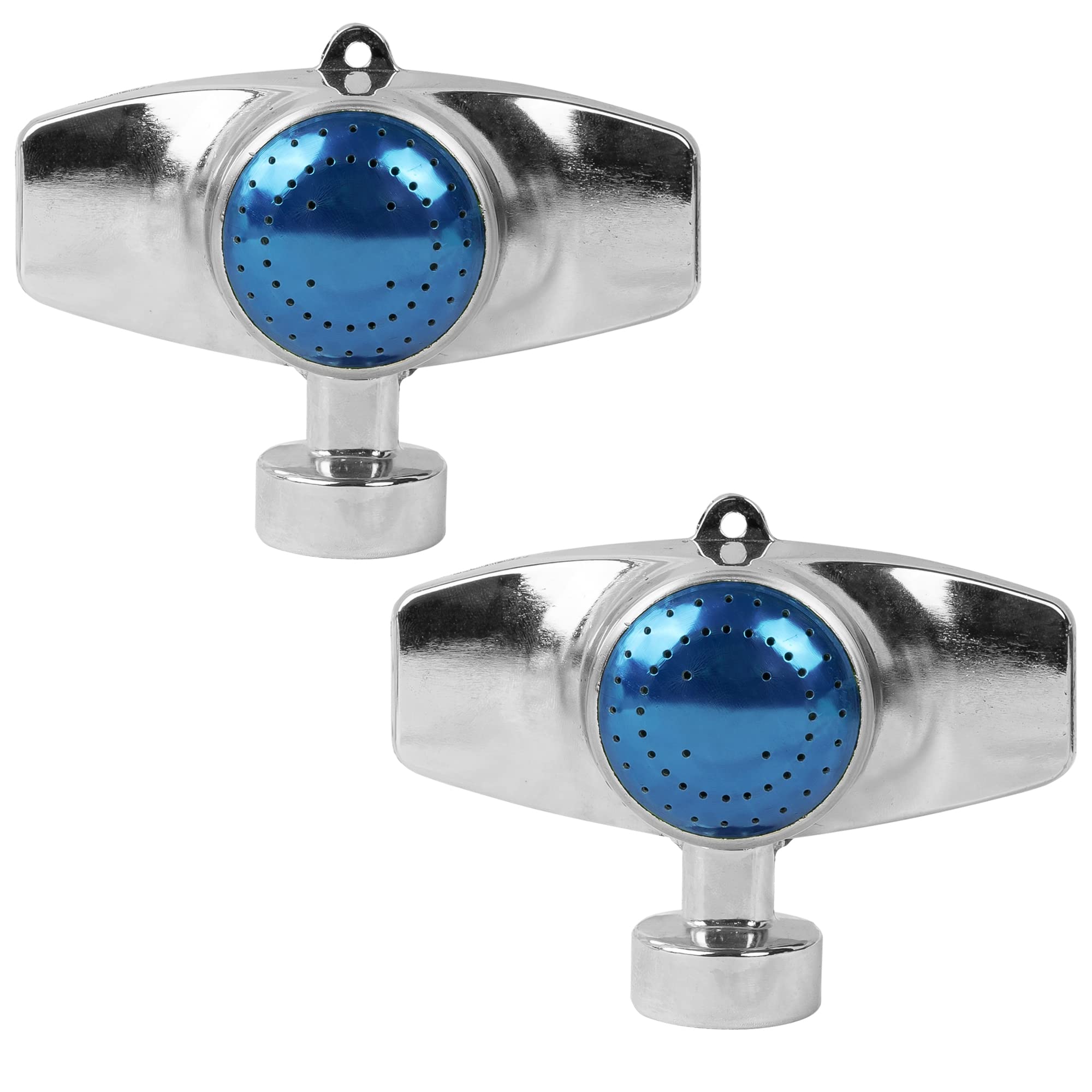
I liked this 2-pack for flexible, durable spot coverage; heavy alloy metal and O-ring connectors make these reliable for small yards and flower beds.
Why I picked it: Two robust metal heads for covering multiple small zones affordably.
Best for: Small lawns, flower beds, and rotating watering spots.
Affordable and durable value.
Pros
- Solid alloy metal build
- 360° circular coverage
- Good for low pressure
- Comes as a useful two-pack
Cons
- Not suited for very large areas
- Coverage varies with pressure
My take
I put the Hourleey pair to work on a townhouse front yard and a small perennial bed; the metal construction feels considerably tougher than plastic alternatives and the blue finish looks tidy in the grass.
Coverage reaches up to about 30 feet depending on hose pressure, and the included O-rings help prevent leaks at the connection. I especially like having two units so I can stage them to cover an oval or multi-bed layout.
These are simple, no-fuss heads that do exactly what I need for small areas and occasional use. They’re an inexpensive way to get metal durability without complexity.
6. SYOOY 360° Metal Spot Sprinkler – Best Small Yard Sprinkler
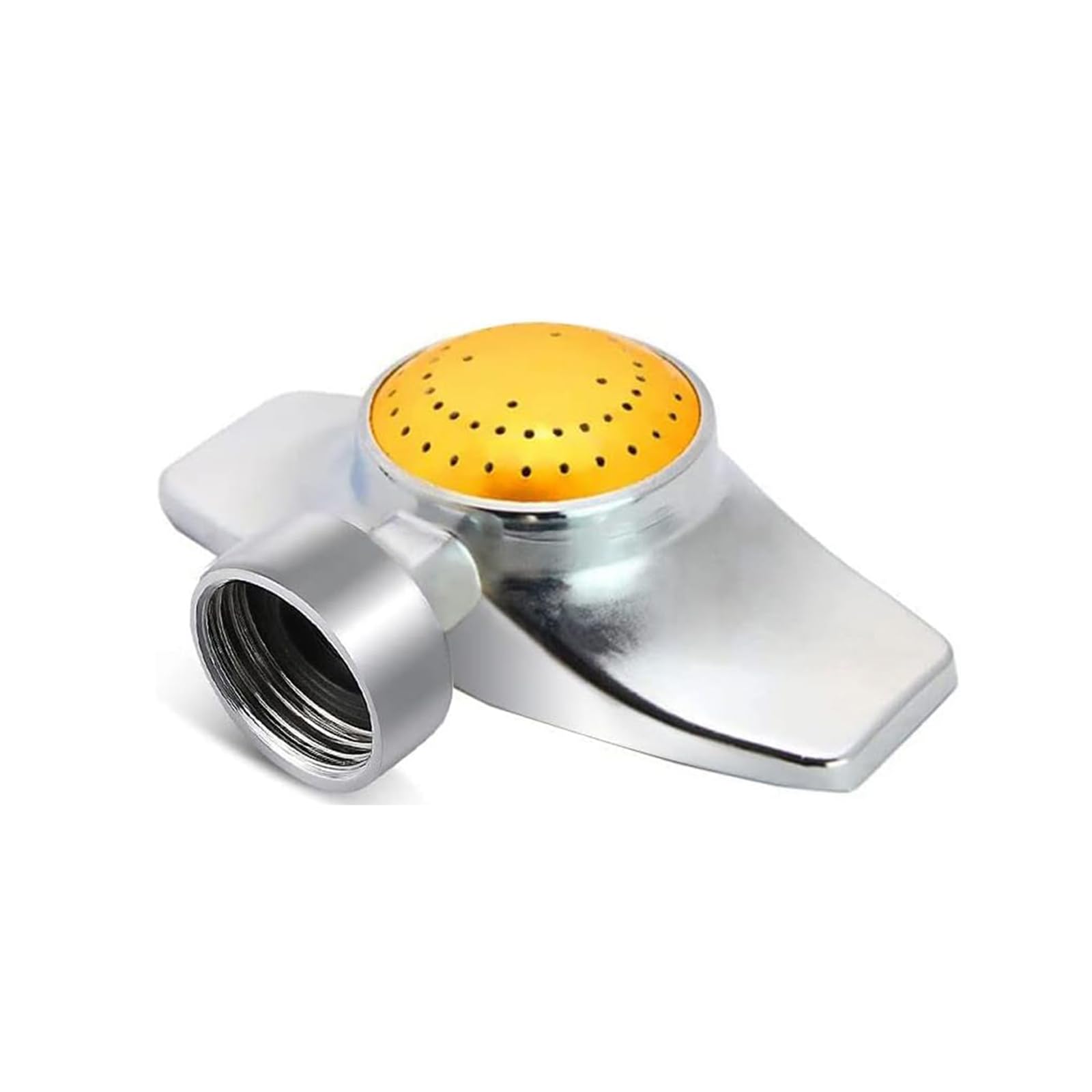
I kept a SYOOY on hand for tiny plots where I wanted a dependable metal spot head; it screws on easily and stays put while delivering an even circular spray.
Why I picked it: Classic, durable spot sprinkler for tiny gardens and targeted watering.
Best for: Very small yards, container gardens, and greenhouse spots.
Extremely budget-friendly basic metal option.
Pros
- Metal construction
- Simple screw-on installation
- Adjustable reach with pressure
- Perfect for small gardens
Cons
- Lightweight — can shift without anchoring
- Limited coverage compared with oscillators
My take
I used the SYOOY head in a small backyard patch and it performed exactly like the classic metal sprinklers I grew up with: dependable, simple, and surprisingly efficient for its size.
Installation is just a standard hose thread and the spray distance responds predictably to faucet pressure. It isn’t heavy enough to resist every hose tug, so I sometimes anchor it, but otherwise it’s a fine, long-lasting basic.
If you want a no-frills metal sprinkler that won’t break the bank, this is the one I reach for when space is tight.
How I Choose a Stationary Sprinkler
Match the Type to Your Yard
I decide first whether I need oscillating coverage, a traveling sprinkler, or a spot head. Oscillators are best for rectangular lawns and even distribution; traveling sprinklers cover long runs without moving them myself; spot sprinklers are ideal for small beds and low-pressure situations.
- Oscillating: even rectangular coverage for lawns
- Traveling: large, open areas — set and forget
- Spot/360°: targeted watering for small areas or low pressure
Consider Water Pressure and Hose Size
I check my household water pressure and plan hose length before choosing. Long runs need wider hose diameter to avoid pressure loss, especially for traveling sprinklers.
- Use 5/8" hose for long runs to minimize pressure drop
- Spot sprinklers work well at low pressure
- Adjust nozzle settings to balance reach and water use
Prioritize Durability and Maintenance
I look for metal construction or UV/frost-resistant plastics if a sprinkler will be left outside. Built-in filters and easy-to-clean nozzles make long-term upkeep much easier.
- Metal bodies resist cracking from sunlight
- Soft nozzles and removable filters reduce clogs
- Expect occasional gearbox or seal maintenance on heavy-use units
Features That Matter to Me
I value adjustable range, stability (weighted base or anchor points), and useful accessories like quick-connect fittings or auto shutoff ramps for traveling sprinklers.
- Sliding range controls for oscillators
- Weighted bases or stakes for spot heads
- Quick-connects to prevent hose kinking
Placement and Use Tips
I always position sprinklers to avoid wasting water on hard surfaces and to prevent overspray on fences or sidewalks. For traveling sprinklers I run a straight hose path and check the shutoff ramp placement.
- Avoid placing oscillators too close to fences
- Anchor lightweight spot heads in high-traffic areas
- Monitor the first run to check coverage patterns
Frequently Asked Questions
Will these sprinklers work with low water pressure?
Yes — I found metal spot sprinklers and smaller oscillators work well at low pressure. For traveling sprinklers and large oscillators, I recommend a wider hose and checking pressure before long runs.
How do I prevent clogging and keep nozzles clear?
I use units with removable filters and soft nozzles when possible; the Eden and Gardena models include easy cleaning access, and I keep a small brush handy for routine maintenance.
Can I leave these sprinklers outside year-round?
I leave frost- and UV-resistant models outdoors, but store metal and plastic heads indoors over winter in freezing climates to extend their life.
What hose should I use with a traveling sprinkler?
I prefer a 5/8" hose for long runs to reduce pressure loss; shorter distances can work with a standard hose, but performance improves with larger diameter for traveling units.
Final Take
I chose these sprinklers because they cover the common yard scenarios I deal with: from precision beds to acres of grass.
If you want a single versatile unit, the Eden oscillating sprinkler delivers the best balance of coverage and features. For the largest lawns, the Nelson RainTrain saves me hours of moving gear. For tight areas and low-pressure spots, I keep metal spot heads from Gilmour, Hourleey, or SYOOY handy.
Whichever direction you go, match the type to your space and water supply, and routine maintenance will keep any of these working reliably season after season.
