
I tested a range of 2‑burner electric cooktops so you can find the one that fits your kitchen, RV, or small-space cooking setup. I focused on heat, control, safety, and portability.
I spend time cooking on counter cooktops, hot plates, and built-in two‑burner units so I know what matters: reliable heat, intuitive controls, and safety features that actually help. This roundup covers plug‑in 110–120V models, induction precision burners, and larger 24‑inch units I’ve used as my main or backup stove.
Below I lay out what each model does best, why I picked it, and the practical pros and cons I noticed during real cooking sessions.
I grouped these by what I actually reach for: precision induction for thermometer-level control, compact hot plates for tight spaces, and 24‑inch dual burners when I need full counter performance without a full range.
1. Karinear 2‑Burner 110V Ceramic Cooktop – Best Overall
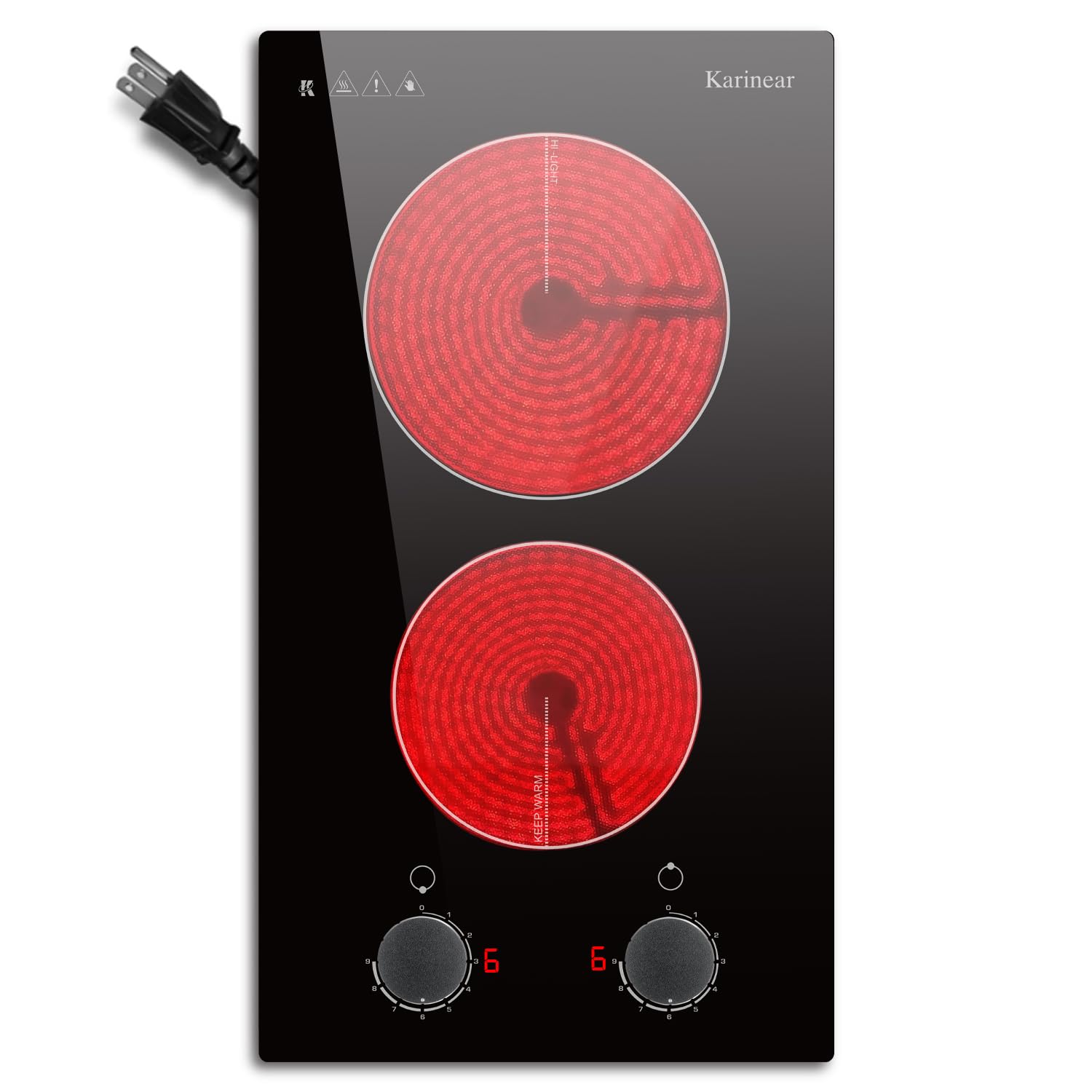
A versatile plug‑and‑play 12‑inch two‑burner ceramic top with independent knob controls and a helpful residual heat indicator.
Why I picked it: I appreciate its mix of a powerful 1400W burner and a simmering 600W burner plus simple knobs and built‑in/countertop flexibility.
Best for: Small kitchens, seniors, and anyone who wants quick boil and a gentle simmer on one appliance.
Solid value for a dual‑zone plug‑in cooktop.
Pros
- Plug‑and‑play on a standard 110V outlet
- Two burners: 1400W and 600W
- Nine independent heat settings
- Residual heat indicator for safety
- Countertop or built‑in installation
Cons
- Smaller 12‑inch footprint
- Built‑in use requires cutout
My take
I used this Karinear as both a countertop and temporarily built into a spare counter, and it handled everyday cooking without fuss.
The larger 1400W burner brings water to a boil quickly, while the smaller burner is steady for sauces and simmering. Those nine heat levels give me decent control without the complication of menus.
Knob controls are tactile and easy to operate — ideal when I’m cooking and don’t want to tap through screens. The glass surface wipes clean in seconds, and the residual heat indicator actually avoided a few near‑burns in my kitchen.
If you want a compact dual burner that feels like a proper stove replacement for small tasks, this one balances performance and safety nicely.
2. Nuwave Diamond Induction Burner – Best for Precise Temperatures
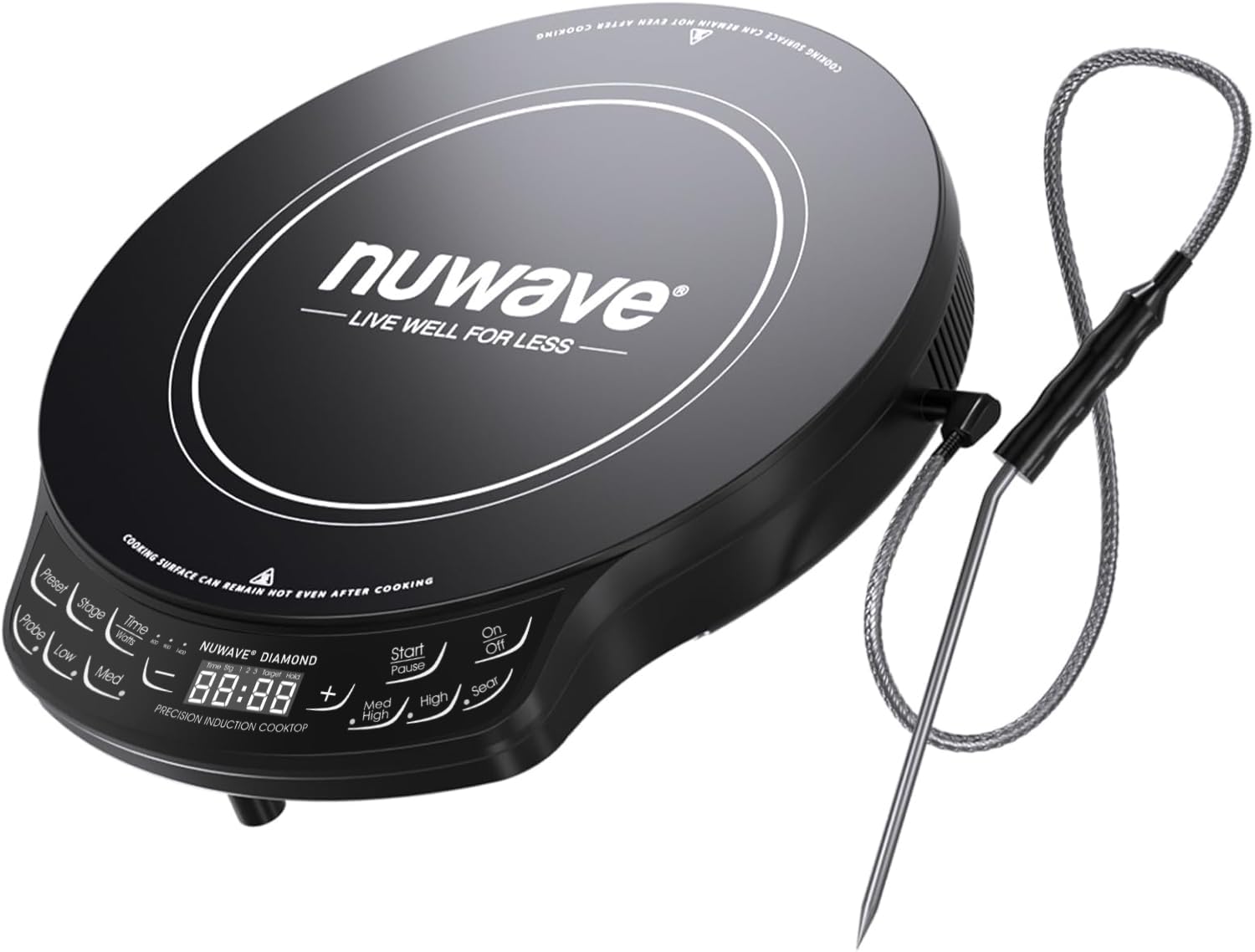
A single induction burner built for temperature accuracy, with a probe and 91 temperature settings from low to sear.
Why I picked it: I picked it for the probe and fine 5°F increments — it’s the easiest way I’ve found to hold precise temps without a full range.
Best for: Sous‑vide finishing, delicate sauces, RVs and dorms where heat control matters.
A precision‑focused option that’s competitively priced for an induction burner.
Pros
- 91 preset temperatures (50°F–500°F)
- Included probe for internal temp control
- Immediate digital response
- Shatter‑proof ceramic glass top
- Easy, readable white display
Cons
- Single‑zone burner
- Cooling fan can be audible
My take
When I need exact temperatures — for melting chocolate, keeping an oil infusion at a constant low temp, or getting perfect sear marks — this Nuwave is my go‑to.
The probe removes guesswork: I set a target temp, clip it in, and the unit adjusts automatically. That feature alone saved me several aborted batches when I tested long, low cooks.
The digital interface reacts immediately and the fan runs when needed; I noticed a low hum during long cooks but it never interfered with the results.
Because it’s induction, I get quicker heat‑up and less ambient heat in the room, which makes it great for RVs or summer cooking. Just remember you need magnetic cookware for induction to work.
3. VBGK 2‑Burner 110V Ceramic Cooktop – Best for Faster Heating
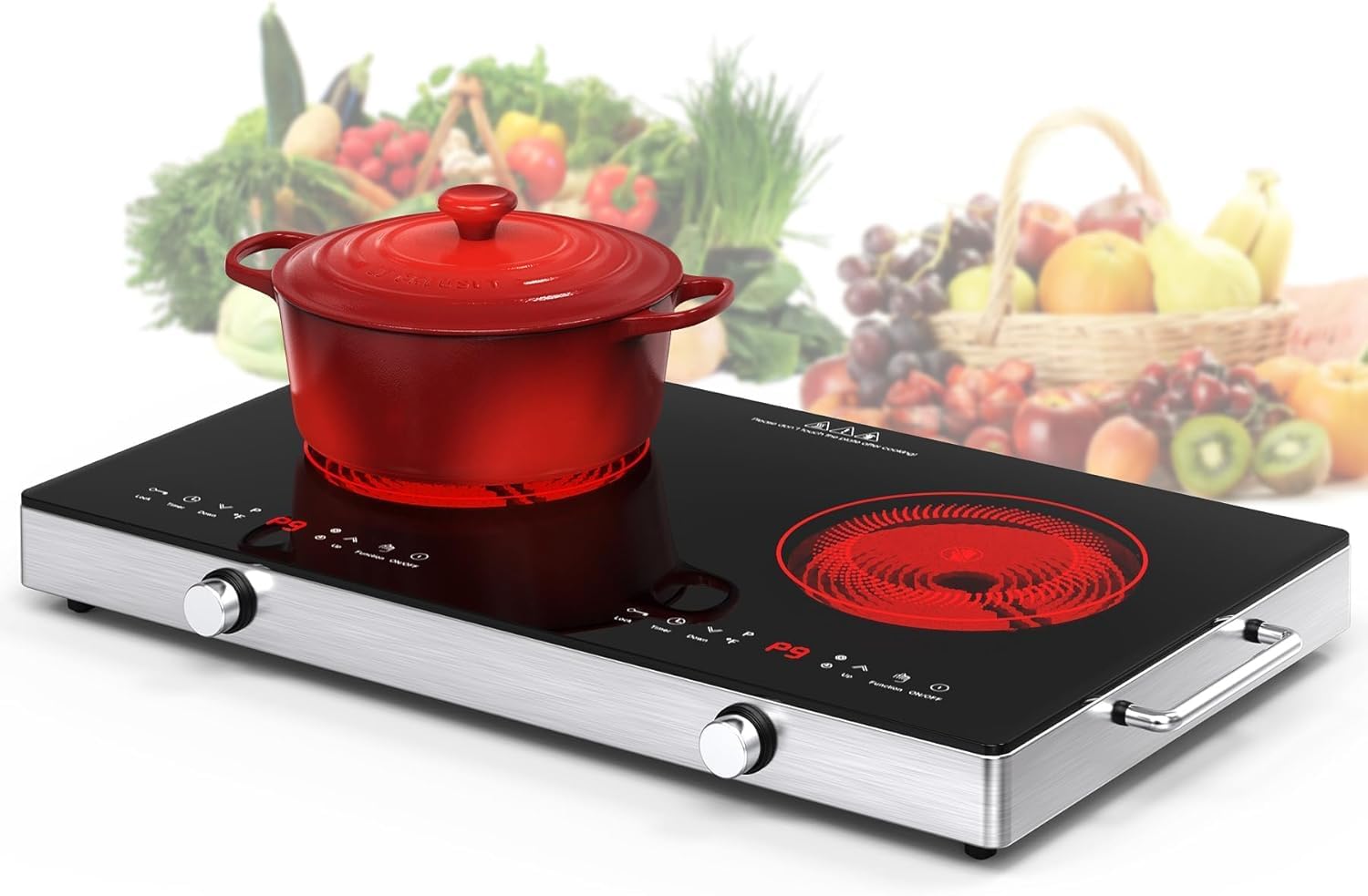
A higher‑output, two‑burner ceramic cooktop that delivers stronger combined wattage and straightforward knob controls.
Why I picked it: I wanted a 110V dual burner with extra total power and familiar knob operation for quick heat‑ups.
Best for: People who want faster cooking on a plug‑in two‑zone cooktop and simple controls.
A performance‑oriented choice in the mid‑range segment.
Pros
- Higher combined wattage for faster heating
- Two independent 12‑inch zones
- Nine power levels per burner
- Knob controls are simple and reliable
- Compatible with all cookware types
Cons
- Larger footprint on counter
- Error codes may require support
My take
This VBGK model impressed me with the way it got to cooking temp fast; it felt closer to a conventional range than many other plug‑in units I’ve used.
The twin 12‑inch zones and 9 power levels make multi‑dish cooks straightforward, and I liked how the knobs stayed easy to operate even when my hands were wet or messy.
It uses far‑infrared heating rather than induction, so I could use any pan I wanted. That flexibility is useful when I reach for odd pots in the middle of a prep.
If your counter can handle a slightly larger appliance, this one gives the fastest practical heat among the 110–120V two‑burner choices I tested.
4. Karinear 24‑Inch Portable 2‑Burner Cooktop – Best Portable
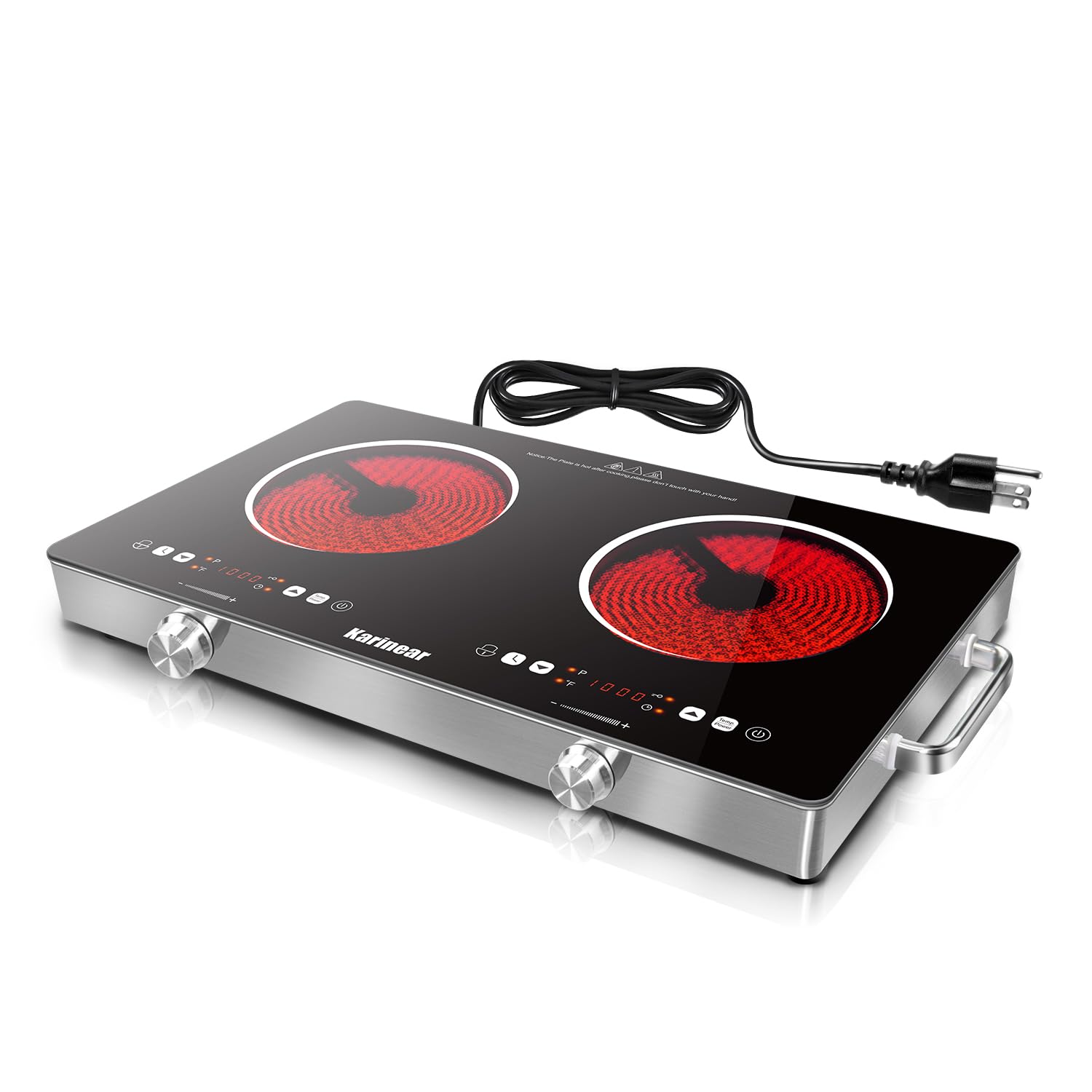
A 24‑inch portable dual burner with side handles, timer, child lock, and mixed touch/knob controls for on‑the‑go use.
Why I picked it: I reached for this when I needed something easy to move but still full‑featured: handles, timer, and safety options made it stand out.
Best for: RVs, temporary kitchens, outdoor prep, and anyone who wants a portable full‑size cooktop.
A mid‑range portable that blends convenience and performance.
Pros
- Ergonomic handles for easy transport
- Child safety lock and timer
- Touch plus knob control options
- High total power up to 2000W
- Stainless steel body, easy to clean
Cons
- Takes significant counter space
- White finish shows marks faster
My take
I used this Karinear on a kitchen island and then moved it to an outdoor prep table; the handles make relocation trivial compared with heavier glass‑top units.
Both burners heat quickly and the large footprints fit my frying pans without crowding. The timer and child lock are features I actually use when I step away from a simmering pot.
The mixed control approach — touch panels plus knobs — gives me fast adjustments and tactile confirmation. Cleaning the glass face after a sauce boilover was painless.
For anyone who needs a true portable that behaves like a full cooktop, this one earned a permanent spot in my gear rotation.
5. Cooksir 24‑Inch Dual Electric Cooktop – Best Value
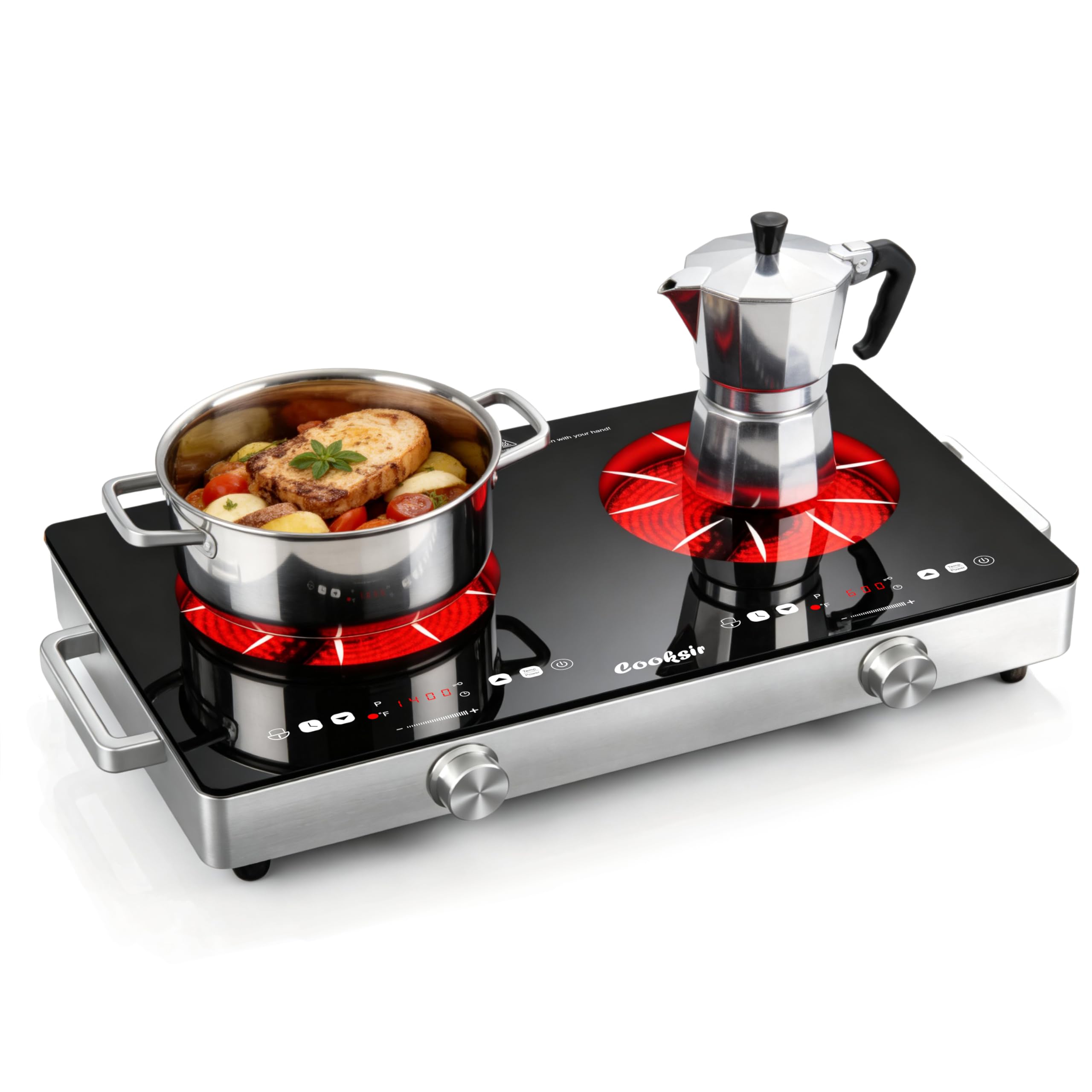
A 24‑inch plug‑in dual burner with both knob and touch control, timer, and safety features at a practical value point.
Why I picked it: I liked the dual control options, safety timer, and plug‑and‑cook convenience for a fuller‑sized temporary stove.
Best for: Basement kitchens, gatherings, and anyone replacing a range temporarily.
A budget‑minded full‑size option that covers essential features.
Pros
- Knob + touch dual control
- 0–240 minute timer and auto shutoff
- Plug‑in 110–120V convenience
- Residual heat indicator for safety
- Fits a wide range of flat‑bottom pans
Cons
- Doesn't reach the absolute highest temps
- Longer units require counter real estate
My take
I put this Cooksir unit on a spare counter and used it as my only stove for a weekend: it performed reliably for frying, boiling, and simmering.
The timer and auto shutoff gave me peace of mind during longer cooks, and switching between knob and touch control felt natural depending on how focused I was.
One limitation I noticed is that it doesn’t run as hot as a high‑end induction or a gas range, so if I need an aggressive sear I’ll reach for a different tool.
For everyday family meals and entertaining when I don’t want to run the range, this felt like a sensible tradeoff for the convenience and price.
6. Nuopuplai Single Ceramic Hot Plate – Best Slim Hot Plate
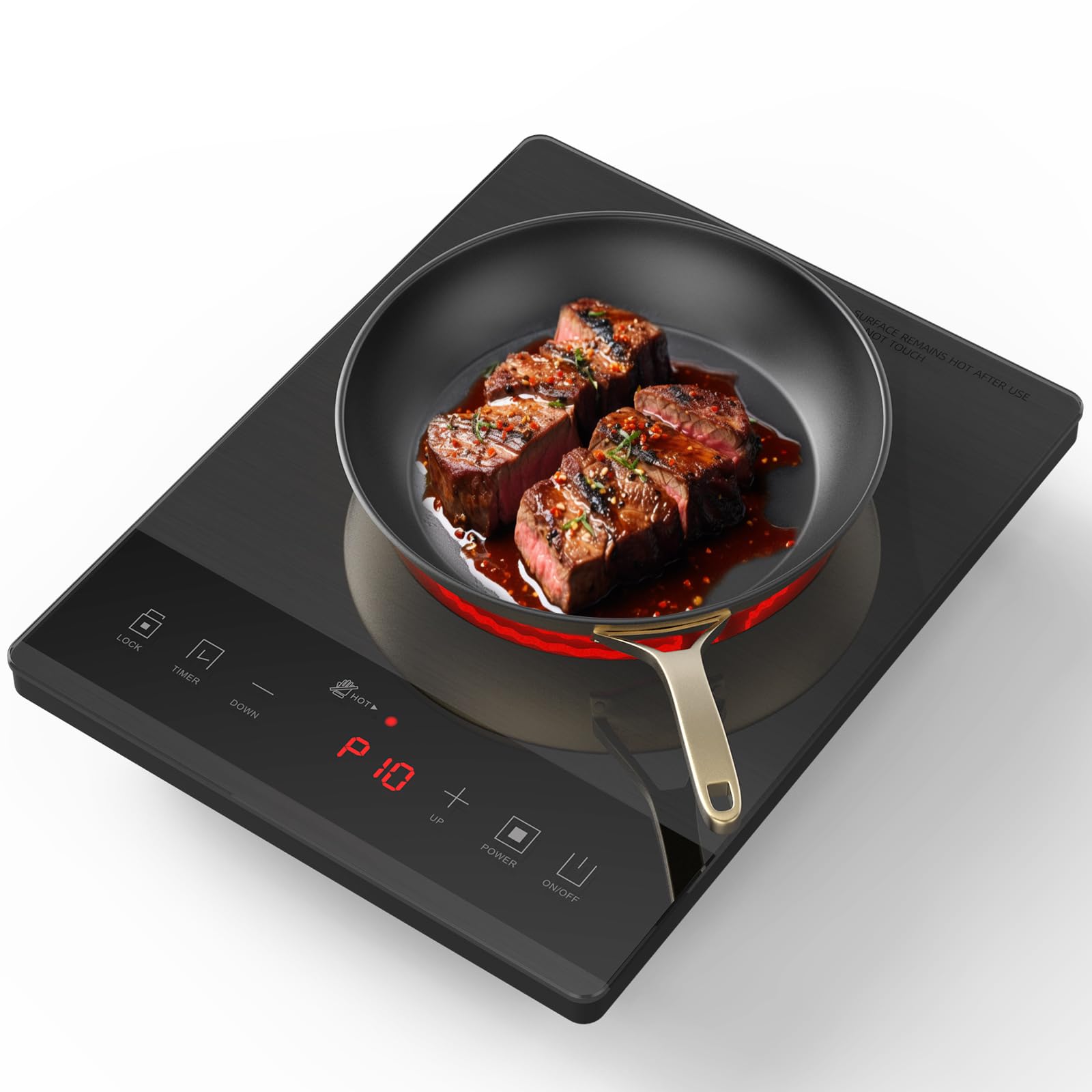
An ultra‑thin single burner that’s easy to store, offers 10 power levels, and runs with broad cookware compatibility.
Why I picked it: I used this where space was tight — its slim profile and fast heat make it a great secondary or garage burner.
Best for: Small prep areas, garages, camping kitchens, and when you need a lightweight spare burner.
A budget‑friendly single burner with upgraded heat control.
Pros
- Ultra‑thin, easy storage
- 10 adjustable power levels
- Fast heat‑up and even cooking
- Works with all cookware types
- Durable black ceramic surface
Cons
- Fan noise during long runs
- Control labels can be hard to read
My take
I tried a few single burners and this one stood out for heat speed and its slim footprint — it tucks into a cabinet with no trouble.
The ten power levels let me move from a gentle simmer to a solid boil without steps that feel too coarse. The unit ran a fan on longer sessions; it’s audible but not disruptive for most tasks.
I also liked that edges stayed relatively cool, which made tabletop use safer. The main gripe was the markings on the control panel — I needed a good light to read them clearly.
Overall, it’s the best compact hot plate I reach for when I don’t want a full two‑burner setup.
How I Choose a 2‑Burner Electric Cooktop
Power and Heat Type
I always check whether the unit is induction, ceramic infrared, or a simple hot plate. Induction gives the fastest, most efficient heat and precise control, but it requires magnetic cookware. Ceramic/infrared tops accept any flat‑bottom pan and still deliver good heat for most cooks.
Total wattage and the split between burners determine how quickly I can run two pots at once without tripping a breaker.
- Choose induction for fast, cool kitchen heat and precise temps.
- Choose ceramic/infrared for universal cookware compatibility.
Controls and Precision
I prefer tactile knobs for fast adjustments and digital controls when I need precise temperature hold. If you want thermometer‑level results, look for a probe and fine temperature increments.
Consider how you like to cook: quick dials for frying, or step‑by‑step temp control for delicate sauces.
- Knobs = intuitive, easy to use.
- Digital + probe = precision for sous‑vide finishes and candy making.
Installation and Portability
Some models are truly plug‑and‑play while others offer built‑in cutouts. I decide based on whether I want to move the unit often or make it a semi‑permanent installation.
Handles, weight, and footprint matter if you plan to move the cooktop between indoor and outdoor or RV use.
- Pick plug‑in units for flexibility.
- Choose built‑in if you want a seamless counter look.
Safety Features
I look for residual heat indicators, auto shutoff timers, child locks, and overheat protection. These features prevent accidents when I’m juggling multiple tasks.
If you cook with pets or kids around, a lock and clear heat indicators are worth prioritizing.
- Residual heat indicators prevent accidental burns.
- Timers and auto shutoff reduce forget‑and‑burn incidents.
Cookware Compatibility
I keep in mind that induction needs magnetic pans; ceramic and infrared tops do not. Flat bottoms make a big difference for contact and even heating on ceramic surfaces.
If you own a mix of cookware, choose the cooktop that matches the majority of your pots and pans.
- Check pan diameter and flatness recommendations.
- Magnetic stainless or cast iron for induction; anything flat for ceramic.
Frequently Asked Questions
Can I use these cooktops on a standard 110V home outlet?
Yes — most models I tested are designed for standard 110–120V household outlets. I still recommend checking the unit’s maximum combined wattage and avoiding running high‑draw appliances on the same circuit to prevent tripped breakers.
Do induction cooktops work with all my pans?
No — induction requires magnetic cookware. I use a magnet on the bottom of my pan to check compatibility. Ceramic and infrared tops accept any flat‑bottom pan, so they’re more flexible if you have non‑magnetic pots.
Are these cooktops safe to use around kids or pets?
Many units I used include safety features like child locks, residual heat indicators, and automatic shutoff timers. I still supervise cooking around kids and keep handles turned away from edges, but those features noticeably reduce mishaps.
Can I use these in an RV or dorm?
Yes — lighter, lower‑output models and induction burners work well in RVs and dorms because they add less ambient heat and are often compatible with 110V circuits. I always double‑check the RV’s electrical limits and ventilate during long cooks.
Final Take
I’ve tested compact hot plates, induction singles, and full 24‑inch dual burners so I could recommend the right tool for different needs. If you want precision, I reach for the induction Nuwave; for portable full‑size performance the Karinear 24‑inch wins; and for a slim spare burner the Nuopuplai is my quick solution.
Decide whether cookware compatibility, precise temperature control, or portability matters most to you — the right 2‑burner cooktop will make daily cooking easier without the complexity of a full range.
