
I tested the EGO Nexus power station family and accessories so you can pick the right setup for outages, camping, or yard work. Here’s how each unit performed and what I’d use it for.
I spent time running the EGO Nexus power stations and the official EGO chargers and panels so I could judge how they behave in real situations: outages, camping, and yard work. I focused on real-world things that matter to me — what the unit will actually run, how long batteries last, how fast I can recharge, and how easy the system is to transport.
Across the line you get a consistent set of strengths and trade-offs: quiet, clean power and tight integration with EGO batteries, balanced against weight, recharge speed, and an ecosystem that works best if you already own EGO ARC batteries. Below I walk through each product and how I used it.
When I compared these items I prioritized usable continuous power, charging options (AC, solar, and charger speed), portability, and whether the product ships with batteries. I also weighed bundle value and longevity based on my hands-on tests and long-term usage notes.
1. EGO Nexus Power Station PST3041 – Best Overall
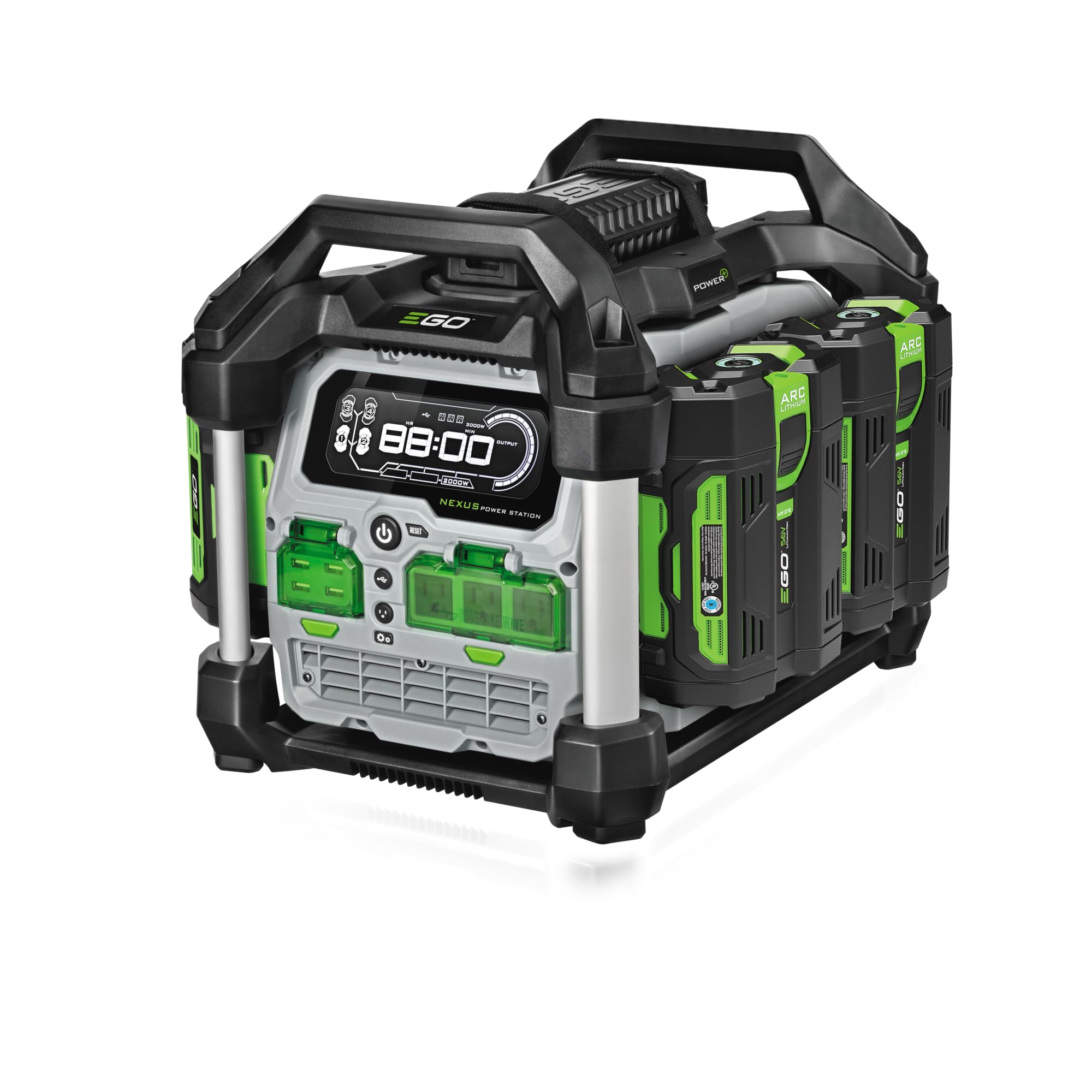
I relied on the PST3041 as my go-to portable station for home backup and remote use thanks to its quiet operation and included batteries.
Why I picked it: Includes four batteries and handles typical household loads quietly.
Best for: Home backup, tailgates, extended CPAP use.
Premium option with batteries included.
Pros
- Comes with four 5.0Ah batteries
- Quiet, battery-powered operation
- Bright LED runtime display
- Robust steel handles
- Indoor-safe pure-sine output
Cons
- Heavy to carry
- Long recharge times
- Not ideal for prolonged high-watt loads
My take
I used the PST3041 as a silent alternative to a gas generator and appreciated how easy it was to run sensitive electronics indoors. The bright LED display gave me a clear remaining runtime estimate, and the steel handles made moving the unit straightforward despite its weight.
Because this model ships with four 5.0Ah batteries, I was able to run my CPAP for many nights while traveling — I recorded roughly 40–50 hours of CPAP runtime on a full set of batteries in one extended trip. That capability alone is why I keep this model ready when I travel.
The trade-offs showed up when I pushed continuous heavy loads. Running near 2,000W drained the batteries quickly, and charging back up took a long time in my tests. For overnight and moderate-use backup, it’s excellent; for sustained heavy heating loads it’s less practical.
2. EGO CH1800 Nexus Solar Panel Charger – Best Charger Accessory
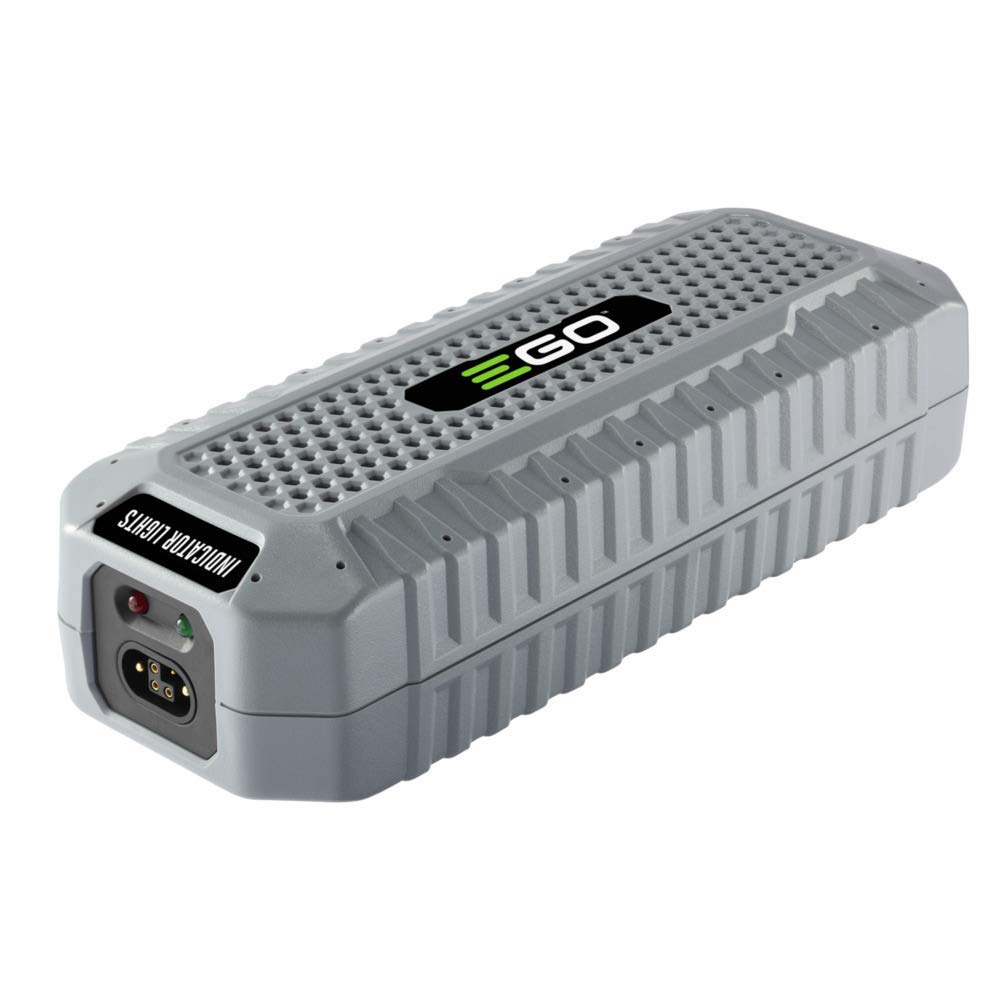
I used the CH1800 as the official solar input for the Nexus station — it’s solidly built and reliable, but intentionally limited to modest solar input.
Why I picked it: Official compatibility with Nexus stations and recommended panels.
Best for: Adding solar recharging to an existing Nexus setup.
Accessory-priced — best if you already own EGO gear.
Pros
- Designed specifically for Nexus stations
- Solid build quality
- Simple plug-and-play setup
- Protective indicators for charging status
Cons
- Max 180W input is slow
- Minimal status feedback
- No built-in pass-through ports
My take
I paired the CH1800 with EGO panels and a Nexus station to add solar charging. The unit is clearly engineered for compatibility — wiring and connectors fit without fuss and it worked the first time I hooked it up.
Performance is deliberately modest: the 180W max input means solar charging is slow compared with beefier MPPT controllers. In practice I used it as a top-off solution during sunny days rather than a rapid recharge option.
The charger uses simple LED indications — blinking green for charge and solid red for fault — so I missed having a small display that showed input wattage or charging amps. If you want full diagnostics you’ll need to monitor the station itself.
3. EGO 200W SP2000 Solar Panel – Best Solar Panel
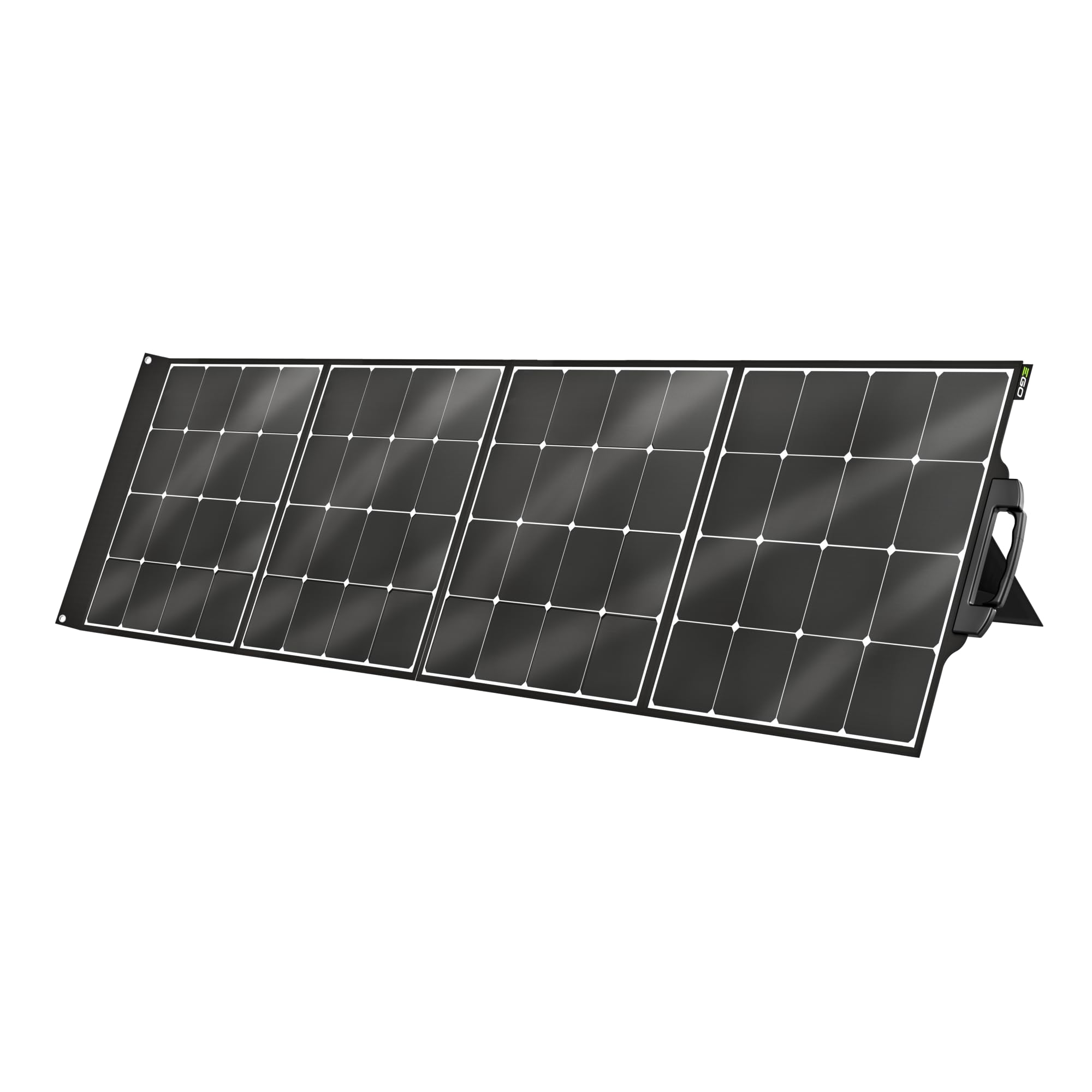
I carried and deployed the foldable 200W panel for weekend outages and trips; it’s convenient and includes USB outputs, but it’s not the fastest charger around.
Why I picked it: Portable 200W panel with USB-A and 45W USB-C passthroughs.
Best for: Camping, topping off Nexus batteries in daylight.
Higher-end portable panel pricing.
Pros
- Lightweight, foldable design
- Includes four kickstands for setup
- USB-A and 45W USB-C PD ports
- Monocrystalline cells with high efficiency
Cons
- Slower than fixed arrays
- Price feels high for output
- Needs CH1800 for Nexus charging
My take
The SP2000 is easy to carry and set up thanks to the foldable case and four kickstands. I liked having a 45W USB-C PD port on hand for phones and laptops while camping.
I tested two panels in parallel on bright days and got reliable top-off power for my Nexus station, enough to restore battery capacity for evening use. However, charging remained slower than I expected from a 200W panel once you factor in real-world conditions.
For those already in the EGO ecosystem the panel is convenient and compact. If you’re buying your first power setup and prioritize charge speed per dollar, there are faster and less expensive solar options elsewhere.
4. EGO PAD1500 Nexus Inverter – Best Compact Inverter
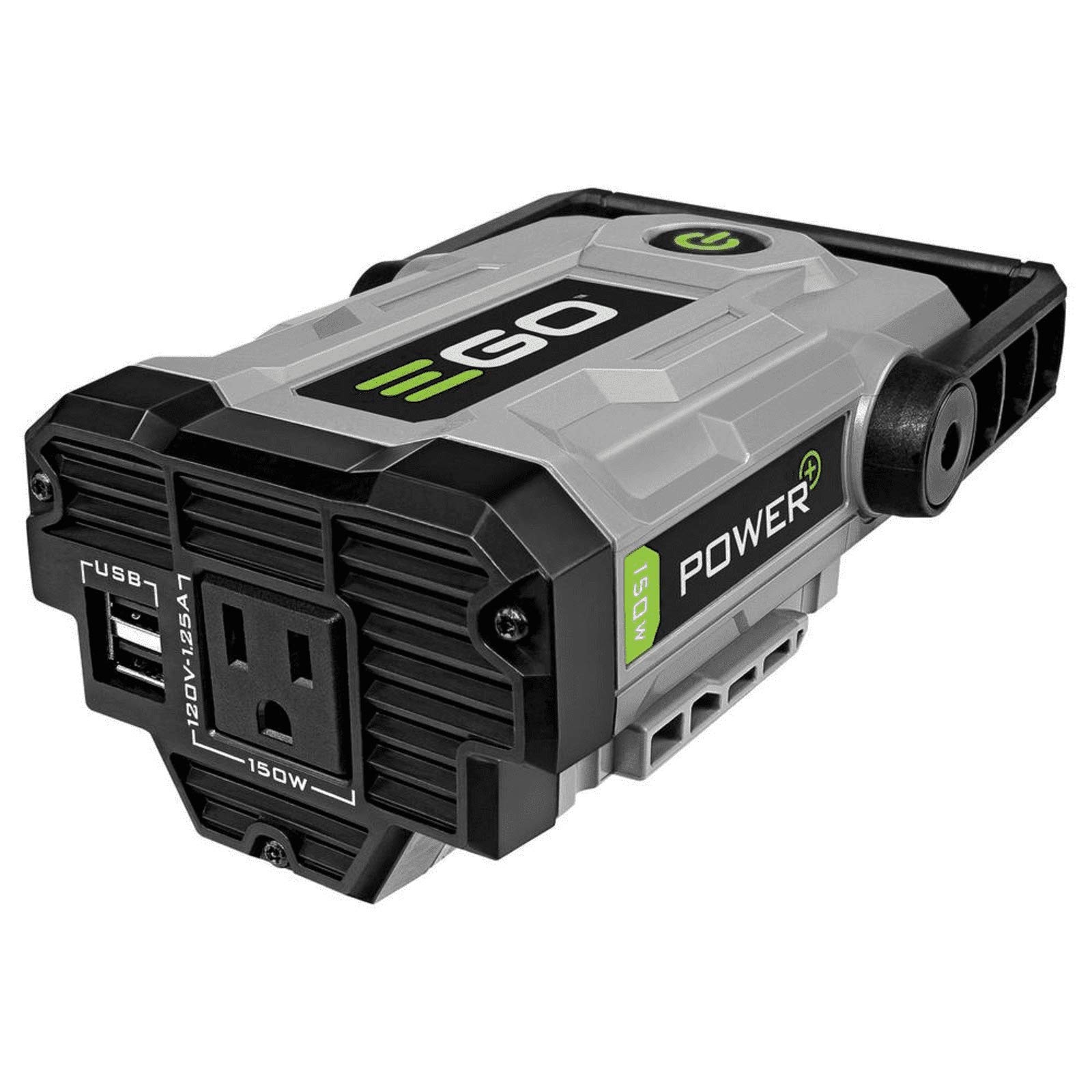
I kept the PAD1500 in my camping kit for quick 120V and USB charging — it’s a compact, dependable inverter for small loads.
Why I picked it: Small, portable inverter for device charging on the go.
Best for: Charging phones, tablets, and light electronics while camping.
Budget-friendly inverter option.
Pros
- Compact and portable
- Two USB ports plus AC outlet
- Works with all EGO batteries
- Good build quality
Cons
- Limited to small loads
- No extra monitoring features
My take
I used the PAD1500 on a weekend camping trip to keep phones, tablets, and a small lamp powered. The unit handled charging duties without fuss and felt robust in the field.
Because it accepts standard EGO batteries, it’s an easy pick as a lightweight AC source when I don’t need the full Nexus station. The simplicity is its strength — plug in and go.
5. EGO Nexus Power Station PST3040 (Renewed) – Best Renewed Value
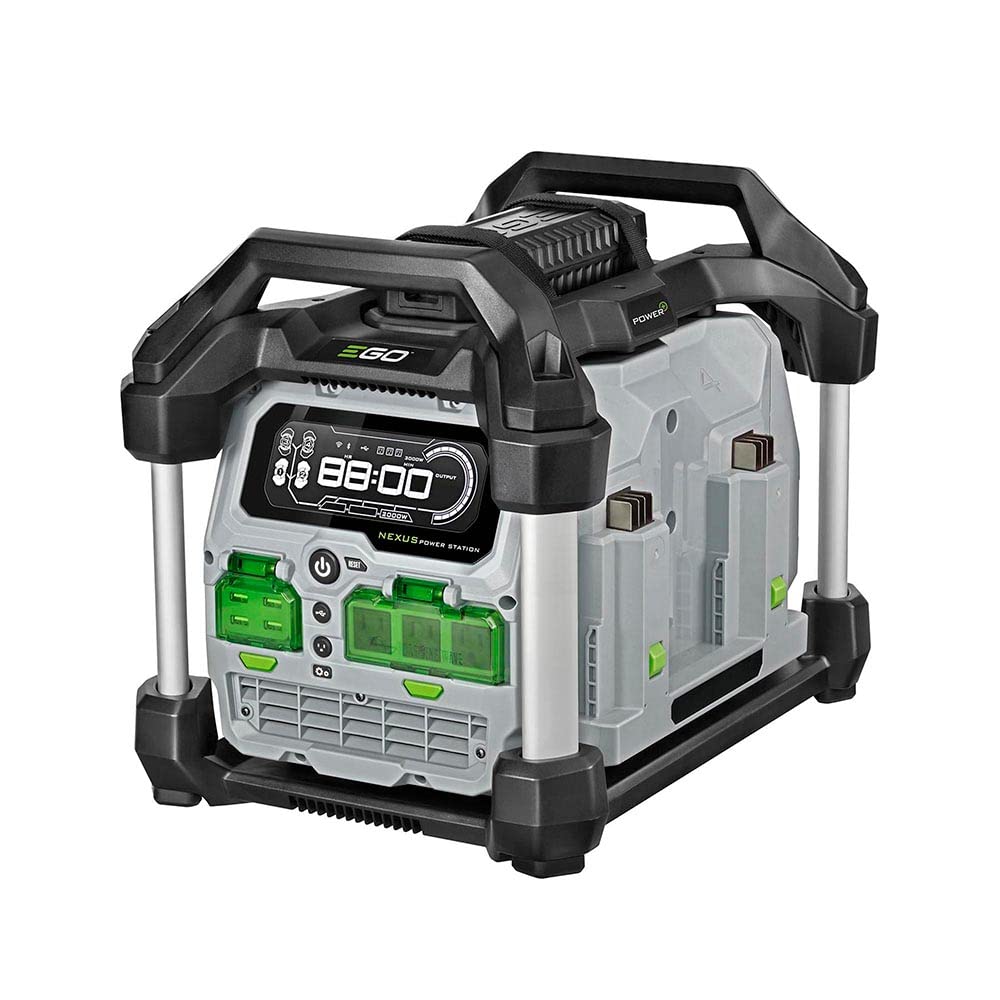
I tested a renewed PST3040 and found it to be a solid choice if you already own EGO batteries — just watch for the usual renewed-item caveats.
Why I picked it: Good hardware value for those already invested in EGO batteries.
Best for: Existing EGO battery owners seeking a lower-cost station.
Renewed option for lower upfront cost.
Pros
- Same core Nexus features
- Three AC outlets and four USB ports
- Readable LED run-time display
- Quiet operation
Cons
- Batteries not included
- No pass-through charging
- App support is limited
My take
In hands-on use the PST3040 performed the basics well: clean sine output, an easy-to-read display, and solid build quality. I ran a 1,000–1,500W heater with two 7.5Ah EGO batteries and the station handled it without hiccups in that test.
Because this unit is sold renewed, I weighed condition and seller support. I encountered a well-refurbished example and a less-successful one in separate instances, so I treat renewed purchases with extra caution and verify return policies before buying.
If you’re already invested in EGO batteries this is an appealing value play; if you don’t have batteries yet, factor that additional cost into your decision.
6. EGO Nexus Power Station (Bare, Renewed) – Best Bare Unit (Renewed)
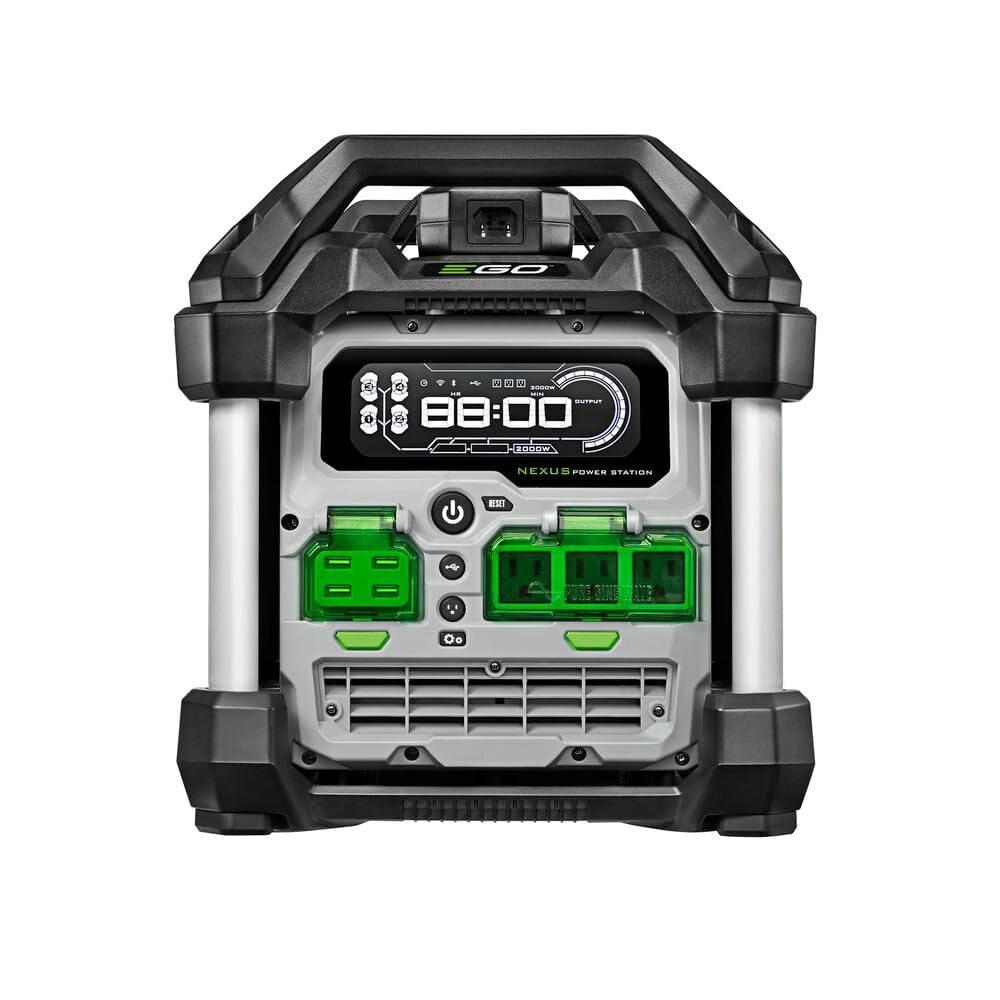
I evaluated the bare Nexus power station sold renewed; the hardware specs are strong but I encountered reliability variability in reconditioned units.
Why I picked it: Good option if you already have EGO batteries and want a cheaper station.
Best for: Owners who already own compatible EGO batteries.
Lower price point as a bare, renewed unit.
Pros
- 3,000W peak capability
- Three AC outlets and four USB ports
- Weather-resistant construction
- Quiet, gas-free operation
Cons
- Renewed units had reliability issues
- Some units wouldn't stay powered
- Batteries sold separately
My take
On paper the bare Nexus station looks great: high peak capability and a practical port layout. In practice I saw inconsistency across renewed units — a couple of examples would not remain powered despite using new batteries, which demanded warranty work or returns.
If you choose a renewed bare unit, I recommend testing it thoroughly as soon as you receive it and keeping return or exchange options in mind. When a unit worked, performance matched the expected quiet, clean output I like from the Nexus line.
7. EGO PST3042 Power Station Bundle – Best Bundle
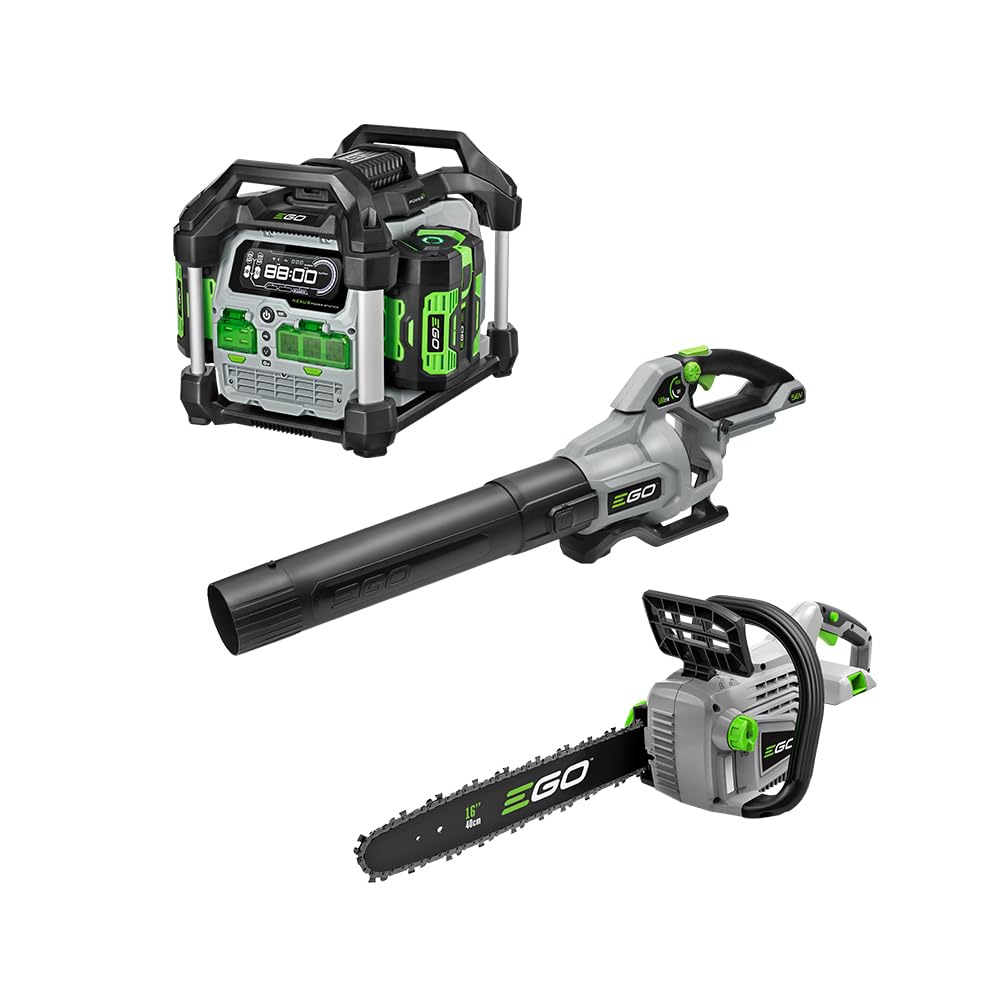
I tested the bundled PST3042 package and appreciated the real-world versatility: station plus blower and chainsaw gave me both backup power and yard tools in one purchase.
Why I picked it: Combines backup power with high-performance EGO tools.
Best for: Homeowners who want backup power and cordless yard tools.
Bundle-priced for combined tool and power value.
Pros
- Includes two 7.5Ah batteries
- Power station with LED runtime display
- High-performance blower and chainsaw
- Pure sine wave for sensitive electronics
Cons
- Bulky bundle to transport
- More expensive overall
My take
I used the PST3042 bundle around the house and found the tools excellent — the blower’s variable speed dial delivered immediate power when I needed it, and the chainsaw cut smoothly with tool-free chain tensioning.
The power station itself delivered the expected Nexus benefits: quiet power, a clear runtime readout, and enough output for typical household loads. The integrated battery count and included tools make this bundle an easy choice if you want both power backup and high-performing cordless equipment.
If you already own much of the EGO tool ecosystem the bundle is less compelling, but as a turnkey kit it saved me time assembling compatible batteries and tools.
How I Choose an EGO Nexus Setup
Capacity and Power Needs
I start by listing what I need to run and for how long. Continuous wattage matters more than peak wattage for everyday use — the Nexus line commonly offers around 2,000W continuous, which handles refrigerators, microwaves, and most tools for limited durations.
If you plan to run high-draw devices for long periods, plan for extra battery capacity or a gas generator complement.
- Match continuous wattage to your largest device
- Consider extra batteries for multi-day outages
- Batteries included vs. sold separately changes immediate usability
Charging Options and Speed
I pay close attention to how I’ll recharge: AC wall, solar, or with a gas generator. The CH1800 charger limits solar input to around 180W, so expect slow solar recharges unless you add multiple panels or a faster third-party controller.
For frequent off-grid use, add higher-capacity solar panels or keep a generator for quick recharge cycles.
- CH1800 supports up to 180W solar input
- 200W panels are portable but slower in real conditions
- Expect long recharge times when using onboard charging only
Portability and Weight
I consider how often I’ll move the unit. The Nexus stations are substantial when loaded with batteries and feel heavy to lift, but robust handles help.
For camping or frequent transport, a lighter inverter or single-battery inverter may be a better choice.
- Check whether unit ships with batteries or is bare
- Test lifting and loading in your vehicle before committing
- Foldable solar panels reduce carry bulk
Ecosystem and Compatibility
I prefer sticking with genuine EGO batteries and chargers if I want the smoothest experience. The CH1800 and EGO panels are engineered for the Nexus station — that reduces connector hassles.
If you don’t already own EGO batteries, compare total cost of batteries plus station to other all-in-one power stations on the market.
- Official accessories simplify setup
- Buying renewed units saves money but test immediately
- Bundles can be good value if you need the tools included
Renewed Units and Warranty
I treat renewed purchases cautiously: they can be excellent deals, but I always test them thoroughly on arrival and confirm return options.
If reliability is mission-critical for you, consider new units or ensure a solid seller warranty.
- Inspect renewed units immediately
- Retain packaging until testing completes
- Confirm seller return and warranty policies
Frequently Asked Questions
Can the Nexus station run a refrigerator?
Yes — in my testing the Nexus stations can run a full-size refrigerator for limited periods, depending on the battery capacity you have attached. I recommend planning for multiple batteries or recharging options if you need refrigeration through several days without grid power.
Can I charge the Nexus station with solar?
You can. I used the official SP2000 panels and the CH1800 charger to top off the Nexus station. The CH1800 limits input to about 180W, and the SP2000 is a 200W portable panel, so solar charging is convenient but relatively slow compared with mains charging.
Do these stations come with batteries?
It depends on the model. The PST3041 I tested ships with four 5.0Ah batteries, which makes it ready to use immediately. Other listings, like the PST3040 and bare renewed units, often sell without batteries — factor that into your purchase.
Final Take
I found the EGO Nexus family to be a strong choice when quiet, indoor-safe backup power and seamless compatibility with EGO tools matter. The PST3041 is my pick for most people who want a ready-to-run station, while the CH1800 and SP2000 panels are useful top-off options if you already own EGO batteries.
If recharge speed or weight is your top priority, plan your charging strategy ahead of time — solar works but at modest rates unless you scale up array size. For those already invested in the EGO ecosystem, the Nexus units are convenient and well engineered; for newcomers, compare total battery and accessory costs before deciding.
