
I tested eight popular candle-making waxes and blends so you don’t have to. Here’s what I used, why each wax worked (or didn’t) for my projects, and which wax I reach for in specific situations.
I make candles regularly and I buy a lot of wax. Over several months I tried eight waxes and blends across container candles, tealights, melts, and DIY skincare applications.
In the tests I paid attention to melt behavior, scent hold, finish, and how each wax handled color and additives. Below I walk through what I liked about each product and where I would use it in my work.
I compared melting points, how well the wax holds fragrance, ease of melting and pouring, and intended uses so you can match a wax to your project quickly.
1. American Soy Organics Freedom Soy Wax Beads – Best Overall Soy
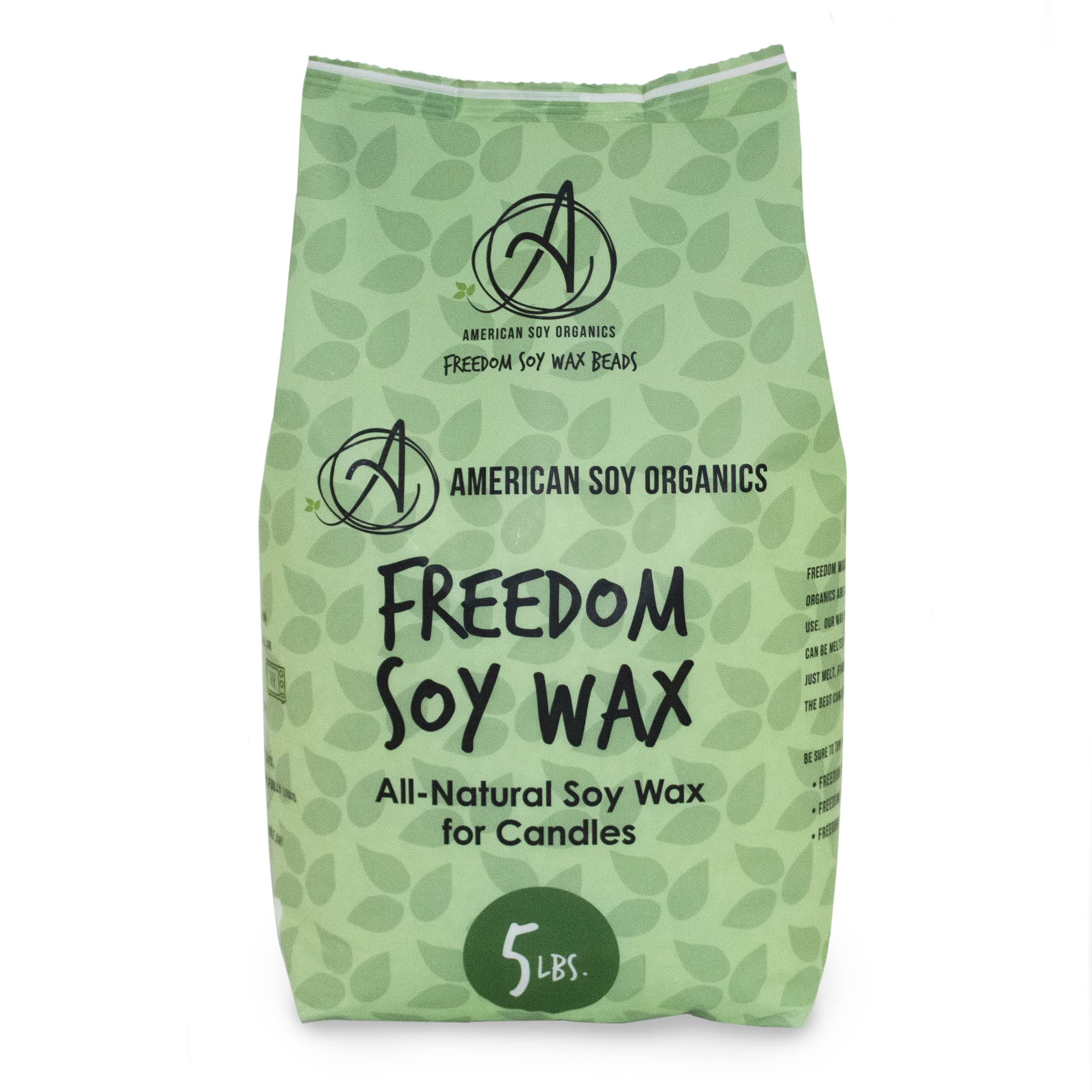
Smooth soy wax beads that melt uniformly, hold fragrance well, and give clean, consistent tops on container candles.
Why I picked it: Uniform melt, good scent retention, and easy bead form make it versatile for most candle projects.
Best for: Container candles, tealights, wax melts, and hobbyists who add their own fragrance.
Affordable and great value for small-batch makers.
Pros
- Bead form melts quickly
- Paraffin- and beeswax-free
- Smooth tops and consistent set
Cons
- Max fragrance load is modest
- Not specialized for heavy fragrance loads
My take
I reached for these soy beads when I wanted a reliable, clean-burning base that’s easy to melt and dye.
They melted to a smooth, creamy texture and poured without the air pockets or frosting I sometimes see with other soy waxes.
I tested fragrance at the recommended load and found the scent retention steady; candles set with smooth tops and consistent appearance.
Because they’re paraffin- and beeswax-free and come in bead form, I found measuring and melting faster and neater than block wax.
2. Sky Organics Organic White Beeswax Pellets – Best Beeswax Pellets
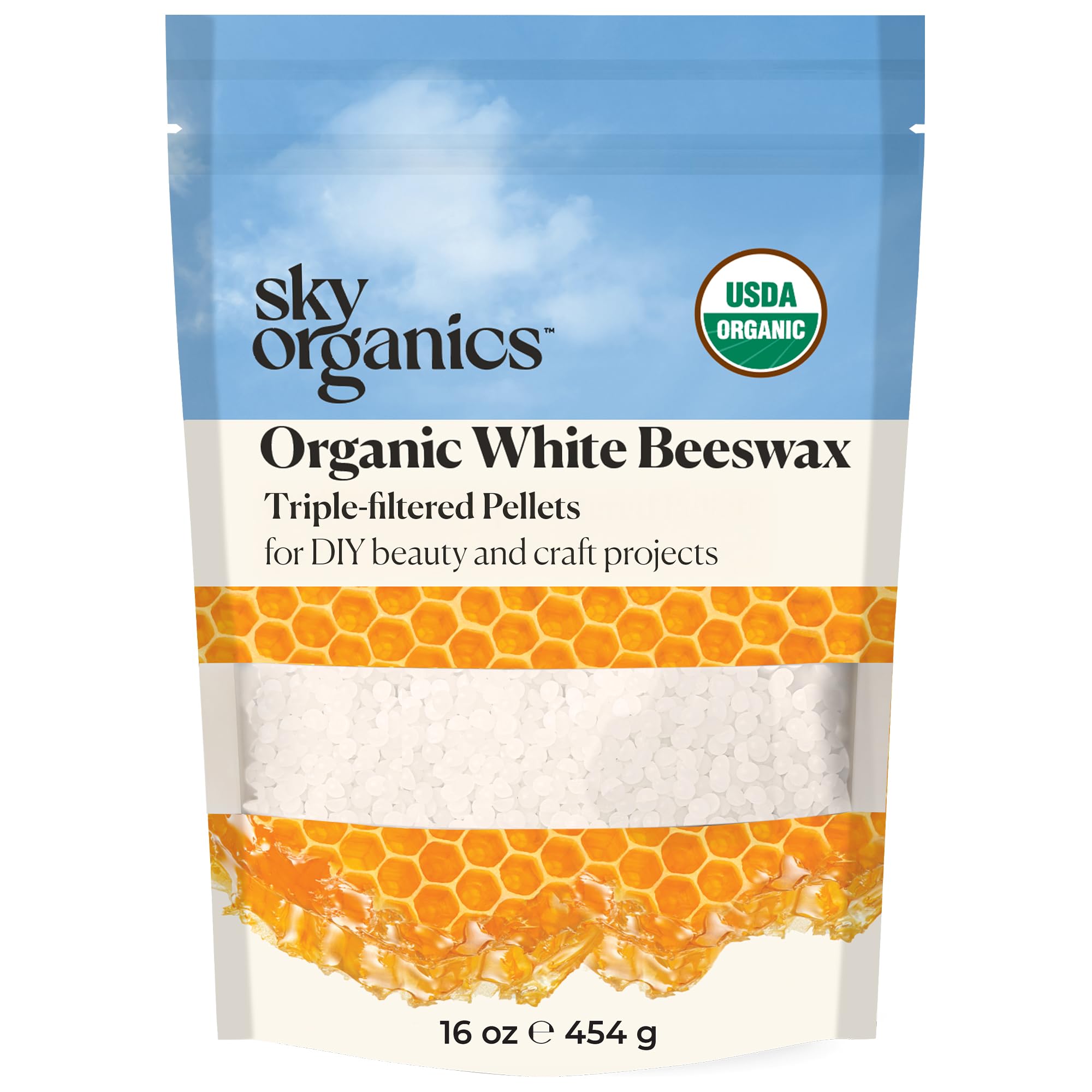
Pure, triple-filtered beeswax pellets with a natural mild scent and a higher melting point suited to skincare and craft use.
Why I picked it: High-purity beeswax in pellet form that melts cleanly and is ideal for salves, balms, and traditional candles.
Best for: Lip balm, salves, beeswax candles, and small-batch skincare formulations.
Midrange cost for pure, organically processed beeswax.
Pros
- Single-ingredient purity
- Pellet form for quick measuring
- Natural mild beeswax scent
Cons
- Higher melting point
- Can show color/texture variation
My take
I appreciate that this is real, single-ingredient beeswax — it smells and behaves like beeswax and nothing else.
The pellets melted reliably using a double boiler and were faster and cleaner to measure than block wax I used in the past.
For skincare recipes I dialed my heating just right to avoid rings as it cooled; when melted at the proper temperature my balms and candles set beautifully.
Because the melting point is higher than soy, I treat it differently in blends and adjust my temperatures accordingly.
3. American Soy Organics Millennium Soy Wax Beads – Best for Color Retention
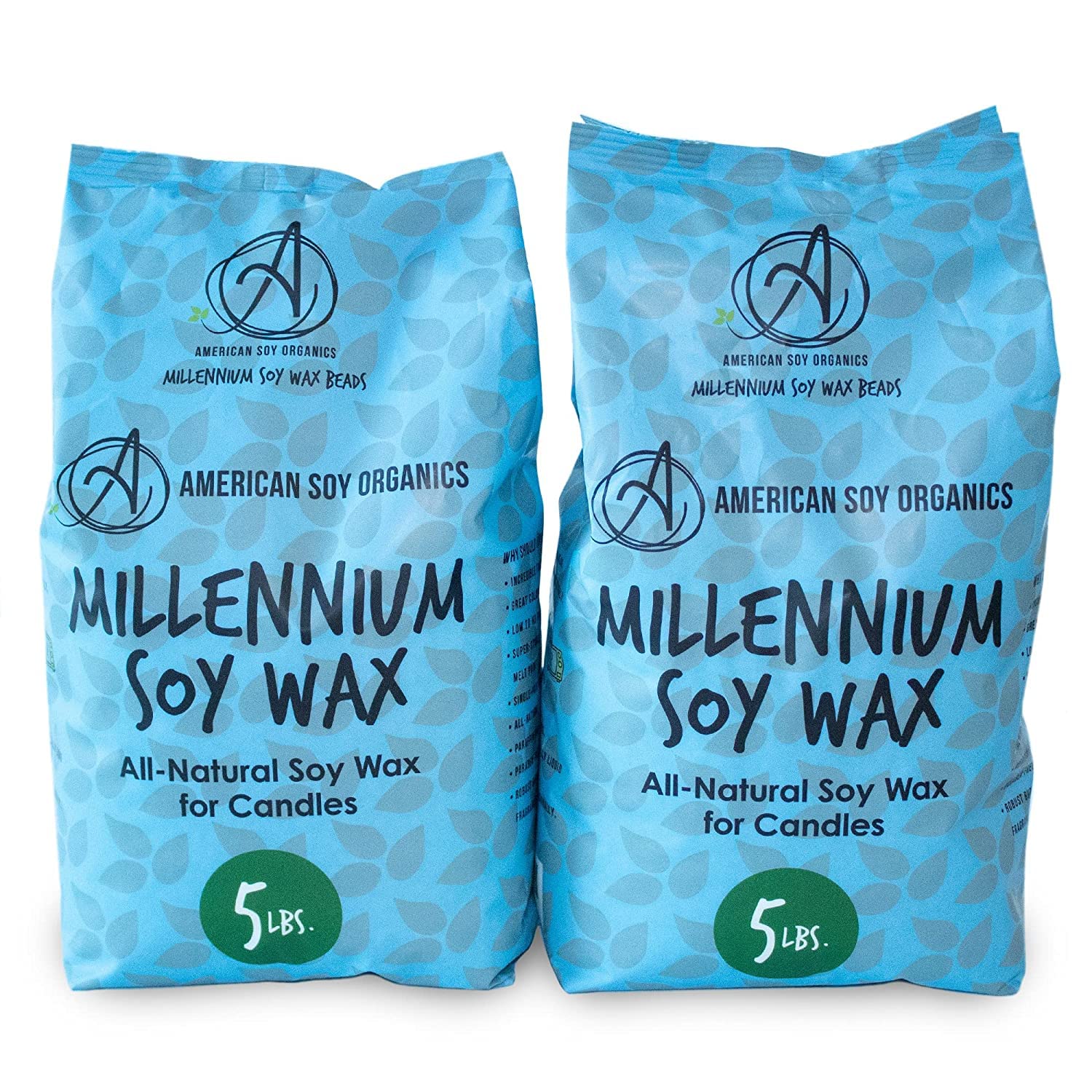
Soy beads formulated to reduce frosting and retain color, with a slightly higher melt point for a warm burn and strong fragrance throw.
Why I picked it: Improved color retention and strong scent throw make it ideal for colored or heavily scented candles.
Best for: Vibrant colored candles and makers focusing on hot/cold fragrance throw.
A more premium soy option for finished-appearance priorities.
Pros
- Better color retention
- Strong fragrance throw
- Bead form for easy measuring
Cons
- Requires a bit more technique
- Slightly higher melt point
My take
I used this Millennium blend when I wanted bright, even color and discovered fewer frosting issues than with other soy waxes.
The wax holds fragrance impressively; I got a strong hot and cold throw after a proper cure.
It takes a little more patience to master pouring temperatures, but once dialed in the finished candles looked professional and burned cleanly.
For my small-batch business runs I liked the reliable performance even if I had to tweak wick sizes and cure time.
4. Milliard Emulsifying Wax Pastilles NF – Best Emulsifier for Skincare
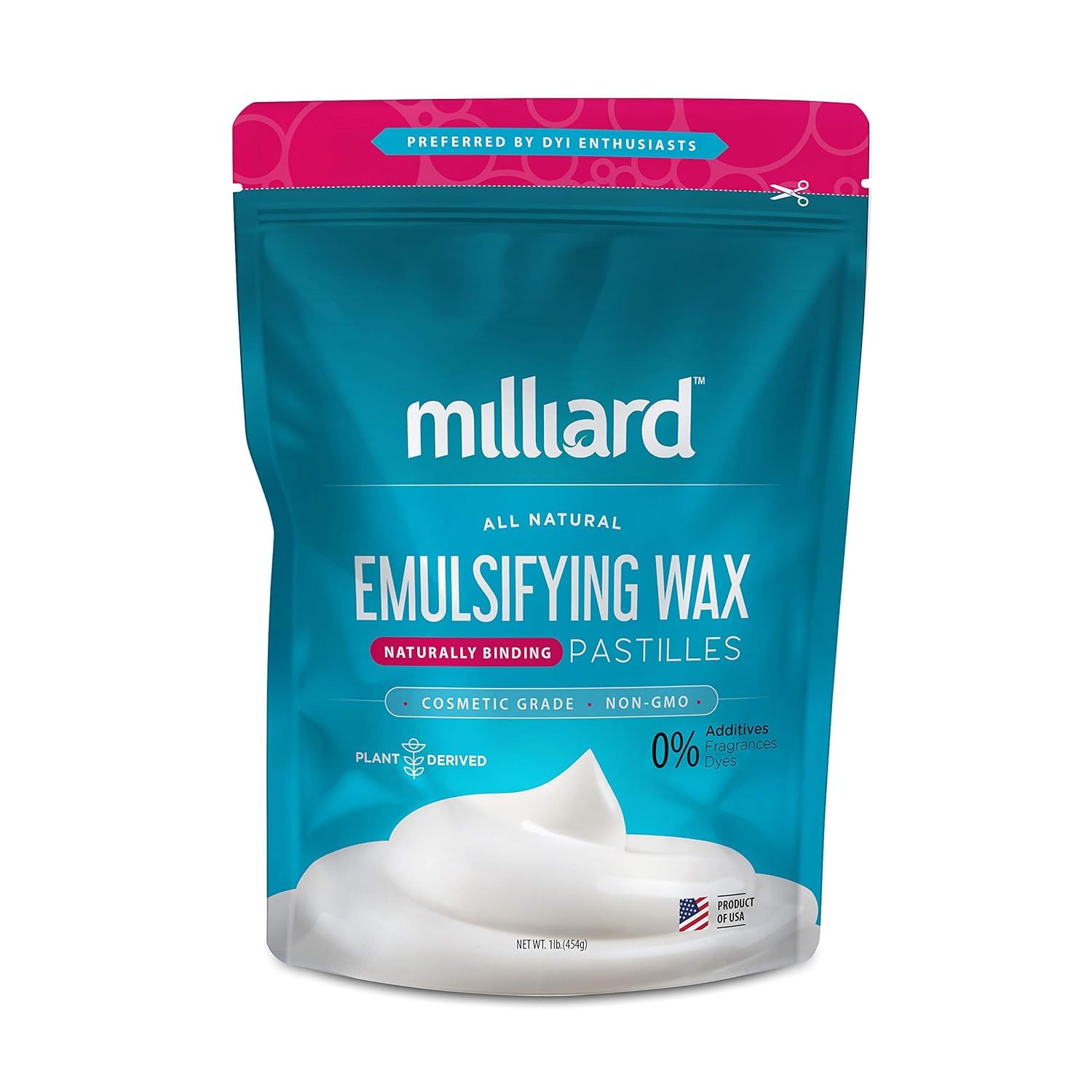
Odorless emulsifying wax pastilles refined from palm, designed to bind oils and water for lotions and creams.
Why I picked it: Conforms to National Formulary standards and simplifies oil-to-water emulsions in skincare recipes.
Best for: Lotions, creams, whipped body butters, and other water-based DIY cosmetics.
Cost-effective single-ingredient emulsifier for home formulators.
Pros
- Easy to use in emulsions
- Neutral, odorless pastilles
- Clear usage guidelines
Cons
- Not a substitute for beeswax in balms
- Requires precise ratios
My take
I turn to these pastilles when I make lotions and creams because they reliably bind oils to water and give stable textures.
They melt quickly in a double boiler and the neutral, almost translucent finish keeps my products from smelling waxy.
Following the recommended 3–6% ratio gave me smooth creams; in one small-batch whipped body cream this wax gave a noticeably better texture than beeswax alone.
For anyone making preservative-free small batches, this is an easy emulsifier to work with and easy to clean up.
5. American Soy Organics 100% Midwest Soy Wax Beads – Best Midwest Soy
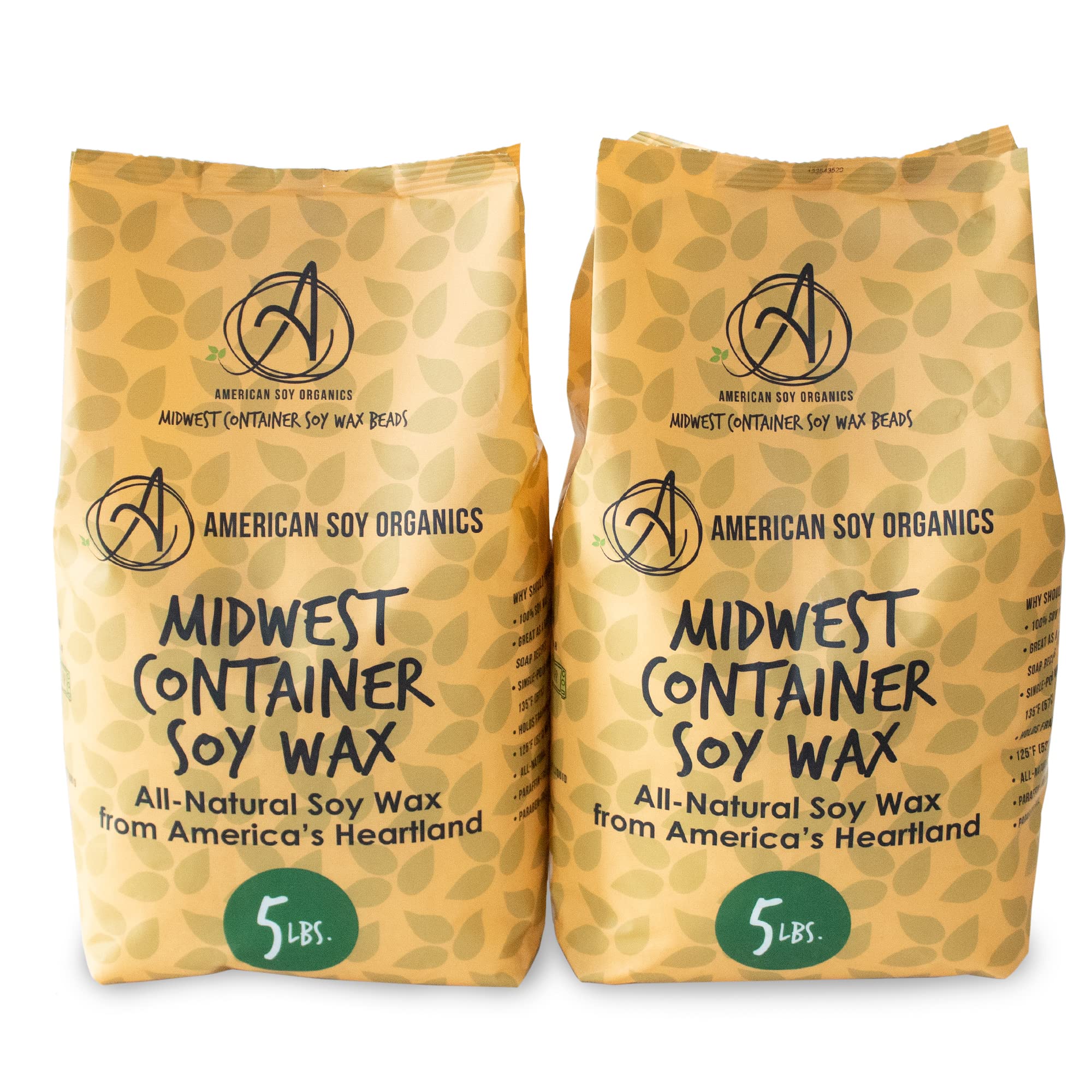
Classic Midwest soy beads that melt evenly, hold fragrance well, and provide a slow, clean burn with easy handling.
Why I picked it: Dependable soy base with a comfortable melting range and good fragrance retention for everyday candle making.
Best for: Everyday container candles, beginners, and makers who want a consistent, natural soy base.
Good value for bulk users and regular crafters.
Pros
- Even melting
- Good fragrance retention
- Bead convenience
Cons
- Standard soy finish
- Not optimized for extreme fragrance loads
My take
I used 100% Midwest soy beads when I wanted dependable, repeatable results across multiple candle sizes.
The wax melted smoothly, filled jars without shrinkage, and set slowly enough to avoid sinkholes around the edges.
I noticed clean burns and steady scent release after curing, which is exactly what I expect from a solid soy base.
The bead form made measuring and melting much faster than block wax for larger batches.
6. Etienne Alair Soy Wax Flakes Kit – Best Starter Kit
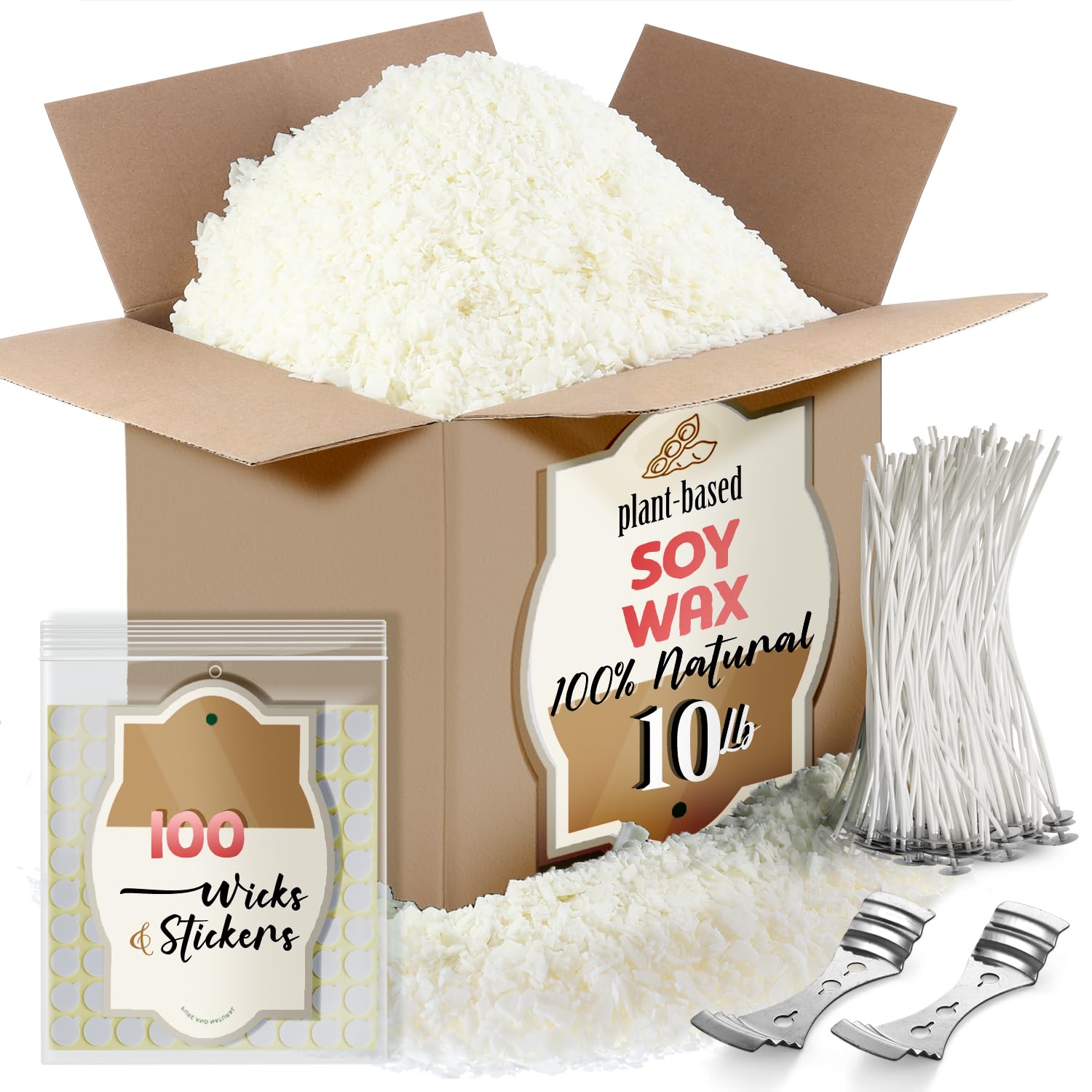
A beginner-friendly soy wax kit that includes flakes, cotton wicks, adhesive stickers, and centering tools for quick starts.
Why I picked it: Complete starter pack with useful accessories that gets me making candles right away.
Best for: Beginners, workshops, and makers who want a turn-key solution.
Starter-kit value with tools included.
Pros
- Includes wicks and stickers
- Flakes melt quickly
- Good scent hold
Cons
- Packaging lacks manufacturer details
- Max fragrance load not clearly stated
My take
I like this kit when teaching friends or running a small candle party because it bundles wax with 100 cotton wicks and basic tools.
The flakes melt reliably and blend well with fragrance; even though the max load wasn’t explicit, I worked at 6–8% and got a nice throw.
Finished candles burned clean and looked professional — the included centering tools and stickers made wick setup painless.
This is the kit I recommend for anyone who wants to skip shopping for individual accessories and start making candles immediately.
7. Gulf Wax Paraffin Wax Bars (3-pack) – Best Paraffin Bars
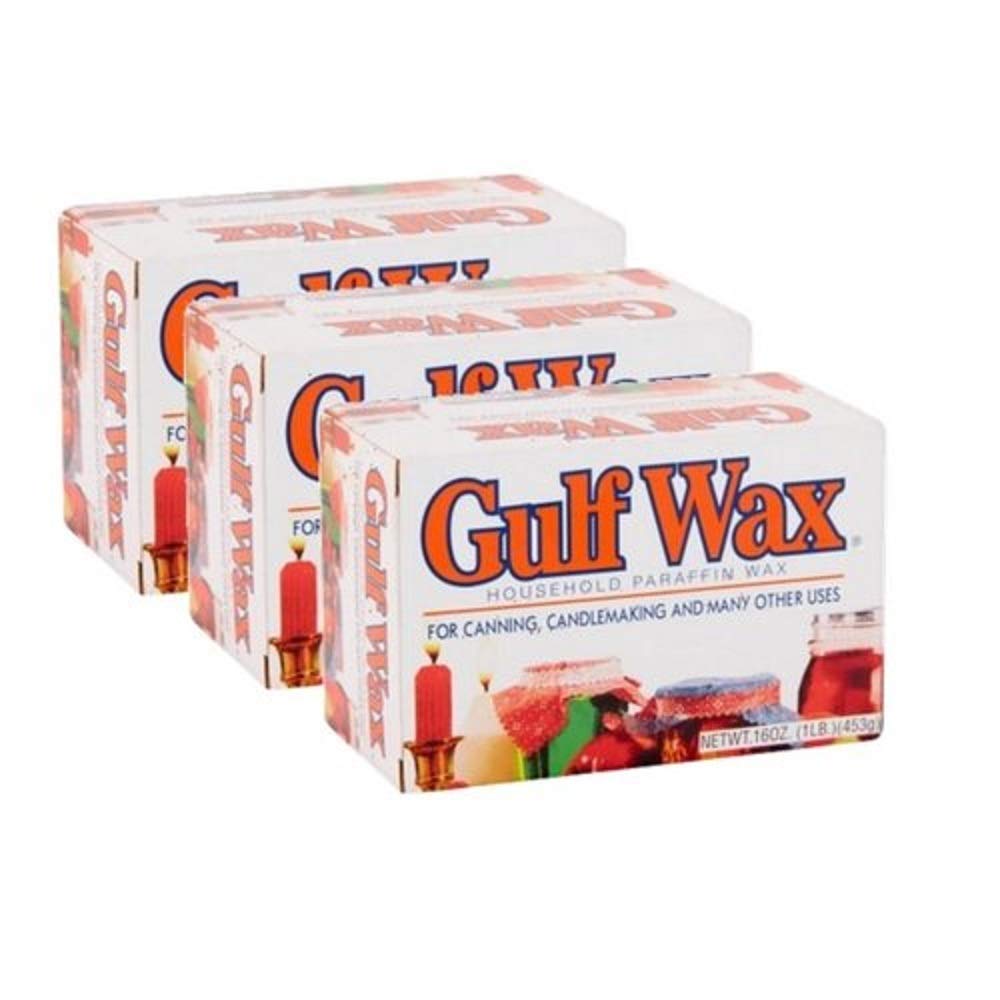
Classic paraffin bars sold in manageable 1 lb pieces, useful for sealing, canning, and traditional candle making.
Why I picked it: Reliable, dense paraffin that’s versatile for household uses and craft projects where paraffin’s properties are needed.
Best for: Canning wax, candle cores, sealing jars, and craft projects needing a firm paraffin base.
Practical bulk-format for household and craft use.
Pros
- Durable paraffin bars
- Easy to portion
- Multipurpose utility
Cons
- Not plant-based
- Less eco-friendly than soy/beeswax
My take
I keep a few of these paraffin bars in my workshop for sealing jars and making firm pillar cores.
Each bar melts predictably and is easy to portion for small runs, which makes it handy when I need a stiff wax.
Paraffin has a very long shelf life and works well for uses where a hard finish or sealing property is required.
I reserve paraffin for projects that specifically need its characteristics and stick to plant-based waxes for most of my candles.
8. Coconut Soy Candle Wax Blend – Best Coconut-Soy Blend
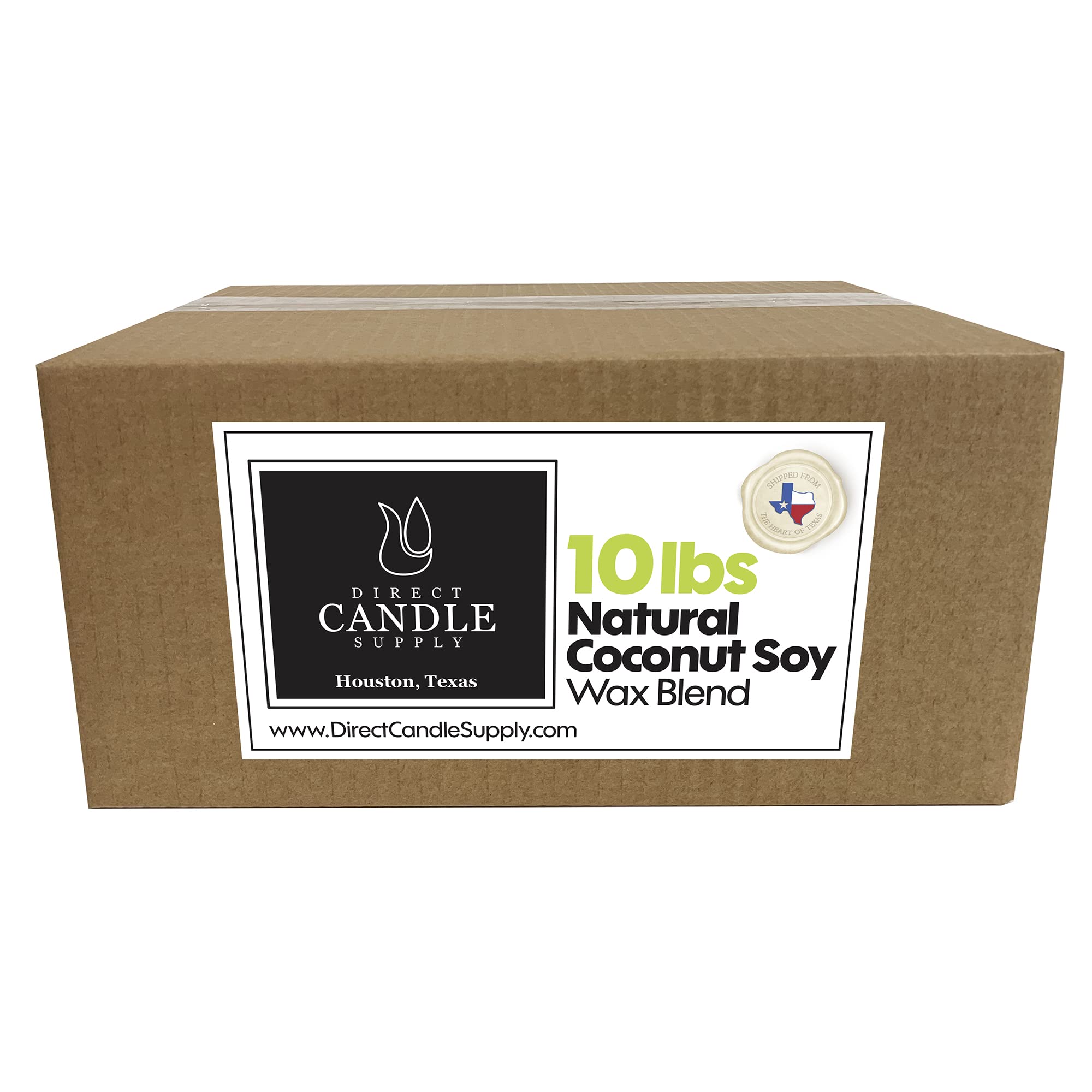
A coconut-soy blend formulated for high fragrance loads and a long, clean burn with a creamy finish.
Why I picked it: Blend is optimized to absorb fragrance and deliver a strong scent throw while keeping a smooth finish.
Best for: High-load scented candles and makers who prioritize fragrance performance and a creamy poured finish.
Premium blend for fragrance-first candles.
Pros
- Excellent fragrance absorption
- Creamy finish
- Designed for high loads
Cons
- Contains small paraffin amounts
- Can be tougher to cut/handle
My take
I used this coconut-soy blend when I wanted to push fragrance loads and achieve a creamy, smooth finish.
The blend took fragrance oil well and delivered a satisfying hot throw after curing, though I found the wax a bit tougher to cut and handle than pure soy flakes.
In one test I did see tunneling when I mismatched wick type, so I adjusted to a thicker or wooden wick and the results improved.
Overall, this is my go-to when scent is the primary objective and I need a wax that carries oils deeply and evenly.
How I Choose Wax for Each Candle Project
Match wax to project needs
I pick wax based on what I’m making: container candles, pillars, tealights, melts, or skincare. Each use has different melting point, firmness, and scent-holding priorities.
If fragrance throw is my top priority, I lean toward blends and waxes specified for higher fragrance loads. For lotions and balms, I use beeswax or an emulsifying wax.
- Beginners: choose bead or flake form for easy measuring and melting.
- Strong scent: use a blend designed for high fragrance absorption.
- Skincare: use pure beeswax or an NF emulsifying wax for stable emulsions.
- Pillars/sealers: paraffin provides a firm finish and long shelf life.
Practical tips I use when melting and pouring
I always melt wax in a double boiler or controlled wax melter and keep a thermometer handy. Overheating damages fragrance and can change final appearance.
I let most container candles cure before doing a final scent test; that often makes the difference between a so-so and a great hot throw.
- Follow the recommended melt temp for the wax.
- Allow proper cure time for fragrance to bind to the wax.
- Adjust wick size after small test pours rather than guessing.
Frequently Asked Questions
Which wax is best for beginners?
I recommend bead or flake soy wax because it melts predictably and is easy to measure. Kits that include wicks and stickers are especially handy when I’m teaching newcomers.
Can I blend waxes like beeswax and soy?
Yes. I blend to combine benefits — beeswax for firmness and longer melt points, soy for scent and a cleaner burn. I test small batches to dial in melt and wicking.
How do I avoid tunneling and sinkholes?
I prevent tunneling by using the right wick size, proper cure time, and by pouring at the recommended temperatures. If I see sinkholes, I try a slightly warmer top-off and a slower cooling cycle.
Final Take
I covered a range of waxes so you can pick the right base for your goals — scent, finish, or formulation.
For everyday container candles I reach for reliable soy beads; for skincare I use beeswax or emulsifying pastilles; and for high-fragrance pieces the coconut-soy blend is my go-to.
Whatever your project, I suggest testing small batches first so you can fine-tune wick size, temperature, and fragrance load before committing to a larger run.
