
I tested seven stackable bed risers to find the most stable, space-maximizing, and versatile options for different furniture and needs.
I spent time installing and living with seven different stackable bed risers so I could compare real-world fit, stability, and usefulness. I checked height gain, how well caster wheels and irregular legs seated in the cups, whether bases slipped on hardwood or carpet, and how easy the risers were to stack or remove.
In the sections below I lay out which risers performed best for specific situations — from a minimal lift for desks to heavy-duty, steel-reinforced cups for oversized furniture — and why I chose each one.
I compared products on lift height, cup design, slip protection, stackability, and stated weight capacity. I focused on how each riser handled real furniture legs and casters, how secure the top cup felt, and whether the riser stayed put on different floors.
1. HOME IT 5–6-inch Bed Risers – Best Overall
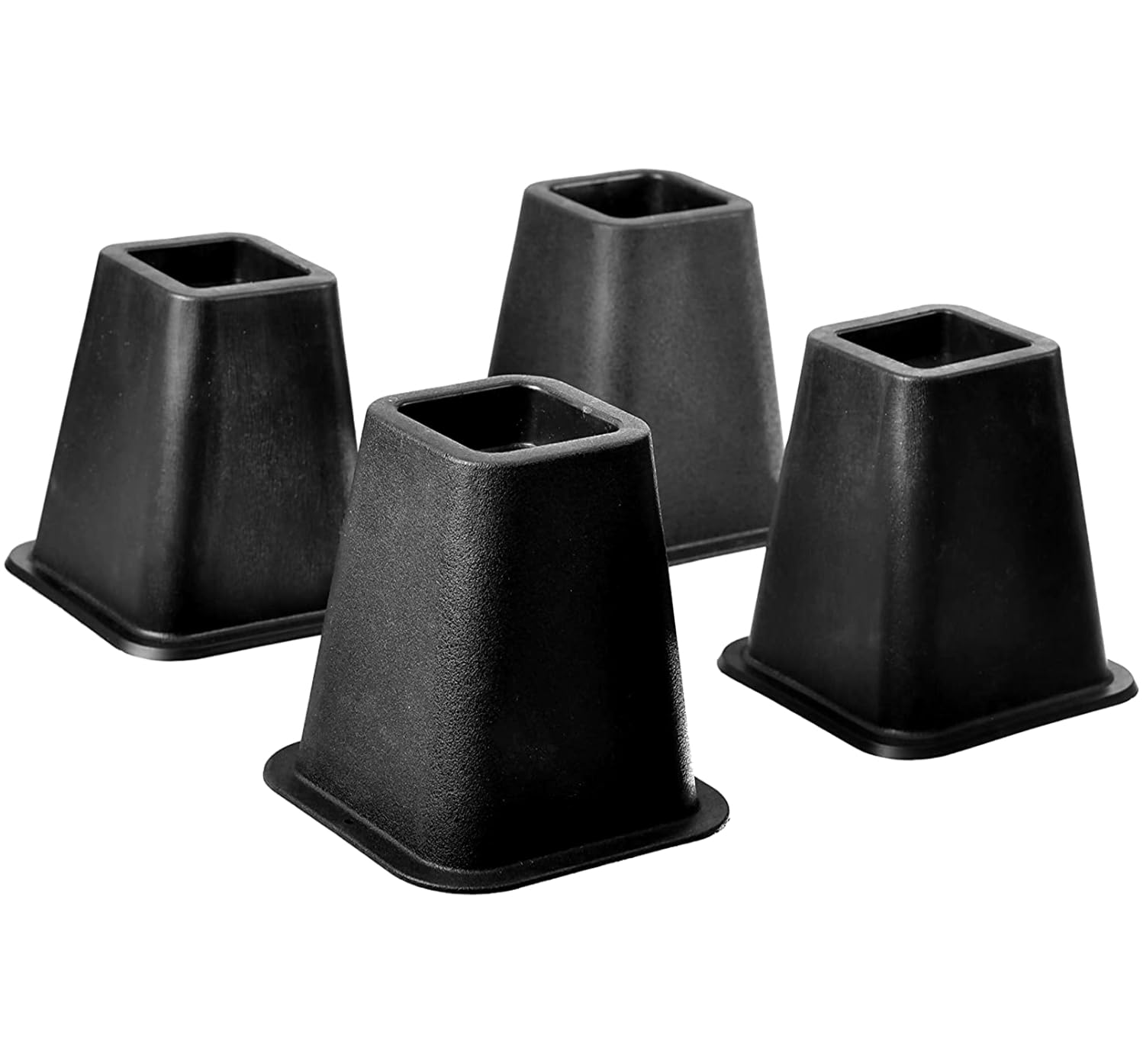
I found these risers reliable for adding substantial under-bed storage while keeping bed posts and casters secure.
Why I picked it: Offers the largest single-step lift with a secure lip and thick impact-resistant plastic.
Best for: Anyone who wants maximum under-bed clearance for large storage bins.
Affordable for the lift they provide.
Pros
- Big lift for more storage
- Durable high-impact polymer
- Built-in lip secures posts and casters
Cons
- Not all furniture feet fit the base
- Only available as a larger-size block
My take
I used the HOME IT risers to raise a heavy bed and immediately noticed the extra storage space under the frame. The units give roughly a five‑to‑six inch increase and feel very sturdy under distributed weight.
The one-inch lip in the top cup keeps casters and bed posts from wandering, which made me more comfortable using them with a metal frame. A few feet on oddly shaped furniture didn’t sit neatly in the cup, so I double‑checked fit before committing to placement.
Setup was simple — I could stack them if I needed different heights, and the black finish blended in with my bedroom furniture. For maximizing clearance, these were my go-to.
2. iPrimio 2-inch Bed Risers – Best for Small Lifts
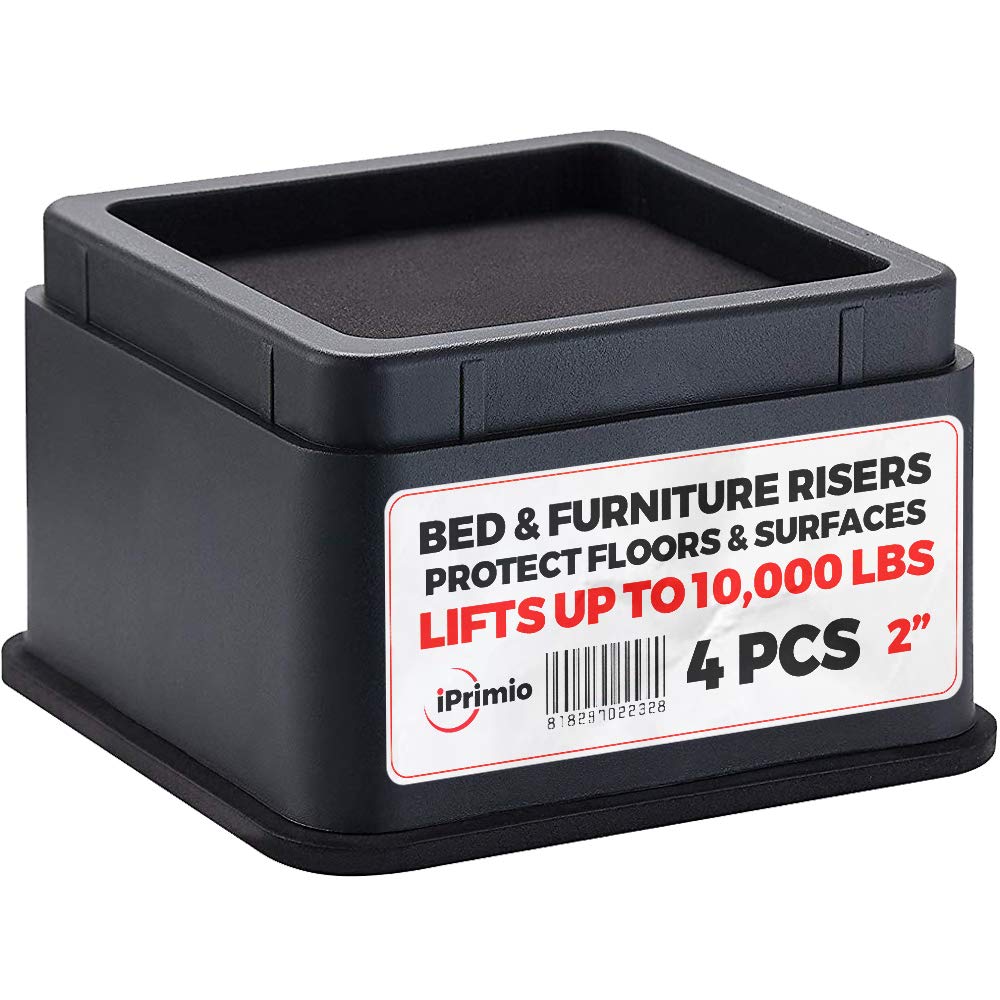
I reached for these when I needed a small, secure bump in height and strong, non-slip support for caster-equipped frames.
Why I picked it: Patented anti-skid foam pad and an extremely high stated weight capacity per leg.
Best for: Metal frames with casters and projects that need a modest 2-inch raise.
Solid midrange choice for heavy-duty small lifts.
Pros
- Anti-skid foam keeps casters seated
- Very high weight capacity rating
- Fully padded bottom protects floors
Cons
- Only raises about two inches
- Color availability can vary
My take
When I needed to raise an old metal frame by two inches, these iPrimio risers did exactly that without shifting. The dense foam top lets caster wheels settle into a shallow depression so they don’t roll off.
The brand lists an impressively high capacity per leg, and the plastic felt stout under heavy desks and beds I tested. If you only want a small elevation and want to lock casters in place, these are the most confident two-inch option I used.
I did notice some color mismatches across batches, so match them to your décor if that matters.
3. BTSD-home 3/6-inch Adjustable Risers – Best Adjustable
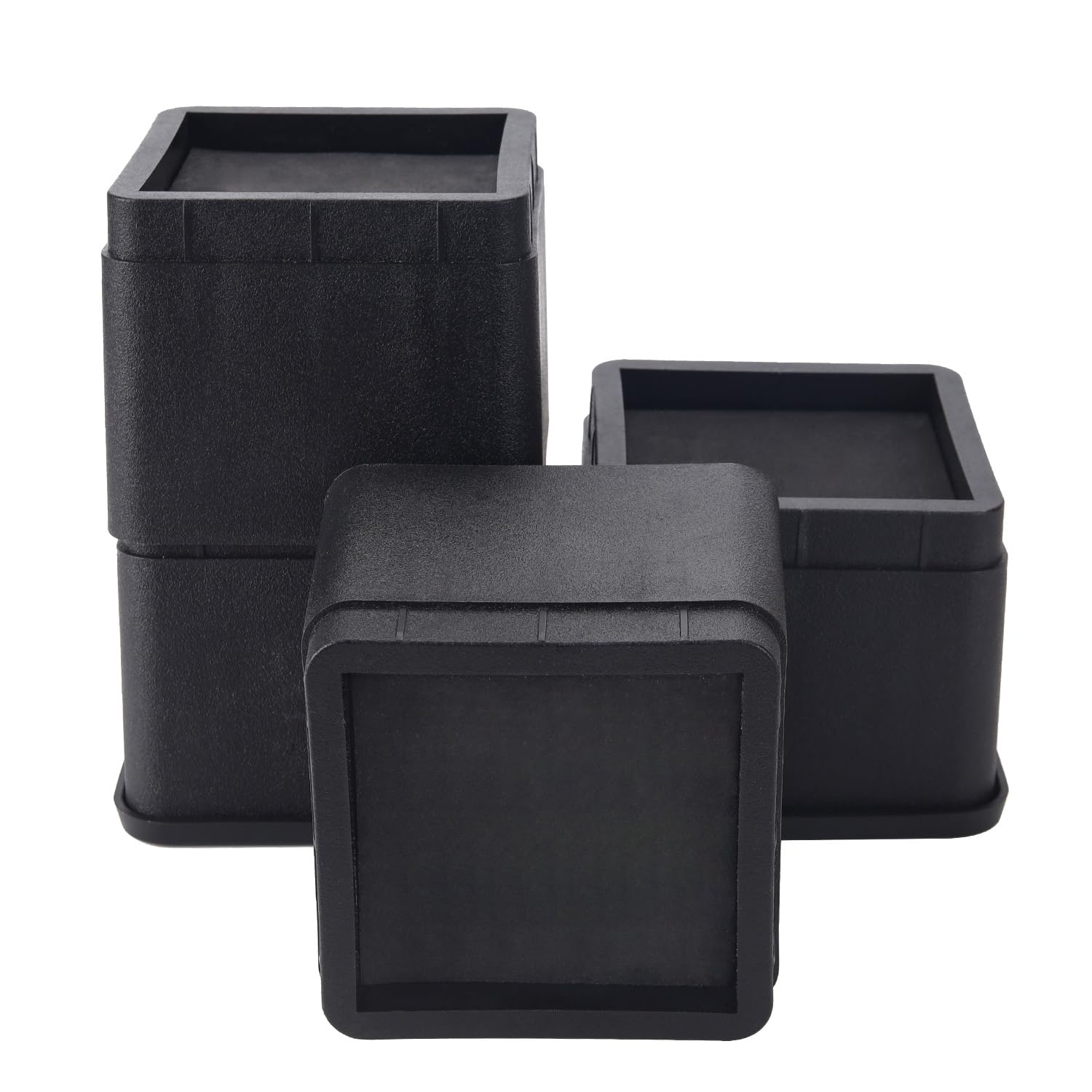
I liked these for their stackable, modular design and the non-slip pads that protect floors and furniture.
Why I picked it: Stackable design that converts 3-inch lift to 6 inches when needed.
Best for: Dorm beds and adjustable needs where you may stack later.
Good value for a stackable adjustable set.
Pros
- Stackable for two height settings
- Non-slip pads protect floors
- Wide top cup fits many rollers
Cons
- Pads aren’t adhesive to the riser
- Stacking can make access tricky
My take
I used the BTSD set under both a box spring and a headboard post and appreciated how the cups accommodated a variety of leg shapes. Individually they give a solid 3‑inch lift and click together cleanly for more height.
The foam and rubber pads do an excellent job of keeping the riser from sliding on hardwood, but the pads aren’t glued to the unit. If you try to move the riser with the pad in place, the pad can stick to the floor and separate, so I positioned things carefully the first time.
Overall they felt reinforced and well molded — a pragmatic choice if you want the option to change height later.
4. Slipstick CB672 3-inch Reinforced Risers – Best Reinforced
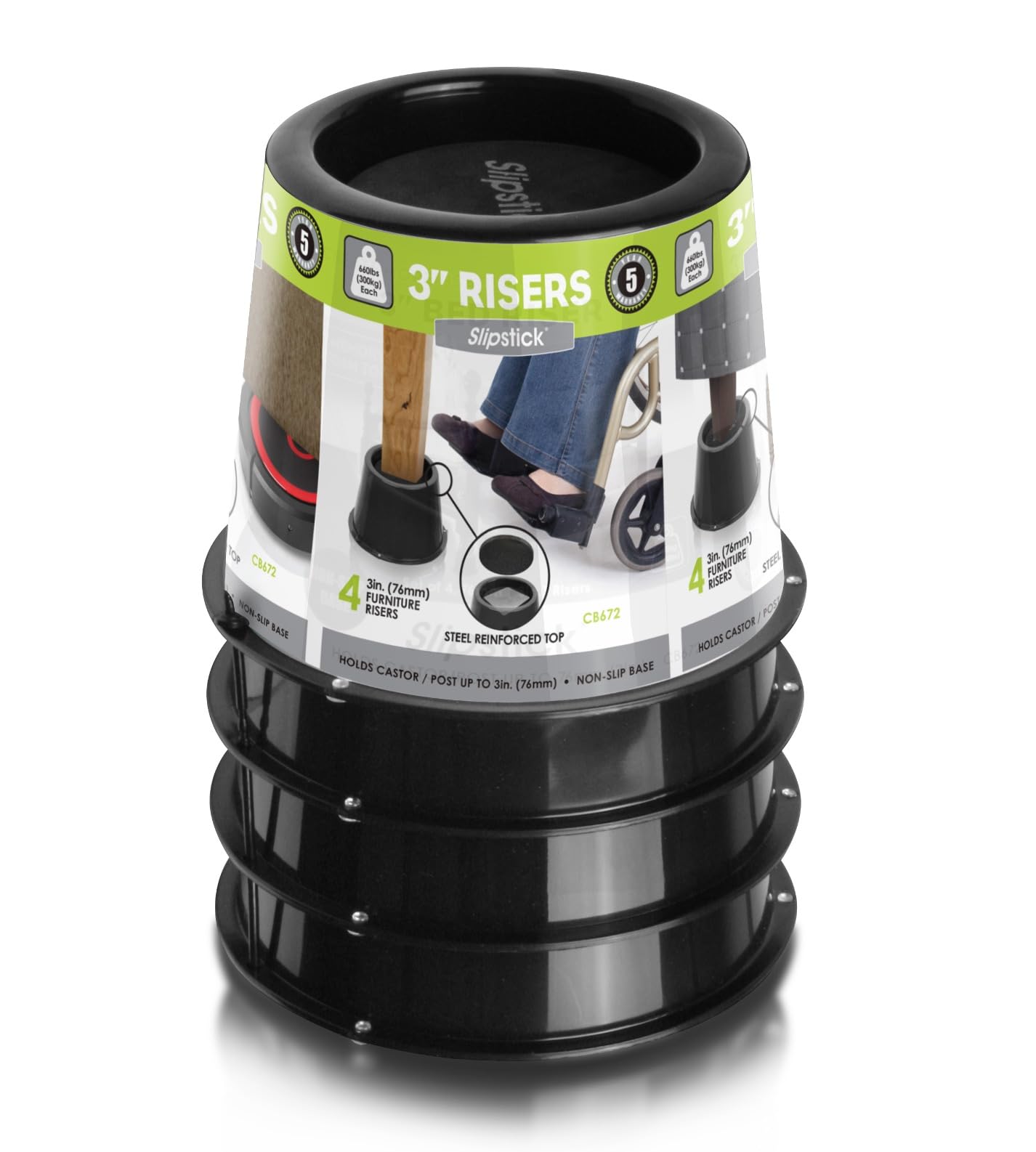
These are my pick when I need puncture-proof strength and a locking cup for heavy or stationary furniture.
Why I picked it: Steel-reinforced plate under the cup and memory-foam top for a secure hold.
Best for: Heavy furniture where stability and puncture resistance matter.
Premium option for reinforced protection and warranty coverage.
Pros
- Steel-reinforced underplate
- Memory-foam cup secures legs
- Rubber grips protect floors
Cons
- Top cup limits legs larger than listed
- Riser body taller than effective lift
My take
I relied on the Slipstick risers under a heavy chair and noticed immediate stability; the recessed cup with memory foam really does lock casters and posts in place so the furniture didn’t wander.
The internal steel plate gives me confidence against puncture or cracking, and the small rubber grips on the base kept everything from sliding on hardwood. Note that the overall block height is taller than the actual raise because of the recessed cup, so double‑check clearance before buying.
For stationary sofas, heavy chairs, or cases where puncture resistance is key, these felt like the most engineered option I tested.
5. Kings Brand 6-inch Bed Risers – Best for Storage Space
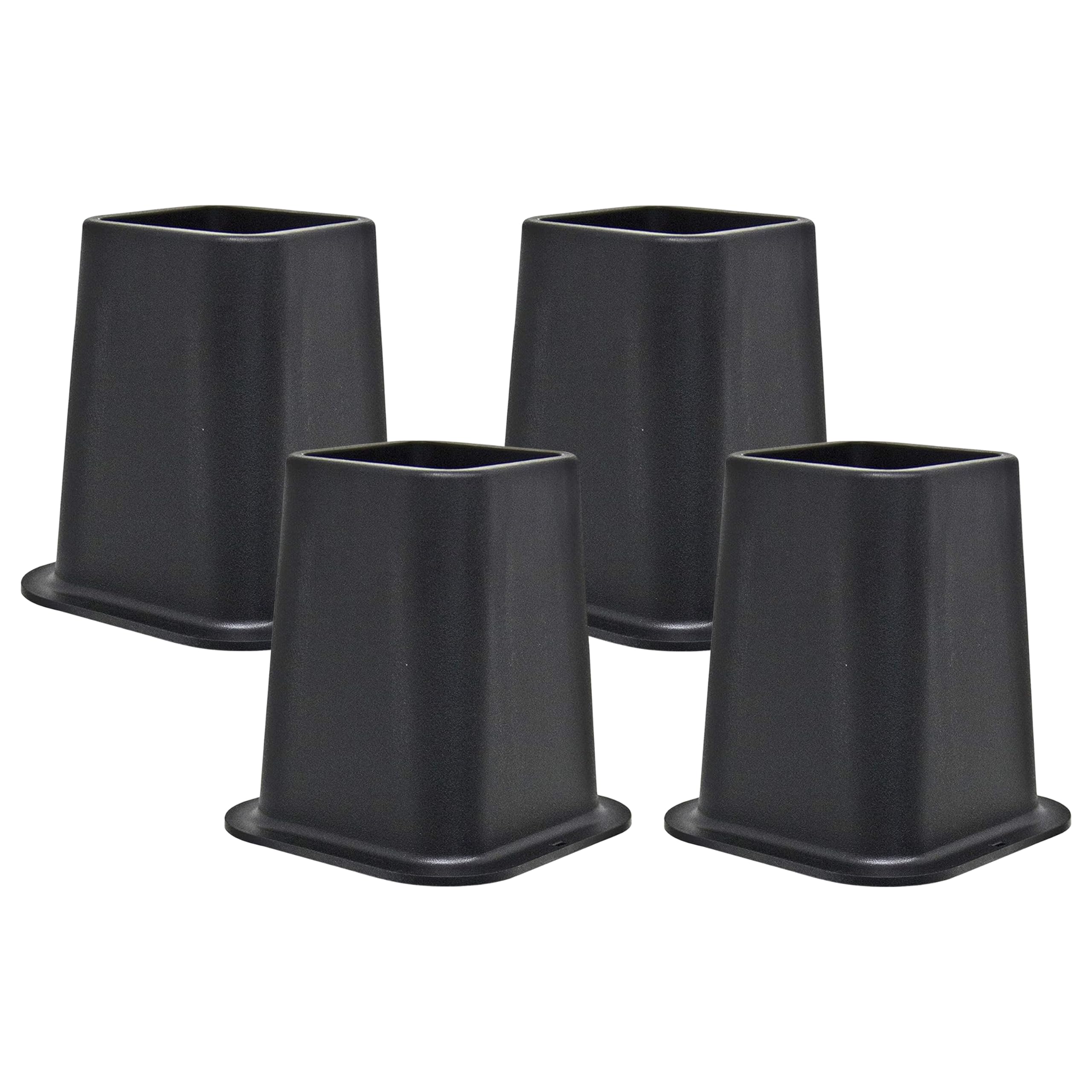
I turned to these when I wanted straightforward, large clearance under a bed to store bins and seasonal items.
Why I picked it: Tall lift with a steady base designed to maximize storage beneath furniture.
Best for: Users who need the most under-bed clearance for bulky storage.
Affordable way to create maximum clearance.
Pros
- Generous six-inch clearance
- Steady base protects floors
- Lightweight yet sturdy
Cons
- Limited bottom grip on some furniture
- May not secure odd-shaped legs
My take
I used the Kings Brand risers to free up storage under a bedroom set and appreciated how much more room they created. The risers felt solid under seated loads and were easy to place beneath legs without removing the mattress.
On lightweight modular couches the pieces shifted a touch, so I added a non-slip pad underneath to steady them. For bed frames and heavier furniture they felt secure and did exactly what I wanted: more usable space beneath.
6. BTSD-home 3-inch Bed Risers – Best Value Mid-Height
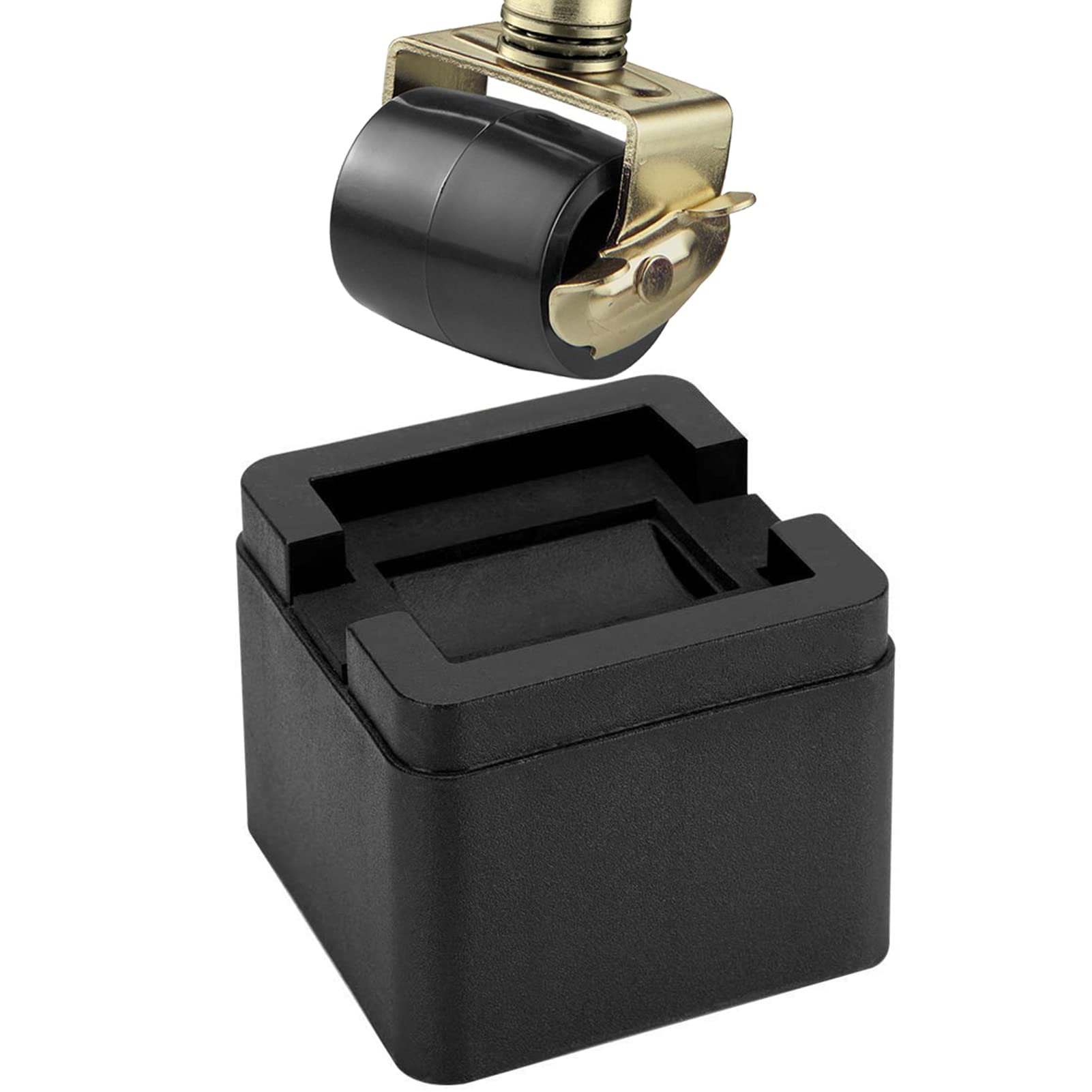
These gave me a reliable, middle-ground lift with a good balance of strength and price.
Why I picked it: Solid 3-inch lift with anti-slip design and broad compatibility.
Best for: Everyday use under beds, sofas, and small tables.
Great value for a dependable mid-height riser.
Pros
- Good mid-level lift
- Anti-slip and stable
- Handles heavy furniture
Cons
- Requires careful placement
- Not adhesive pads
My take
I used this BTSD three-inch set under a box spring and a treadmill and was impressed that the rigid plastic handled the loads without deformation. Installation was quick — I used a small floor jack to ease each wheel into place and didn’t need to remove the mattress.
The risers are stackable if you want more height later and the molded walls give a reassuring feel underfoot. For routine use where you want an extra three inches, these performed dependably.
7. iPrimio Oversized 3-inch Risers (8-pack) – Best for Sofas & Recliners
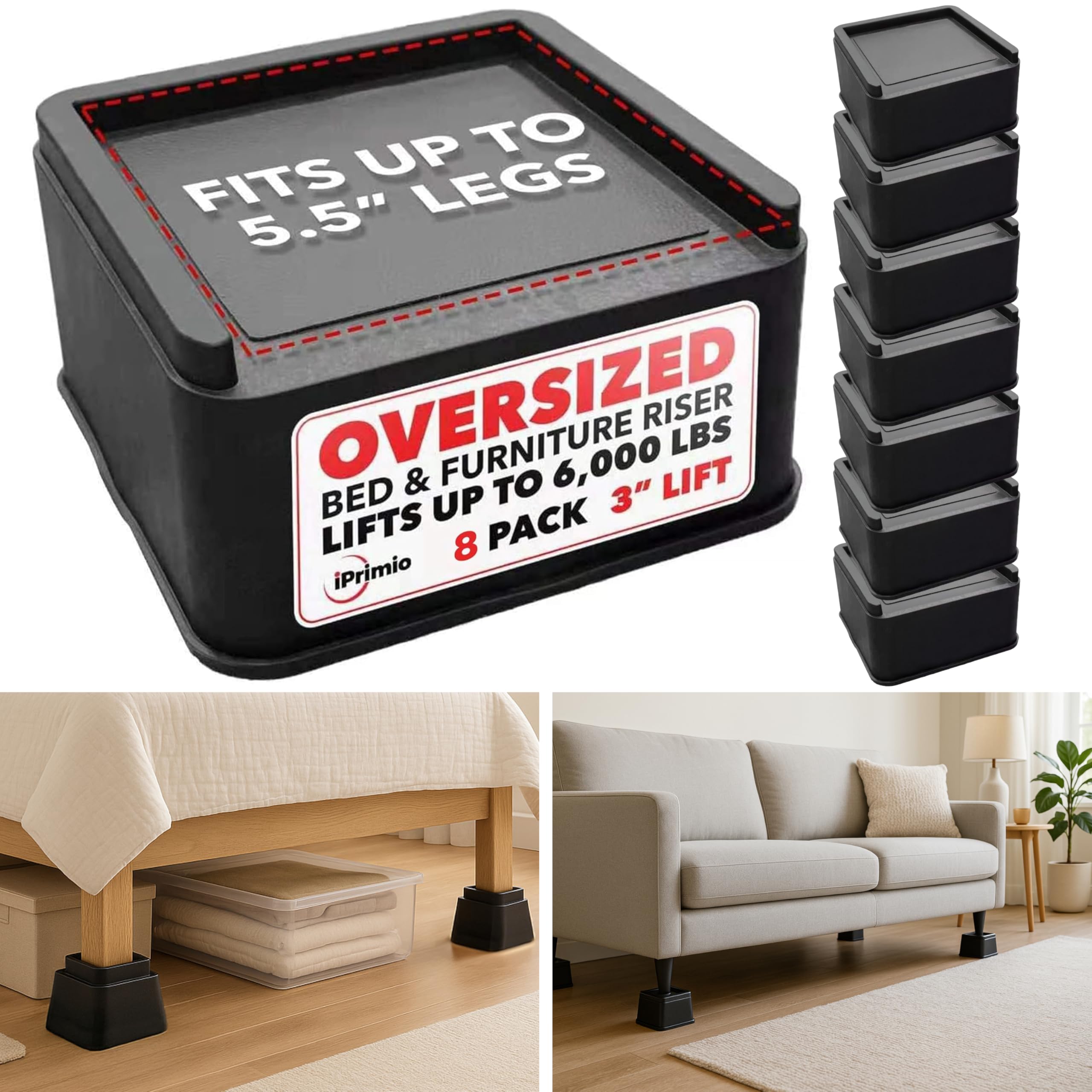
I recommend this oversized set when you need multiple wide risers to lift couches, recliners, or awkwardly shaped legs.
Why I picked it: Large top cup, foam grip top and bottom, and a bulk pack for multiple furniture pieces.
Best for: Sofas, rocker recliners, and irregular or oversized legs.
Best for people who need several risers at once.
Pros
- Wide cup fits odd-shaped legs
- Foam grip prevents slipping
- Comes in a large 8-pack
Cons
- One-sided lip can allow sliding
- Visually bulky for some furniture
My take
I tested the oversized iPrimio risers under a loveseat and a rocker recliner and was pleased that the open‑side top let me slide awkward legs into place without lifting the whole piece.
The foam on top and the padded bottom kept the furniture from nudging around, even with active use. A couple of pieces I tried lacked a full lip on one side, so I paid attention to orientation to avoid any forward or backward movement.
If you need several risers for multiple furniture pieces, the eight-pack is practical and gave me consistent performance across all pieces.
How I Choose Stackable Bed Risers
Key things I check before buying risers
I evaluate fit, cup design, slip protection, stated capacity, and stackability. Those five factors determine whether a riser will stay put and work with my furniture.
Fit: I measure leg diameter or caster size and check the riser’s cup dimensions so posts and wheels seat properly.
Slip protection: I prefer foam or rubber pads on the top and base for hardwood and tile floors; on low‑pile carpet the pads matter less but still help.
- Match the cup size to your leg or caster diameter.
- Choose steel-reinforced units for very heavy or stationary furniture.
- Use stackable risers only if you can safely access and position them.
- Consider recessed cups if you need furniture to lock in place.
Height and clearance advice
I confirm the actual raise amount rather than the block height; some risers list the block height but the recessed cup reduces the effective gain.
Think through how much clearance you need for storage bins or under‑bed organizers and remember stacked risers reduce convenience for future adjustments.
- If you need drawers or large bins, aim for the largest effective lift.
- For occasional use or medical elevation, smaller lifts are easier to manage.
Safety and installation tips I follow
I always place risers one leg at a time and confirm furniture sits squarely before sleep or regular use. For heavy furniture, I temporarily support the piece while positioning each riser.
If pads aren’t adhesive, I set the furniture in its final position first — moving a loaded riser with a pad often separates the two.
- Use a helper or jack for heavy pieces to avoid wrestling mattresses.
- Test stability after installation by gently rocking the furniture.
- Avoid risers for furniture with legs larger than the manufacturer’s specified limits.
Frequently Asked Questions
Can I stack these risers to get more height?
Yes — I stacked models designed for it to reach higher heights, but I only do so when I can safely access and stabilize the furniture. Stacked risers can complicate moving the piece and sometimes change the effective fit of the cup.
Will risers damage my floor?
I look for foam or rubber bottoms to protect hard floors. On hardwood I add an extra protective pad under the riser if the product doesn’t include one. Carpet usually cushions the base, but I still check for slipping.
How do I know which riser fits my caster or leg?
I measure the diameter and shape of the leg or wheel and compare it to the riser cup dimensions. If the riser lists a maximum round or square leg size, I don’t exceed that specification.
Final Take
I found that the right riser depends on what you’re lifting: choose reinforced, recessed cups for heavy or stationary furniture, and select stackable units when you want adjustable height over time.
For straightforward maximum clearance I favored the 5–6 inch blocks; for small, secure bumps the 2-inch foam‑padded risers worked best. Whichever route you take, confirm cup fit and slip protection before final placement.
