
I tested five tall black fabric dressers with metal frames and wood tops to find the best options for closets, nurseries, and small bedrooms. Here’s how each one performed and who I’d recommend it for.
I’ve spent time assembling and using several tall black fabric dressers to find practical, space-saving storage that actually works in real rooms. These lightweight towers share a steel frame and a wood top, but differences in drawer count, depth, and build change how useful each piece is.
In this roundup I focus on what I noticed first-hand: ease of assembly, drawer capacity and behavior under load, stability features like anti-tip and adjustable feet, and how the finished unit looked and functioned in closets, nurseries, and small bedrooms.
All of these units use breathable non-woven fabric drawers on a metal frame with an MDF top. I prioritized drawer depth, anti-tip hardware, and overall stability when comparing them, since those things matter most in daily use.
1. YITAHOME 5-Drawer Fabric Dresser – Best Budget
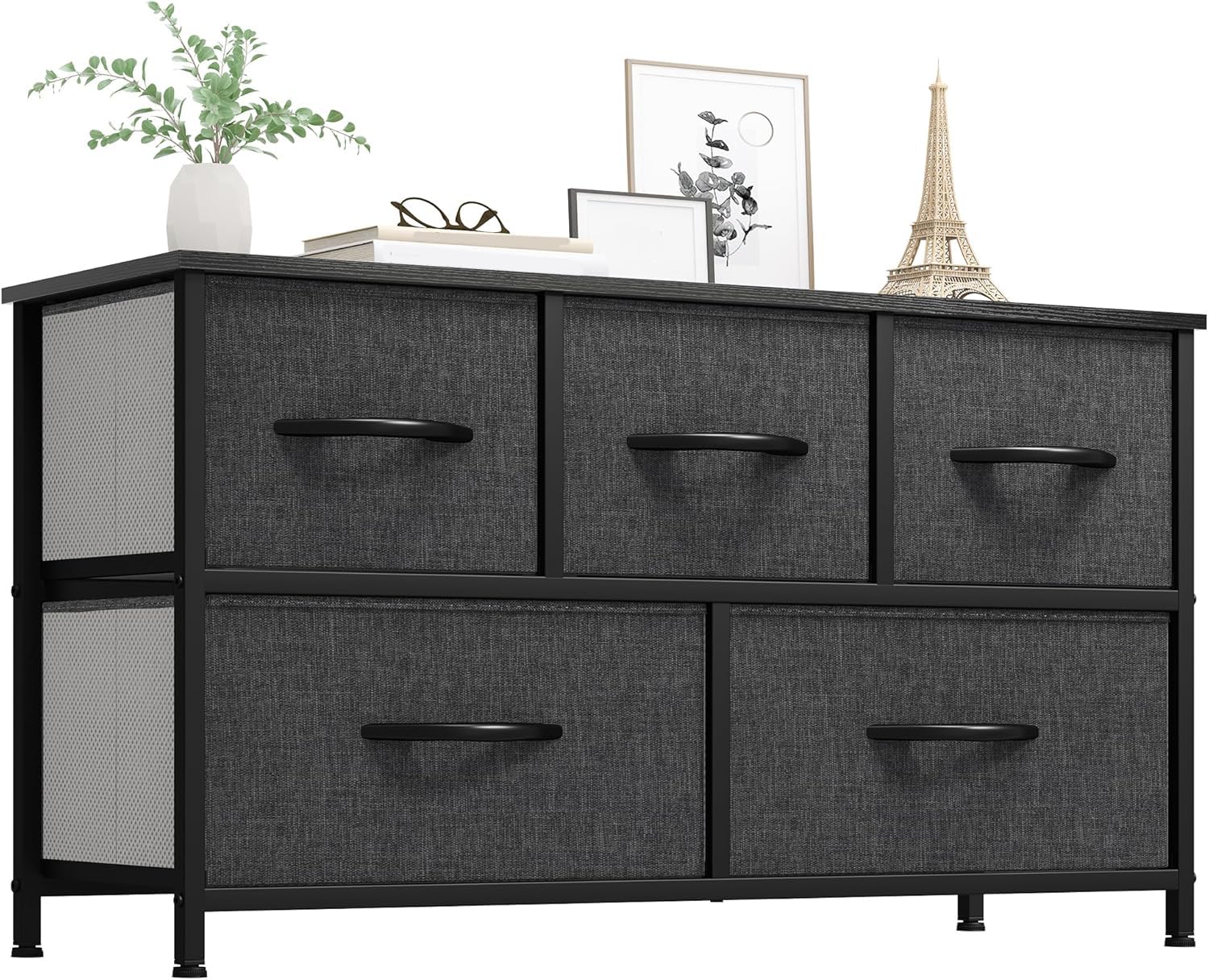
A lightweight, no-frills 5-drawer tower with a wood top and adjustable feet that looks pricier than it feels.
Why I picked it: Strong metal frame, removable foldable drawers, and a wood top that elevates the look.
Best for: Closets, guest rooms, nurseries and anyone who wants budget-friendly storage.
Very affordable option for basic storage needs.
Pros
- Sturdy metal frame and MDF wood top
- Removable, foldable fabric drawers
- Adjustable feet protect floors
- Straightforward assembly
- Compact footprint for tight spaces
Cons
- Fabric fronts can bulge when full
- Plastic handles feel basic
- Not for heavy, rigid storage
My take
I assembled this unit in about half an hour following the clear instructions and an included installation video. The frame went together quickly and the wood top instantly made the piece look more intentional than a plain fabric tower.
The drawers are breathable, wipeable, and surprisingly roomy for their footprint. I used them for folded shirts, baby clothes, and linen extras; they held a lot without immediate sagging, though very heavy items make the fronts bow slightly.
I appreciated the adjustable plastic feet — they protected my hardwood and helped level the dresser on my uneven closet floor. For a guest room or nursery where I want lightweight, movable storage, this felt like the best value.
2. WLIVE 8-Drawer Fabric Dresser – Best for Capacity
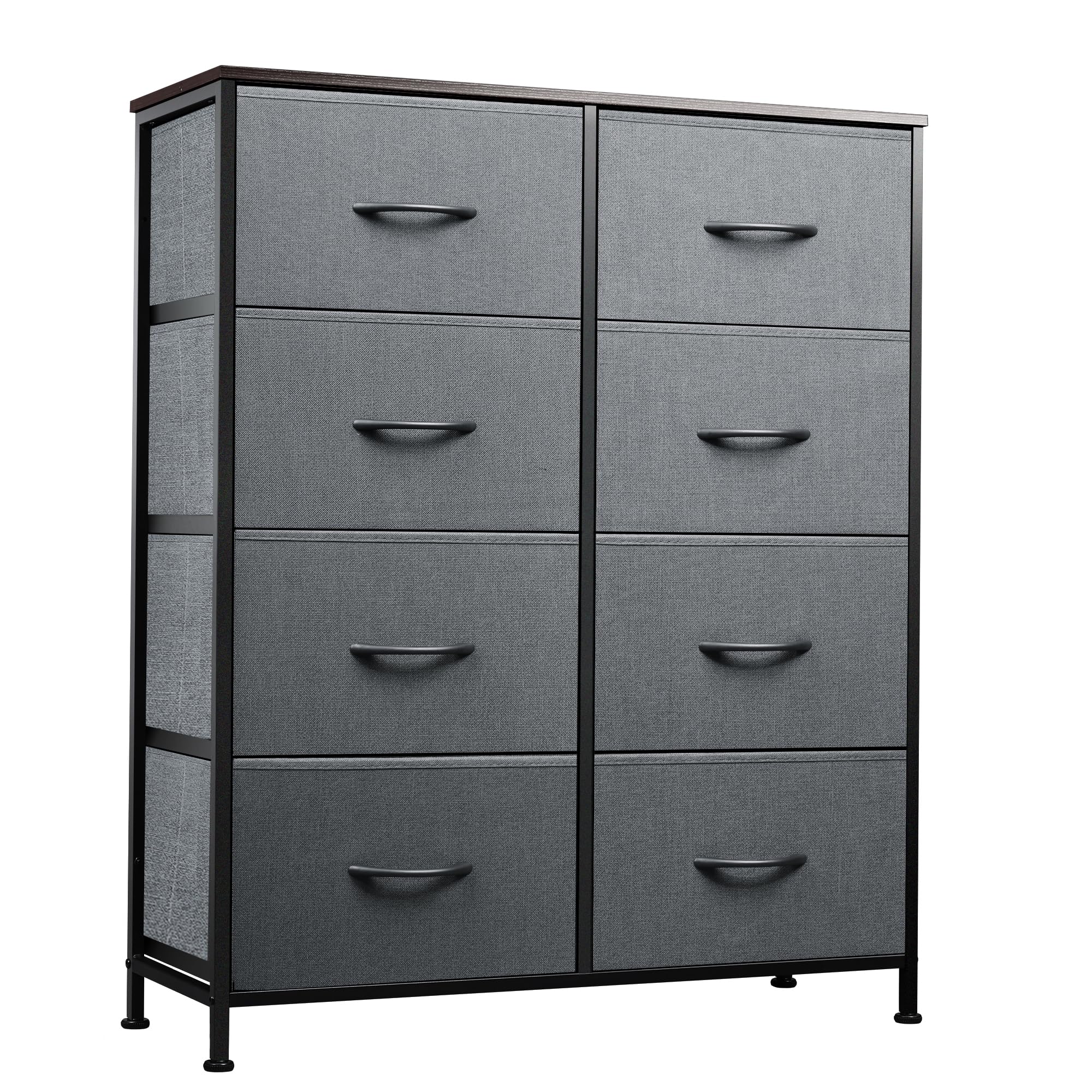
An 8-drawer tower built around a strong steel frame and wood top, designed to maximize vertical storage in a small footprint.
Why I picked it: Eight deep drawers plus anti-tip hardware give the most storage without taking much floor space.
Best for: Small bedrooms or closets where vertical storage matters most.
A modest step up in capacity for a reasonable price.
Pros
- Eight deep drawers for lots of organization
- Strong steel frame and wood top
- Anti-tip accessories included
- Adjustable feet for uneven floors
Cons
- Not ideal for bulky jeans or heavy stacks
- Lightweight overall — limit heavy loads
My take
I chose the 8-drawer WLIVE when I needed to maximize storage in a narrow closet. The drawers are surprisingly deep and let me separate socks, tees, and accessories without using multiple bins.
Assembly was simple and the included tools and instructions were sufficient. The wood top is handy for frequently used items and makes the dresser look more finished on sight.
I did find that thicker clothing like jeans requires a little folding strategy to fit neatly. Still, the anti-tip hardware and the solid steel frame gave me confidence to use this in a bedroom where kids might open multiple drawers.
3. Sorbus 5-Drawer Fabric Dresser – Best for Easy Setup
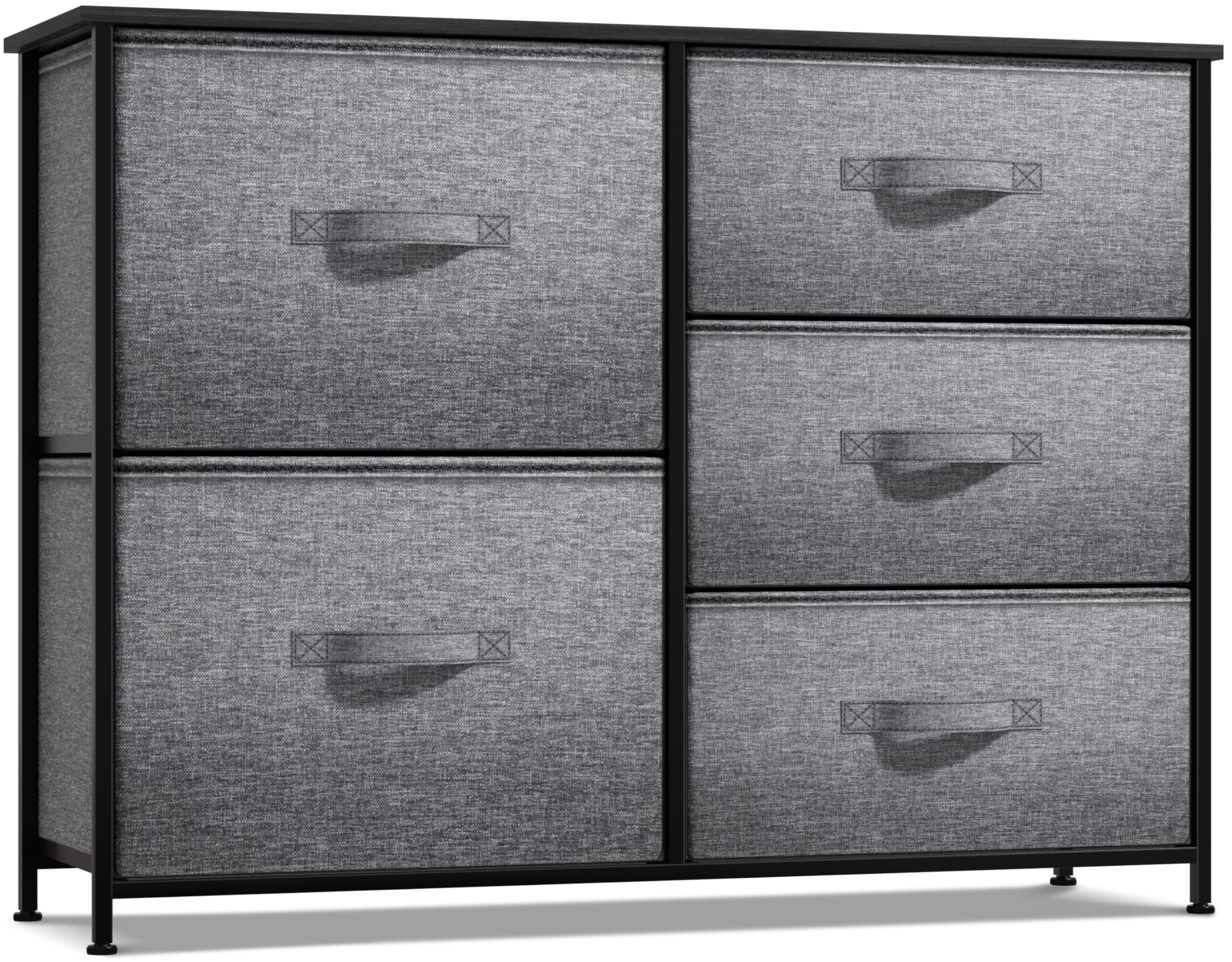
A mid-size 5-drawer unit with reinforced drawer bases and tool-free assembly that works well in closets and small rooms.
Why I picked it: Generous drawer depth with reinforced bases and nearly tool-free assembly.
Best for: Closets, nurseries, and temporary rooms where portability matters.
Solid mid-range value with reinforced drawer bottoms.
Pros
- Reinforced drawer bases prevent sagging
- Steel frame with attractive wood top
- No-tools assembly in minutes
- Portable and lightweight
Cons
- Fabric drawers can bulge when fully packed
- Not as rigid as solid wood furniture
My take
I set this Sorbus up in under an hour with no special tools and was impressed by how stable the frame felt. The wood top looks intentional and sits flat even with a lamp and small TV.
Each drawer has a reinforced base that resists sagging better than the typical fabric bin. That made a difference when I filled drawers with socks, underwear, and smaller garments.
Because the unit is lightweight, I moved it between a nursery and a hallway without hassle. It’s not a replacement for a heavy, primary dresser, but it’s excellent as supplemental storage.
4. WLIVE 6-Drawer Fabric Dresser – Best Compact
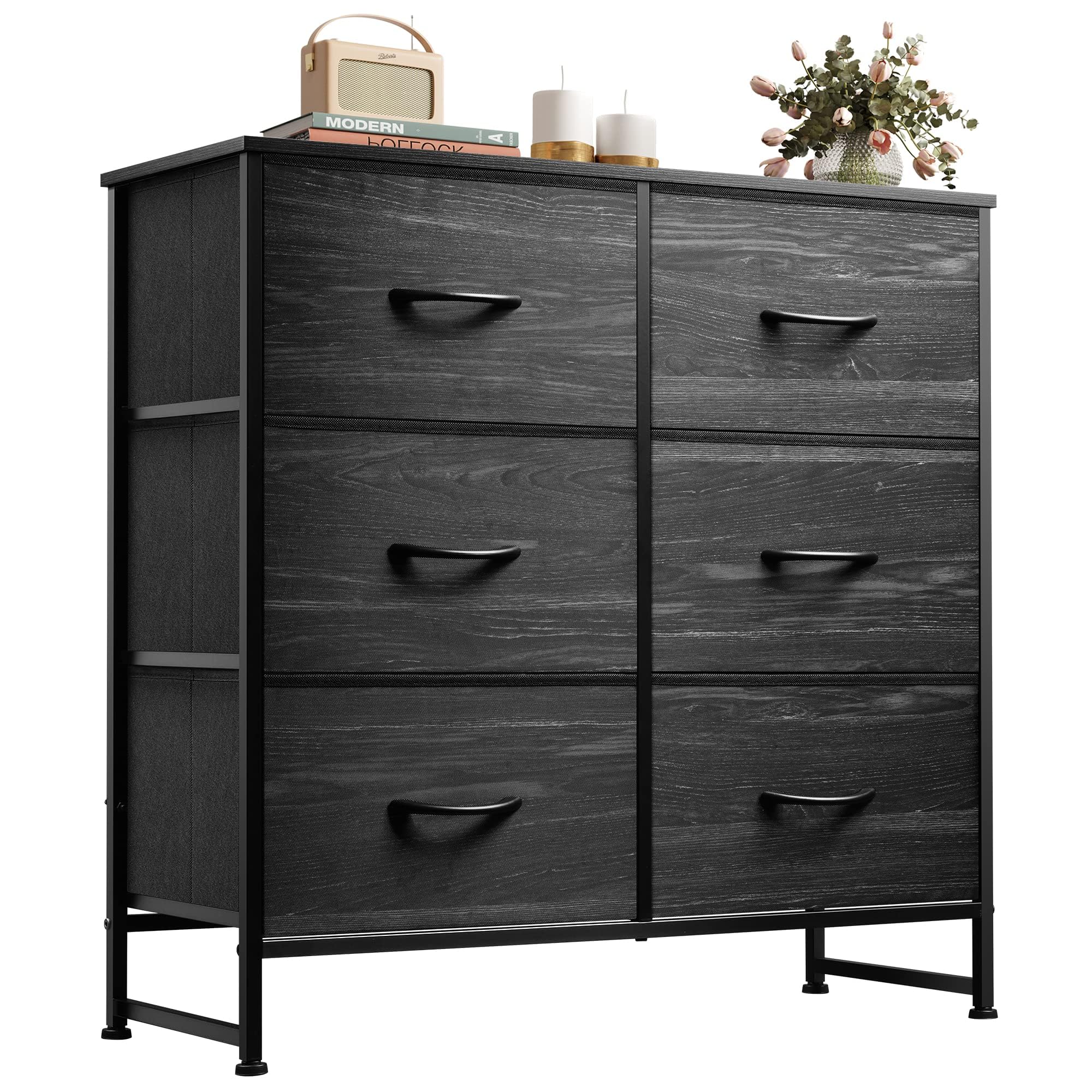
A compact 6-drawer tower with a charcoal wood-grain finish that fits into closets and tight bedroom corners.
Why I picked it: Balanced size — more storage than a 5-drawer but still compact for closets.
Best for: Small closets, kids' rooms, or as a secondary dresser.
Budget-friendly and space-conscious.
Pros
- Compact footprint for small spaces
- Water-resistant wood top
- Easy-to-pull arch handles
- Anti-tipping hardware included
Cons
- Limited capacity for heavy adult clothing
- Handle screws can be fiddly
My take
I used this WLIVE unit inside a closet as a compact chest for underwear, tees, and workout clothes. The wood-grain top hides wear well and gives the unit a more finished look.
Assembly was quick and the dresser felt stable once leveled. If you plan to store thicker items, expect to rotate seasonal pieces elsewhere because the drawers are best for lightweight folded items.
Small drawbacks like soft handle screws required a little patience, but nothing that affected daily use. For a child’s room or a secondary storage spot, this is a practical choice.
5. Sorbus 9-Drawer Fabric Dresser – Best Organization
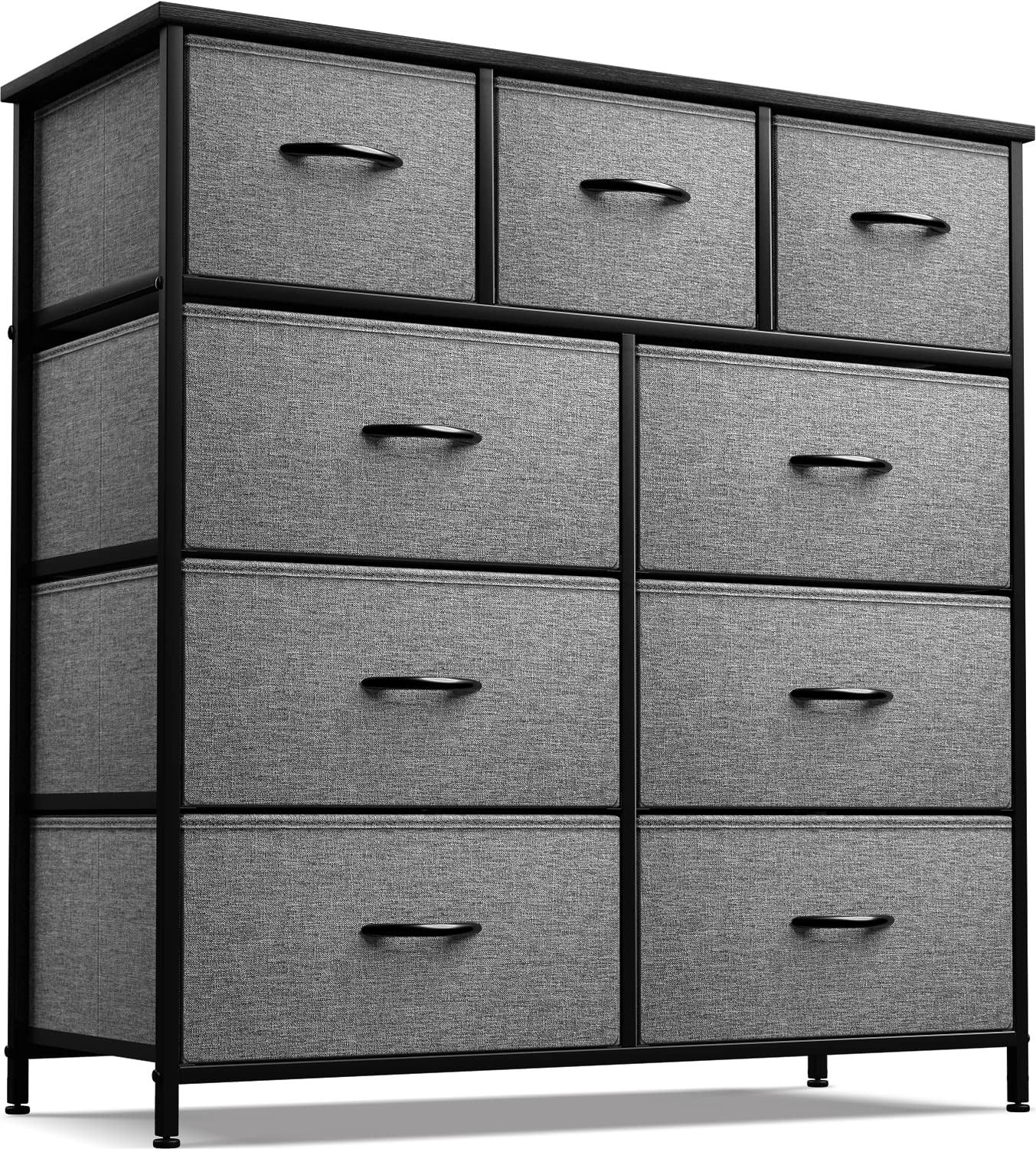
The largest option here, offering nine smaller drawers that make it easy to organize accessories, craft supplies, and kids’ items.
Why I picked it: Nine drawers and a wide wood top make this a top pick for detailed organization.
Best for: Craft rooms, kids’ storage, and anyone who needs many small compartments.
Higher capacity and more expensive than smaller towers.
Pros
- Lots of separate drawers for tidy organization
- Sturdy metal frame with wood top
- Removable, fold-flat drawers
- Lightweight and easy to relocate
Cons
- Initial smell may be noticeable out of box
- Less rigid under heavy weight
- Slight wobble when heavily loaded
My take
I picked the 9-drawer Sorbus when I needed to organize craft supplies and kids’ accessories. The nine compartments let me keep small items sorted and accessible.
Out of the box there was a noticeable odor for a day or two; I aired the drawers and used baking soda in a couple of them, which cleared the smell quickly. Once aired out, the unit performed well.
Because the drawers are smaller and fabric-based, I avoid loading them with heavy items. For lightweight organization and a large number of compartments, this dresser delivers exactly what I needed.
How I Choose a Tall Fabric Dresser
Materials and construction
I prioritize a strong steel frame with an MDF or wood top — that top not only looks better but gives me a usable surface. Fabric drawers are breathable and lightweight, but I expect reinforced bottoms to prevent sagging.
- Look for steel frames and an MDF/wood tabletop for stability.
- Check that drawer bases are reinforced to avoid bulging.
- Adjustable feet and anti-tip hardware are important safety features.
Drawer count and depth
I match drawer count to the clothing I plan to store. More drawers mean better organization for small items; deeper drawers hold bulkier garments but reduce compartment count.
- Choose 8–9 drawers for many small items or accessories.
- Choose 5–6 deeper drawers for folded clothes and linens.
- Measure drawer depth if you plan to store jeans or bulky items.
Assembly and portability
If I’m moving often or avoiding heavy furniture, I favor units that assemble quickly and come apart easily. Tool-free or minimal-tool assembly is a time-saver.
- Prefer units with clear instructions and included tools.
- Lightweight frames are easier to relocate but don’t expect heavy-load capacity.
- Fold-flat drawers save storage space when not in use.
Daily use considerations
I avoid packing fabric drawers with very heavy items; they work best for everyday folded clothing, kids’ items, and linens. Also, allow new fabric pieces to air out if they have any factory odor.
- Use anti-tip hardware if placing in a bedroom with kids.
- Air out new units if there’s a noticeable smell.
- Don’t overload drawers with very heavy items to preserve shape.
Frequently Asked Questions
Are fabric drawers durable?
From my experience, fabric drawers are durable for everyday folded clothes and light items when they have a reinforced base. I avoid storing very heavy or sharp items in them because the fabric can bulge or wear over time.
How do I clean these dressers?
I wipe the MDF or wood top with a damp cloth and air-dry. For fabric drawers, I spot-clean with a damp cloth; removable fabric bins can be aired out or lightly vacuumed to remove dust.
Can these units hold a TV or heavy items on top?
I’ve put small TVs and lamps on the wood tops without issue, but I’m cautious with heavy electronics. The frame is stable, but the manufacturer-specified limits and the unit’s lightweight nature mean I avoid very heavy loads.
Will these dressers tip over?
I always use the included anti-tip hardware for taller units. In my experience, once anchored and leveled with the adjustable feet, they’re stable for normal use.
Final Take
If I need maximum organization for small items, the Sorbus 9-drawer is my go-to. For the best value in a general-purpose tower, the YITAHOME 5-drawer gives surprisingly good capacity for the price. When vertical storage matters most, the WLIVE 8-drawer wins for depth and anti-tip confidence.
All of these fabric-front dressers are best used for lightweight folded items, kids’ clothing, and organizers who want a movable, budget-friendly alternative to built-in cabinetry. I recommend matching drawer count to what you actually plan to store and using the anti-tip hardware for safety.
