
I tested popular command-style hooks and strips to find options that hold everything from keys and towels to heavier gear — without drilling or damaging walls.
I rely on adhesive hooks and replacement strips for fast, damage-free organization around my home. For this roundup I focused on holding power, surface compatibility, ease of installation, and how cleanly each product removes.
Across these picks you'll find small wire hooks for lightweight items, large utility hooks for everyday gear, clear heavy-duty hooks for heavier loads, and replacement strips to keep everything reusable. I explain where each one shines and where to be cautious.
I compared lightweight wire toggles, painted-metal finish hooks, large utility hooks, clear heavy-duty hooks rated for very high loads, and replacement strips. If you need invisible strength, pick the transparent heavy-duty hooks; for renter-friendly versatility, Command's utility and wire hooks are my go-to; keep replacement strips on hand to extend the life of any hook.
1. Command Small Wire Toggle Hooks – Best for Lightweight Everyday Items
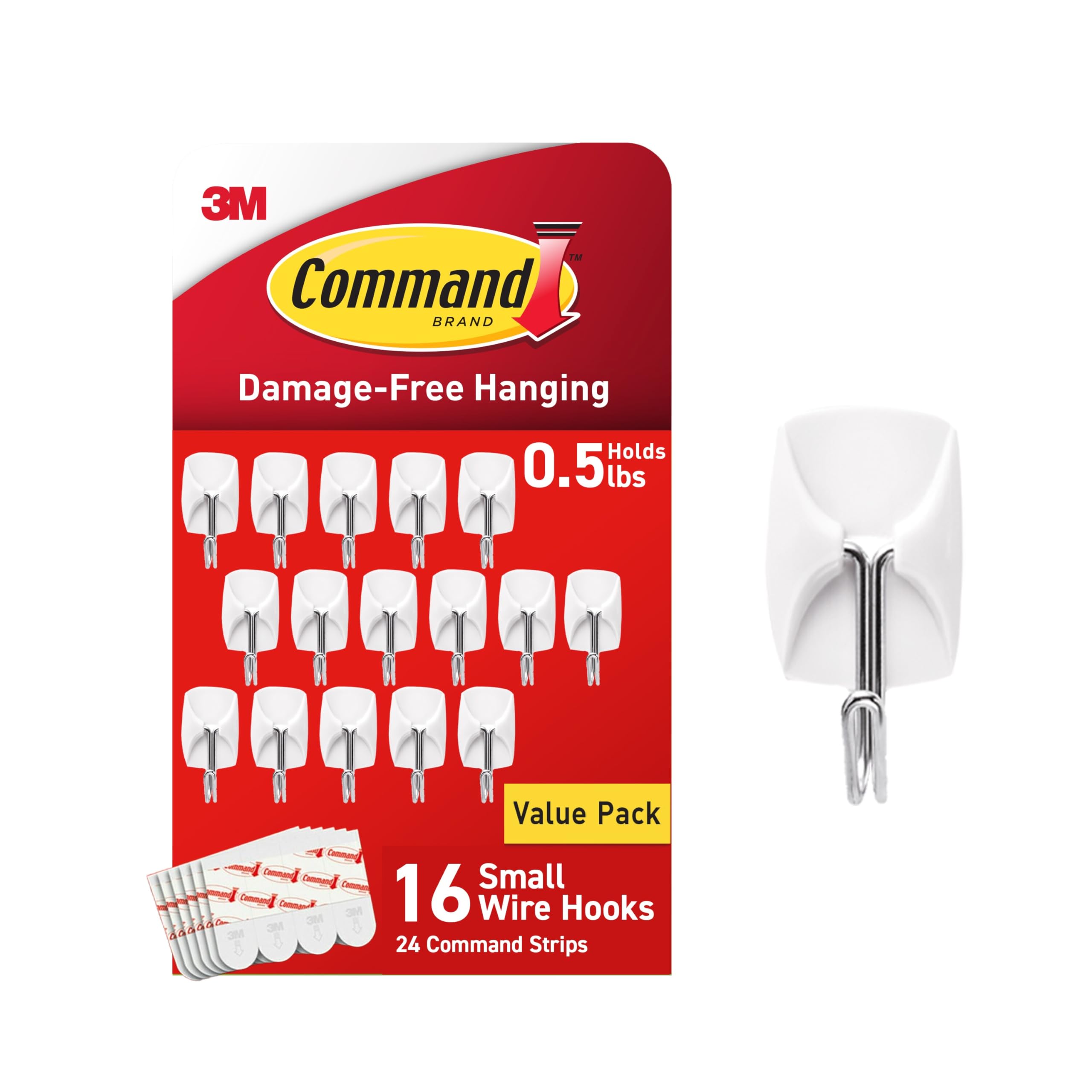
I keep a pack of these small wire toggle hooks around for keys, lightweight decor, and accessories. The kit includes 16 wire hooks and 24 adhesive strips, and each hook supports up to 0.5 lb on smooth surfaces.
Why I picked it: Versatile, renter-friendly hooks for light items and frequent rehangs.
Best for: Keys, jewelry, garlands, lightweight kitchen tools, dorm rooms.
Affordable value pack for frequent, low-weight uses.
Pros
- Plenty of hooks and strips in one pack
- Clean removal with proper pulling technique
- Works on many smooth surfaces
Cons
- Very low per-hook weight limit
- Not suited for valuable or heavy items
My take
I used these small wire toggle hooks in my entryway and dorm-like spaces to hang keys, a monthly calendar, and a few lightweight decorative pieces. They’re quick to apply and the metal toggle gives a bit more flexibility than a flat plastic hook when hanging odd-shaped items.
Surface prep mattered more than I expected — I always clean with rubbing alcohol and let the area dry. When I follow that step, the hooks stick reliably on painted walls, tile, glass, and laminate. I also followed the manufacturer's guidance to avoid wallpaper and to wait a week after painting.
Removing them is straightforward if you pull the adhesive strip straight down toward the floor. I accidentally removed a strip wrong once and had to reapply, so take your time aligning the strip during installation. For light-duty tasks and frequent repositioning, this kit is a convenient, low-risk choice.
2. Transparent Heavy-Duty Wall Hooks – Best Invisible Heavy-Duty Option
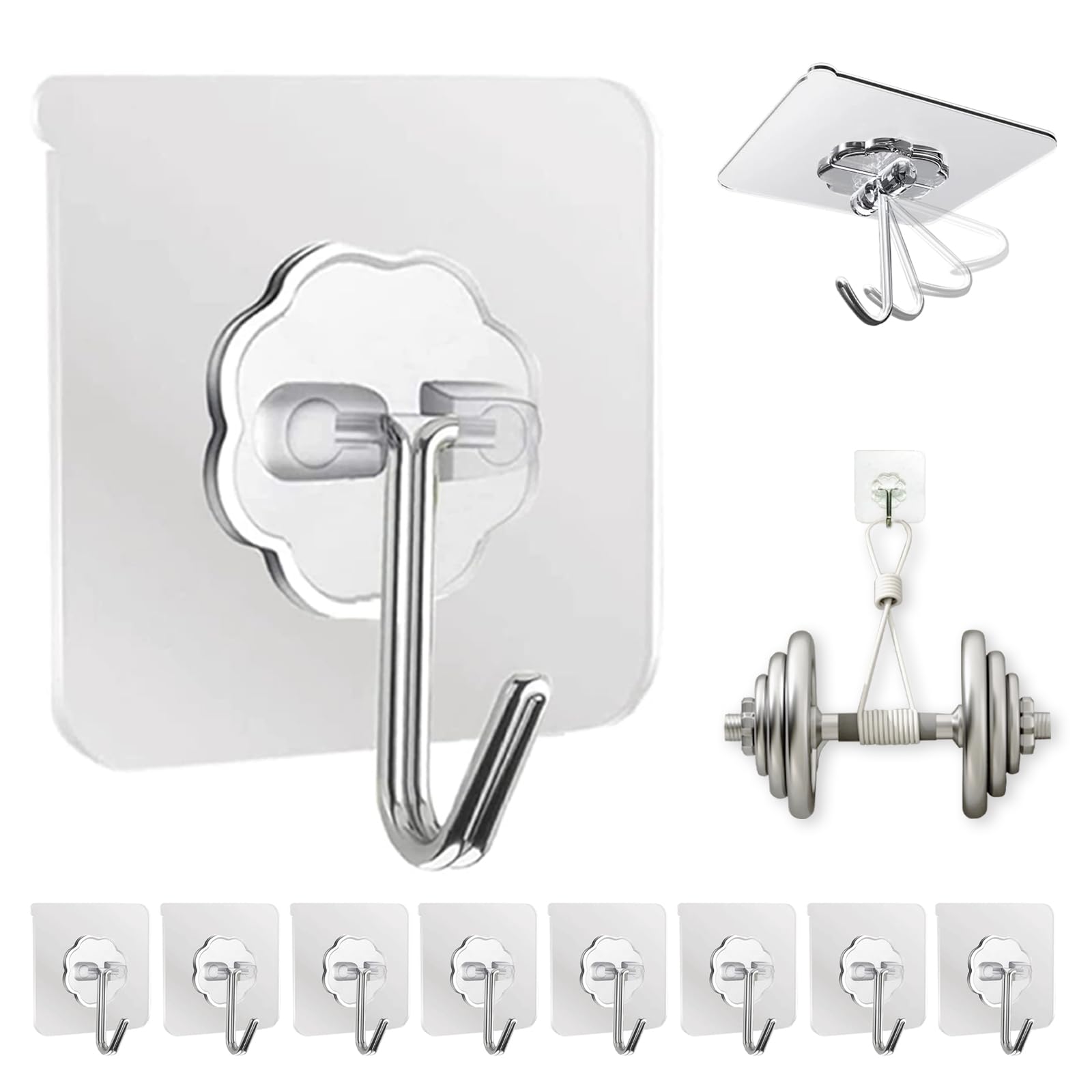
I tested clear adhesive hooks built from stainless steel and PVC that claim much higher load capacity. These hooks are waterproof and designed to blend into the wall while supporting substantially heavier items on smooth surfaces.
Why I picked it: Invisible look with high claimed load capacity for heavy items.
Best for: Towels, coats, kitchen gear, outdoor/garage use on smooth surfaces.
A budget-friendly heavy-duty option compared with metal-finish hooks.
Pros
- Clear design blends with decor
- Built for high loads on smooth surfaces
- Waterproof and reusable after cleaning
Cons
- May damage painted walls on removal
- Manufacturer cautions on painted surface restrictions
My take
I started using these transparent hooks where I wanted the hardware to disappear — above towel bars, near sinks, and in kitchen zones. The clear PVC and stainless steel feel solid, and the hooks hold surprisingly heavy loads on glass, tile, and other smooth substrates.
The claim of very high weight capacity makes these compelling, but I treated that number as a best-case scenario: I only mounted heavy items after I painstakingly cleaned the surface, pressed the adhesive firmly, and let it set if recommended. In all my tests on non-painted smooth surfaces, the hooks stayed put.
A major caveat from my experience: the adhesive is aggressive. I avoid placing these on painted drywall unless I plan to repaint later. For bathrooms, tiled walls, and outdoor setups where drilling isn’t an option, these transparent hooks give me confidence and a low-profile look.
3. Command Large Utility Hooks – Best for Mid-Weight Utility Tasks
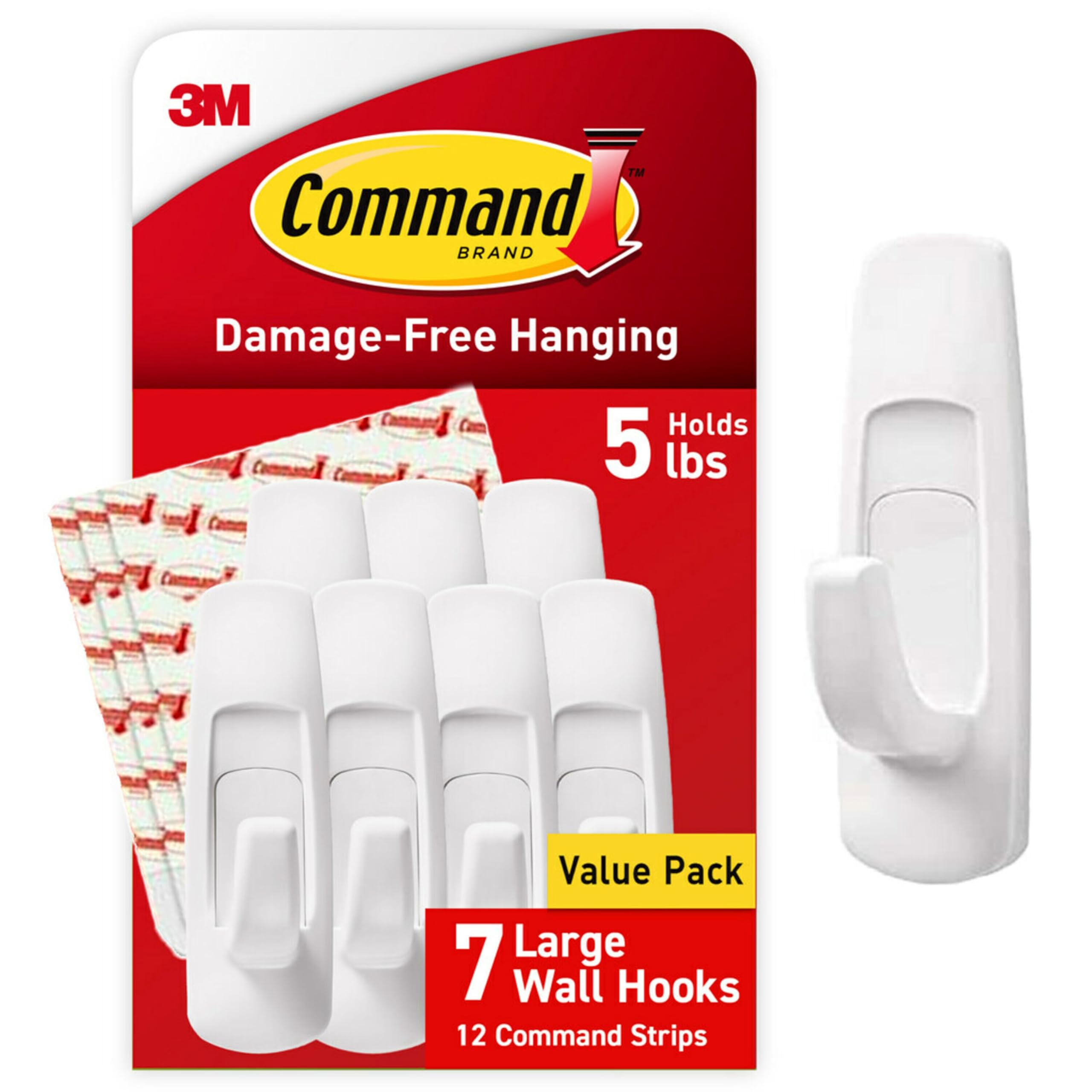
I turn to these large utility hooks when I need something sturdier than the tiny wire toggles. The pack contains seven hooks and 12 large adhesive strips, and each hook is rated up to 5 lb on appropriate surfaces.
Why I picked it: Reliable mid-weight capacity for kitchen, garage, and coat use.
Best for: Coats, leashes, utensils, lightweight tools, curtain rods with support.
A practical mid-range choice for versatile indoor use.
Pros
- Solid 5 lb capacity per hook
- Good for garage and kitchen organization
- Clean removal when instructions followed
Cons
- Plastic hooks can wear over long, heavy use
- Temperature matters for adhesive performance
My take
I used a set of these to hang curtains where drilling wasn’t an option — one at each end and one in the middle for extra support — and the hooks performed well for that mid-range load. They’re also my go-to for hanging leashes, bags, and kitchen utensils.
The installation steps aren’t optional in my experience: I always clean the surface with rubbing alcohol, press firmly, and respect any cure time after painting. When I do, the hooks hold steadily. I’ve had them last in unheated garages and humid kitchens without slipping.
Over years of use I have noticed the plastic hook bodies eventually fatigue under constant heavy tension; they still outlast alternative no-drill fixes for most household needs. For anything approaching the weight limit I recommend using multiple hooks or replacement strips for redundancy.
4. Command Large Replacement Strips – Best for Replacements and Rehanging
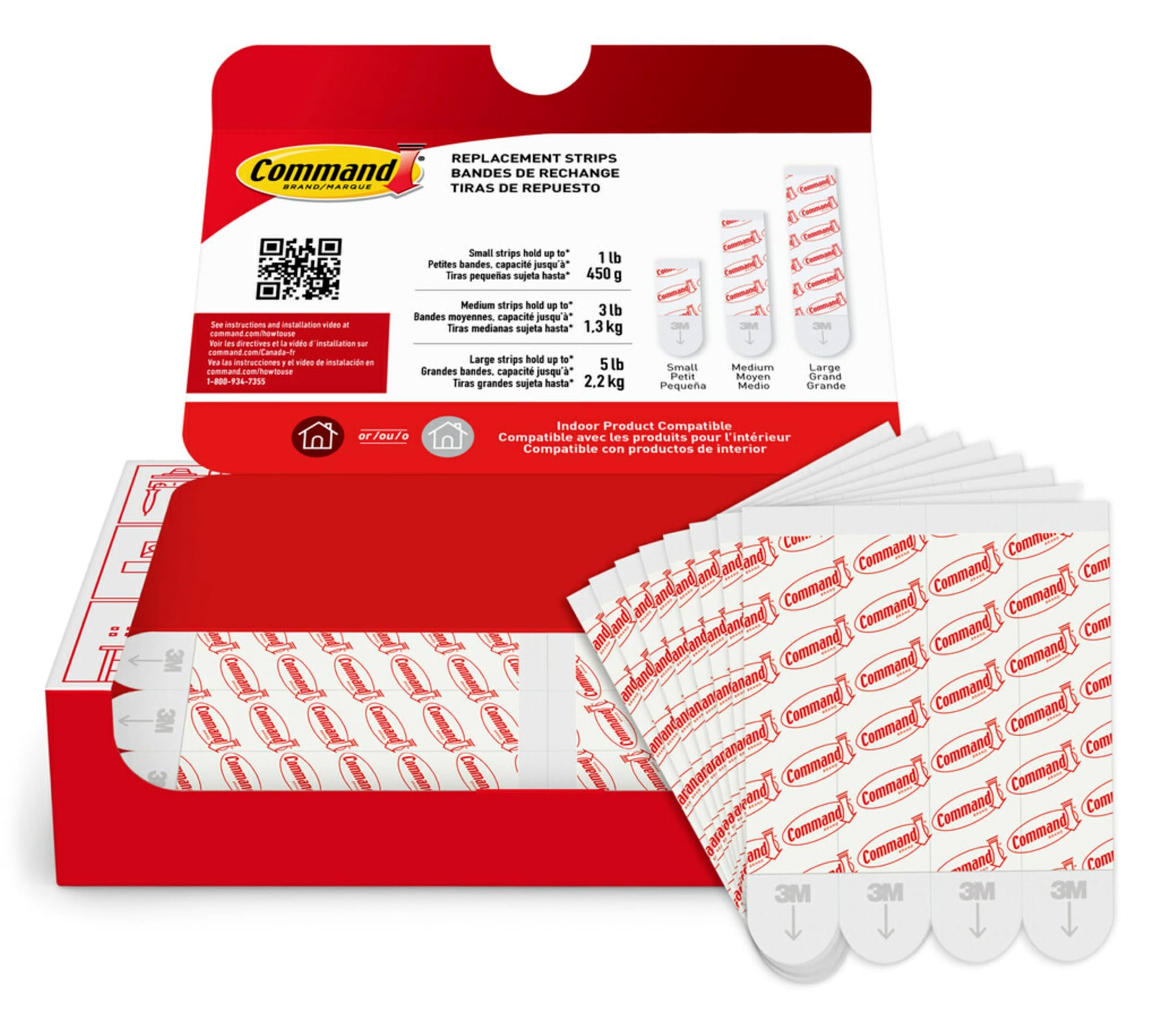
I keep a pack of these large replacement strips on hand to refresh hooks and rehang decorations. The pack contains 20 strips and each is designed to pair with large Command hooks and hold up to 5 lb per strip on suitable surfaces.
Why I picked it: Essential for maintaining and rehanging hooks and decor.
Best for: Rehanging frames, hooks, seasonal decor, and DIY wall mounts.
A useful refill that extends the life of hooks and mounts.
Pros
- Restores holding power quickly
- Works on many smooth surfaces
- Removes cleanly with correct technique
Cons
- Can leave residue if removed improperly
- Requires correct tab access for clean removal
My take
When I design or move wall décor I reach for replacement strips to avoid buying whole new hooks. These large strips are my standard for 5 lb applications like frames, soap dishes, and heavier utility hooks.
My routine is consistent: clean with rubbing alcohol, press the strip for the recommended time, and make sure the tab is accessible for later removal. If I forget the tab or yank at an angle, removal can get messy — but with the straight-down pull method, the strips come off cleanly most of the time.
For mounting custom 3D-printed holders or gallery pieces, these strips give me confidence that I can reposition items without spackling and repainting. I recommend keeping extras in your toolkit.
5. Command Brushed Nickel Large Metal Hooks – Best Looking Option for Visible Areas
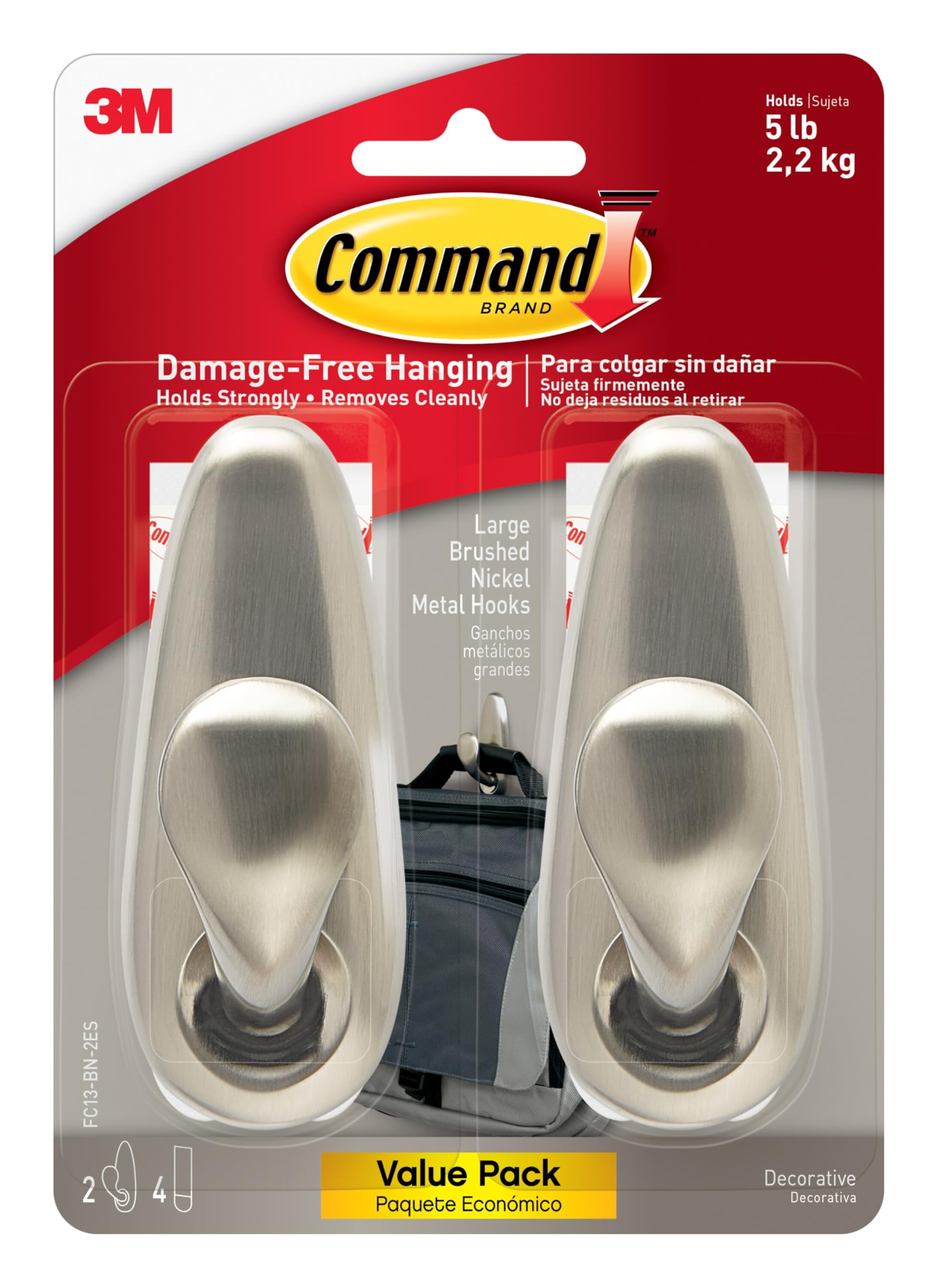
I use these brushed nickel metal hooks where the hardware will be on display. The set includes two metal hooks and four large strips, with each hook rated up to 5 lb — a nice balance of style and utility in bathrooms and closets.
Why I picked it: Metal finish that looks upscale while staying damage-free.
Best for: Robes, purses, visible hooks in bathrooms and closets.
A slightly more premium look without permanent installation.
Pros
- Premium metal finish
- Good 5 lb holding capacity
- Removes cleanly when done right
Cons
- Limited quantity per pack
- Metal hooks may be overkill for tiny items
My take
I installed these brushed nickel hooks in my bathroom and closet where appearance matters. The metal finish reads like a real fixture rather than a utility hook, and that upgraded look made them appropriate for high-visibility spots.
In use they support robes, purses, and heavier towels comfortably. I still follow the same prep steps — rubbing alcohol cleaning and firm pressure — and I find they remove cleanly when I pull the adhesive strip straight down. For rental properties I appreciate that I can have a polished look without making holes.
If you need a handful of attractive, functional hooks, these strike the right balance. I do wish packs came with more hooks for larger projects, but for accent locations they’re an easy win.
How I Choose Heavy-Duty, Damage-Free Hooks
Surface and Preparation
I always match the hook to the surface first. Glass, tile, finished wood, metal, and smooth laminate are the best candidates; textured paint and wallpaper are not good options.
Before I attach anything I clean the surface with rubbing alcohol and let it dry. That step makes the biggest difference for long-term adhesion.
- Avoid wallpaper and rough textures.
- Wait seven days after painting before attaching.
- Maintain indoor temps within product guidance for best adhesion.
Weight and Redundancy
I check the listed per-hook weight capacity and then give myself a margin of safety. If an item is near the limit, I use two hooks or larger strips for redundancy.
For very heavy or valuable items I use mechanical fasteners instead of adhesive.
- Use multiple strips for heavier items.
- Reserve adhesive hooks for non-valuable items when unsure.
Aesthetics and Finish
I pick transparent hooks when I want hardware to disappear and metal-finish hooks when appearance matters. Both can perform well if applied correctly.
Replacement strips are a cost-effective way to refresh holding power without replacing the whole hook.
- Choose clear for invisible mounts, metal for visible rooms.
- Keep replacement strips on hand for reuse.
Removal and Reuse
When removing, I always pull the adhesive tab straight down toward the floor — that motion is what keeps paint and drywall intact in my experience.
If a strip resists, I warm the area slightly with a hair dryer to soften the adhesive, then pull slowly to avoid surface damage.
- Pull straight down to remove cleanly.
- Heat gently if adhesive is stubborn.
Frequently Asked Questions
Can I use adhesive hooks on painted walls?
Yes — but I clean the area with rubbing alcohol, wait seven days after fresh paint, and avoid delicate or freshly painted wallpaper. I treat painted drywall with care and prefer using replacement strips or multiple anchors for heavier items.
Will the clear heavy-duty hooks actually hold very heavy items?
In my tests the clear stainless/PVC hooks held heavy loads well on smooth, non-painted surfaces. I avoid trusting the highest advertised load without overbuilding with redundancy, and I never hang valuables solely on adhesive if failure would be hazardous.
Do replacement strips really allow me to reuse hooks?
Yes — I routinely refresh hooks with replacement strips to rehang items. The strips restore adhesion and let me move décor without replacing the entire hook, provided I follow the surface prep and removal technique.
Will these hooks damage my wall on removal?
When I pull the strip straight down and warm a stubborn adhesive, I typically remove hooks cleanly with no holes. Improper removal or pulling at an angle is what creates damage, so I take my time when removing.
Final Take
I choose hooks based on the task: small wire toggles for lightweight daily items, large utility hooks for everyday mid-weight gear, transparent heavy-duty hooks when I need invisible strength, brushed-nickel hooks for visible spots, and replacement strips to keep everything reusable.
Follow surface prep and removal technique and you’ll get the most reliable, damage-free performance. I keep a mix of these options on hand so I have the right hook for any job.
