
I tested six popular aerating pourers so I could open up bottles fast, avoid drips, and keep unfinished wine fresh. These are the ones I reach for and why.
I don’t like waiting a bottle out to get the best flavor. Over the past year I’ve poured, compared, and lived with half a dozen aerators so I can tell you which ones actually make a difference, which are best for travel or storage, and which are best left in the drawer.
This roundup focuses on pourer-style aerators that fit directly into a bottle neck. I prioritized how much air they add, how clean they pour, how they fit standard bottles, and how easy they are to clean and store.
If you want immediate, glass-by-glass improvement, choose models with a larger aerating chamber; if you need storage plus pouring, pick a multi‑tool stopper; if you want backups or gifts, a two‑pack gives great value.
1. Vintorio Wine Aerator Pourer – Best Overall
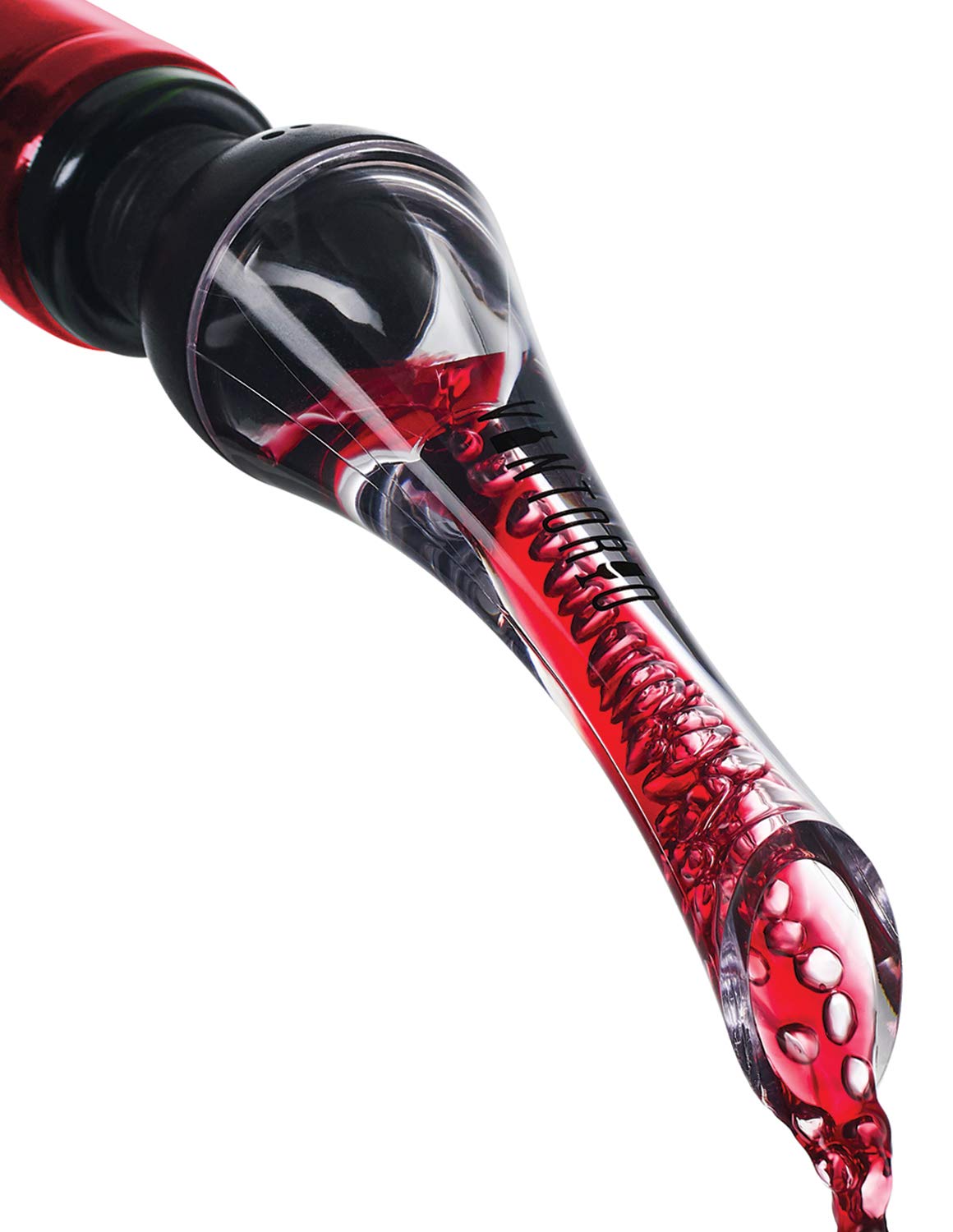
This is the one I reach for when I want instant, reliably consistent aeration and a drip‑free pour.
Why I picked it: Instantly opens wine with a large chamber and leak-free pour.
Best for: Everyday red wines and quick glass‑by‑glass aeration.
Affordable, excellent value.
Pros
- Instant, noticeable aeration
- Drip‑free pouring
- Large aerating chamber
- Easy to disassemble and clean
- Fits most bottles
Cons
- Plastic construction, not glass
- Occasional tube detachment
My take
I put the Vintorio on nearly every bottle I open when I want results fast. The large internal chamber and air intake give a clean hiss as air mixes with the wine, and I can taste softer tannins and more aroma on the pour.
Pouring is mess‑free thanks to the tapered rubber stopper and slanted acrylic spout—no tablecloth drips in my experience. I also like that it disassembles for a quick rinse after use.
The construction feels plastic rather than glass, but that makes it lightweight and durable for daily use. Every now and then the small tube pops off, but it snaps back on easily and hasn’t stopped me from using it regularly.
2. Haley's Corker 5‑in‑1 – Best Multi‑Tool
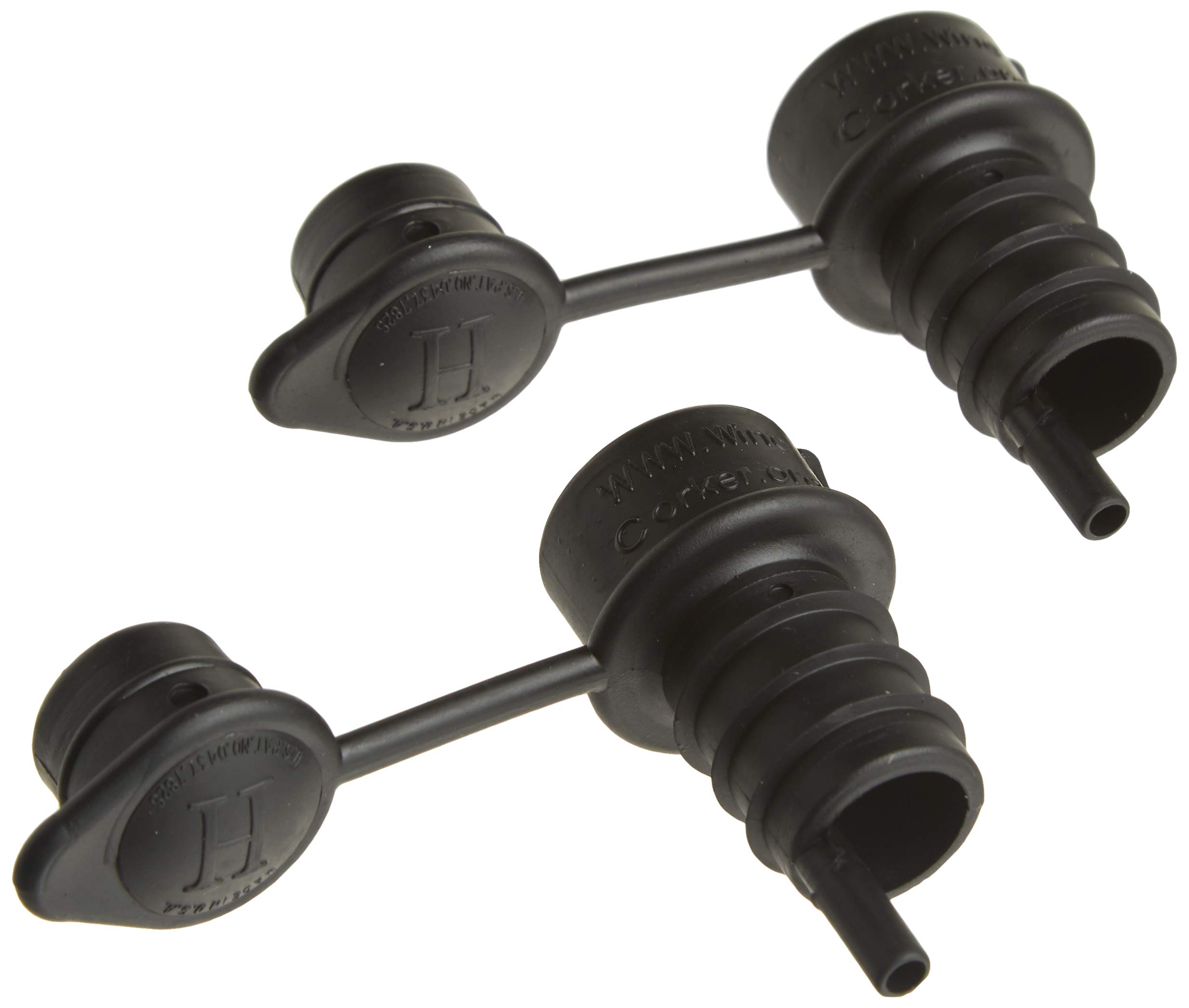
When I want one tool that does everything—pouring, aerating, filtering, and re‑corking—this is the stopper I keep in the fridge.
Why I picked it: Combines pourer, aerator, filter, stopper and re‑corker in one.
Best for: Storing unfinished bottles and quick pours outdoors.
Budget‑friendly and versatile.
Pros
- Five functions in one tool
- Airtight, liquid‑tight seal
- Dishwasher safe
- Filters cork and sediment
- Great for storing bottles on their side
Cons
- Filter is not ultra‑fine
- Mostly plastic build
My take
Haley’s Corker is the Swiss‑army solution I use when I don’t want to fuss with multiple accessories. I can pour, reseal a bottle, and keep it fresh in the fridge without switching gadgets.
The seal is impressively tight—I’ll lay a mostly full bottle on its side without worrying about leaks. The built‑in filter catches cork bits and sediment well enough for normal pours, though I wouldn’t rely on it for very heavy sediment.
Because it’s dishwasher‑safe and compact, I toss it in with other bar tools after a tasting. For picnics or parties where I want to close a bottle between pours, it’s been consistently handy.
3. TenTen Labs Wine Aerator Pourer (2‑Pack) – Best Two‑Pack

I keep one at home and one in my picnic bag—the two‑pack is the best option when you want a spare or a travel set.
Why I picked it: Two aerators for the price of one plus reliable drip‑free pouring.
Best for: Tastings, picnics, and giving as gifts.
Great value two‑pack.
Pros
- Includes two aerators
- Drip‑free elongated spout
- Compact and portable
- Enhances flavor quickly
Cons
- Hand‑wash recommended
- Small size for heavy decanting
My take
The TenTen pair gives me backup and portability. Each spout slips into a bottle snugly and produces the same steady stream of tiny bubbles that I want from a pourer aerator.
I avoid dishwashing them because of reports of cracking; a quick rinse is all they need. For tastings or travel they’re ideal—compact, effective, and easy to hand off when pouring multiple glasses.
They’re not as showy as a countertop decanter, but they do the job of opening up flavor without any fuss.
4. Vinturi Wine Aerator – Best for Serious Aeration
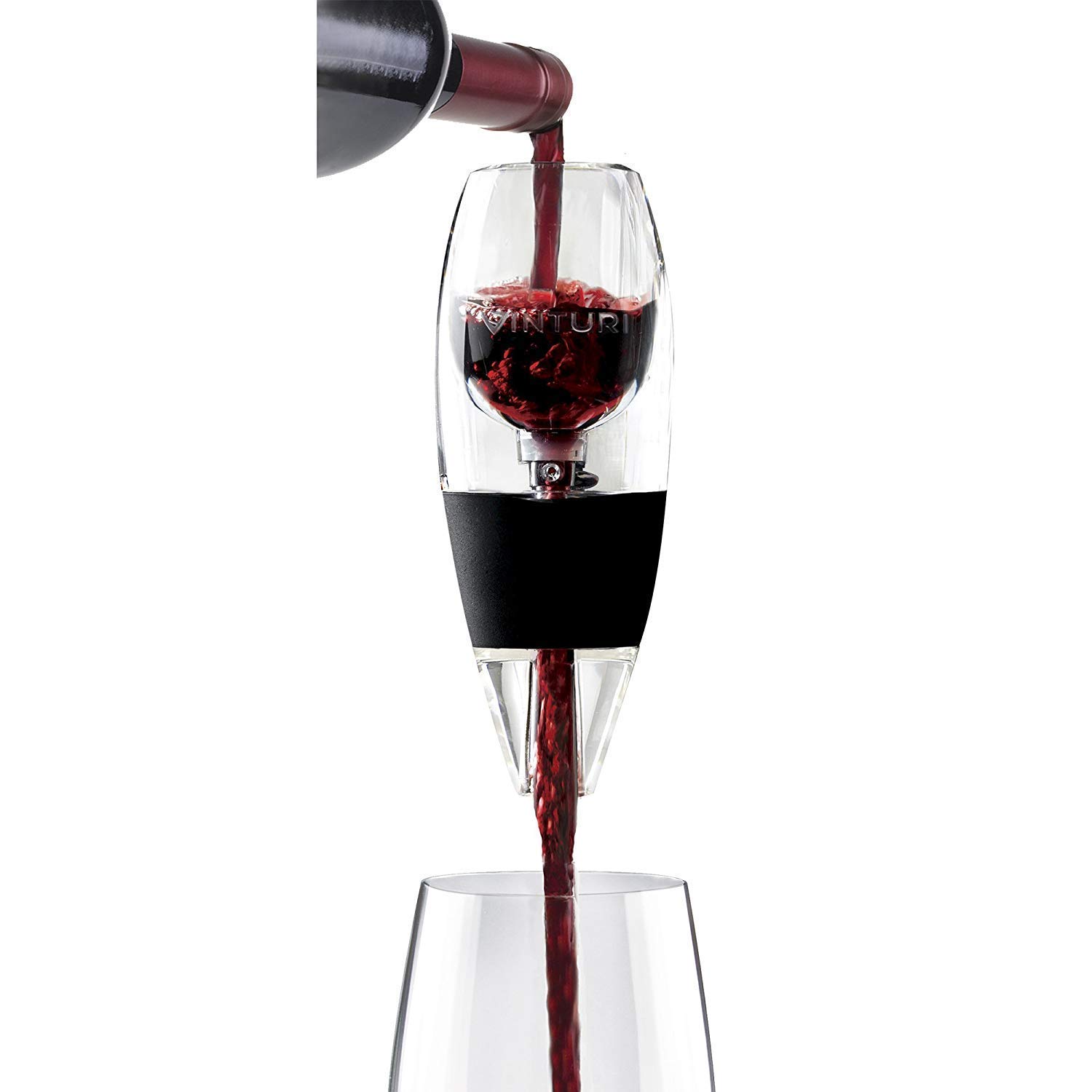
When I want a pronounced, immediate opening and an audible confirmation, I grab the Vinturi.
Why I picked it: Patented internal design gives precise aeration and an audible cue.
Best for: Bold reds and when I want a more pronounced bouquet.
Mid‑range, built to last.
Pros
- Patented aeration technology
- See‑through design
- Built‑in sediment screen
- Includes no‑drip stand
Cons
- Bulkier than spout aerators
- Acrylic shows manufacturing fold lines
My take
The Vinturi feels like the technical choice in my lineup. Its internal channels draw air in at the right moment, and I can hear the signature suction as I pour—useful feedback that aeration is happening.
The clear body lets me see flow and the small sediment screen is a nice touch for older bottles. It’s a bit more substantial on the counter than slim spouts, which I like when I’m focusing on a few special bottles.
Materials are durable acrylic with a silicone grip; it’s not glass, but it’s built for regular use and I’ve kept one in rotation for years.
5. Rabbit Wine Aerator and Pourer – Best Design
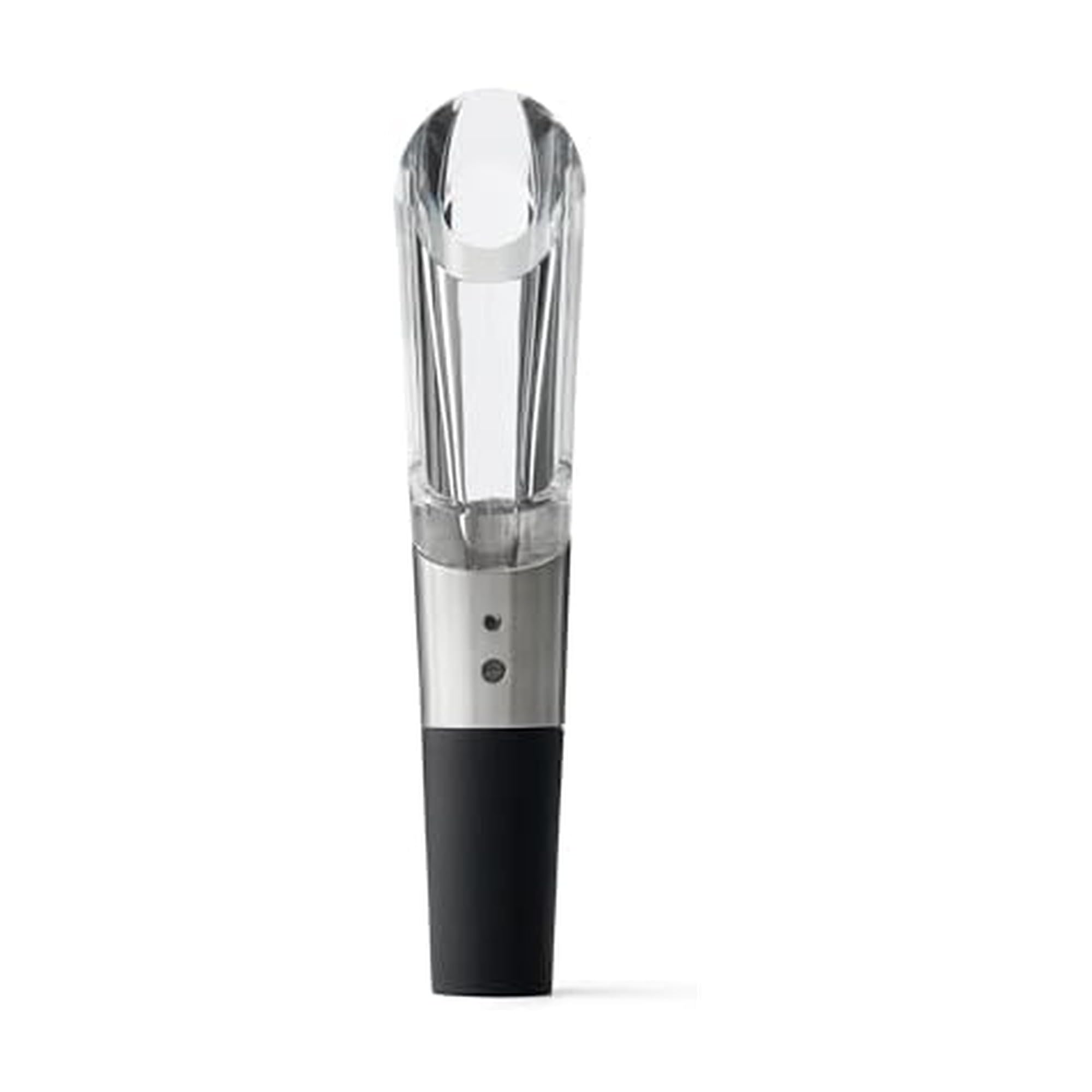
I like this one for the stainless steel accent and the solid, comfortable feel while pouring.
Why I picked it: Stylish stainless accent with dependable aeration and drip control.
Best for: Entertaining and gifting where appearance matters.
Moderately priced and stylish.
Pros
- Polished stainless accent
- Drip‑proof lip
- Creates tiny aeration bubbles
- Solid, well‑built feel
Cons
- Similar clones exist
- Egg shape delays aeration start
My take
The Rabbit aerator looks like barware I’m happy to serve with. The stainless steel trim elevates the presentation, and the silicone base seals well in a range of bottle necks.
It produces lots of small bubbles and a steady pour stream—great for opening up aromas—while remaining easy to clean by hand. If you prefer a compact, attractive pourer for guests, this one fills that niche.
Be aware that the egg‑style body can require a slightly steeper tilt to begin aerating compared with spout‑style designs.
6. Vinabon Wine Aerator Pourer – Best Warranty
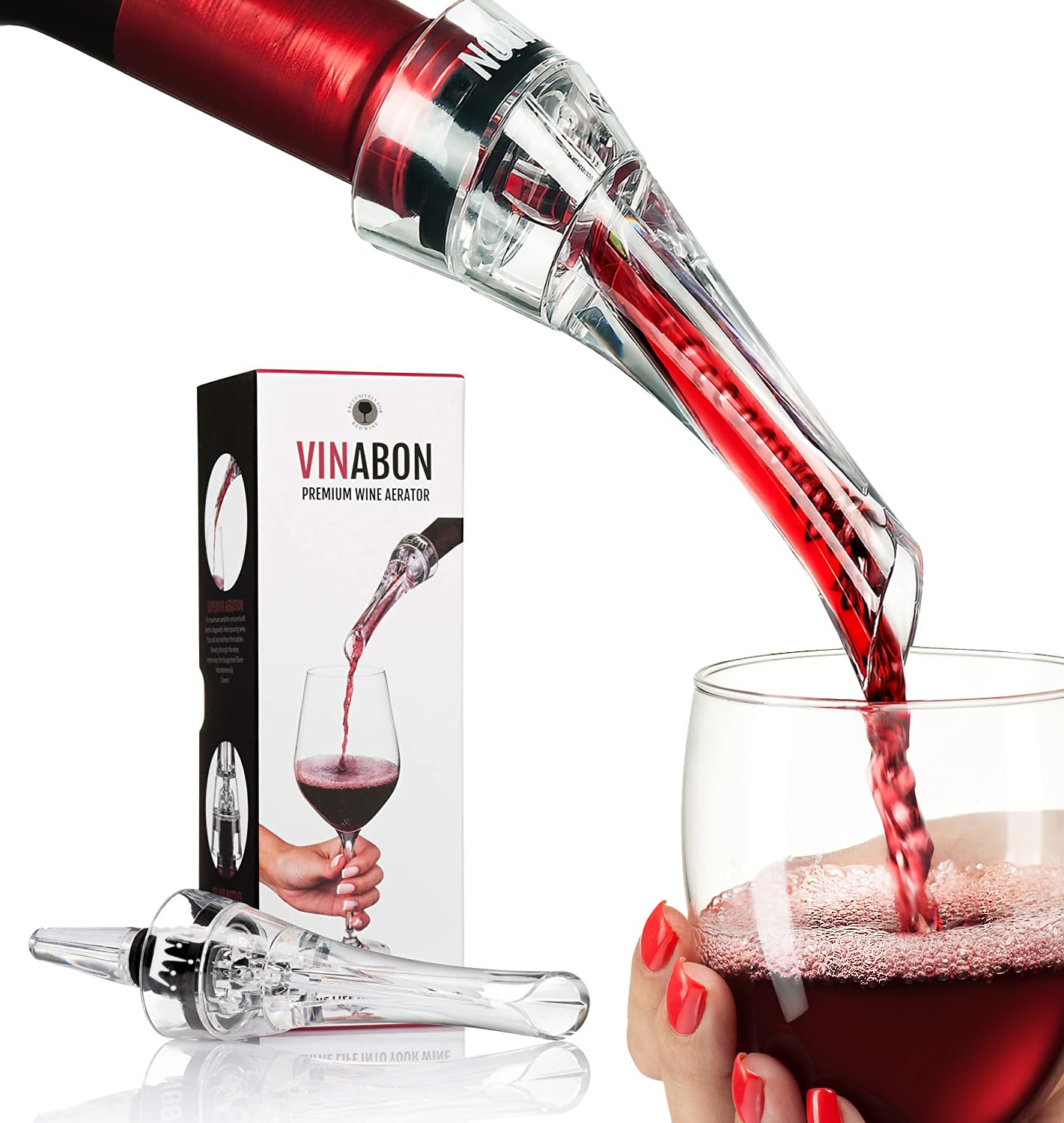
I appreciate the lifetime warranty and the extra guidance that comes with this aerator.
Why I picked it: Lifetime warranty plus a guided approach to using and caring for it.
Best for: Buyers who value warranty support and an included wine guide.
Affordable with strong warranty backing.
Pros
- Lifetime warranty
- Anti‑drip rubber stopper
- Distinctive gurgling sound
- Includes wine guide eBook
Cons
- Long tip may be awkward for shaky hands
- Long‑term durability still unproven
My take
Vinabon stands out because I can register it and count on a replacement if anything goes wrong. The unit fits bottles easily and produces a satisfying little gurgle that tells me air is being mixed in.
I found the long spout slows pours slightly and gives me better control; just watch hand placement if you have unsteady hands. Cleanup is straightforward with a rinse, and the included wine guide is a nice bonus if you want quick tips.
For anyone who wants a warranty and solid daily performance, this one makes sense in my lineup.
How I Choose an Aerator Pourer
Aeration basics
I look for devices that use a chamber or venting to mix air into wine as it pours—this is where the Bernoulli effect or similar internal channels make a real difference.
If I want quick, glass‑by‑glass improvement, a pourer with a visible chamber or a distinct gurgle gives the most immediate change.
- Chamber or venting = faster aeration
- Bigger chamber usually equals more immediate effect
- Audible suction or gurgle is a useful signal
Fit and leak control
A tapered rubber or silicone stopper that fits snugly is non‑negotiable for me; it prevents drips and lets me store bottles on their side.
If I’ll store unfinished bottles, I favor models that re‑seal tightly and claim liquid‑tight performance.
- Tapered, ribbed stopper for secure seal
- No‑drip spouts preserve tablecloths
- If storing wine, choose an airtight stopper
Materials and cleaning
I prefer aerators that disassemble or at least rinse cleanly—residue builds up quickly with frequent use.
Plastic/acrylic aerators are lightweight and durable; stainless accents add polish but hand‑washing usually protects longevity.
- Hand wash to avoid cracking on certain plastics
- Look for simple parts that pop apart for rinsing
- Dishwasher safe models are convenient but check warnings
What to pick for your needs
I choose a multi‑tool stopper if I need pouring plus safe storage. For tastings or travel, a two‑pack is smart so you’re never without one.
When I’m serving bold reds and want a pronounced opening, I reach for a model with patented internal channels or a larger chamber.
- Multi‑tool stopper = storage + pour
- Two‑pack = backups and travel
- Large chamber or patented design = stronger aeration
Frequently Asked Questions
Do aerator pourers actually change the taste?
Yes. In my experience, pourer aerators that introduce air as the wine flows soften tannins and release aroma more quickly than leaving a bottle untouched for a few minutes.
How do I clean a pourer aerator?
I rinse mine immediately after use and occasionally soak small parts in warm soapy water. For plastic models I avoid the dishwasher unless the instructions explicitly say it’s safe.
Will these fit my wine bottles?
Most tapered rubber or silicone bases fit standard bottles. If you use unusually wide or narrow necks, I recommend checking the product fit notes or keeping a backup stopper handy.
Final Take
I’ve found a pourer aerator for every situation: Vintorio for everyday value, Haley’s Corker when I want storage plus pouring, TenTen for extra spouts, Vinturi for more technical aeration, Rabbit for style, and Vinabon when warranty matters.
Pick the model that matches how you serve wine—glass‑by‑glass aeration, sealed storage, travel, or presentation—and you’ll be pouring better glasses almost immediately.
