
I tested the most popular vacuum and storage bag sets on Amazon so you can decide which type — manual pump, rechargeable pump, or simple heavy-duty moving tote — fits your needs.
I spent time packing, compressing, and living with several vacuum and storage bag kits so I could compare real-world performance across brands and styles.
In this roundup I focus on what matters most to me: how well the bags compress, how durable the materials and seals are, whether the included pumps actually help, and which sizes are useful for travel versus home storage.
If you want an all-purpose set, a travel kit with a powered pump, or heavy-duty moving bags, I’ll walk you through the tradeoffs and the specific strengths of each pick.
I tested manual hand pumps, a rechargeable electric pump, pure flat poly bags, and non-vacuum moving totes to see how each solution performs for travel, long-term storage, and moving; pick the type that matches how often you’ll compress items and how bulky those items are.
1. Amazon Basics Vacuum Bags (20‑Pack) – Best Overall
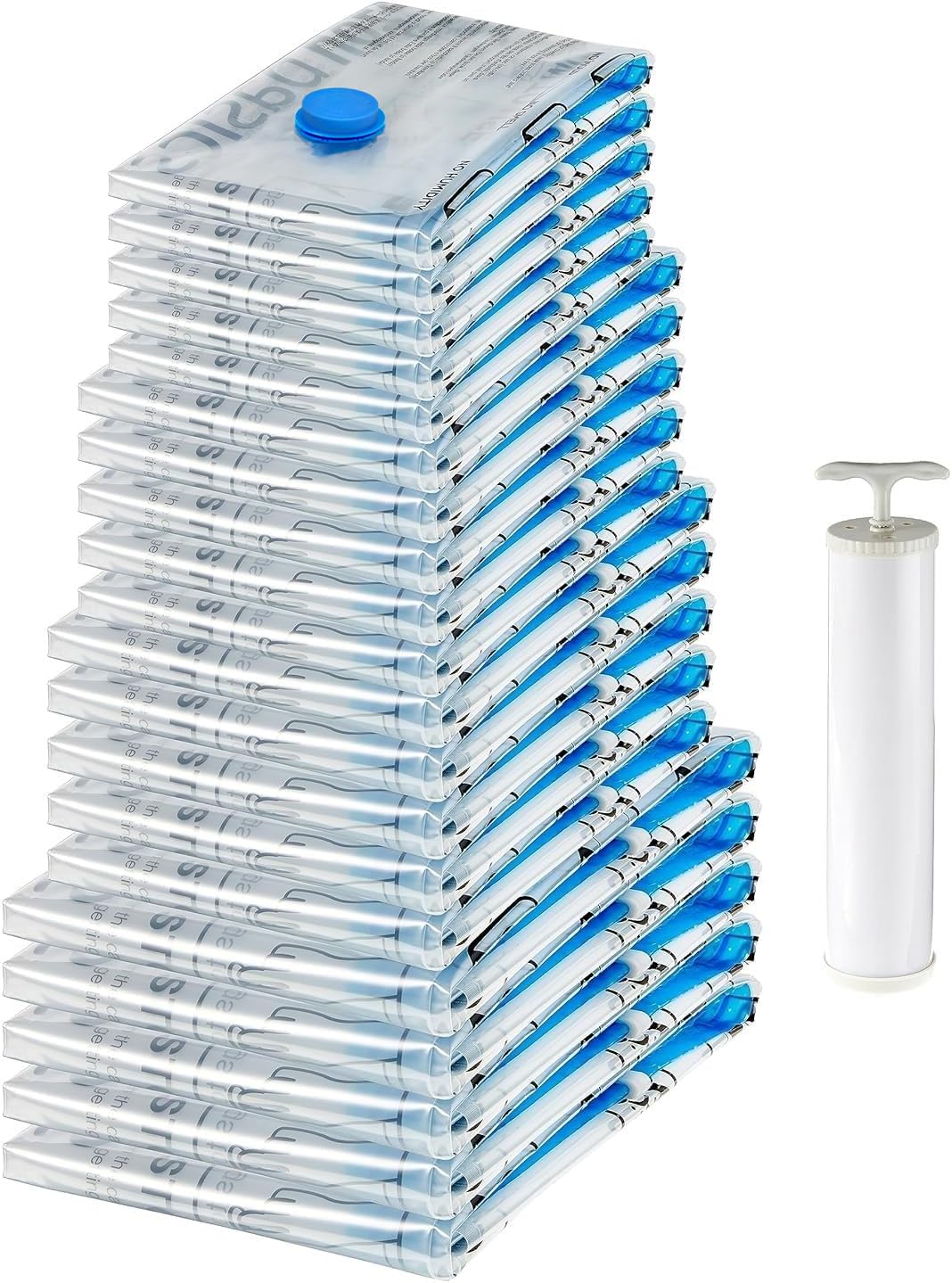
A large, versatile 20‑pack with a hand pump and a full range of sizes that handled everything from sweaters to comforters in my testing.
Why I picked it: Comprehensive size assortment plus durable material and reliable seals made this my everyday go‑to set.
Best for: Home organization and seasonal bedding storage where variety of sizes matters.
Great value for the number of bags and included pump.
Pros
- Wide size assortment
- Thick, durable plastic
- Includes hand pump
- Strong double-zip seals
- Holds vacuum well over days
Cons
- Manual pump takes effort
- Largest bags are bulky when empty
- Can re‑inflate if overfilled
My take
I liked that the set included five sizes — small through jumbo — because it let me compress scarves and king comforters with the same kit.
The plastic felt thick and the double-zip plus turbo valve kept bags sealed for days; I didn’t notice air sneaking back in after initial compression.
The hand pump works for travel, but I reached for a standard vacuum cleaner when I wanted faster, effortless results.
A practical tip I learned: don’t overfill the bags. When they’re overloaded they don’t compress fully and can puff back up.
2. Ziploc Space Bag (2‑Pack) – Most Trusted Brand
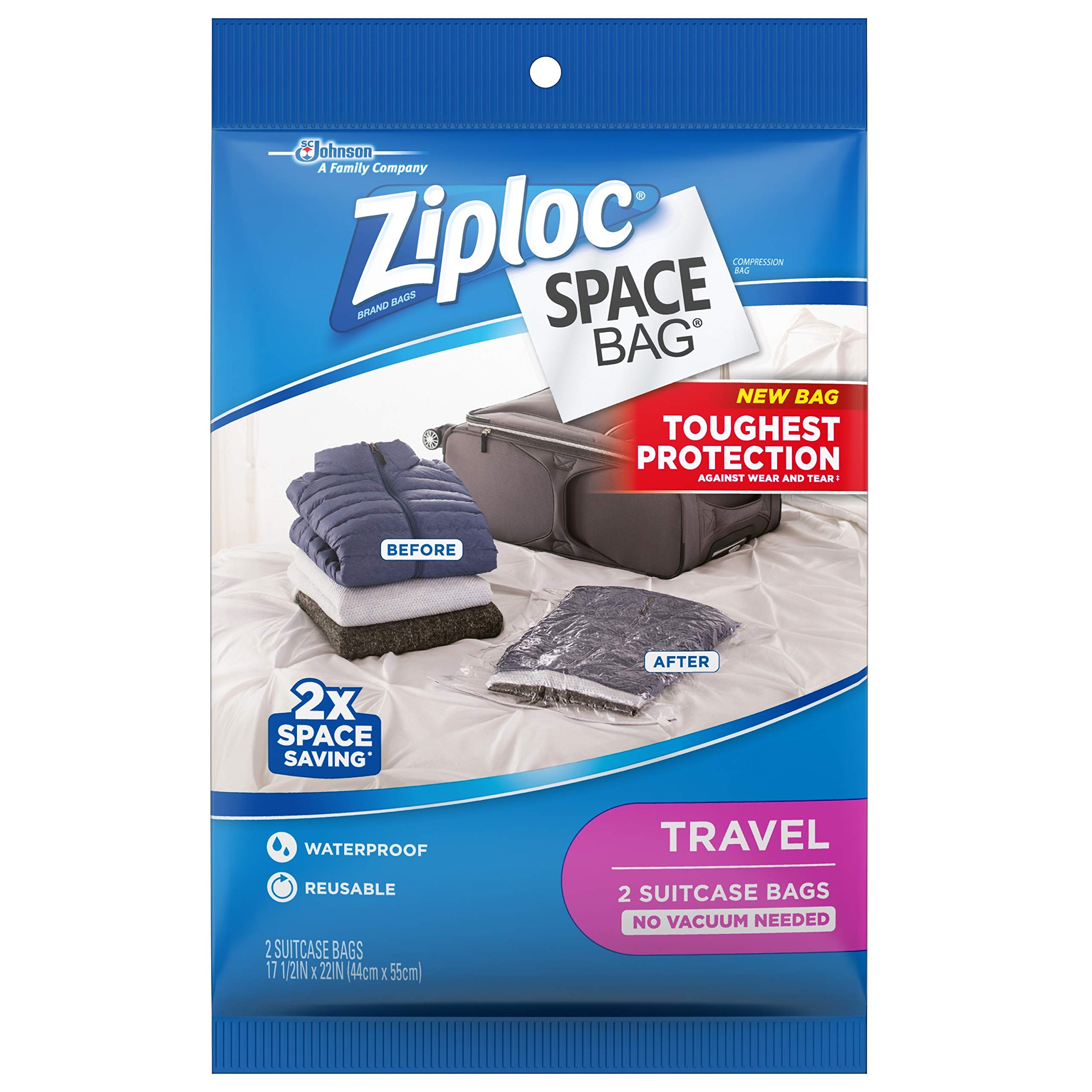
A heavyweight classic that compresses very well and feels reliably airtight — ideal for big bedding or closet hanging use.
Why I picked it: Proven construction and a thick, flexible plastic made these the ones I reached for when I needed maximum compression for bulky items.
Best for: Compressing comforters and large seasonal garments for closet or attic storage.
A solid midrange option for durable, high‑capacity compression bags.
Pros
- Very durable plastic
- Airtight and waterproof
- Compresses bulky items well
- Flexible, easy to pack
Cons
- Only two bags in this pack
- Very large — hard to fill fully
My take
When I stuffed a winter wardrobe and a comforter into these, they compacted more than I expected and stayed sealed.
The one-way valve and strong zipper design make these feel more like a long‑term storage solution than a travel accessory.
I appreciated the oversized capacity, but the tradeoff is that the bags can be awkward to fill and store when empty.
3. Amazon Basics Vacuum Bags (6‑Pack) – Best Small Pack
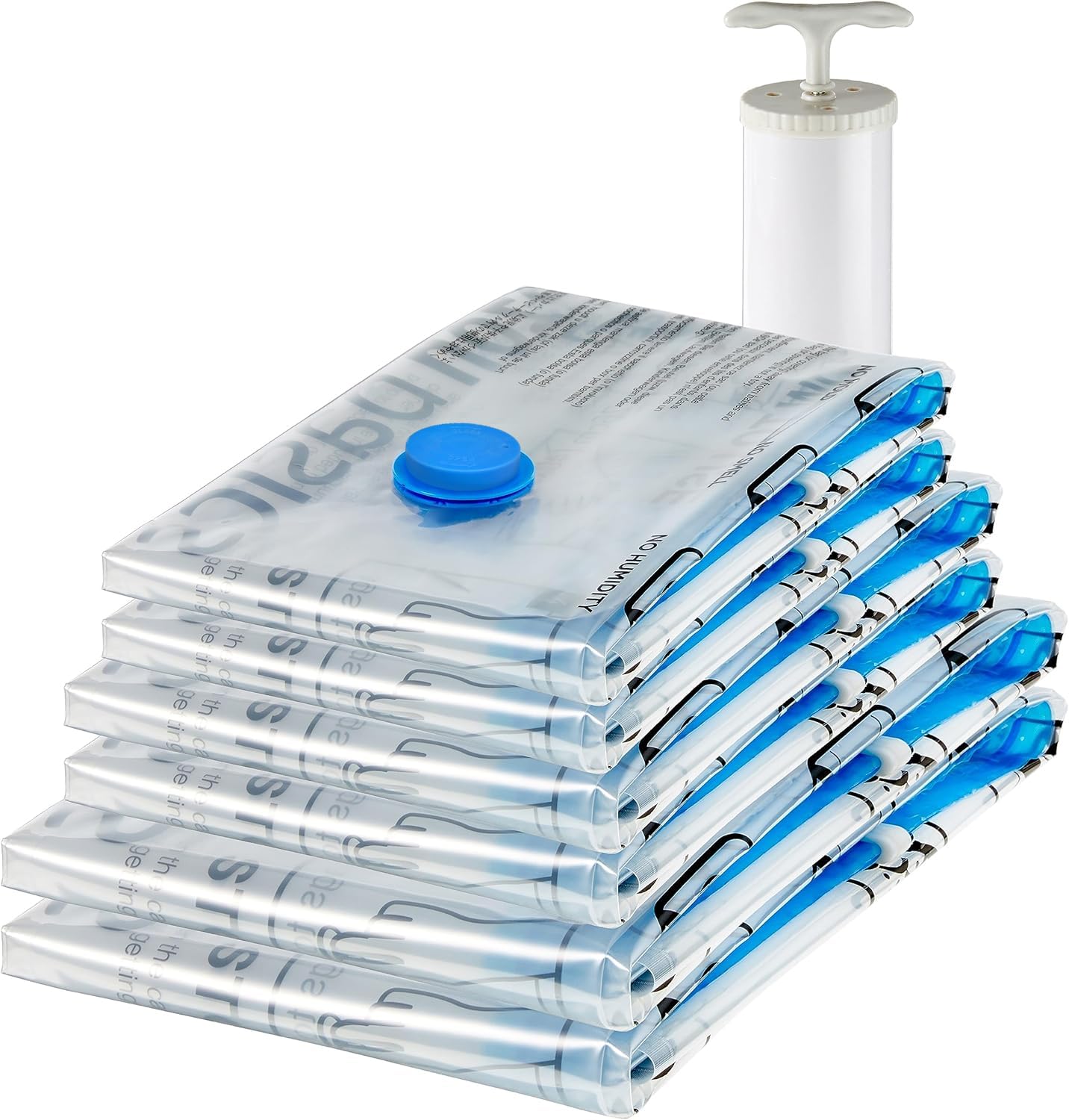
A smaller, focused set with the same durable construction as the larger Amazon Basics kit — handy when you only need a few quality bags.
Why I picked it: Same strong seals and thick material from Amazon Basics in a compact 6‑pack makes it easy to try vacuum bags without committing to a huge set.
Best for: Occasional storage for out‑of‑season clothes and a couple of bulky blankets.
Good budget option if you only need a handful of bags.
Pros
- Durable material
- Includes hand pump
- Strong seals
- Compresses up to 80%
Cons
- Limited number of bags
- Sizes can be large for small wardrobes
My take
I used these for a quick seasonal swap and appreciated that the seals stayed airtight for long periods.
The hand pump is convenient for travel, but for speed I attach a vacuum hose and get the job done in seconds.
These are heavy plastic and held up well to repeated use; they’re a compact, practical set for occasional storage needs.
4. Rechargeable Travel Compression Bags (25‑Pack) – Best for Travel
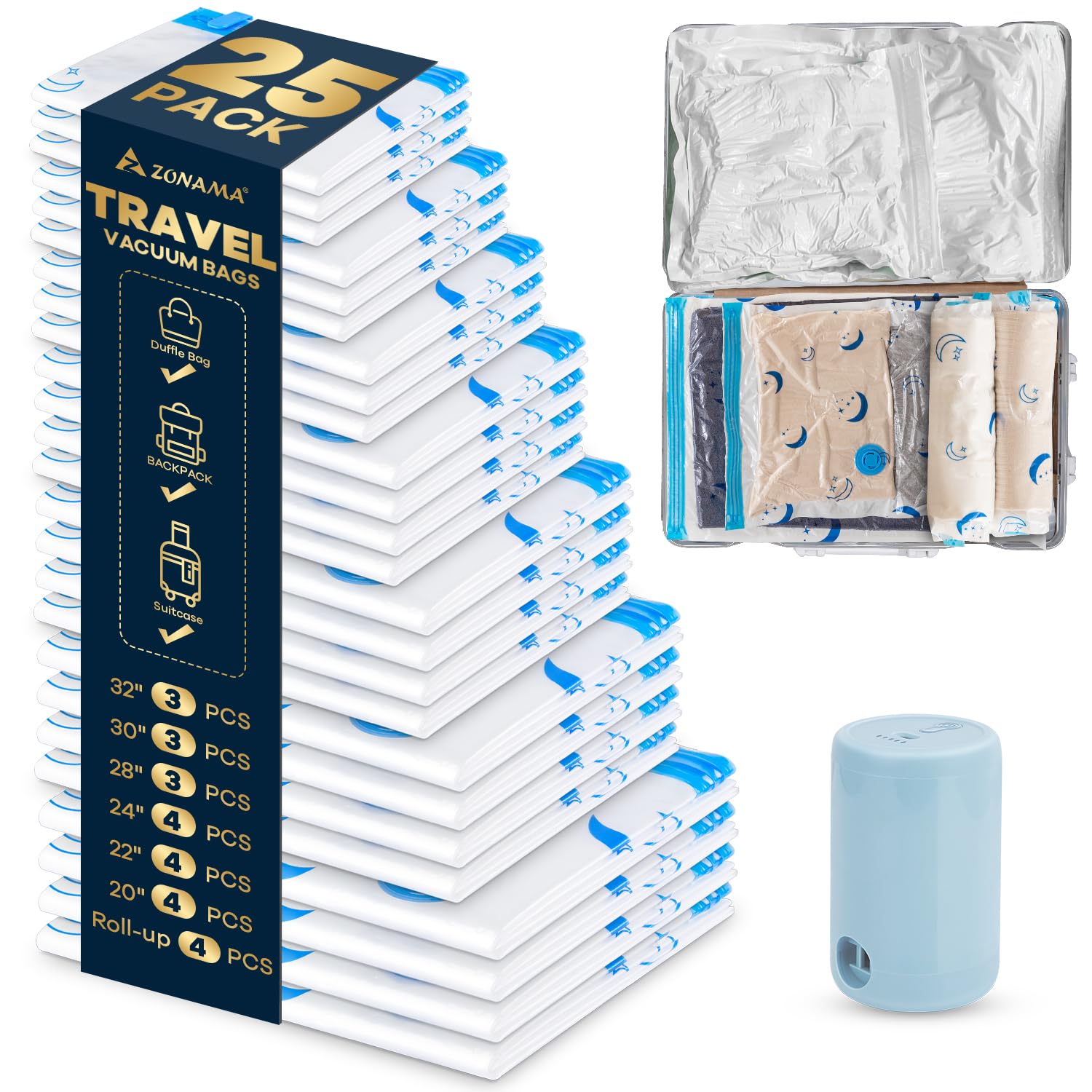
A full travel‑focused kit with many sizes and a rechargeable electric pump that shaves packing time — great for frequent travelers.
Why I picked it: The rechargeable pump and the mix of tiny carry‑on sizes to jumbo bags made this the most travel‑friendly choice I tested.
Best for: Frequent travelers and people who want a powered pump to save time while packing.
Feature‑heavy set — more convenient but check pump reliability for heavy use.
Pros
- Rechargeable electric pump included
- Huge variety of sizes
- Cap‑free valve design
- Hand‑compress option works without pump
Cons
- Pump battery life can be inconsistent
- Some bags feel thinner than others
My take
I loved how fast the electric pump removed air — a clear timesaver compared with manual pumping during quicker trips.
The kit’s many sizes meant I could compress travel shirts, pillows, and a medium blanket without hunting for extra bags.
Be aware that my pump’s runtime felt limited on one charge, so I kept a vacuum on standby; still, the cap‑free valve and tool‑free compression are clever conveniences.
5. 20‑Pack Vacuum Bags with Hand Pump (Combo) – Best Budget Combo
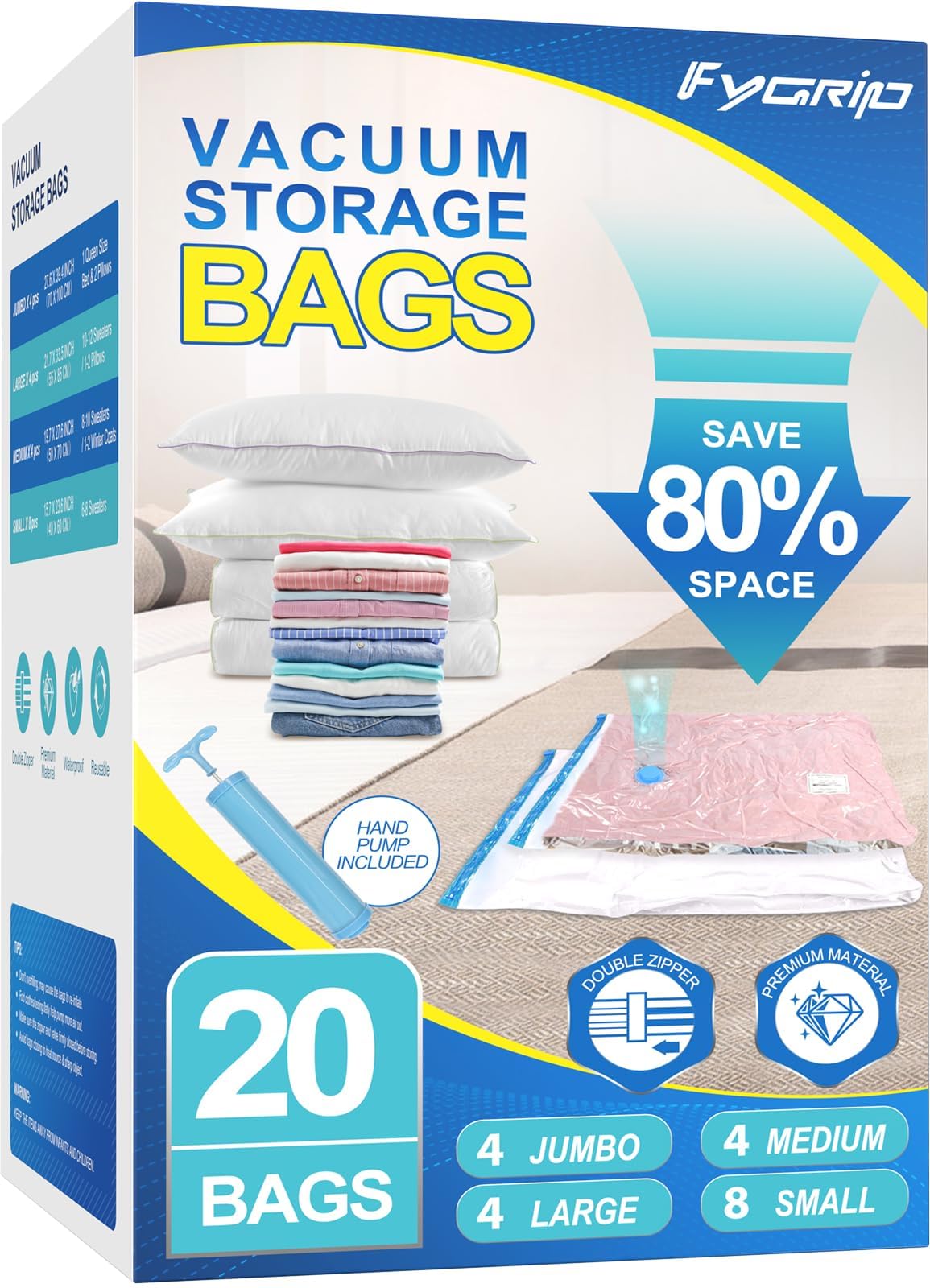
A straightforward 20‑pack that delivered strong compression and reliable seals at a budget‑friendly value in my hands‑on use.
Why I picked it: Simple, effective, and affordable — these bags gave me consistent compression and held vacuum well with the included pump.
Best for: Anyone looking to maximize closet or suitcase capacity on a tight budget.
Affordable option with a good mix of sizes and a hand pump included.
Pros
- Good space savings
- Sturdy double‑zip seals
- Includes hand pump
- Reusable multiple times
Cons
- Sizes not labeled in pack
- Can be messy to unfold
My take
I reduced bulky bedding and winter clothes by roughly 80% with these; they stayed compressed and protected from dust and moisture.
The supplied pump worked fine for travel and quick jobs, and the bags felt robust for repeated use.
My only annoyance was that sizes weren’t marked on each folded bag, so I had to unfold a couple to figure out which was which.
6. AlexHome Heavy Duty Moving Bags (Set of 5) – Best for Moving
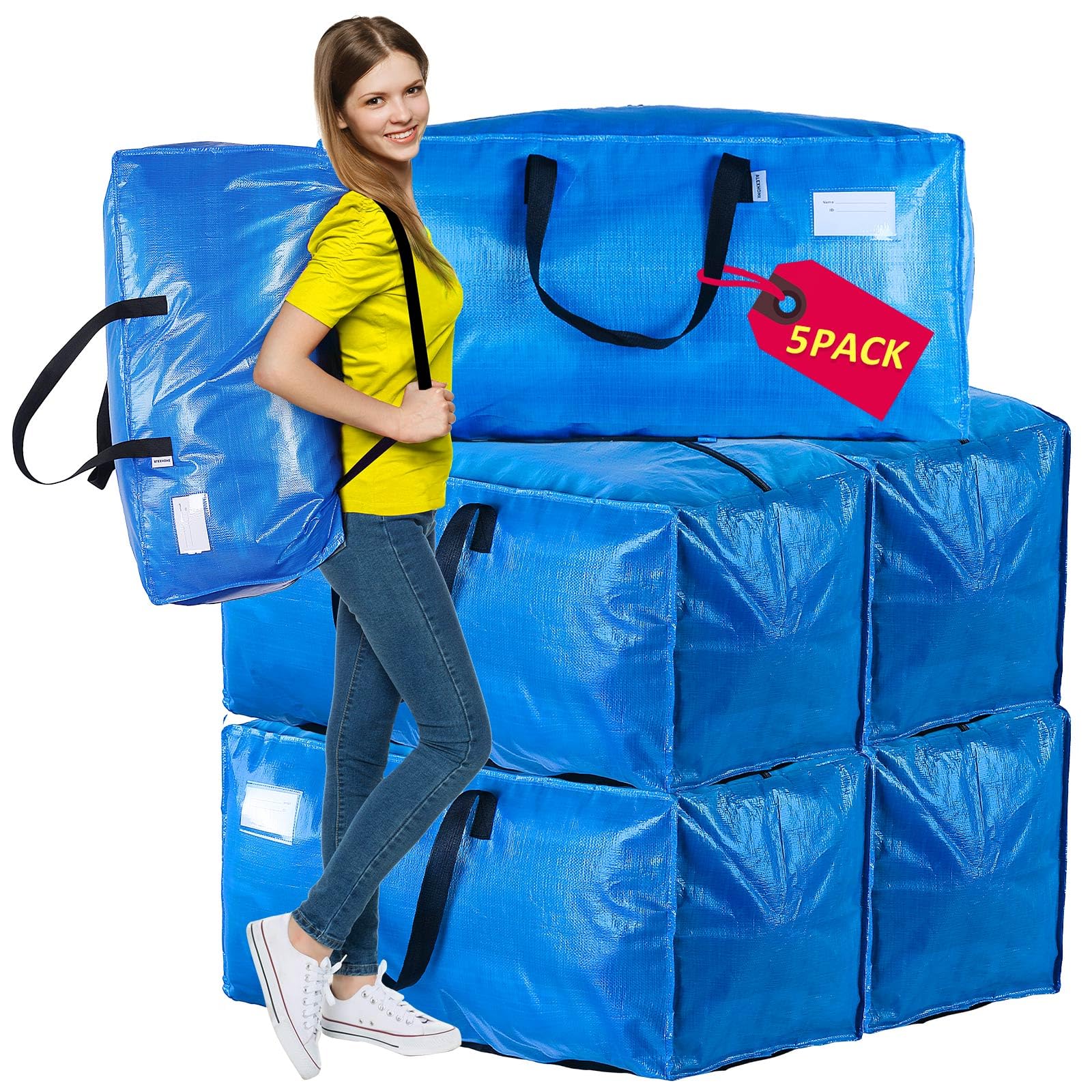
Not a vacuum product — these heavy‑duty, reusable packing totes handled moving and storage differently but extremely well in my practical tests.
Why I picked it: When I needed to move bulky items without compression, the heavy polypropylene, reinforced straps, and roomy capacity made these indispensable.
Best for: Moving, college dorm moves, and hauling heavy loads where vacuum compression isn’t required.
Good value for heavy‑duty reusable moving and storage bags.
Pros
- Very heavy‑duty material
- Large capacity
- Multiple carry options
- Clear ID pocket
Cons
- Not vacuum seal bags
- Bulkier when not in use
My take
I used these for a dorm move and appreciated how much they held without tearing; the reinforced stitching handled full loads and stairs without complaint.
They fold flat for storage and the clear ID pocket was helpful when I had multiple bags to sort.
If your priority is compressing bulky bedding, these aren’t the tool — but for moving and heavy transport they’re a robust alternative.
7. Wowfit Extra Large Clear Poly Bags (5‑Pack) – Best Flat Bags
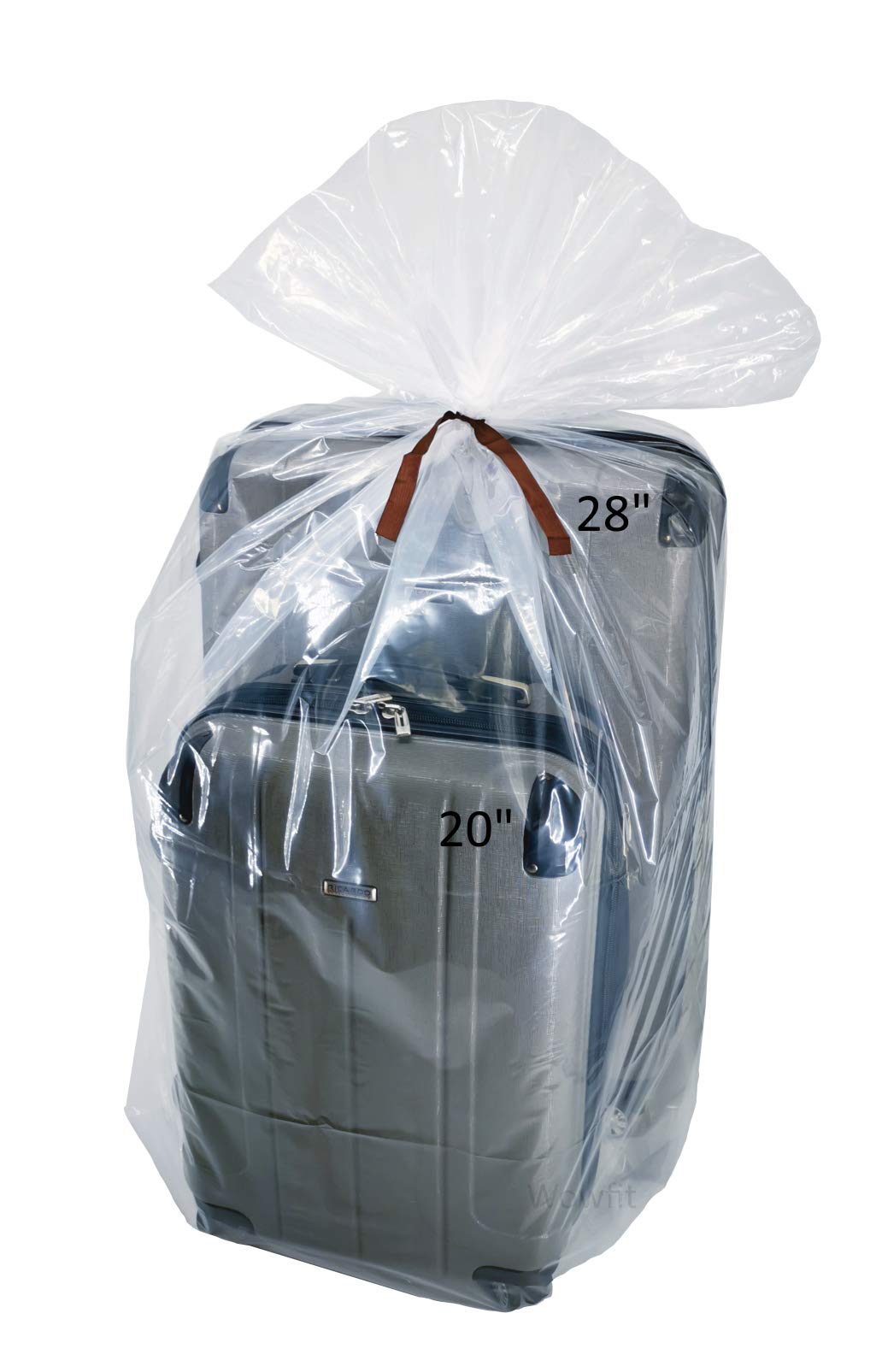
Giant flat clear poly bags that are superb for covering, protecting, and storing oversized items like car seats, trees, or king quilts.
Why I picked it: I kept a few of these around for non‑compressed storage and protective wrapping — they’re simple, cheap, and very large.
Best for: Protecting large items from dust and moisture, or one‑time packing jobs where vacuuming isn’t needed.
Low‑cost choice for large, clear storage needs.
Pros
- Huge 40×60 size
- Clear, see‑through material
- Includes ties
- Food‑grade polyethylene
Cons
- Thin compared with vacuum bags
- Not suitable for compression
My take
I used one to protect an extra car seat and another to wrap smaller Christmas trees — the size and clarity make locating contents easy.
The plastic is thinner than vacuum bags but still strong enough for light storage; the included ties are a nice touch.
These are perfect when I want a protective, visible cover rather than compression.
How I Choose Vacuum and Storage Bags
Material & Seal Quality
I prioritize thick PA/PE films and double‑zip seals because they keep air out and resist punctures.
A turbo or one‑way valve that's well seated makes vacuuming faster and prevents leaks after I finish compressing.
- Look for double‑zip or heavy slider closure.
- Turbo/one‑way valve improves vacuum retention.
- Thicker plastic resists tears during handling.
Pump Type: Hand, Electric, or Vacuum
I decide on pump type based on how often I compress items: hand pumps work for travel, electric pumps save time, and a standard vacuum hose is fastest for home use.
If a kit includes a rechargeable pump, factor in potential battery limits and have a backup vacuum for heavy jobs.
- Hand pump: good for travel and occasional use.
- Electric pump: best for frequent packers.
- Vacuum hose: fastest and most reliable for large loads.
Sizes & Intended Use
I match bag sizes to what I actually store — small and extra‑small for knitwear and pillows, jumbo for comforters and sleeping bags.
If you need a long‑term attic or basement solution, I choose thicker bags and airtight seals; for travel, a mix of small and medium sizes is more practical.
- Jumbo: comforters, bulky blankets.
- Medium: sweaters, jackets.
- Small: shirts, scarves, travel items.
Durability and Reuse
I reuse bags frequently, so I inspect seams and valves after each use to make sure they’ll last another season.
Avoid overstuffing — repeated overstretching shortens the life of even the sturdiest bags.
- Check valve and zipper after first use.
- Store folded and labeled to extend life.
- Avoid sharp items inside the bag.
Practical Tips I Use
I always leave a little room when sealing to ensure air has a path to the valve, and I run a vacuum over multiple passes for stubborn air pockets.
Label bags when storing in dark closets so I don’t have to open multiple bags searching for one item.
- Don’t overfill; leave space to compress.
- Use a vacuum for speed and completeness.
- Label contents on the bag or a sticky note.
Frequently Asked Questions
Are vacuum bags safe for down comforters and pillows?
I use vacuum bags for short‑to‑medium term storage of down items, but I don’t keep down compressed indefinitely — long exposure can reduce loft. For long storage I rotate items out and give them time to fully loft again.
Will vacuum bags keep moisture and odors out?
In my experience, bags with robust double zips and turbo valves are airtight and help keep out moisture and odors. For damp basements I still add silica packs or store the bags off the floor.
Can I check a vacuum‑packed bag in my carry‑on or checked luggage?
I’ve travel‑tested vacuum bags in carry‑ons and checked bags; compressed items are usually fine, but check airline rules for compressed or oversized items and always keep fragile valves protected.
What if a bag reinflates after sealing?
If a bag reinflates I first check the zipper and valve for complete closure, then reapply the vacuum. Overfilling is the most common cause — leaving a little headroom prevents reinflation.
Final Take
I found that the right vacuum or storage bag depends on how often I pack and what I store: choose a big, varied kit if you need long‑term home storage; pick a rechargeable travel set to save time on the road; or rely on heavy‑duty moving totes when compression isn’t required.
Across the options I tested, paying attention to seal quality and using a vacuum for larger jobs gave me the most consistent results.
If you want one quick takeaway: get the mix of sizes you’ll actually use, and keep a backup vacuum or pump on hand.
