
I tested five freestanding shoe organizers across closets, entryways, and bedrooms to find durable, space-saving options for different needs — from compact racks to high-capacity rolling units.
I own more shoes than I care to admit, so I’ve tried a lot of freestanding shoe organizers in tight entryways, closet nooks, and open bedrooms. For this roundup I focused on build quality, capacity, footprint, and real-world assembly and use.
Below I share the winners that worked best in my spaces: compact solutions for narrow spots, stackable shelves for modular systems, and heavy-duty racks that handle large collections and movement.
I compared each unit for footprint, ease of assembly, real capacity with adult shoes, and long-term stability, then picked options that shine for different needs rather than one-size-fits-all.
1. Simple Houseware 6-Tier Shoe Rack – Best for Families
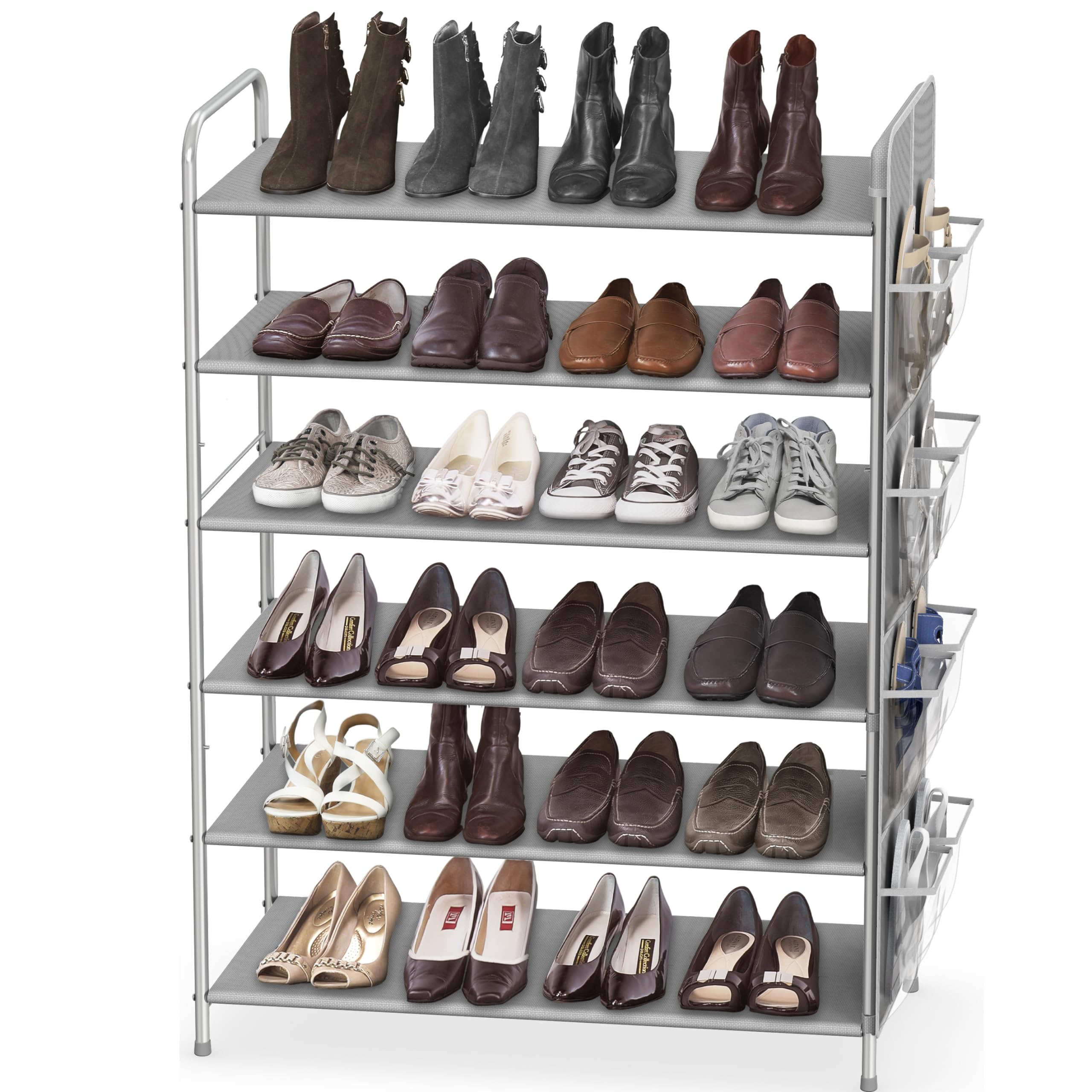
I found this tall fabric-and-metal rack to be the best balance of capacity and price for families who need lots of accessible shoe space.
Why I picked it: Holds a surprising number of shoes, includes side pockets, and adjusts shelving easily.
Best for: Families or shared entryways with lots of everyday shoes.
Very affordable for the capacity it provides.
Pros
- High pair capacity
- Side pockets for small items
- Adjustable shelf configuration
- Washable fabric shelves
Cons
- Fabric shelves feel lightweight
- Requires tools for final assembly
My take
I bought two of these for a busy family entry and they immediately cleared the shoe chaos. The six-tier layout fits flip-flops, kids’ shoes, and adult sneakers across the shelves without crowding.
Assembly felt intimidating at first because the box contained a lot of parts, but the instructions are straightforward and I had both racks together in under an hour with a Phillips screwdriver. Removing a panel to convert the layout to fewer tiers is quick if you need taller shelf space for boots.
The metal frame feels sturdy and each shelf is rated to hold a decent amount of weight. The 600D polyester shelves clean up easily and the side hanging bag is genuinely useful for sandals and slippers that tend to get lost.
For an entryway solution that maximizes vertical storage without a big budget, this was my go-to. If you prefer a fully rigid shelf or have very heavy boots, consider a metal-slatted option instead.
2. Seville Classics 3-Tier Resin Slatted Shoe Rack – Best Stackable
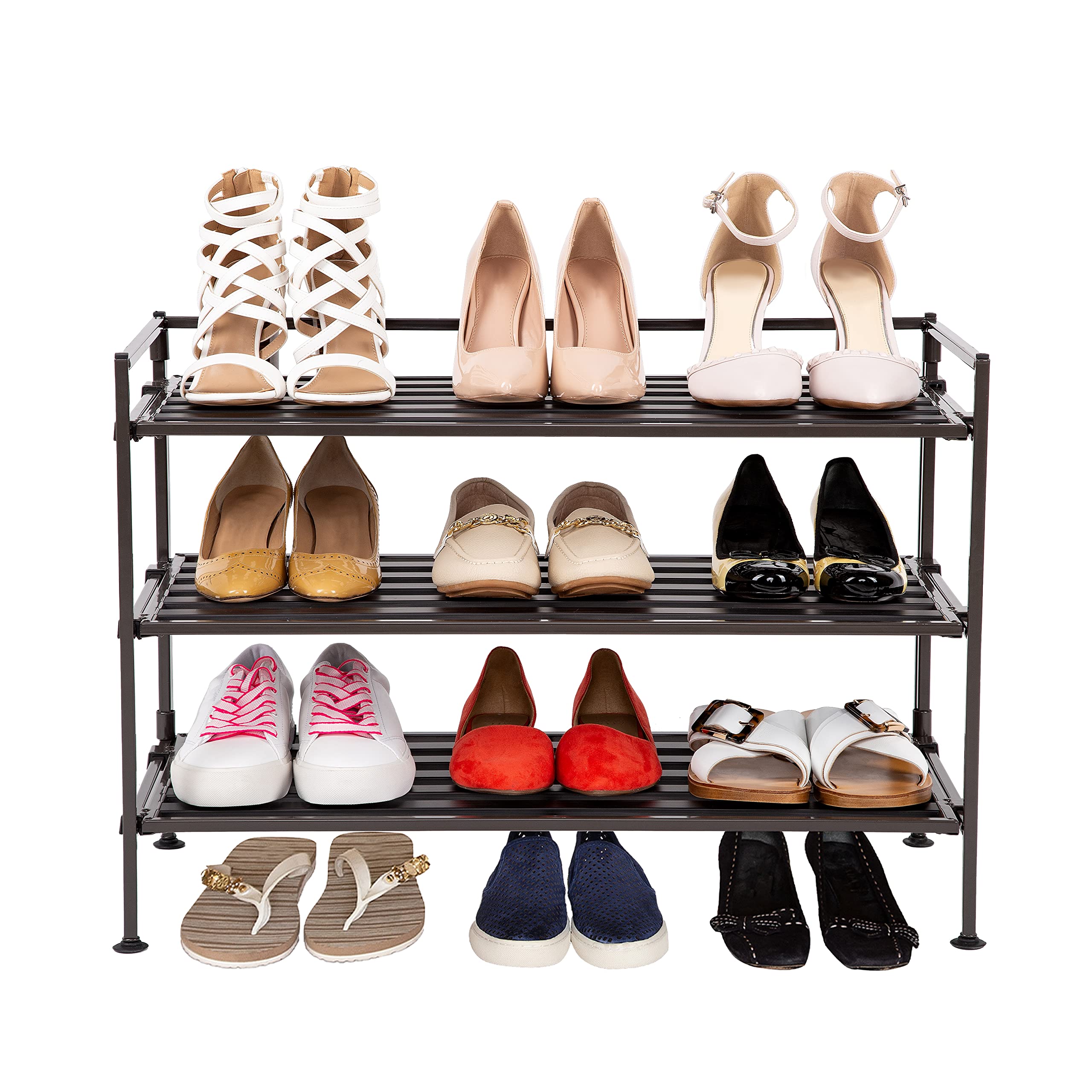
This compact metal-and-resin rack is my pick when I want a sturdy, stackable shelving system that looks clean and scales horizontally or vertically.
Why I picked it: Interlock design and stackability make it very flexible for closets and modular setups.
Best for: Closets and entryways where stacking or connecting units is useful.
A midrange option that trades up for durability and modularity.
Pros
- Stackable and interlockable
- Durable steel frame
- Resin slat shelves resist dirt
- Quick, tool-free assembly
Cons
- Width can be tight for large boots
- Not ideal if you need high vertical clearance
My take
I used this rack inside a narrow closet where I wanted something tidy and modular. The resin slats look like wood at a glance and don’t trap mud or water, which is great for transitional shoes.
Assembly was essentially drop-in — the shelves click into the frame and stay put. I like that I can stack up to three units when I need more vertical storage, and the interlock feature allowed me to connect another unit horizontally for a custom arrangement.
Each shelf carried heavy sneakers and a couple of shoe boxes without sagging. I did pay attention to measurements before trying to install it behind a door — the frame width can be a factor in tight openings.
If you want a clean, modular system that plays well with different configurations, this Seville unit is one of the most flexible I used.
3. Amazon Basics 50-Pair Rolling Shoe Rack – Best for Large Collections
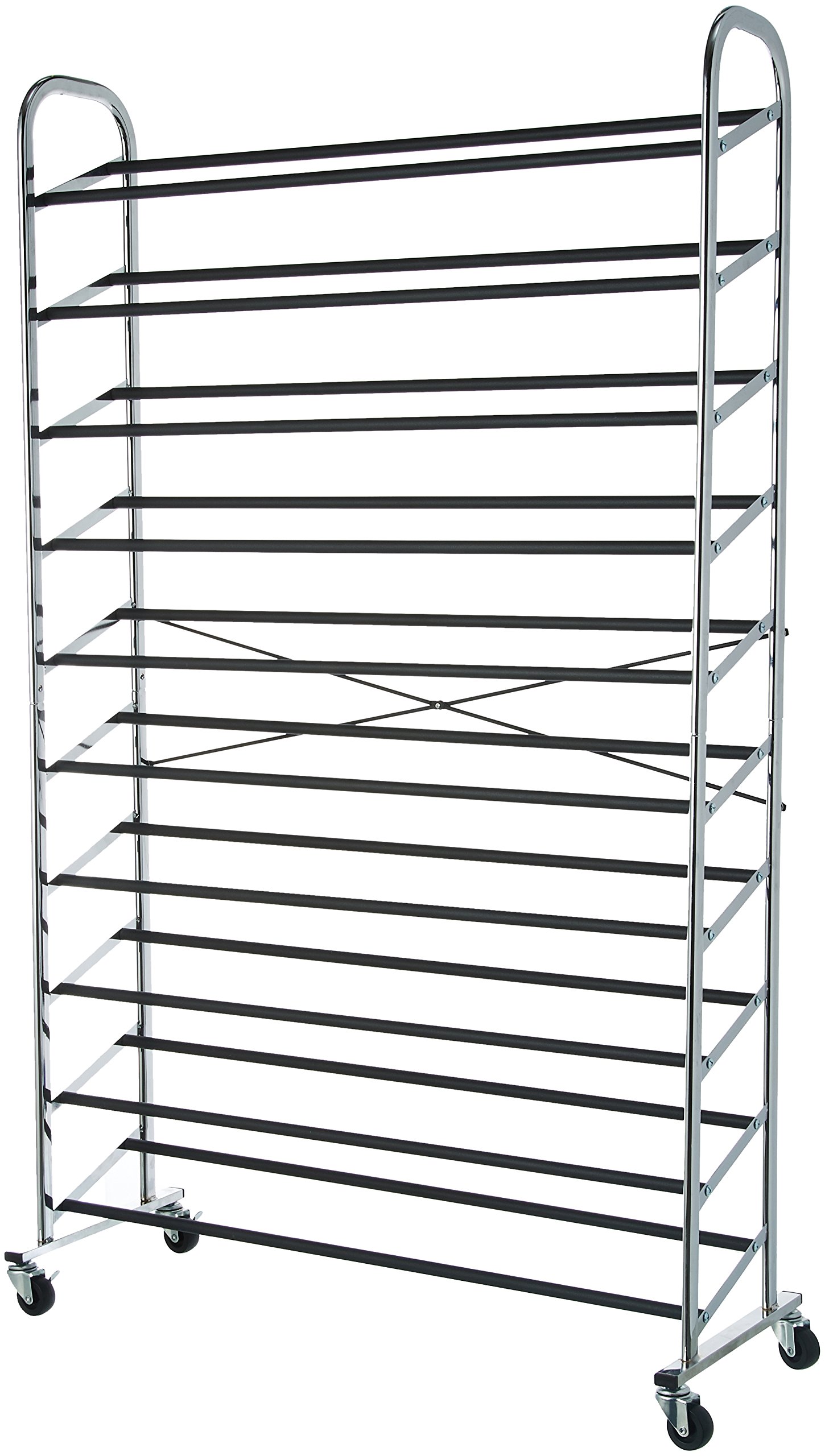
When I needed the largest capacity, this tall, rolling metal rack kept dozens of shoes organized while remaining mobile and surprisingly sturdy.
Why I picked it: Massive capacity with locking casters makes it the go-to for big collections.
Best for: Closets or rooms where you need to store many pairs and occasionally move the unit.
Good value for very high capacity and mobility.
Pros
- Holds many pairs
- Rolling casters with locks
- Solid chrome finish
- Ten tiers maximize vertical space
Cons
- Tall footprint needs vertical space
- High-profile shoes need creative placement
My take
I put this unit into a spare bedroom and was impressed by how many pairs it actually holds — slim dress shoes and sandals stack neatly across the ten tiers.
The chrome frame looks clean and the casters let me move the rack to sweep or rearrange without unloading shoes. Locking wheels hold it steady once positioned.
Assembly requires some patience with the many bars, and a power driver speeds the process, but the final product felt sturdy and balanced in my testing. I did note taller sneakers require a little squeeze to fit on individual tiers.
If you need maximum pair count and occasional mobility, this is the most capable freestanding rack I tried.
4. VASAGLE 4-Tier Shoe Rack – Best Decorative & Durable
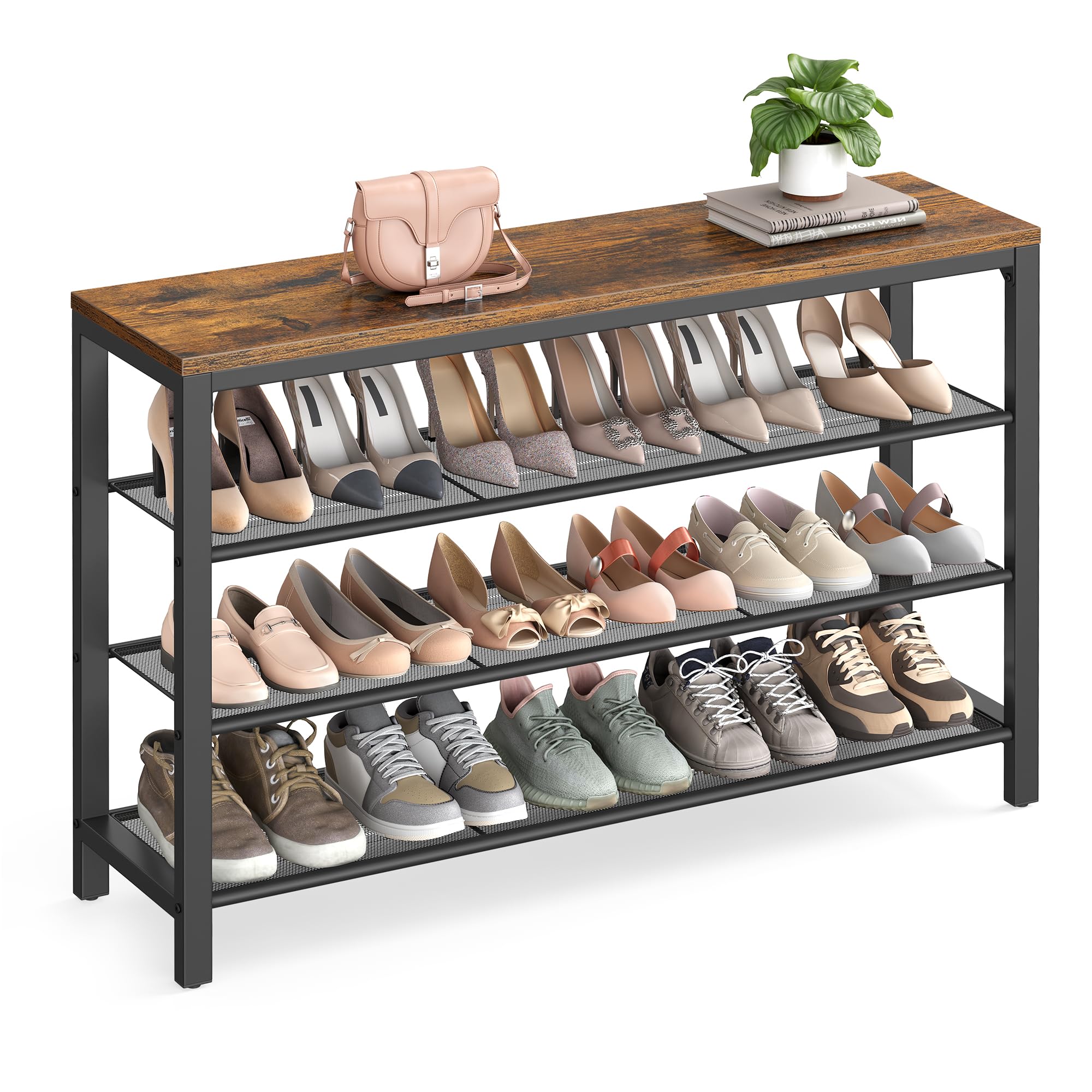
This industrial-style rack gave me a stronger, more decorative option that blends into a foyer while delivering reliable long-term durability.
Why I picked it: Particleboard top, mesh shelves, and adjustable feet combine sturdiness with a finished look.
Best for: Entryways and living spaces where looks matter alongside function.
A bit more upscale for a decorative, sturdy organizer.
Pros
- Attractive industrial design
- Mesh shelves drain and stay clean
- Adjustable feet for leveling
- Sturdy particleboard top
Cons
- Heavier to move
- Mesh shows fewer storage options for tiny items
My take
I placed the VASAGLE rack in my foyer and appreciated that it looks like furniture rather than a utilitarian rack. The wood top gives me a place for keys and a tray, which is something I value in an entry setup.
Assembly was simple thanks to labeled parts and the rack felt solid once tightened. The wire mesh shelves are forgiving with muddy shoes because debris falls through instead of collecting on a solid surface.
I tested it with adult footwear and it handled several pairs per shelf without sagging. The adjustable feet made it easy to stabilize on slightly uneven flooring.
If you want a shoe rack that doubles as decorative storage and will age well, this was one of my favorite balance points between form and function.
5. Simple Trending 5-Tier Stackable Shoe Rack – Best Modular Budget
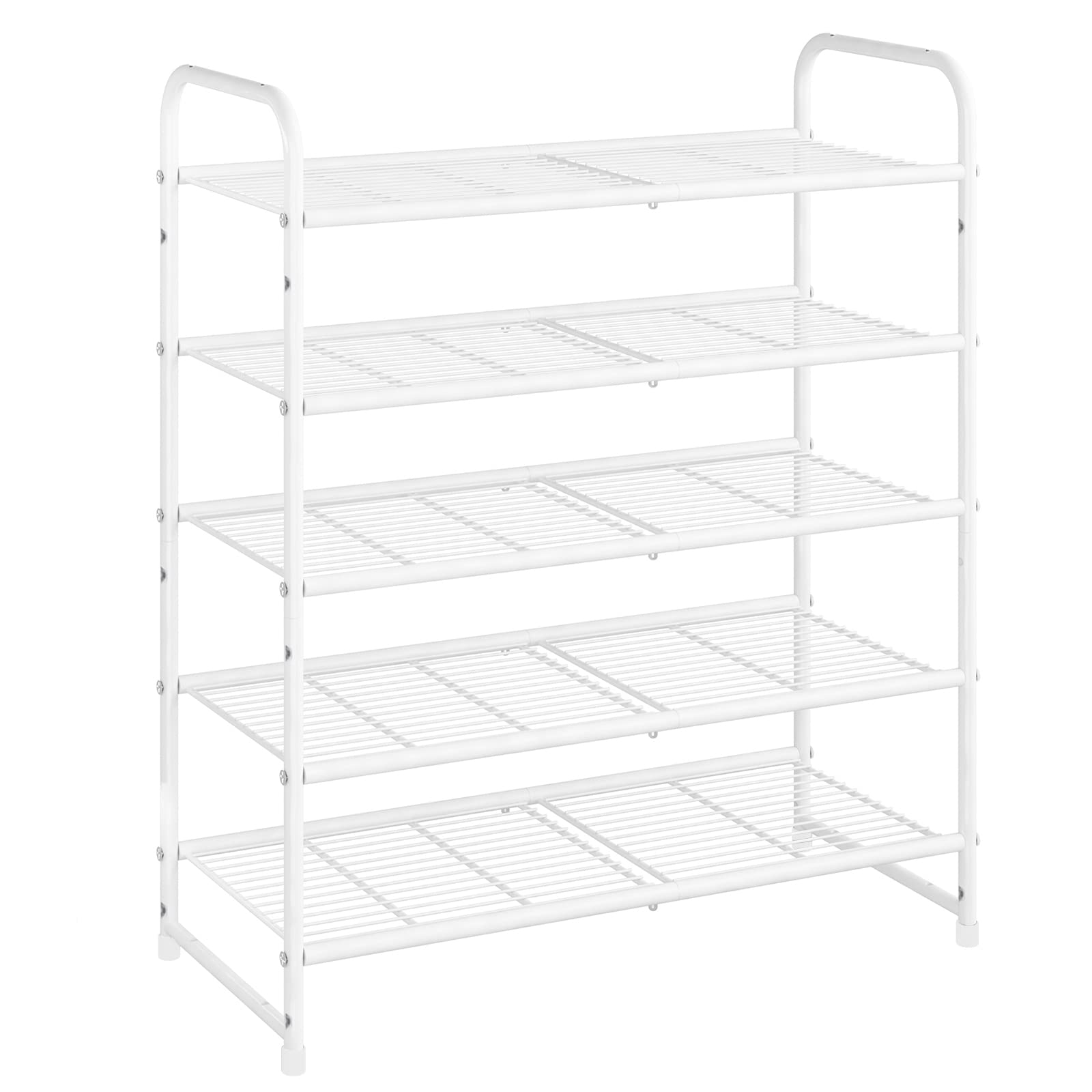
I liked this for tight closets where I wanted a sturdy, stackable metal grid system that I could expand or rearrange affordably.
Why I picked it: Stackable, expandable, and robust metal tubing gives flexible configurations at a budget-friendly price.
Best for: Closet corners and DIY modular shelving builds on a budget.
Affordable and expandable for growing storage needs.
Pros
- Stackable and expandable
- Thick metal tubes resist bowing
- Easy assembly
- Fits boots and heels
Cons
- Limited decorative appeal
- Wall anchor hardware is basic
My take
I used this five-tier system in a standard closet and liked how quickly it went together. The metal tubes feel thicker than typical basic racks and didn’t bow under load.
Stacking two units gave me a ten-tier setup and I could also bridge them horizontally for a wider run — the DIY flexibility proved handy when I reconfigured my closet.
A small gripe: the included wall anchor felt underbuilt for tall stacks, so I added an L-bracket for peace of mind. Once secured, the unit was very stable and held a mix of boots, sneakers, and flats.
For affordable, expandable closet storage that actually performs, this Simple Trending rack earned a permanent spot in my closet rotation.
How I Choose a Freestanding Shoe Organizer
Key features I look for
I focus on footprint, capacity, and build material first. A rack that says it holds many pairs matters less than how those pairs actually fit when I load adult shoes.
Mobility and leveling matter depending on where the rack will live. Locking casters are invaluable for movable storage; adjustable feet are essential on uneven floors.
- Footprint: measure width and depth before buying.
- Shelf height: check clearance for tall sneakers and boots.
- Materials: metal frames resist sag; resin slats handle mud well.
- Modularity: interlock or stackable units allow future expansion.
Assembly and durability tips
I always set aside time for assembly and keep a screwdriver or drill ready. Many racks go together quickly, but multiple-shelf units can be tedious without the right tools.
Tighten fasteners evenly and avoid over-tightening. For taller stacked systems I anchor to a wall or add an L-bracket for safety.
- Use a power driver on low torque to speed assembly.
- Level adjustable feet after assembly to reduce wobble.
- Add wall anchors for tall, stackable units.
Choosing by location
For entryways I prefer decorative, furniture-like racks with a top shelf. In closets, compact stackable units maximize space. For large collections, rolling multi-tier racks give the best capacity.
Consider how often you’ll move the rack. If you’ll be rearranging, prioritize casters with locks.
- Entryway: decorative top shelf and sturdy build.
- Closet: slimmer width and stackable modularity.
- Bedroom/spare room: high-capacity rolling racks.
Frequently Asked Questions
How do I measure for a shoe rack?
I measure the intended floor space (width x depth) and the vertical clearance for the tallest shoes. I also measure doorways and closet openings to ensure the assembled rack will fit through entry points.
Can I stack multiple units safely?
I will stack only models designed for stacking or interlocking, and I secure tall stacks with wall anchors or brackets to prevent tipping.
Which racks are best for muddy or wet shoes?
I prefer resin slat or mesh shelves for muddy shoes because debris falls through instead of collecting, and the materials are easier to rinse or wipe down.
Final Take
I picked options here to cover different needs: compact family storage, modular closet systems, high-capacity rolling racks, decorative entryway shelves, and affordable expandable units.
Measure your space, consider how you’ll load and move the rack, and pick the type that fits both your shoes and your daily routine.
