
I tested a range of cookware sets with good stockpots — from budget aluminum calderos to premium ceramic collections — and picked the best options for different kitchens and cooking styles.
I spent time cooking with seven different cookware sets that include stockpots, focusing on how each set handled soups, stews, stocks, and large-batch simmering.
My testing looked at how the stockpots heated, how lids fit, how easy they were to clean, and whether the set's construction stood up to everyday use.
Below I call out the set I would reach for in specific situations — from a small apartment needing a compact stockpot to a full kitchen that wants a premium, non-toxic ceramic option.
When comparing these sets I prioritized the stockpot's capacity and stability, how evenly it heats, lid fit and venting, stovetop compatibility (especially induction), and overall durability so you can pick a set that actually performs when you're making big batches.
1. T-fal Ultimate Hard Anodized 13-Piece Cookware Set – Best Overall
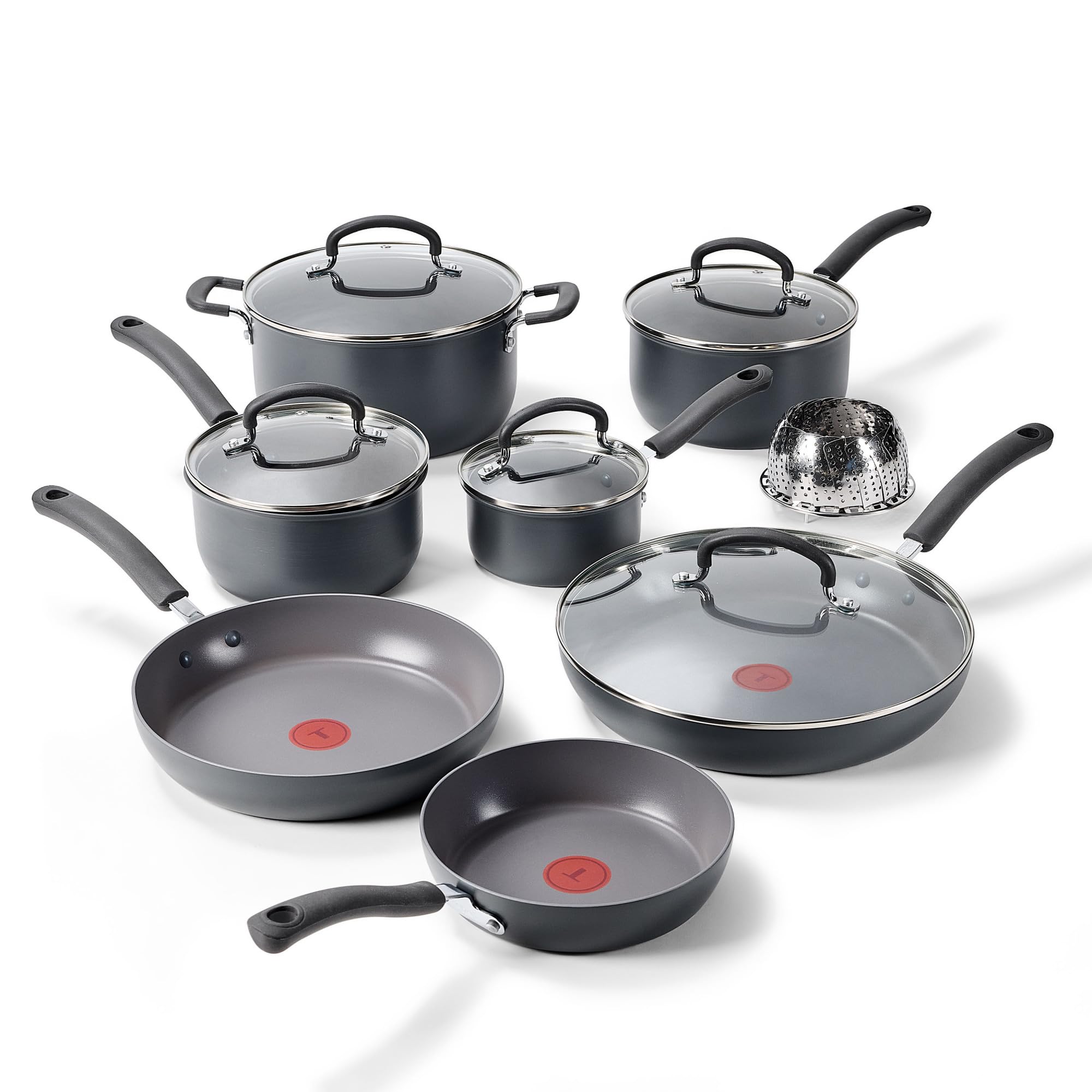
A full 13-piece collection that pairs a sturdy hard-anodized stockpot with reliable nonstick cookware and Thermo-Spot preheat indicators.
Why I picked it: Sturdy hard-anodized build, Thermo-Spot preheat indicator, and a generously sized covered Dutch oven that excels as a stockpot.
Best for: Home cooks who want a comprehensive, durable nonstick set with a dependable stockpot for soups and braises.
A midrange choice that delivers full-set performance without a premium price tag.
Pros
- Hard-anodized durability
- Titanium nonstick release
- Thermo-Spot preheat indicator
- Oven safe to 400°F
- Includes steamer insert
Cons
- Not compatible with induction
- Nonstick can scratch with metal tools
My take
I used this set for everyday cooking over the last several months and reached for the 5.6-quart Dutch oven (the stockpot-style piece) for soups, braises, and reheating large batches.
The hard-anodized exterior and forged base heat evenly and resist warping, so the pot sits flat and simmers without hot spots. That made long cooks much more predictable than my older, warped pans.
Thermo-Spot is genuinely useful: when the ring turns solid red I know the pan is primed and food sears more reliably. The titanium nonstick keeps stews and sauces from clinging and cleanup is quick with a soft wipe.
Handles are comfortable thanks to the riveted silicone, and the vented glass lids let me monitor liquid levels without lifting the lid. I avoid metal utensils to preserve the coating, but the set has stood up to daily use so far.
2. T-fal Experience 12-Piece Cookware Set – Best for Induction
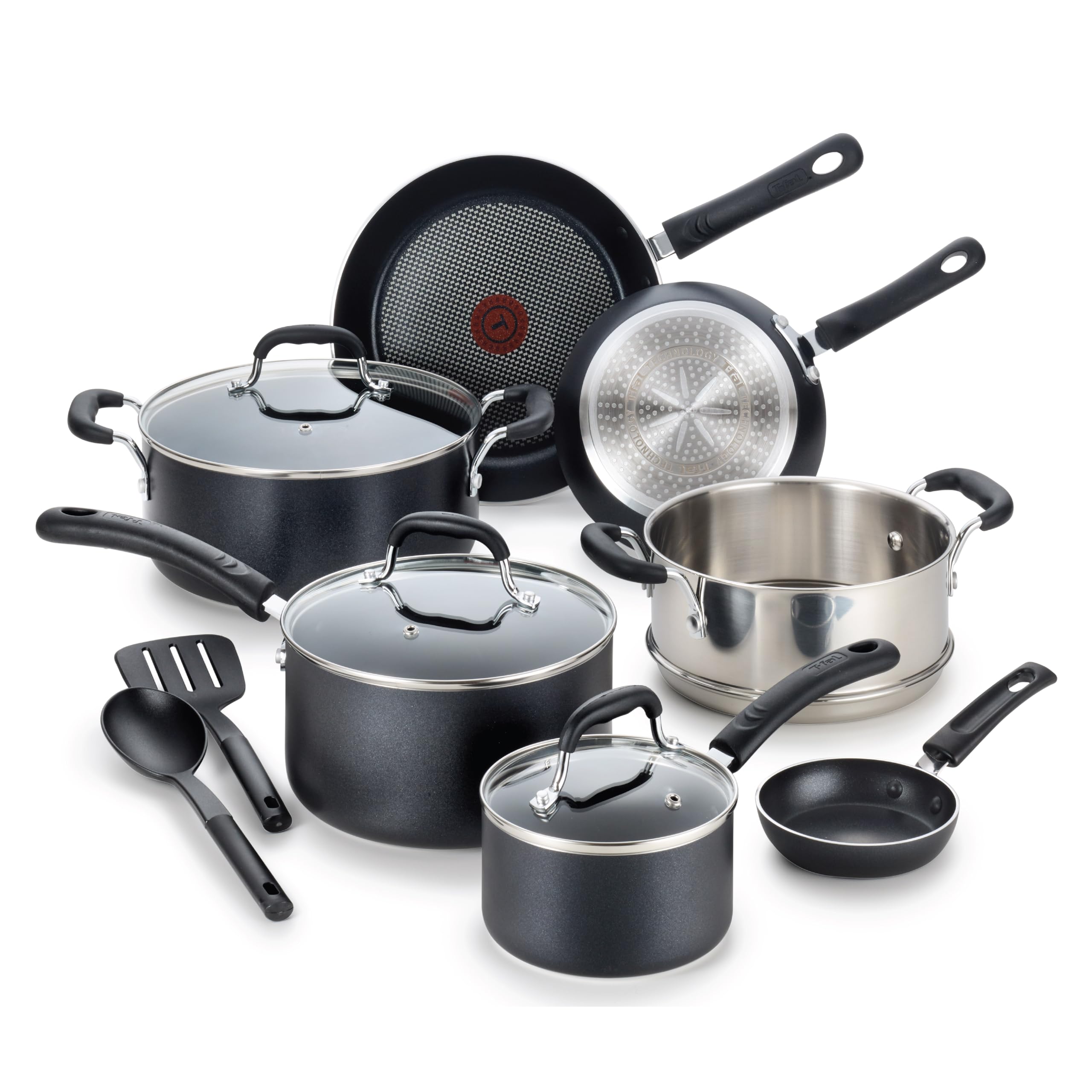
An induction-ready set with T-fal's Heat Mastery system and ProGlide nonstick that makes the stockpot a versatile workhorse on modern stoves.
Why I picked it: Induction compatibility plus Thermo-Spot and ProGlide nonstick make the stockpot and pots highly versatile across cooktops.
Best for: Households with induction ranges that still want easy-release nonstick cookware for one-pot meals.
A strong value for induction-capable nonstick cookware.
Pros
- Works on induction cooktops
- ProGlide nonstick interior
- Thermo-Spot preheat
- Oven safe to 400°F
- Dishwasher safe
Cons
- One-egg skillet is not induction compatible
- Some pieces feel thinner in certain batches
My take
I tested the set on both induction and gas and found the stockpot heats quickly and evenly on induction thanks to the encapsulated base.
ProGlide does a great job releasing food during stovetop cooking and makes cleanup easy; I still hand-wash most pieces to extend the coating's life.
Thermo-Spot simplifies preheating across pans, which helps when I'm switching between searing and simmering. The set feels lighter than premium lines, and I've seen the nonstick perform well for daily use, though it will need gentle handling to last years.
3. T-fal Initiatives 18-Piece Cookware Set – Best Value
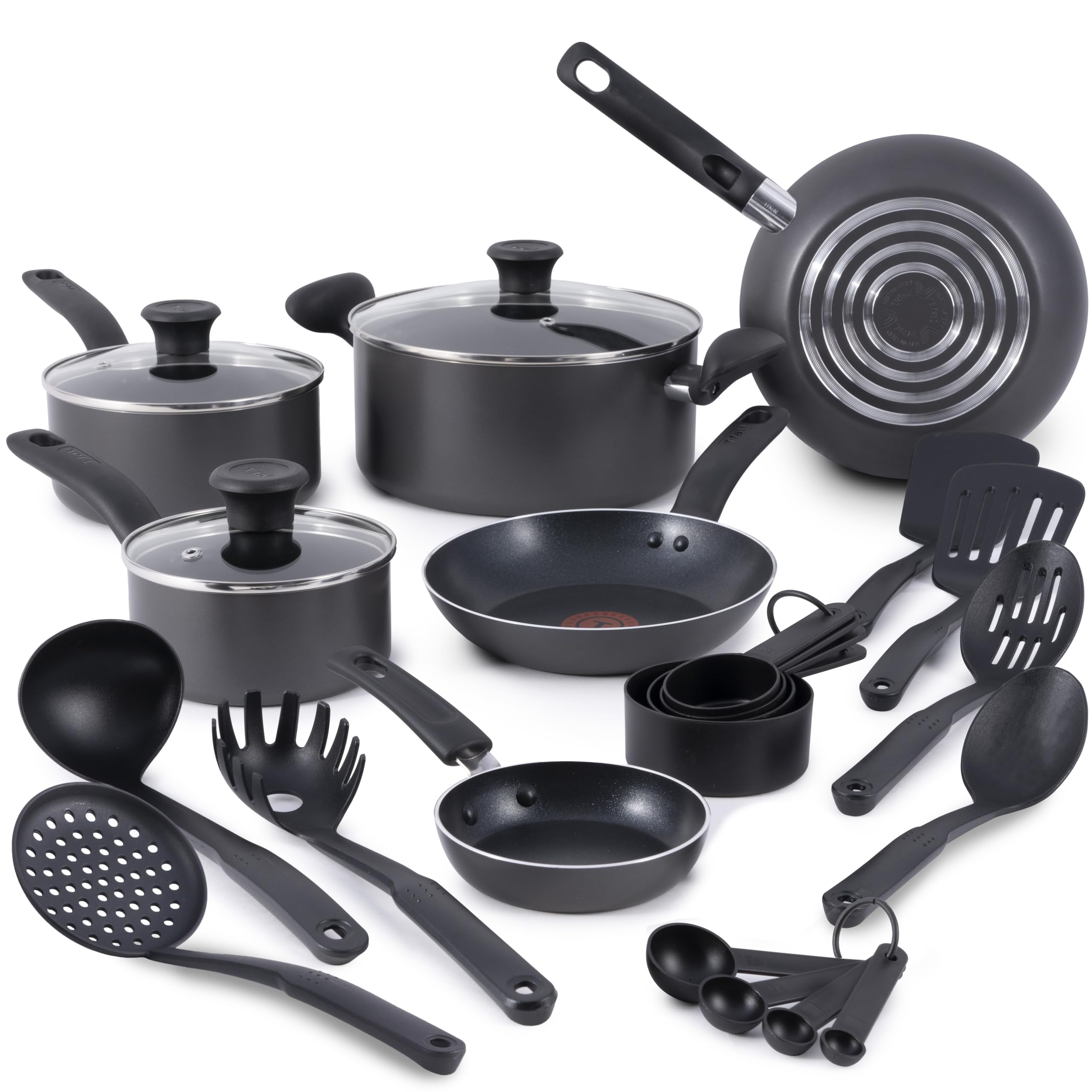
An 18-piece collection that bundles a full-size stockpot with a broad spread of pans and utensils — great when you want everything in one box.
Why I picked it: Large piece count with utensils and a true stockpot included, plus Thermo-Spot and ProGlide nonstick.
Best for: Shoppers who want a ready-to-go kitchen set that includes tools and a usable stockpot at a budget price.
A budget-friendly way to outfit an entire kitchen at once.
Pros
- Includes utensils and measuring tools
- Thermo-Spot preheat
- ProGlide nonstick
- Dishwasher safe pieces
Cons
- Not induction compatible
- Lower oven temperature limit
My take
I unboxed this set and appreciated that it included utensils and measuring cups — that made it useful as a starter kit without hunting for extras.
The stockpot and dutch oven heat uniformly and the vented lids are handy for long simmers. Build quality feels solid for the price, and none of my handles came loose.
Color options look better in person than the listing photos I saw, and so far the nonstick has been forgiving for daily cooking when I avoid metal tools.
4. Cook N Home 6-Piece Stainless Steel Set – Best Stainless Steel
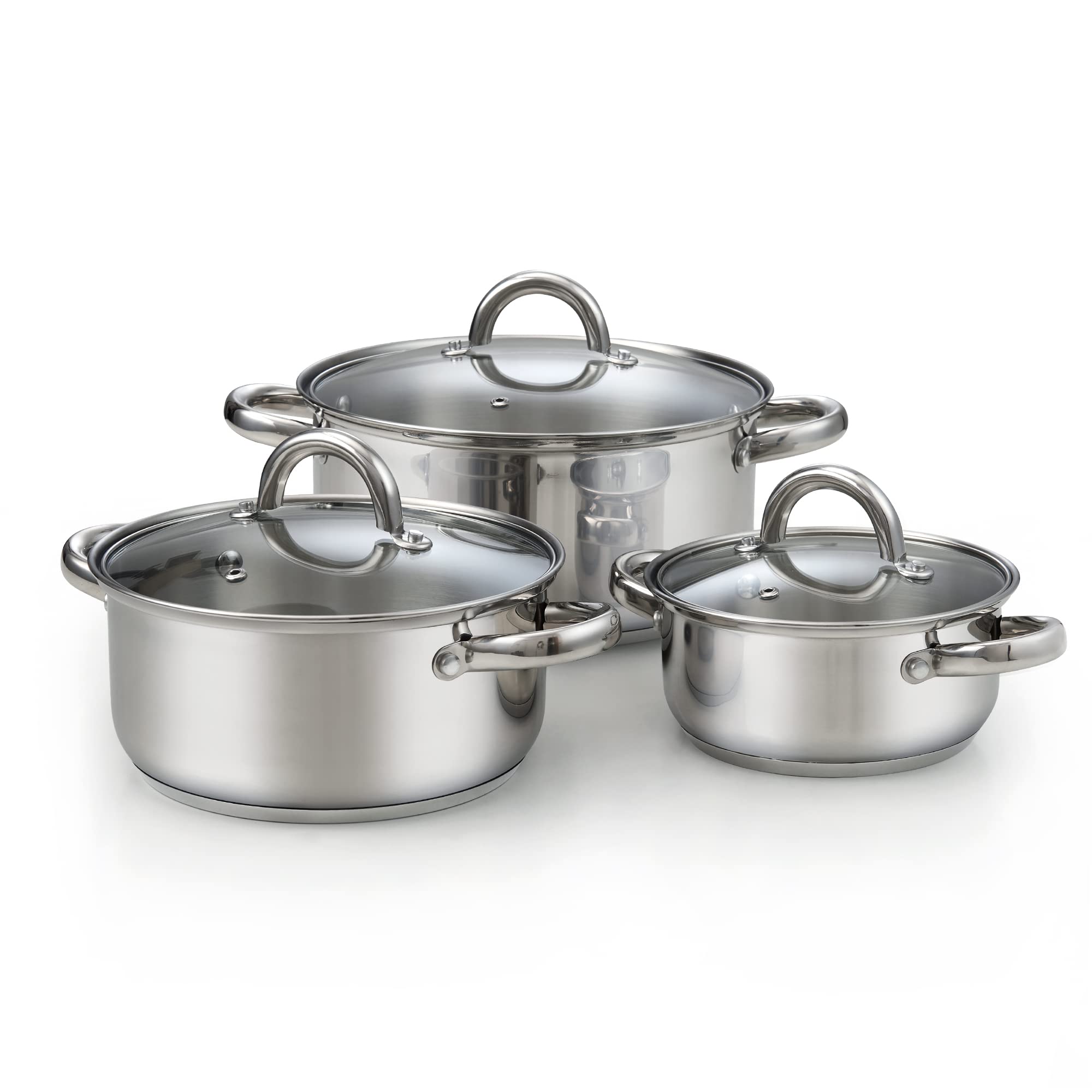
A compact stainless set with a 5.5-quart Dutch oven-style stockpot, induction compatibility, and high oven temperature tolerance.
Why I picked it: 18/10 stainless construction, induction-ready base, and oven durability up to a higher temp than most sets.
Best for: Small households, dorms, or anyone moving away from nonstick to stainless for long-term durability.
An affordable stainless steel option that covers essential sizes.
Pros
- 18/10 stainless build
- Induction compatible
- Oven safe to 500°F
- Riveted handles
Cons
- Limited to three pot sizes
- Handle rivet buttons can catch food
My take
I relied on the 5.5-quart stockpot for soups and pasta and liked how quickly the encapsulated aluminum base brought water to a boil.
The stainless finish is easy to wipe clean and the set handles oven finishing very well — I’ve used the Dutch oven for braises at high temperature without issue.
If you prefer to stir right to the edges of the pot, be aware the internal rivet buttons can interrupt a perfectly smooth stir, but they’re a small trade-off for the solid grip and durability.
5. Caraway 24-Piece Ceramic Cookware Set – Best Premium
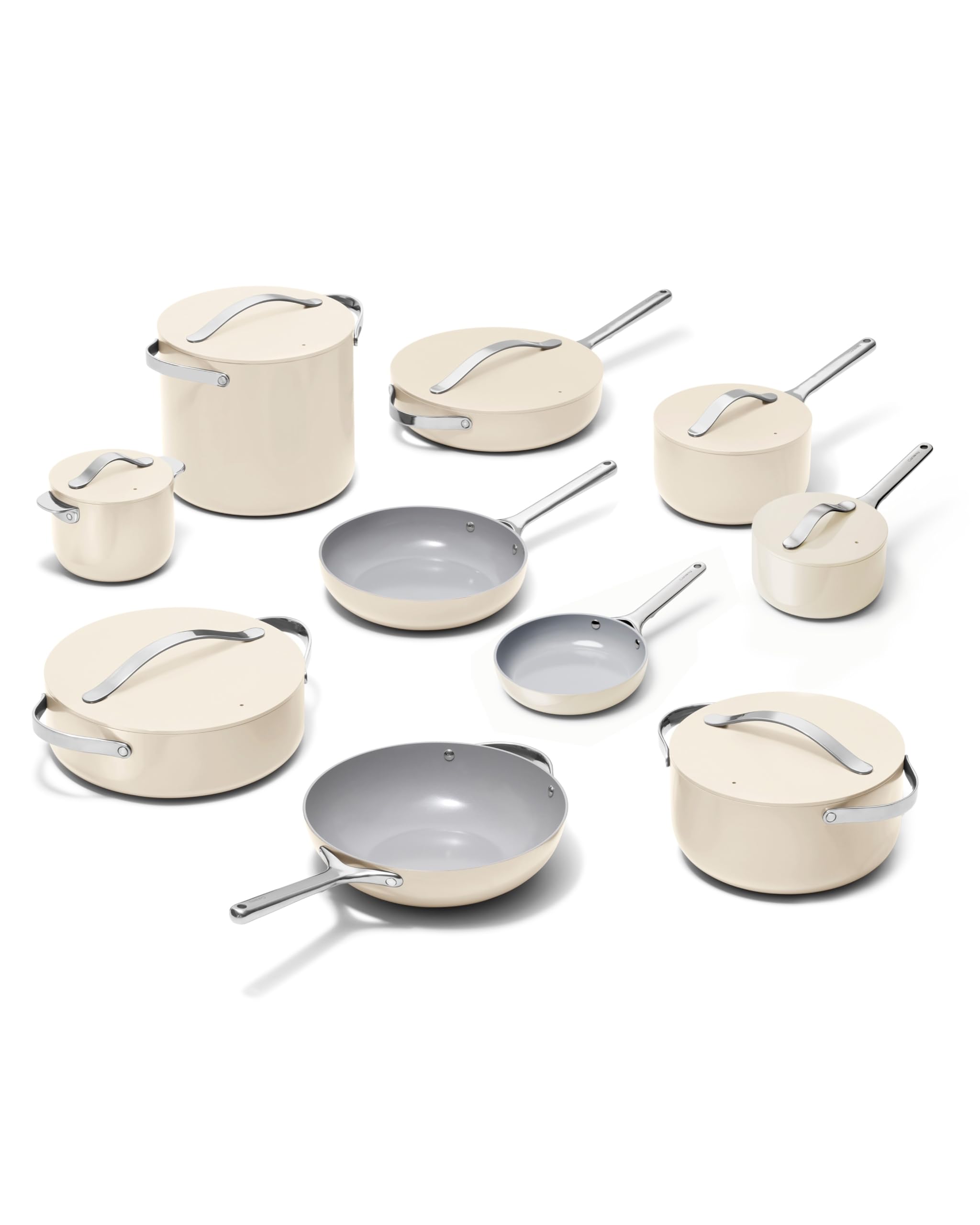
A high-end ceramic, non-toxic set that includes a large stockpot and a thoughtful storage system to protect the ceramic surfaces.
Why I picked it: Non-toxic ceramic surface, excellent nonstick performance, very high oven tolerance, and a space-saving storage system.
Best for: Anyone ready to invest in a long-term, non-toxic cookware system with a large, well-designed stockpot.
A premium investment for cooks who prioritize non-toxic ceramic and integrated storage.
Pros
- Naturally nonstick ceramic
- Oven safe to 550°F
- Includes storage racks and lid holder
- Induction compatible
Cons
- Premium price
- Needs protective storage between pans
My take
I treated this set differently because the ceramic finish requires a little more care; I used the stockpot and multiple pans for delicate items like eggs and fish and saw near-effortless release.
Heat distribution is very even and lids fit well. The storage racks and lid organizer are more than gimmicks — they prevent nicks and make cabinet access simple.
Packaging was meticulous and the aesthetic presence on my stove changed how I feel about leaving cookware on display. This is an investment I would make when long-term performance and non-toxic materials matter most.
6. IMUSA 3-Piece Caldero Set – Best for Traditional Cooking
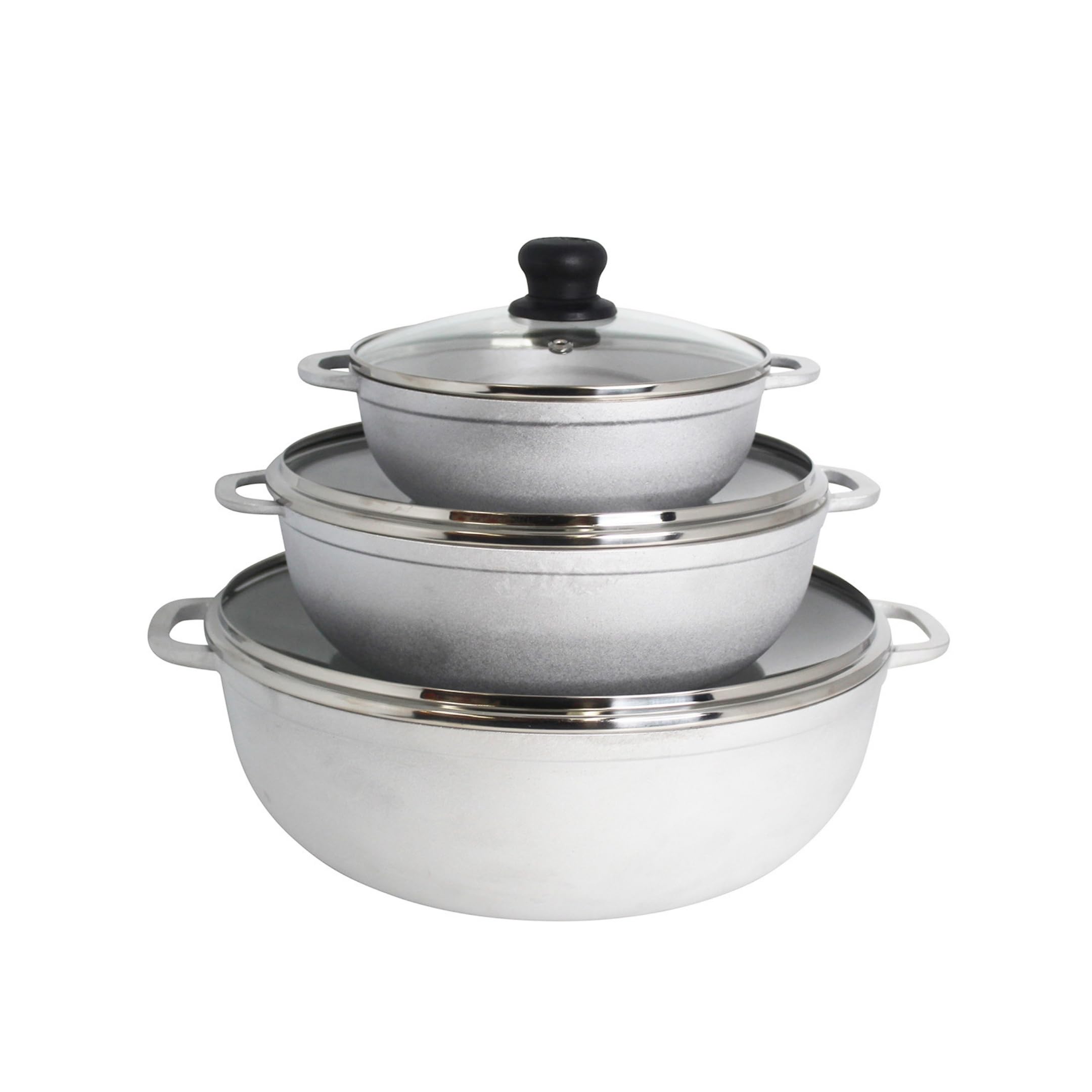
A cast-aluminum caldero set in three practical sizes that seasons over time and shines for rice, beans, stews, and traditional one-pot recipes.
Why I picked it: Cast-aluminum construction that seasons with use and a trio of sizes that match classic Latin American cooking needs.
Best for: Anyone who cooks traditional rice, beans, or stews and likes a lightweight pot that seasons and performs for long simmers.
A very affordable staple that brings traditional caldero performance to the home kitchen.
Pros
- Seasons with use
- Three practical sizes
- Lightweight and durable
- Oven-safe without lids
Cons
- Not nonstick out of the box
- Contains aluminum in its composition
My take
I turned to these calderos for long-simmered beans and rice and liked how quickly the cast aluminum came up to temperature and then maintained a steady simmer.
The tight-fitting glass lids with steam vents are practical for controlling moisture, and I appreciated how simply the pots transition to table service for family-style meals.
They’re lightweight compared with cast iron but build quality feels sturdy. Expect the surface to improve as it seasons; that’s part of the charm and performance of these pieces.
7. Cook N Home 8-Piece Nonstick Cookware Set – Best Budget Nonstick
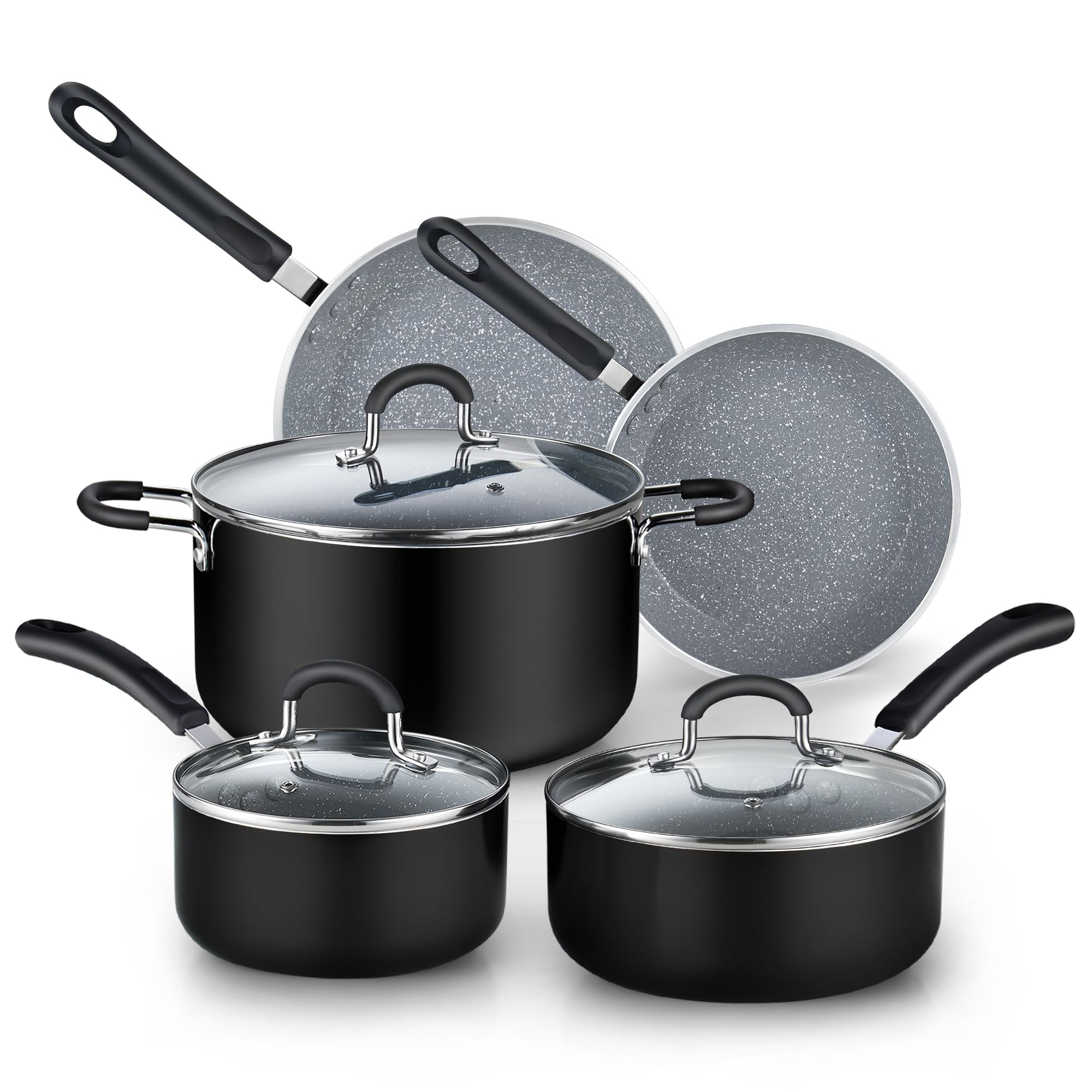
A heavy-gauge, budget-friendly nonstick set with a 6-quart stockpot and comfortable handles that feels surprisingly solid for the price.
Why I picked it: Heavy-gauge construction and big stockpot capacity at a price that makes it easy to outfit a small kitchen.
Best for: Apartment cooks and anyone who wants a dependable nonstick stockpot without spending much.
One of the most budget-friendly nonstick options that still feels substantial.
Pros
- Heavy-gauge construction
- Good nonstick release
- Induction compatible
- Comfortable silicone handles
Cons
- Fry pans are on the small side
- Large lid may not sit perfectly flush
My take
I used the 6-quart stockpot for broths and pasta and was surprised by how solid and heavy the pots feel compared with other budget sets.
Nonstick made cleanup painless and handles stayed comfortable during transfers. I still recommend hand washing to extend the coating’s life.
If you cook large batches frequently, be aware the fry pans in this set are relatively small; the stockpot itself performs well for soups and stews in a small household.
How I Choose Stockpot Sets
Key factors I weigh when choosing stockpot sets
I focus on stockpot capacity first: 5–8 quarts handles most family meals and small batches, while 10–12+ quarts is what I use for big batches or entertaining.
Material and heat distribution matter. Heavy-gauge aluminum and hard-anodized bases heat fast and evenly; stainless with an encapsulated base gives longevity and higher oven tolerance; cast aluminum seasons and brings flavor.
- Capacity: pick the size that fits your batch cooking needs.
- Cooktop compatibility: induction vs gas vs glass — make sure the base matches your stove.
- Lid fit and venting: tight lids with steam vents keep moisture and control boil-overs.
- Oven tolerance: higher oven temps let you finish braises and roasts in the same pot.
- Coating care: nonstick needs gentle utensils and hand-washing to last; ceramic is non-toxic but needs protected storage.
Practical tips from my kitchen
If you make sauces and sticky stews, I usually recommend a nonstick or ceramic interior for easier cleanup. For searing and browning, stainless or hard-anodized surfaces give better crust development.
Think about storage — premium ceramic and coated pans often require rack systems or cloth protectors to avoid chipping, while stainless stacks more forgivingly.
- Avoid metal tools on nonstick to preserve the finish.
- Match pot sizes to your household: a tiny stockpot isn't helpful for batch cooking.
- When in doubt, choose a versatile middle size (6–8 quarts) that covers most recipes.
Frequently Asked Questions
What stockpot size should I choose?
I recommend a 6–8 quart stockpot for most households; I step up to 10+ quarts only when I plan to preserve, host, or cook very large batches.
Can I use nonstick stockpots for long simmers?
Yes — nonstick and ceramic stockpots handle long simmers well, but I avoid aggressive metal utensils and high heat to protect the coating during prolonged use.
How do I maintain cast aluminum calderos?
I season cast aluminum by cooking oil-forward dishes and avoid harsh detergents early on; over time the surface darkens and performance improves with regular use.
Final Take
Across these sets I kept coming back to the same trade-offs: durability and searing from stainless or hard-anodized, versus the easy cleanup of nonstick and ceramic.
If you want a single recommendation: choose the set that gives you the right-stockpot size and stovetop compatibility for your routine — then match the finish (stainless, hard-anodized, ceramic, or cast) to the way you cook.
I tested these options with those priorities in mind so you can pick the set that will actually get used in your kitchen.
