
I tested cordierite stones, a cast-iron pan, and a purpose-made cleaning brush to find durable, high-heat tools that give me crisp crusts and easier cleanup.
I bake a lot of pizza at home and I’ve tried stones, pans, and the odd accessory to push my crust from good to great.
This roundup reflects what I keep using: a thick cordierite stone for big pies, a compact cast-iron pan when I want fast, even heat, and a few practical accessories that cut cleaning time and frustration.
I rely on cordierite for classic brick-oven crusts, cast iron when I want fast heat retention and edge char, and a dedicated brush/scraper to keep stones and salt blocks usable.
1. CucinaPro Round Cordierite Pizza Stone – Best Overall
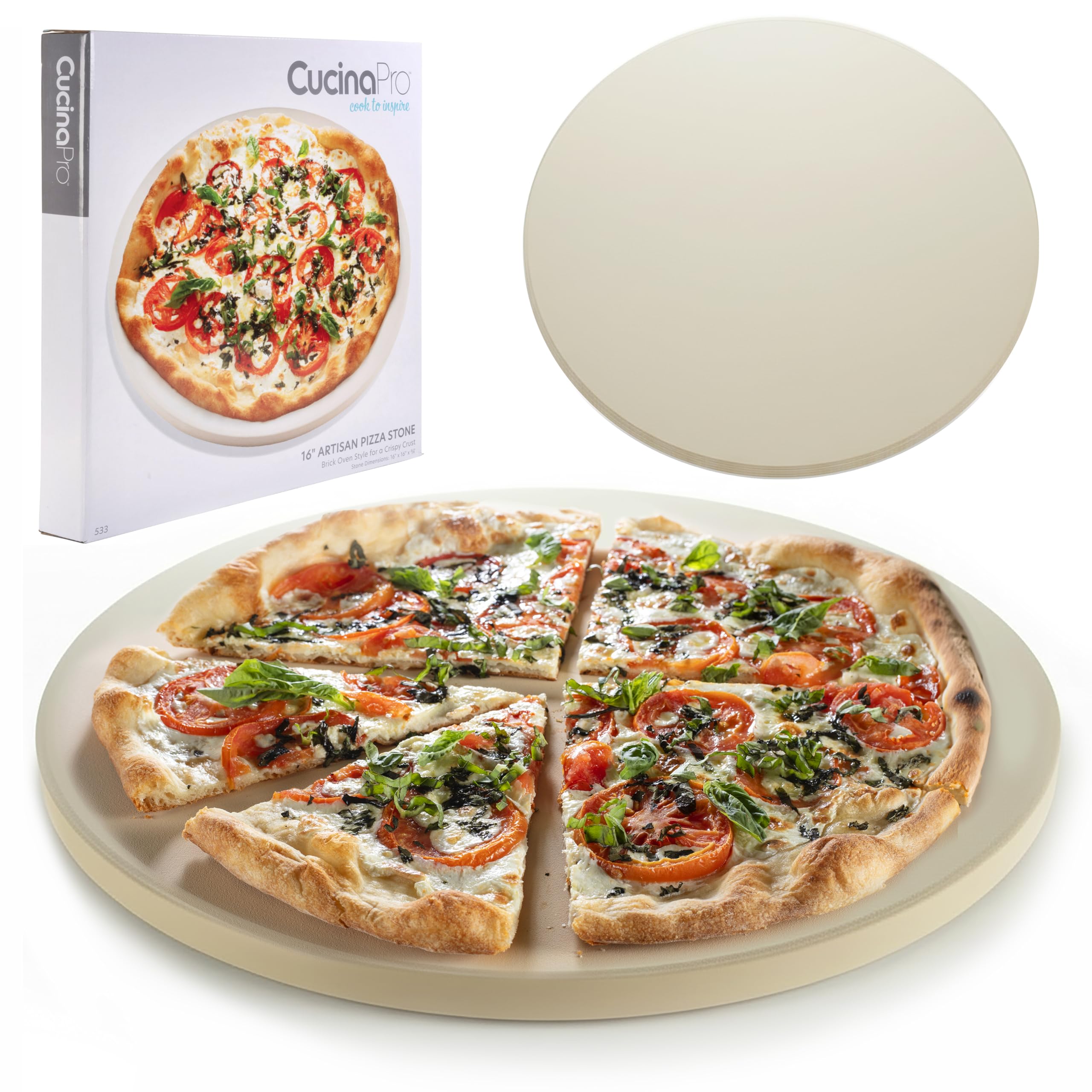
I switched to this extra-thick round cordierite stone when I wanted bigger, restaurant-style pizzas at home. It soaks up moisture, heats evenly, and stands up to high oven and grill temps.
Why I picked it: Large diameter and extra thickness for stable, even heating.
Best for: Home cooks who want big, crispy, brick-oven style pizzas.
Affordable for a heavy, extra-thick cordierite stone.
Pros
- Extra-thick for heat stability
- Large round surface for full-size pizzas
- Absorbent material for crisp crusts
- Durable under high temperatures
Cons
- Gets stained with use
- Heavy to move in and out of oven
My take
I bought this to replace a rectangular stone because circle-shaped pizzas belong on a round surface, and the extra thickness gave me more confidence during high-heat bakes.
The cordierite absorbs moisture from the dough so my crusts come out crisp instead of soggy, and I routinely preheat it in the oven so it’s fully saturated with heat before a bake.
There was a faint odor the first time I preheated it, but that disappeared after a short burn-in cycle; since then I haven’t noticed off-gassing.
Cleanup is simple: I scrape off charred bits after it cools and wipe it down—stains and dark spots are normal and don’t affect performance, they just show a stone that’s been used hard.
2. Outset Pizza Stone Cleaning Brush & Scraper – Best Accessory
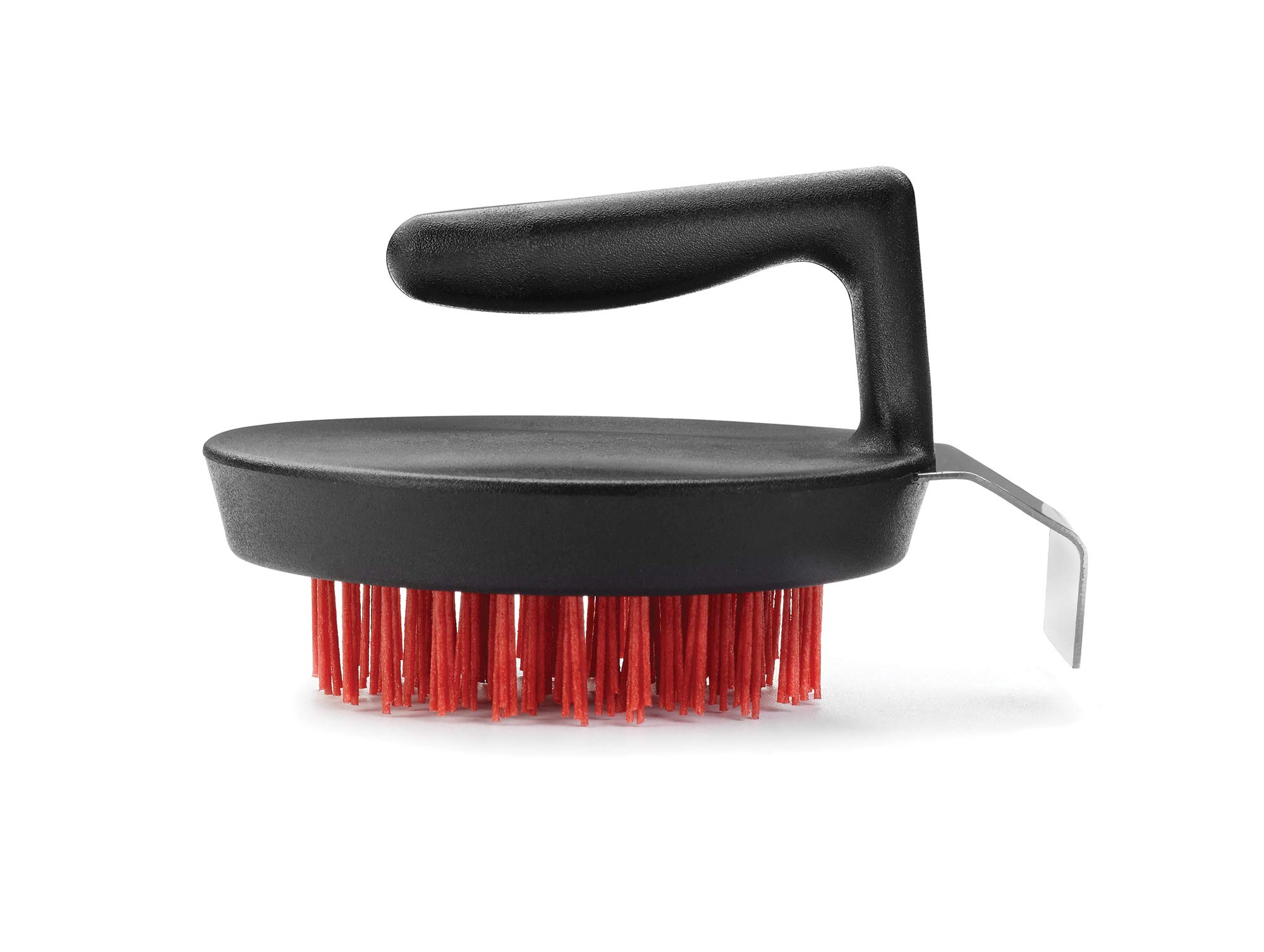
I keep this nylon-bristle brush and stainless scraper handy whenever I cook on salt blocks, stones, or cast iron. It removes stuck cheese and char without gouging surfaces.
Why I picked it: Soft-yet-sturdy nylon bristles plus a stainless scraper for stubborn residue.
Best for: Anyone who wants an easy, safe way to clean stones and salt blocks.
Low-cost, practical accessory that extends cookware life.
Pros
- Gentle nylon bristles
- Stainless steel scraper included
- Ergonomic handle
- Resists rust for outdoor use
Cons
- Handle pivot can loosen
- Not a replacement for heavy-duty scrapers
My take
I use this brush on my Himalayan salt block and pizza stones to lift baked-on cheese and dough without scratching the surface.
The bristles are firm enough to scrub away residue but soft enough to avoid gouging, and the scraper removes the worst bits quickly.
The grip is comfortable and I’ve hung it on my grill hook between uses; the handle can rotate for compact storage, though the pivot can loosen over time if I don’t tighten it occasionally.
For routine maintenance of stones and salt tiles this is the tool I reach for first—simple rinsing and air drying afterward keeps it ready for the next pizza night.
3. Cuisinel Cast Iron Pizza Pan 13.5-inch – Best for Heat Retention
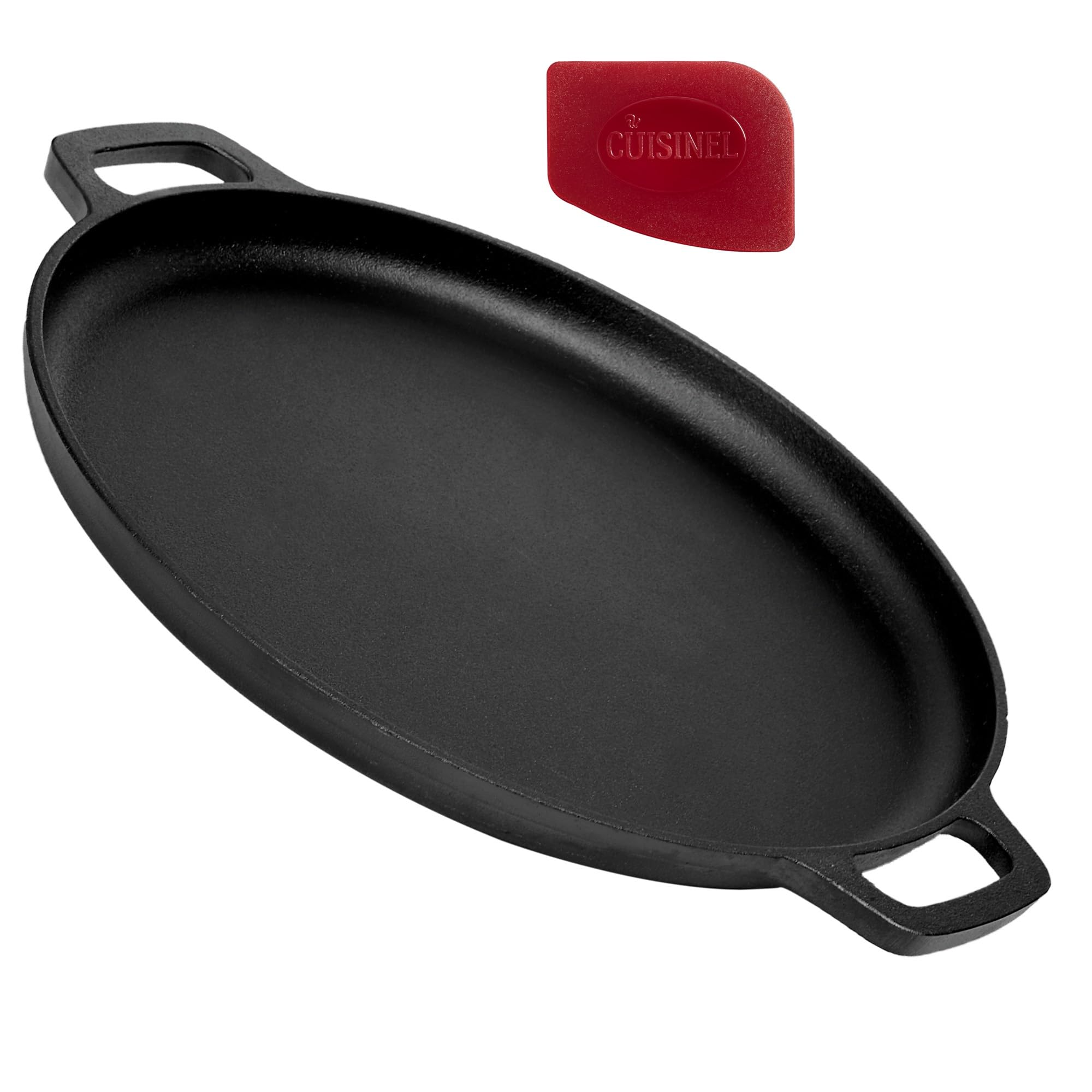
When I want blistered crust and unbeatable edge char, I grab this pre-seasoned cast-iron pan. It holds heat longer than thin steel and doubles as a griddle and roasting tray.
Why I picked it: Pre-seasoned cast iron that locks in heat for crisp crusts.
Best for: People who want fast, even browning and a multi-use pan.
Mid-range investment that’s essentially a lifetime pan with care.
Pros
- Excellent heat retention
- Pre-seasoned for immediate use
- Versatile for stovetop, oven, and grill
- Durable one-piece construction
Cons
- Heavy to handle
- Requires maintenance to prevent rust
My take
I’ve baked a dozen pizzas on this pan and the crust comes out consistently crisp when I preheat the pan in the oven before adding the dough.
It arrived pre-seasoned and improved with each bake after I rubbed on oil and re-heated it—regular seasoning smoothed the surface and improved release.
Cast iron is heavy and will rock on imperfect glass cooktops; I sanded and re-seasoned mine to get a flatter contact patch, but most users won’t need that step.
When I want a fast sear or to finish toppings under a broiler, this pan beats a stone for speed and char—just remember to dry and oil it after cleaning to keep the seasoning intact.
4. GOURMEO Cordierite Pizza Stone with Peel – Best Value Set
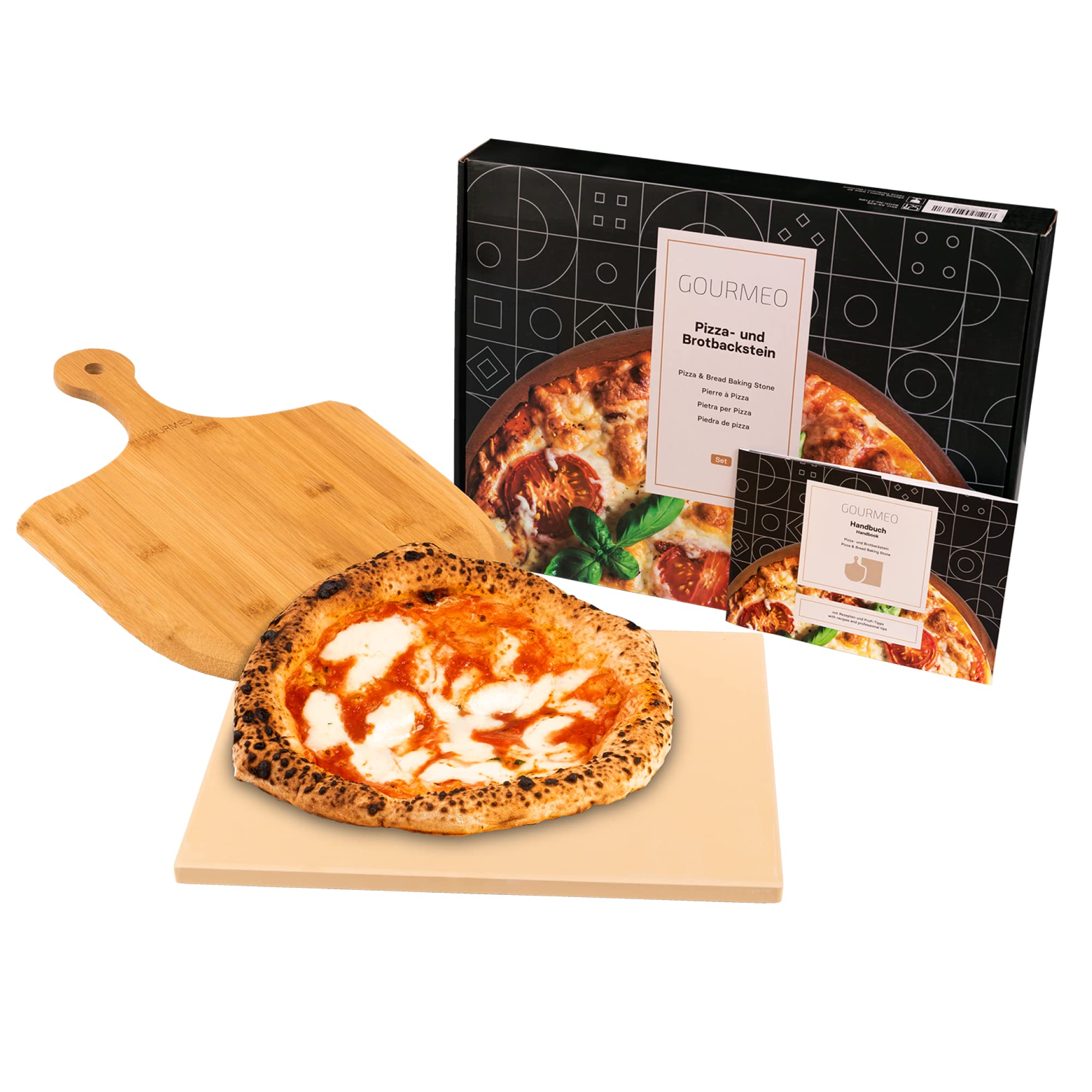
I like this stone-and-peel set for its balanced thickness and included paddle—useful when I’m baking pizza or sourdough and want an easy way to slide pies in and out.
Why I picked it: Stone plus peel gives everything needed for oven or grill baking.
Best for: Home bakers who want a ready-made set for pizzas and breads.
Budget-friendly set that includes a wooden peel.
Pros
- Includes peel for easy handling
- Good heat retention
- Solid drainage for crisp crust
- Works in ovens and grills
Cons
- Can be heavy to lift
- Some units may crack if mishandled
My take
I used this stone for sourdough and pizza, and it held heat beautifully—my bread developed good oven spring and crunchy bottoms.
The peel makes sliding pies onto the stone straightforward, which is a big help when I’m managing a hot oven.
I’ve seen one instance where a stone cracked on first use due to handling, though the seller resolved that report; I treat mine gently and let it preheat fully to avoid thermal shock.
Cleaning can be fiddly—stuck bits sometimes adhere unpredictably—so I scrape and wipe it right after it cools to keep it usable.
How I Choose a Pizza Stone or Pan
Material and Cooking Style
I pick cordierite when I want a true brick-oven feel because it soaks up moisture and produces crispy bottoms. For fast heat and edge char, I use cast iron.
If I need something multi-purpose—searing, roasting, or stovetop work—I reach for cast iron. For direct-heat grilling or authentic oven-baked crusts, cordierite is my go-to.
- Cordierite: great moisture absorption and even heat; can stain but stays effective.
- Cast iron: superb heat retention and browning; requires seasoning and care.
- Steel: fastest heat transfer, great for quick char but less forgiving for delicate doughs.
Size and Thickness
I match the stone size to my peel and oven so I can slide pizzas on and off without trouble.
Thicker stones heat more evenly and resist cracking, but they’re heavier—so I balance thickness with how often I plan to move it.
- Choose a diameter that fits your oven with room to preheat.
- Extra-thick stones reduce thermal shock and improve temperature stability.
Cleaning and Maintenance
I scrape charred bits after the stone cools and wipe with a damp cloth; I avoid soap on cordierite because it can absorb odors.
For cast iron, I rinse with hot water, remove stuck debris, dry thoroughly, and re-oil to protect the seasoning.
- Use a nylon brush and stainless scraper for stubborn residue.
- Don’t soak stones or let them stay wet—drying prevents odor and damage.
Using Stones on Grills and Ovens
I put stones in the oven during preheat so they come up to temperature with the appliance, reducing thermal shock.
On a grill I let the stone warm gradually over indirect heat before moving to direct heat; cordierite tolerates high temps but benefits from controlled heating.
- Always preheat with the stone inside the oven or grill.
- Avoid abrupt temperature changes to prevent cracking.
Frequently Asked Questions
How do I clean a pizza stone without damaging it?
I scrape off burnt-on bits after the stone cools and wipe with a damp cloth. I avoid soap on cordierite because it can absorb scents; for tough residue I use a nylon brush and scraper.
Can I use a stone on the grill and in the oven?
Yes. I use cordierite stones on both grills and ovens. I always preheat gradually to avoid thermal shock and let the stone come to full temperature with the appliance.
Do cast-iron pizza pans need seasoning?
Absolutely. I maintain cast iron by heating, applying a thin layer of oil, and wiping it after cooling. Regular seasoning improves release and prevents rust.
Final Take
If I had to pick one all-rounder, the thick cordierite stone gives the most consistent, brick-oven results for home baking.
I keep cast iron around when I want speed and char, and the Outset brush lives by my oven to keep everything ready for the next bake.
Choose the tool that matches how you cook: size, material, and how much handling you’re willing to do will determine the best fit for your kitchen.
