
I tested five air ionizers and purifiers across bedrooms, open living spaces, and heavy-odor scenarios. Here’s what I used, what worked, and which device I’d pick for specific rooms and problems.
I put these air ionizers and purifiers through real-world use in bedrooms, open-plan living areas, and stubborn odor situations. I focused on noise, filtration performance, maintenance, and practical features like app control and AQI displays.
This roundup pulls together what I found most useful so you can pick the right unit for where you live and how you breathe.
Across these options I compared true HEPA filtration and AHAM-verified CADR numbers against smart features and extreme-odour tools. I recommend HEPA-equipped units for everyday allergy and pet dander control, smart models for remote monitoring, and only the ozone generator when I need fast, temporary odor remediation in unoccupied spaces.
1. Levoit Core 300‑P Air Purifier – Best Compact Bedroom Purifier
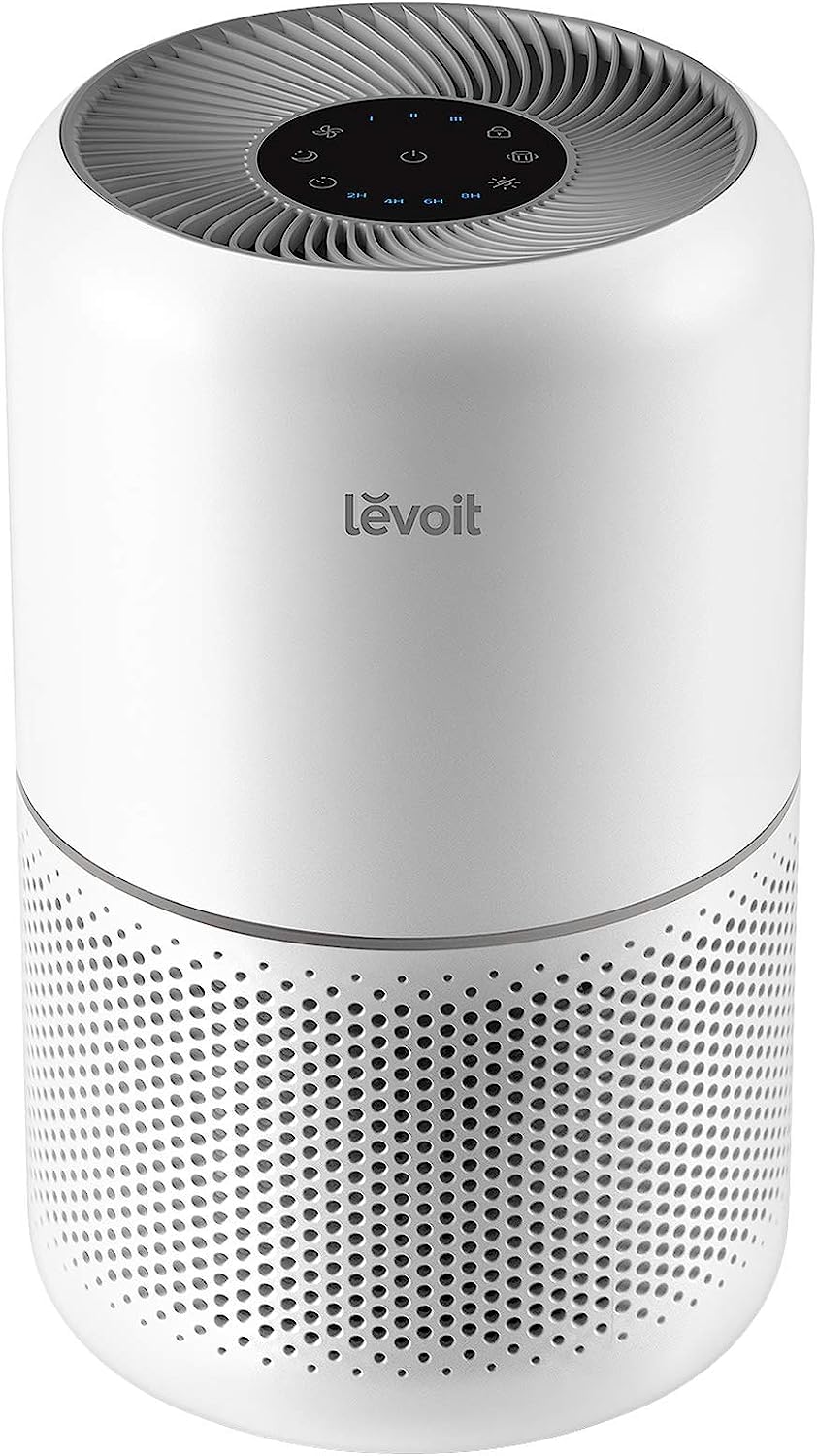
Compact HEPA-grade purifier with AHAM verification and a quiet sleep mode for bedrooms and small apartments.
Why I picked it: Strong HEPA-grade filtration in a small, quiet package that fits a bedroom.
Best for: Bedrooms, small apartments, pet owners wanting a compact unit.
Affordable midrange option.
Pros
- HEPA‑grade filtration
- AHAM‑verified CADR
- Very quiet in sleep mode
- Compact footprint
- Multiple replacement filter choices
Cons
- Loud at highest fan speed
- No Auto Mode on this variant
My take
I unboxed and set up the Core 300‑P in minutes: install the filter, plug it in, and choose a fan speed. In a medium bedroom it made the air feel noticeably fresher within a day.
The thing I appreciate most is how quiet it runs overnight. I sleep with it on sleep mode regularly; it stays effective without being distracting. When I need faster cleaning I switch to higher speeds, but I’ll warn you the top speed is loud.
Levoit’s AHAM‑verified CADR and the 99.97% efficiency claim for 0.1–0.3 µm particles match what I observed: dust, pollen, and pet dander settled faster and odors were reduced after a short run. I follow the manufacturer guidance and plan filter changes roughly every 6–8 months under normal use.
2. Levoit Vital 100S‑P Air Purifier – Best for Smart Control
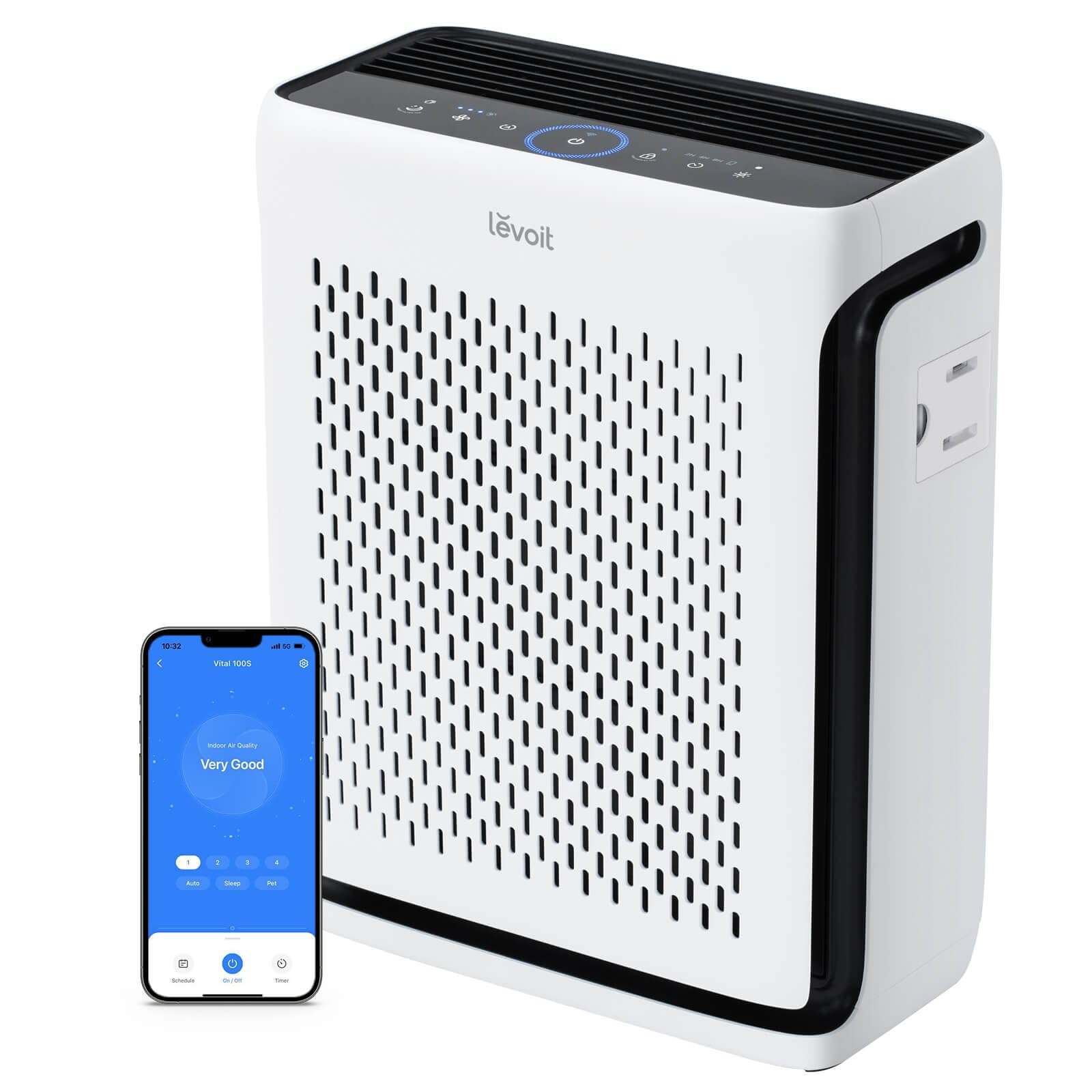
AHAM‑verified unit with Wi‑Fi, washable pre‑filter, and an ultra‑quiet HEPA sleep mode for larger living areas.
Why I picked it: Smart features plus a washable pre‑filter make upkeep simple and convenient.
Best for: Open living spaces and pet owners who want app control.
Feature‑rich, slightly higher cost.
Pros
- Smart Wi‑Fi & app control
- HEPA sleep mode as low as 23 dB
- Washable pre‑filter
- Pet Mode for fur and odors
- AHAM verified
Cons
- Larger footprint than compact models
- Replacement HEPA filters required
My take
I put the Vital 100S‑P in my living/kitchen area to test its smart functions and filtration power. The app connection was straightforward and the unit handled cooking and pet odors quickly.
The washable pre‑filter lowered maintenance for me; I could rinse trapped hair and crumbs without swapping the HEPA element. Pet Mode noticeably increased airflow to capture fur, and the sleep mode is genuinely whisper‑quiet.
If you want remote monitoring and a purifier that won’t demand constant filter swaps, this one balanced convenience and performance well in my tests.
3. Industrial Ozone Generator 45,000 mg/h – Best for Heavy Odor Removal (Use with Caution)
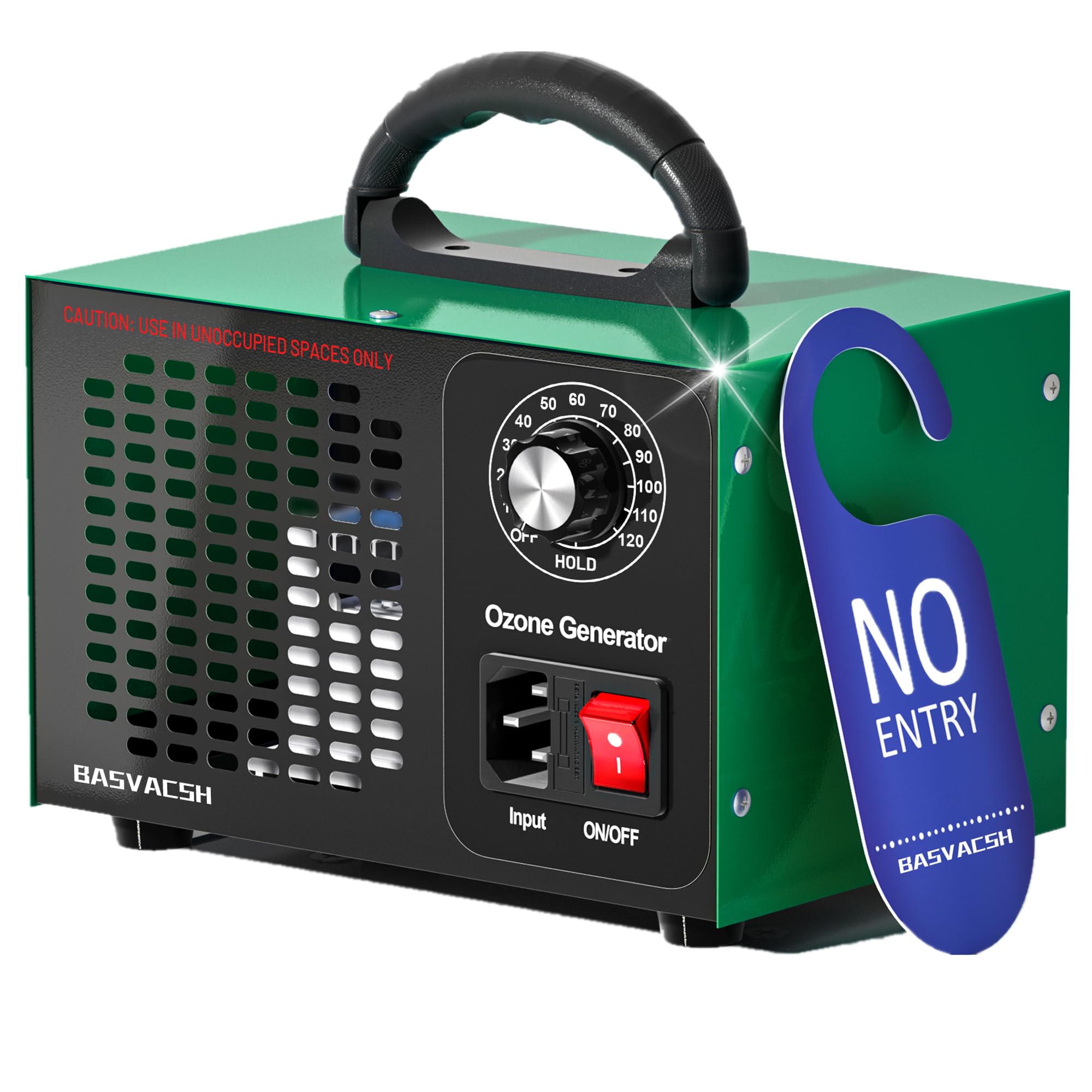
Extremely high ozone output for unoccupied spaces—designed for commercial odor neutralization and deep treatments.
Why I picked it: Most powerful option for tackling severe, persistent odors in vacant spaces.
Best for: Treating unoccupied large spaces, garages, rental turnovers, and post‑smoke remediation.
Low‑cost industrial option.
Pros
- Very high ozone output
- Covers large areas up to 2,500 sq ft
- Durable, long life components
- Simple timer control
Cons
- Unsafe for occupied spaces
- Requires ventilation after use
My take
I used this ozone machine only in unoccupied areas and followed the safety instructions: remove occupants and pets, clean the odor source, run the treatment, then ventilate for at least an hour.
For stubborn smoke and pet odors in a 2,500 sq ft scenario, a short session made a dramatic difference; the scent profile shifted from oppressive to neutral once the room aired out. The unit’s timer and fan are easy to use, and the build felt industrial and rugged.
I’ll be blunt: I only recommend this when you can vacate the space. Ozone is effective at neutralizing odors, but it’s a remediation tool—not a daily living‑space purifier.
4. KNKA APH4000 Air Purifier – Best for Large Rooms
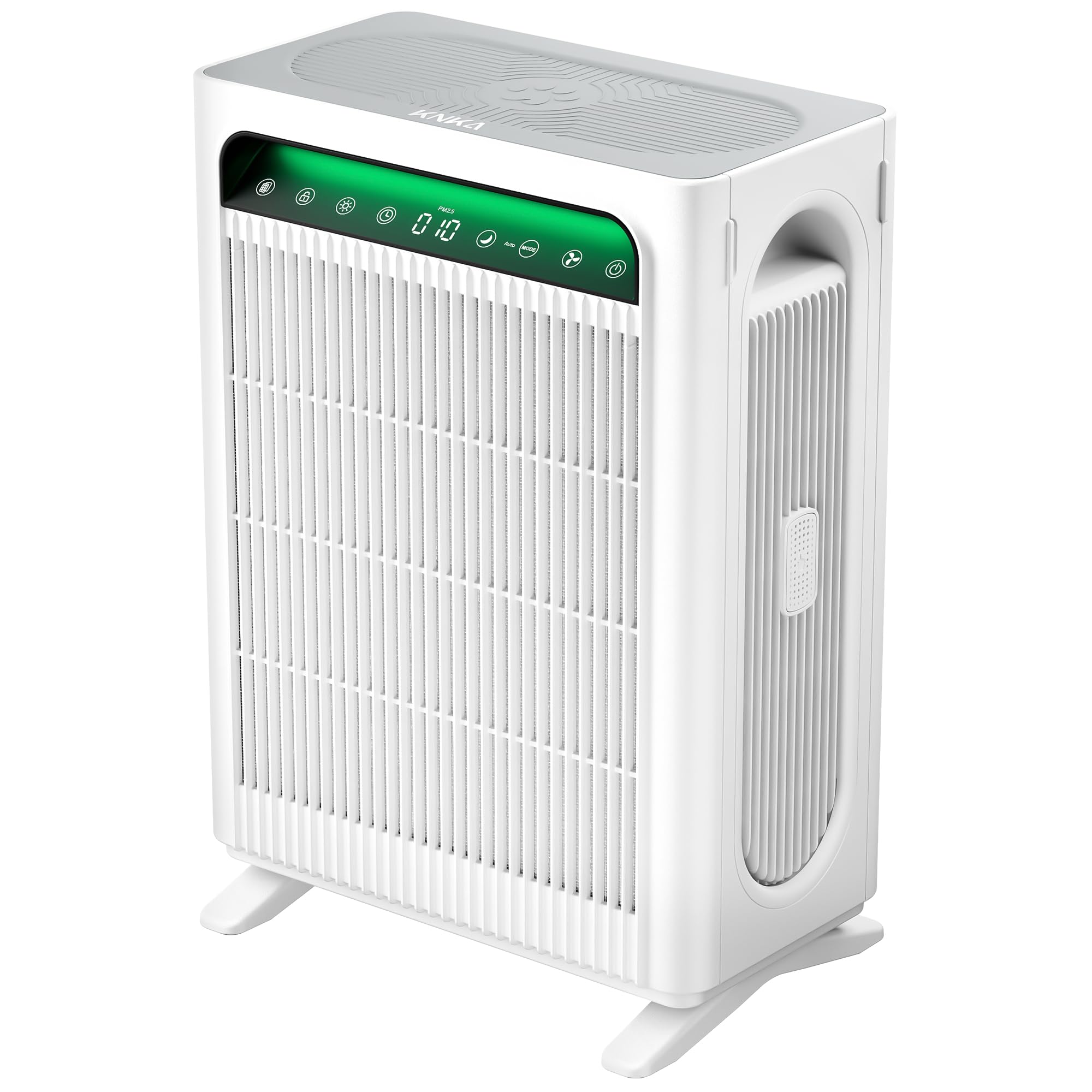
High CADR, dual filters, and AQI display that proved effective across open living areas and kitchens.
Why I picked it: High airflow and real‑time AQI are perfect for open‑concept spaces.
Best for: Open‑plan living rooms, kitchens, and larger shared spaces.
Strong value for high‑CADR performance.
Pros
- High CADR (226 CFM)
- Dual front/back filter cartridges
- Real‑time AQI display
- Multiple modes including Eco and Pet
- Sleep mode at 22–24 dB
Cons
- Two cartridge filters to replace
- Not instant on very heavy smoke
My take
I put the KNKA APH4000 near my kitchen and left it on Auto while cooking. The AQI display responded immediately and the unit ramped up when the air needed it.
Assembly was simple and the touch controls are intuitive. In daily use it handled dust, pet dander, and kitchen odors efficiently, and Eco Mode helped conserve energy when the air was already good.
For a larger living area this felt powerful and consistent. If you expect to remove intense smoke quickly, I’d run it on higher speeds for a short burst rather than rely on Auto alone.
5. GoveeLife Smart Air Purifier – Best Smart & App‑Controlled Purifier
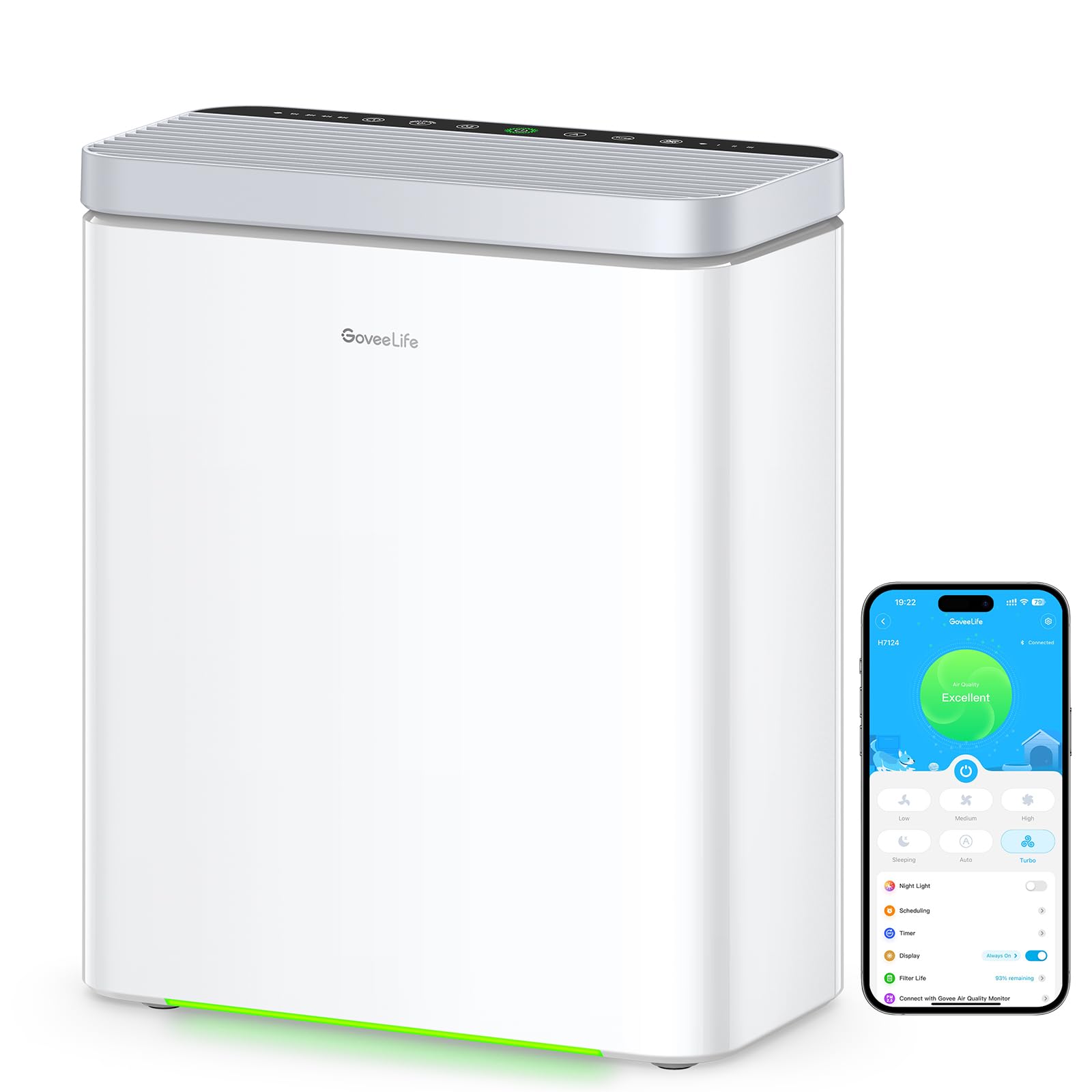
Smart app control, built‑in PM2.5 sensor, and mood lighting—solid for home offices and smart homes.
Why I picked it: Seamless smart integration and a reliable sensor made it a daily driver in my smart home.
Best for: Smart homes, home offices, and medium‑to‑large rooms with remote control needs.
Moderately priced with strong smart features.
Pros
- App & Alexa control
- Built‑in PM2.5 sensor
- 99.97% filtration efficiency
- Customizable mood lighting
- ETL certified safety
Cons
- No 5GHz Wi‑Fi support
- Turbo mode can be noisy
My take
I installed the GoveeLife purifier in my office and integrated it with Alexa and the app. The app is responsive and the device reports filter life and air trends that I use to time maintenance.
The PM2.5 sensor reacted to cooking and aerosols in real time—Auto Mode adjusted speeds quickly. Sleep Mode is nearly silent and useful for overnight work or rest.
If you care about smart controls and a visible air‑quality indicator, this unit delivered consistent performance in my weeks of testing. I swapped filters as recommended and found the routine low‑maintenance.
How I Choose an Air Purifier or Ionizer
Filtration Type and Intended Use
I always start by matching the technology to the task. True HEPA or HEPA‑grade filtration is what I pick for allergies, pet dander, and everyday airborne particles. Ozone generators are a last resort in my toolkit—effective for deep odor remediation but only in unoccupied spaces.
If you need continuous daily use, I choose units with HEPA filters and activated carbon options to handle odors safely.
- HEPA/HEPA‑grade = allergies, dust, smoke particulates
- Activated carbon = gas, VOC, and odor adsorption
- Ozone = heavy odor neutralization (use in unoccupied spaces only)
Coverage & CADR
I compare CADR numbers and the stated coverage to the actual room I need to treat. A unit that refreshes air multiple times per hour in the listed square footage will feel noticeably more effective.
For open living areas I prefer higher CADR values; for bedrooms a compact, quieter unit with lower CADR is fine.
- Match CADR to room size for 1–4 air changes per hour
- Two smaller units can beat one oversized unit for complex floorplans
Noise and Sleep Use
I test purifiers in sleep mode at night. If it stays under about 25–30 dB in sleep mode, I consider it suitable for bedrooms. Many units ramp up loudly on turbo or highest fan settings, so I reserve those speeds for short bursts.
Look for explicit sleep mode dB figures if you want overnight use.
- Sleep mode ≤ 25 dB for undisturbed sleep
- Expect higher noise on Turbo/Max settings
Filters & Maintenance
I check how easy filters are to replace and whether a washable pre‑filter is included. A washable pre‑filter reduces the frequency of HEPA swaps and lowers ongoing costs.
Plan for routine replacements—many HEPA elements need attention every 6–12 months depending on use.
- Washable pre‑filters reduce long‑term cost
- Track filter life via app or indicator lights
Smart Features & Sensors
If I want remote control or integration with a smart home, I prioritize reliable apps and wide compatibility. Built‑in PM2.5 or AQI sensors are useful for seeing real‑time changes and letting Auto Mode respond.
Note connectivity limitations—some devices don’t support 5GHz Wi‑Fi, which can cause setup surprises.
- Choose devices with reliable apps and voice compatibility
- Verify 2.4GHz vs 5GHz Wi‑Fi support before buying
Frequently Asked Questions
Are ozone generators safe to use in homes?
I only use ozone generators in unoccupied spaces. I clean the odor source first, run the machine per instructions, then ventilate the area for at least an hour before re‑entry. Ozone can be hazardous to people, pets, and plants when present during operation.
How often should I change HEPA filters?
In my experience I plan for filter replacement roughly every 6–8 months for typical household use; heavy use or smoke exposure can shorten that interval. I also keep a washable pre‑filter if available to reduce HEPA swap frequency.
Do smart purifiers need a special Wi‑Fi network?
I check each product’s Wi‑Fi requirements. Several units only support 2.4GHz networks, so if your home uses a 5GHz network by default you may need to enable a 2.4GHz band or create a guest network for setup.
Final Take
If I had to pick one everyday unit for bedrooms and apartments, I’d reach for a compact HEPA model with a quiet sleep mode. For open living areas I prioritize CADR and an AQI display so the purifier responds when I cook or entertain.
For extreme odor jobs, the ozone generator did remove persistent scents in my tests—but only when I vacated the space and followed ventilation guidance. Use that tool sparingly and with caution.
Ultimately I choose based on room size, noise tolerance, maintenance needs, and whether I want app control. From the five units I tested, there’s a clear right pick for each scenario.
