
I tested a range of .155-inch trimmer lines — bulk spools, pre-cut segments, and premium reinforced options — to find the most durable, easy-to-load, and cost-effective choices for heavy weeds, walk-behind mowers, and do
I spend a lot of time cutting tough grass, matted kikuyu, and overgrown fence lines, so I tested a variety of .155-inch trimmer lines to find what actually lasts and cuts cleanly. I focused on durability, feeding and compatibility, cutting shape, and how convenient each format is to reload.
My tests included square, twisted, and edged profiles, both in bulk spools and pre-cut segments. I used walk-behind trimmers, wheeled string mowers, and handheld gas and battery heads to see which lines handled thick weeds, rocks, and frequent impact without wasting time on constant reloads.
Below I highlight the standout options and explain when I reach for each one.
I compared square vs. twisted and edged profiles, bulk spools vs. pre-cut segments, and standard vs. reinforced constructions. Square and edged shapes cut aggressively; Gatorline-style reinforced and armored lines resist breakage best but can cost more. Pre-cut segments save time on walk-behind trimmers; bulk spools are better value for frequent use.
1. ANLEOLIFE .155 Commercial Square Trimmer Line (3 lb) – Best Overall
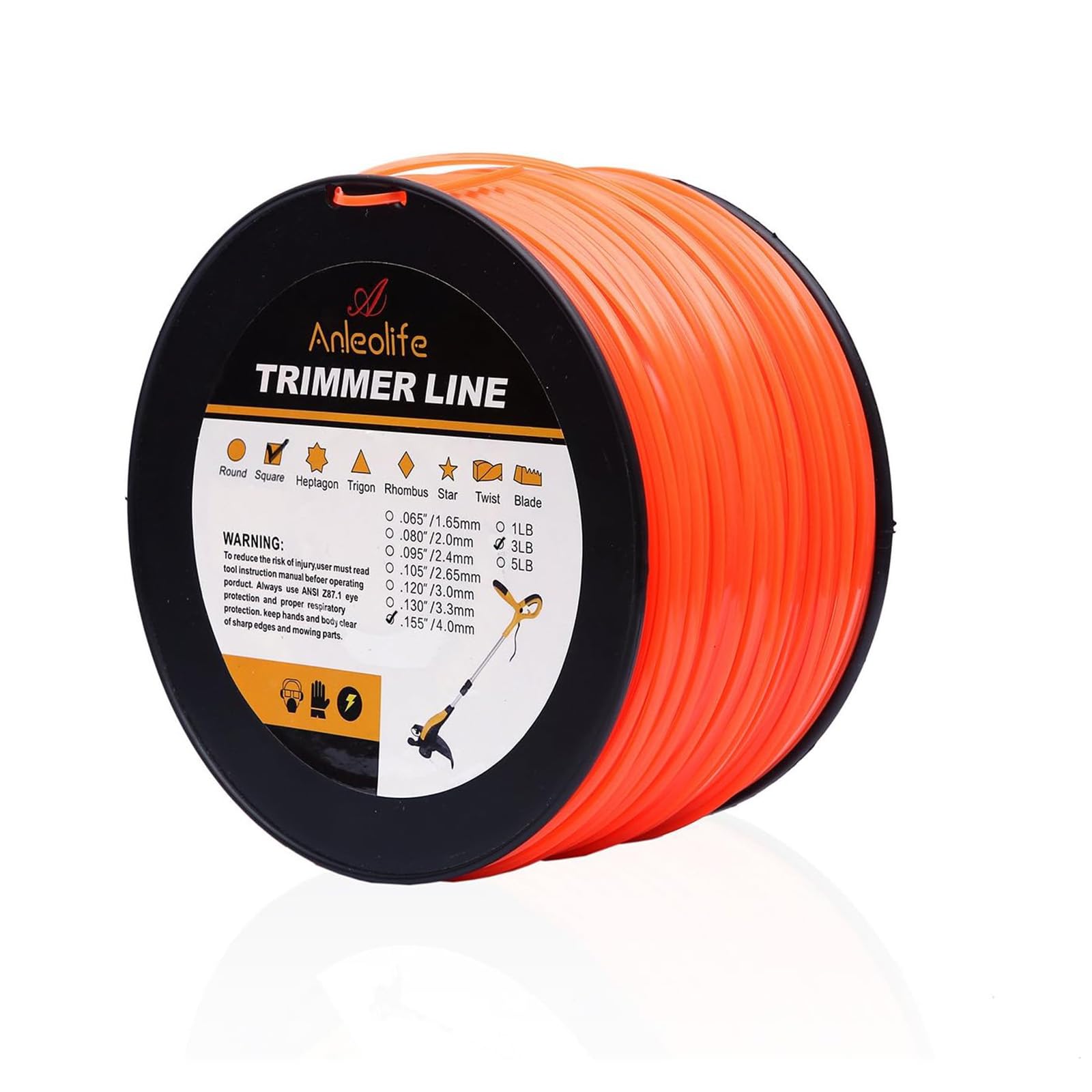
A heavy-duty square line on a large 3 lb spool with a built-in line cutter that handled matted kikuyu and thick stalks in my tests.
Why I picked it: Commercial square profile and a huge spool that kept me cutting for long sessions.
Best for: Large properties, walk-behind trimmers, and tackling matted or stalky weeds.
Big-spool value — less frequent refills for heavy use.
Pros
- Extremely durable nylon copolymer
- Built-in line cutter on spool
- Cuts through heavy, matted grass
- Wide brand compatibility
Cons
- Can be stiff to feed through anti-wrap guards
- Orange color may show more on lawns
My take
This 3 lb square line became my go-to when I needed raw cutting power. The square sides slice aggressively, which made short work of matted kikuyu and thick stalks that shredded other lines I tried.
I did need a little patience to thread it on a Grillo trimmer with an anti-wrap guard — the line isn’t floppy — but once I worked out the trick it fed reliably and reduced reloads compared with smaller spools.
The built-in cutter on the spool is a small practical touch; I could pull out line and trim it cleanly without hunting for scissors. Overall, I liked the runtime and cutting performance for large or commercial-type jobs.
2. Oregon Platinum Gatorline .155 Twisted Trimmer Line – Best for Professionals
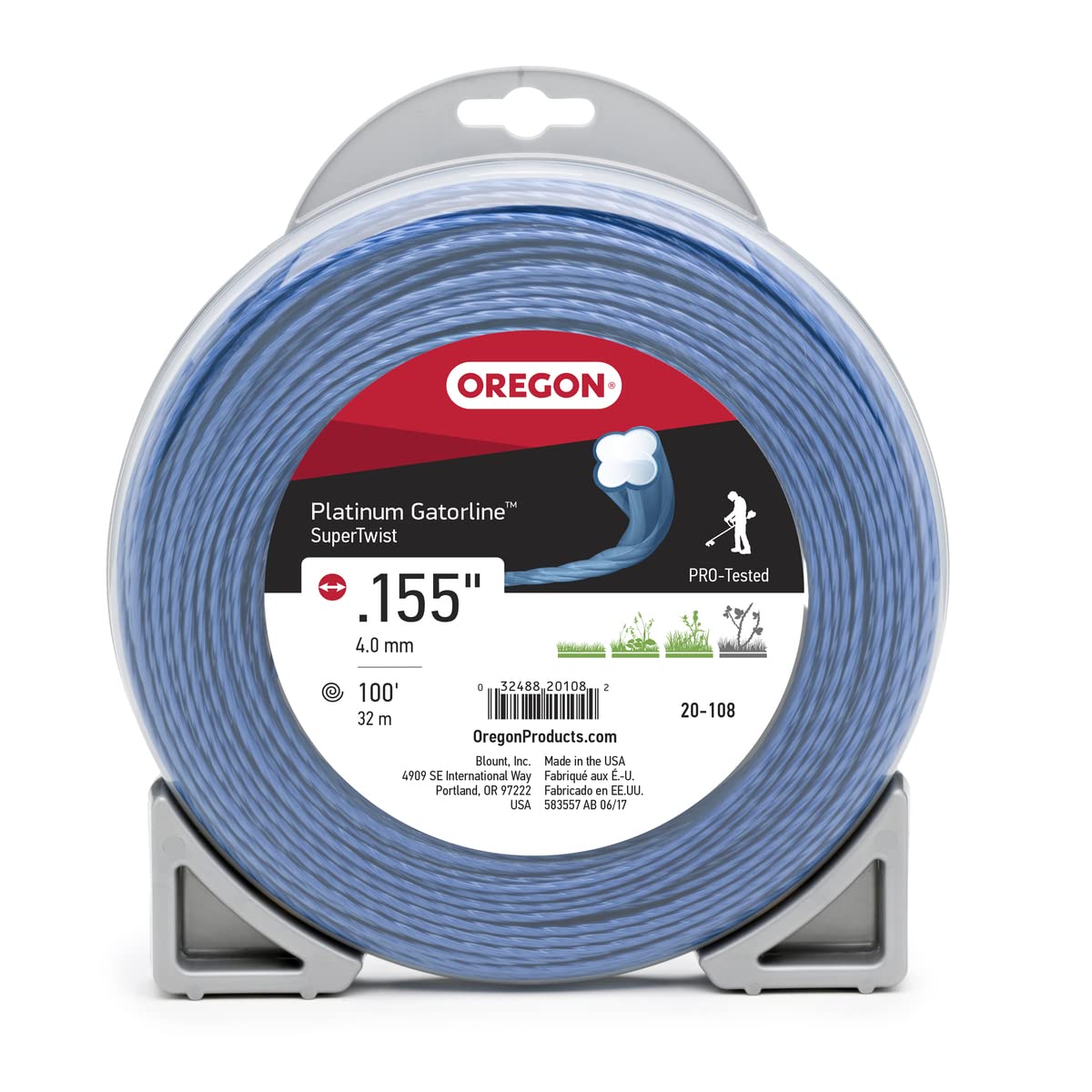
A reinforced, impact-resistant option with a thin armored skin and flexible core that stood up to hard contacts during heavy trimming.
Why I picked it: Armored outer shell plus flexible core for impact resistance and long life.
Best for: Pros trimming underbrush, around beds, and in hot or extreme conditions.
Premium-performance line — a tradeoff between durability and cost.
Pros
- Armored exterior resists breakage
- Flexible core absorbs impacts
- Produces less noise and drag
- Good for high-heat conditions
Cons
- Shorter spool length than some bulk options
- Can throw debris more readily
My take
I reached for the Platinum Gatorline when I needed something that tolerated knocks and repeated contact with fence posts and stony ground. The thin hard shell and pliable core really did keep the line intact where others split.
The twisted profile reduced drag and the trimming noise noticeably, which made edges and flower-bed work feel cleaner. It’s not indestructible, but it survives far more abuse than standard round lines.
Because this is a reinforced style, I treated it like a premium choice — I used it for jobs where I expected impacts and wanted to avoid constant reloading.
3. Arnold Xtreme Professional .155 Serrated Trimmer Line – Best for Heavy-Duty Edging
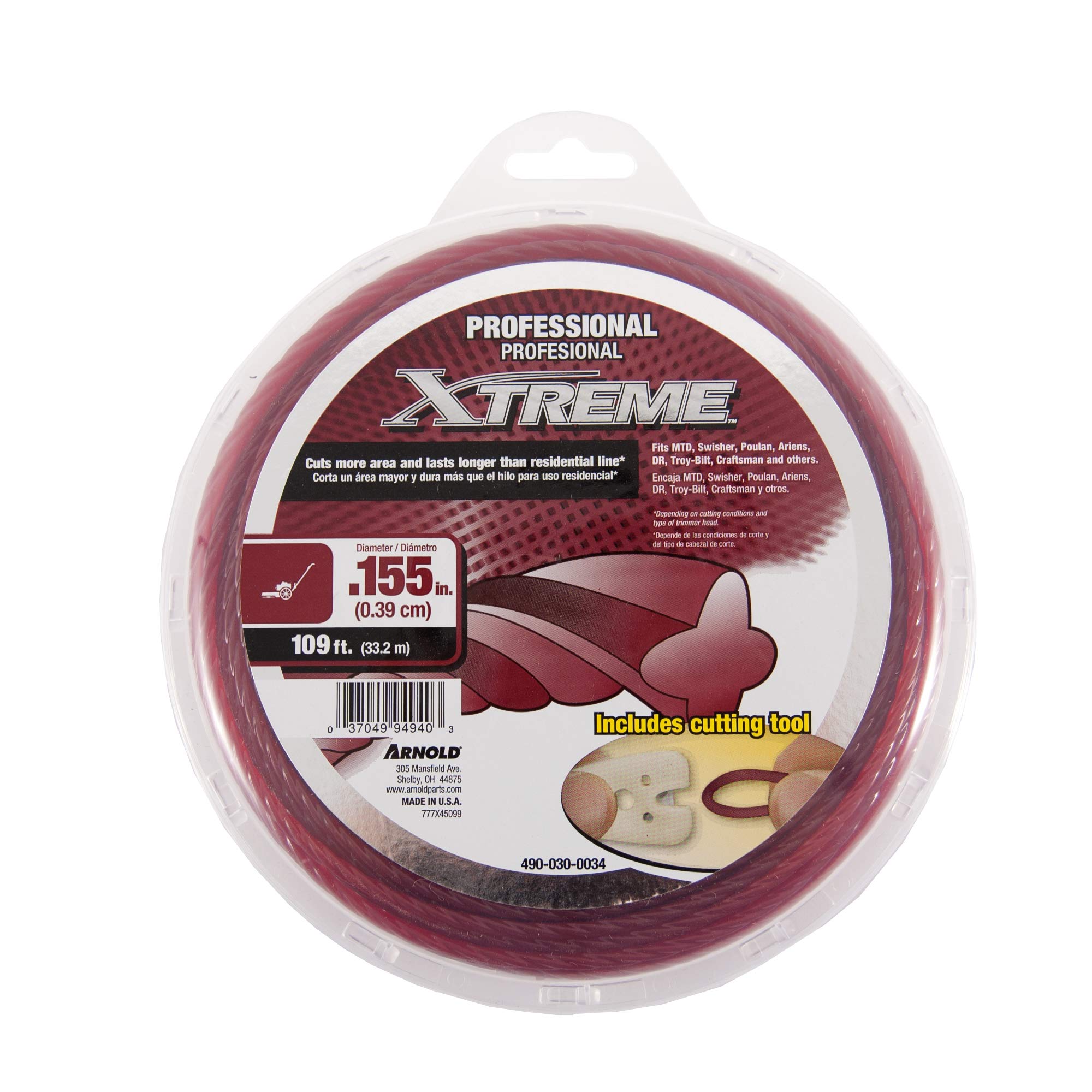
A professional-grade serrated/edged profile that delivers extra mass and aggressive cutting for edgers and walk-behind units.
Why I picked it: Edged, heavy-mass profile that cut faster and lasted through bigger jobs.
Best for: Walk-behind edgers, heavy edging, and large job sites.
Commercial-grade durability — built for frequent, heavier use.
Pros
- Thick, serrated shape for aggressive cutting
- Durable under heavy impact
- Good value for heavy use
Cons
- Requires cutting to fit many spools
- Heavier profile can shorten head life
My take
This line felt built for work. The serrated, heavier profile plowed through thick weeds, and I found myself reloading far less than with regular residential lines.
I used it on a Cub Cadet trimmer mower and a brushcutter; feeding was straightforward and the performance on edging was excellent. It did demand that I trim segments to length on some spools, but the payoff was longer continuous cutting.
If you need a line that stands up to aggressive trimming and edging, this Arnold line is a solid tool in my bag.
4. Grass Gator Pre-Cut .155 Red Trimmer Line (21″) – Best Pre-Cut Segments
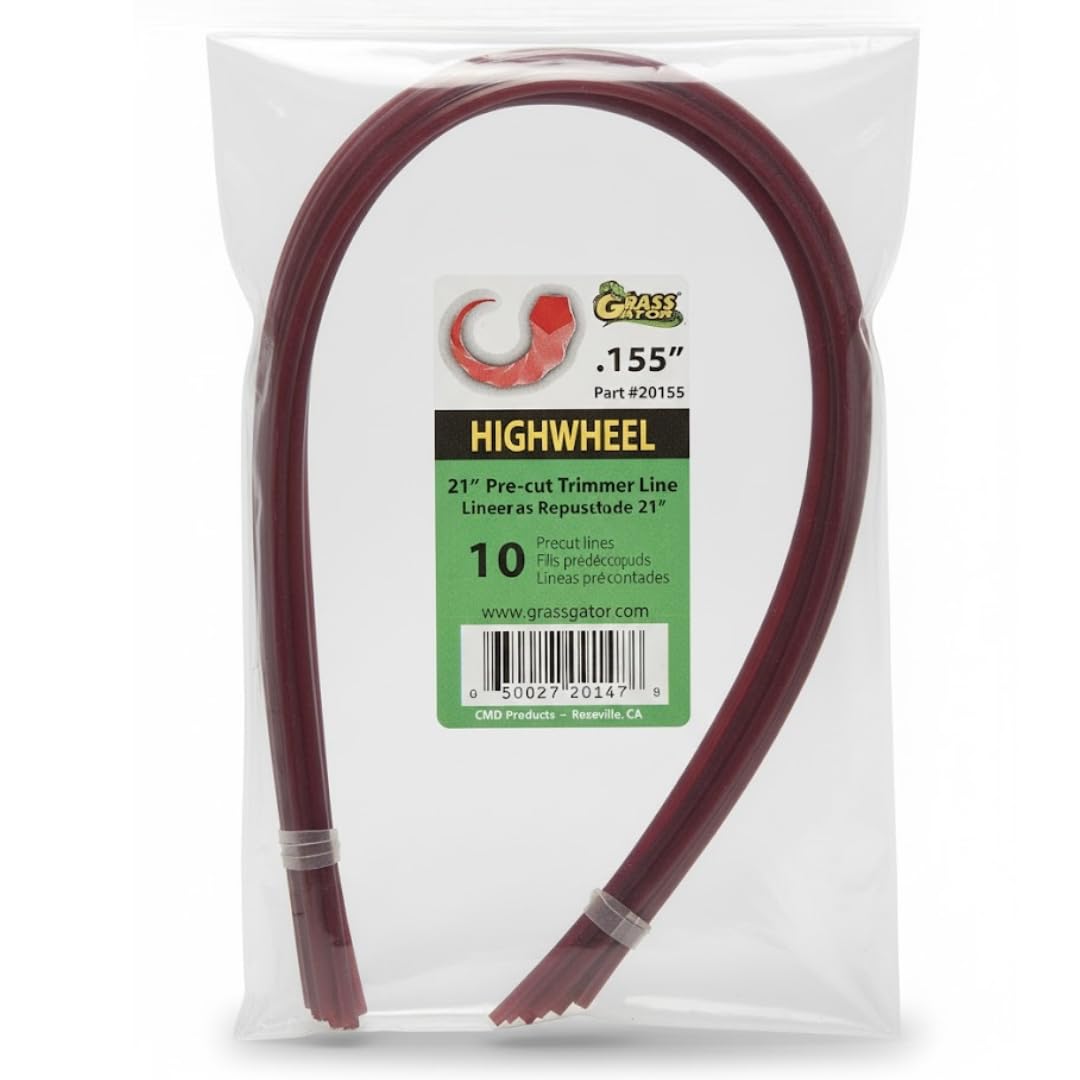
Pre-cut 21-inch segments in a five-edged profile that made reloads quick and kept my high-wheel trimmer running with minimal fuss.
Why I picked it: Pre-cut pieces save time on walk-behind mowers and high-wheel trimmers.
Best for: Wheeled string mowers and anyone who wants fast, tool-free reloads.
Convenient pre-cuts — strong value for quick replacements.
Pros
- Ready-to-install pre-cut segments
- Five-edge profile for aggressive slicing
- Commercial-grade toughness
Cons
- Quality varies between batches
- Some packs can be slightly undersize
My take
I switched to these pre-cut segments when I wanted a no-fuss reload for my high-wheel trimmer. Installation was straightforward and I appreciated not having to measure and cut while standing in the yard.
The five-edge shape sliced through medium brush and thick stalks cleanly, and the segments lasted several acres’ worth of trimming in my sessions.
One caveat: I encountered variability between batches—one pack in my run threw line more than others—so I keep an extra pack on hand. When the batches match expected size, these are a very convenient, heavy-duty option.
5. Cub Cadet Pre-Cut .155 Replacement Trimmer Line (18.5″) – Best for Cub Cadet Owners
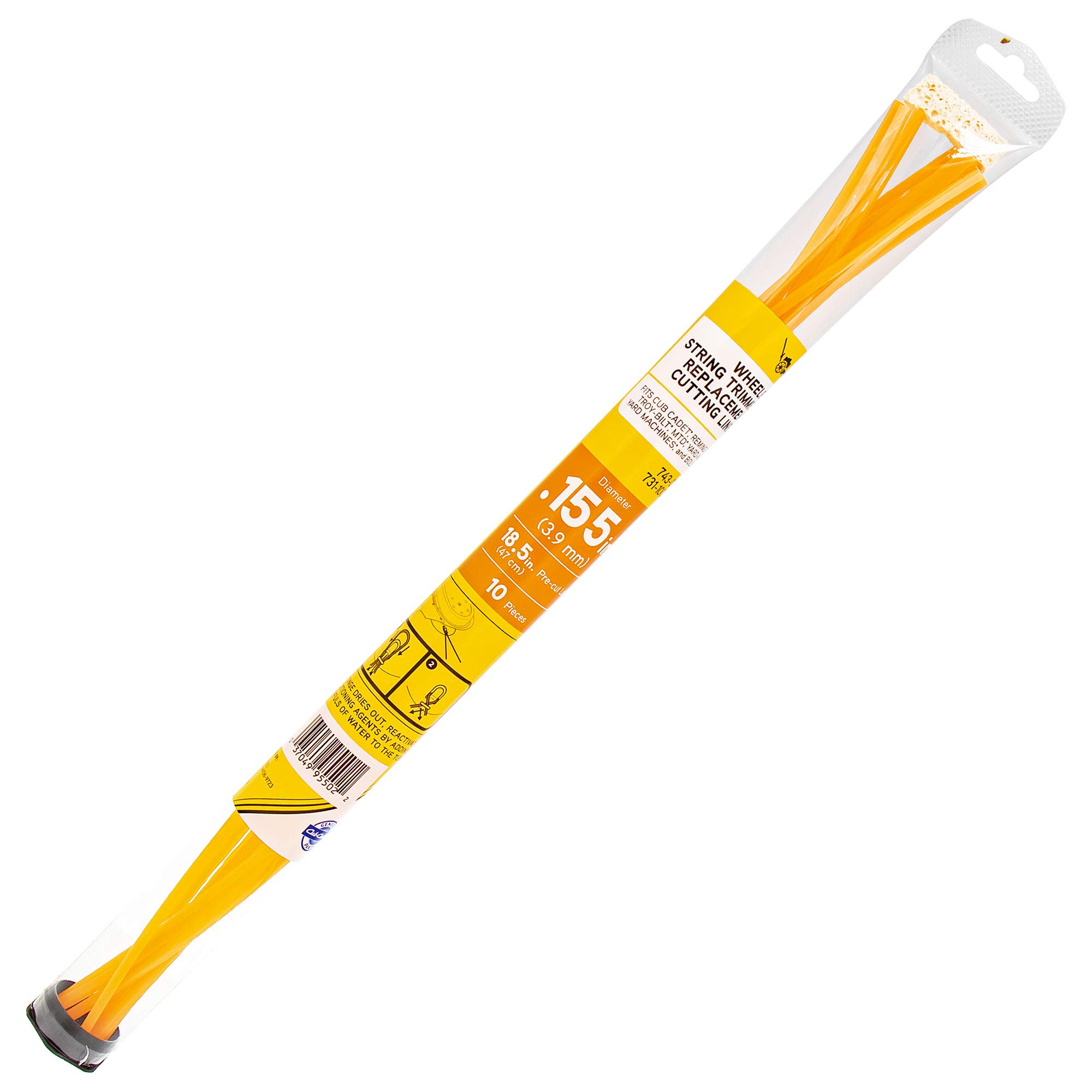
Genuine Cub Cadet pre-cut segments made to the correct length for their walk-behind trimmers; engineered and factory-tested for a precise fit.
Why I picked it: Exact fit and factory-tested reliability for Cub Cadet and similar walk-behind heads.
Best for: Cub Cadet and Remington walk-behind trimmer owners who want plug-and-play pieces.
Excellent convenience but higher per-piece cost than bulk spools.
Pros
- Factory-tested fit for Cub Cadet heads
- Pre-cut for hassle-free reloads
- High visibility yellow color
Cons
- Pricier per segment than bulk spools
- Limited to specific trimmer types
My take
When I run a Cub Cadet ST100, having pre-measured 18.5-inch segments is a real time-saver. I can swap pieces quickly and get back to work, which matters when a machine already has one troublesome side.
The lines cut well and the consistent length avoided the guesswork that used to slow me down. I do treat these as a convenience purchase because the per-piece cost is higher than winding my own from a bulk spool.
If you own the matching machine and value easy reloads, I prefer these genuine replacements for predictable performance.
6. KAKO Square .155 Trimmer Line (3 lb, 285 ft) – Best Value Bulk Spool
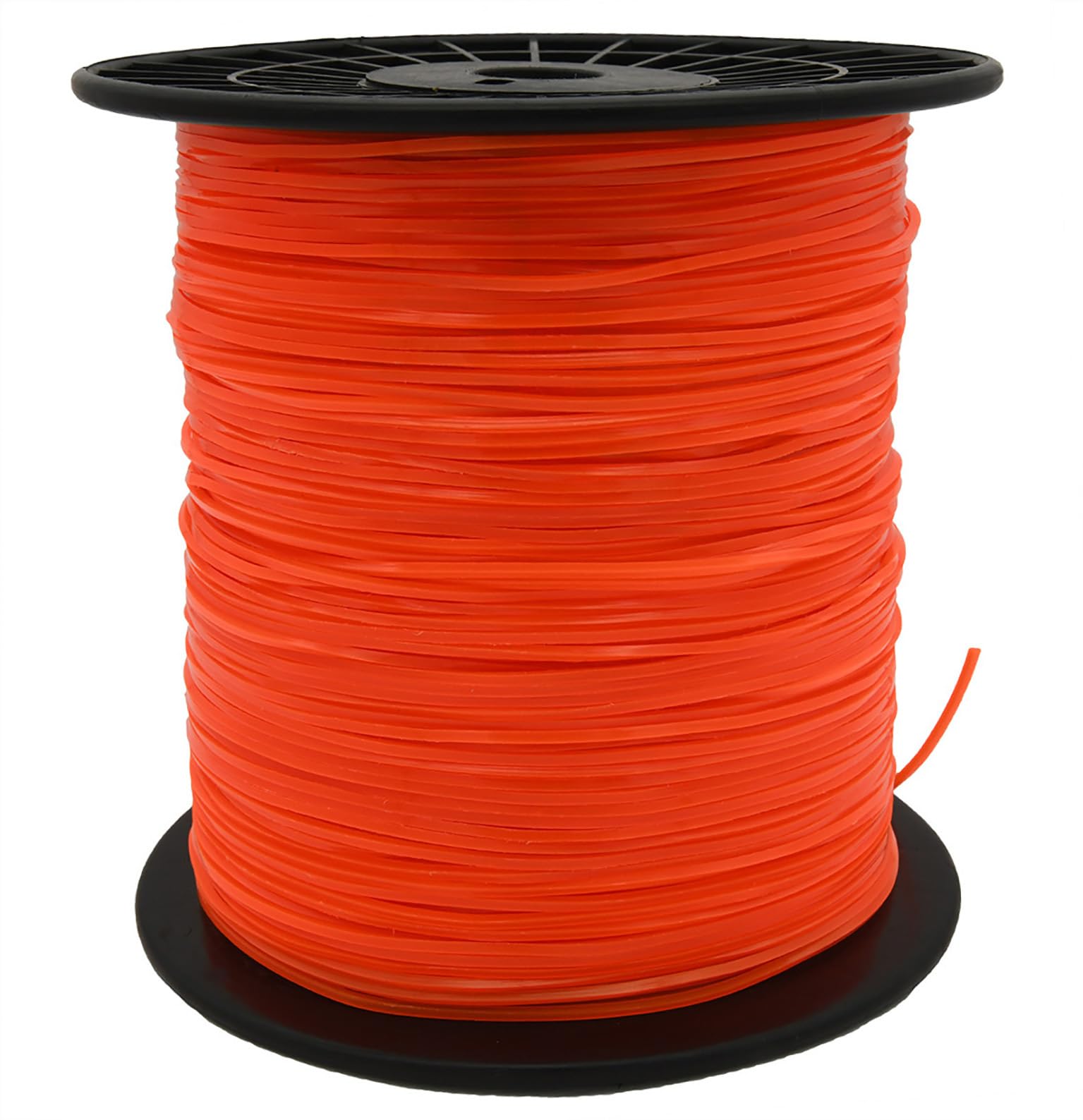
A long 285 ft, square nylon spool that balanced cut performance and runtime at a very competitive value during extended trimming sessions.
Why I picked it: Long spool and square shape that combined durability with strong value.
Best for: Commercial properties, long runtimes, and frequent re-winds.
Large spool delivers low cost-per-foot for heavy users.
Pros
- Long 285 ft bulk spool
- Square profile for aggressive cutting
- Good compatibility with many trimmers
Cons
- Spool can be bulky to handle
- Orange color may be conspicuous
My take
I chose the KAKO spool when I needed a lot of line for repeated trimmings. It fed easily, cut aggressively thanks to the square corners, and I appreciated not having to buy replacements every few weeks.
It felt comparable to higher-priced alternatives in day-to-day cutting and was forgiving in both handheld and wheeled heads. The orange color also made it easier to pick up stray bits in the yard after trimming.
For any job where I need a large quantity of reliable line at a good value, this spool is what I reach for.
7. Oregon .155 Square Universal Trimmer Line (266 ft) – Best Economy Choice
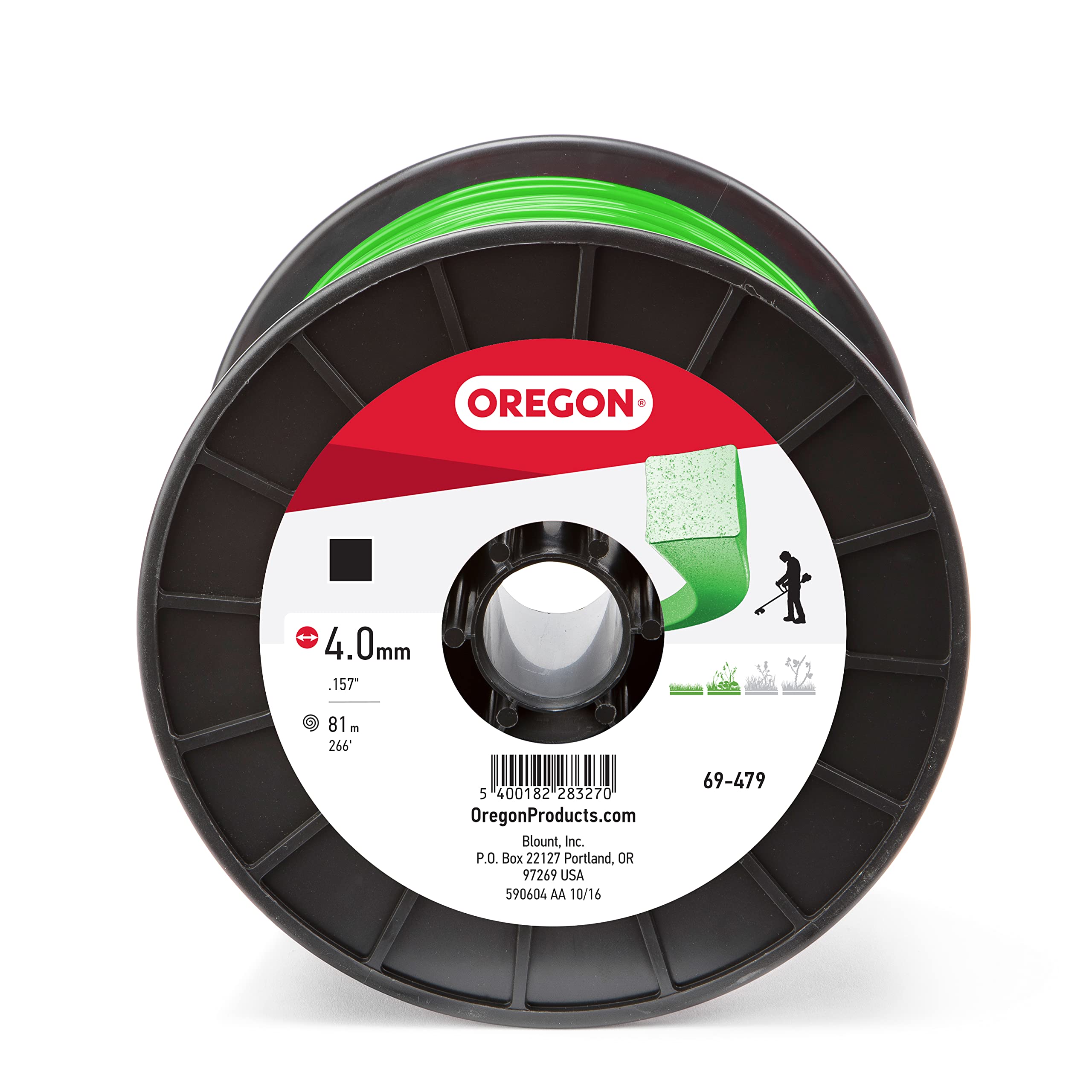
A universal-fit square line on a tangle-minimizing donut spool that handled general-purpose trimming around my property very well.
Why I picked it: Universal compatibility and an anti-tangle donut spool at a sensible price.
Best for: Homeowners, DIYers, and general-purpose trimming tasks.
Economy-oriented spool — sensible balance of cost and performance.
Pros
- Universal fit for most trimmer heads
- Donut spool limits tangles
- Good general-purpose durability
Cons
- Not as heavy-duty as reinforced lines
- Some breakage reported in extreme work
My take
This Oregon spool was my go-to for everyday trimming and large perimeter work. The donut-style spool keeps the line tidy and makes loading quick, and the square profile gives a neat four-edge cut.
It handled tall weeds and thick grass with ease, though I wouldn’t pick it over a reinforced Gatorline when I expected repeated impact on rocks or heavy woody growth.
For most homeowners who want an easy-to-use, affordable spool that fits many machines, this is a practical choice.
How I Choose .155 Trimmer Line
Key factors I check before buying
I always start with compatibility and the type of head I’m using. Some heads prefer flexible round nylon; bump-feed and automatic heads generally accept universal diameters like .155. Walk-behind and high-wheel trimmers often work best with pre-cut segments sized to the manufacturer's spec.
Next I consider shape. Square and edged profiles deliver aggressive cuts and last longer on heavy weeds. Twisted or reinforced Gatorline-style cords resist breakage when you’re hitting obstacles.
Finally, spool format matters. Bulk spools give the best cost-per-foot and are ideal for frequent use, while pre-cut segments save time during quick reloads.
- Match diameter (.155) to your trimmer head specifications
- Choose square/edged for heavy weeds; twisted for quieter, lower-drag trimming
- Pick pre-cut for walk-behind trimmers; bulk spools for frequent use
- Consider reinforced or armored lines for impact-prone areas
- Store line in a cool, slightly humid place or soak briefly to maintain flexibility
Practical tips from my experience
If a spool feels overly stiff, I soak short lengths in warm water for a day to reduce brittleness before use. That trick preserved feedability on several nylon types I tested.
Be mindful of debris. Heavier lines throw garden mulch and loose stones more aggressively; wear eye protection and clear the area when possible.
When in doubt, I keep one premium reinforced line and one bulk square spool in my shed — the premium handles obstacles, and the bulk spool covers long mowing sessions economically.
- Soak new line briefly to improve flexibility in dry climates
- Use eye protection; heavier line throws more debris
- Keep spare pre-cut pieces for walk-behind machines
Frequently Asked Questions
Will a .155 line fit my trimmer head?
I always check my trimmer’s manual or measure the existing line; most standard heads accept .155 but some high-power commercial heads use thicker gauges. If your head accepts fixed-line, semi-auto, or bump-feed, .155 is commonly compatible.
Which line shape cuts best through thick, matted grass?
From my tests, square and edged profiles cut more aggressively through matted or stalky weeds. Twisted or reinforced lines are best when you need impact resistance.
Are pre-cut pieces worth the extra cost?
Yes, if you use a walk-behind or high-wheel trimmer. I save a lot of downtime with pre-cut segments because I don’t have to measure and cut while out in the field.
How can I make trimmer line last longer?
I avoid hitting hard objects when possible, keep spare line hydrated in dry climates, and choose reinforced or thicker profiles for impact-prone areas. Proper storage and avoiding overheating the head also extend life.
Final Take
I find there’s no single perfect .155 line for every job — square and edged shapes win for aggressive cutting, reinforced Gatorline-style cords resist breakage, and pre-cut segments speed reloads on walk-behind units.
For heavy, repeated work I pick large bulk spools like the ANLEOLIFE or KAKO to minimize reloads. When I expect impacts, I reach for the Oregon Platinum Gatorline. And for quick maintenance or Cub Cadet machines, the factory pre-cut pieces save time.
Choose the line that matches your machine and workload, and keep a backup spool of a different profile so you’re ready for any trimming challenge.
