
I tested six popular 16×20 canvas packs and picked options that cover stretched canvases and rigid panels for oil, acrylic, pouring, and practice work.
I paint regularly and keep a steady stock of 16×20 canvases for commissions, practice, and classes. Over several months I worked across stretched canvases and rigid panels from six common packs so I could recommend choices that match specific techniques and budgets.
This roundup focuses on build quality, priming weight, backing support, and how well each canvas holds paint. I include practical notes about pouring, framing, and classroom use so you can pick the right format for your work.
I compared stretch, panel, priming weight, and pack format so you can choose between a taut, gallery-ready stretched canvas and a flat, rigid panel for framing or classroom use.
1. PHOENIX Stretched Canvas 16×20 (5-Pack) – Best Overall
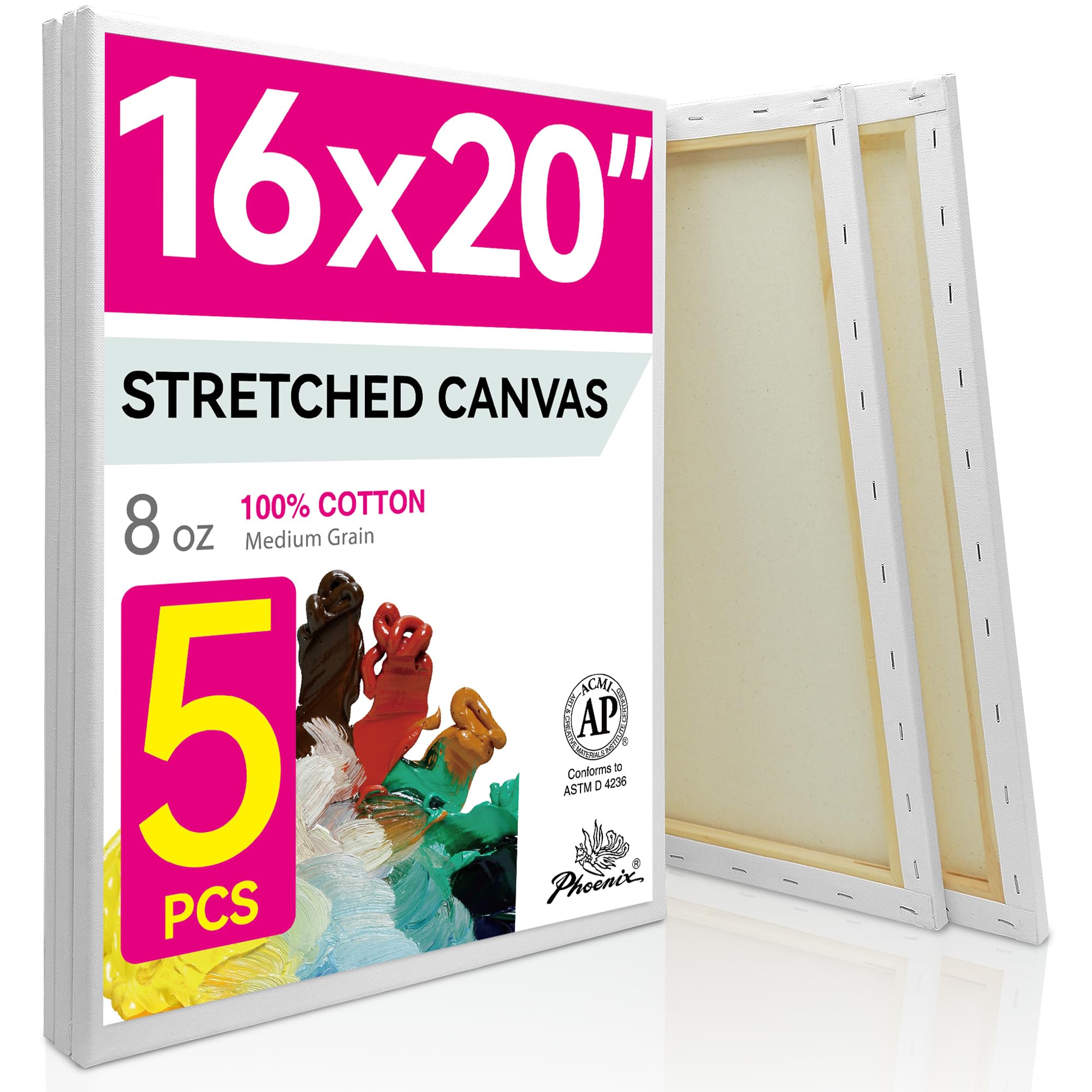
A reliable stretched cotton canvas with 8 oz triple-primed gesso and sturdy pine stretchers — great for oil and acrylic work.
Why I picked it: Triple-primed, 100% cotton surface on solid pine stretchers that handles impasto and heavy paint.
Best for: Artists who want ready-to-paint stretched canvases for gallery and pouring work.
Bulk 5-pack makes this an economical studio staple.
Pros
- 8 oz triple-primed surface
- 100% cotton with medium grain
- Solid pine stretcher bars
- Tightly stretched, back-stapled edges
Cons
- Occasional shipping damage reported
- One canvas may arrive with minor defect
My take
I reach for these PHOENIX stretched canvases when I need a taut, gallery-style surface. The 100% cotton weave has a medium texture that grabs paint without feeling abrasive, and the triple-primed 8 oz gesso gives good tinting strength right out of the wrapper.
The pine stretcher bars are mortise-and-tenon style and keep the surface flat and stable — I’ve pushed thick impasto and heavy acrylic pouring on these without visible sag. Every canvas in my pack arrived tightly stretched and ready to frame.
They’re vacuum packed for transit and represent a strong value for studio work. On one order I received a single canvas with interior damage, so I now inspect shipments immediately, but otherwise these are consistently usable for both finished pieces and experimental sessions.
2. PHOENIX Canvas Panels 16×20 (6-Pack) – Best for Panels & Framing
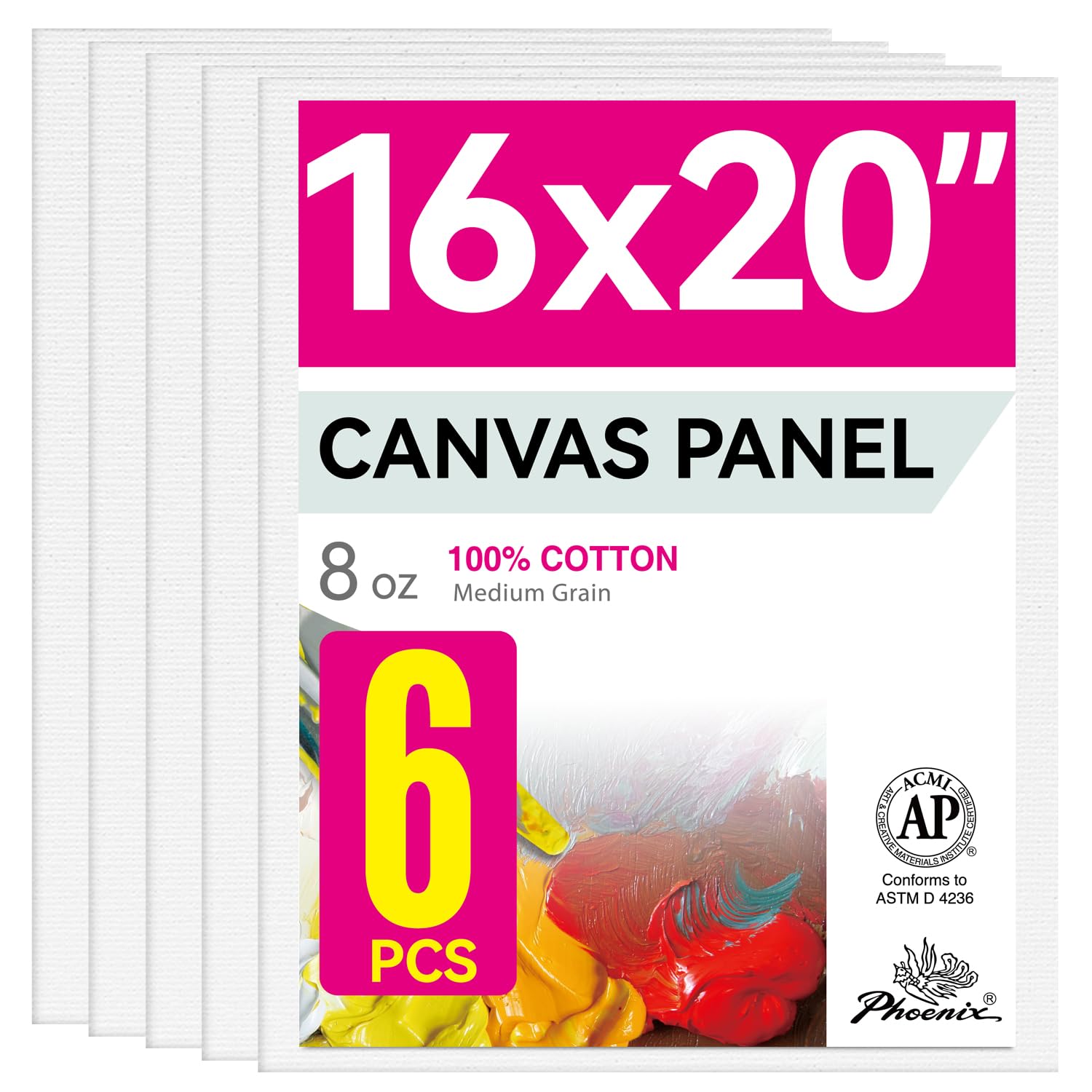
Flat, ready-to-paint canvas panels glued to MDF backing — great for classes, framing, and smaller finished pieces.
Why I picked it: Hand-stretched cotton glued to rigid MDF backing with 8 oz priming; ready-to-paint and warp-resistant.
Best for: Workshops, framing, practice sessions, and classroom use.
Panel format keeps costs down and simplifies framing.
Pros
- Ready-to-use out of box
- Rigid MDF backing resists warping
- Lightweight and portable
- Good for framing under glass
Cons
- Not designed for heavy acrylic pouring
- Thinner profile than stretched canvases
My take
I use these PHOENIX canvas panels when I need flat, frame-ready work with minimal prep. The cotton surface is hand-stretched and glued over quality MDF so paintings don’t curl or warp, which is especially handy for classes and gifts.
The 8 oz acid-free gesso comes pre-applied, so I can start a session immediately. I do avoid heavy acrylic pouring on these, since the listing cautions panels aren’t meant to carry the volume of pour techniques.
For quick studies, framed pieces, and craft nights, these panels are a very convenient option — they’re lighter and cheaper than stretched canvas and make framing straightforward.
3. FIXSMITH Stretched Canvas 16×20 (5-Pack) – Best Value Stretched
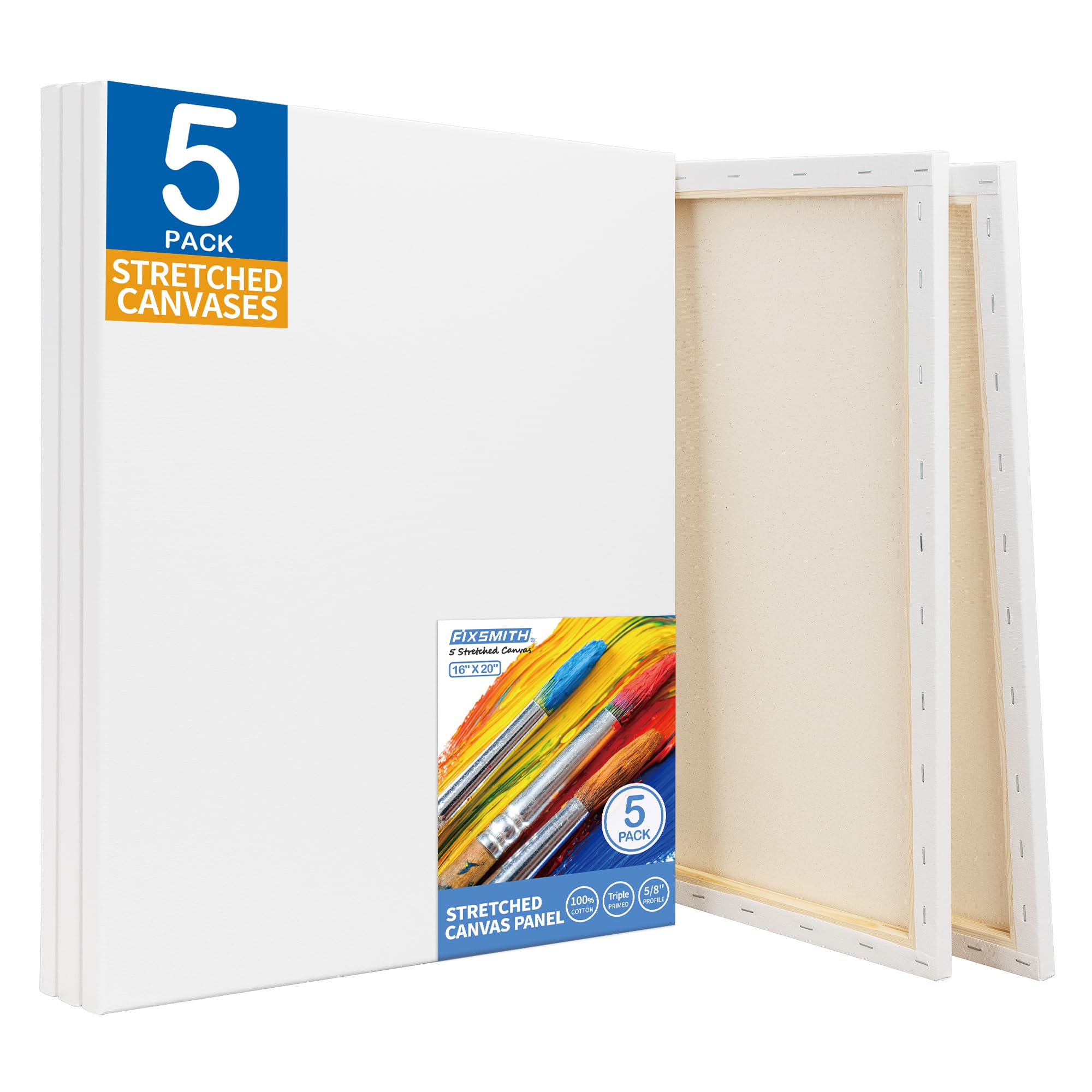
An affordable stretched cotton canvas pack that’s triple-primed and sturdy enough for most oil and acrylic projects.
Why I picked it: 100% pure cotton with triple-primed 8 oz gesso and reliable pine stretcher bars.
Best for: Artists who want economical stretched canvases for commissions and practice.
Good value for artists needing multiple stretched canvases.
Pros
- 100% pure cotton surface
- Triple-primed and ready to paint
- Stretched on pinewood bars
- Suitable for oils and acrylics
Cons
- Not marketed as gallery-grade premium
- Pack sizes vary across listings
My take
I like these FIXSMITH canvases for commission work and regular practice because the cotton feels consistent under brush and the primer accepts both oils and acrylics without additional prep. The 5/8" profile gives a familiar gallery depth that frames nicely.
The stretcher construction holds tension well and the edges are clean for framing or display. I’ve used these for longer-term pieces and have seen good longevity so far — the brand emphasizes durability and archival intent.
If you want a no-fuss stretched canvas that performs for finished pieces without a premium price, these strike a good balance between quality and cost.
4. GOTIDEAL Stretched Canvas 16×20 (5-Pack) – Best for Versatility
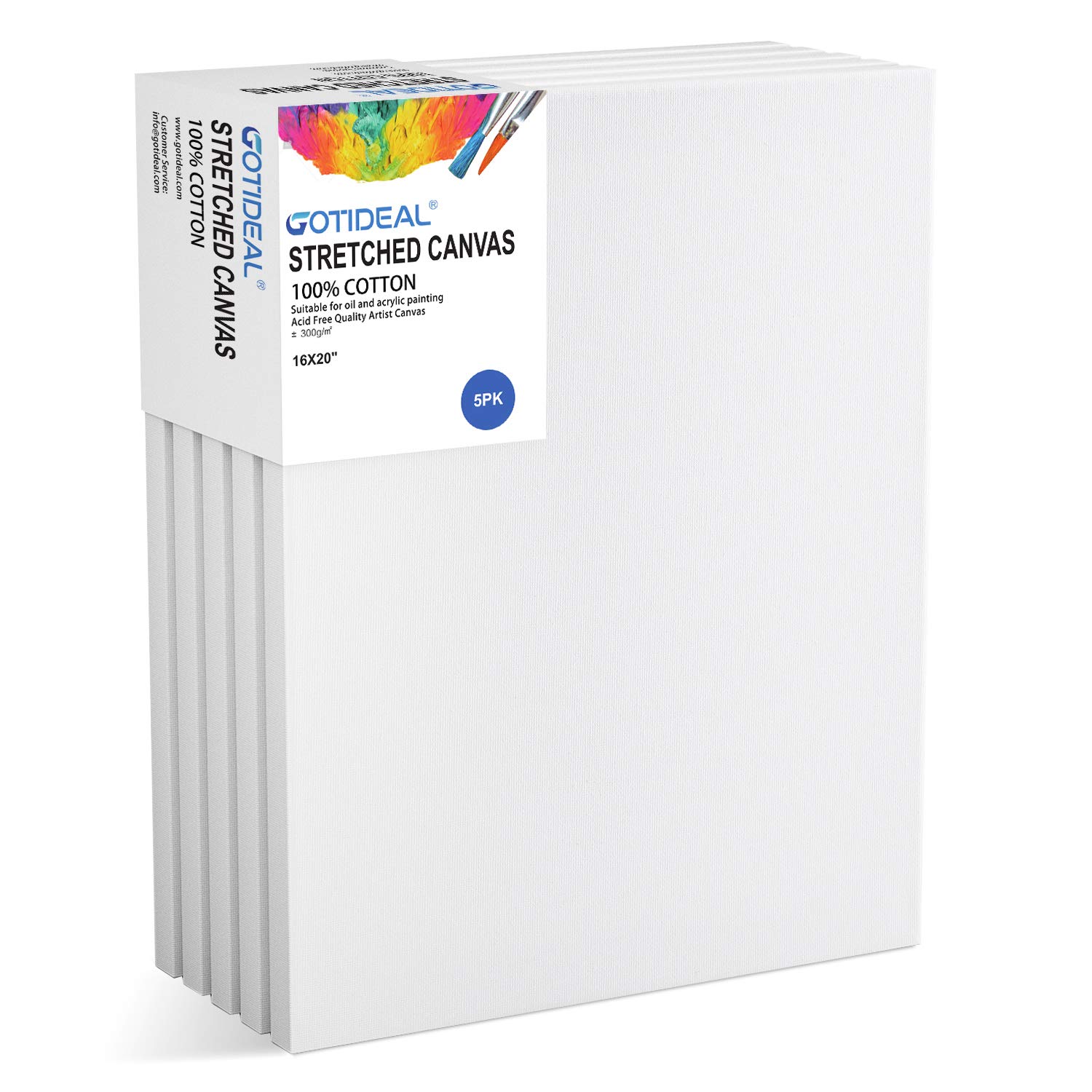
Primed, archival cotton stretched canvases that work across media and ship as a convenient studio pack.
Why I picked it: 8 oz titanium gesso, archival quality, and 100% cotton make these flexible across oil, acrylic, and watercolor techniques.
Best for: Artists who switch between media and want a general-purpose stretched canvas.
Solid midrange value for multi-media use.
Pros
- Archival, acid-free priming
- 100% cotton medium grain
- Ready-to-paint, vacuum packed
- Good all-purpose surface
Cons
- Surface can be scratched if handled roughly
- Not the highest-end canvas finish
My take
These GOTIDEAL canvases became my go-to when I wanted one surface that handled oils, acrylics, and mixed media without fuss. The 8 oz titanium gesso offers a bright, stable ground that keeps my colors vibrant.
They’re vacuum packed and arrive ready to work, which is great for keeping an inventory on hand. I’ve used them for portraits and studies and find the medium grain holds glazes and detail well.
I do handle them carefully — a few of the comments I saw noted they can scratch more easily than premium canvases — but for most studio and teaching situations they’re a reliable, archival option.
5. Artkey Canvas Panels 16×20 (6-Pack) – Best for Classes & Parties
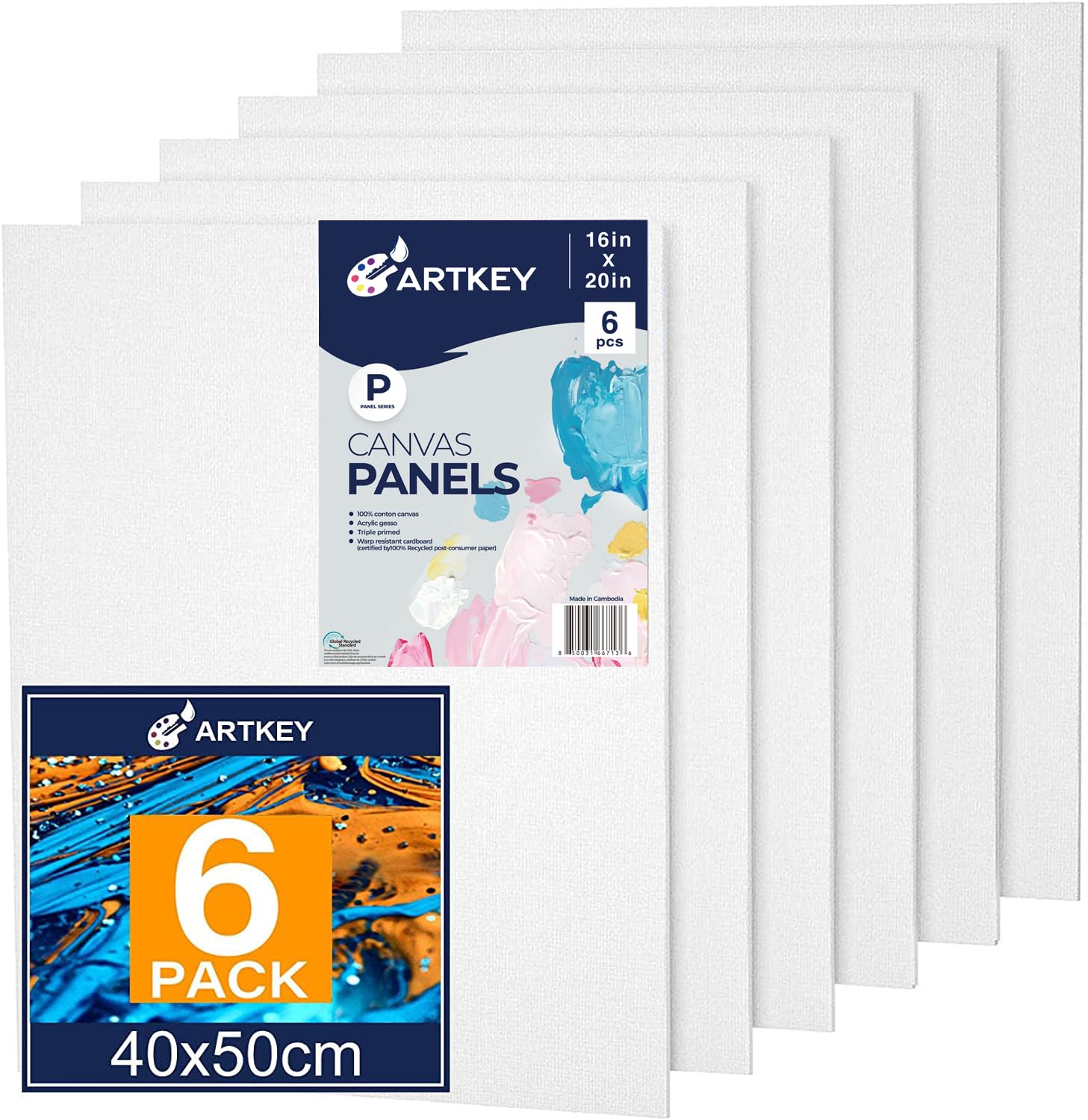
Heavy 10 oz cotton panels glued to rigid boards — a firmer, more robust panel option for classrooms and paint parties.
Why I picked it: 10 oz priming and rigid backing give a firmer, more durable painting surface than lighter panels.
Best for: Beginner workshops, paint nights, classroom use, and landscape practice.
Higher-primed panel for a sturdier surface without premium cost.
Pros
- 10 oz heavy primed surface
- Rigid board backing prevents warping
- Acid-free and CE verified
- Great for group activities
Cons
- Primer can feel uneven on occasion
- Not the finest smooth priming for detail work
My take
I bring these Artkey panels to paint nights and classroom sessions when I want an extra-stable surface that can take a bit of rough handling. The 10 oz priming gives a firmer tooth that I like for landscapes and broader brushwork.
They’re hand-stretched and glued to heavy boards so they resist bending and frame nicely. I painted a gift on these and found the panels hold color well and present cleanly framed or on an easel.
The only caveat is that the priming can be a touch uneven if you’re doing ultra-fine glazing; for most party, class, and practice work they’re an excellent, sturdy choice.
6. CONDA Stretched Canvas 16×20 (5-Pack) – Best Budget Stretch
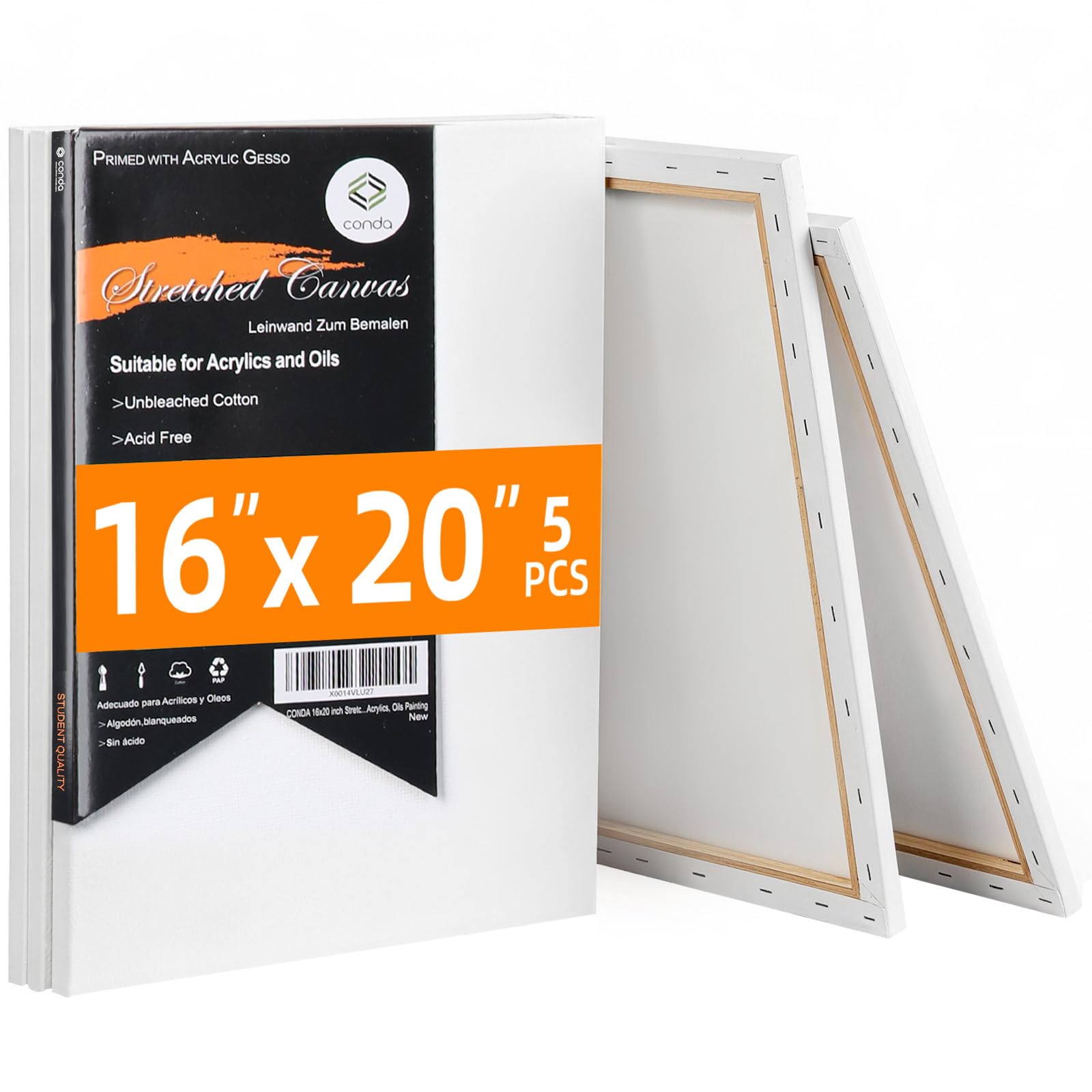
A no-frills, individually packed stretched canvas set with triple priming — good for everyday painting and practice.
Why I picked it: Triple-primed cotton, pinewood stretchers, and individual vacuum packing make these a dependable budget option.
Best for: Casual artists, practice pieces, and bulk studio use.
Value-focused bulk pack for frequent practice sessions.
Pros
- Individually vacuum-packed
- Triple-primed and ready to use
- Includes corner shims for tensioning
- 100% cotton canvas
Cons
- Not pro-premium grade
- Better for casual work than sales pieces
My take
I keep a box of these CONDA canvases for practice sessions and student work. They arrive individually packed, which minimizes dings, and the triple-primed surface is ready for both oils and acrylics.
I appreciated the little corner shims included in some packs — they let me fine-tune tension when a corner loosens. For heavy, gallery-quality pieces I choose higher-end priming, but for sketches, studies, and commissions where budget matters, these do the job reliably.
Overall they’re a practical buy when I need several stable stretched canvases that perform consistently during long practice runs.
How I Choose a 16×20 Canvas
Stretched Canvas vs. Panel — pick by purpose
I decide between stretched canvas and panels based on final use. If I need a gallery-ready, deep-edge piece that I may stretch and frame without glass, I pick a stretched canvas. For framed work, classrooms, or quick gifts, I choose rigid panels because they won’t warp and are easier to ship and frame.
- Choose stretched canvas for impasto, heavy layers, and traditional framing.
- Choose panels for cost-effective, flat, frame-ready work and classes.
Priming weight and surface feel
Priming weight (commonly listed as ounces of gesso) changes how paint behaves. I prefer 8 oz priming for a balanced tooth that accepts washes and glazes; 10 oz gives a firmer, denser ground for heavier paint application.
- 8 oz: good all-purpose surface for oils and acrylics.
- 10 oz: firmer, better for broad brushstrokes and heavier media.
Fabric and archival concerns
I favor 100% cotton for its texture and tinting strength. If longevity matters, look for acid-free, archival priming and canvas constructions that mention archival quality or ASTM/CE/AP verification.
- 100% cotton for traditional artist surfaces.
- Acid-free primer for archival stability.
Stretcher bars and build quality
Check for pine stretcher bars with mortise-and-tenon corners on stretched canvases; those keep tension more reliably. For panels, inspect the backing (MDF or heavy board) to ensure it’s glued evenly to prevent voids and warping.
- Mortise-and-tenon stretchers resist warping.
- MDF-backed panels offer flat, warp-resistant support.
Special techniques: pouring and impasto
A stretched canvas with a strong stretcher and thicker priming will hold heavy impasto and many pouring techniques. Panels can work for light mixed media but generally aren’t recommended where large volumes of poured acrylics will pool and stress the backing.
- Use stretched canvas for heavy pours and impasto.
- Avoid heavy pours on thin panels; they may buckle.
Packaging and shipment
I pay attention to whether canvases are vacuum packed and individually wrapped. That reduces the chance of dents and dust on arrival. Still, I inspect each shipment right away so any damaged pieces can be addressed quickly.
- Vacuum packing reduces shipping dings.
- Inspect shipments immediately for damage.
Frequently Asked Questions
Can I use these canvases for acrylic pouring?
I use heavy, well-stretched canvases for most acrylic pouring. Panels are often not designed to handle the volume of poured paint and can warp or sag. Look for listings that explicitly mention pouring if you intend to pour large volumes.
What does ‘8 oz’ or ’10 oz’ primer mean for painting?
Those numbers refer to the weight of the priming layer. I find 8 oz is a good all-around ground for glazes and details, while 10 oz gives a firmer surface better suited to thicker brushwork and heavier paint loads.
Are these canvases archival and safe for finished work?
When a product notes acid-free or archival priming and mentions CE/AP verification, I treat it as suitable for finished work. I still varnish finished pieces for added protection and longevity.
How do I keep a stretched canvas taut over time?
I keep small wooden corner shims on hand and tap them into the stretcher corners if a canvas loosens. Proper stretcher construction (mortise-and-tenon) also helps maintain tension for years.
Final Take
I keep both stretched canvases and rigid panels in my studio because each format has specific strengths. For gallery-style pieces and heavy techniques I prefer sturdy stretched canvases; for classroom work, gifts, and framing I turn to panels.
Use the packing, priming weight, and backing notes above to match your preferred media and workflow. With the right 16×20 option on hand, you can move from study to finished piece with confidence.
