
I tested foaming sprays, concentrated cleaners, and fin-comb kits so you can pick the right product for seasonal tune-ups, deep cleans, or DIY repairs.
I keep my HVAC systems in top shape by pairing the right cleaner with the right job. Over multiple seasons I've tried foams, concentrated liquids, and hand tools to see what actually restores airflow and removes build-up.
In this roundup I explain when I reach for each product, how they perform in real-world use, and what to expect during application and cleanup.
I compared products by cleaning power, application style (foaming spray vs liquid concentrate vs hand tools), ease of use, and suitability for evaporator versus condenser coils so you can match the product to the task.
1. Foam Blaster AC Coil Cleaner – Best Overall
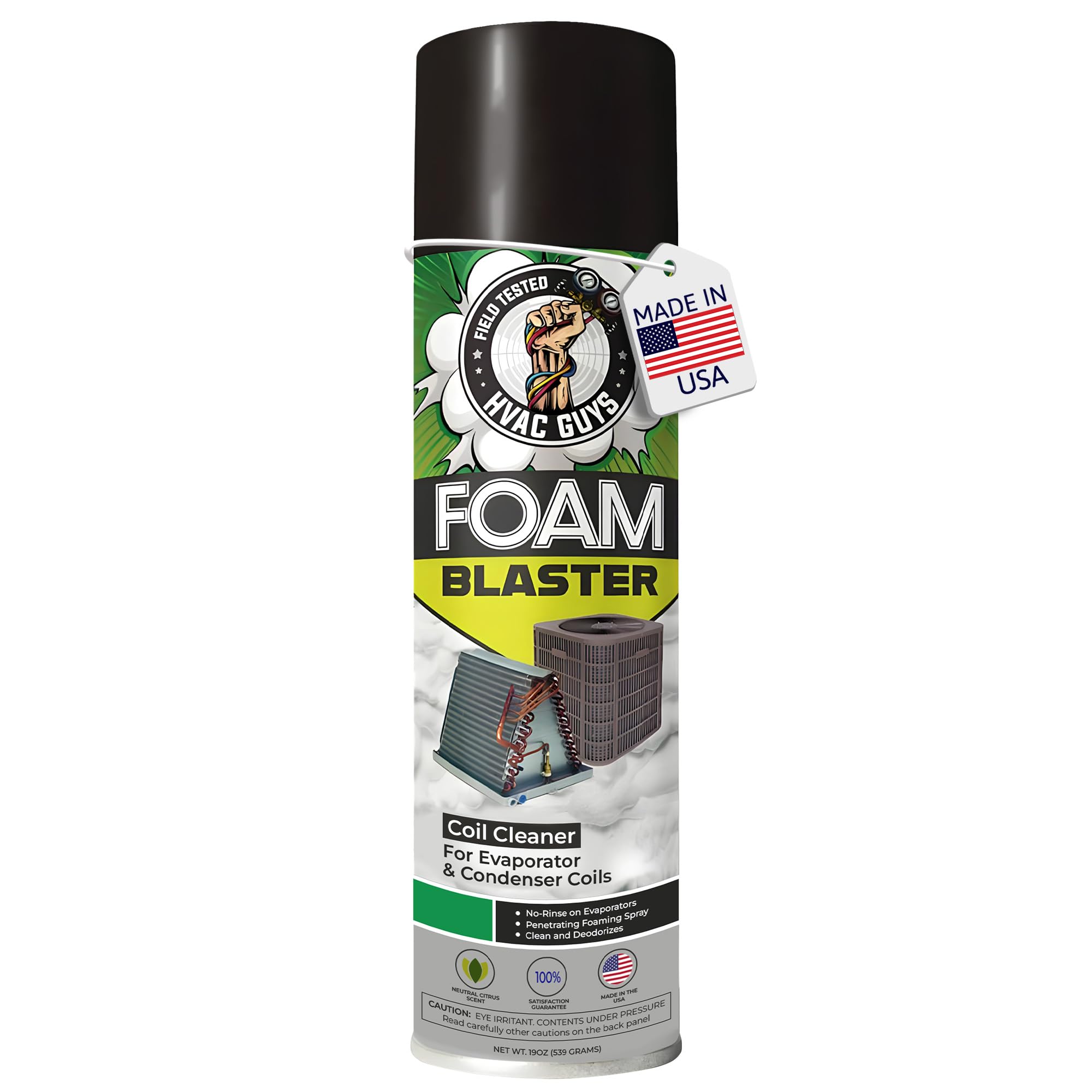
A pro-grade foaming spray that penetrates coils, conditions metal, and leaves a mild citrus scent; no-rinse for evaporators and light rinsing for condensers.
Why I picked it: Powerful expanding foam that reaches deep into fins and is designed for professional use.
Best for: Quick evaporator cleanings and seasonal tune-ups when I want fast, effective foam action.
Midrange aerosol — good value for a professional-strength spray.
Pros
- Active expanding foam lifts grime
- Professional-grade spray nozzle
- No-rinse on evaporator coils
- Leaves a mild citrus scent
Cons
- Condensers need light rinsing
- Aerosol can limits total volume
My take
I reach for the Foam Blaster when I want a fast, deep-cleaning foam that actually penetrates the coil fins. The spray foams on contact, expands into the dirty gaps, and liquefies buildup so it drains away with condensate or a quick rinse.
During a seasonal tune-up I sprayed the evaporator, let the foam dwell for a few minutes, and watched the grime break up. The conditioner left the coil looking cleaner and helped reduce re-soiling for weeks after.
On outdoor condensers I still give the unit a light rinse after using this product. That extra step removes loosened debris and prevents residue. Keep in mind the can format means you’ll want at least one full can per medium-sized unit.
2. ERRECOM Clima-Net AC Cleaner (1 L) – Best for Whole-Home Maintenance
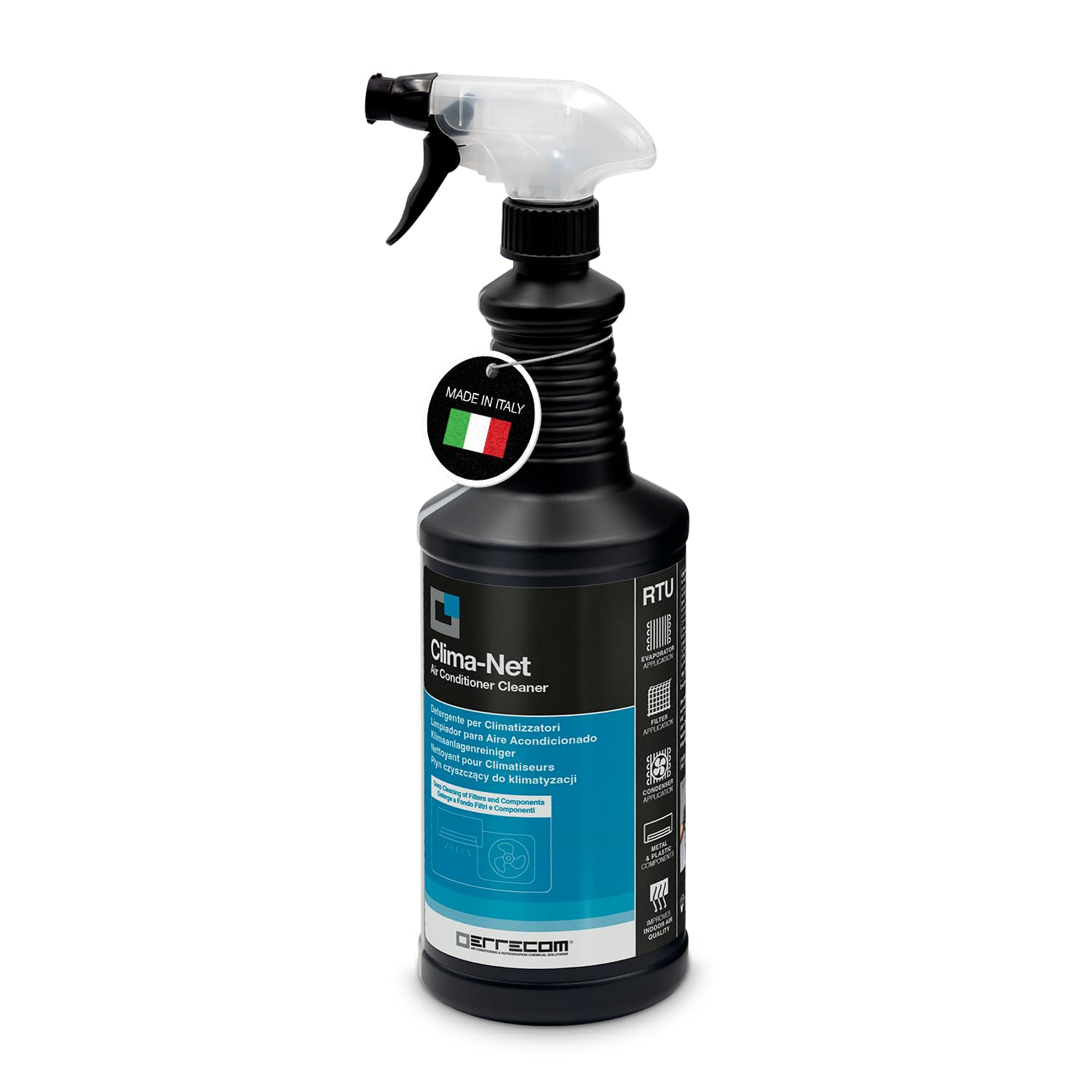
A versatile liquid cleaner made in Italy that works on ducts, filters, evaporator and condenser coils; comes in a pump-friendly bottle for foam or stream application.
Why I picked it: Large-volume, multi-surface formula that’s gentler and ideal for regular maintenance between pro services.
Best for: Whole-home upkeep and repeat use where coverage and economy matter.
Better value per use thanks to the larger bottle and refillable application options.
Pros
- Covers ducts, filters, and coils
- Generous 1 L refill bottle
- Gentler formulation for frequent use
- Works with pump bottle foam or stream
Cons
- Not as aggressive on heavy grime
- Manual application for some areas
My take
I use the Clima-Net bottle when I need to treat an entire system — air handler, mini-splits, and a few window units — without swapping cans. The pump bottle lets me switch between a steady stream and a foaming spray, which is handy for different components.
The formula is noticeably milder than industrial aerosols, so it does a great job keeping filters and ducts fresher without being overly harsh. For heavily caked condensers I sometimes follow up with a stronger cleaner, but for routine maintenance this bottle stretches a long way.
Packaging arrived leak-free and the nozzle design makes application less fussy. I’ll reach for this between professional deep cleans to maintain airflow and indoor comfort.
3. QwikProducts Foaming Coil Cleaner – Best for Heavy-Duty Cleaning
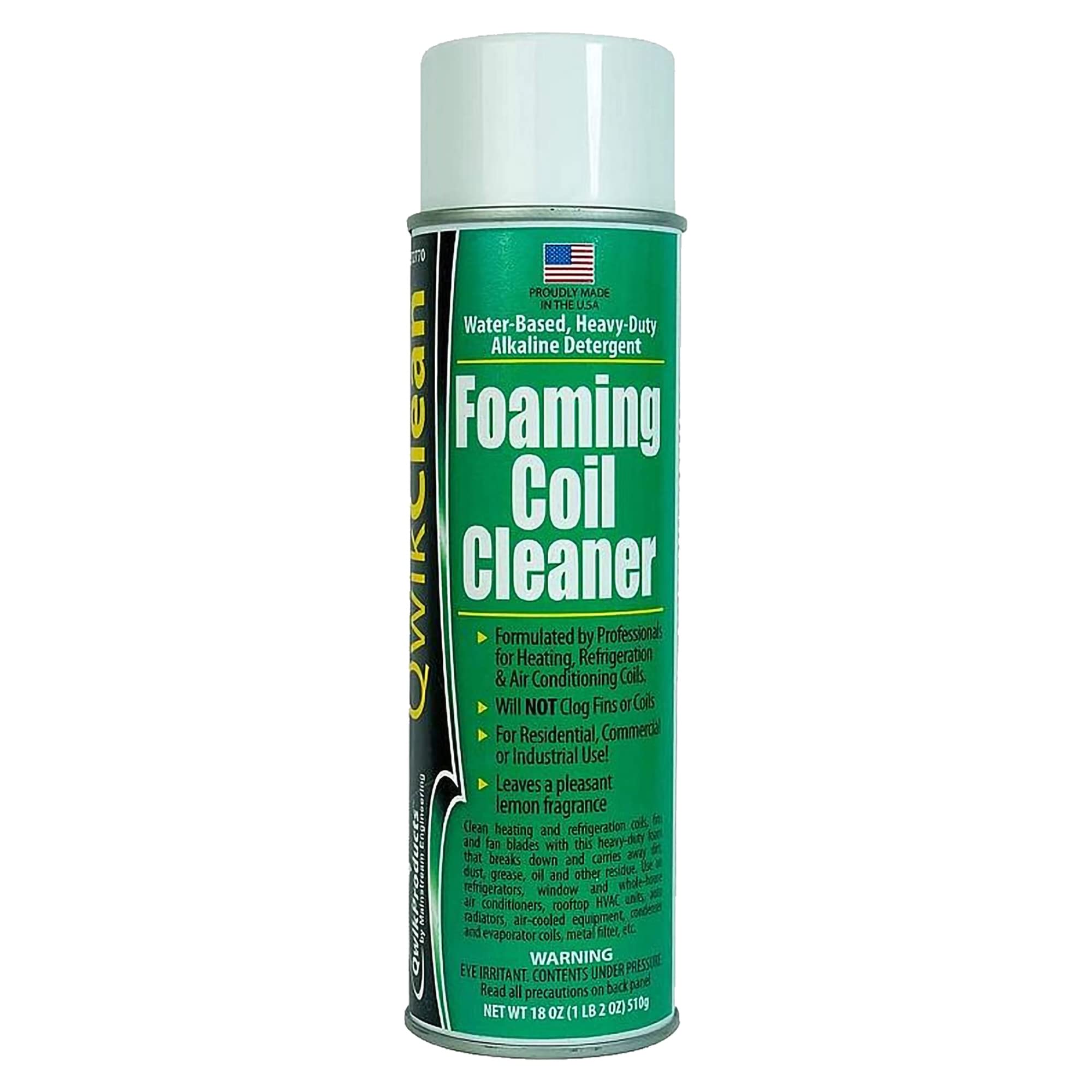
An industrial-strength foaming cleaner that breaks down dirt, grease, and oil; self-rinsing on many units and leaves a pleasant lemon scent.
Why I picked it: Strong foaming action and self-rinsing design handle tougher, greasy buildup.
Best for: Outdoor condensers, greasy radiators, and units with heavy residue.
Higher-strength option aimed at tougher cleaning needs.
Pros
- Industrial-strength foaming action
- Self-rinsing on many applications
- Neutralizes odors with lemon scent
- Works across many equipment types
Cons
- May need manual rinsing on some units
- Aerosol format limits volume
My take
When I face grimy outdoor condensers or greasy heat-exchange surfaces, QwikProducts is my go-to. The foam expands into the fins and cuts through sticky residues that milder cleaners leave behind.
I’ve used it on an outdoor unit where I rinsed with a watering can and on a window unit where a gentle wipe finished the job. It also cleaned a CPU heatsink and a car evaporator during a few odd jobs, which speaks to its strength.
Because it’s designed to be self-rinsing, cleanup is usually simple, but I still rinse or flush condensers when possible to remove loosened debris completely.
4. AC Fin Comb & Brush Set (5-Piece) – Best for Repairs and Detail Cleaning
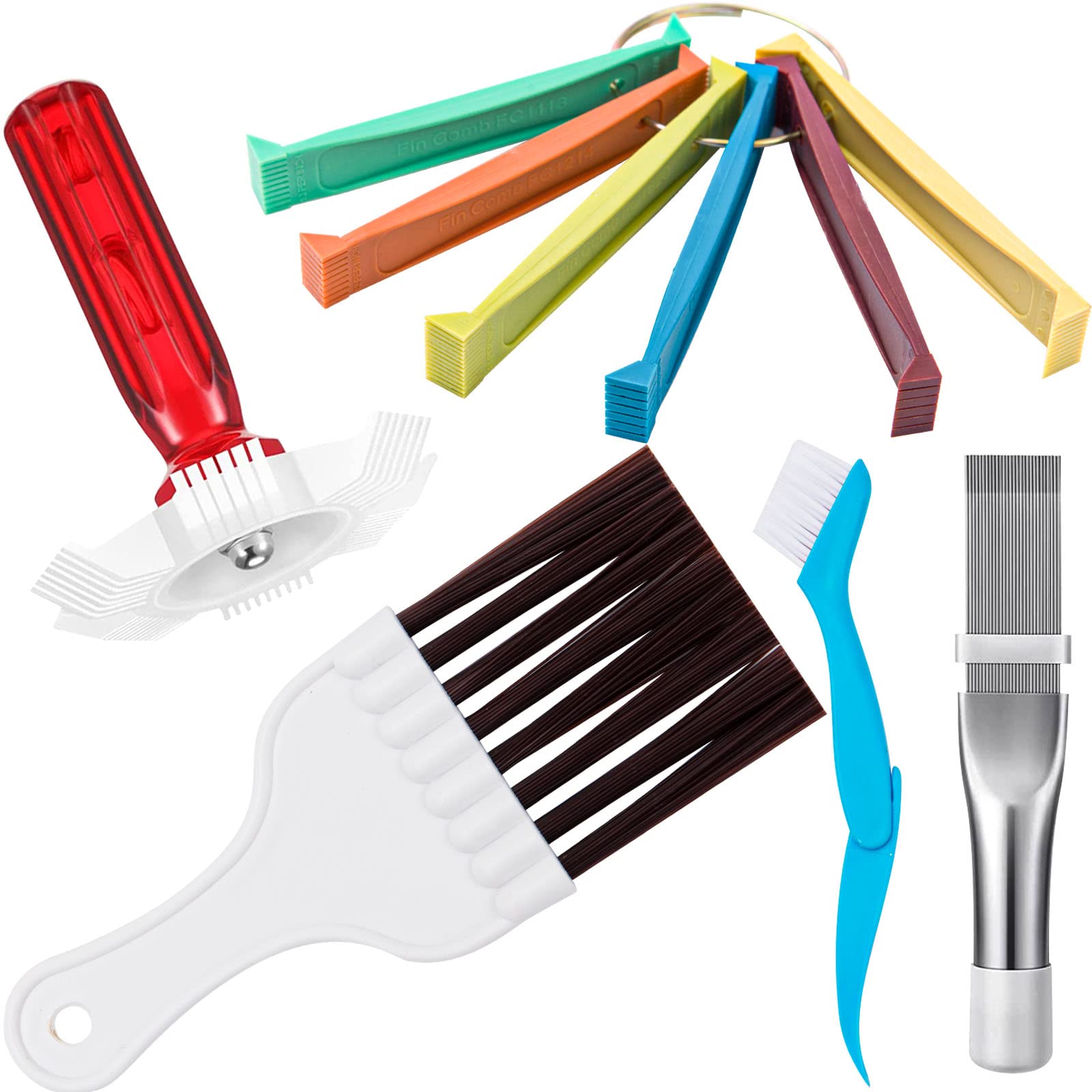
A five-piece kit with three fin combs and two brushes for straightening bent fins and scrubbing condensers and evaporators.
Why I picked it: Gives me the ability to restore bent fins and scrub out trapped debris without replacing parts.
Best for: Homeowners doing DIY fin straightening and detailed coil cleaning.
Very affordable toolkit for occasional maintenance and repairs.
Pros
- Multiple comb sizes for different fin spacing
- Includes brushes for deep cleaning
- Helps restore airflow by straightening fins
Cons
- Durability concerns with heavy use
- Struggles on severely flattened fins
My take
I keep this fin comb and brush set in my toolbox for jobs where airflow is limited by bent fins. With a little patience and soapy water to ease the comb through, I was able to open up rows and noticeably improve airflow.
The brushes are useful for dislodging stubborn dust and debris in tight areas. I did see the tools show wear after repeated use on very damaged fins, so I treat this as an affordable, replaceable kit rather than a lifetime solution.
For flattening or badly crushed fins you’ll still need professional repair, but for most homeowner-level bends this set does a solid job at a low cost.
How I Choose an AC Coil Cleaner
Key things I consider before picking a cleaner
I match the product to the job: foaming aerosols for deep penetration, liquid concentrates for whole-system maintenance, and hand tools for fin repair and detail work.
Safety and compatibility matter to me. I check whether a product is labeled for evaporator (no-rinse) versus condenser use and follow manufacturer guidance for metals and plastics.
Volume and frequency influence my choice. If I service multiple units I prefer a refillable bottle; for one-off touch-ups a spray can is more convenient.
- Foam vs liquid: foam expands into tight fins; liquids are better for large coverage.
- No-rinse formulas are great on evaporators—use condensate to rinse material away.
- Stronger, industrial formulas remove grease; gentler formulas are better for routine upkeep.
- Keep safety gear handy: gloves and eye protection at minimum.
- Use fin combs to straighten damaged fins before deep cleaning for better airflow.
Frequently Asked Questions
Can I safely clean my AC coils myself?
Yes — I perform basic coil cleaning myself regularly. I wear gloves and eye protection, power down the unit, and follow the product label. Evaporator coils with no-rinse cleaners are the easiest to handle; condensers often benefit from a light rinse afterward.
Do I have to rinse after using a foaming coil cleaner?
It depends on the product and where you apply it. I typically don’t rinse when the product is labeled no-rinse for evaporators because condensate clears residue. For outdoor condensers I prefer to give the unit a light rinse to flush loosened dirt.
How often should coils be cleaned?
I clean coils at least once per year during a seasonal tune-up and more often if units are in dusty or high-pollen environments. Filters and accessible components I check and clean more frequently.
Final Take
If I want a fast, professional-style clean for evaporators I reach for the Foam Blaster. For whole-system maintenance the ERRECOM bottle gives me coverage and flexibility, while QwikProducts handles the greasiest jobs. The fin comb set finishes the toolkit by restoring airflow where fins are bent.
Pick the product that matches the level of soil and the component you’re working on, follow safety instructions, and you’ll see better airflow and system performance after cleaning.
