
I tested and used these acrylic brush sets across miniature work, classroom projects, and everyday painting. Here are the ones I reach for most—each chosen for bristle performance, handle comfort, and overall value.
I paint regularly for fun and for work, so I look for brushes that hold a fine tip, survive repeated cleanings, and offer a useful variety of sizes.
In this roundup I focused on synthetic nylon bristles, ferrule construction, handle ergonomics, and the mix of sizes you actually use for acrylics and mixed media.
Below I explain why each set earned a spot in my kit and when I reach for it during a session.
I compared these sets head-to-head on tip retention, shedding, ease of cleaning, and how comfortable the handles felt during long sessions. I also tested them on acrylic, watercolor, and small-scale projects like miniatures and rock painting to judge versatility.
1. BOSOBO 20-Piece Nylon Brush Set – Best Value
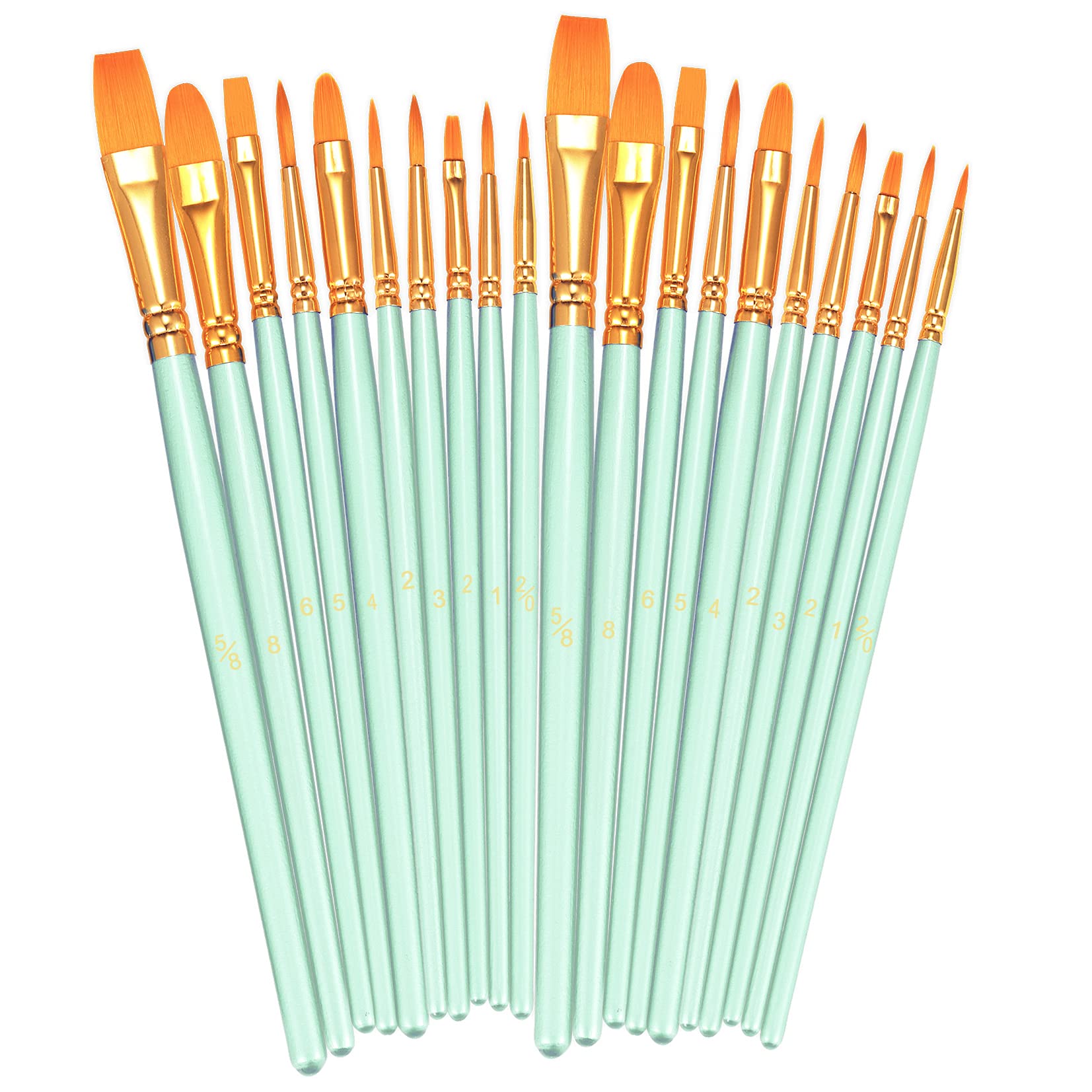
A 20-brush two-pack that delivers a wide range of sizes, soft yet springy nylon bristles, and double-crimped nickel ferrules—great value for detail and general use.
Why I picked it: Huge size assortment, no shedding, and bristles that spring back after washing.
Best for: Miniatures, detailed acrylic work, mixed-media hobby projects.
Very affordable two-pack that stretches a budget.
Pros
- Twenty useful sizes
- Soft but springy nylon bristles
- Double-crimped nickel ferrules
- Short handles for precise control
- Holds shape after repeated washes
Cons
- Short handles can feel cramped on large canvases
- Not intended for heavy-bodied large-area coverage
- No individual protective tubes included
My take
I reach for this BOSOBO set when I need lots of size options without paying for specialty brushes. The two-pack gives me small liners for fine hairs and slightly broader rounds for washes.
The nylon bristles are soft enough for smooth strokes but firm enough to keep a point—I've used them on acrylics, watercolor, and even basic oil techniques with predictable control.
The nickel ferrules are double-crimped and stayed tight after many washes; I didn’t experience bristle loss, which matters when I work on tiny details.
Cleaning is straightforward with warm soapy water, and the tips reshape reliably. The short wooden handles give me very close control for miniatures and rock painting, though I switch to a longer-handle brush for larger canvases.
2. Crafts 4 All 10-Piece Brush Set – Best for Crafts & Holidays
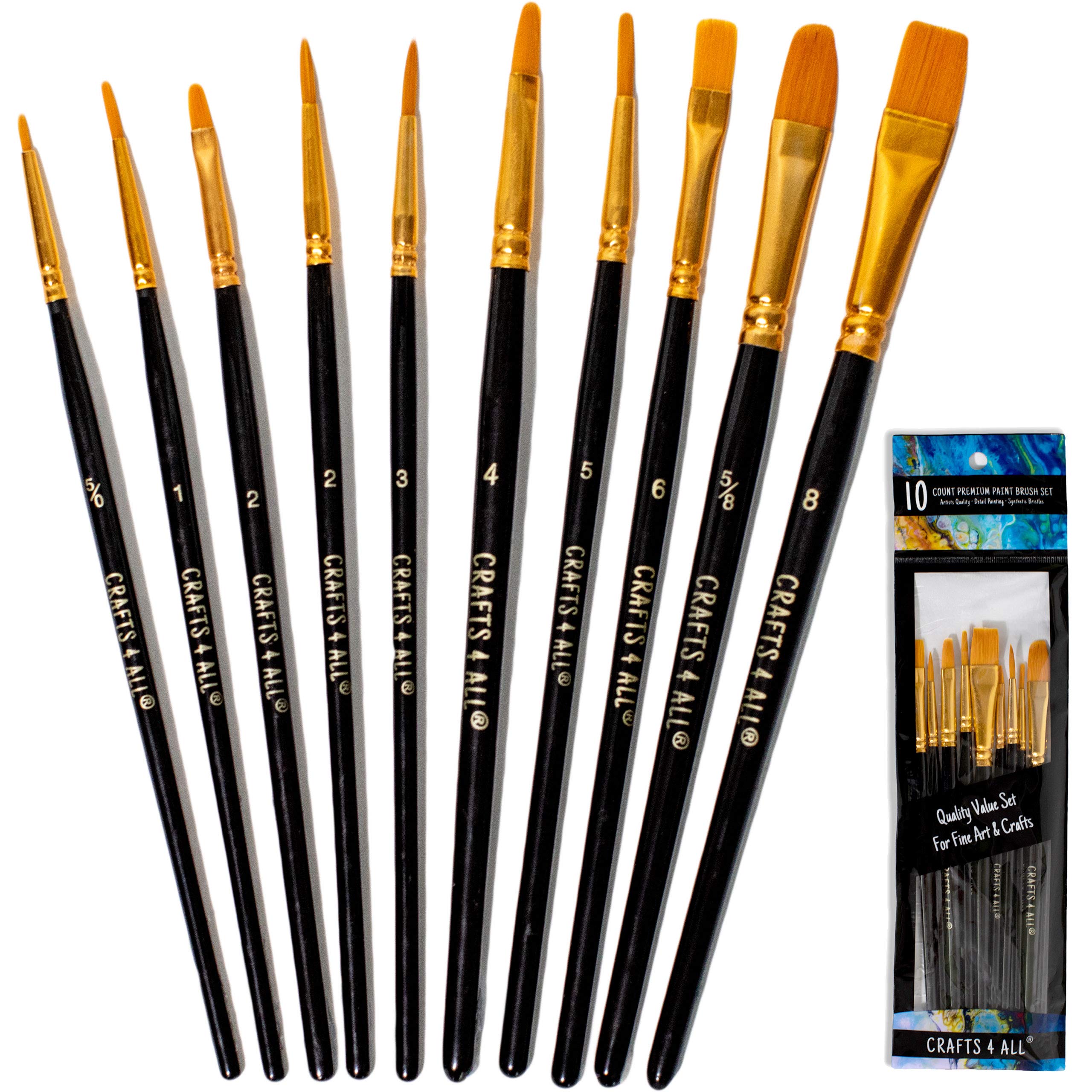
A versatile 10-brush set aimed at seasonal crafts and general decorating; bristles are sturdy and handle a variety of materials well.
Why I picked it: Sturdy bristles and versatile tips for craft projects and holiday decorations.
Best for: Holiday crafts, model detailing, classroom projects, DIY decorations.
Low-cost single set that covers basic needs.
Pros
- Sturdy bristles that hold shape
- Good mix of tip styles
- Works well across craft materials
- Easy to wash
Cons
- Glossy handle finish can chip
- A few brushes may arrive uneven
My take
I use this Crafts 4 All set when I’m preparing decorations or working on model kits—those stiffer bristles stand up to glue, mod podge, and repeated handling.
A handful of brushes arrived with slightly uneven bristles, but a quick trim fixed them and they performed reliably afterward.
The handles are easy to grip, though the glossy finish showed wear faster than the bristles; it doesn’t affect performance but is worth noting if you like a pristine look.
Overall this set is exactly what I pick up for seasonal projects and kids’ activities: versatile, forgiving, and inexpensive to replace when needed.
3. 20-Piece Assorted Nylon Brush Set – Best for Families & Classrooms
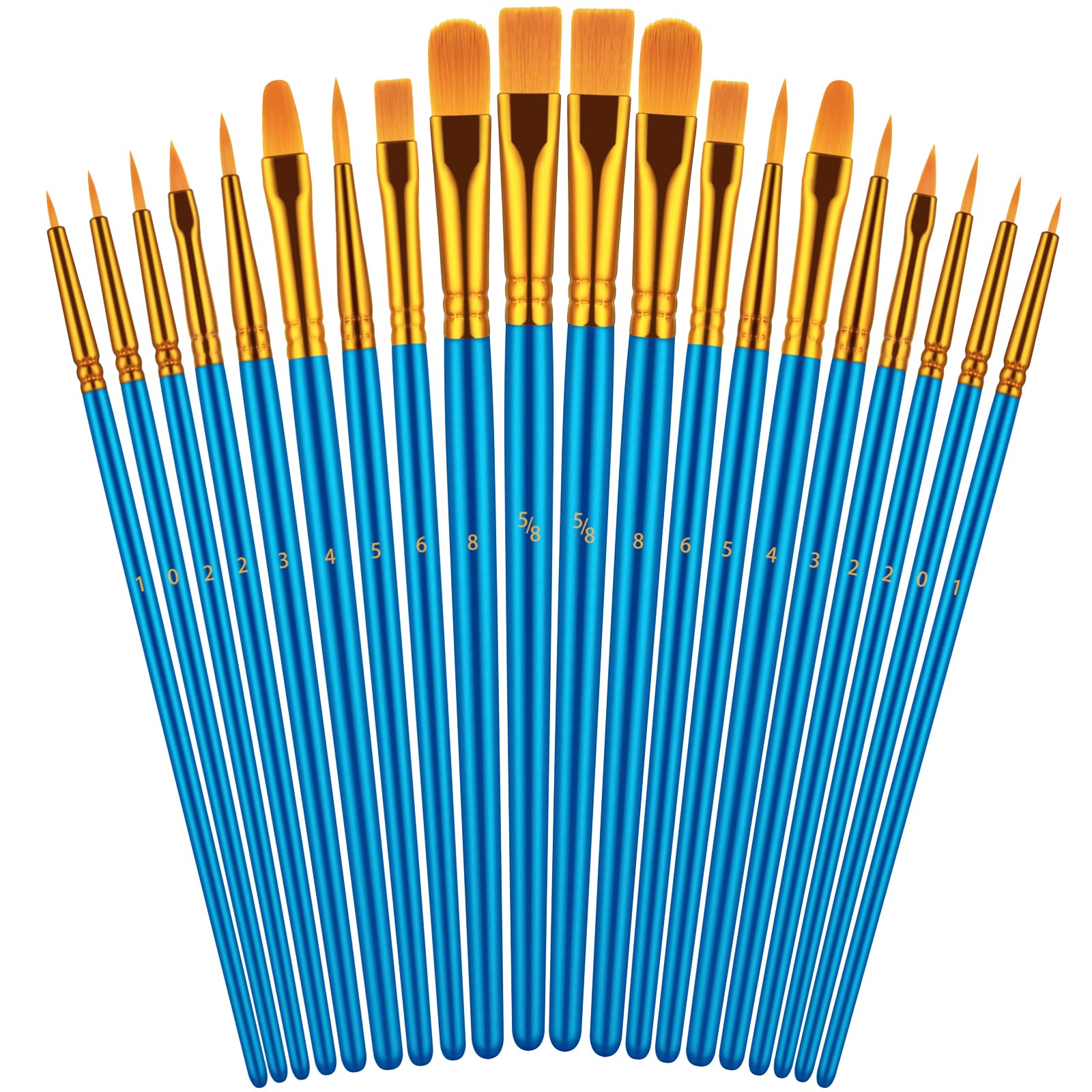
A twin pack of ten sizes with UV-coated wooden handles and nickel ferrules; suitable for family painting, classroom use, and multi-surface crafts.
Why I picked it: Longer UV-coated handles and reliable bristle spring-back make it great for group projects.
Best for: School lessons, family art nights, face and rock painting.
Budget-friendly twin pack built for groups.
Pros
- UV-coated wood handles
- Soft bristles that retain shape
- Wide variety of sizes
- Works on many surfaces
Cons
- Color inconsistencies in bristles
- May struggle on some heavier canvases
My take
This 20-piece assortment is my go-to when I need enough brushes for a group or multiple projects at once.
The UV coating on the handles resists peeling and makes them feel more durable in classroom and family-use scenarios.
Bristles hold water well without collapsing, and they cleaned up nicely after acrylics and craft glues. I did notice a color inconsistency on one set—some handles and bristles didn’t match the photos—but it didn’t affect performance.
If you need a large, inexpensive supply for lessons or parties, this set covers the bases without fuss.
4. eBoot Triangular-Handle Detail Brush Set – Best for Fine Detail
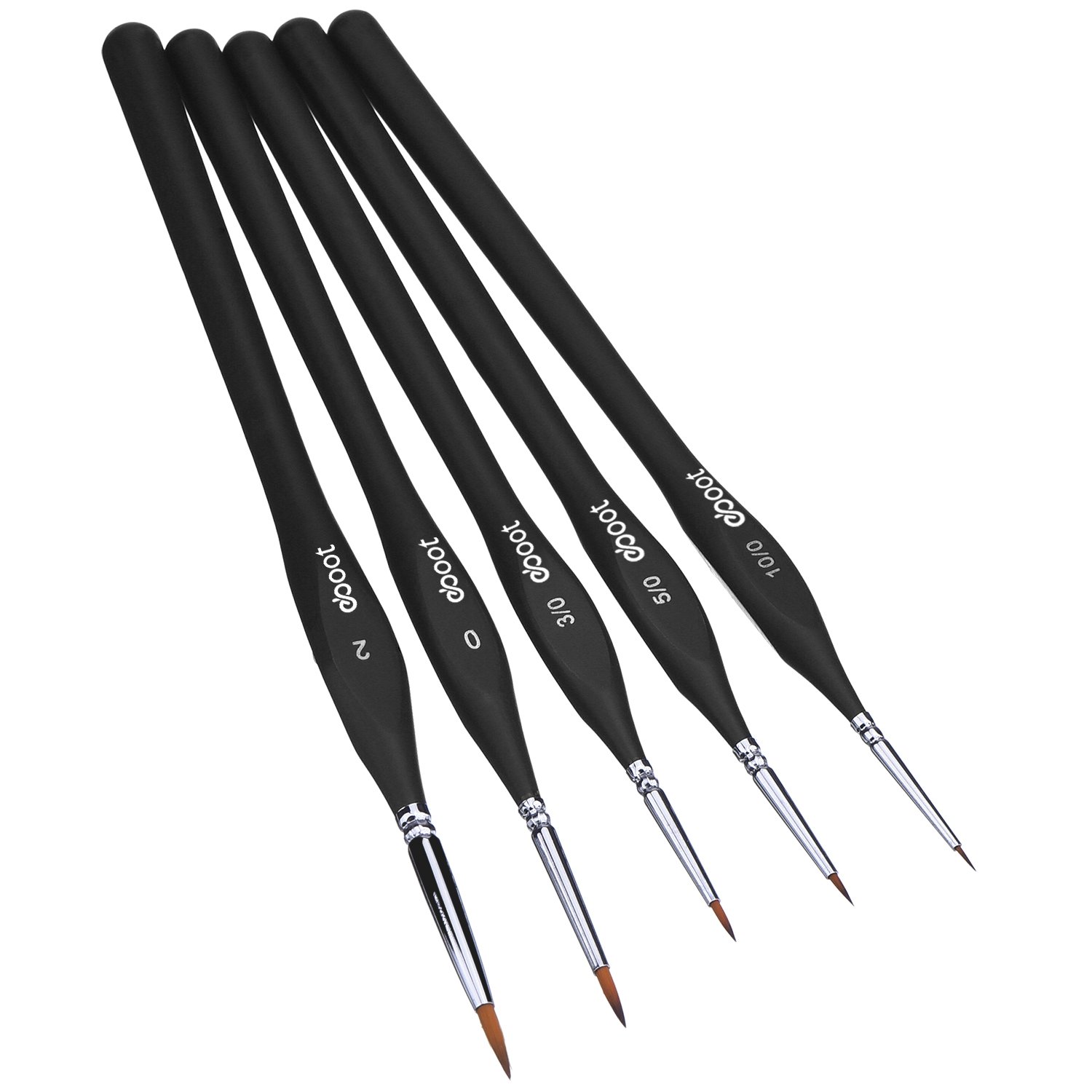
A focused five-piece detail set in ultra-fine sizes with triangular handles and protective tubes—built for precision work and safe storage.
Why I picked it: Ultra-fine tips that keep their point and protective tubes for travel.
Best for: Miniature painting, fine lining, paint-by-number kits.
Inexpensive specialist set for detailed work.
Pros
- Ultra-fine tip sizes
- Protective storage tubes included
- Triangular ergonomic handles
- Hairs stay attached under pressure
Cons
- Only five detail sizes
- Not suited for covering large areas
My take
When I need the finest hairlines or tight control, I reach for this eBoot set. The smallest sizes—10/0 and 5/0—keep a sharp point and don’t splay under light pressure.
The triangular handle is a subtle but real improvement for my grip; it reduces fingertip fatigue during long, precise passes.
Protective tubes are a big plus—I store the brushes tip-up after cleaning and the tubes prevent accidental flattening when packed.
These brushes are narrowly focused on detail work; I still pair them with a larger round or flat when I need to block in color quickly.
How I Choose Acrylic Paintbrushes
Bristle Type and Performance
I usually choose synthetic nylon for acrylics because it resists water, dries quickly, and holds a consistent tip.
When I need softer washes for watercolor, I still prefer synthetics that imitate natural hair but handle cleanings better.
- Nylon: durable, springy, good for acrylic and mixed media.
- Look for tips that return to a point after washing.
- Avoid brushes that shed or leave loose hairs on the work.
Ferrules and Construction
A solid ferrule keeps the hairs attached and prevents wobble over time. I prioritize double-crimped, rust-resistant ferrules.
Well-attached ferrules and a smooth handle finish are signs the set will last through multiple cleanings.
- Double-crimped nickel ferrules resist loosening.
- Check for smooth ferrule-to-handle joints to avoid paint traps.
- Replace brushes with loose ferrules—repair is rarely worth it.
Handle Style and Length
Short handles give me more control for miniatures and fine detail; long handles are better for easel work and looser strokes.
Ergonomic shapes like triangular handles help when I’m doing long sessions of precision work.
- Short handle: precision and control.
- Long handle: easel painting and sweeping strokes.
- Ergonomic grips reduce hand fatigue on detailed pieces.
Assortment and Purpose
I match set size to how I work: small multi-packs for families or classrooms, and focused detail sets for miniatures.
Having a range of rounds, flats, filberts, and liners means I can switch between effects without stopping to clean repeatedly.
- Large assortments: good for groups and mixed projects.
- Small specialist sets: ideal for precision tasks.
- Think about surface type—canvas, paper, rock, and models demand different brushes.
Care and Longevity
I clean brushes promptly after use with warm soapy water for acrylics and reshape the tip before drying.
I never leave brushes resting on their heads in water; I store them tip-up or flat to protect the ferrule and hairs.
- Clean immediately after use to avoid stiffening.
- Use gentle reshaping and air-dry flat or upright.
- Protective tubes extend tip life during travel and storage.
Frequently Asked Questions
Are synthetic nylon brushes good for acrylics?
Yes. I prefer synthetic nylon for acrylics because it resists water, dries quickly, and holds a reliable point for fine lines and washes.
How should I clean and store these brushes?
I rinse acrylics with warm soapy water right after use, reshape the tip with my fingers, and store brushes upright or in protective tubes to avoid bending the hairs.
Can I use these brushes for oils and watercolors too?
I use synthetic sets across acrylic, watercolor, and light oil work. For heavy oil painting I sometimes choose stiffer or natural-hair brushes, but these synthetics handle versatile tasks well.
Final Take
Each of these sets earns a place in my studio for different reasons: the BOSOBO set for overall value and variety, the Crafts 4 All kit for craft and holiday work, the 20-piece twin pack for classroom and family sessions, and the eBoot set when I need the finest detail.
I recommend picking the set that matches your usual subjects—go broad for group projects or tight and ergonomic for detailed miniature work—and follow the care tips here to keep tips performing longer.
