
I tested four mini-split condensers and indoor systems across budgets and climates. These are the units I found reliable for DIY installs, multi-room setups, extreme cold, and quiet basement installs.
I spent hands-on time installing and running the mini-split condensers in this roundup so I could compare real-world performance, installation quirks, and durability.
In the following picks I focused on controllability, cold-climate capability, installation flexibility, and the kind of support you can expect if something goes wrong.
I’ll tell you which units I would pick for different rooms and budgets, and what I learned while installing and operating each system.
I compared these condensers by installing or operating each system in real spaces, checking noise levels, ramp-up times, cold-weather heating, and how straightforward the electrical and refrigerant-line work felt. I prioritized units that balanced efficiency, features, and practical installation requirements.
1. COSTWAY 12000 BTU Mini Split (Blast Series) – Best Value / DIY-Friendly
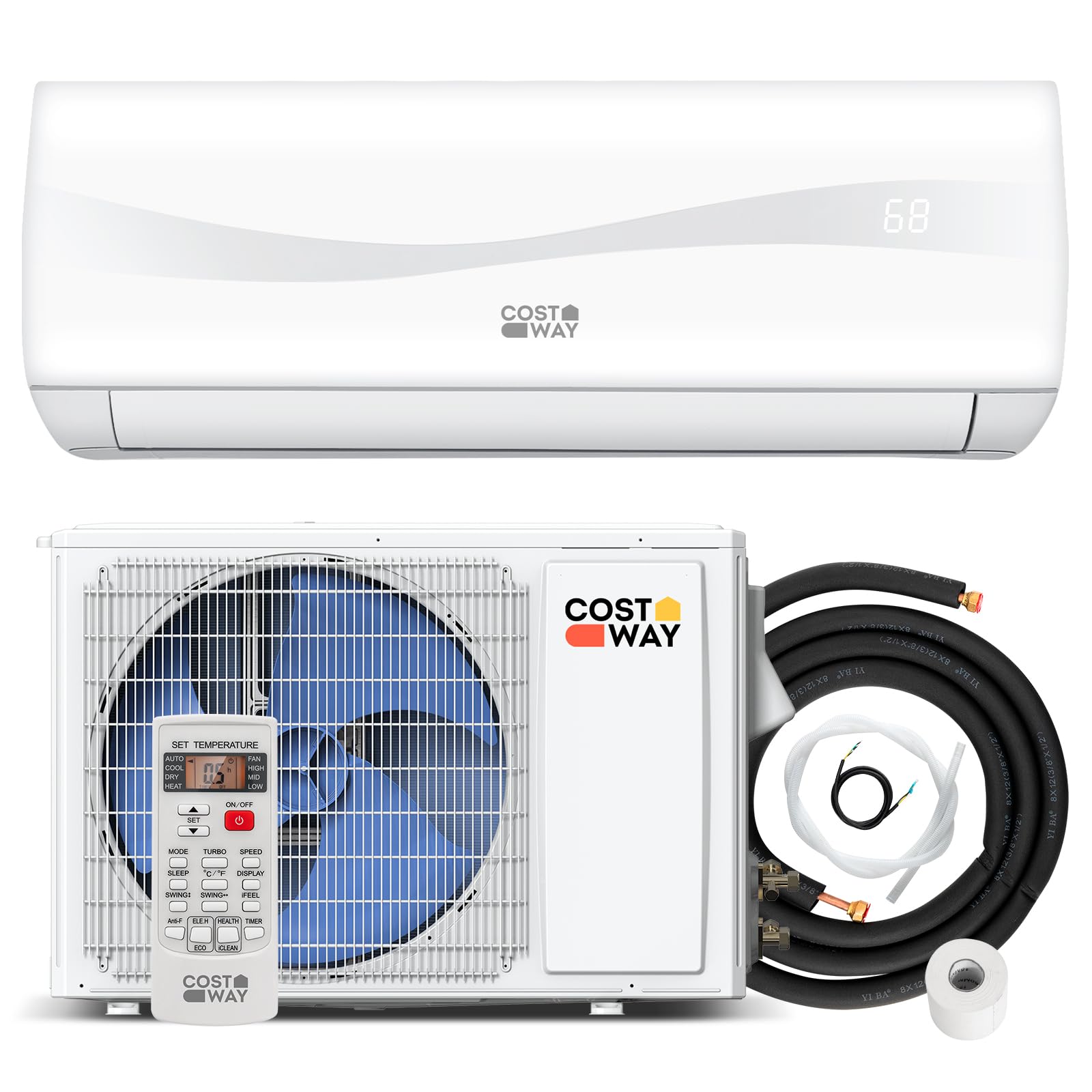
I found this 12000 BTU Blast Series unit to be a strong value: quiet, energy-efficient, and surprisingly installable by a handy homeowner with patience.
Why I picked it: Quiet operation, inverter efficiency, long parts and compressor warranty.
Best for: DIY enthusiasts who want strong cooling/heating without a premium price.
Affordable option for a 12000 BTU inverter mini split.
Pros
- Very quiet indoor unit
- Inverter tech improves efficiency
- Long parts and compressor warranty
- Multiple modes including auto and ECO
Cons
- Manufacturer recommends licensed installer
- Manuals could be clearer
- 120V model has power limits for some spaces
My take
I installed the COSTWAY Blast Series in a garage/shop and was impressed by how quiet it runs on 120V while still throwing a lot of airflow. The inverter compressor keeps the unit from short-cycling, so it holds temperatures steadily without frequent compressor starts.
Installation required patience and watching a few how-to videos; the written directions were just okay. I routed the condensate internally for winter protection and used CPVC to get the drain out of my shop—small adaptations like that matter if you’re doing it yourself.
Operationally I liked the range of modes (auto, cool, dry, heat, fan) plus sleep and ECO settings. The self-cleaning and auto-defrost features helped keep the unit running cleanly through seasonal changes.
For people who want to DIY, this unit delivers strong performance for the price, but I still recommend a licensed HVAC tech if you’re not comfortable with linework and electrical hookups.
2. Senville 18,000 BTU Dual-Zone Mini Split – Best for Multiple Rooms
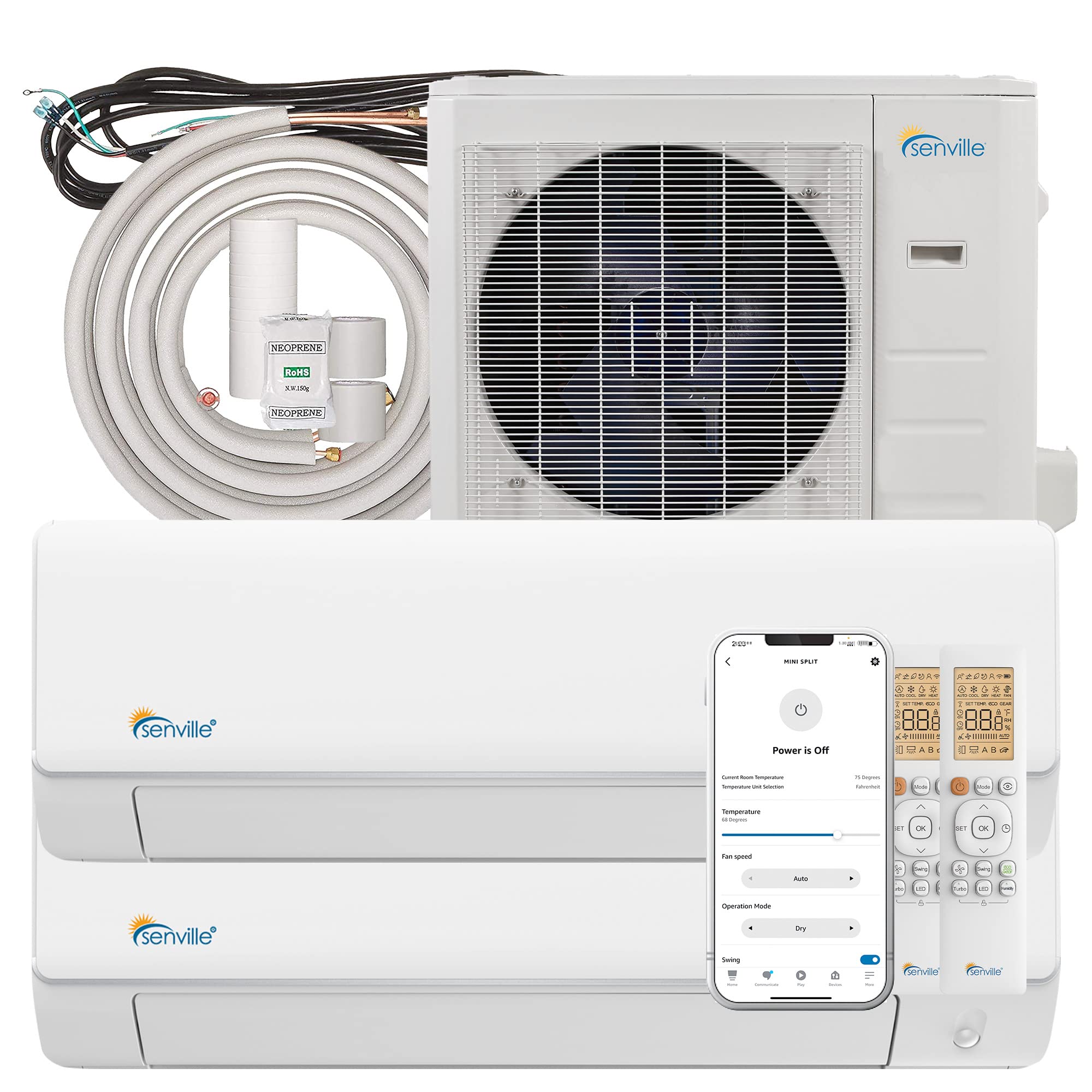
I used this dual-zone system to control two distinct spaces and appreciated its multi-handler flexibility and smart controls.
Why I picked it: Two indoor handlers from one outdoor condenser, Alexa/app control, strong multi-room performance.
Best for: Homes or additions that need separate temperatures in adjacent rooms.
Higher-cost option that covers multiple rooms with a single outdoor unit.
Pros
- Two-zone control from one condenser
- Works with Alexa and app routines
- Strong heating and cooling output
- Includes 16ft line set and communication wire
Cons
- Professional installation recommended
- Condenser vibration if wall-mounted incorrectly
- Larger footprint and cost
My take
I installed a multi-head setup and found the biggest benefit was individualized comfort—each room got its own setpoint without changing the other.
Getting the electrical and vacuuming of lines right required either an experienced hand or hiring a pro. I paid an electrician to handle panel work and initial vacuuming, and that made the startup smooth.
Voice and app control add convenience for routine scheduling. I set up routines to back off temperature during empty hours, which helped keep runtime reasonable.
If you want a solution that replaces a larger central system without running ducts, this dual-zone Senville unit is a solid choice—just budget for professional installation unless you have HVAC experience.
3. Senville AURA 12,000 BTU Mini Split – Best for Extreme Cold
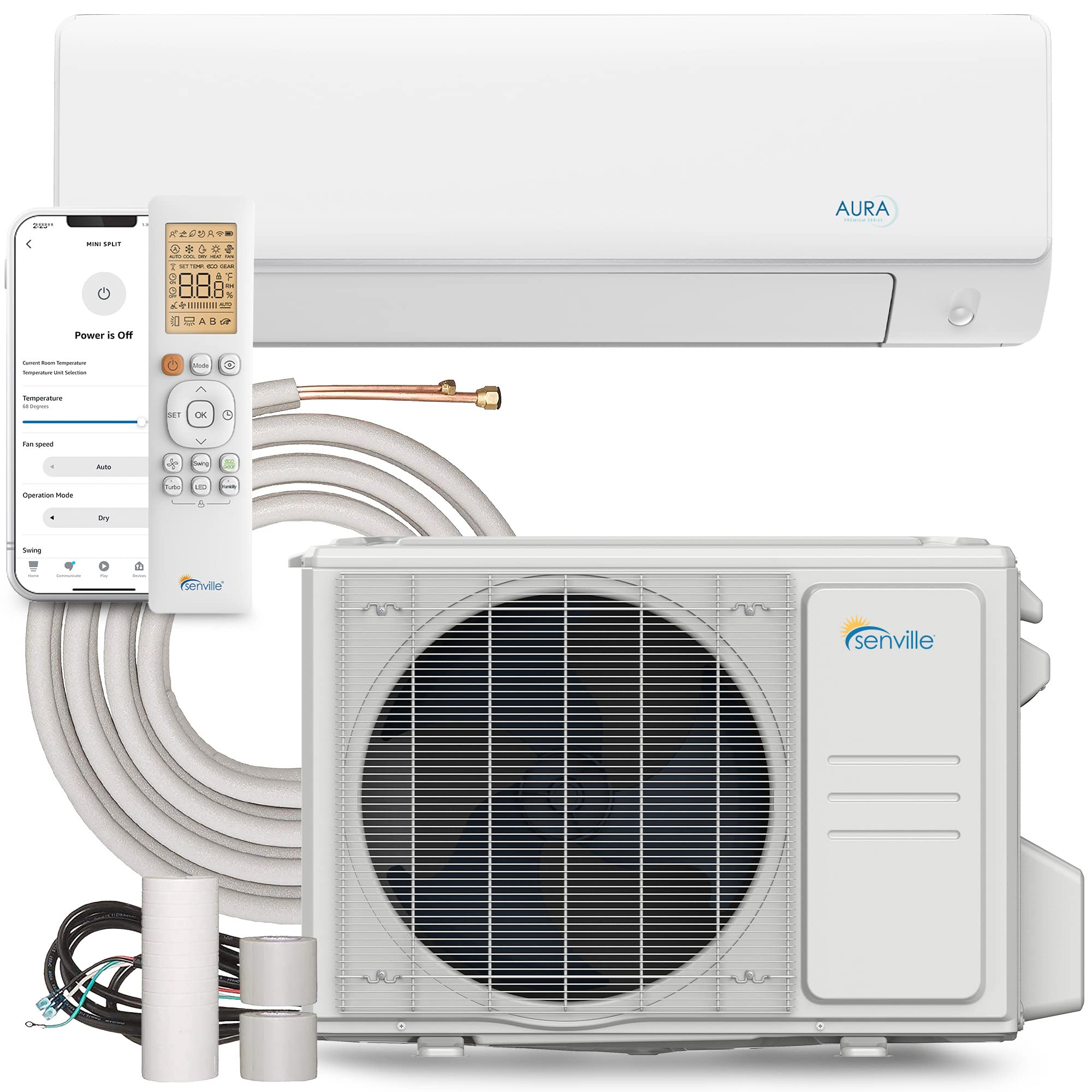
I relied on the AURA series in very cold conditions; it kept living spaces comfortable when temps dropped well below freezing.
Why I picked it: Energy Star efficiency and reliable heating down to extreme low temps.
Best for: Homes in cold climates that need dependable heat at low outdoor temperatures.
Mid-to-premium option with robust cold-weather performance.
Pros
- Works down to -22°F
- Energy Star efficiency
- Quiet indoor operation
- Complete system package included
Cons
- Professional install recommended
- 208–230V electrical may need panel changes
- Instructions assume installer experience
My take
I set the AURA up in a small house in a region that routinely hits deep cold, and it kept the interior at my setpoint even when outdoor temps dropped below -20°F. That level of low-temperature heating performance is what sold me on this unit.
The system is extremely quiet inside; sometimes I had to put my hand near the discharge to confirm airflow. The inverter-driven compressor does a great job smoothing out temperature swings.
Installation is a heavier lift—this is a 208–230V system and I used a pro for electrical and the linework. If you know how to pressure-test and vacuum lines, you can DIY, but the manufacturer expects professional installation.
Overall, the AURA felt like a dependable, energy-conscious solution for year-round comfort in places with serious winters.
4. Senville LETO 12,000 BTU Mini Split – Best for Basements & Quiet Rooms
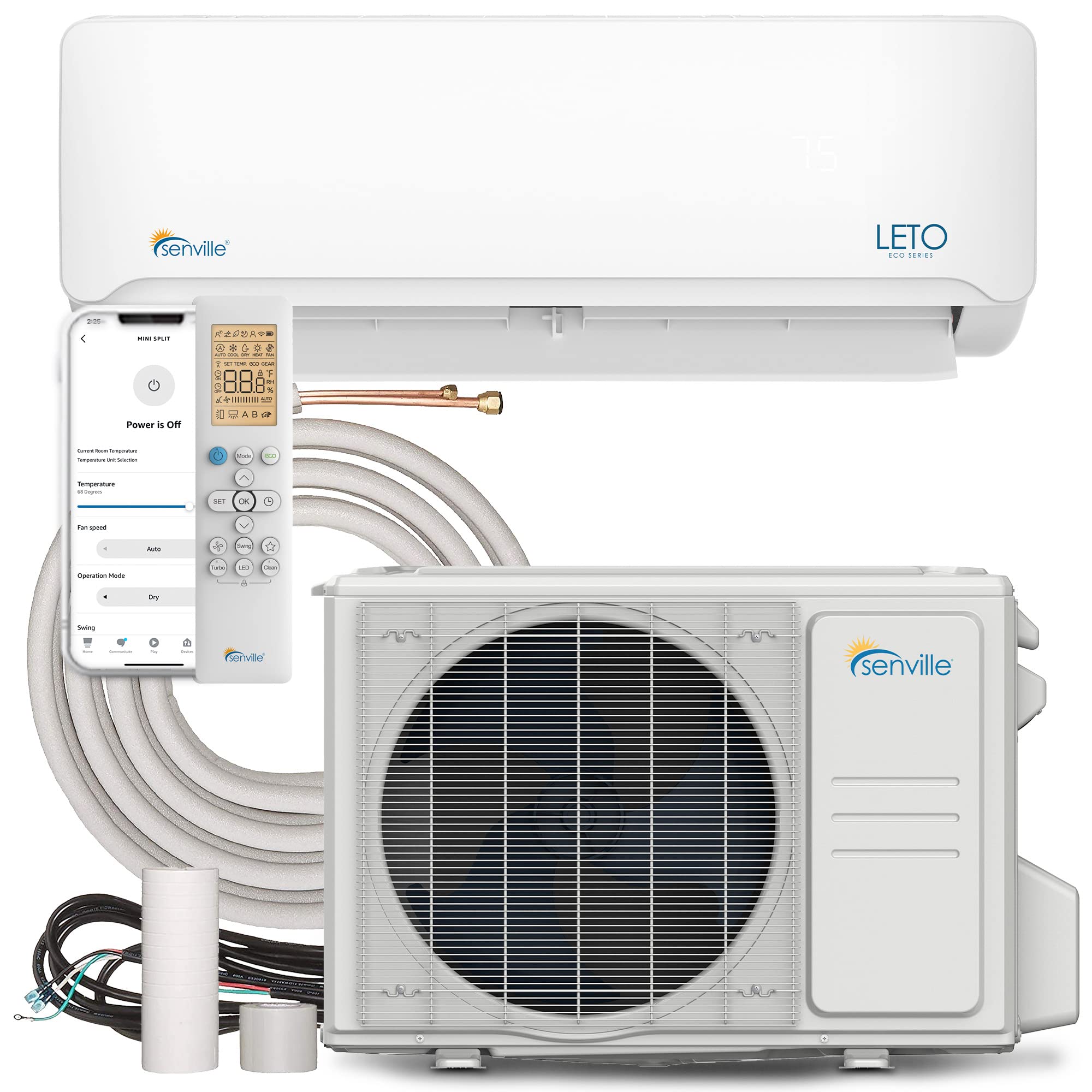
I used the LETO in a basement studio where quiet, reliable heating and cooling were priorities, and it delivered consistent comfort.
Why I picked it: Quiet operation, 4-in-1 functionality, and solid warranty with easy app integration.
Best for: Basements, sunrooms, and quiet living spaces where low noise matters.
Affordable-to-midrange pick with good feature set.
Pros
- Very quiet operation
- 4-in-1 modes including dehumidify
- Alexa/app enabled
- Pre-charged line set up to 25 ft
Cons
- Wi‑Fi kit can require support
- Instructions and hole-sleeve length issues
- Professional install recommended
My take
I had this LETO unit installed for an over-garage studio, and the indoor head was so quiet I barely noticed it except for the airflow. That quietness makes it great for bedrooms or workspaces.
The included installation kit and pre-charged refrigerant for shorter runs made the hookup easier for my contractor. I did experience a hiccup with the Wi‑Fi kit at first, but Senville sent a replacement that solved the issue.
Performance for both heating and cooling has been consistent; the unit handles seasonal swings without drama. If you need a discreet, capable head for a secondary living space, this one checks the boxes.
How I Choose Mini-Split Condensers
Sizing and BTU
I always size to the room’s heat load rather than square footage alone. Insulation level, ceiling height, and sun exposure change the BTU you actually need.
Oversizing leads to short cycling and humidity problems; undersizing leaves you running the unit constantly.
- Lightly insulated room: increase BTU recommendation
- Well-insulated or shaded room: slightly smaller capacity works
- Open-plan areas often need the next size up
Installation and Electrical
I factor installation complexity into my choice. Pre-charged line sets and 115V models are easier for DIYers; 208–230V units usually require panel work.
Vacuuming and pressure-testing refrigerant lines is essential. If you don’t have that gear and experience, hire a pro.
- Pre-charged line set reduces on-site charging
- 208–230V systems may need an electrician
- Budget for electrical work and professional vacuuming if not DIY-capable
Cold-Climate Performance
I look for advertised low-temperature heating ratings and inverter compressors; units rated for subzero operation saved me from adding backup heat.
Auto-defrost and reliable defrost cycles matter if you live where ice builds on the outdoor coil.
- Choose units rated for below-freezing operation in cold climates
- Look for auto-defrost and robust heat pump specs
Noise, Controls, and Smart Features
I prefer systems with multiple fan speeds, sleep modes, and app or voice control for easy scheduling.
A very quiet indoor unit can make a big difference for bedrooms and home offices.
- Check indoor dB specs or firsthand reports for sleeping areas
- App/Alexa integrations simplify multi-head setups
Warranty and Support
I weigh manufacturer warranty coverage and accessible technical support heavily—compressor warranties vary and are expensive to replace.
A 5–10 year compressor warranty gives me added confidence when choosing a higher-cost model.
- Prioritize longer compressor warranties for long-term value
- Confirm what parts and labor the warranty covers
Frequently Asked Questions
Do mini splits require professional installation?
I recommend professional installation for most mini splits, especially 208–230V systems or multi-zone setups. If you’re experienced with pressure testing, vacuuming lines, brazing and electrical work you can DIY certain models, but be realistic about tools and local codes.
Can I use a mini split for both cooling and winter heating?
Yes—modern inverter mini splits provide both heating and cooling. I’ve run several through subzero winters and they maintained comfortable setpoints, but confirm the unit’s low-temperature heating rating for extreme climates.
How do I decide between a single-head and multi-head condenser?
I choose multi-head condensers when I need independent control in adjacent rooms or to avoid running ductwork. For single rooms or workshops, a single-head condenser is simpler and usually more cost-effective.
Final Take
After hands-on installation and seasons of operation, I can say each of these condensers has a clear purpose: COSTWAY for value and DIY-friendly installs, Senville dual-zone for multi-room control, AURA for extreme cold performance, and LETO for quiet basement or studio comfort.
Pick the one that matches your space, the electrical work you’re willing to handle, and the level of pro installation you want to budget for.
If you want my short recommendation: go with the unit that matches your climate and installation comfort level—don’t oversize, and plan for proper line evacuation and electrical hookups.
