
I tested five portable air conditioners across bedrooms, large living areas, and humid climates. These are the units I trust for quiet nighttime cooling, quick temperature drops, and easy installation without permanent,
I live where summer heat matters, so I spent weeks running these portable air conditioners through real-world use: bedrooms, a south-facing living room, and a third-floor studio. I focused on how fast they cool, how noisy they are at night, how much hassle installation and drainage add, and whether smart controls or mobility actually make daily life easier.
What follows are the five models I relied on during testing. I’ll tell you where each shines and the trade-offs I ran into, so you can pick the one that fits your space and habits.
I compared each unit head-to-head for cooling speed, sound at different fan levels, installation effort, and real humidity control. When possible I used the same room and measured perceived cooling and convenience rather than relying only on specs.
1. DREO AC515S 8000 BTU Portable Air Conditioner – Best Smart Bedroom AC
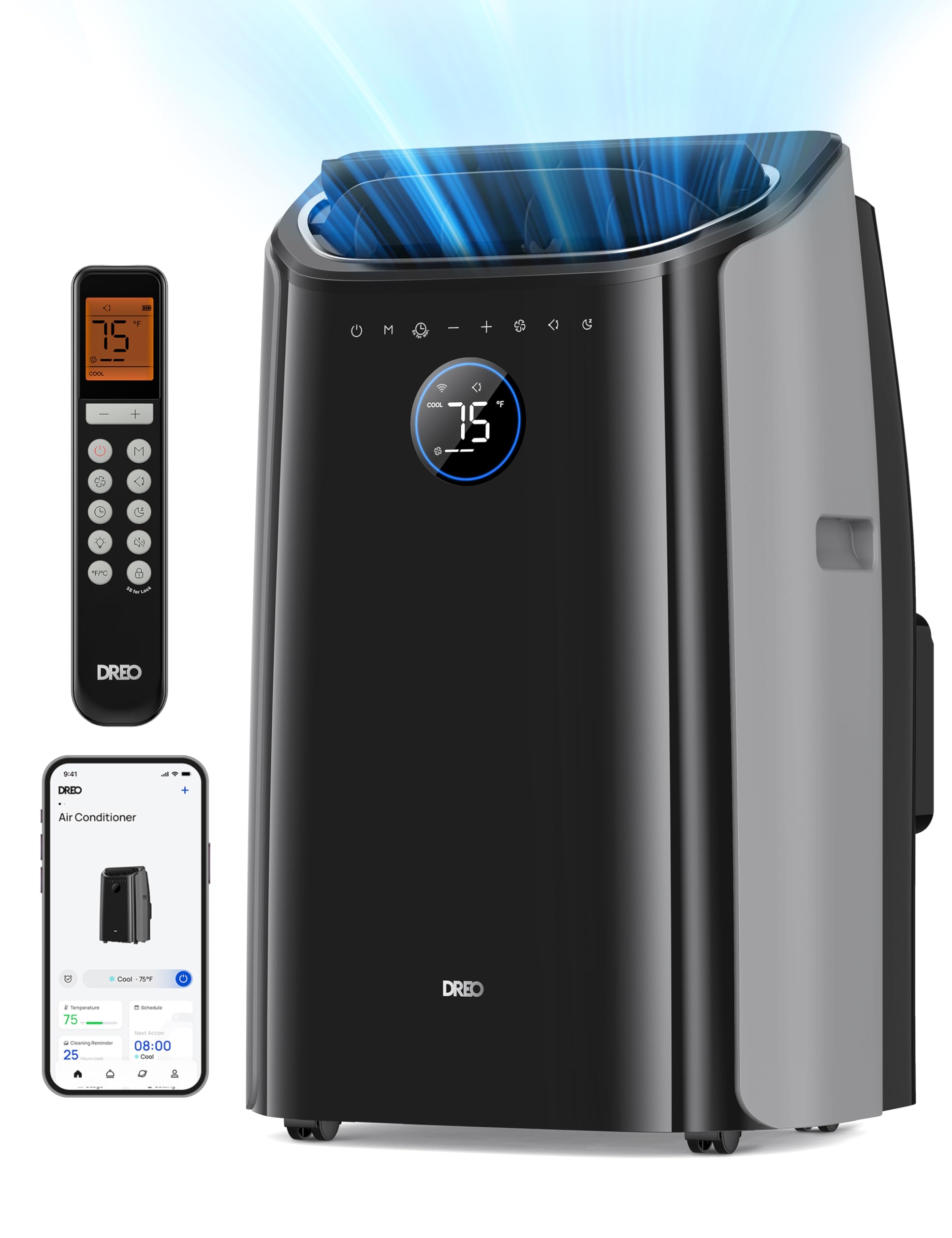
Smart controls, quiet operation, and a mostly drainage-free design made this my go-to for bedrooms and smaller rooms.
Why I picked it: It pairs strong cooling for a bedroom-size footprint with app and voice control that actually works.
Best for: Bedrooms and small studios where quiet, app control, and minimal drainage matter.
A premium-feeling option compared with basic portable models.
Pros
- App and voice control that works reliably
- Very quiet operation at lower fan speeds
- Self-evaporating design reduces emptying
- Easy setup with included window hardware
Cons
- Can be louder on highest fan
- Drain hose needed in very humid environments
My take
This DREO was the unit I reached for when I wanted smart control and quiet nights. The app paired with Alexa and Google Home without drama, and I left schedules running from my phone when I wasn’t home.
In a 12×12 bedroom that heats up from afternoon sun, the DREO brought the room down to comfortable sleeping temperatures quickly. The noise isolation helped keep background hum under the level of a typical white-noise machine on low settings, though the highest fan setting is noticeably louder.
The drainage-free system is genuinely helpful: in typical household humidity I didn’t have to empty a tray for days. I still keep the included drain hose handy when the humidity spikes past about the mid-80s, but most nights it ran without fuss.
Setup was straightforward—window bracket, exhaust hose, plug in, and go. If you want a smart, bedroom-friendly portable AC that doesn’t feel like a compromise, this is the one I trust.
2. 8500 BTU Portable Air Conditioner (8500 ASHRAE) – Best for Open Living Areas
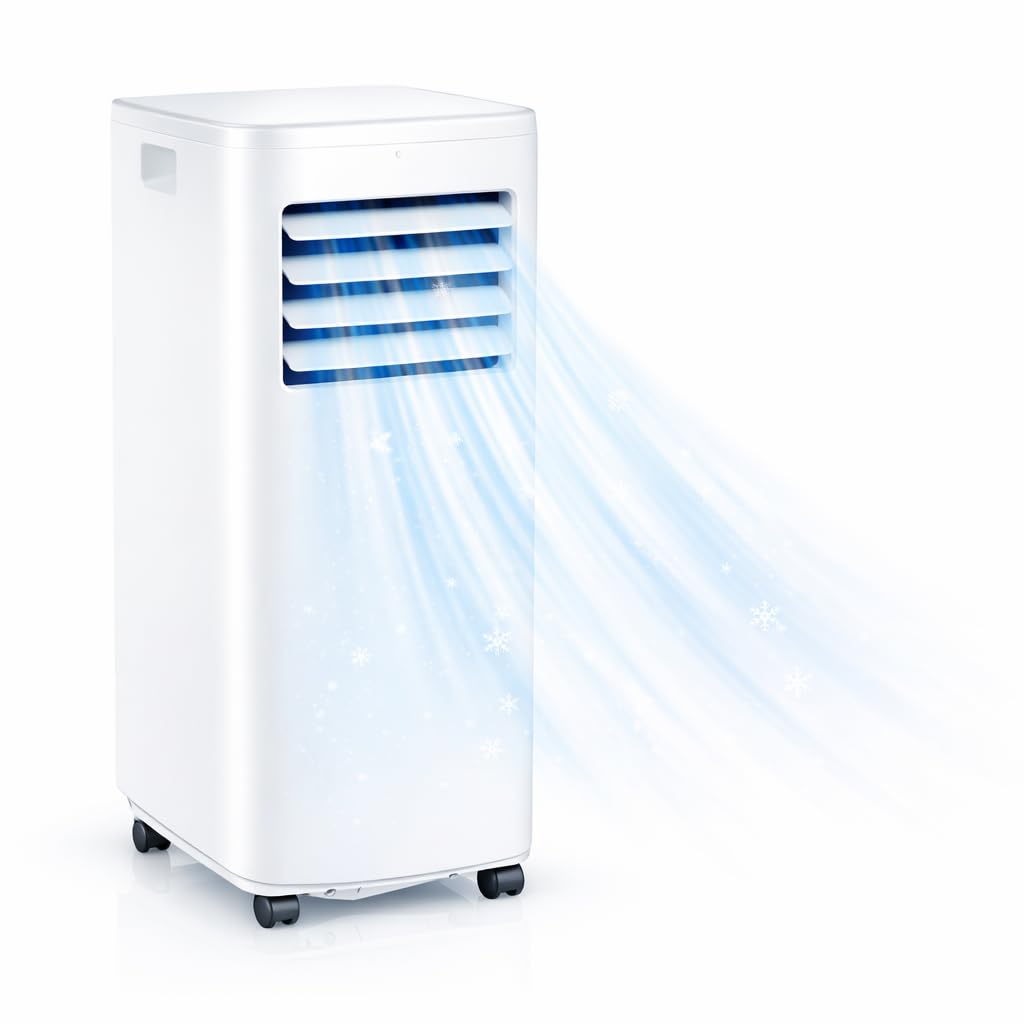
A workhorse for larger rooms and open layouts: fast cooling, a sleep mode, and easy mobility with sturdy casters.
Why I picked it: It cools larger spaces quickly and rolls between rooms without effort.
Best for: Open living rooms, home offices, and apartments that need an extra boost.
A solid midrange option for larger rooms without premium extras.
Pros
- Cools large areas quickly
- Tool-free window kit for fast install
- Quiet sleep mode under typical noise levels
- 360° swivel wheels for easy movement
Cons
- Claims larger coverage than some rooms actually need
- Window seal may require adjustment in odd windows
My take
I pushed this 8500 BTU unit into a third-floor studio that traps heat; it knocked down the temperature in minutes and kept the space comfortable during work sessions.
The unit’s wheels and handles make moving it from living room to bedroom effortless, which I appreciated on days when I wanted targeted cooling without running central air.
Sleep mode and the 24-hour timer are useful for overnight use; the unit stayed quiet enough for rest on lower settings. The included window venting kit installs quickly and is a plus for renters.
If you need strong, dependable cooling for larger rooms and value easy mobility, this unit balanced power and convenience well in my testing.
3. EnerGlow 10000 BTU Portable Air Conditioner – Best for Heavy-Duty Cooling
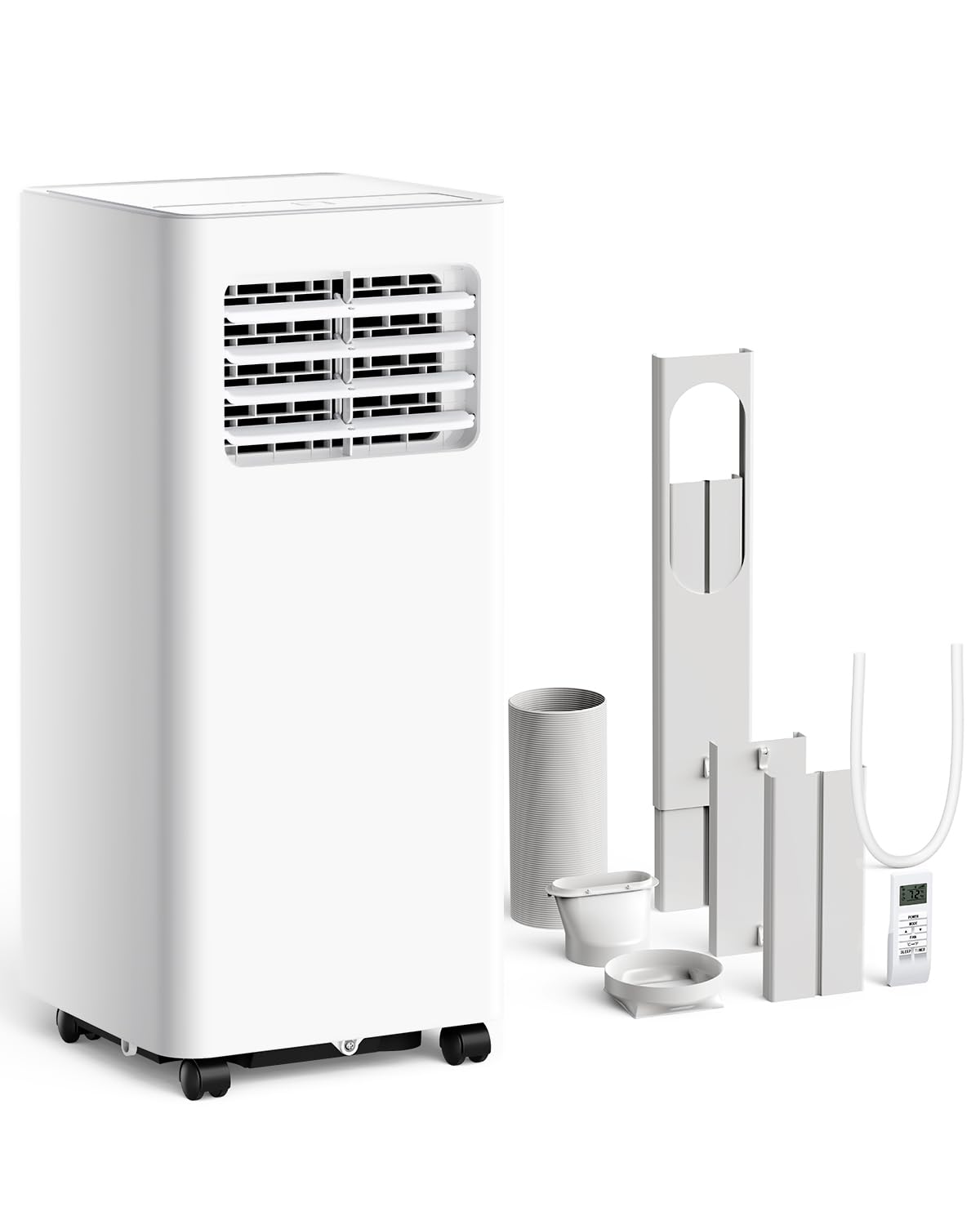
High-capacity cooling and a strong dehumidifier mode. Expect fast temperature drops and solid moisture control at the cost of extra noise on high.
Why I picked it: Its 10,000 BTU compressor and 4-in-1 modes handled hot, humid days that overwhelmed smaller units.
Best for: Medium to large rooms where strong cooling and dehumidification are priorities.
A value-oriented heavy hitter compared with smaller BTU models.
Pros
- Rapid cooling for medium-large rooms
- Integrated dehumidifier with high daily capacity
- Sleep mode under 50 dB
- Includes window mounting hardware
Cons
- Noticeably louder on high fan
- Window kit may need minor adjustments
My take
When central AC couldn’t keep up during a heat spike, I relied on the EnerGlow to create a cool refuge. It cooled my main room in about ten minutes and kept it steady.
Dehumidifying felt effective—the unit helped bring down the muggy feeling in humid conditions and the washable filter kept maintenance simple.
This model is heavier than the smallest portables, but the casters and handle made relocation manageable. Expect more noise at maximum fan speeds; I used lower settings overnight.
For anyone needing a portable that actually feels like a full-power emergency AC, this EnerGlow delivered the performance I wanted.
4. DREO 12000 BTU Portable Air Conditioner – Best for Very Hot Climates
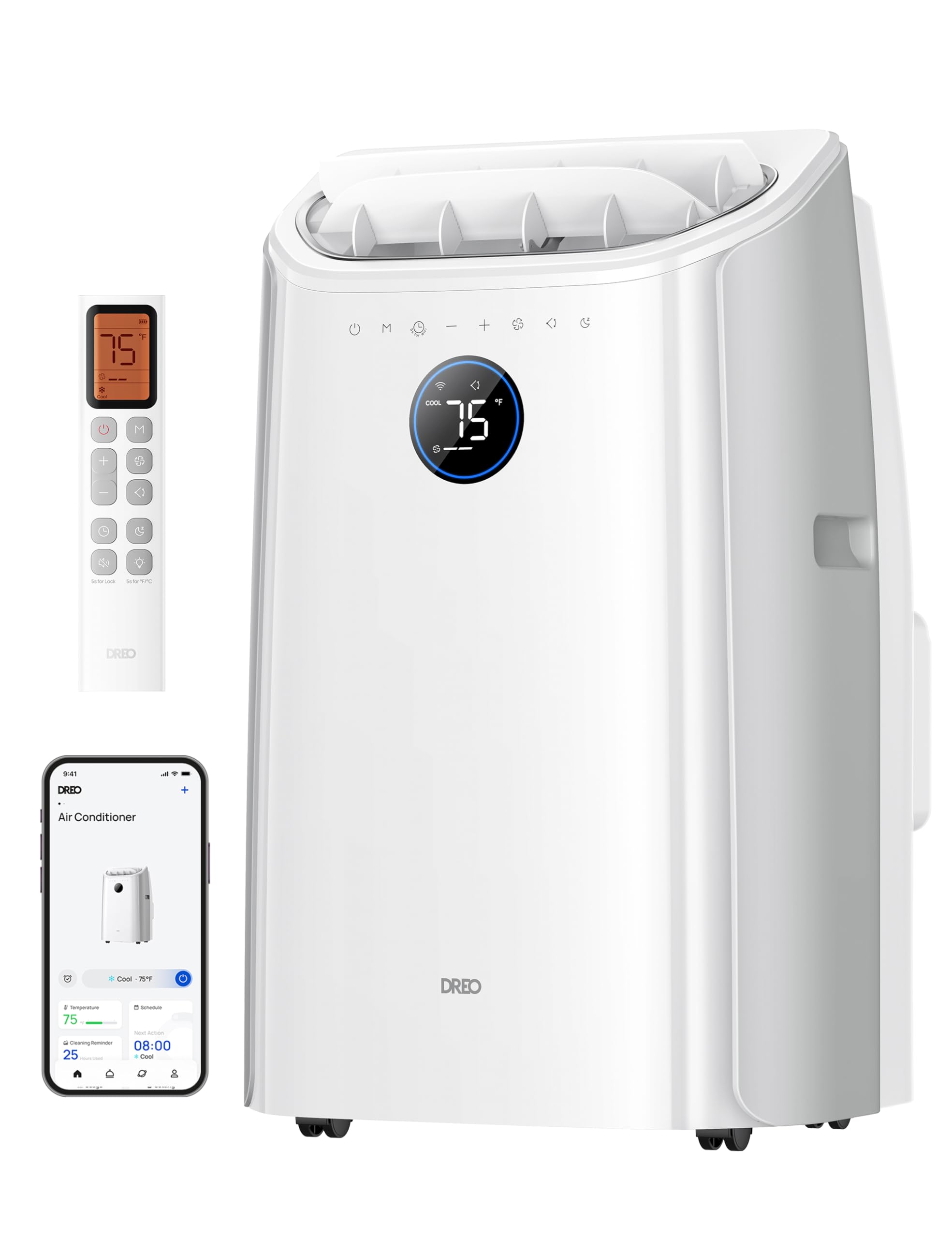
The most powerful DREO in the group; it handled sustained heat well and kept rooms cool when other solutions struggled.
Why I picked it: It combines a high cooling output with DREO’s drainage-free tech and smart controls for sustained performance.
Best for: Homes in very hot regions or rooms that need continuous heavy cooling.
A higher-tier choice that prioritizes cooling power and smart features.
Pros
- Very strong cooling reach
- Patented drainage-free system up to high humidity
- Smart app and voice control
- Designed for sustained heavy use
Cons
- More expensive than smaller units
- Can demand a lot from older home wiring
My take
I used the DREO 12000 in a hot, sun-soaked living area and it sustained cooling during extended high temperatures better than the smaller units I tested.
The drainage-free system held up even on humid days that normally force me to empty trays. I did see that in an electrical setup with old wiring it stressed the circuit on rare occasions—something to check before buying for older homes.
Controls via app and voice were convenient for fine adjustments, and filter cleaning is straightforward. It’s a premium-feeling option that earned its keep when temps climbed.
If you live somewhere brutally hot and need continuous performance, this was the most capable portable I tested.
5. Feelfunn 8000 BTU Portable Air Conditioner – Best Value Compact AC
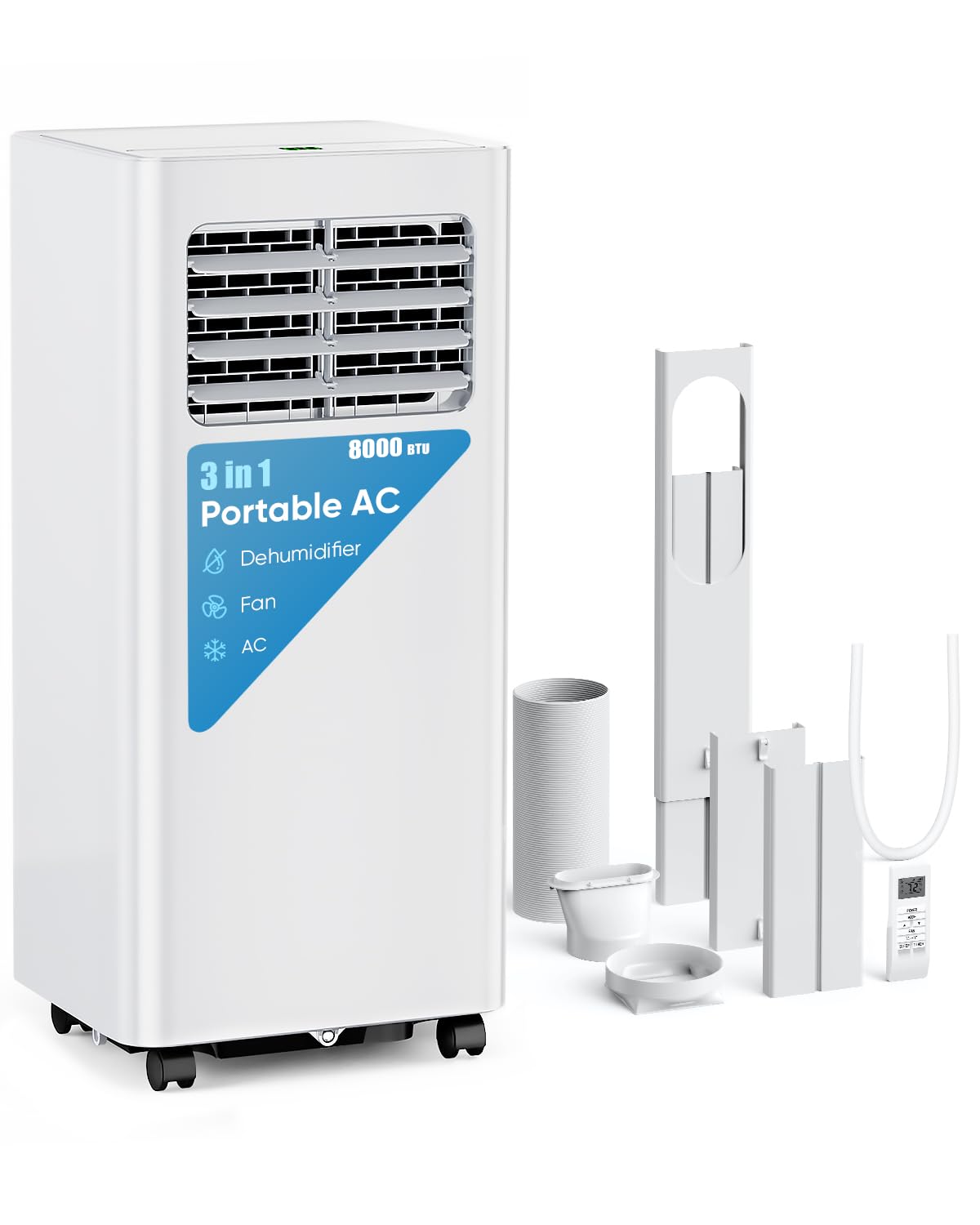
Compact, efficient, and affordable—this unit cooled quickly, performed well in humid conditions, and felt like the best value in everyday use.
Why I picked it: It matches strong basic performance with lower cost, compact size, and smart convenience features like full-tank alerts.
Best for: Dorms, small apartments, bedrooms, and anyone who wants a straightforward, affordable portable AC.
The most budget-friendly choice that still offers solid features.
Pros
- Rapid cooling in small rooms
- Compact and easy to move
- Full-tank alert prevents overflow
- Quiet on low fan speed
Cons
- Gets louder on high
- Connector feels a bit flimsy
My take
This Feelfunn unit felt like a practical lifesaver in a humid, warm bedroom. It cools quickly and the dehumidifier mode helps the room feel truly comfortable.
On low the noise level was pleasant and almost like white noise; on high it’s louder but still tolerable for daytime use.
The unit is relatively light and the included window kit worked well for most standard windows, though I had to be hands-on with fit for a narrow sash.
If you want solid performance without paying for premium extras, the Feelfunn gave me the best value for the typical use-case.
How I Picked and What I Look For
Match BTU to Room Size
I always start by matching BTU to room size — undersized units run constantly and oversized units cycle inefficiently. For bedrooms and small studios I prefer models in the 7,000–9,000 BTU range; for larger living rooms or open-plan spaces I look for 8,500–10,000 BTU or higher.
When humidity is high I lean toward higher-capacity units with solid dehumidifier performance to get both temperature and comfort under control.
- Up to ~200 sq ft: ~7,000–8,000 BTU
- 200–450 sq ft: 8,500–10,000 BTU
- Over 450 sq ft: consider multiple units or a higher-capacity solution
Noise, Sleep Modes, and Placement
I measure noise subjectively: if I can carry on a conversation or sleep with the unit running on low, it’s acceptable for bedrooms.
Sleep modes that step down fan speeds and adjust temperature curves make a big difference for overnight comfort. Placement matters—closer placement to doors or vents changes perceived sound.
- Look for explicit sleep or low-noise modes
- Expect louder sound on max fan speeds
- Place unit against an exterior wall/window for best efficiency
Drainage and Dehumidification
Drainage-free or self-evaporating systems save time, but I still keep a drain hose option on hand for very humid days. If you live in high humidity, prioritize units with stronger dehumidifier capacities.
Full-tank alerts and easy-to-remove trays or filters reduce maintenance hassles; I prefer washable filters to disposable ones.
- Self-evaporating works for most homes, hose needed above very high humidity
- Look for full-tank alerts for peace of mind
- Washable filters reduce long-term cost
Installation and Mobility
Tool-free window kits and standard exhaust hoses make setup fast, especially for renters. I assess how easy it is to pivot the unit between rooms—wheels and handles matter more than you think.
Also check compatibility with your window type; some kits work better with horizontal or vertical sliders than others.
- Prefer units with 360° casters for easy movement
- Confirm window kit matches your window style
- Measure exhaust hose reach before final placement
Smart Features and Power
I value apps and voice control when they actually perform reliably; otherwise they’re nice-to-have. Check power draw if your home has older wiring—high-capacity units can trip weak circuits.
Consider warranty and support for extended peace of mind.
- Test the app pairing before final placement
- Check your breaker capacity for larger units
- Prefer brands with clear support and warranty
Frequently Asked Questions
How do I choose the right BTU for my room?
I measure the room and match BTU to square footage. Small bedrooms do fine with around 7,000–8,000 BTU, while larger living spaces benefit from 8,500–10,000 BTU or more. I also upsize if the room gets strong sun or has poor insulation.
Do I have to empty a water tank frequently?
It depends. Units with self-evaporating or patented drainage-free systems generally need less frequent emptying in typical humidity. I still use a drain hose or empty the tank when humidity spikes or if I’m running dehumidify mode heavily.
Are smart features worth it?
When the app and voice control are reliable, I use them daily—scheduling, remote turn-on, and sleep curves are convenient. If the software is flaky, the basic remote and onboard controls suffice, so I weigh reliability more than hype.
Final Take
I tested these units in real home conditions and came away with clear favorites depending on need: DREO for quiet, smart bedroom cooling; the 8500 BTU for larger spaces and mobility; EnerGlow for heavy-duty cooling; the DREO 12000 for relentless heat; and Feelfunn if you want the best value for everyday use.
Pick the unit that matches your room size, noise tolerance, and how hands-on you want to be with drainage. For me, the right portable AC is the one that stays out of the way and reliably keeps the space comfortable—these five did exactly that in the settings I tested.
