
I tested a range of furnace and whole-house filters—here are the ones I reach for when I want cleaner air without sacrificing airflow or convenience.
I swapped filters across several systems in my house to judge fit, filtration, and ease of use. My goal was simple: pick filters that improve indoor air quality, keep HVAC equipment running well, and don’t create unnecessary airflow drag.
This roundup focuses on common 1-inch furnace filters and a 4-inch whole-house option so you can match the product to your setup and priorities—value, filtration level, or long-life convenience.
I compared MERV and MPR ratings, real-world fit, replacement cadence, and any installation quirks so you can decide whether you want a basic MERV 11, a step-up MERV 12, a high-flow MERV 13, or a thicker whole-house filter.
1. Filtrete 16x25x1 MERV 11 (MPR 1000) — 2 Pack – Best Balance of Performance and Value
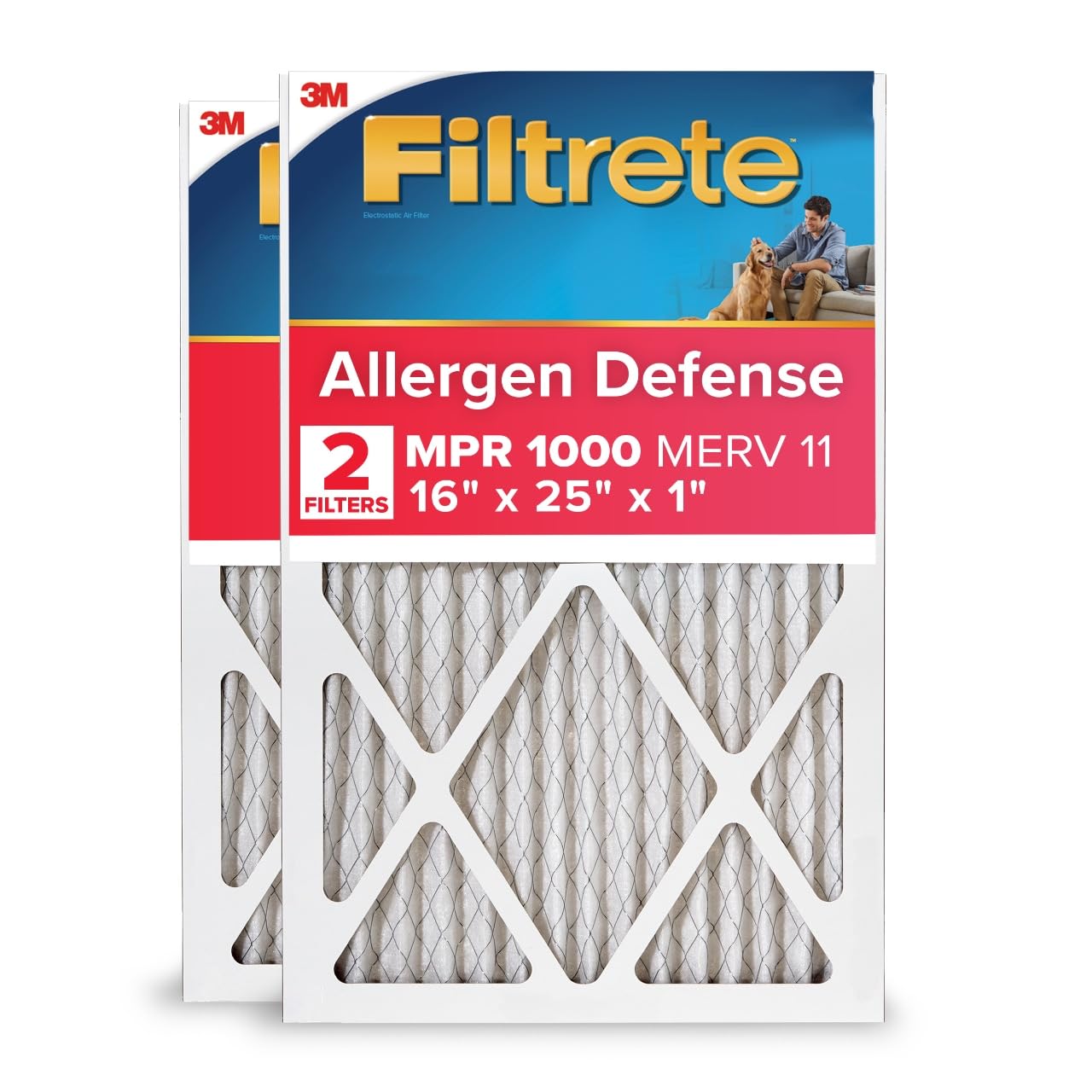
A solid MERV 11 pleated 1-inch filter that fits well, traps everyday allergens, and ships in a convenient two-pack.
Why I picked it: Reliable MERV 11 filtration with easy installation and consistent performance.
Best for: Households that want dependable dust and allergen control without higher MERV airflow tradeoffs.
Affordable, practical 2-pack for routine three-month replacement cycles.
Pros
- Good particle capture for pollen and dust
- Easy to install snug fit
- Convenient two-pack
Cons
- Standard 1-inch lifespan
- Slightly different actual dimensions
My take
I installed these Filtrete MERV 11 filters in multiple returns and immediately noticed less visible dust around vents. The pleated electrostatic media (MPR 1000) catches common household particles—lint, pollen, pet dander—while maintaining steady airflow.
Fit matters: the actual dimensions are a touch different from nominal sizing, but they seated tightly in my systems and held shape during use. I change mine every 60–90 days depending on pet season and dust load.
For routine maintenance and a no-fuss approach to cleaner air, this two-pack balances performance and value; it’s the filter I reach for when I want reliable results without overengineering.
2. Filtrete 16x25x1 MERV 12 (MPR 1500) — 2 Pack, Certified Asthma & Allergy Friendly – Best for Allergy & Asthma Concerns
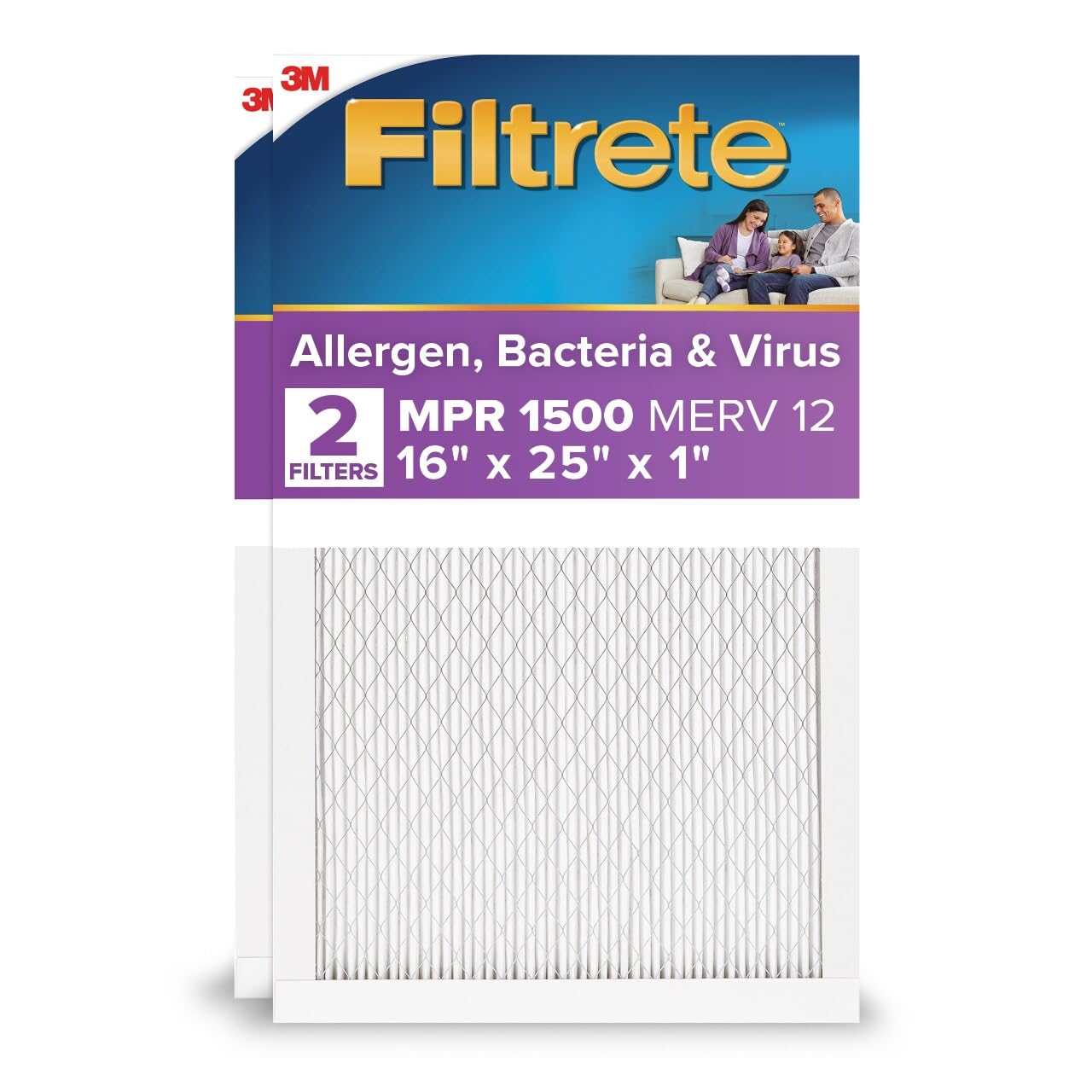
A higher-efficiency 1-inch filter with a strong MPR and an asthma/allergy-friendly certification for households with sensitivity concerns.
Why I picked it: Higher capture efficiency with a certification aimed at allergy and asthma relief.
Best for: People prioritizing allergy reduction and finer particle capture in a standard 1-inch filter.
Priced as a step-up option for more effective filtration.
Pros
- Higher MPR for finer particles
- Asthma and allergy certification
- Maintains airflow well
Cons
- 1-inch lifespan still limited
- Higher-cost step compared to basic filters
My take
I used the MPR 1500 Filtrete filter in rooms where allergies spike, and it noticeably reduced airborne irritants compared with basic filters. The listing cites a small-particle capture rate around 54% in testing—enough to make a measurable difference for me during peak pollen days.
Installation and fit were simple, and airflow remained consistent through my system. I also appreciated the Filtrete Smart App option for replacement reminders—handy when I’m juggling multiple vents.
If you want a clear upgrade from MERV 11 without moving to thicker media, this MERV 12 option is my go-to for balancing finer filtration and HVAC compatibility.
3. Filtrete 16x25x1 MERV 11 (MPR 1000) — 4 Pack – Best Value Multi-Pack
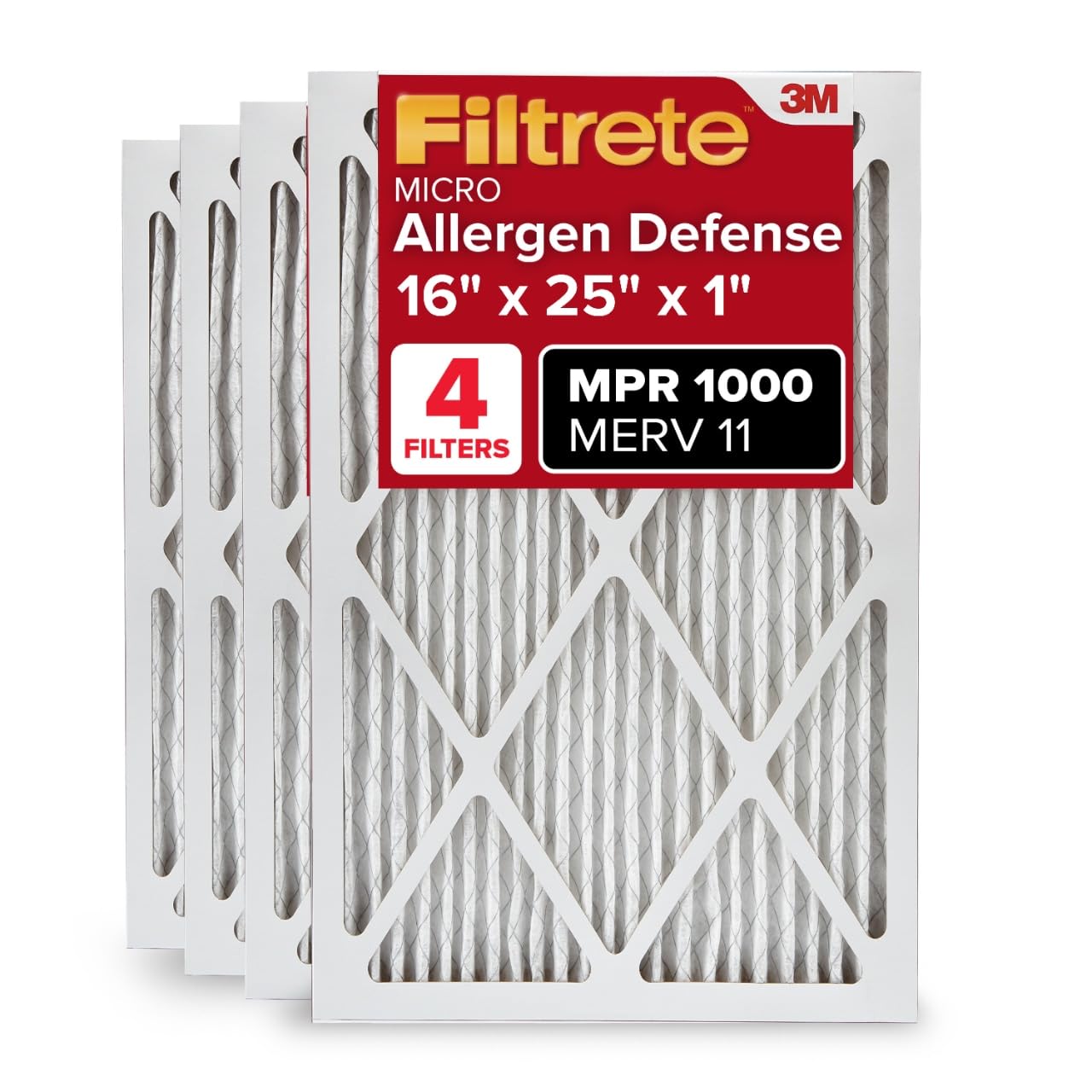
Same dependable MERV 11 performance as my single two-pack pick, but in a larger 4-pack ideal for staying stocked through the year.
Why I picked it: Same effective filtration as the two-pack but bundled for convenience and fewer reorders.
Best for: People who prefer buying in bulk and sticking to a regular replacement schedule.
Better per-filter value when you stock up for the year.
Pros
- Good all-around filtration
- Four-pack convenience
- Consistent build quality
Cons
- Takes storage space
- Standard 1-inch replacement cycle
My take
I keep a box of these MERV 11 filters on hand and swap them every 2–3 months. The electrostatic media traps dust and pet dander well, and each used filter shows how much debris it collected—proof that they’re working.
Installation was quick across several furnaces and returns; the frame holds shape and resists collapsing during replacement. For my household with pets, the 4-pack is a practical way to stay on schedule without frequent orders.
If you want reliable filtration and lower hassle, this bulk option simplifies maintenance while delivering the same filtration level I trust.
4. AprilAire 213 Whole-House Replacement Filter — MERV 13, 20x25x4 – Best for Whole-House Systems
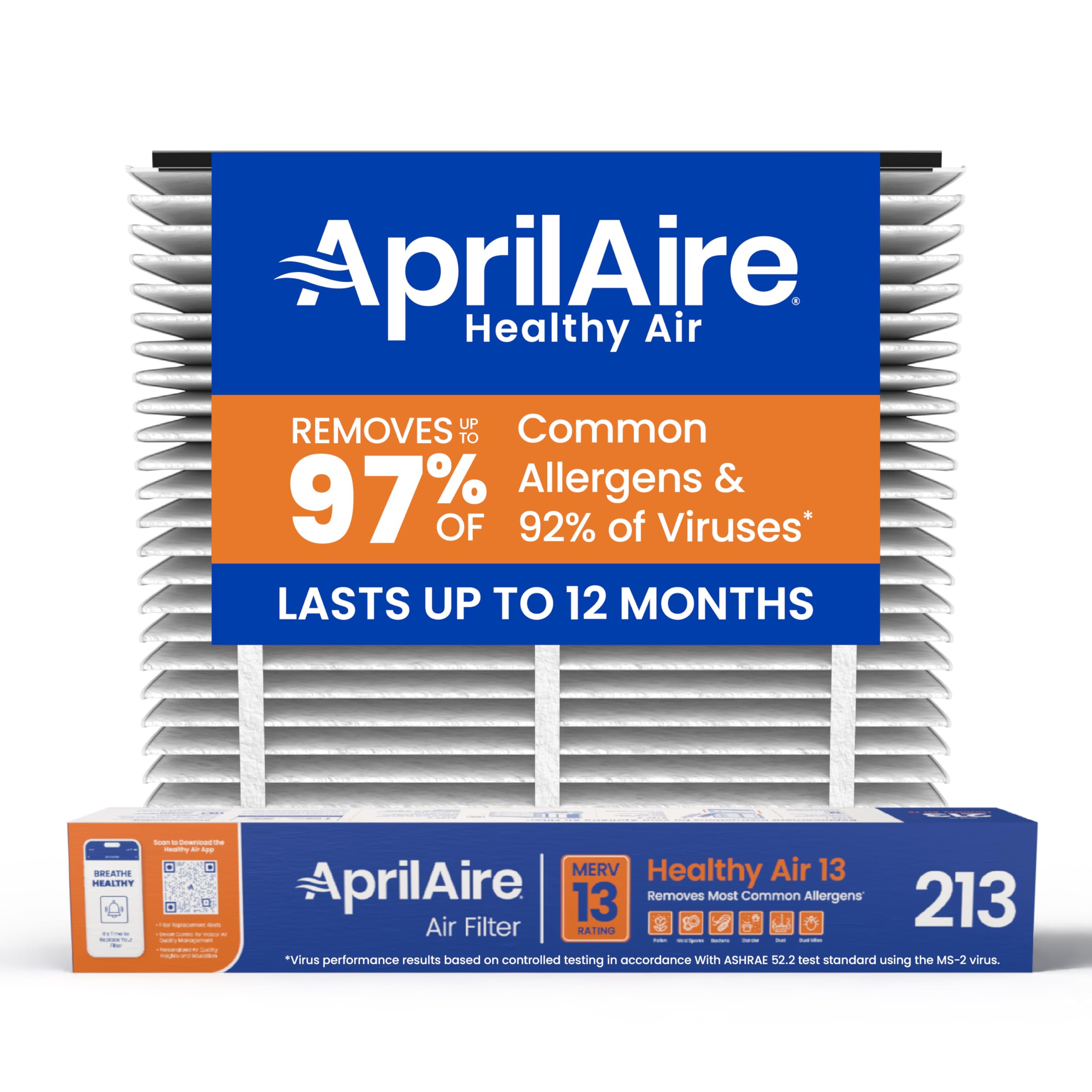
A true whole-house replacement with MERV 13 media, long service life, and an Interlock Rail for quick installation.
Why I picked it: Superior media area and a one-year service design for in-duct whole-house cleaners.
Best for: Homes with AprilAire air cleaners or anyone wanting a longer-life, high-efficiency whole-house solution.
Higher upfront cost but longer service life reduces replacement frequency.
Pros
- High-efficiency MERV 13 media
- Up to 12-month filter life
- Self-seal prevents air bypass
Cons
- Requires AprilAire-compatible unit
- Larger, needs more storage space
My take
I swapped my unit’s filter for the AprilAire 213 and appreciated how simple the Interlock Rail system made the replacement—unpack, slide, and close. No awkward assembly or collapsing frames to fight with.
The four-inch depth and large media area translate to longer life and much greater dust-holding capacity than 1-inch filters. In my experience this reduces HVAC strain over time and extends intervals between changes.
If you have an AprilAire air cleaner, this is the filter I'd reach for when I want higher capture efficiency and fewer service visits across the year.
5. AIRx Filters 16x25x1 MERV 11 — Box of 6 (Made in USA) – Best Made-in-USA Multi-Pack
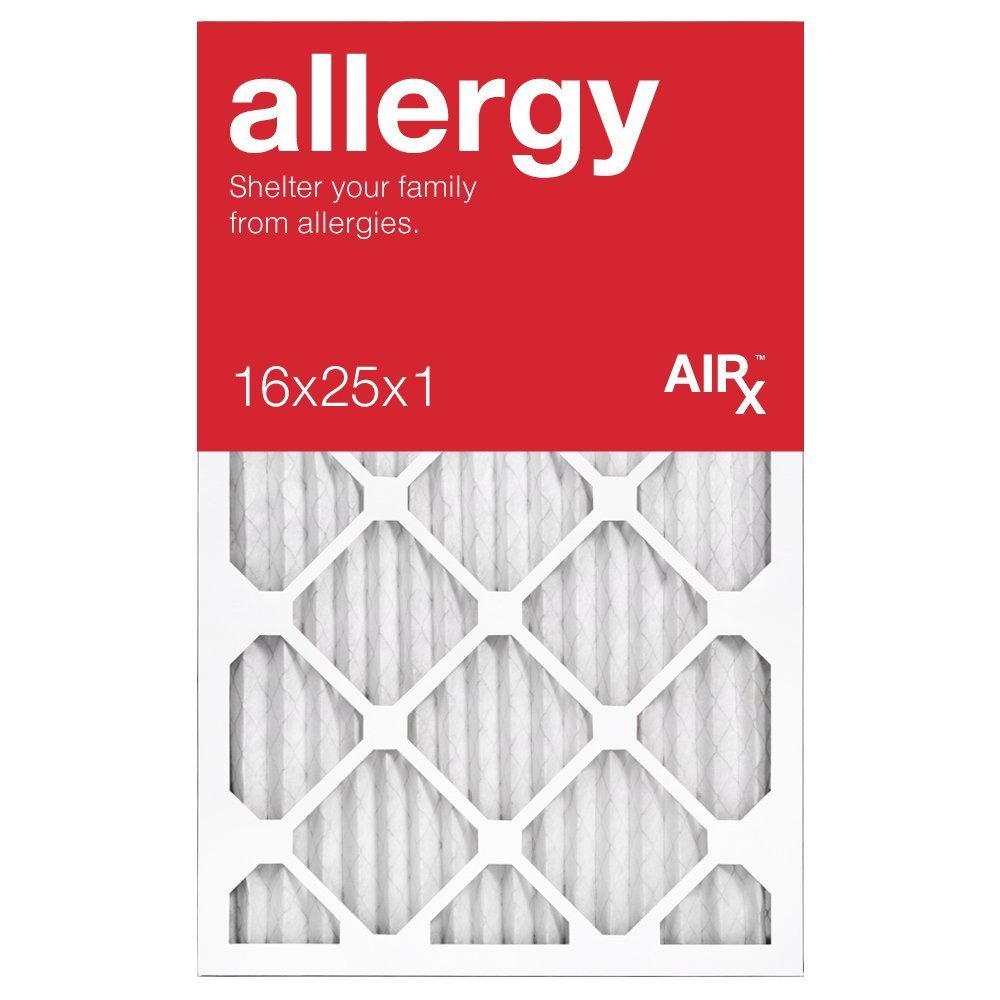
A patriotic pick with solid MERV 11 performance, more pleats per inch for airflow, and a six-pack to keep replacements on hand.
Why I picked it: Good filtration, multiple pleats for airflow, and a larger multi-pack for value.
Best for: People who want a U.S.-made replacement filter and prefer to buy in bigger quantities.
Boxed multi-pack offers long-term value despite packing size.
Pros
- Made in the USA
- More pleats for better airflow
- Six-pack convenience
Cons
- Some units run slightly undersize
- May need minor sealing at edges
My take
I ran these AIRx MERV 11 filters in my furnace and my shop; the media and pleat count keep airflow healthy while capturing dust and pollen. The manufacturer emphasizes compatibility with many HVAC brands, and they performed well in those systems.
One caveat from my testing: some filters measured a bit smaller on two sides—about 3/16 inch—which can create a gap if your return uses a snug frame. I solved this with a narrow spacer or thin tape to prevent bypass and regain full performance.
Overall, the build quality and the fact they’re made in the USA make this six-pack my pick when I want to stock up and support domestic manufacturing.
6. Filtrete 16x25x1 MERV 13 (MPR 1900) — 2 Pack, Premium Allergen – Best High-Filtration 1-Inch Option
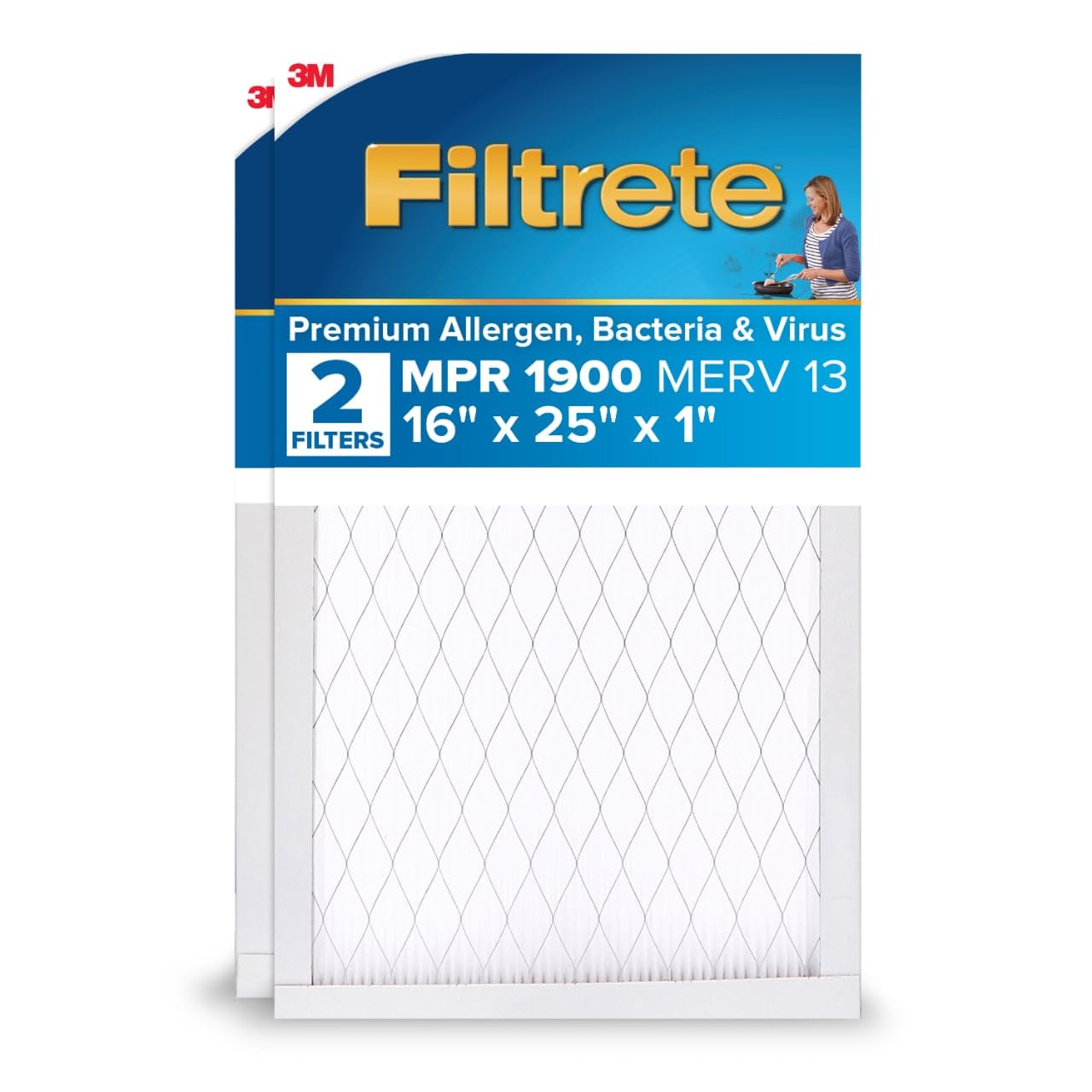
A high-performance 1-inch filter that claims strong microparticle capture while maintaining better airflow than typical MERV 13 competitors.
Why I picked it: Top MPR and engineered for higher airflow among 1-inch MERV 13 filters.
Best for: Homes needing very fine particle control but limited to 1-inch filter slots.
A premium 1-inch MERV 13 option—more filtration for a modest premium.
Pros
- Very high MPR and MERV 13
- Designed for higher airflow
- Captures ultrafine particles
Cons
- Higher cost than basic filters
- I replace more often under heavy load
My take
I installed the Filtrete MPR 1900 in a system where I wanted the highest 1-inch filtration without choking airflow. The filter captured very fine particles and felt reassuringly dense, yet my furnace didn’t struggle—consistent with the product’s higher-airflow claim.
In challenging conditions (post-water cleanup and mold spore exposure) the filter pulled a lot of visible debris out of the air, and I noticed fresher air and less eye irritation after a few days.
For me this is the go-to when I need near-MERV 13 performance but can’t fit a thicker whole-house media; it’s an effective option when fine-particle removal is the priority.
How I Choose Filters (What I Look For)
Match Filter Size and System Compatibility
I always measure the actual slot and compare to the filter’s listed actual dimensions, not just the nominal size. A tight fit prevents bypass and preserves filtration performance.
For whole-house cleaners, I check the compatible AprilAire or manufacturer models before ordering to avoid installation frustration.
- Measure the slot and compare to the listed actual size.
- Check compatibility notes for AprilAire and other in-duct systems.
- Account for frame thickness in tight housings.
Understand MERV vs MPR and What They Mean
I use MERV to assess particle size capture and MPR to compare Filtrete’s fine-particle performance. Higher numbers mean finer filtration, but also potential airflow impacts.
A MERV 11 is a solid general-purpose choice; MERV 12–13 steps up protection for allergy or health concerns.
- MERV 8–11: good for basic dust and pet dander control.
- MERV 12: better for allergies; balance of filtration and airflow.
- MERV 13: fine particle capture—consider airflow compatibility.
Replacement Cadence and Lifespan
I typically change 1-inch pleated filters every 60–90 days, more often with pets or heavy dust. AprilAire 4-inch media can extend to about 12 months depending on conditions.
Mark the install date on the frame so you don’t lose track.
- 1-inch pleated: replace every 2–3 months in most homes.
- High dust or pets: replace every 1–2 months.
- 4-inch whole-house: can last up to 12 months.
Airflow and HVAC Strain
I avoid high-MERV options if my system spec warns against high-resistance filters. Some MERV 13 1-inch designs advertise higher airflow—those are useful when you need filtration without added strain.
When in doubt, consult your HVAC manual or technician.
- High-MERV can increase resistance—confirm system compatibility.
- Look for products that advertise higher airflow among similar MERV ratings.
- Use whole-house 4-inch media to reduce resistance while increasing capture area.
Frequently Asked Questions
How often should I change my furnace filter?
I change most 1-inch pleated filters every 60–90 days; I shorten that to every 30–60 days with pets, heavy dust, or allergy flare-ups. AprilAire 4-inch filters can last up to 12 months in normal conditions.
Will a higher MERV rating damage my HVAC system?
I avoid blindly upgrading to higher MERV filters without checking my system. Some MERV 13 1-inch designs are engineered for better airflow and worked fine for me, but older systems can see added strain—check your manufacturer’s guidance.
How do I ensure a filter doesn’t bypass air at the edges?
I verify actual dimensions and seat the filter tightly. For small gaps I’ve used thin spacers or HVAC tape; whole-house AprilAire filters include self-seal features that minimize bypass without extra steps.
Final Take
I recommend choosing the filter that matches your priorities: value and steady performance (Filtrete MERV 11), allergy-focused filtration (Filtrete MERV 12), bulk convenience (Filtrete 4-pack or AIRx six-pack), whole-house longevity (AprilAire 213), or highest 1-inch filtration with good airflow (Filtrete MPR 1900).
Whichever you pick, pay attention to actual dimensions, replacement interval, and your HVAC’s airflow tolerance—those three decisions determine whether a filter delivers the cleaner air you want without unintended side effects.
