
I tested compact baskets to family-size oven combos and picked six air fryer ovens that I use regularly — for single servings, big batches, fast weeknight meals, and crisp results without deep frying.
I live with multiple air fryers on my counter because no single model fits every cooking need. For this roundup I focused on real-world use: how much food each unit holds, how intuitive the controls are, how evenly items crisp, and how each one fits into everyday cooking routines.
Below I break down the six air fryer ovens I've cooked with most — from a tiny, whisper-quiet mini fryer I use for snacks to a dual-zone unit I use for full dinners — and explain which one I reach for in different situations.
I compared capacity, cooking functions, temperature range, noise, and accessories. Where I tested side-by-side, I prioritized evenness of browning, speed, and ease of cleanup.
1. COSORI Small Air Fryer Oven 2.1 Qt (Green) – Best for Singles & Small Kitchens
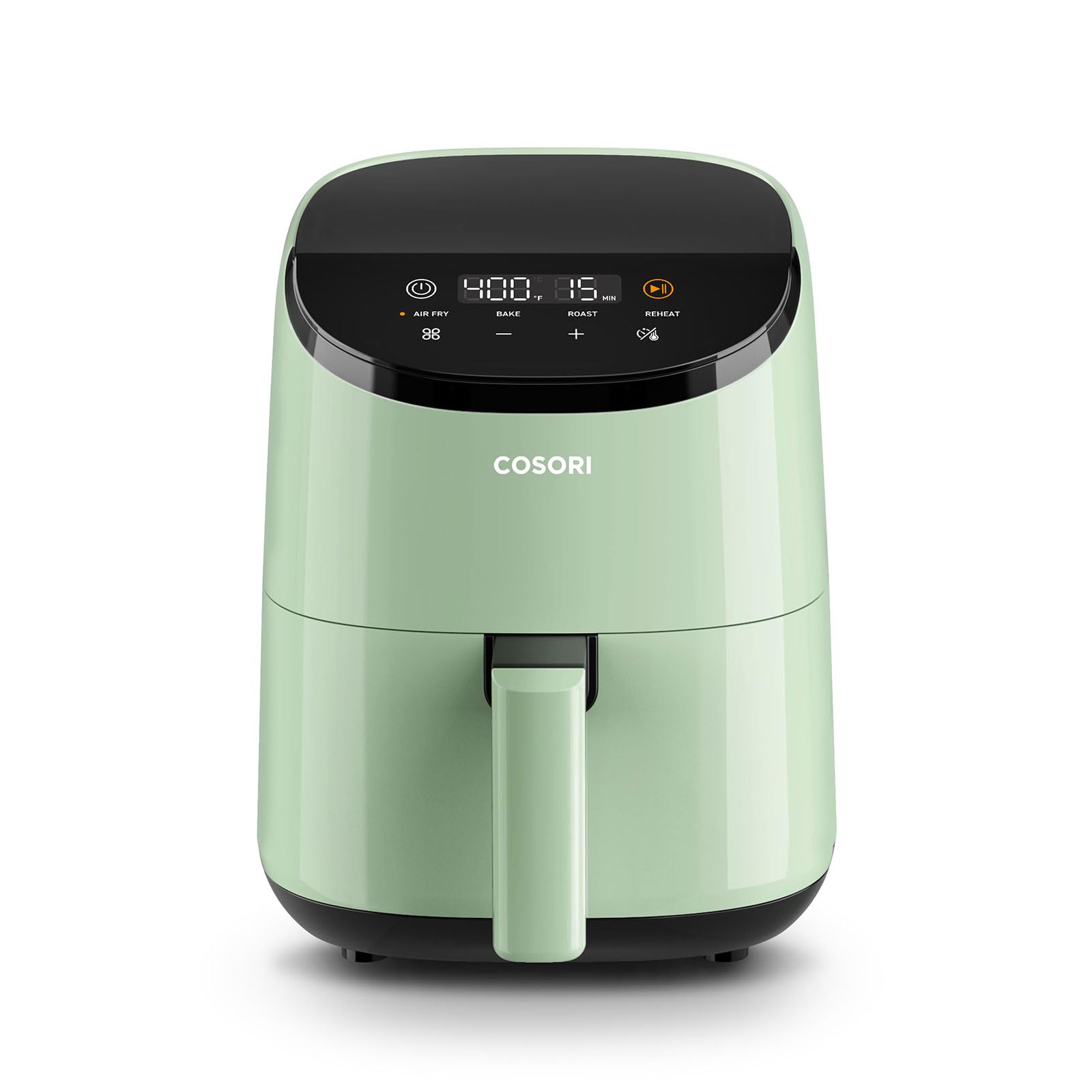
A tiny, very quiet basket fryer that fits on a crowded counter and delivers crisp single servings with minimal oil.
Why I picked it: I wanted the smallest, quietest fryer I could keep out and use daily for one-portion meals.
Best for: Single portions, snacks, and keeping a small counter footprint.
Affordable, compact option for one or two people.
Pros
- Extremely compact footprint
- Very quiet operation (<48 dB)
- Four one-touch functions
- Dishwasher-safe basket
Cons
- Small 2.1-Qt capacity
- Learning curve on time/temp
- Basket liners need careful placement
My take
I leave this Cosori mini on my counter because it’s the smallest fryer I’ve used that still cooks like a full-sized basket unit. The 2.1-quart basket handles single portions — roasted veg, a few wings, or a sandwich — and the whole machine weighs under five pounds so I move it around as needed.
Noise is the standout. It runs under 48 dB, so I can air fry while doing other things without the appliance dominating the kitchen. The four one-touch modes (air fry, roast, bake, reheat) cover most quick tasks and cleanup is easy thanks to the dishwasher-safe basket.
A couple of practical notes from my tests: follow the included test run to clear manufacturing odors, leave the rear vent space described in the manual, and if you use liners fold them slightly so they won't touch the heating element. Expect a small learning curve on time and temperature — I dialed back default high temps for delicate items like thin-sliced onions.
2. Mondial 12.7QT Air Fryer Oven (Black & Stainless Steel) – Best for Fast Family Meals
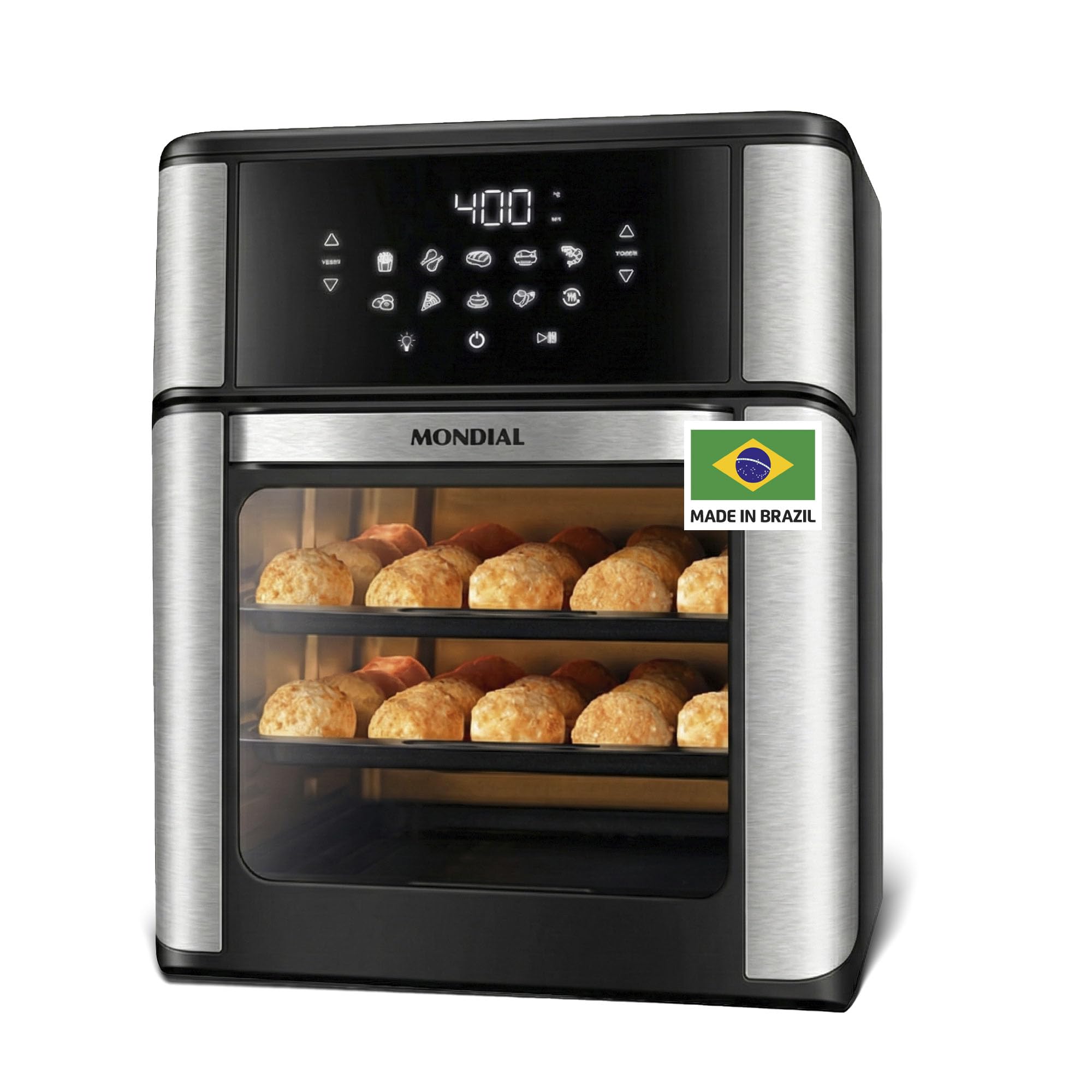
A roomy, powerful oven-style fryer with a touchscreen and enough capacity for family-size portions and larger trays.
Why I picked it: I needed a large-capacity unit that heats quickly and handles whole meals without crowding.
Best for: Families and anyone who cooks full dinners or larger batches.
A mid-range larger-capacity option with modern controls.
Pros
- Spacious 12.7-Qt interior
- Powerful 1800W heating
- Digital touchscreen controls
- Automatic shut-off for safety
Cons
- Takes significant counter space
- Stainless finish needs regular wiping
My take
When I want to cook a whole tray of fries, multiple chicken breasts, or a big batch of roasted vegetables, the Mondial’s 12.7-quart cavity is what I reach for. The 1800W heater gets the chamber hot fast, and that extra power makes a real difference in browning and speed.
The touchscreen is responsive and precise — setting time and temperature feels more modern and repeatable than basic dials. I also appreciate the automatic shut-off for peace of mind during longer bakes or if I get distracted.
This one is heavier on counter real estate, but if you need to feed several people at once it handles volume without the multiple batches I’d have to do in a smaller fryer.
3. DREO Air Fryer 4 Quart (9-in-1, Black) – Best Compact All-Rounder
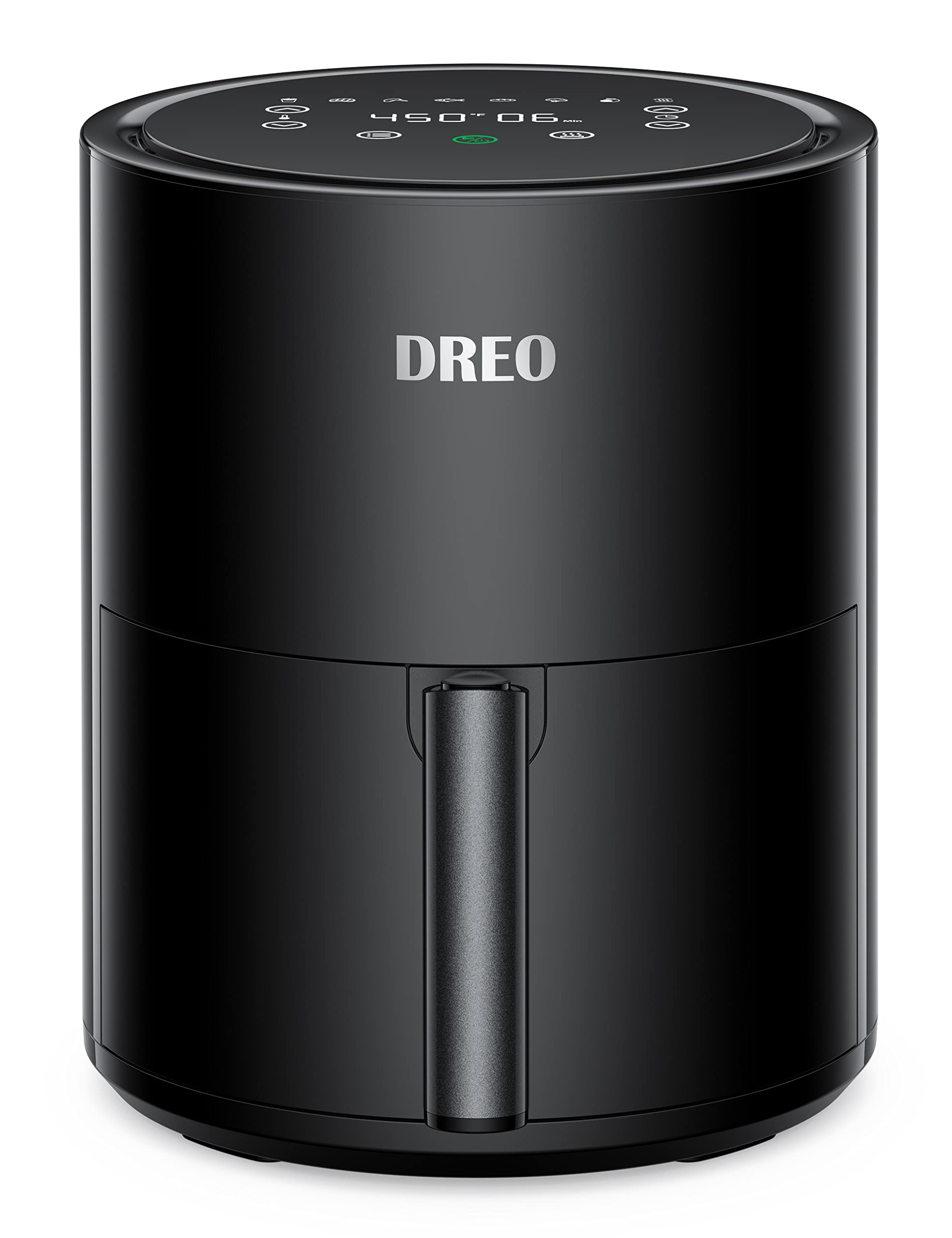
A compact 4-quart basket fryer with a wide 100°F–450°F range and nine cooking functions, good for two people and versatile meals.
Why I picked it: I wanted a small-but-capable basket fryer with broad temperature control and presets I could use without fuss.
Best for: Couples and cooks who want flexibility in a compact unit.
Well-priced for a feature-packed, compact fryer.
Pros
- Wide 100°–450°F range
- Nine functions and presets
- Compact countertop fit
- Includes 50 recipes
Cons
- Icons need learning
- Basket size limits large items
My take
The DREO sits in the sweet spot between tiny minis and bulky ovens. Its 4-quart basket fits dinner for two and the 100°F–450°F temperature range lets me make everything from yogurt to fast-browning wings. That higher max temp cuts cooking time and helps get better color on small things like wings.
I liked the one-touch preheat and shake reminder during my tests — they make repeatable results simpler. The included recipe booklet is genuinely useful when I’m experimenting with new dishes.
If you’re switching from a very basic model, expect a short adjustment to the control icons. Once I learned the layout, the unit became my go-to for weeknight dinners and reheating leftovers that need crisping.
4. Cuisinart Air Fryer 9-Quart Basket Stainless Steel (AIRX-221) – Best for Family Versatility
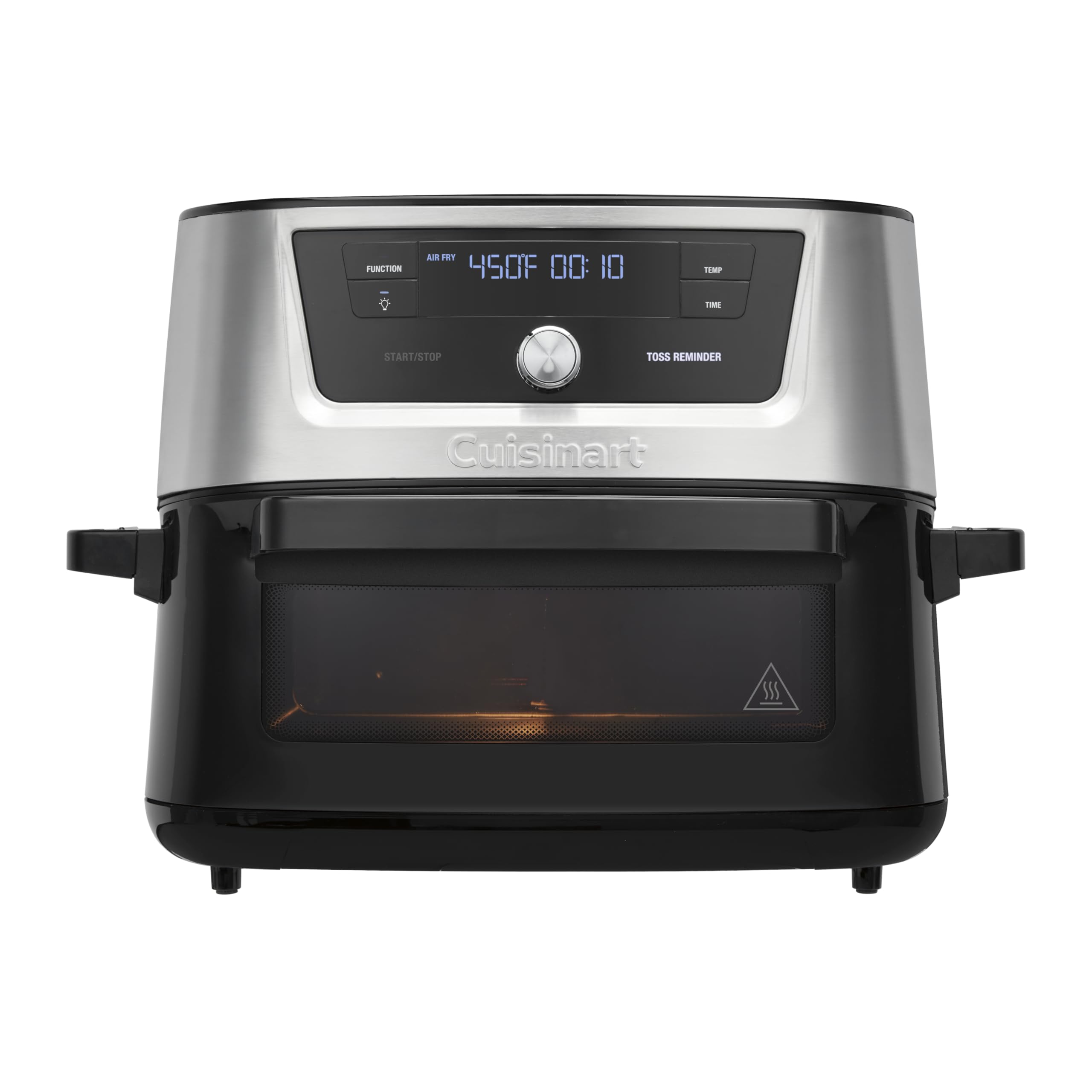
A family-size basket air fryer with a divider, six cooking functions, and a roomy surface that feels like a compact countertop oven.
Why I picked it: I wanted a well-built, multipurpose unit that handles family meals and has thoughtful presets.
Best for: Families who want flexible cooking modes and a large cooking surface.
A higher-end, durable option for frequent use.
Pros
- Large 9-Qt capacity
- Multiple presets and functions
- Sturdy stainless-steel build
- Keep-warm and 60-min timer
Cons
- Takes counter space
- Some presets need minor adjustments
My take
This Cuisinart has become my reliable workhorse for larger batches. The 9-quart interior and divider let me cook two different foods at once or combine the space for a whole chicken. The AirAdvantage top fan/heater design produced consistent browning across trays in my testing.
Controls are intuitive — the digital display and preset buttons make common tasks fast. I also use the Keep Warm function when timings don’t line up across dishes; it holds food gently without drying it out.
Build quality feels premium and cleanup is straightforward with dishwasher-safe parts. Be prepared to tweak some preset times for your personal preferences, but that’s a small trade for the versatility and capacity this unit delivers.
5. T-fal Infrared Air Fryer 6.3 Quart (Black) – Best for Fast Heat & Crispy Finish
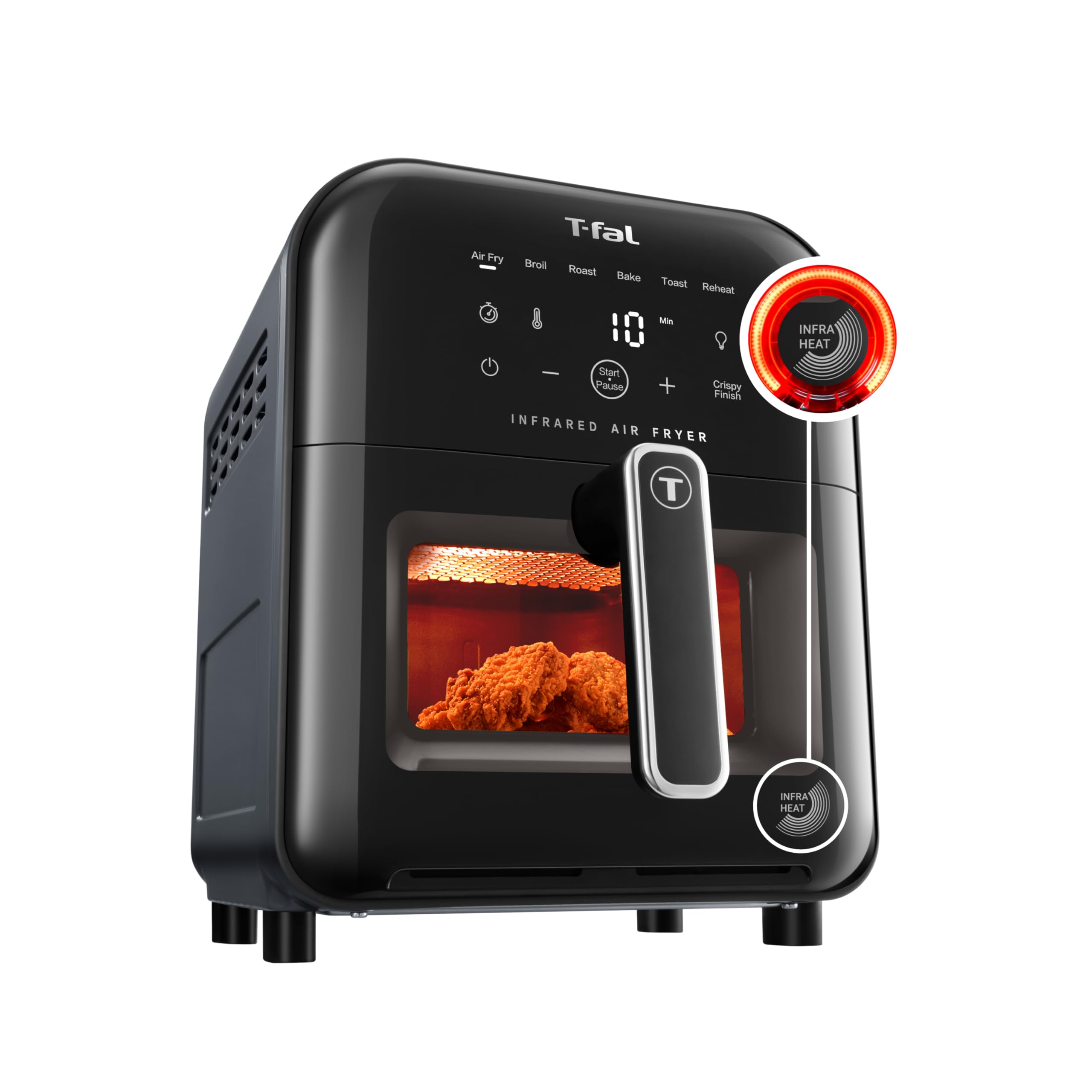
An infrared toaster-air-fryer combo that heats very quickly and targets crisp finishes while keeping interiors juicy.
Why I picked it: I wanted a fryer that uses infrared to speed up cooking and improve top-to-bottom crisping.
Best for: Busy cooks who want very fast heat-up and a crisp exterior.
A feature-rich mid-sized option with advanced heating tech.
Pros
- Infrared quick heat-up
- No-shake even cooking
- 6.3-Qt fits a 3-lb chicken
- Always-on viewing window
Cons
- Gloss black shows fingerprints
- Infrared feel takes adjustment
My take
The T-fal stood out for speed. That carbon-fiber heating element reaches high temperatures almost instantly, so I start cooking without a long preheat. In practice that means faster dinners on weeknights and a noticeable improvement in crisping on top of food.
Infra-Heat technology gave me juicier interiors while still developing a crunchy exterior on fries and wings. The no-shake airflow is handy when I want even results without babysitting the basket.
The 6.3-quart size is comfortable for family dinners, and the always-on illuminated window is something I appreciated when I wanted to keep an eye on browning without opening the door.
6. Oster 11-Quart Dual Air Fryer Oven (Dual Zone) – Best for Multi-Tasking Cooks
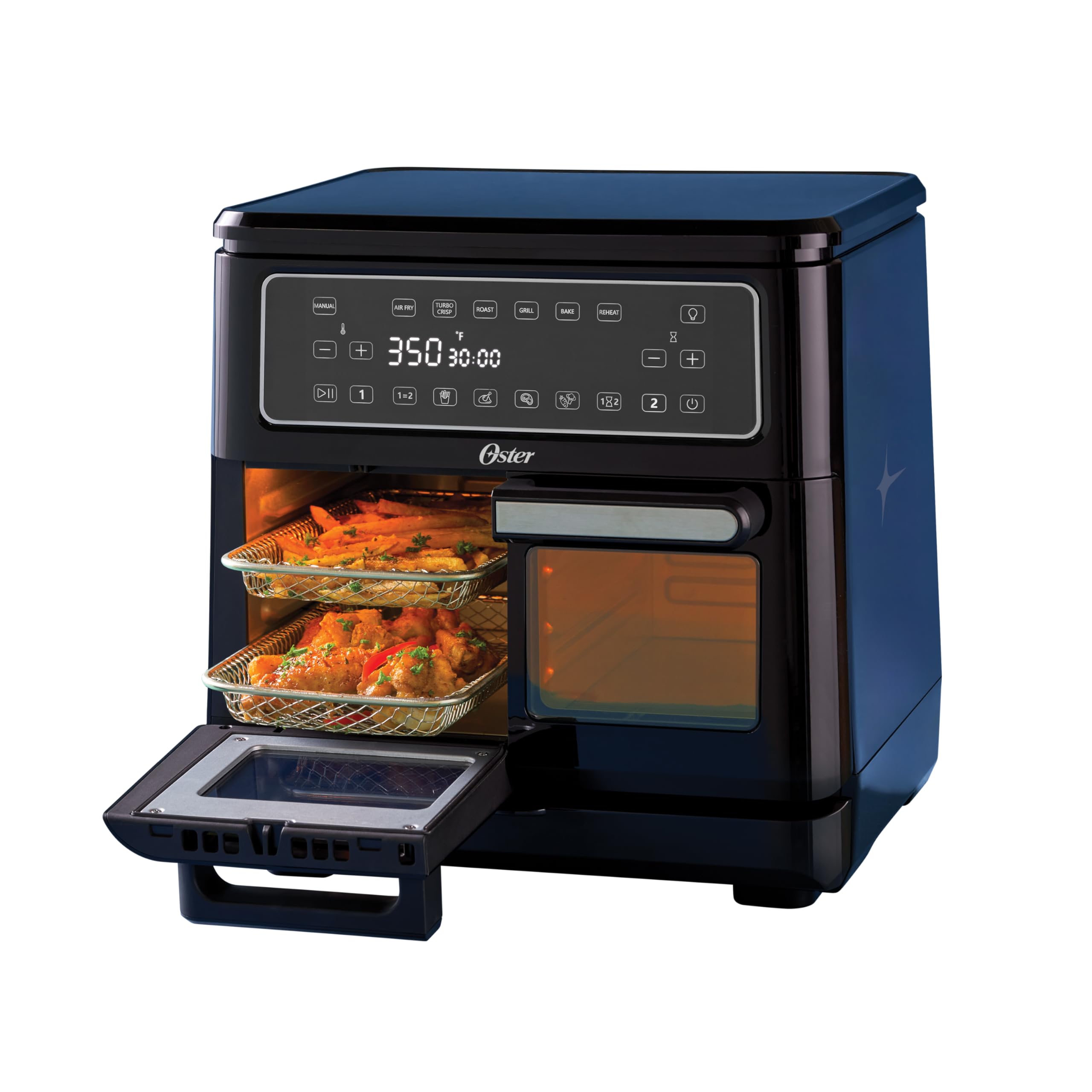
A convertible dual-zone fryer with two independent 5.5-quart compartments that can sync or run separately for simultaneous cooking.
Why I picked it: I needed flexibility to cook two different dishes at once or combine zones for a full roast.
Best for: Meal prepping, cooking separate dishes at once, and larger family meals.
A versatile, higher-capacity option with dual-zone convenience.
Pros
- Two independent cooking zones
- Convert to single 11-Qt oven
- Includes many dishwasher-safe accessories
- Integrated accessory storage
Cons
- Occasionally slower to crisp
- Needs more full-length inserts
My take
I regularly cook two things at once with the Oster. The Match and Sync functions let me run both zones independently or have them finish together — ideal when I want fries and a protein done at the same time without juggling batches.
Removing the partition to use the full 11-quart space converts it into a single oven that fits a whole chicken. The included accessories are generous and the built-in storage drawer keeps everything tidy on my counter.
In my long-term use I noticed it sometimes takes a bit longer to get the absolute crispiest finish compared with a very small dedicated fryer, but the trade-off for multi-zone flexibility has been worth it for meal prepping and larger family cooking.
How I Pick an Air Fryer Oven
Capacity: match the unit to how you cook
I start by thinking about the meals I cook most. If I’m reheating lunches or making single servings, a 2–4 quart basket is perfect. For family dinners or batch cooking I look for 9–13 quarts or a dual-zone model.
Remember that stated capacity doesn’t always reflect usable surface area — a wider tray is better for evenly crisping multiple items at once.
- 1–4 qt: single servings, snacks, tiny counters
- 5–8 qt: couples and moderate batches
- 9+ qt or dual-zone: families and full dinners
Functions and temperature range
I value a wide temperature range (down to low temps for yogurt and up to high temps for quick browning) and presets I can override. Built-in dehydrate, broil, or crisp-finish modes are useful if you plan to experiment.
Don’t rely solely on presets; I always test and adjust time/temperature the first few times I make a new recipe.
- Look for at least 400–450°F max for effective browning
- Low-temp capability is handy for yogurt and proofing
- Preheat and shake reminders simplify repeatable results
Controls, cleaning, and accessories
I prefer tactile, intuitive controls or a clear touchscreen so I can dial settings without guessing. Dishwasher-safe baskets and removable trays save me time.
Extra accessories — dividers, trays, mesh inserts — increase utility, but I check fit and storage options so they don’t clutter my kitchen.
- Clear display or simple icons are best
- Dishwasher-safe parts reduce cleanup friction
- Consider where you’ll store trays and liners
Noise, speed, and heat
I test for noise because a loud fan can make a kitchen feel chaotic. Quieter models under 50 dB are pleasant to use while I work nearby.
Power (wattage) correlates with how fast a unit heats and how well it browns; higher wattage often means faster results but more draw on a circuit.
- Under ~48–50 dB is noticeably quieter
- Higher wattage = faster heat-up and browning
- Check vent placement to avoid cabinet heat buildup
Frequently Asked Questions
Do I need to preheat my air fryer oven?
I usually skip preheat for quick snacks in basket models, but I preheat for big batches or when following recipes that call for immediate high heat. Some units have one-touch preheat which I find convenient.
Which is better for crisping: basket or oven style?
I find small basket fryers tend to crisp fastest because food gets more direct airflow. Oven-style units can achieve great crisping too, especially higher-wattage and infrared models, but they sometimes need a bit more time or rack positioning.
How do I get even browning without shaking?
If I don’t want to shake mid-cycle I use models with no-shake or turbo airflow tech, arrange food in a single layer, and leave space between pieces. Thinner items crisp faster, so I stagger cook times for mixed batches.
Final Take
I keep different air fryers for different jobs: the tiny Cosori for solo meals, the Dreo for flexible compact cooking, the Cuisinart and Mondial for family-sized tasks, the T-fal when I want ultra-fast heat, and the Oster when I need true dual-zone convenience.
Pick the one that matches how you cook most often, and expect a little initial experimentation with times and temps — once you dial it in, your air fryer oven will quickly become a workhorse.
