
I tested raised queen airbeds, ultralight backpacking pads, foam cot toppers, and a kids' travel bed to find the best options for camping and overnight guests.
I’ve spent nights in tents, trucks, and backyard setups to figure out which air mattresses actually deliver comfort, durability, and portability. This roundup covers raised queen airbeds for basecamp, thick pads for side sleepers, ultralight insulated pads for backpacking, a canvas cot topper, and a portable kids’ travel bed.
My goal was simple: recommend the right mattress for the way you camp — whether you want a hotel-like queen at basecamp or a featherweight pad for long miles.
I compared inflation method, pack size, insulation, durability, and how true-to-size each mattress sleeps. Where possible I tested overnight, assessed how well each stayed inflated, and checked real-world packability.
1. Intex Dura-Beam Essential Rest Airbed — Queen, 18″ Height, Built-In Electric Pump – Best Overall Basecamp Queen
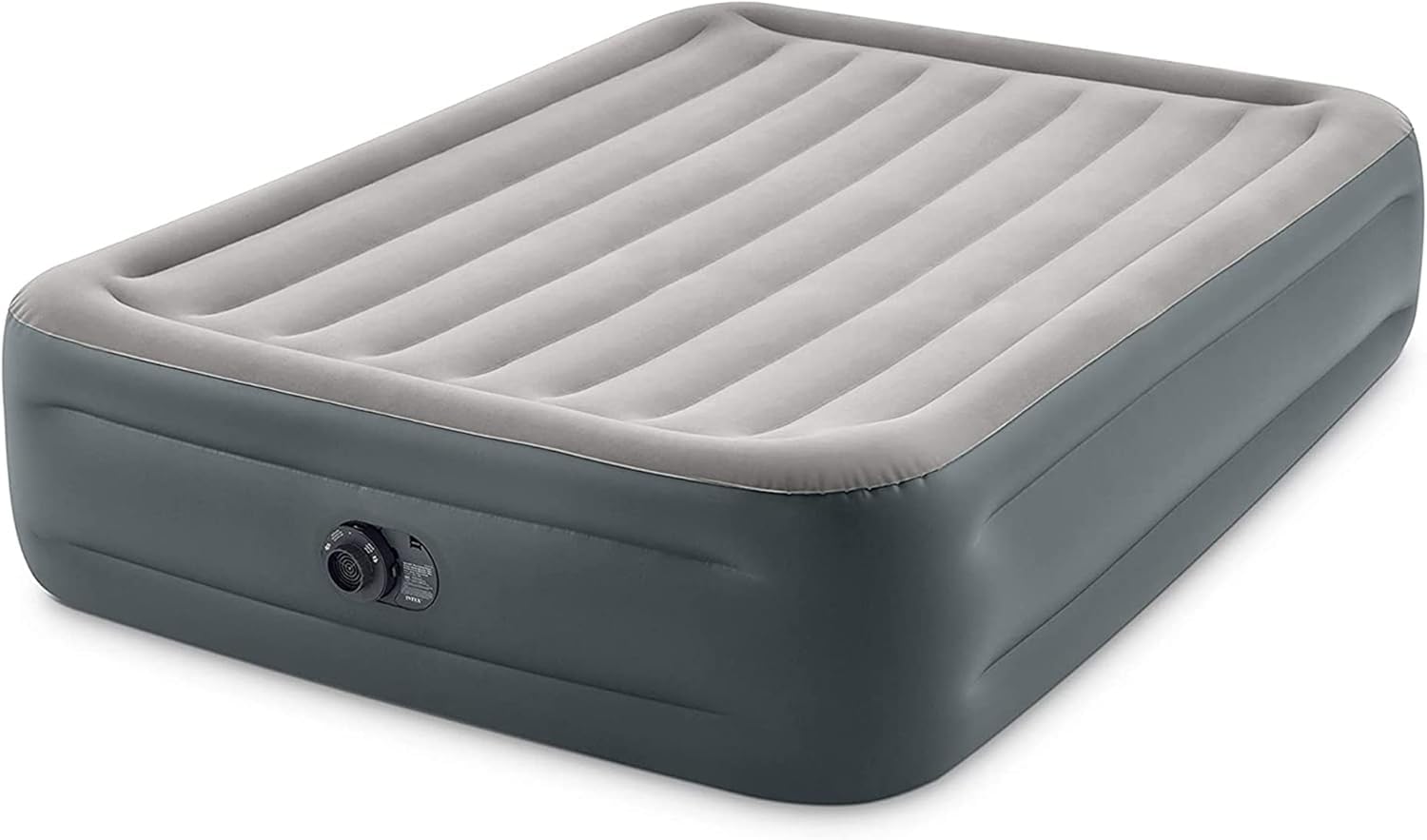
I picked this when I wanted a true queen-height airbed that inflates quickly and feels like a real bed at camp or for guests.
Why I picked it: Rapid internal pump, tall 18" sleep height, and stable fibre-tech construction.
Best for: Campers who want a hotel-style queen for basecamp or car camping.
Affordable midrange option for an elevated, supportive airbed.
Pros
- Fast built-in electric pump
- Velvety top feels cozy
- Raised 18" easy to get on/off
- Strong perimeter for better stability
- Supports heavyweight loads
Cons
- May need occasional top-ups
- Vinyl can stretch after inflation
- Some units show pump-area leaks
My take
This is the bed I grab when I want effortless setup and a proper sleeping surface at basecamp. The internal electric pump inflates the queen to usable firmness in roughly three to four minutes, which makes setup trivial when I arrive and tiring guests are ready for sleep.
The Fibre-Tech interior with a velvety top gives a firm, stable feel that mimics a regular mattress more than thin camping pads do. I like the raised 18" height — it’s much easier to get in and out of than low-profile alternatives and works well on uneven ground in a hard-sided shelter or in a tent with enough headroom.
I left one unit inflated for an extended period and only added a small bit of air a few times; it stayed comfortable and supportive. That said, I’ve also handled units that required more frequent topping up and noted the pump-area as a common trouble spot. For me, the tradeoff is worth it if I’m prioritizing speed, height, and a familiar bed-like feel.
2. VOSSER Queen Air Mattress — 18″ Comfort Height, Built-In Pump, 0.45mm PVC – Best Durable Queen
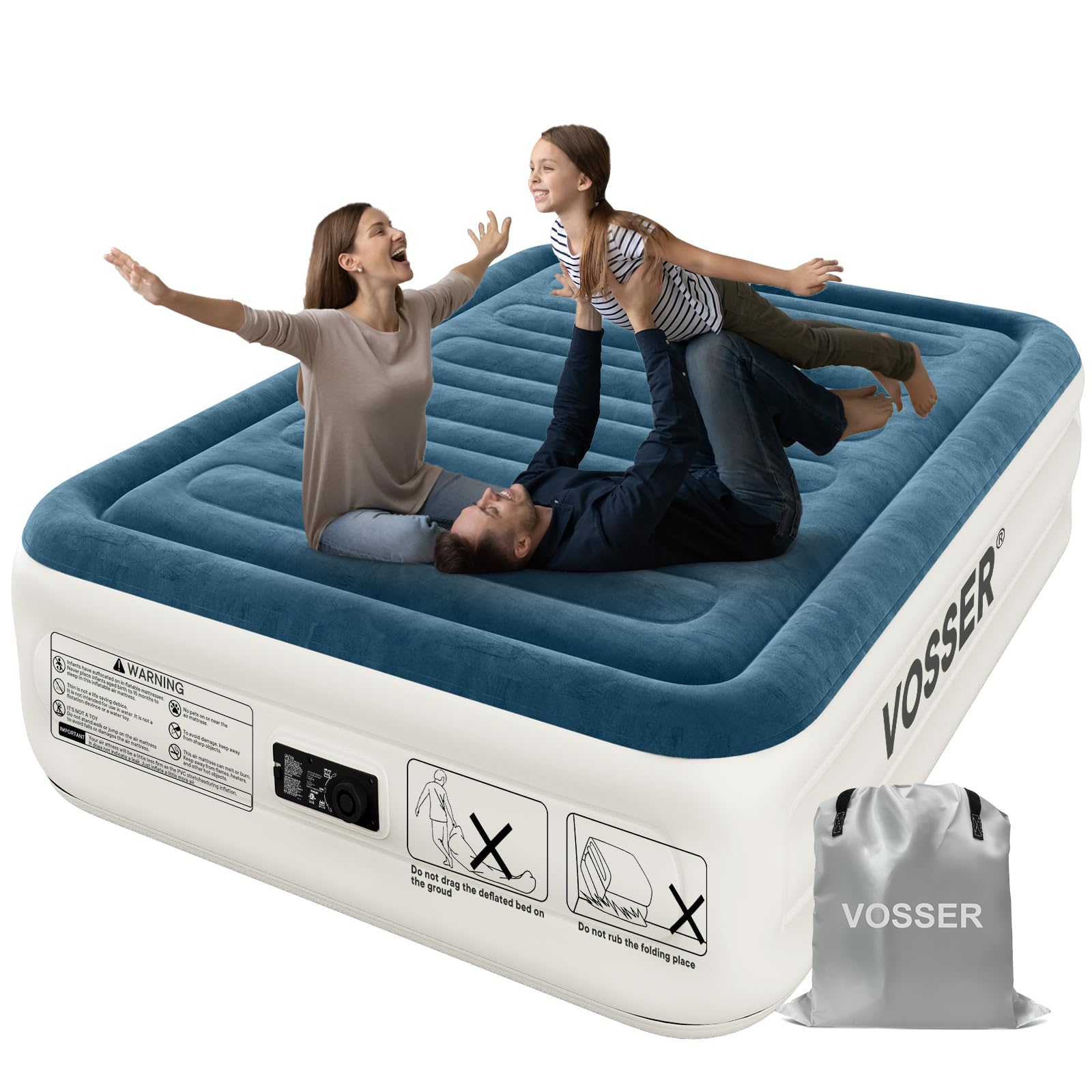
I recommend this when I need a heavier-duty queen that aims to resist punctures and sleep two adults without the 'taco' effect.
Why I picked it: Thicker 0.45mm PVC and patented I-beam support for firmness and durability.
Best for: Families or couples wanting a rugged, elevated guest bed at camp or home.
A slightly higher-cost, heavy-duty alternative built for longevity.
Pros
- Thick 0.45mm PVC resists punctures
- Patented I-beam prevents middle sag
- Fast built-in pump (under 3 minutes)
- Quiet, flocked top feels like a bed
- Generous weight capacity
Cons
- Heavier to transport
- One unit I handled needed a warranty exchange
- Bulkier to store than thin pads
My take
This mattress is my go-to when I want something that can take rougher treatment and still sleep two people well. The extra-thick PVC and I-beam interior make the sleeping surface much more stable; people don’t roll toward the middle the way they can on cheaper airbeds.
Inflation is quick via the built-in pump and the flocked top is quiet and comfortable with sheets. In my camping use the bed held firm across multiple nights of use. I also appreciate the manufacturer’s protective approach — a long warranty gives me confidence if something does go wrong.
If you plan to move the mattress often or need a truly lightweight option, this isn’t the pick. For basecamp durability and a queen-sized, hotel-like sleep, it’s one of the toughest airbeds I’ve put on the ground.
3. Teton Outfitter Canvas Camping Pad — 80″ x 30″ x 2″ Comfort Infused Foam Pad – Best Cot Topper / Canvas Pad
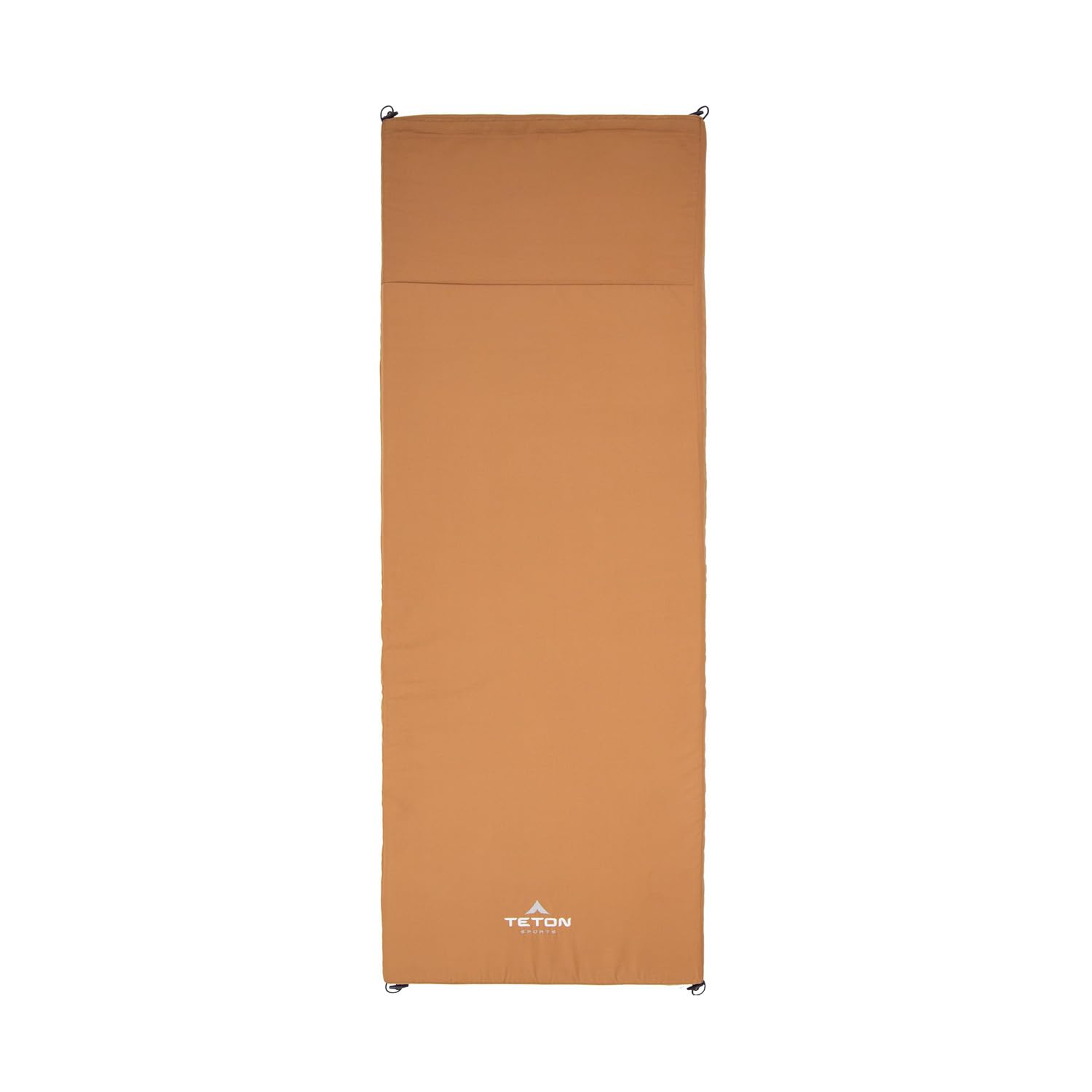
I chose this pad when I wanted a non-inflatable cot or ground pad that actually feels like home bedding.
Why I picked it: Thick open-cell foam, canvas shell, and compatibility with cot systems.
Best for: Campers using cots or anyone who wants a warm, washable pad.
Pricier than basic foam mats but built for long-term comfort.
Pros
- Feels like a home mattress
- Canvas cover is washable
- Works great on cots
- Lightweight for its comfort level
- Durable construction
Cons
- Bulky when rolled up
- Roll-up stick can break
- Higher price than basic pads
My take
This is the pad I reach for when comfort beats packability. The two-inch open-cell foam gives a cloud-like sleeping surface on a cot and adds useful insulation under a sleeping bag on cold nights.
The canvas shell slips off for cleaning and the pad stays put on a cot thanks to corner loops; that combination makes it easy to keep from sliding around during the night. I’ve used it both on the ground and on a cot and woke up without the usual stiffness that a thin foam or inflatable can cause.
Be aware it’s bulkier to carry than an inflatable sleeping pad and the roll-up stick included can be a weak point. For car camping, basecamp, or as a replacement for a thin cot mattress, this is one of the most comfortable non-inflatable options I’ve used.
4. Gear Doctors ApolloAir — Ultralight Insulated Inflatable Pad, 5.2 R‑Value, Packs Small – Best Ultralight Backpacking Pad
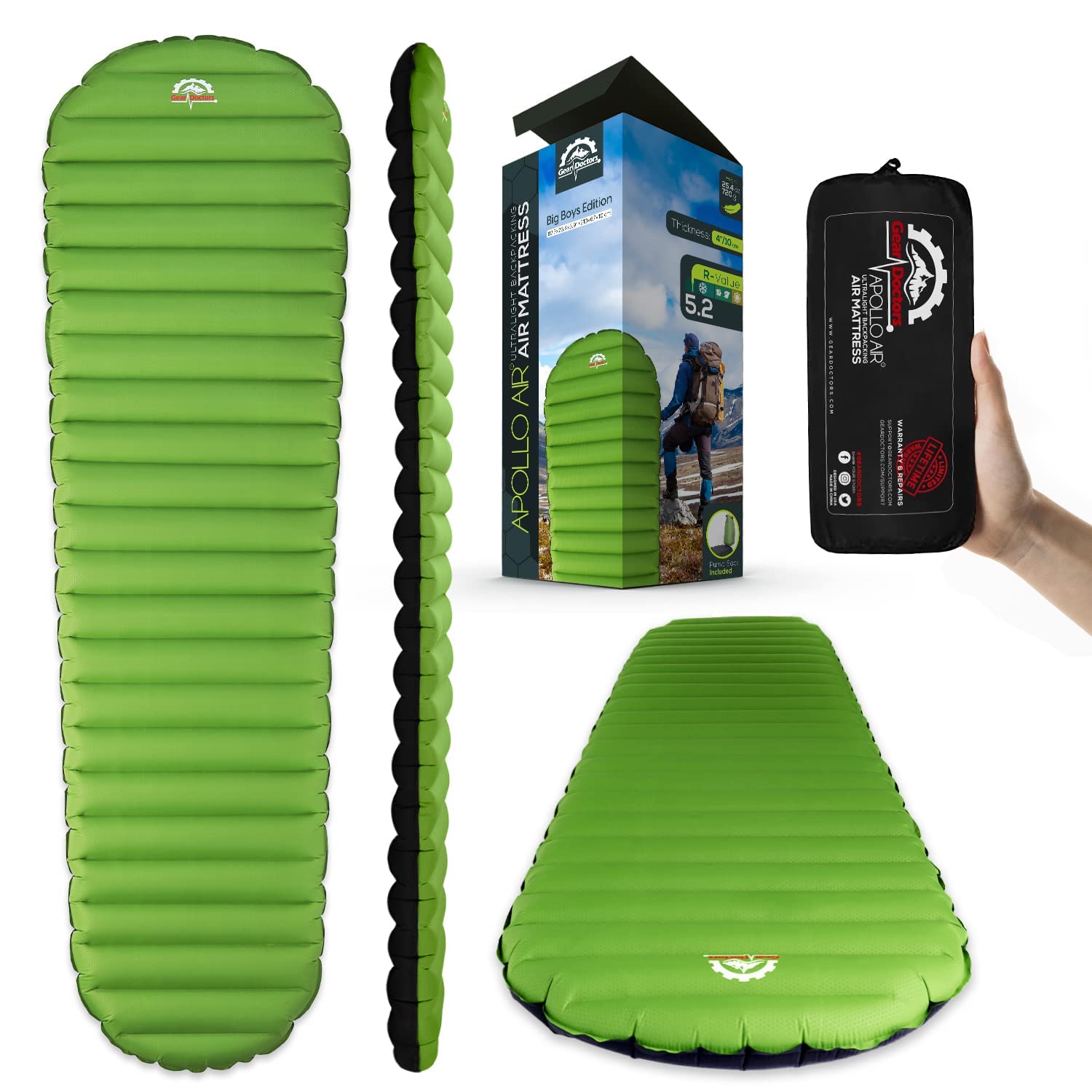
I picked this pad for serious trail use when I needed warmth, compact size, and quick inflation without sacrificing comfort.
Why I picked it: Excellent 5.2 R-value, tiny packed size, and fast pump-sack inflation.
Best for: Backpackers and thru-hikers who need warmth and minimal pack weight.
Midpriced for a high-R-value, ultralight pad designed for multi-season use.
Pros
- Very small packed footprint
- High 5.2 R-value for warmth
- Inflates fast with pump sack
- Quiet and stable sleeping surface
- Durable hexagon nylon fabric
Cons
- Tapers to a narrow width
- Less wiggle room when rolling
- Pump sack takes practice
My take
I carried this on multi-day trips where pack space and warmth mattered most. The ApolloAir packs down to a fraction of the size of traditional pads, and the included pump sack lets me inflate the pad in under two minutes while saving my breath.
The 5.2 R-value kept me comfortable in chilly shoulder-season nights; I noticed less heat loss than on standard ultralight pads. Movement on the surface is quiet — no crinkly noise when I turned — and overnight inflation held steady across several trips.
Do note the mummy-style shape tapers, so you get limited side-to-side room compared with full-width pads. For solo hikers and those who value warmth and packability above all else, this pad hits the sweet spot.
5. TREKOLOGY Sleeping Pad — 4.9″ Thick, Built‑in Pump, Integrated Neck Pillow – Best Thick Pad for Side Sleepers
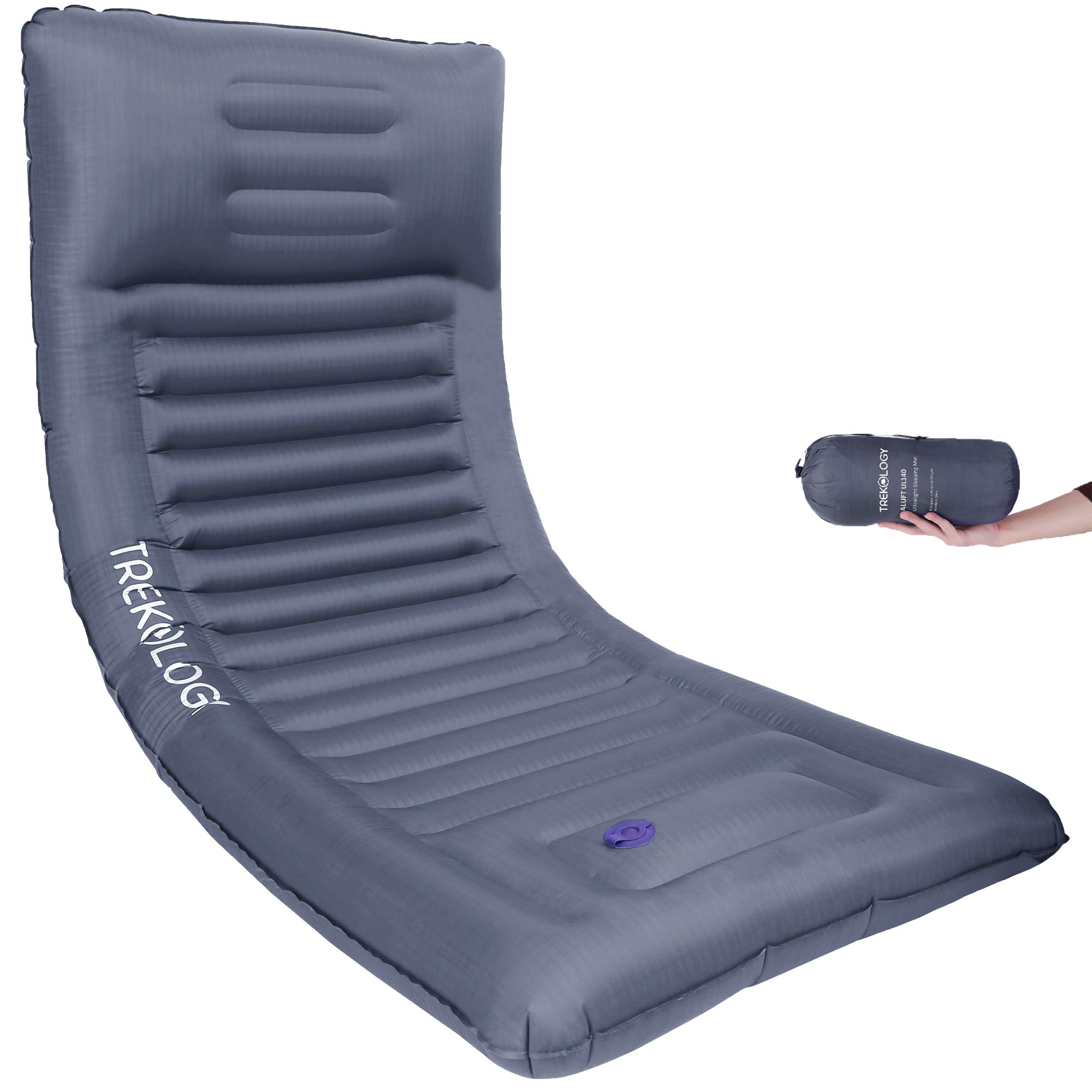
I recommend this pad when I want a thick, supportive surface that makes side sleeping comfortable in a tent or vehicle.
Why I picked it: Generous 4.9" height, integrated pump and pillow, and wide platform.
Best for: Side sleepers and backpackers who want extra height and built-in pillow convenience.
Great value for a thick, feature-packed sleeping pad.
Pros
- Very thick 4.9" cushioning
- Built-in pump is convenient
- Integrated neck-support pillow
- Lightweight and compact
- Wide for better stability
Cons
- May need slight overnight reinflation
- Folds a bit larger than expected
- Not as ultralight as some pads
My take
This is my choice when I want luxury-level thickness without hauling a full air mattress. The nearly five-inch height is a game-changer for side sleepers; I stopped feeling rocks and roots and actually slept through the night.
The built-in pump makes inflation effortless — a few pumps and the pad reaches a firm, comfortable level. I also appreciated the integrated neck pillow; it removed the need to pack an extra pillow for short trips.
In long-term use I noticed a light overnight pressure drop on one sample, requiring a quick top-up. It’s not catastrophic, but if you require stone‑solid overnight firmness, pack a tiny pump. For comfort per ounce and convenience, this pad stands out.
6. QPAU Inflatable Toddler Travel Bed — Racing Car Design with Sides and Hand Pump – Best Kids Travel Bed
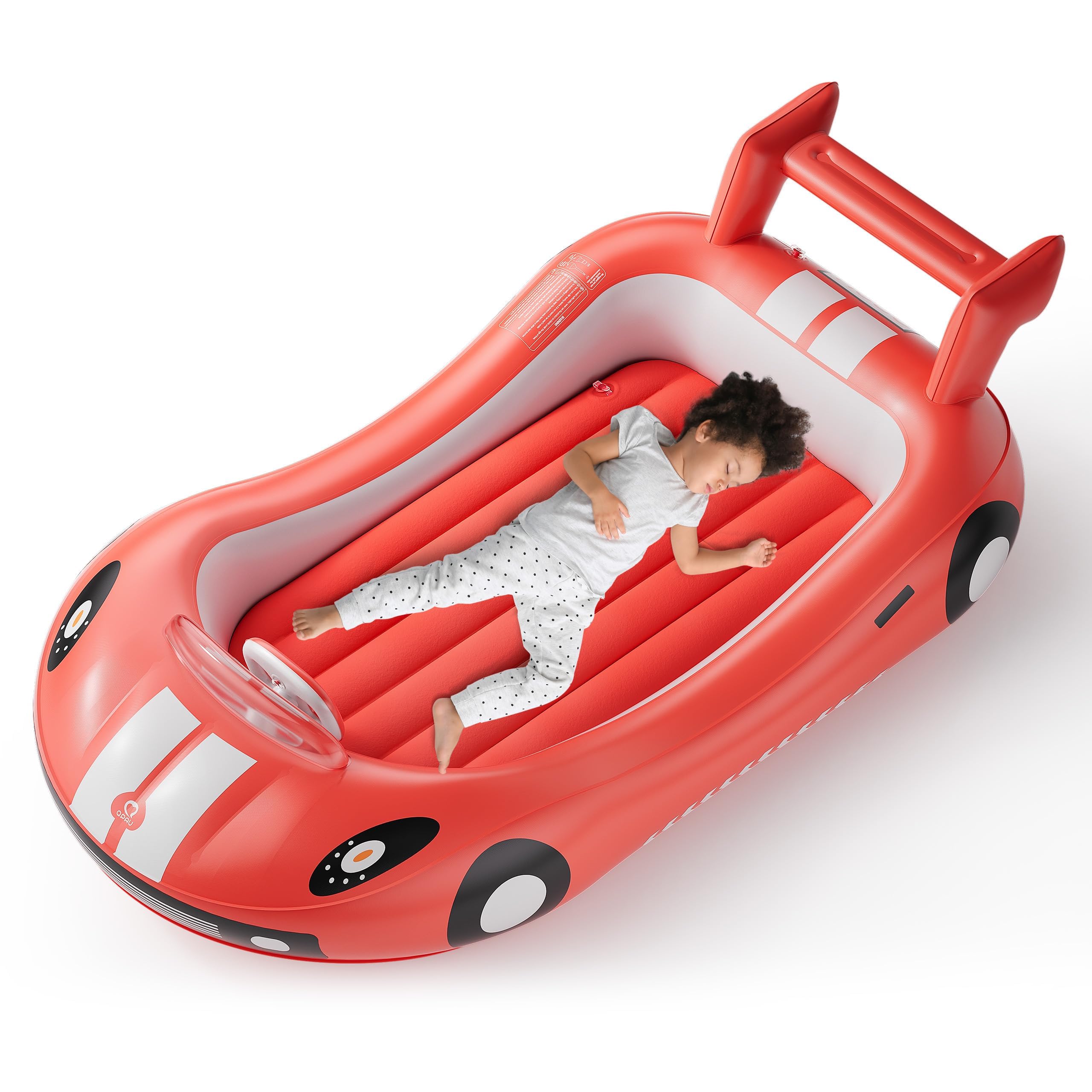
I recommend this when I want a safe, fun, and portable sleep spot for kids on trips or sleepovers.
Why I picked it: Playful car design, padded sides for safety, and included hand pump and repair patches.
Best for: Parents or grandparents who want a portable, kid-friendly sleep solution.
Budget-friendly and feature-complete for occasional travel and sleepovers.
Pros
- Fun racing car design kids love
- High side rails for safety
- Comes with pump and patches
- Plush sleeping surface
- Lightweight and portable
Cons
- No dedicated carry bag included
- Folding can be fiddly
- Interior sleeping width is narrow
My take
I used this travel bed for weekend trips and it repeatedly won over the little campers. The car shape is a big hit and the raised side rails do a reliable job of keeping a toddler from rolling out.
Inflation with the included hand pump is straightforward and the kit includes repair patches so I felt prepared for minor issues. The plush top is quiet and comfortable for kids, and the construction is sturdy enough for regular sleepovers.
My only practical complaints are the lack of a dedicated carry bag and that folding it back down small takes some practice. For the price and convenience, though, it’s the easiest, most fun sleep solution I pack for kids.
How I Choose an Air Mattress for Camping
Match mattress type to your trip
I always start by deciding how I’ll use the mattress. For car camping and basecamp I prefer tall, built-in-pump queens. For backpacking I prioritize R-value, pack size, and weight. For cots I reach for foam canvas pads.
If you camp in cold conditions, insulation (R-value) matters more than thickness alone. For warm-weather car camping, comfort and height usually win.
- Basecamp: raised queen with internal pump for quick setup
- Backpacking: high R-value, tiny packed size, and low weight
- Cot use: thick canvas or foam pad sized to the cot
- Kids: low-to-mid height with side rails and included pump
Inflation method and reliability
I prefer built-in pumps for convenience at basecamp and pump sacks or integrated pumps for trail use. Manual mouth inflation is a fallback but tires quickly.
Check how long it takes to inflate and whether the mattress holds air overnight in real use; some models need occasional top-ups.
- Built-in electric pump: fastest, needs a power source
- Pump sack or integrated pump: good for trail use
- Manual inflation: lightest, least comfortable to set up
- Look for included repair patches for on-trail fixes
Durability, materials, and weight limits
I always read the material thickness and construction notes. Heavier PVC and reinforced seams give real-world puncture resistance. For inflatables used around kids or dogs, choose thicker materials.
Weight capacity matters if you sleep with a partner or place gear on top; higher-rated mattresses feel less strained.
- Thicker PVC (0.45mm) lasts longer around abrasion
- I-beam or fibre-tech interiors reduce sagging
- Canvas and foam are great for cot setups
- Always bring repair patches and a small pump
Frequently Asked Questions
Which air mattress is best for backpacking?
I choose a high R-value ultralight pad like the ApolloAir for backpacking because it balances warmth, pack size, and weight.
How can I prevent leaks while camping?
I inspect seams before trips, avoid sharp rocks, use a groundsheet, and pack repair patches. Proper folding per the manufacturer also helps protect valves.
Are built-in pumps worth it for camping?
For car camping and basecamp absolutely — built-in pumps save time and effort. For backpacking they add weight and require a power source.
What mattress should I pick for side sleepers?
I recommend a thicker pad (4–5") such as the TREKOLOGY for side sleepers to avoid pressure points.
Final Take
If I’m car camping and want a hotel-like sleep, I reach for a raised queen with a built-in pump. For multi-day backpacking, a compact, insulated pad with a strong R-value is non-negotiable. For cot or basecamp comfort, canvas and thick foam pads deliver home-like rest.
Use the quick guide above to match a mattress to your style, and pack a small repair kit. With the right choice, you’ll sleep better and wake ready to enjoy the trail.
