
I tested a range of patch kits for air mattresses and inflatables — from self-adhesive TPU tape to heavy vinyl patches with cement and liquid PVC sealants. Here are the kits I keep on hand and when I reach for each one.
I’ve fixed leaky air mattresses, pool floats, kayaks, and even a hot tub seam using every kind of patch kit in this roundup. Over time I learned that the material and location of the damage determine the right approach: self-adhesive TPU works great for quick, dry repairs; heavy vinyl patches plus cement are best for thick pool liners; and liquid PVC is the go-to for permanent, flexible seals on PVC and PU surfaces.
Below I walk through the specific kits I used, what each one does best, and practical tips I apply when patching holes so the repair actually lasts.
I compared three classes of kits: self-adhesive TPU patch tape for fast, low-prep fixes; pre-cut vinyl patches with a tube of vinyl cement for heavy-duty repairs; and liquid PVC sealants that cure into a permanent, flexible membrane. I’ll tell you which one I reach for depending on hole size, material, and whether the repair needs to be underwater.
1. Pool Above Heavy Duty Vinyl Repair Kit – Best Overall
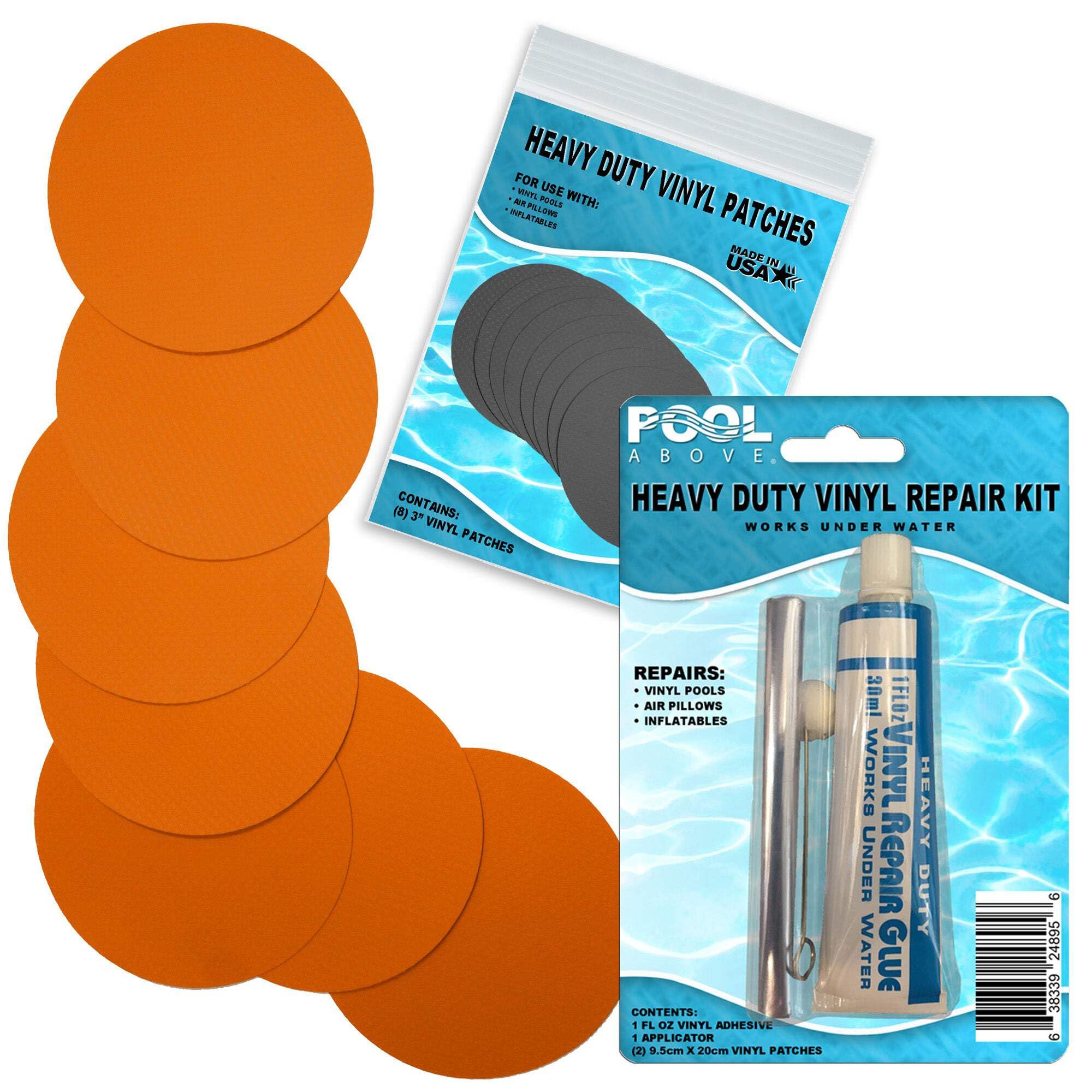
I keep this Pool Above kit in my repair drawer for heavy vinyl tears — it ships with multiple round patches and a tube of vinyl cement so I can handle larger punctures and seam repairs.
Why I picked it: Comes with several heavy-duty patches plus cement for durable vinyl fixes.
Best for: Repairing thick pool liners, inflatables, and air mattresses with vinyl surfaces.
A practical midrange option for durable vinyl repairs.
Pros
- Multiple heavy-duty patches included
- Patches trim to fit irregular tears
- Good color-match options
Cons
- Glue supply is limited
- Requires surface prep and clamping
- Curing time can be long
My take
This kit is my go-to when the damaged item is heavy vinyl rather than fabric-like TPU. The patches are beefy and trimmable so I can cut rounded corners to avoid peeling. I followed the kit’s instructions: clean, trim, apply cement, press out bubbles and weight the patch while the glue cures.
A few practical notes from hands-on use: if the air mattress has a fuzzy top, you must remove that layer to reach the vinyl before the patch will stick well. The included tube of cement works, but I’ve run into repairs that needed more adhesive, so I keep an extra tube on hand. When applied correctly and left to cure (I often leave weight on the patch overnight), the bond holds under repeated inflation cycles.
This kit shines for pool-liner-style tears and seam repairs where strength matters more than cosmetics. For tiny pinholes or quick campsite fixes I’ll reach for a TPU tape instead, but for anything that needs serious tensile strength this kit earns its place.
2. PVC Stitch Liquid Sealant (with Mesh Cord) – Best for Permanent Liquid Repairs
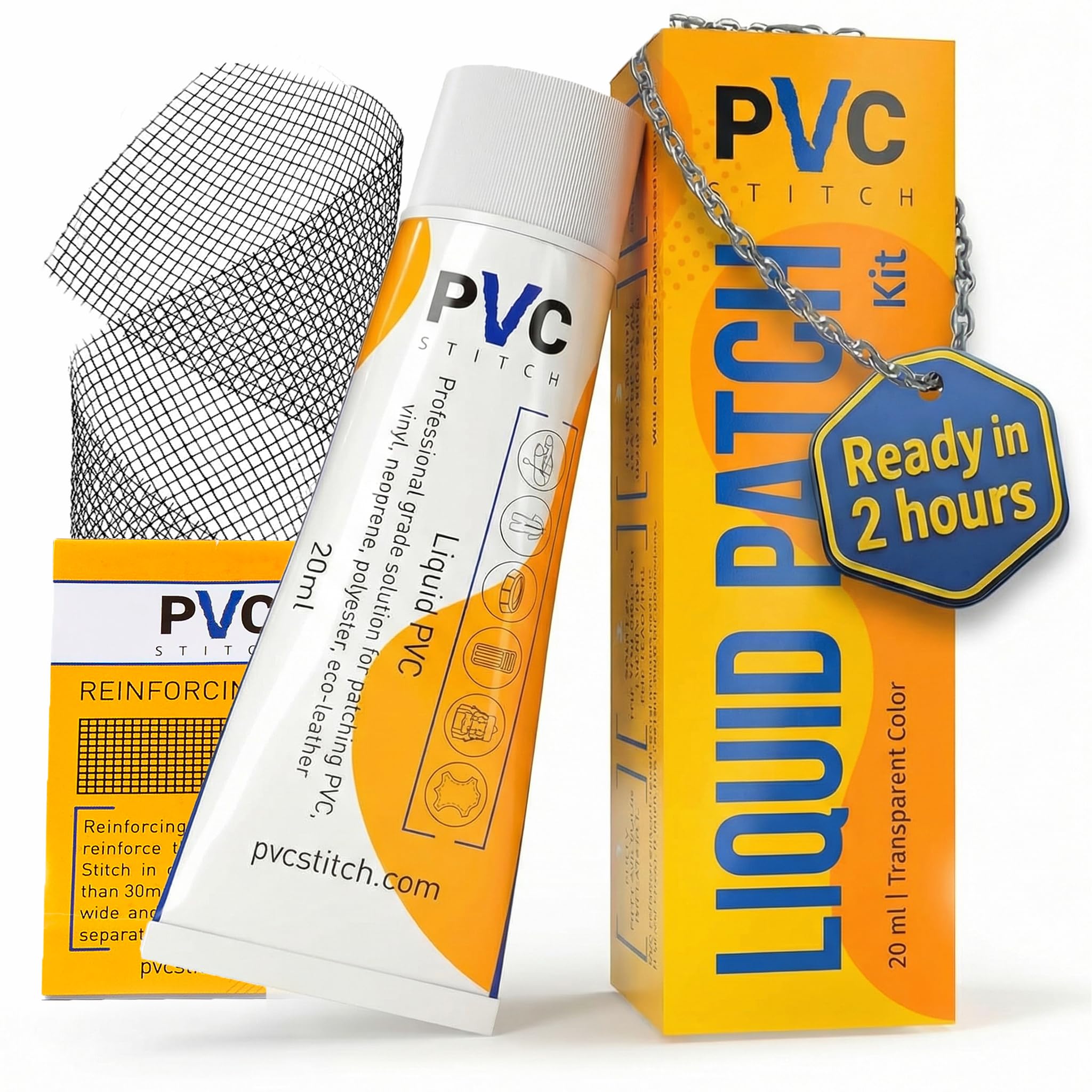
I used this liquid PVC sealant when I needed a permanent, flexible repair — it comes as a thick sealant and a reinforcing mesh cord for larger tears.
Why I picked it: Liquid formula cures to a permanent, flexible patch that bonds to PVC and PU.
Best for: Permanent repairs on PVC/PU inflatables, seams, and underwater patches.
A slightly premium solution for long-lasting PVC fixes.
Pros
- Creates permanent flexible bond
- Water and UV resistant
- Includes mesh cord for reinforcement
Cons
- Small tube — limited repairs
- Not suitable for nylon-based fabrics
- Requires full deflation and prep
My take
When I needed a true permanent patch on a PVC airbed and a small raft seam, this kit delivered. The sealant goes on thick and cures to a rubbery, waterproof finish within a few hours. For long rips I embed the supplied mesh cord into the sealant; for pinholes I apply a few generous layers.
A couple of caveats from using it: you must deflate the item completely and work on a dry, clean surface. I made an initial attempt over old sealant and had to remove the failed coating before a successful second application — once I did that the bond was rock solid. Also, the tube is small, so save it for repairs that need a permanent solution rather than routine tiny fixes.
I now consider liquid PVC the right tool when flexibility and permanence are essential — for example, inflatable boats, high-pressure PVC paddloboards, and seam work that will be under continuous stress.
3. Breliter TPU Inflatable Patch Kit – Best TPU Patch Tape
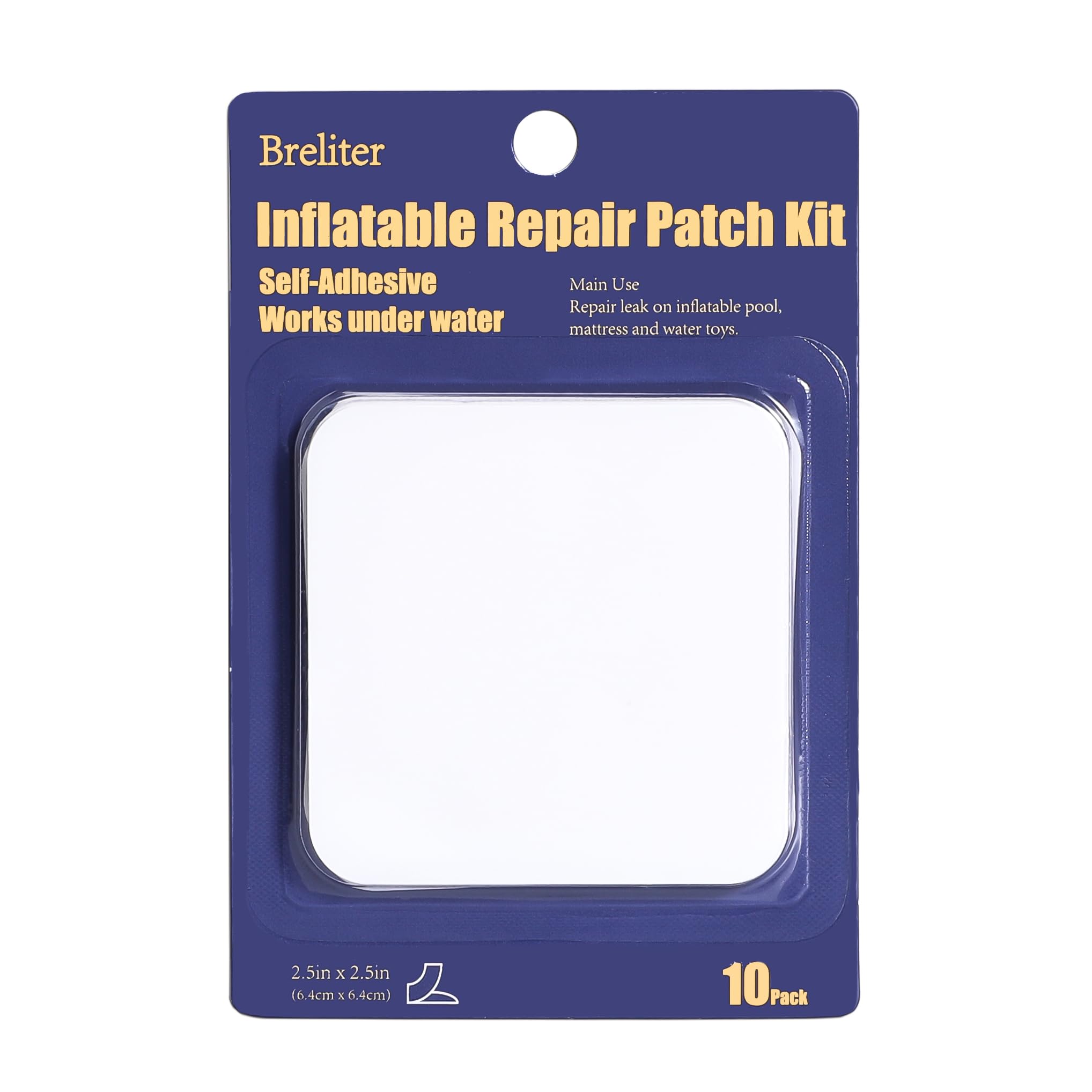
This Breliter TPU patch kit is the fastest way I stop leaks on air mattresses and pool floats — clear, self-adhesive squares that bend with the material and hold up in water once applied to a clean surface.
Why I picked it: Flexible, clear TPU patches that stick quickly and remain waterproof.
Best for: Quick dry-surface repairs on air mattresses, floats, and toys.
A cost-effective, user-friendly patch tape pack.
Pros
- Clear and low-profile
- Stays flexible with inflation
- Very easy to apply
Cons
- Must be perfectly clean and dry
- Can stick to itself when handling
- Smaller size for big tears
My take
I reach for these TPU patches whenever I need a fast, neat repair. After wiping the area clean and dry I press the patch firmly and smooth out air bubbles; the adhesive grabs immediately and held perfectly through several inflate/deflate cycles.
The TPU material is forgiving and stretches rather than cracking, which is why it survived repeated use on an air mattress I use for guests. Two practical tips: trim the patch if you need a rounded edge to avoid peel-back, and give it a few minutes of firm pressure before reinflating.
For on-the-spot fixes or when appearance matters, these patches are my first choice. For wet or underwater seam repairs, I switch to vinyl patches plus cement or liquid PVC.
4. PVC Stitch Liquid Patch (20 ml) – Best Rapid Cure Liquid Glue
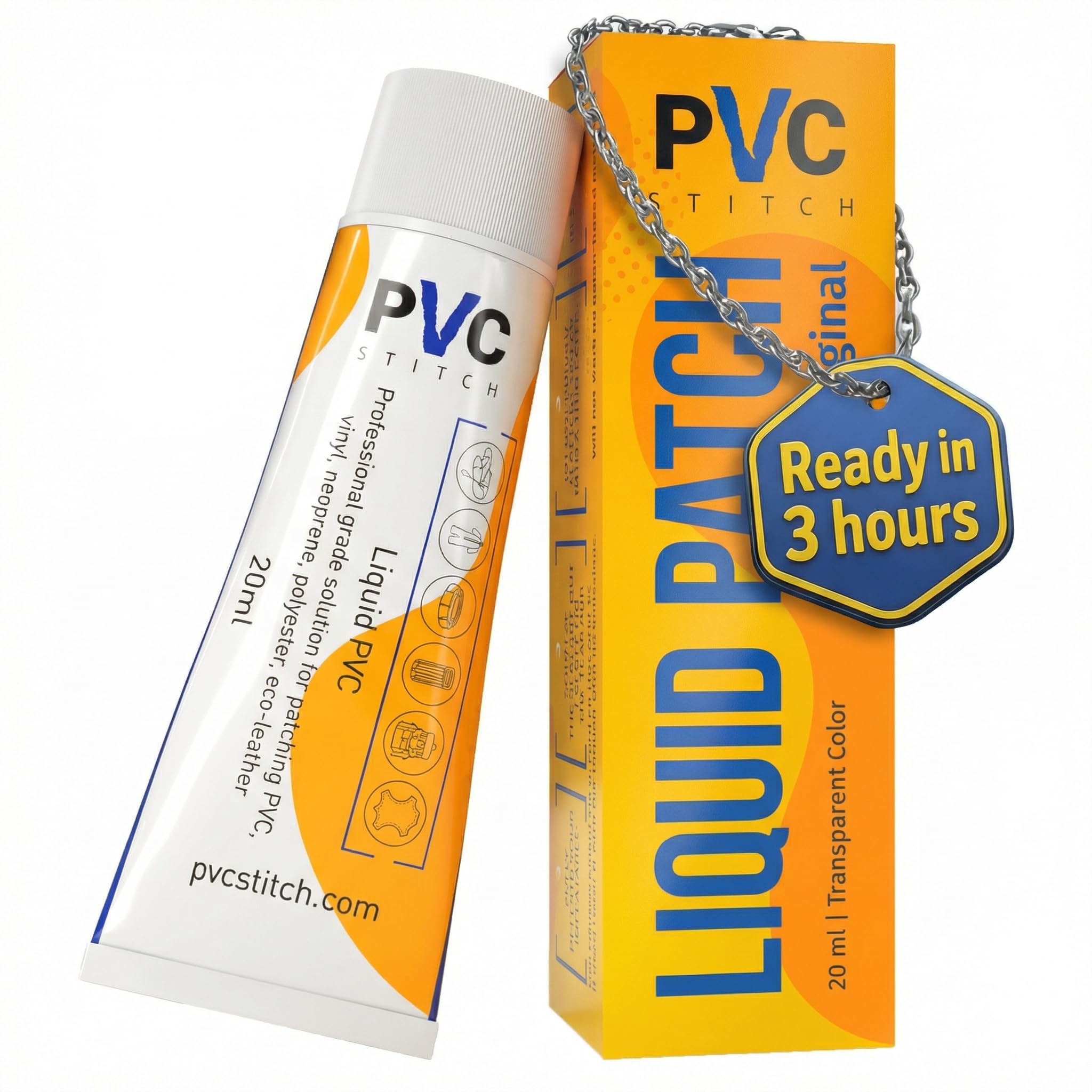
I use this faster-curing PVC Stitch tube when I want a liquid patch that sets up in a matter of hours — it’s transparent and designed for PVC and PU surfaces.
Why I picked it: Faster cure time for durable, flexible repairs on PVC/PU inflatables.
Best for: Quick permanent seals on PVC boats, rafts, and airbeds needing flexibility.
A reliable midrange liquid-glue option.
Pros
- Cures in a few hours
- Flexible after cure
- Works on many PVC surfaces
Cons
- Dries in tube after opening
- One-time-use risk if not stored
- Messy application
My take
This tube has fixed small tears in my paddleboard and a slow leak in an air mattress. I typically lay a bead, smooth it into the damage, and allow a full cure overnight even if the label lists shorter times — that extra patience has given me stronger results.
One thing I learned: once opened the tube can dry out in the cap, so plan repairs or transfer leftover sealant to an airtight container if you want to reuse it. The finished patch stays flexible and tolerates pressure; I’ve inflated to operating PSI without the repair failing.
If you need a quick permanent fix and are comfortable with a slightly messy application, this is a tool I’ll reach for before buying a replacement inflatable.
5. Zonon TPU Inflatable Patch Kit – Best Value TPU Patches
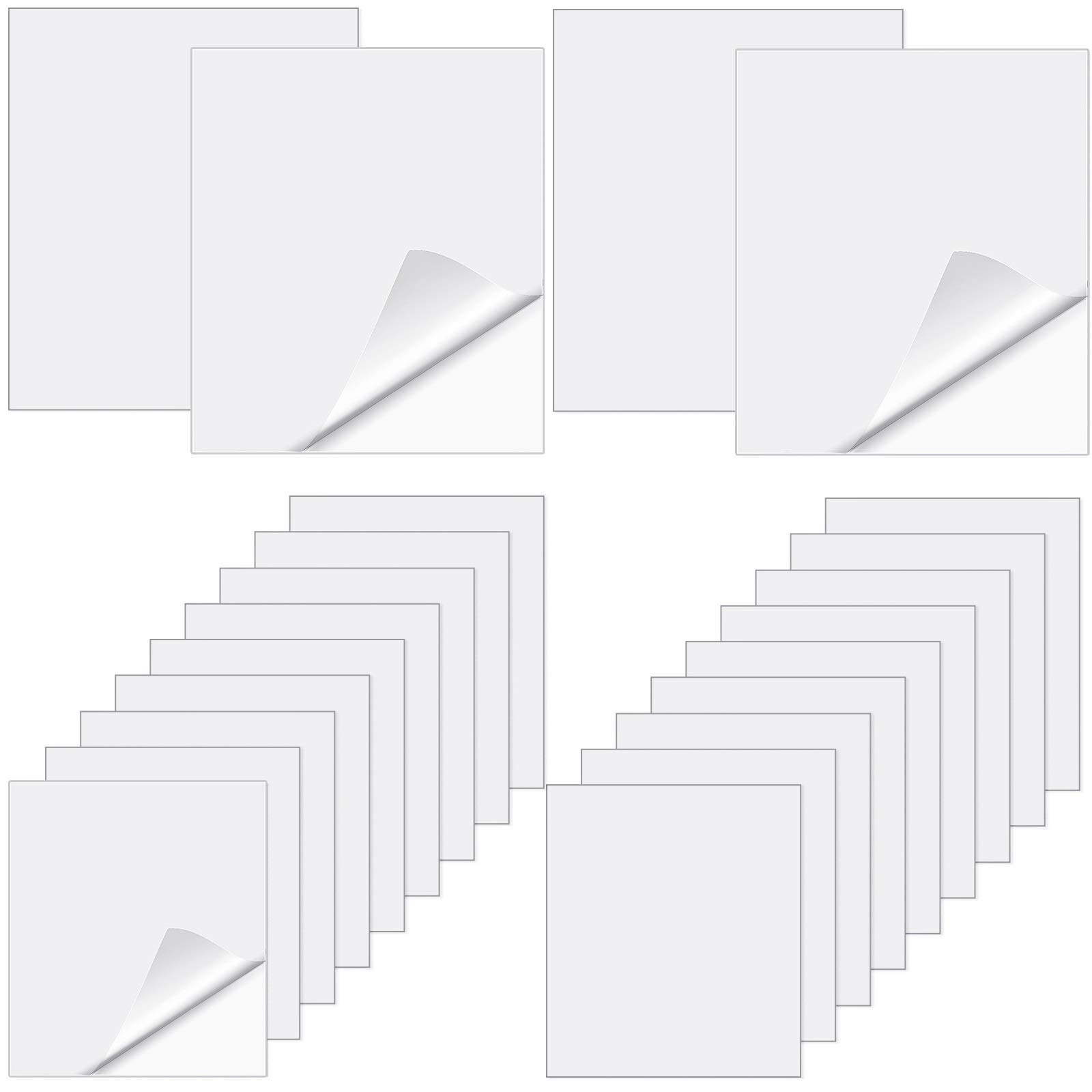
I stocked these Zonon TPU patches when I needed a larger, trim-to-fit self-adhesive option; they’re translucent, easy to cut, and useful for pool toys and larger surface areas.
Why I picked it: Larger self-adhesive TPU pieces that I can trim to shape.
Best for: Bigger patches on floats, rings, and oversized inflatables.
A budget-friendly pack with generous patch size.
Pros
- Large, trimmable patches
- Good adhesion once applied
- Water resistant
Cons
- Needs very clean dry surface
- Can be fiddly to trim
- Adhesive takes time to set
My take
These patches have been useful on oversized inflatables where the small square patches feel insufficient. I cut them to shape, press firmly, and let them set for about 30 minutes before reinflating. On pool floats and larger rings the translucent material blends fairly well.
They’re not a miracle cure for seams under constant stress, but for medium punctures and tears they extend the life of inflatables at low cost. I always keep a few on hand in my beach bag for emergency fixes.
6. Pool Above Heavy Duty Vinyl Rectangle Kit – Best Heavy-Duty Rectangle Patch
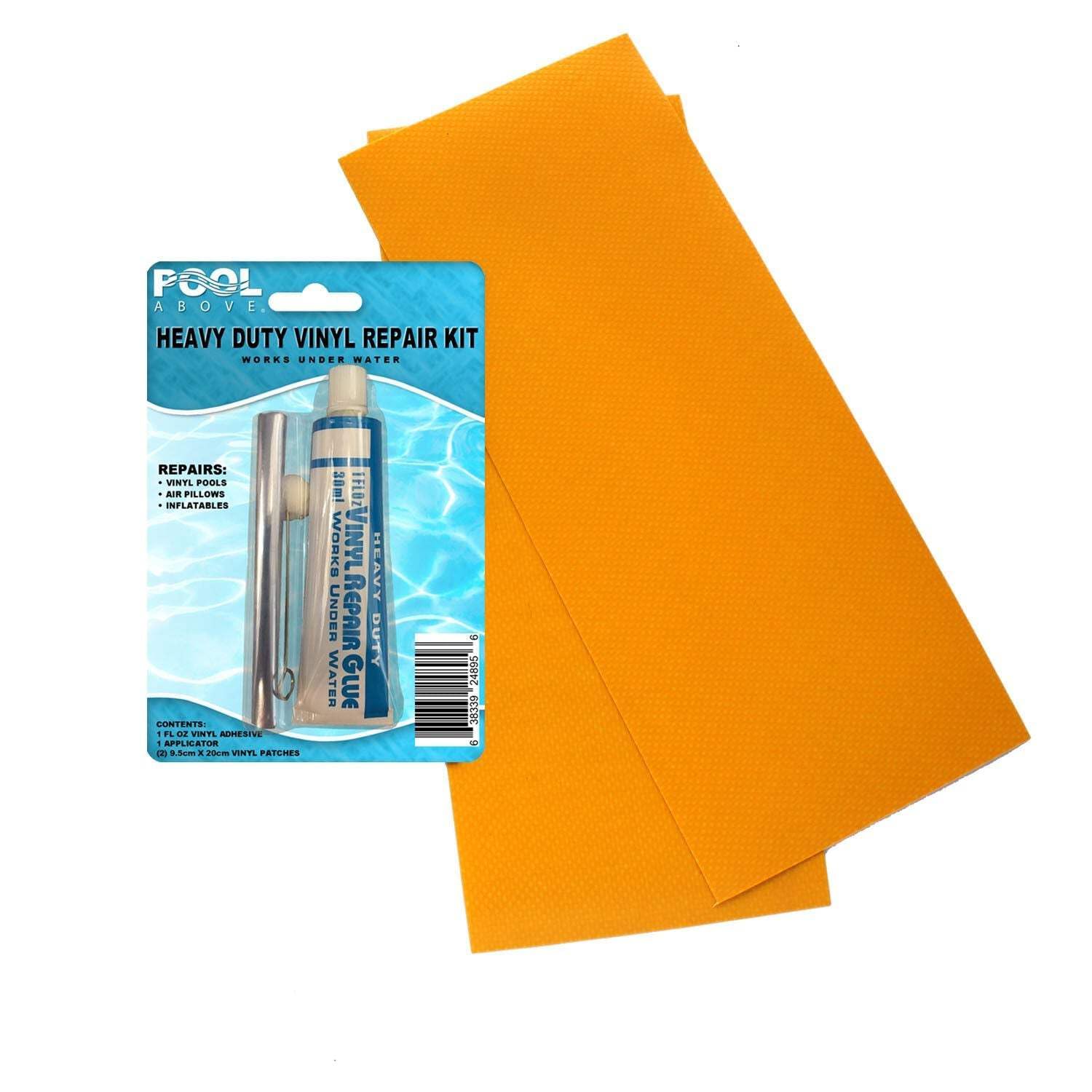
When I have a long slice or need a big supported patch, I reach for this Pool Above rectangle kit — large trimmable patches and vinyl cement give real coverage for large damage.
Why I picked it: Two large, trimmable vinyl rectangles that cover big tears.
Best for: Large rips, rodent damage, and patching pool covers without draining.
Good value for larger, trim-to-fit vinyl patches.
Pros
- Very large patch pieces
- Trimmable to fit odd tears
- Works underwater if applied correctly
Cons
- Included glue can be weak
- Requires careful prep
- Curing needs weight/time
My take
I used this kit to patch a sizable tear and was glad I had the large rectangles. The method is the same as the round-kit version: clean, trim, apply cement, and press. I once patched an above-ground pool liner underwater by folding the patch onto itself during application — it held after proper curing.
The patch material itself is excellent, but I’ve found the supplied glue isn’t generous and can harden after a few uses. For very large or high-stress repairs I sometimes supplement the kit’s cement with a stronger vinyl adhesive I keep in my toolbox.
Overall, this is the kit I choose for big jobs where a small square or tape won’t cover the damage.
7. EPN Air Mattress Vinyl Repair Kit – Best For Versatility
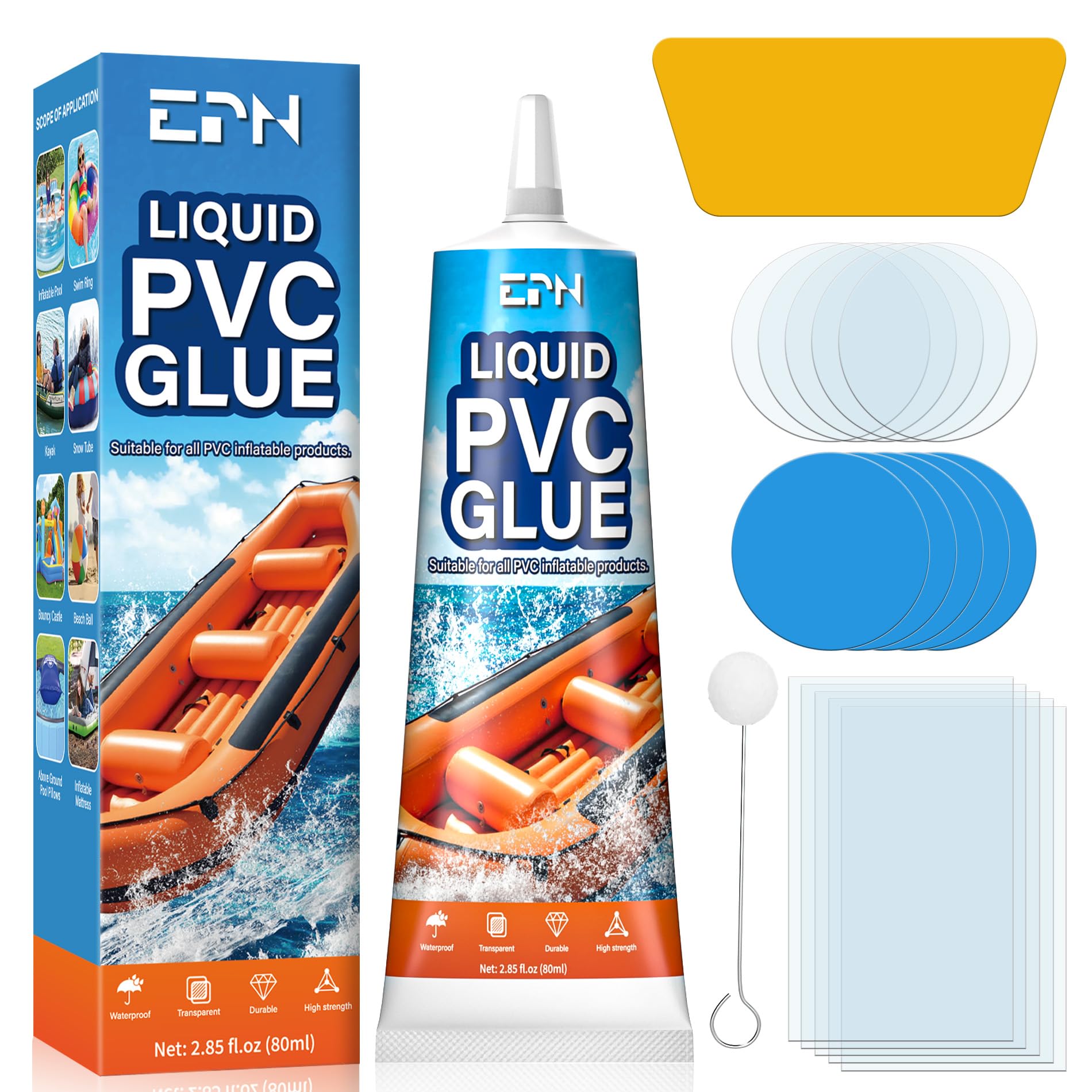
I rely on this EPN kit when I need versatility: it includes multiple patch shapes and a larger 80 ml tube of adhesive so I can tackle several repairs without running out of glue.
Why I picked it: Larger adhesive volume and a mix of patch shapes for varied repairs.
Best for: Multiple repairs across TPU, PVC, TPU-blend items, and pool liners.
Good practical value for repeat repairs and mixed materials.
Pros
- Generous adhesive volume
- Includes round and square patches
- Convenient dispenser with needle
Cons
- Glue can be messy to apply
- Some colored patches are obvious
- Surface prep still required
My take
This kit stood out because of the larger adhesive tube — I could fix a pool liner and later use the remainder for a yoga ball and a snow tube without needing a second purchase. The dispenser needle helps keep the glue from curing in the tip.
The kit includes both blue and transparent patches; I wish more were clear, but the blue options work well on blue liners. The glue is effective once you follow the instructions: pick a patch slightly larger than the damage, press firmly, scrape out bubbles and weight it while it cures.
If you want one kit that covers many repair scenarios and don’t want to juggle tiny tubes, this is the versatile option I reach for.
How I Choose an Air Mattress Patch Kit
Types of kits and when I use them
I sort kits into three classes: self-adhesive TPU patches for quick dry-surface fixes, vinyl patches plus cement for heavy vinyl or underwater work, and liquid PVC sealants for permanent flexible bonds.
For quick campsite fixes or small pinholes on soft-top air mattresses, TPU patches are fast and neat. For pool liners, heavy vinyl boat sides, or seam work that will be underwater, I use vinyl patches with vinyl cement. Liquid PVC is my choice when I need the repair to act like original material and flex under pressure.
- TPU patches: fast, clear, best on dry surfaces
- Vinyl patch + cement: strong, good for thick materials
- Liquid PVC: permanent, flexible, best for seams and boats
What to look for in a kit
I check patch material compatibility (PVC vs TPU), patch size options, and adhesive volume. A small tube can fix one problem; a larger tube or multiple patches lets me handle several repairs.
Packaging that includes application tools (scraper, applicator needle, mesh cord) makes the job easier and reduces the chance of an imperfect bond.
- Material compatibility: PVC glue won’t work on nylon
- Patch sizes: get trimmable or multiple sizes
- Adhesive volume: choose based on expected repair count
- Cure time: allow full cure for pressure-rated repairs
Application tips I always follow
Surface prep is the single most important step I take: clean, dry, and remove any fuzzy top layer so the adhesive meets vinyl. For seams, I add extra glue and clamp or weight the patch until fully cured.
When using liquid sealants I often let them cure longer than the stated minimum to reach maximum strength. For self-adhesive patches I press and smooth out bubbles with a flat tool and leave pressure on them for several minutes before reinflating.
- Clean and dry area thoroughly
- Trim patches with rounded corners
- Apply even pressure and weight while curing
- Test at low pressure before full use
Frequently Asked Questions
Which patch type holds best underwater?
For underwater repairs I choose heavy vinyl patches with vinyl cement or liquid PVC. Both are designed for wet conditions when applied per instructions and given adequate cure time; self-adhesive TPU patches are not ideal for submerged seams.
Can I use liquid PVC on any inflatable material?
Liquid PVC works on PVC and PU surfaces but not nylon-based materials. I always confirm the inflatable’s material before using liquid sealant to avoid a failed bond.
How long should I wait before reinflating an item after patching?
I typically wait at least 24 hours for vinyl cement to reach full bond strength when possible. Liquid PVC often sets in a few hours but I give it extra time (overnight) for maximum strength. For TPU self-adhesive patches, a short firm-press period before reinflation usually suffices.
Final Take
After fixing dozens of leaks, I’ve learned there’s no one-size-fits-all patch kit. Keep a small TPU patch kit for quick fixes, a vinyl kit with cement for heavy repairs, and a tube of liquid PVC for permanent seam work.
With the right kit and careful surface prep, you can extend the life of air mattresses, pool floats, and inflatable boats without replacing them.
