
I tested a range of airless sprayers and accessory tips so you can pick the right tool for your next painting project—whether you're a weekend DIYer or a contractor.
I used these sprayers across sheds, fences, interior rooms, multi‑story exteriors, and heavy production jobs to compare real-world performance.
My focus was on spray quality, ease of setup, clog handling, cleanup, hose reach, and whether each unit holds up under repeated use.
When I compared these units I prioritized project scale (gallons per job), hose and tip options, clog‑clearing features, and how simple each system made cleanup and maintenance.
1. Graco Magnum 257025 Project Painter Plus Paint Sprayer – Best for DIYers
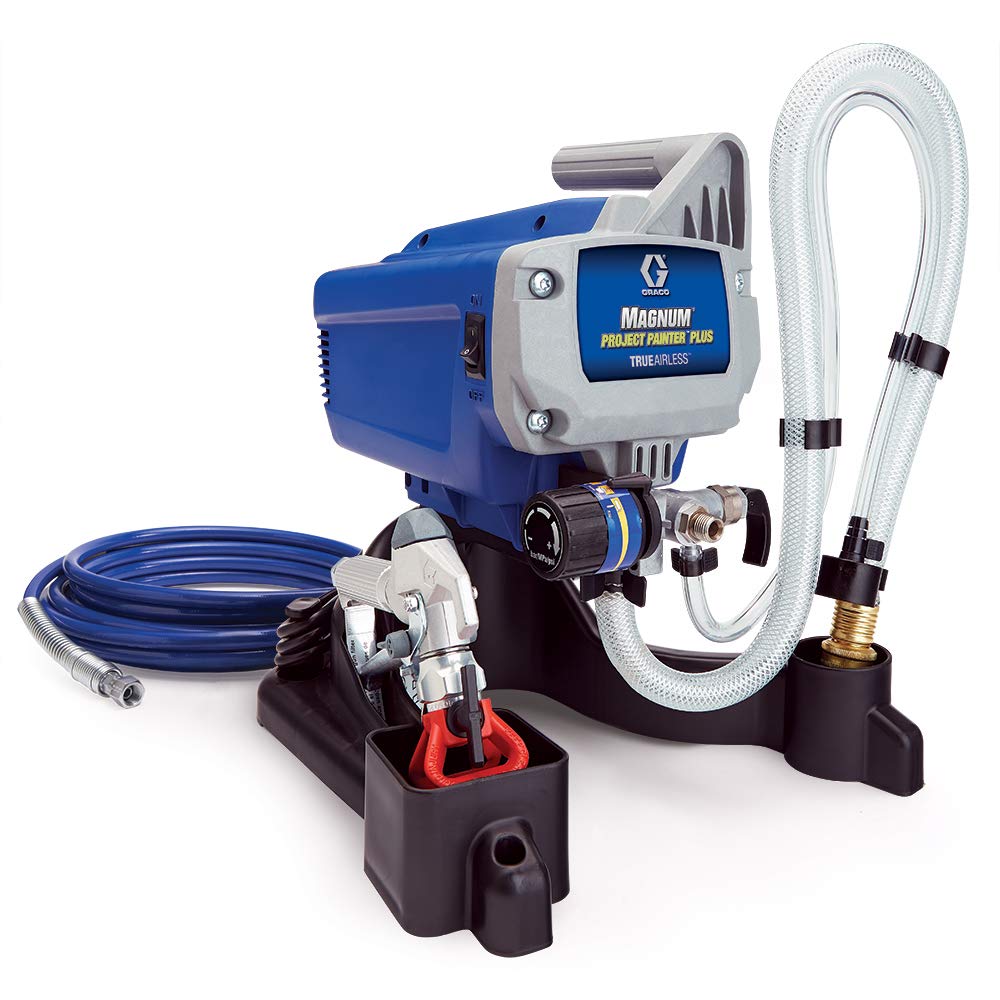
I found this sprayer to be the easiest way to ditch brushes and rollers for small to medium home projects without sacrificing control.
Why I picked it: Balanced power, easy controls, and flexible suction tube for direct bucket spraying.
Best for: Ceilings, sheds, decks, fences, and small interior projects.
Affordable and well suited to weekend projects.
Pros
- Simple, intuitive controls
- Flexible suction tube for bucket use
- Minimal overspray when dialed in
- Metal spray gun included
Cons
- Not rated for heavy professional use
- Can show light orange peel with wrong paint
My take
I used the Project Painter Plus on my garden shed, a workshop door, and kitchen cabinet touchups. It cut my finish time roughly in half compared with brushes and rollers.
The fully adjustable pressure let me spray unthinned paints and stains, and the spray pattern was surprisingly even. When a tip clogged I reversed it and cleared it quickly using the included instructions.
Cleanup was straightforward with the PowerFlush adapter and a bit of patience; I wouldn’t call it effortless, but it’s manageable for DIY work.
If you’re starting out or you want a dependable, easy machine that handles 1–5 gallon jobs without fuss, this is the one I reach for first.
2. Graco Magnum 262800 X5 Stand Airless Paint Sprayer – Best for Larger DIY Projects
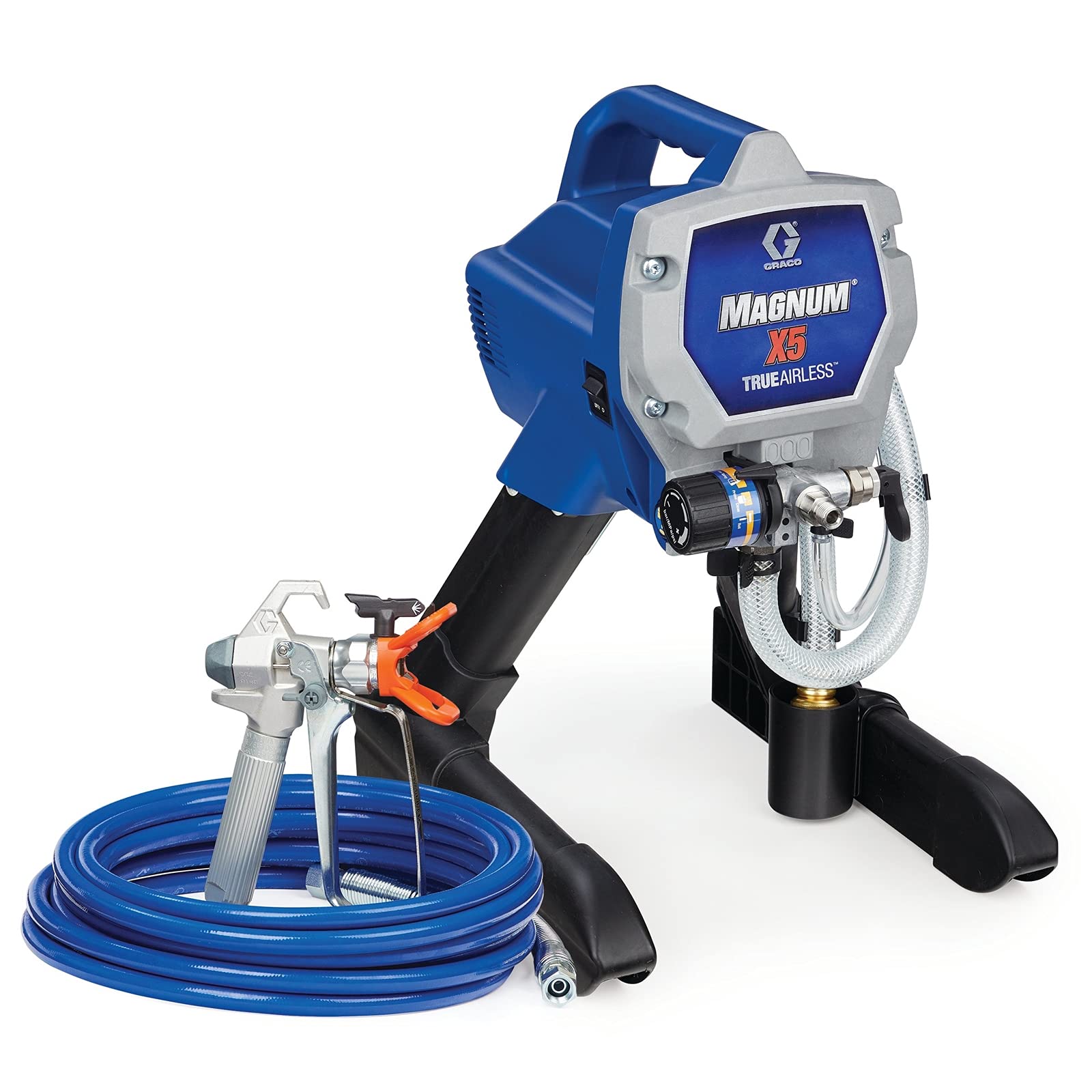
This X5 gave me the extra output and reach I needed for big outdoor jobs without stepping up to pro gear.
Why I picked it: More power and longer hose support for siding and fence projects.
Best for: Decks, siding, long fences, and mid‑size home exteriors.
A solid mid‑range option for frequent DIYers.
Pros
- Handles larger volumes easily
- Supports long hose runs
- Powerful spray without thinning
- Sturdy metal spray gun
Cons
- Clean‑up takes time
- Requires enough paint to justify cleaning
My take
I tackled a huge fence and a pair of 20 ft cargo containers with the X5. It made those long runs painless compared with rolling.
Setup was quick and clear thanks to the placard instructions, and priming the pump took just a few minutes. The sprayer pushes paint fast, so I had to be deliberate about masking and taping.
When paint pick‑up or filter issues occurred it was usually my prep—old or dried paint particles—rather than the machine. Reversing the RAC tip solved most clogs in seconds.
For anyone who needs more capacity than a hobby unit but doesn’t want to buy contractor gear, this is a dependable step up.
3. Graco Magnum 262805 X7 Cart Airless Paint Sprayer – Best for Heavy Weekend Use
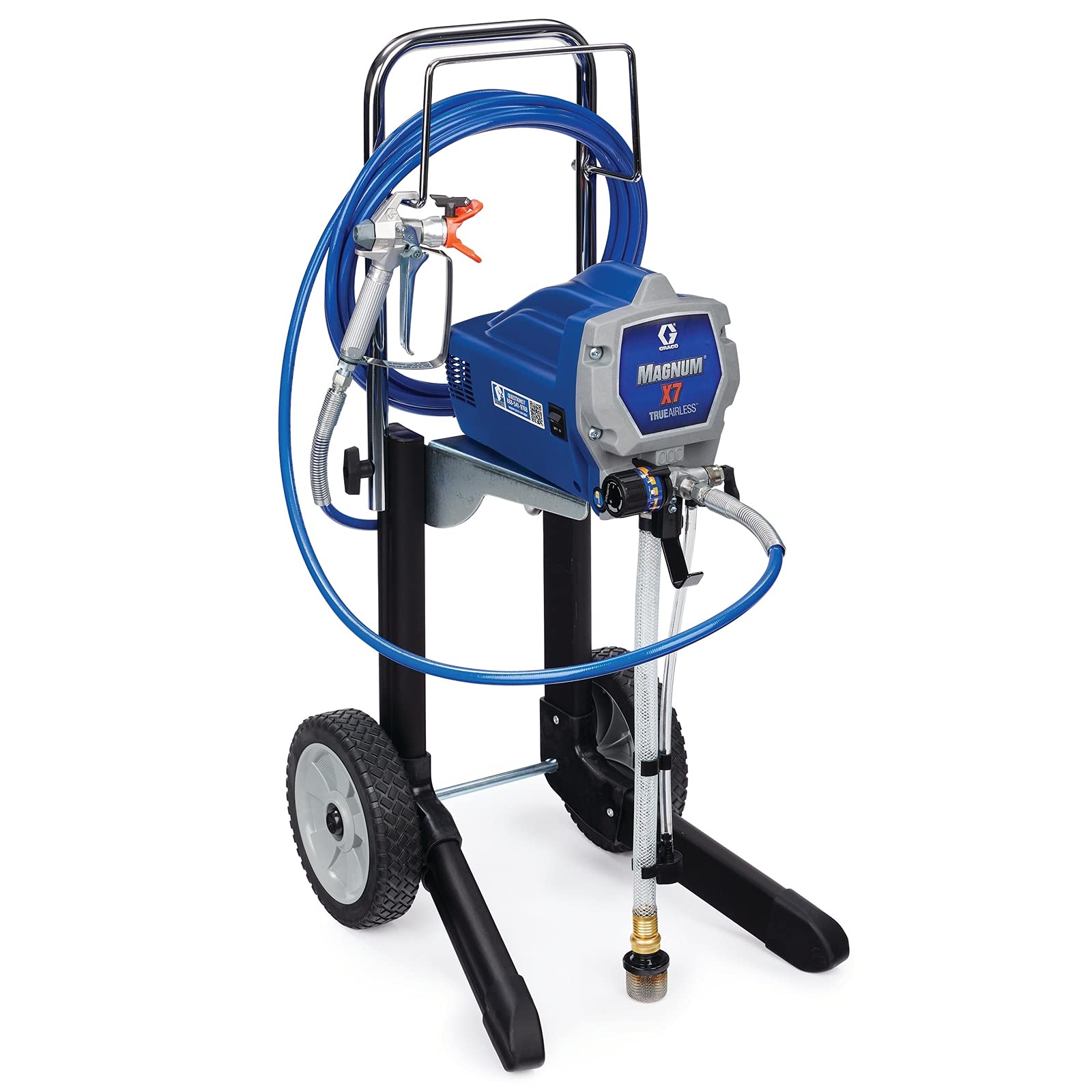
I relied on the X7 when I needed extra duty from an at‑home rig—long hose runs and high annual use recommendations made the difference.
Why I picked it: Higher annual capacity and longer hose support for multi‑story homes.
Best for: Whole‑house exteriors, multi‑story homes, and sustained seasonal projects.
A step toward contractor capability without full pro pricing.
Pros
- High annual use recommendation
- Supports very long hose lengths
- Reversible tip for quick unclogs
- Stainless steel piston pump
Cons
- Not intended for continuous pro use
- Requires attention to prep and masking
My take
I painted an entire house interior and exterior with the X7 over a busy week and it handled the workload with very few hiccups.
The PowerFlush adapter saved me time at cleanup, and the switch tip system was a lifesaver when I encountered debris in the paint.
A professional colleague told me they trusted this model for heavier hobby and small professional jobs—my experience mirrored that; it’s capable and reliable when treated properly.
If you want a durable home sprayer that can stretch into light commercial duty, this is the model I’d recommend.
4. Titan 353-515 High Efficiency Airless 515 Reversible Spray Tip – Best Tip for Solid Stains
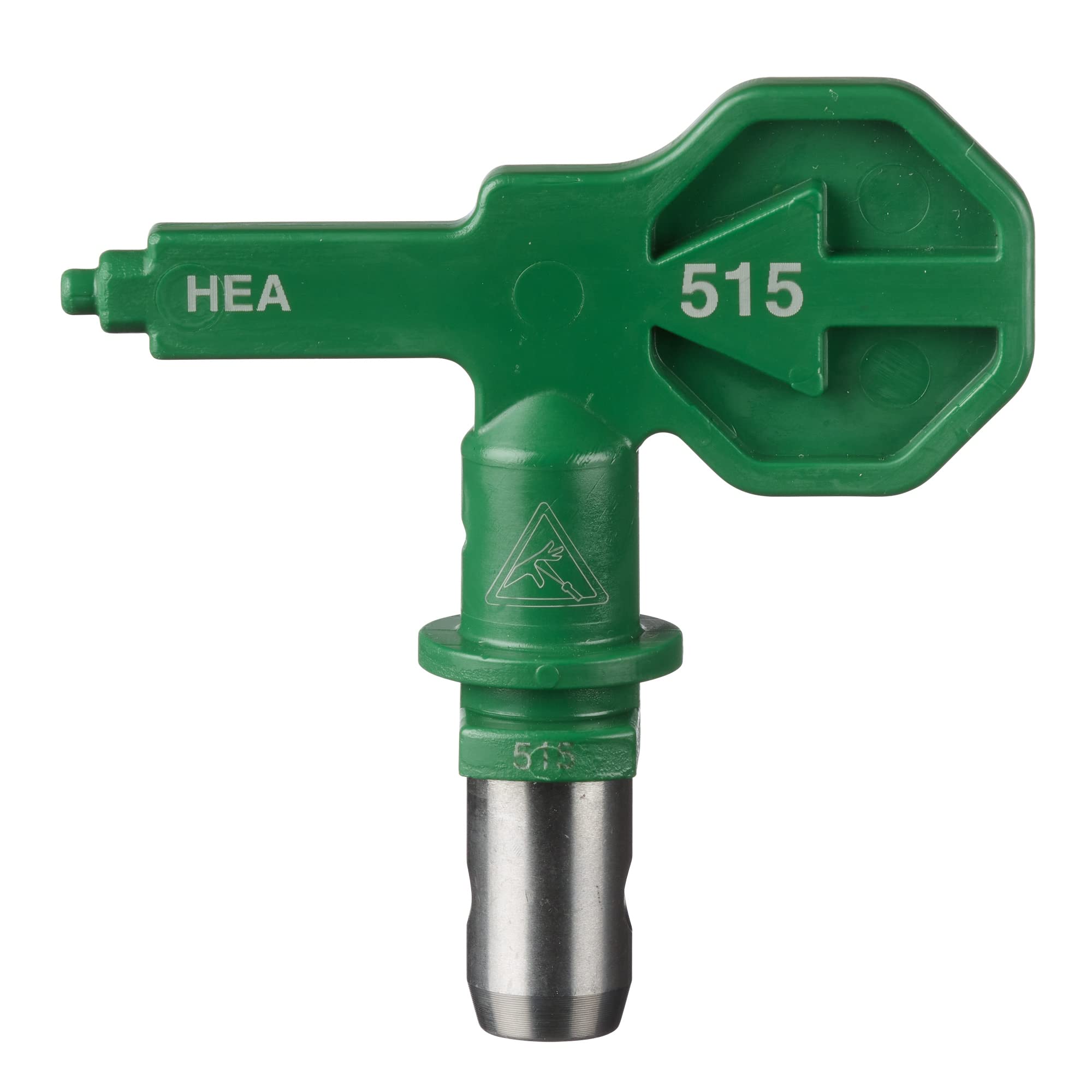
I tested this reversible 515 tip for wide coverage on decks and fences and it delivered a strong, consistent pattern.
Why I picked it: HEA soft spray and a wide 10–12” pattern for fast coverage.
Best for: Decks, fences, siding, and solid color stains.
An economical upgrade or spare tip.
Pros
- Wide 10–12” spray pattern
- Reversible for quick clog clearing
- HEA reduces overspray noticeably
Cons
- Fit can vary by sprayer model
- Applies a heavier coat than some tips
My take
I used the 353‑515 tip on exterior stain projects and appreciated how much faster I covered wide areas compared with a narrower tip.
The HEA technology produced a softer spray that made control easier and reduced rebound on nearby surfaces. When the tip choked I simply reversed it and kept spraying.
Be mindful of tip‑to‑guard fit—some sprayer models have slightly different thread profiles, so I tested fit before committing to an all‑day job.
For anyone spraying solid stains or needing broad coverage fast, this tip is a workhorse I trusted repeatedly.
5. Wagner 517517 Control Pro Airless Sprayer HEA Tip 517 – Best HEA Tip for Walls & Ceilings
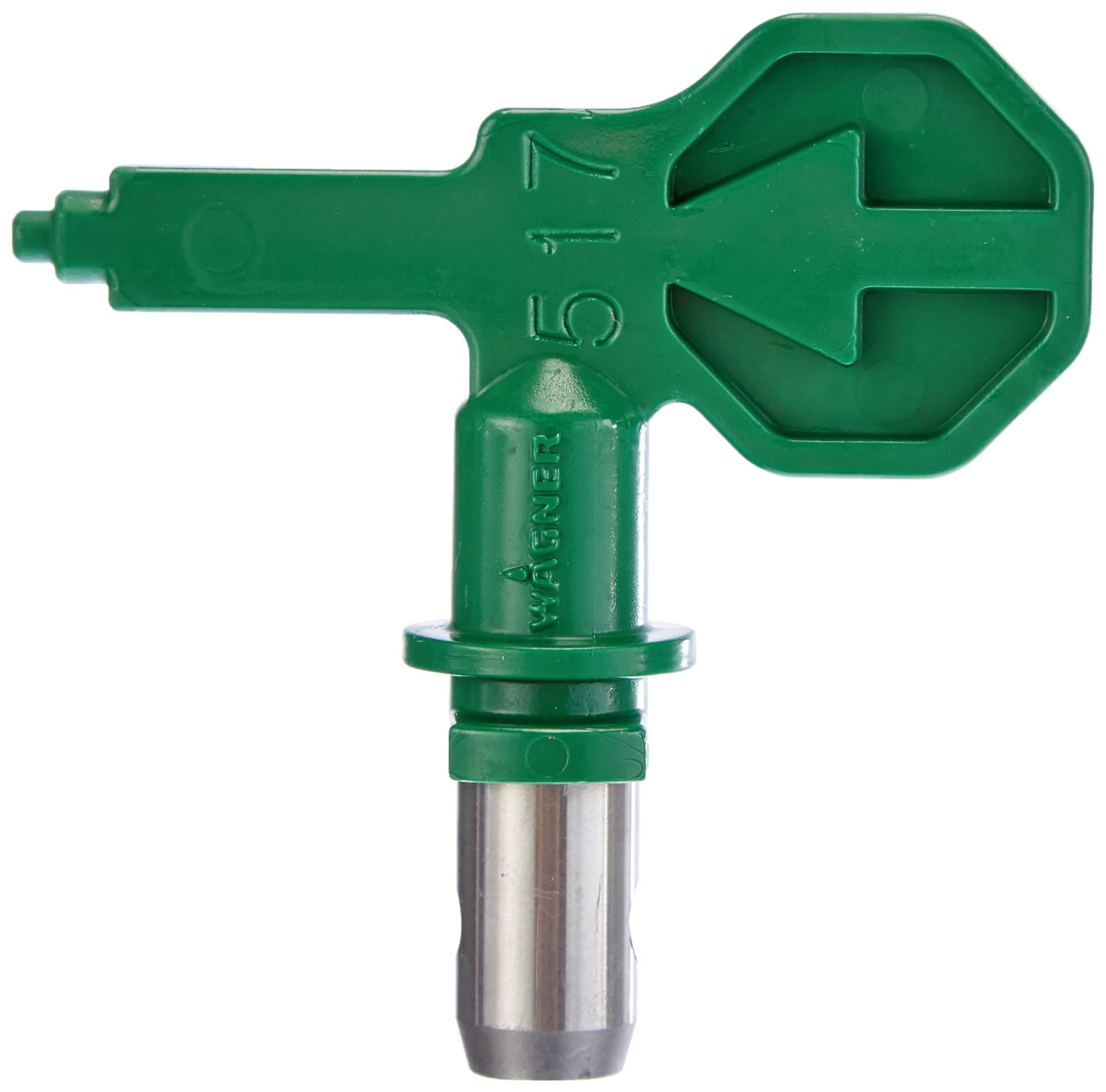
I relied on this HEA 517 tip for interior walls and ceilings where reduced overspray and streak‑free results matter most.
Why I picked it: Lowest overspray and gentle spray for emulsion paints.
Best for: Interior walls, ceilings, and emulsion paints with minimal mist.
A reasonably priced tip for tighter‑control work.
Pros
- Up to 55% less overspray
- Soft, streak‑free finish
- Great control for interiors
Cons
- May not fit all tip guards
- Requires proper paint thinning for best results
My take
I swapped the 517 into a Wagner Control Pro for a bedroom and ceiling job and immediately noticed less mist and easier masking cleanup.
The softer jet produced more controllable coverage and a smoother finish than a standard high‑pressure tip. For interior emulsion work this made my life simpler.
A couple of machines with differently sized tip guards needed small adjustments for a snug fit, so I always test fit before a large run.
When I want minimal overspray without sacrificing coverage, this is the tip I reach for.
6. Graco 17G180 Magnum ProX19 Cart Paint Sprayer – Best for Pros / High‑Volume
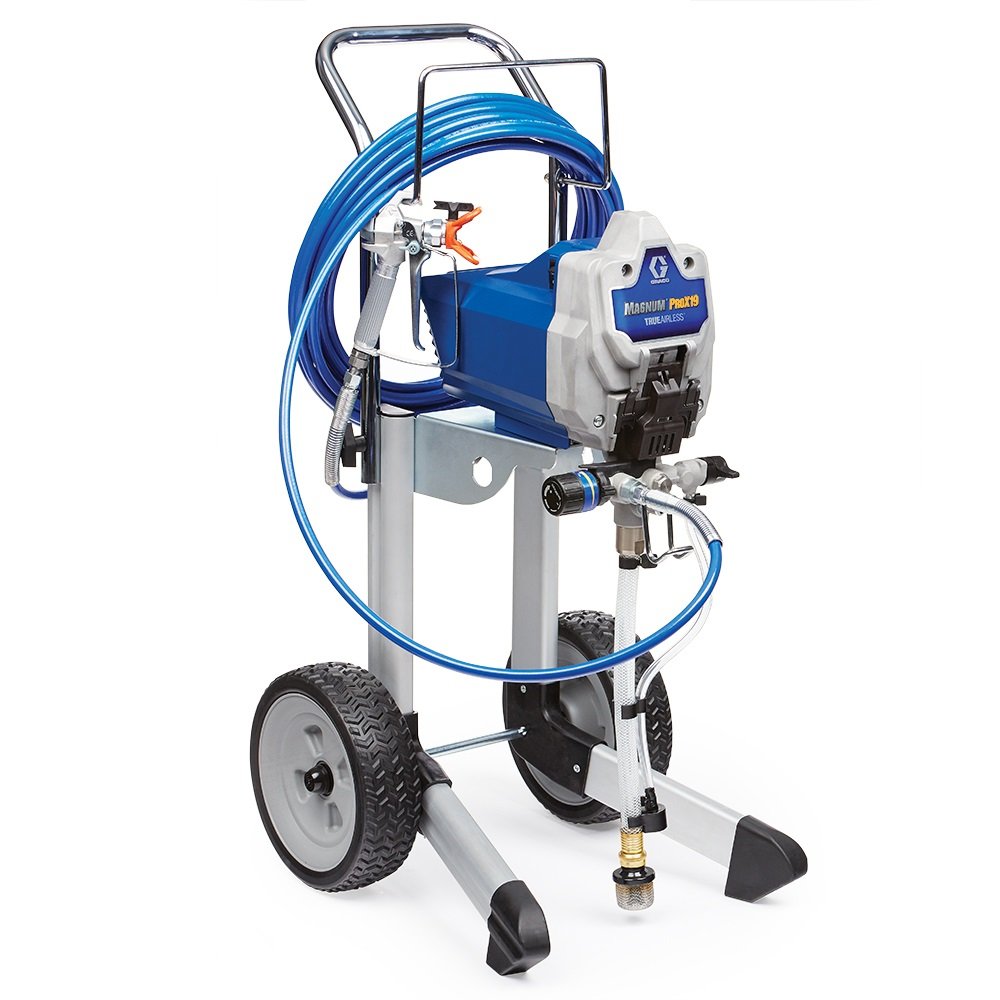
I used the ProX19 on heavy jobs where uptime and pump serviceability matter; it’s built to keep working through long days.
Why I picked it: Field‑serviceable pump, heavy annual capacity, and professional features.
Best for: Contractors, property maintenance, and high‑volume projects.
Higher investment but designed for professional workloads.
Pros
- Quick on‑job pump swaps
- High annual use capacity
- Strong, consistent output
- InstaClean filtration reduces clogs
Cons
- Heavier and less portable
- Higher initial outlay
My take
I put about 70 gallons through this unit while refinishing a large two‑story exposed‑beam structure and it ran without a single mechanical failure.
The ProXChange pump system let me swap pumps without tools, which eliminated costly downtime on long jobs. The built‑in filtration reduced tip clogs and saved me touch‑up time.
Setup, priming, and cleanup were straightforward for a pro machine, and the included 50 ft hose reached most work areas comfortably.
If you’re running multiple jobs or need a machine that tolerates heavy seasonal use, this is the sprayer I trust to stay in service.
How I Choose an Airless Paint Sprayer
Key features I look for
I evaluate flow capacity (how many gallons it can handle comfortably per job), hose length support, and the pump type to match the scale of my projects.
Tip compatibility and a reversible tip matter to me because they determine how quickly I can clear clogs and change spray patterns.
- Project size: small (1–5 gal), mid (up to 10 gal), large/pro (100+ ft hose, high annual gallons)
- Adjustable pressure for spraying unthinned paints
- Reversible or switch tip for fast unclogging
- PowerFlush or similar for faster cleanup
Setup and technique tips I use
I always strain paints when switching colors and keep a dedicated wash bucket for cleaning between jobs.
Masking and taping are the longest part of any spray job; I spend extra time here because it saves touch‑up work later.
- Prime and purge the pump before every run
- Test spray on scrap material to dial pressure
- Use the right tip size for material viscosity
Maintenance I swear by
I rinse and flush systems immediately after use and store pumps as instructed to avoid dried paint issues.
Carrying spare tips and a small tool kit has saved me multiple project delays.
- Use pump storage fluid for long storage
- Replace tip guards if damaged
- Clean filters and suction tubes regularly
Frequently Asked Questions
Can I spray unthinned paint with these sprayers?
Yes — with the adjustable pressure and piston pumps on these units, I sprayed many latex and stain products unthinned. I do take care to use the manufacturer’s recommended tips and to strain thicker materials first.
How much prep and cleanup should I expect?
Prep and masking take the most time in my experience. Cleanup is manageable with PowerFlush adapters or garden‑hose hookups, but it still pays to be patient and thorough.
Which tip should I pick for decks and fences?
I reach for a wide reversible HEA 515 or 353 tip for solid stains and large coverage; it speeds the job and reduces rebound when set up correctly.
Are these machines suitable for multi‑story homes?
Yes — models that support 75–100 ft of hose worked well for second‑story work in my testing, but I always test reach and pressure before committing to a full facade.
Final Take
If you’re a weekend DIYer, I recommend the Project Painter Plus for its balance of simplicity and performance.
For larger exterior jobs choose an X5 or X7 to get more reach and capacity without jumping to full contractor equipment.
If you work heavy production or contract jobs, the ProX19’s serviceability and pump features make it worth the investment for me.
