
I spent time using six airtight coffee containers so I could tell you which preserve freshness, which are easiest to use, and which suit different storage needs.
I live and breathe coffee storage — I tried every lid, valve, and seal here so I could recommend the right canister for different routines.
In the tests that follow I focused on how well each container keeps beans tasting fresh, how easy it is to use day-to-day, and which features actually matter (date wheels, valves, plungers, windows, and scoops).
If you want a single container for everyday use, a set for pantry organization, or something built to stretch the life of a high-end roast, I’ve got a clear pick for each situation.
I compared valve-style lids (one-way CO2 vents), clamp-sealed glass jars, and the Airscape plunger design. Valve canisters are great for everyday freshness; plunger systems remove trapped air for longer storage; glass jars make organization visible but can expose contents to light.
1. Veken Stainless Steel Coffee Canister (22 oz) – Best with Window
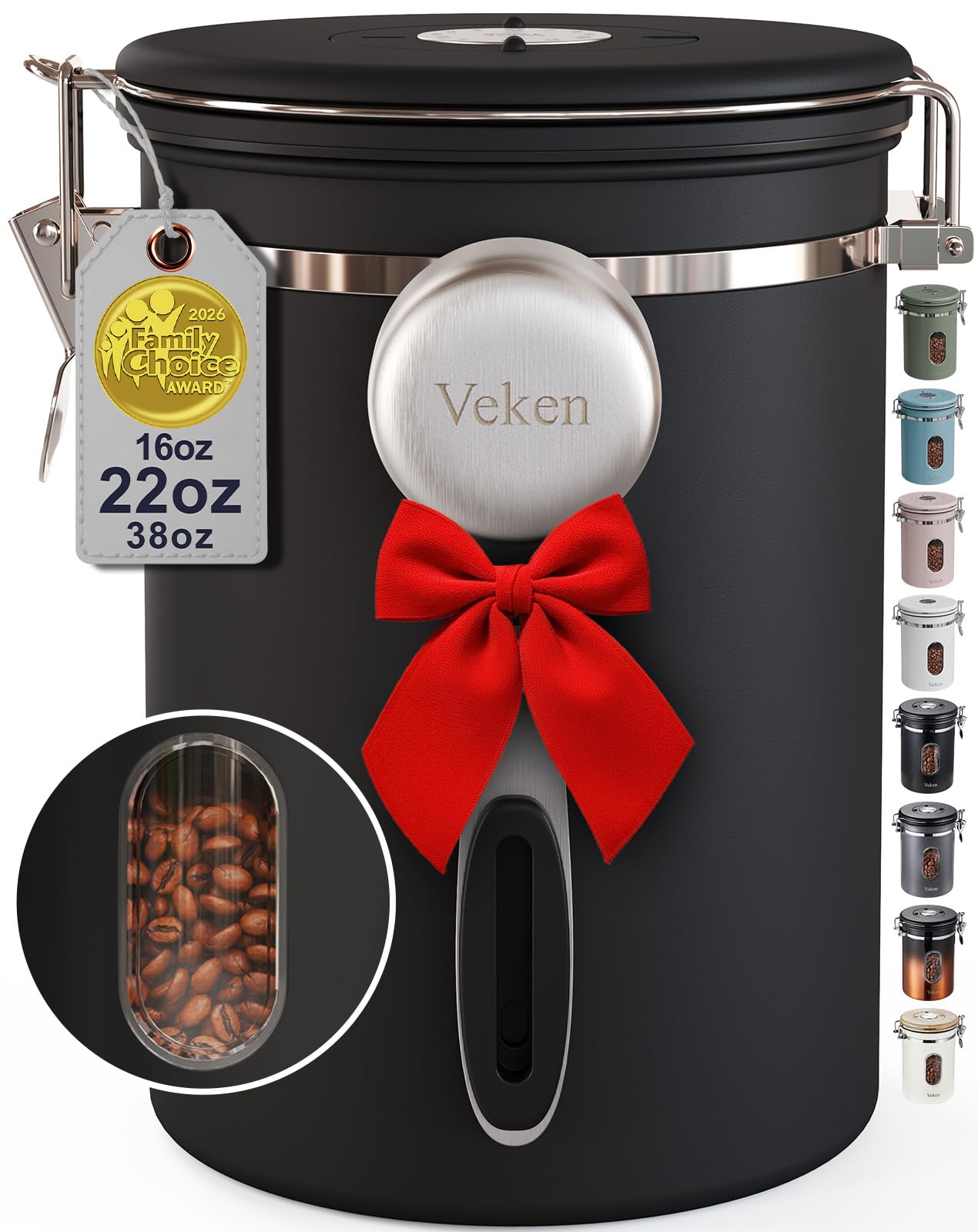
I like this canister when I want a stylish countertop jar that shows how much coffee is left and gives me simple freshness tools.
Why I picked it: Window plus date tracker and a CO2 valve in an elegant, affordable package.
Best for: People who want visible supply levels and easy freshness tracking.
Affordable midrange choice for daily use.
Pros
- Clear front window for quick checks
- Built-in date tracker on the lid
- Included stainless steel scoop
- 304 stainless construction
- One-way CO2 valve and silicone seal
Cons
- Window admits light (possible UV exposure)
- 22 oz capacity only
My take
The Veken canister felt like an immediate upgrade on my counter — the finish looks neat and modern without screaming appliance-grade. I relied on the clear window to avoid opening the lid every time I wanted to see supply levels, which saved me a surprising amount of fiddling during busy mornings.
Functionally it seals well. The silicone gasket plus one-way CO2 valve kept my beans noticeably fresher than an open bag, and the included stainless scoop attaches neatly so I always had a measuring spoon at hand. The date tracker and interior scale line took the guesswork out of rotation.
If you store coffee long-term I’d be cautious about the window because light can affect freshness. For everyday use when you go through coffee within a few weeks, the window and tidy design make this a very practical, stylish option.
2. Coffee Gator Stainless Coffee Canister (22 oz) – Best Overall
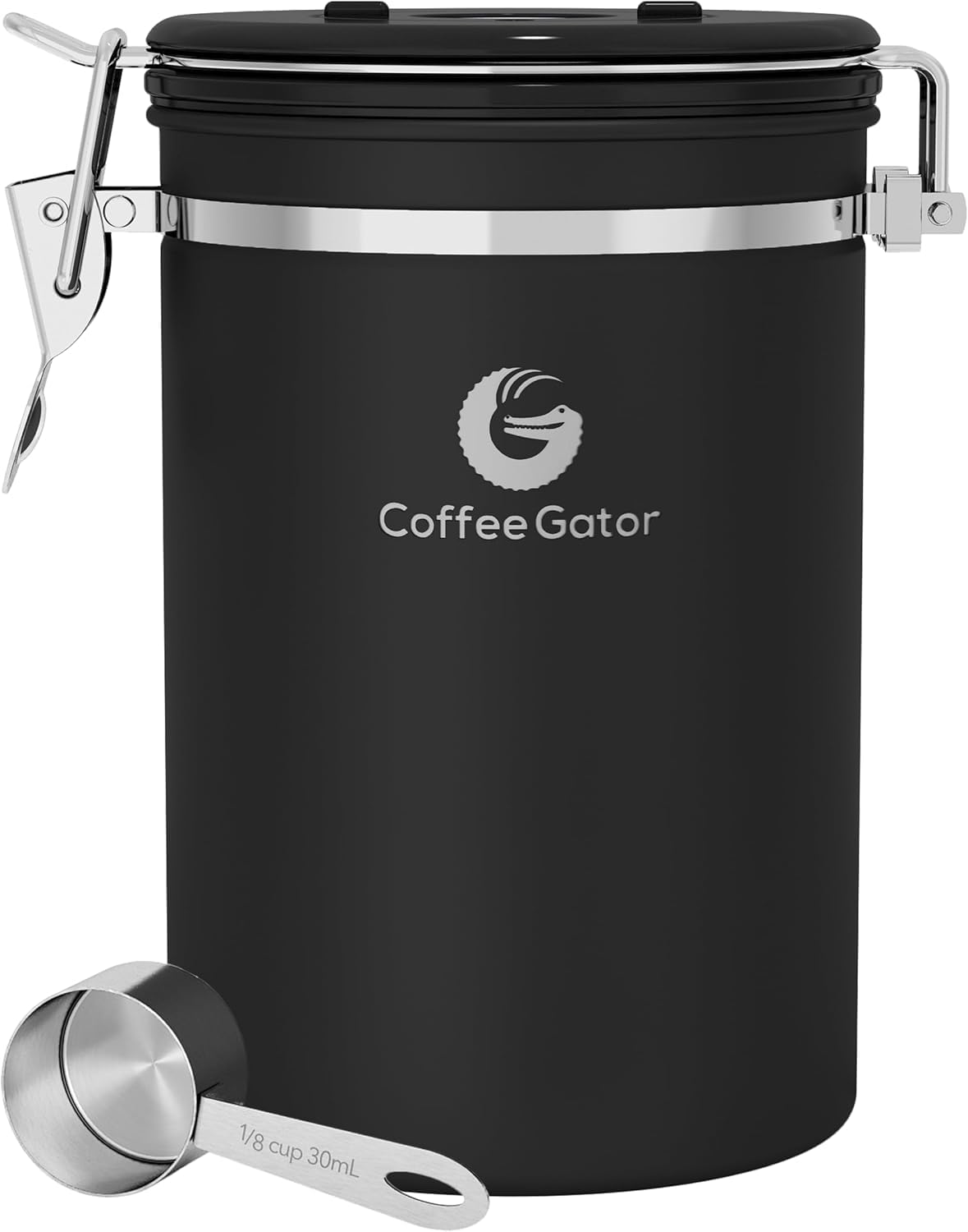
I consider this my go-to when I want a durable, no-nonsense canister with a CO2 valve and a useful date wheel.
Why I picked it: Reliable one-way valve, solid seal, and an easy-to-use date dial.
Best for: Anyone who grinds beans at home and wants dependable freshness features.
Premium midrange pick for everyday enthusiasts.
Pros
- Effective one-way CO2 release valve
- Top-mounted date tracker dial
- Strong stainless construction
- Secure airtight seal
Cons
- Included scoop handle design is awkward
- Slightly heavier on the counter
My take
This Coffee Gator canister became my default for the beans I use every day. The valve does the job of letting gas escape without letting oxygen back in, and I noticed a steadier aroma when I compared it to plain sealed tins.
The date wheel is a small feature that I ended up using more than I expected — it’s handy when I rotate roasts or track roast dates. The lid and latch feel robust; cleaning and reassembly are straightforward.
The only quibble I had was with the scoop design included in some versions — the handle cutout can make storage a bit fiddly. I still kept it because the overall fit, finish, and freshness protection are exactly what I want beside my machine.
3. Coffee Gator Stainless Canister (11 oz) – Best Small Size
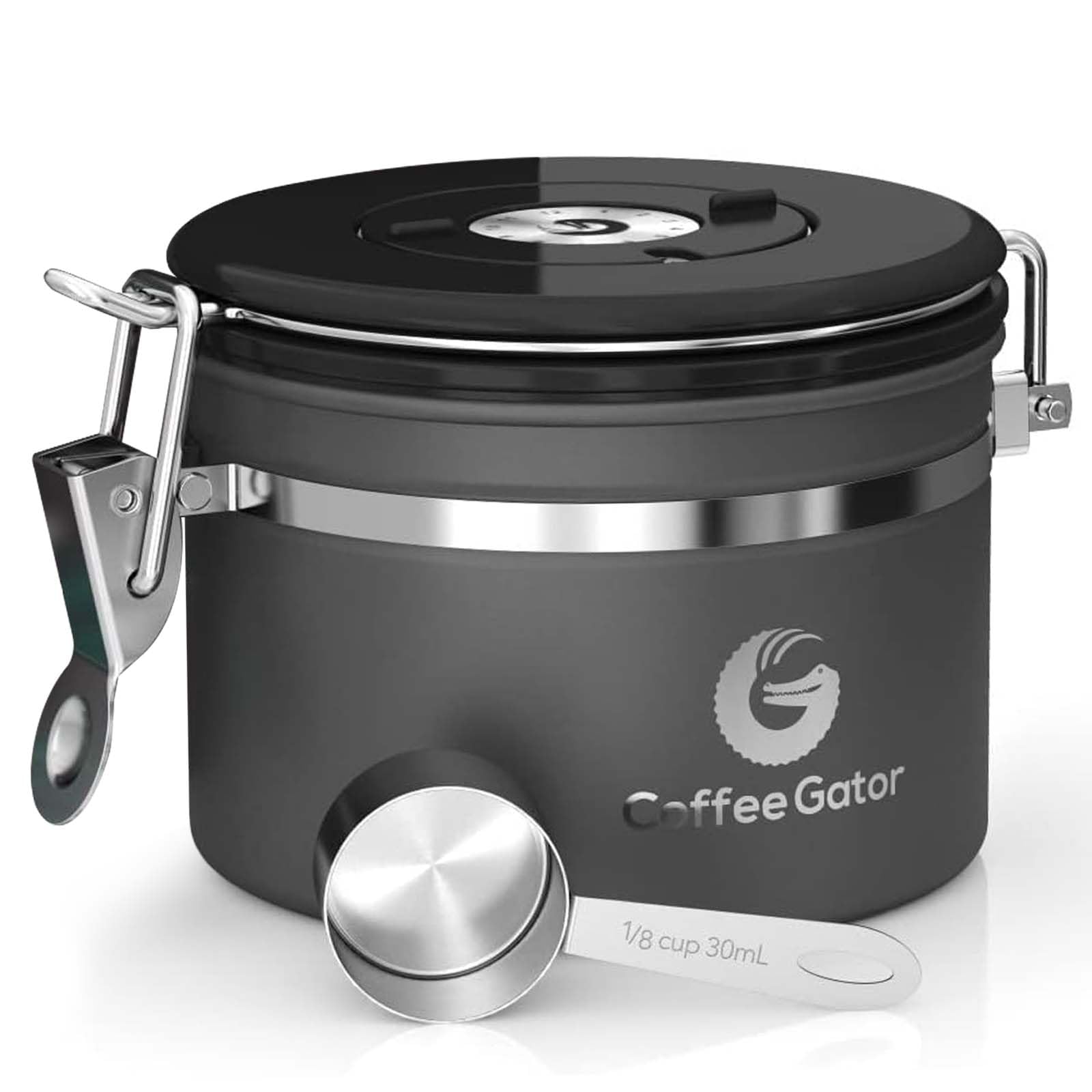
I picked the small Coffee Gator when I needed a compact, airtight jar for single-batch coffee or specialty beans.
Why I picked it: All the valve and date features of the larger canister in a compact footprint.
Best for: Single-serve drinkers, espresso users, or small-batch roasts.
Compact and budget-friendly.
Pros
- Space-saving 11 oz size
- CO2 release valve included
- Date tracker for rotation
- Premium-looking finish
Cons
- Limited capacity for whole bags
- Not ideal for long-term bulk storage
My take
When I keep just a roast or two on the counter, this 11 oz canister is my favorite. It fits neatly on crowded shelves and works perfectly for espresso doses or single-batch specialty beans.
The seal is solid and the valve behaves like the larger Coffee Gator — gas escapes, keeping the beans from sitting in their own CO2. The tight footprint and integrated scoop spot made my morning routine faster.
If you buy whole 12–16 oz bags regularly, you’ll likely want a larger jar too. For occasional drinkers or those who rotate small quantities, this compact canister is ideal.
4. Airscape Stainless Canister (Medium) – Best for Longest Freshness
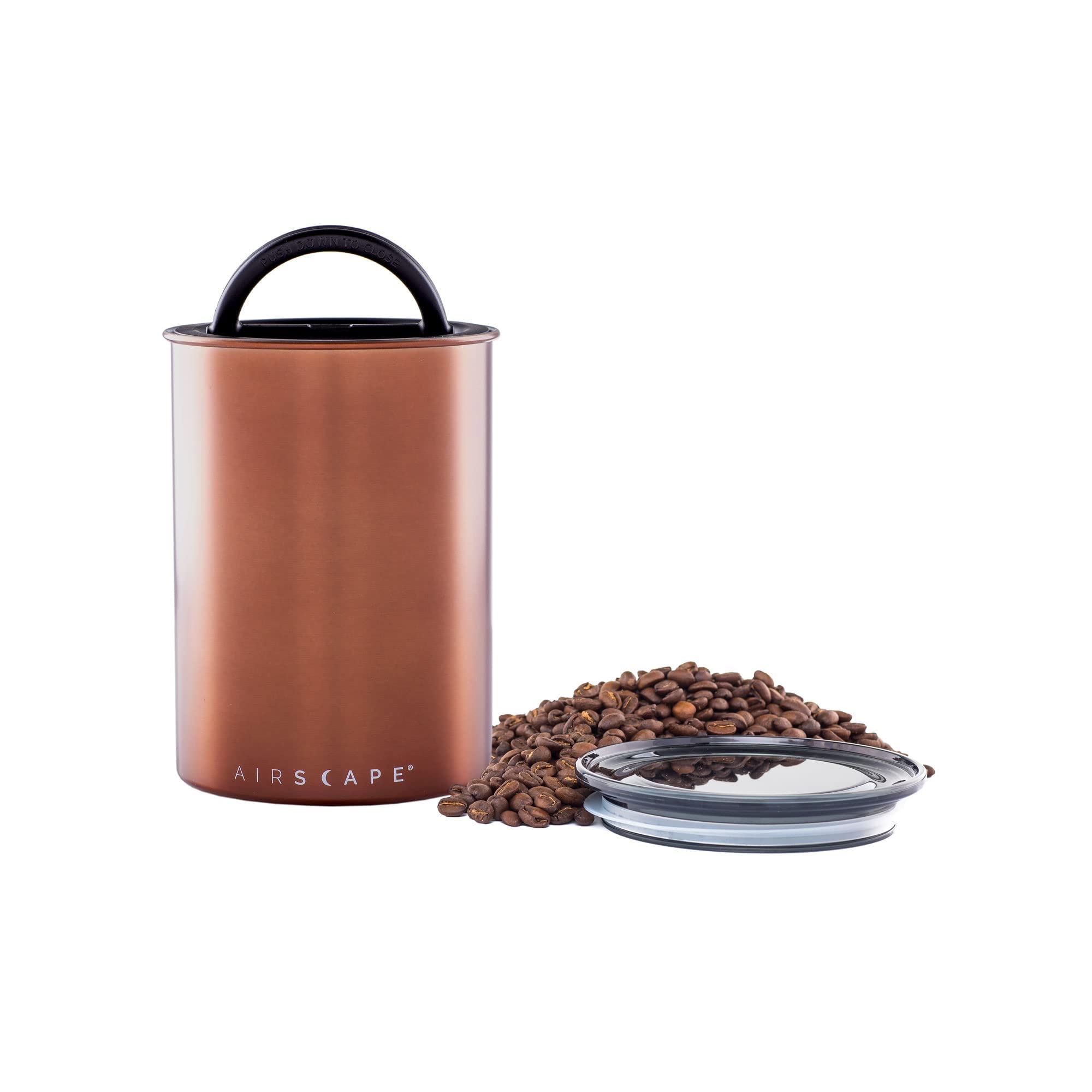
I reach for the Airscape when I want to minimize trapped air and protect beans from light for longer storage.
Why I picked it: Patented inner plunger actively removes air and blocks light exposure.
Best for: Storing higher-end beans longer without sacrificing flavor.
Higher-end option worth it for extended freshness.
Pros
- Patented inner plunger removes trapped air
- Stainless body blocks light
- Stackable and durable
- Satisfying 'swoosh' when sealed
Cons
- Higher cost than typical canisters
- Plunger takes a moment to seat correctly
My take
The Airscape’s inner plunger is genuinely different. I learned quickly that pushing the inner lid expels more air than a standard gasketed lid, and that extra step made a measurable difference when I tested beans stored for several weeks.
Because the body is solid stainless it also blocks light — something I prefer over a windowed jar for any coffee I plan to keep beyond a couple weeks. The build quality feels premium and the canister stacks nicely in my pantry.
It’s not the cheapest option, but if I’m storing pricier beans or want to buy in bulk and hold them a little longer, the Airscape is the canister I reach for first.
5. ComSaf Airtight Glass Canisters (27 oz, Set of 6) – Best Glass Set
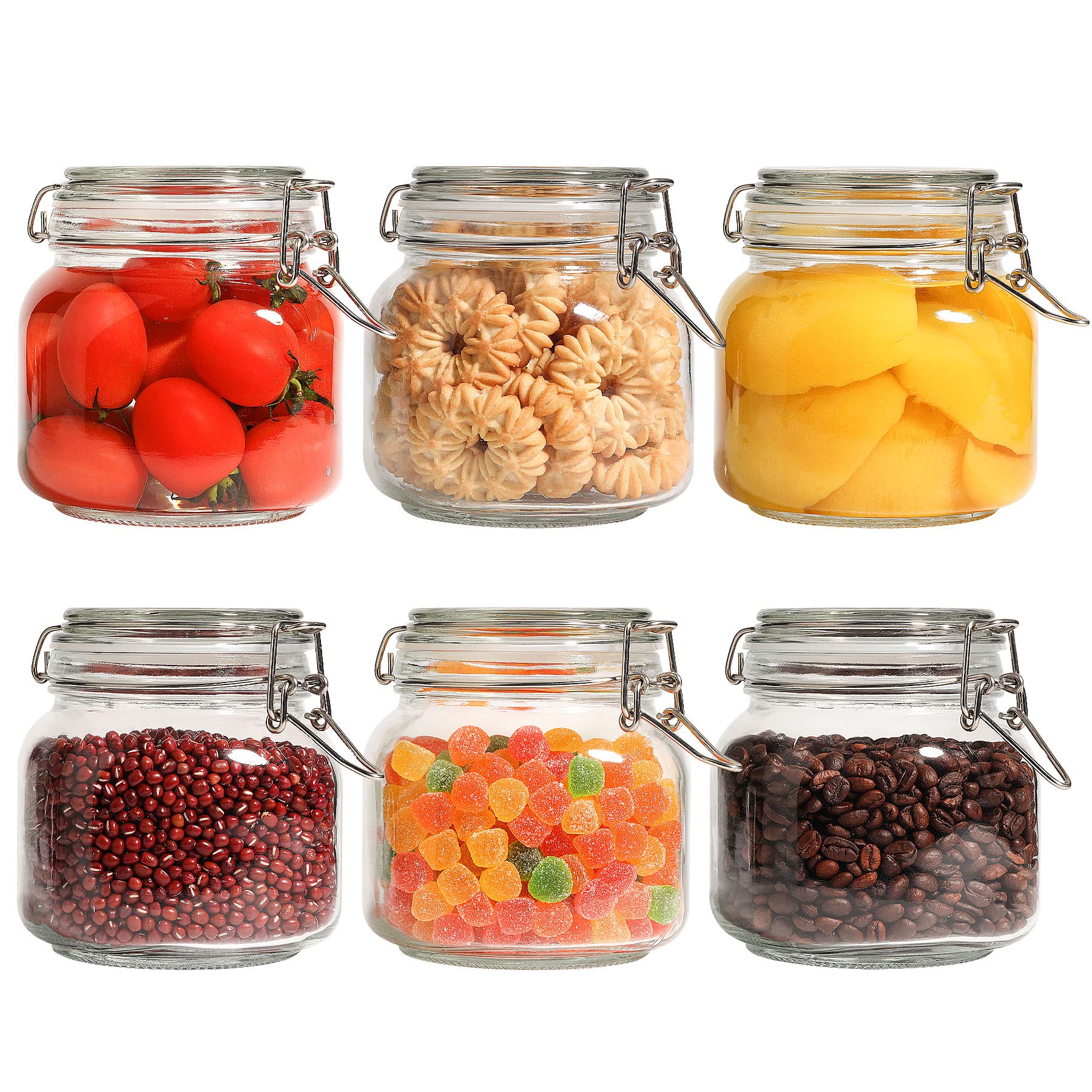
I recommend this set when organization and visibility across many pantry staples are the priority.
Why I picked it: Clear glass, clamp lids, and included labels make pantry organization fast and visible.
Best for: People organizing multiple dry goods and wanting easy ingredient identification.
Great value for a multi-piece pantry set.
Pros
- Transparent glass for instant visibility
- Silicone gasket with clamp lid seal
- Comes with reusable labels
- Wide mouth for easy filling
Cons
- Glass is heavier than metal
- Latch hardware can feel flimsy
My take
I used the ComSaf set across my pantry for sugar, flour, oats, and beans. The clear glass made it trivial to see what needed refilling, and the wide mouths made scooping and cleaning straightforward.
The clamp lids with silicone gaskets sealed well in my experience; I had no issues with moisture buildup. The included labels were a small thing that made a big difference in keeping things neat.
If you need long-term blackout protection for specialty beans I’d pair these with an opaque container, but for everyday pantry organization these glass jars deliver excellent utility and look tidy on open shelving.
6. Vtopmart Large Glass Canisters (78 oz, 3-pack) – Best for Bulk Storage
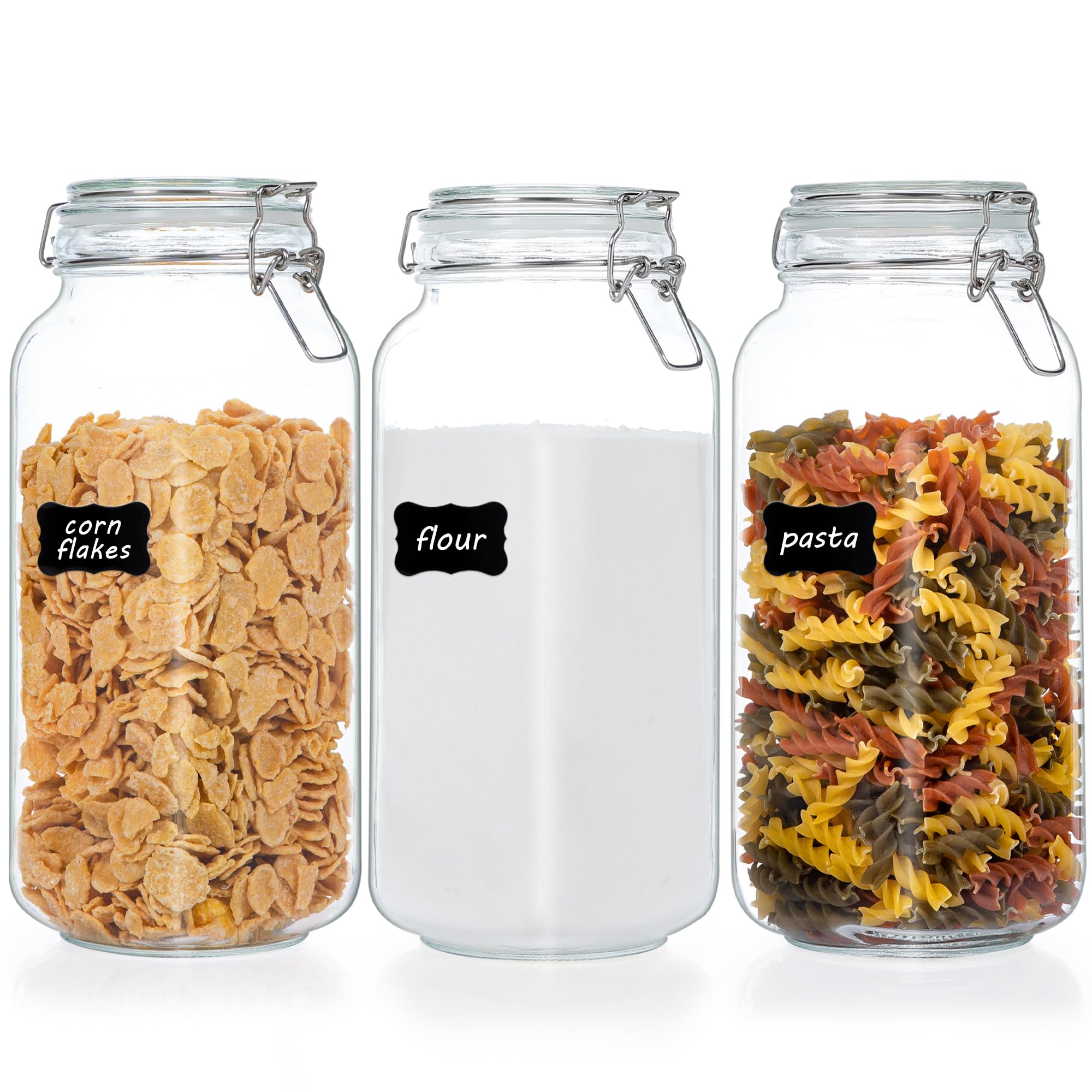
I rely on these large jars when I store bulk staples like flour, big coffee bags, or large quantities of cereal.
Why I picked it: Extra-large capacity with clamp lids and labels for big-batch storage.
Best for: Home bakers and bulk shoppers who need big airtight jars.
Cost-effective option for large-capacity storage.
Pros
- Very large 78 oz capacity
- Thick, durable glass
- Airtight clamp lids with gaskets
- Includes chalkboard-style labels
Cons
- Bulky to handle and store
- Hand‑wash recommended
My take
These Vtopmart jars swallowed large bags of flour and big coffee tins with room to spare. The seal is reassuring, and the glass feels thick and solid — nothing flimsy here.
I liked the chalkboard labels for quick swapping of contents, and the wide openings made scooping out large amounts effortless during baking sessions.
They’re not compact, and I prefer to hand-wash them rather than risk a dishwasher cycle. For anyone who buys in bulk, though, these are a highly practical, economical solution.
How I Choose an Airtight Coffee Container
Material: stainless vs. glass
I pick stainless steel when I want to block light and keep a streamlined countertop look. Glass is unbeatable for visibility and pantry organization, but it exposes contents to light, which can accelerate staling.
- Stainless: blocks light, very durable, great for long-term coffee storage.
- Glass: shows contents at a glance, ideal for organizing multiple dry goods.
Seal type matters
I consider how a container manages air: one-way CO2 valves vent gas without admitting oxygen, while Airscape-style plungers actively remove trapped air. Clamp lids rely on a tight silicone gasket.
- One-way valve: good for daily use and regular rotation.
- Plunger (Airscape): best for removing air when storing for weeks.
- Clamp lid: simple airtight seal, excellent for pantry staples.
Features I actually use
Date trackers, scoops, windows, and labels either save time or add convenience. I prioritize features that fit my routine: I use date wheels and scoops daily, I use windows only for short-term storage.
- Date tracker: useful for rotation and tracking roast/purchase dates.
- Scoop: keeps dosing consistent and prevents mess.
- Window: great for quick checks, but avoid for long-term bean storage.
Size and capacity
I match capacity to how quickly I consume coffee. Smaller canisters prevent stale beans for single-serve drinkers; medium or plunger-style canisters work well for weekly use; large glass jars shine for bulk pantry items.
- 11–22 oz: good for daily counter use and single-bag storage.
- Medium (Airscape/22–32 oz): balances capacity and freshness control.
- Large glass jars: best for flour, sugar, and bulk coffee.
Cleaning and maintenance
I avoid containers that are difficult to disassemble. Stainless bodies are easy to wipe; valves and plungers should be removable for cleaning. Glass jars usually need hand washing to preserve gaskets and finishes.
- Remove valves or inner lids periodically to wash.
- Hand-wash clamp lids to protect metal parts and gaskets.
- Dry thoroughly before refilling to prevent moisture issues.
Frequently Asked Questions
Do I need a CO2 valve for my coffee canister?
I find a one-way CO2 valve useful if I roast or buy very fresh beans that will release gas. It vents built-up CO2 without letting oxygen back in, which helps preserve flavor for everyday storage.
Is glass or stainless better for coffee?
I prefer stainless for beans I plan to keep more than a week because it blocks light. Glass is better when I want to see contents — great for pantry staples but not ideal for long-term bean storage.
How big should my coffee canister be?
I size canisters to how fast I consume coffee. Single-serve drinkers do well with 11–22 oz; households or frequent drinkers should choose medium or buy two containers to rotate fresh and reserve beans.
How should I clean and maintain these containers?
I remove any inner valves or plungers and wash them by hand with warm, soapy water. I let metal parts dry fully before reassembly and avoid dishwasher cycles on gaskets and clamp hardware.
Final Take
I’ve used every canister above in real routines, and each one earns its spot depending on priorities: visibility and organization, compact daily use, or maximum freshness.
If I could recommend a starting point: choose a valve canister for everyday freshness, an Airscape if you want the longest stored life, and glass jars when pantry organization and visibility matter most.
Pick the model that matches how quickly you go through coffee and the features you’ll actually use — that’s what will keep your beans tasting best.