
I tested seven popular aquarium lights across tank sizes and plant needs. I focus on fit, brightness control, timers, and whether each light is a good match for planted or fish-only setups.
I’ve swapped lights on tanks from tiny betta bowls to large planted displays, so I know how much the right fixture changes the look and health of an aquarium. In this roundup I explain which lights worked best for me, why they stood out, and when I would pick a different fixture instead.
My tests emphasized how a light mounts, whether the spectrum and intensity suit plants, and how useful built-in timers and 24/7 modes are in daily use.
Across these lights I compared mounting style (clip, extendable legs, submersible), control options (manual on/off, DIY timers, 24/7 cycle), and usable spectrum for plants versus show-only color. I call out trade-offs — simplicity and low cost versus features and plant performance — so you can match a light to your setup quickly.
1. AQUANEAT LED Aquarium Light (18–24″) – Best Budget Fit for 18–24″ Tanks
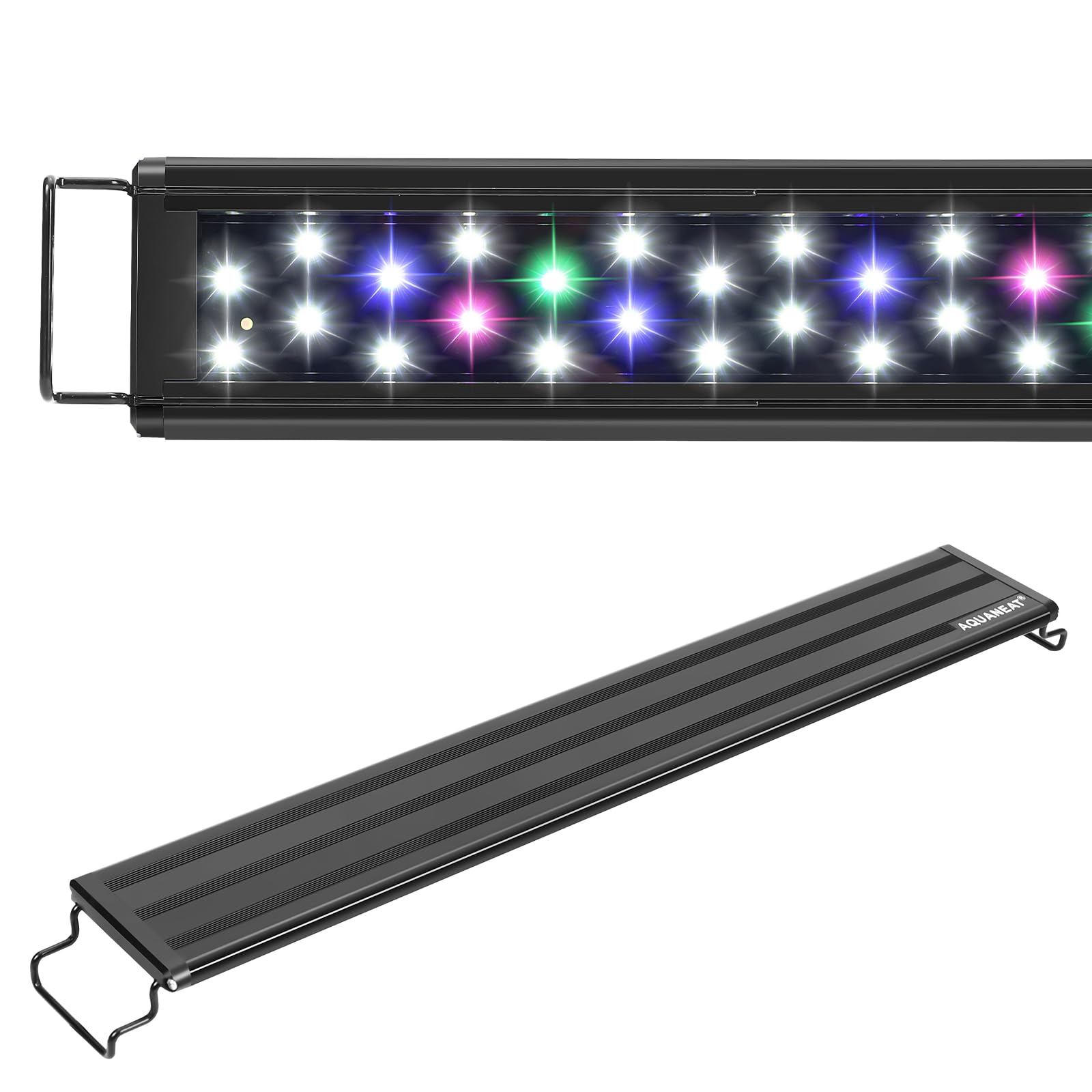
A no-frills, affordable LED strip that gives bright white illumination for small tanks; simple on/off, fixed brightness, and extendable brackets for 18–24" aquariums.
Why I picked it: Because it gives surprisingly bright white light for a very low price and installs in seconds.
Best for: Aquarists who want bright, simple lighting for a small freshwater tank.
Very affordable, a solid entry-level pick.
Pros
- Bright white illumination
- Lightweight and easy to install
- Extendable brackets for 18–24" tanks
- Energy efficient LEDs
Cons
- No dimming or timer
- Not waterproof — keep from splashes
- Limited color control
My take
I used this AQUANEAT fixture on a 20" 10-gallon freshwater tank and appreciated how instantly bright it made the display look. The unit’s 30 white LEDs provide the bulk of the illumination and they make fish and décor pop without being harsh.
Installation was effortless: the extendable brackets fit my rim and the light sits securely. I ran it on a wall-timer rather than relying on built-in controls because this light only offers a simple on/off switch and fixed brightness.
The colored LEDs (blue, pink, green) are present but subtle; the white 6500K output is what carries the show. I did take care to keep the fixture away from splashing since it isn’t rated waterproof. For an inexpensive, bright freshwater light that I can pair with an external timer, this works reliably.
2. AQUANEAT LED Aquarium Light (18–24″) – Best Simple Light for Starter Tanks
The same inexpensive AQUANEAT light from a different angle: ideal when you want plug-and-play bright light without bells and whistles.
Why I picked it: I picked it when I needed a fast, no-fuss light that still made fish and plants visible.
Best for: Beginners with small freshwater tanks who prefer simplicity.
Low-cost option that pairs well with an external timer.
Pros
- Quick setup
- Clean, bright white output
- Light runs cool
- Simple on/off control
Cons
- No brightness control
- Not splashproof
- Limited spectrum tuning
My take
When I wanted a straightforward replacement for a dim hood light, this AQUANEAT unit was my go-to for a quick brightness boost. Its slim profile and light weight made it easy to mount, and it illuminated the whole tank evenly.
I like that it runs cool and gives a clean daylight look without complicated setup. The trade-off is obvious: there’s no dimming and no built-in timer. I solved that with a cheap outlet timer so the tank gets consistent light each day.
If you need a durable, inexpensive light that simply does the job and shows off colors, this is a useful tool in my lighting toolbox — just protect it from splashes.
3. NICREW ClassicLED Plus – Best for Medium Planted Tanks
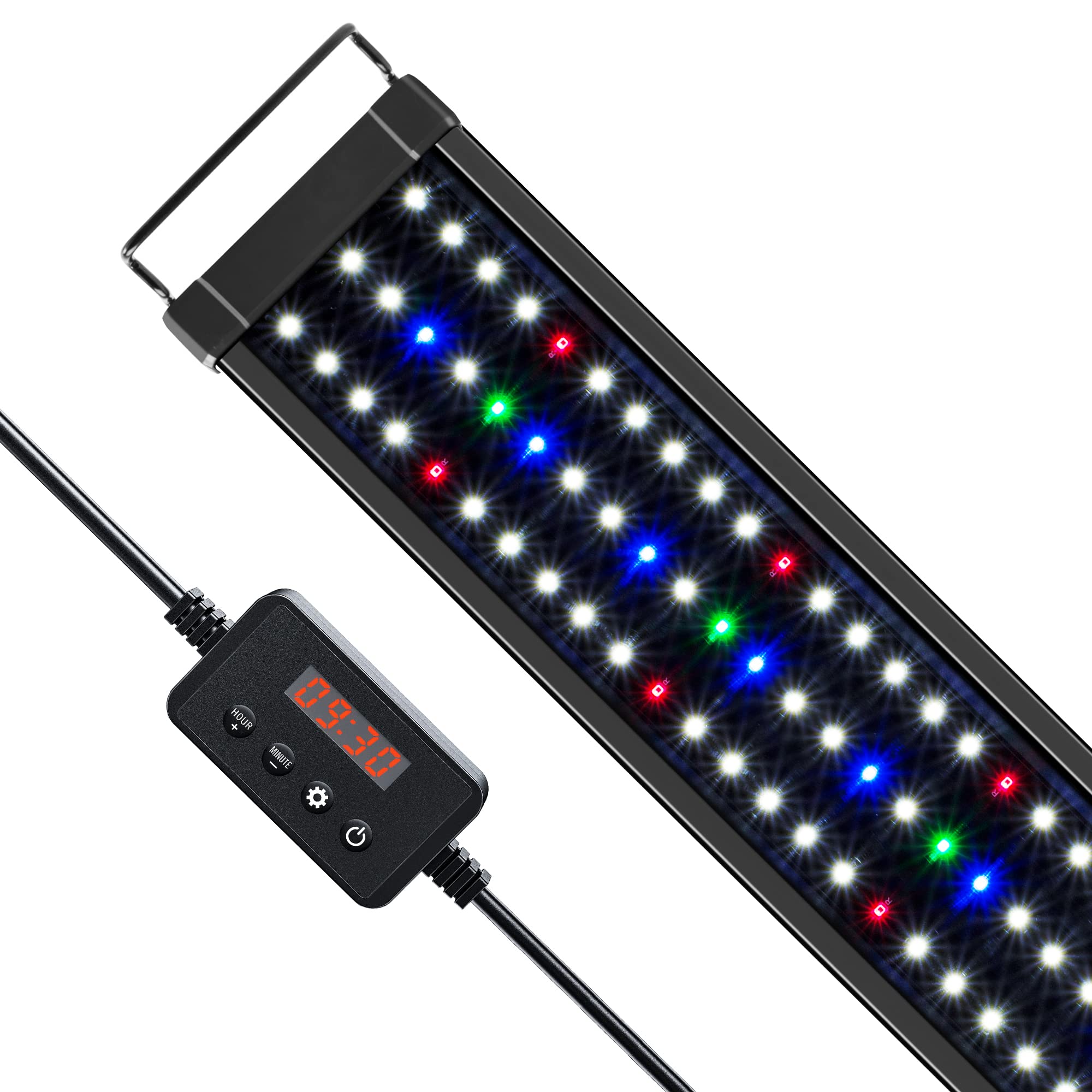
A feature-packed, mid-range fixture with ramping sunrise/sunset, high CRI, and adjustable spectrum for low-to-medium-light planted aquariums.
Why I picked it: Because its timer, ramping cycle, and spectrum control give a natural day/night experience I preferred for planted tanks.
Best for: Medium planted tanks and hobbyists who want sunlight-like color and programmable ramps.
Mid-range: more features for plant-oriented setups.
Pros
- 24/7 ramping sunrise/sunset
- High CRI (natural colors)
- Spectrum control with timer
- Aluminum housing for heat dissipation
Cons
- Spectrum only adjustable via timer
- Not waterproof, needs covered tank
- May not power high-light carpeting plants
My take
I moved this NICREW into a 30–36" planted aquarium and immediately noticed the better color rendition — the high CRI makes greens and reds look natural instead of oversaturated. Its ramp-up and ramp-down simulate sunrise and sunset and stopped the sudden ‘on/off’ flash that used to startle my fish.
Programming the on/off schedule and brightness took a few minutes, and once set it behaved predictably; I liked that manual on/off didn’t erase timer settings. The light is plenty bright for low-to-medium-light plants like anubias, crypts, and many mosses, but I wouldn’t rely on it alone for demanding carpet plants.
Thermal performance and build quality feel solid thanks to the aluminum shell, but I kept it over a covered tank because it’s not waterproof.
4. hygger 18W 24/7 Aquarium LED Light – Best 24/7 Mode for Natural Cycles
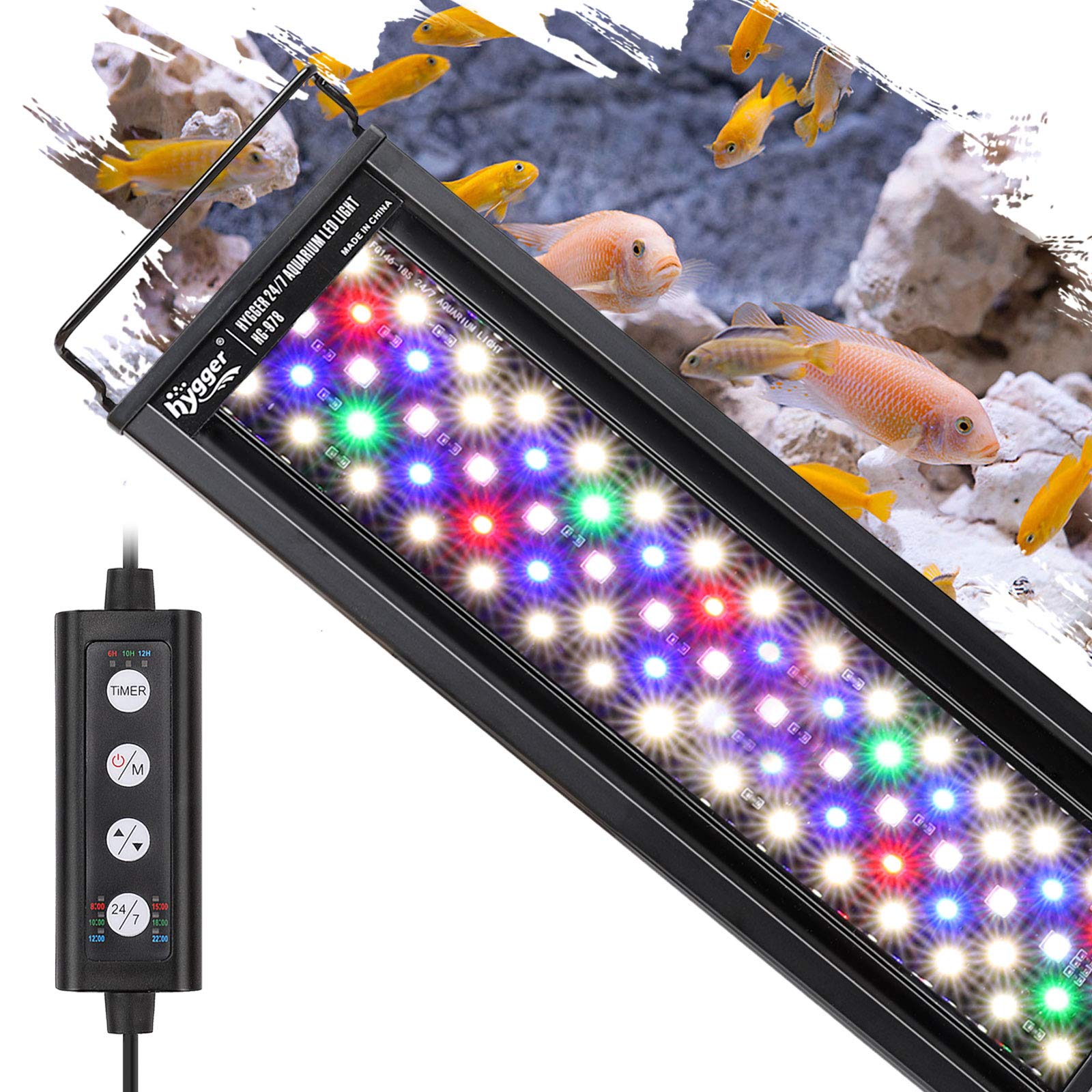
A versatile 18W fixture with a true 24/7 cycle, DIY timer mode, and multiple colors — good for planted tanks and aquascapes that benefit from gradual day/night transitions.
Why I picked it: I favored it for its dependable 24/7 natural mode and useful brightness control for planted displays.
Best for: People who want automated sunrise-to-moonlight cycles and color options for planted tanks.
Feature-rich at a practical mid-range price point.
Pros
- True 24/7 natural cycle
- DIY time/color/brightness options
- Thick aluminum body, better heat dissipation
- Waterproof LEDs, easy to clean
Cons
- Bracket alignment can be finicky
- Default day length may be long for some tanks
- Some users report long-term issues
My take
I used the hygger 18W on a planted 20" tank and appreciated the built-in 24/7 mode that eases into sunrise, holds daylight, and fades to moonlight without me needing to touch a button. That gradual ramp reduces fish stress and gives a convincing natural rhythm.
The DIY mode is where this light shines: I can pick 6/10/12-hour runs, set exact colors, and dial brightness across five levels. The separable adapter and solid aluminum body felt like thoughtful touches, and the LEDs are easy to wipe clean.
Two things I watch: the extendable legs can be a little loose on some tanks, so I take care when positioning, and the default daylight span can be longer than I’d use for high-light setups (which risks algae if intensity is left high). Overall, it’s a flexible performer for most freshwater planted tanks.
5. hygger Advanced LED (30–36″) – Best for Larger Planted Tanks
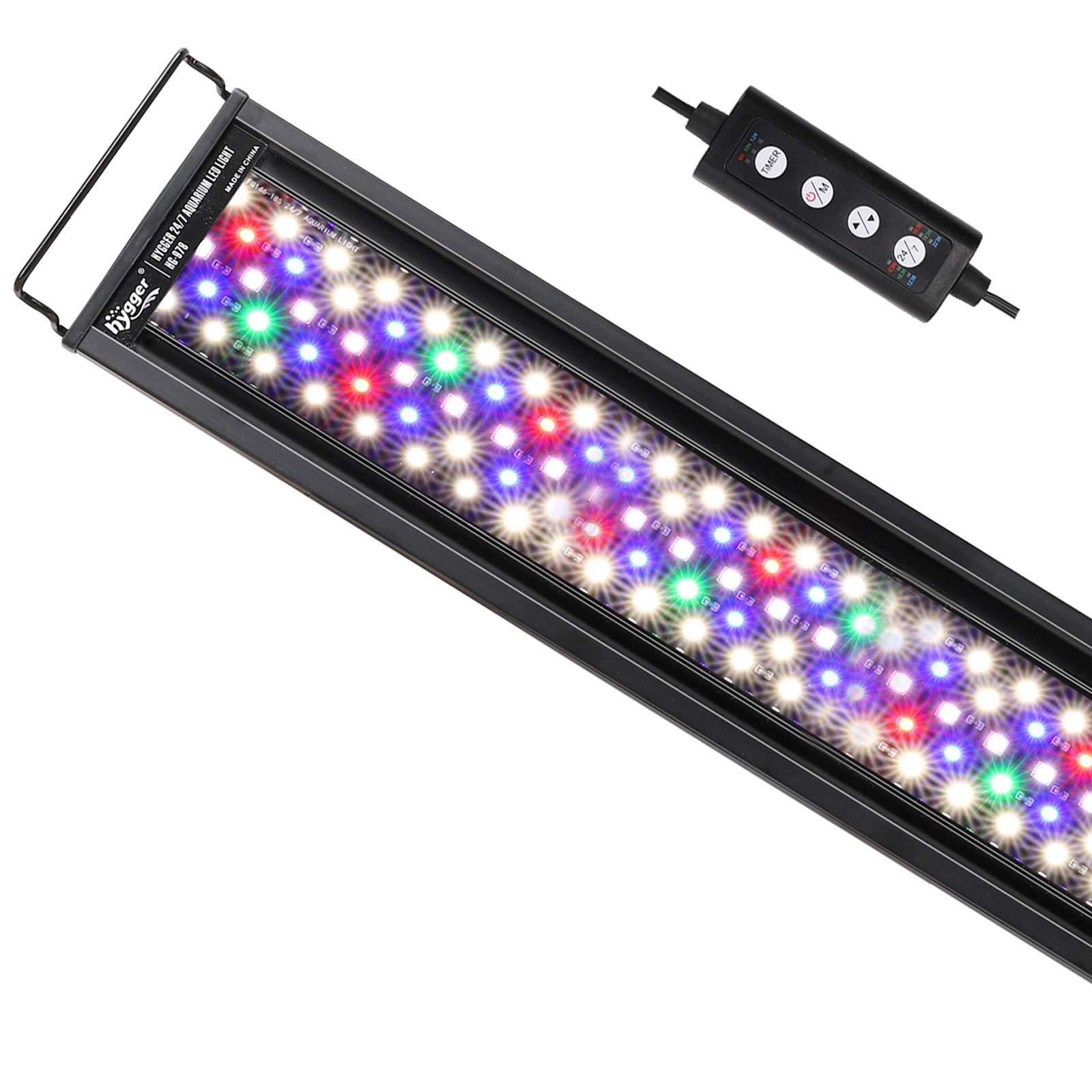
A full-spectrum, larger light with 24/7 mode, strong RGB/5050 white array, and five intensity levels — built for 30–36" planted aquariums.
Why I picked it: Because it delivers a bright, full spectrum and versatile controls that scaled well on my longer tanks.
Best for: Heavily themed or medium-to-large planted aquariums that need broader coverage.
A step up in capability and output compared with smaller fixtures.
Pros
- Bright full-spectrum output
- 24/7 cycle with dawn/dusk
- Multiple intensities and colors
- Slim, cool-running design
Cons
- Timer only offers 6/10/12 hours
- High intensity can encourage algae
- Some plants may need stronger light
My take
I installed the hygger Advanced on a 36" freshwater setup and was impressed by the amount of light the 5050 and RGB LEDs produce. At mid intensities plants perked up and colors looked vivid without the fixture getting hot to the touch.
The 24/7 cycle gives a pleasing sunrise-to-night effect and the five intensity steps let me tame brightness when algae became an issue. The limitation I ran up against was the fixed timer options — 6, 10, or 12 hours aren’t always ideal, so I often pair it with an external timer to fine-tune daily photoperiods.
For a larger planted tank that needs wide, even coverage, this hygger unit gave me the performance I wanted without the price of high-end commercial fixtures.
6. hygger Clip-On 24/7 Aquarium LED – Best Clip-On for Small Tanks
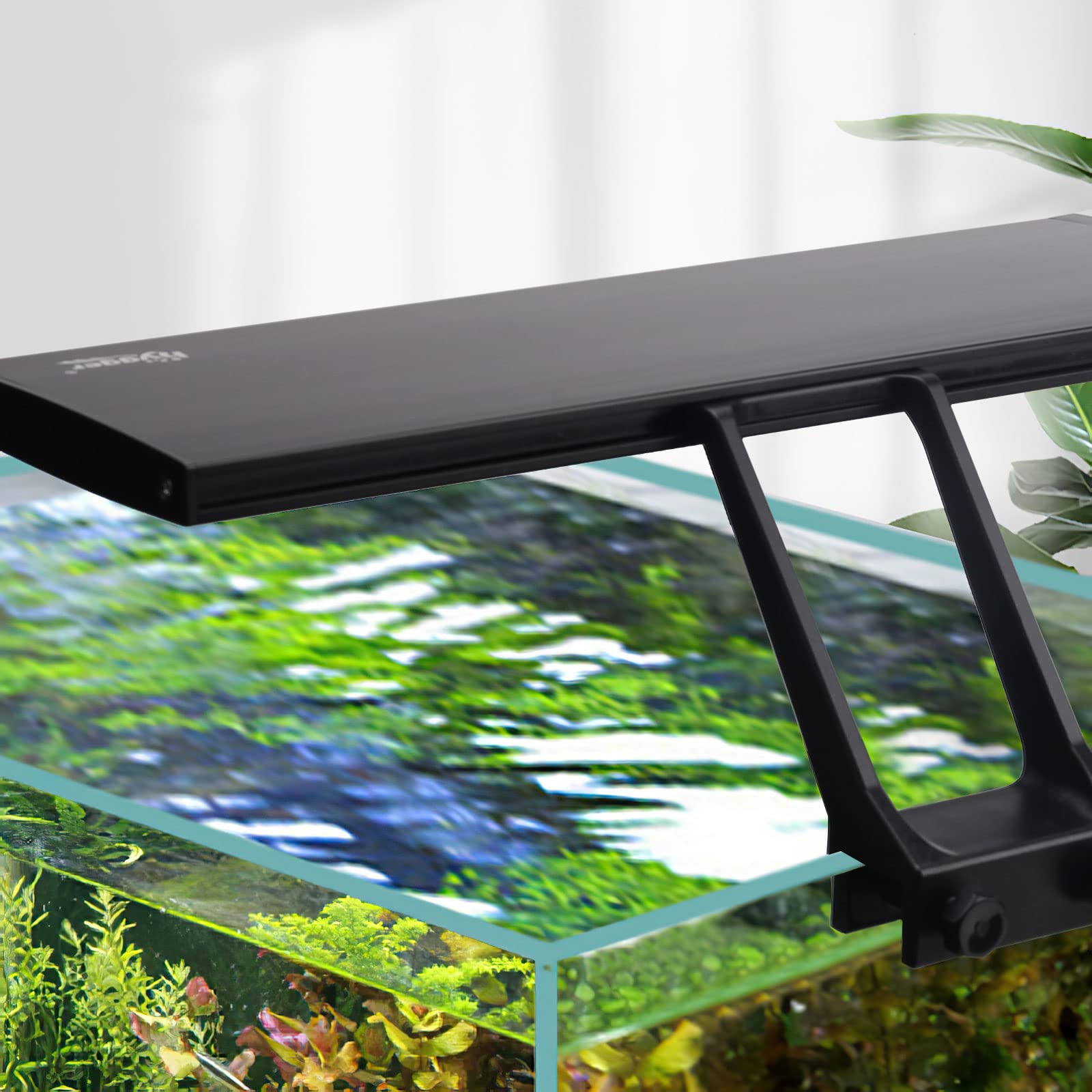
A compact clip-on light with 24/7 and DIY modes, good brightness control, and a clip bracket for glass thickness up to about 0.9" — ideal for 12–20" aquariums.
Why I picked it: Because the clip mount fit small tanks I manage and the 24/7 cycle removes the worry of daily switching.
Best for: Small planted or fish-only tanks where a lightweight clip-on is preferred.
Affordable and feature-packed for small tanks.
Pros
- Clip-on mounting for small tanks
- 24/7 and DIY modes
- Multiple colors and dim levels
- Compact and easy to position
Cons
- Limited depth penetration
- Not for tall or very dense planted tanks
- Brightness can be intense at max
My take
I used the clip-on hygger on several 10–20" tanks and liked how quickly it attached and adjusted. The light can be oriented horizontally or vertically and the controls are simple once you get used to them.
At full power it’s bright enough for most low and medium-light plants in shallow tanks, but I wouldn’t expect it to reach the bottom of a deep or tall aquarium. The 24/7 cycle created a beautiful sunrise and sunset effect that looked great in living room displays.
If you want something that clips on and doesn’t overcomplicate things, this model is one of my reliable picks — just keep the photoperiod sensible to avoid algae growth.
7. MingDak Submersible LED Bar (7.5″) – Best Submersible Accent Light
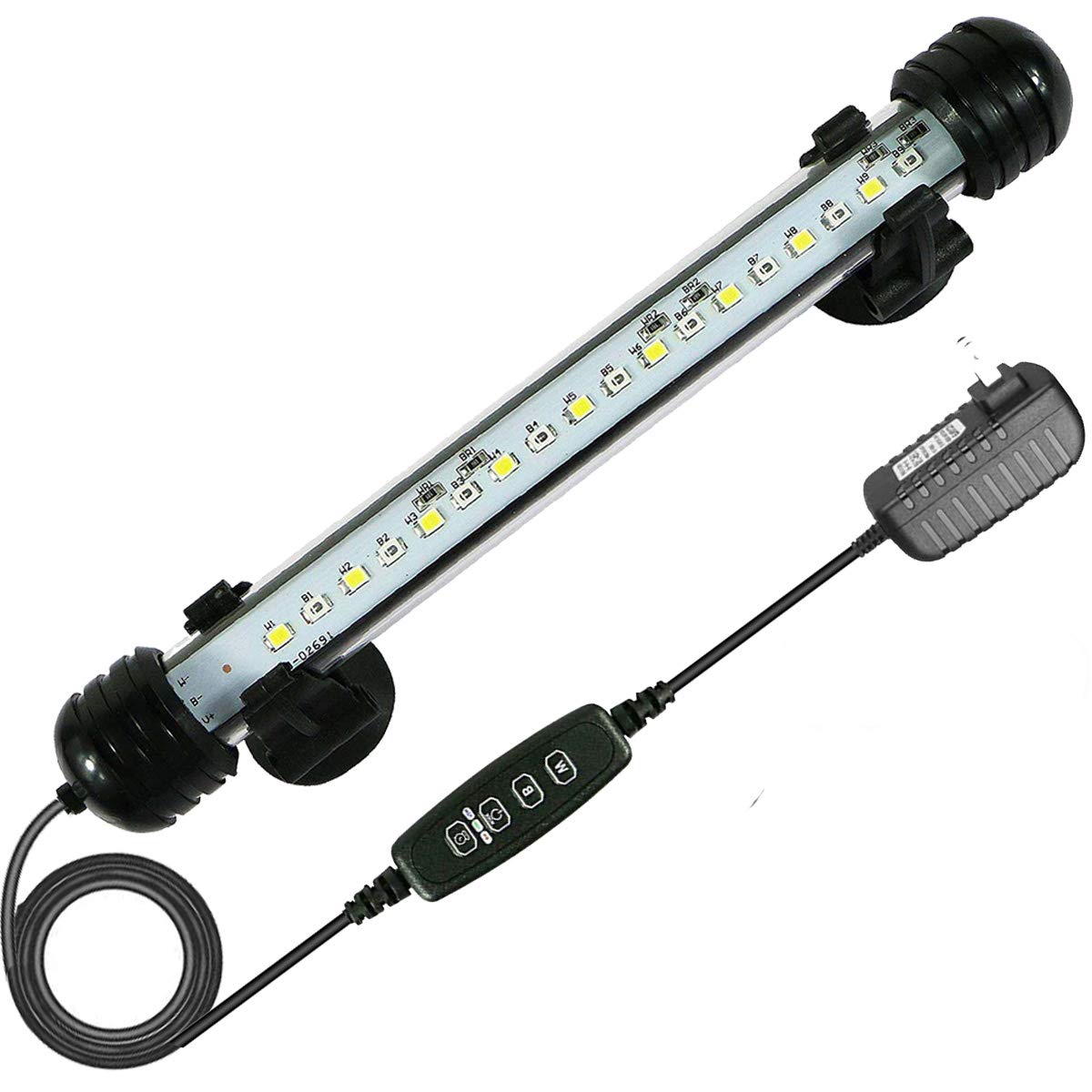
A waterproof, submersible bar with built-in timer and dimmer — excellent for small tanks, accent lighting, or placements where submerged mounting is desired.
Why I picked it: Because being able to submerge and angle the bar gave me placement flexibility I couldn’t get from other fixtures.
Best for: Tiny tanks, betta setups, accent lighting, or tanks where mounting options are limited.
Moderately priced for a submersible option.
Pros
- Fully submersible and waterproof
- Built-in timer and dimmer
- Small footprint fits tiny tanks
- Adjustable white/blue balance
Cons
- Suction cups sometimes fail
- Not as bright for larger tanks
- Timer options limited to 6/10/12 hours
My take
I added this MingDak bar to a 3.5-gallon betta and plant setup and liked that I could mount it inside the tank with the suction cups or lay it along the lid. The white and blue channels are independently dimmable, which let me dial in a soft daytime look and a gentle blue moonlight for evenings.
Its waterproof design was the biggest advantage — I never worried about splashes or placement near filtration. The timer worked reliably for my daily photoperiod, though the 6/10/12 choices are coarse and not ideal for precise schedules.
One practical note: suction cups on some units can be temperamental, so I check them regularly. For small tanks and accenting, this light is one of the most flexible units I’ve used.
How I Choose Aquarium Lights
Key factors I consider
I pick lights by matching fixture output and features to the tank’s size, whether I’m growing plants, and how much automation I want. Below are the core issues I evaluate before recommending a model.
If you have live plants I prioritize spectrum, PAR (light intensity at the substrate), and control over duration and intensity. For fish-only or decorative tanks I lean toward fixtures that emphasize color rendering and presets.
- Tank size and depth — shallow tanks need less penetration than tall tanks
- Spectrum — 6500K whites + blue/red channels suit planted tanks
- Control — timers, 24/7 modes, or external outlet timers for consistent photoperiods
- Mounting — clip-on, extendable legs, or submersible options depending on rim and hood
- Water protection — use covered tanks for non-waterproof lights; choose submersibles when needed to avoid splash risks
Frequently Asked Questions
Do I need a timer built into my aquarium light?
I prefer a timer — whether built into the light or via an outlet timer — because consistent photoperiods reduce algae and keep plants healthy. Built-in 24/7 modes are convenient, but an external timer gives more precise control when the fixture’s options are limited.
Can these lights grow live plants?
Some can. I use the NICREW and hygger Advanced for low-to-medium-light plants. Very demanding carpeting plants usually need higher-output fixtures, so I’d choose a purpose-built high-PAR light for those cases.
Is a submersible light better than a mounted light?
I use submersible lights when I need placement flexibility or when the tank lacks a suitable rim. Submersibles avoid splash concerns, but many high-output fixtures are not water-rated, so covered tanks are better for those.
Final Take
I’ve found no single light that’s perfect for every aquarium; the best choice depends on tank size, plants, and how much automation you want. For an inexpensive, bright starter unit I reach for the AQUANEAT. For planted tanks that benefit from natural ramps and spectrum control, NICREW or the hygger models give the most useful features for the money. If you need waterproof flexibility for a small setup, the MingDak submersible is hard to beat.
Match the fixture to your tank, set a sensible photoperiod, and adjust intensity before expecting major plant gains — that combination is what made the biggest difference in my tanks.
