
I tested four popular artificial palm trees — silk and fabric leaves, lighted models, and weighted bases — to find the easiest-to-style, most realistic, and sturdiest options for indoor and sheltered outdoor use.
I live with a mix of real and fake plants, and I spent time assembling, shaping, and living with these four artificial palms to see which actually deliver the tropical look without the upkeep.
In this roundup I focused on realism, stability, ease of assembly, and how well each tree holds its shape over time. I tried them in corners, on patios, and in entryways so you get a practical sense of what each one does best.
Below I explain what stood out about each option and how I used them, so you can match the right artificial palm to your space and needs.
I compared silk leaves, fabric leaves, and lighted trunks, paying special attention to how adjustable the stems are, how heavy the bases feel, and which styles survive bright windows or breezy balconies.
1. Bagari 5′ Bird of Paradise Artificial Plant – Best Value
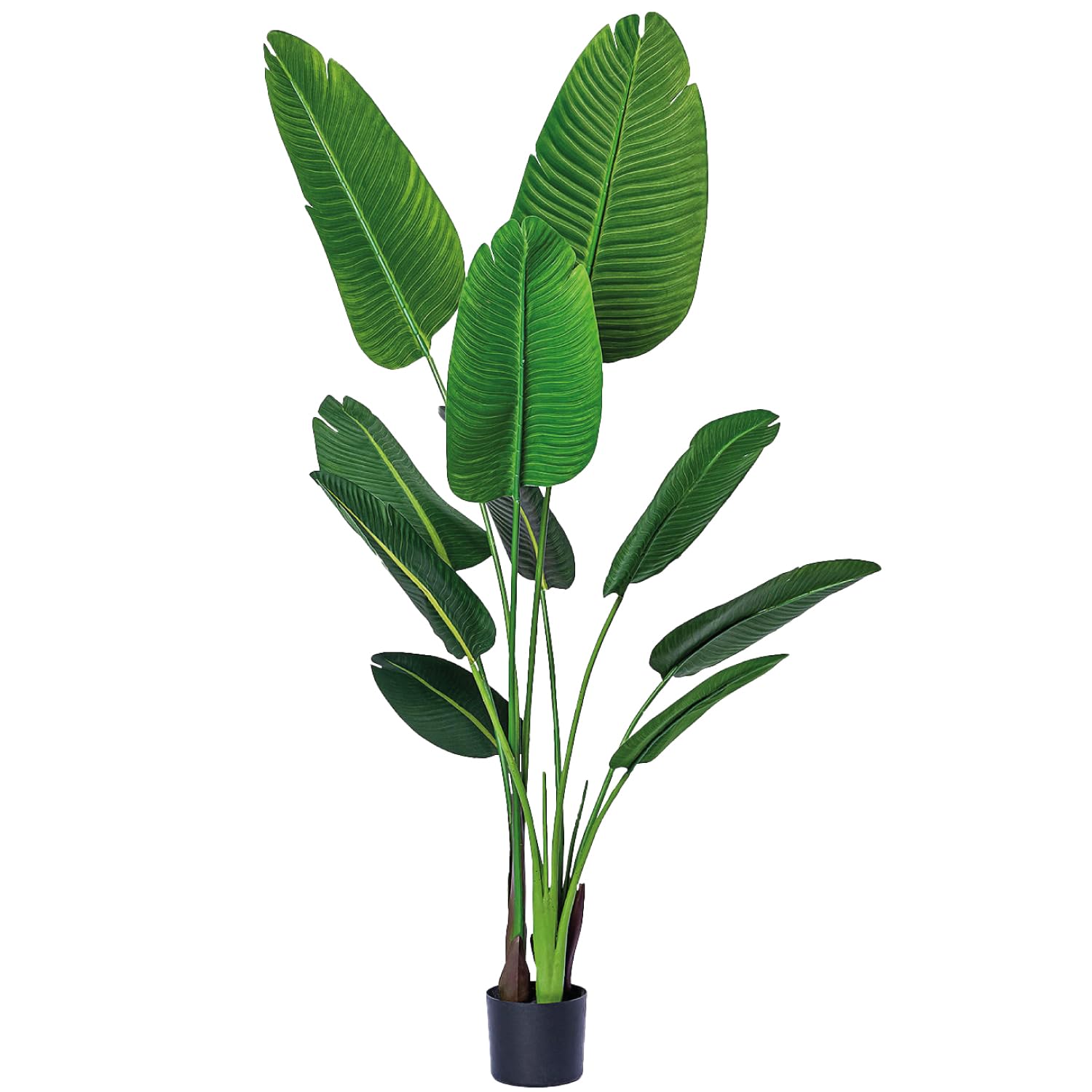
A budget-friendly 5' bird of paradise with thick-feeling leaves and bendable stalks that I found easy to shape for corners and bedrooms.
Why I picked it: Good height, bendable stems, and surprisingly substantial leaf material for the price.
Best for: Bedroom corners, entryways, and pet-friendly homes.
Affordable pick with solid materials for the cost.
Pros
- True-to-size 5-foot height
- Bendable stalks for shaping
- Thick, waxy-canvas style leaves
- Simple assembly
Cons
- Joints can be visible up close
- Needs fluffing and shaping after unpacking
My take
I put this Bagari bird of paradise together in under 15 minutes and appreciated that the leaves ship in two sizes so I could layer them for depth.
The leaves have a dense, waxy-canvas feel that reads more upscale than its price, and the stalks bend easily so I could create a natural silhouette in my bedroom corner.
It did need some serious fluffing and a little patience to hide the obvious joints, but from a few feet away it adds the tropical punch I wanted without fuss.
If you want a quick, inexpensive way to green up a small space—especially where pets are curious—this one balances realism and value well.
2. Lightshare 7′ LED Palm Tree – Best for Lighted Decor
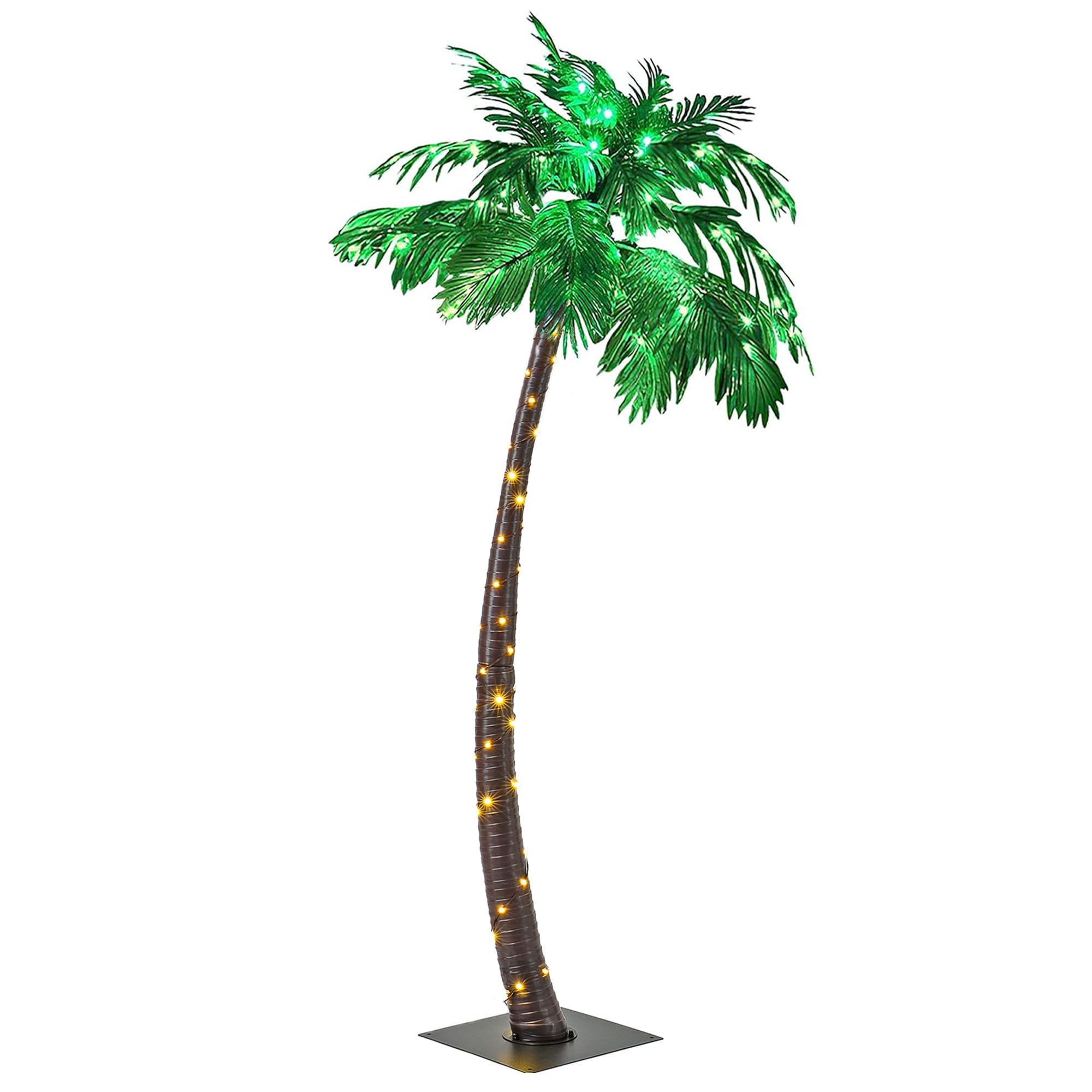
A dramatic 7' lighted palm with a metal trunk, canopy LEDs, and a heavy base that works great for covered patios and seasonal displays.
Why I picked it: Striking LED canopy lighting combined with a metal trunk and solid base for outdoor flair.
Best for: Patios, tiki bars, seasonal holiday displays, and covered outdoor spaces.
A more investment-oriented option for lighted décor.
Pros
- Vibrant green canopy LEDs
- Sturdy metal trunk and base
- Curved, lifelike silhouette
- Includes ground stakes
Cons
- Trunk lights can be inconsistent
- Leaves may fade in strong sun
- May need reinforcement in high winds
My take
I assembled the Lightshare 7' tree on my screened porch and liked how the metal trunk gives the piece a natural curve instead of looking rigid.
The LED lights tucked under the leaves produce a showy green glow that really reads tropical after dusk, and the trunk-wrapped mini lights add sparkle when they work.
On my unit the trunk lights were noticeably dimmer than the canopy lights, so I swapped the trunk string for a spare set; that fixed it quickly. If you buy this for a windy rooftop, plan to brace it—I've reinforced similar trees with internal PVC for long-term stability.
Overall, it’s my go-to when I want a lighted focal point on a covered patio or for seasonal outdoor entertaining.
3. Fopamtri 5′ Bird of Paradise – Most Realistic
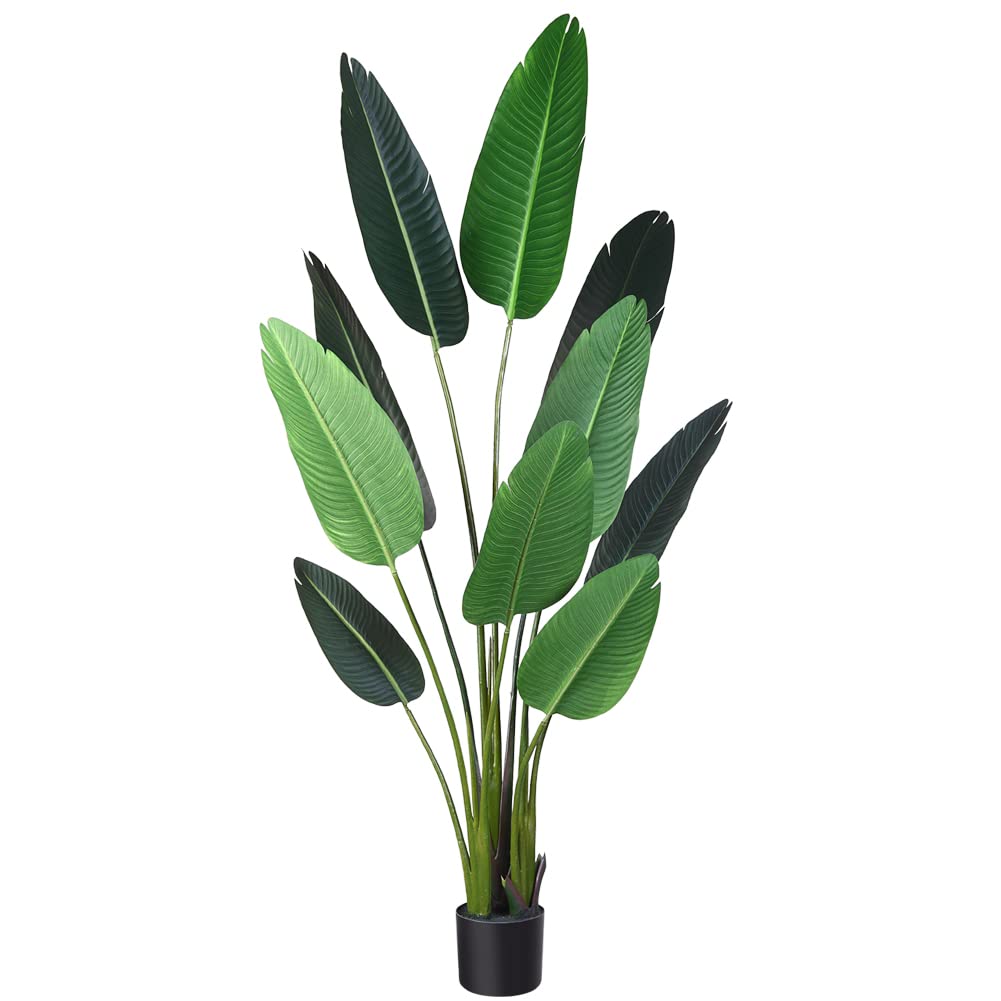
I found this 5' bird of paradise to have convincing shading and adjustable stems, making it the most natural-looking option from a few feet away.
Why I picked it: Layered leaf shades and an adjustable metal core give the most lifelike silhouette.
Best for: Entryways, living rooms, and places where a convincing, natural look matters.
Moderately priced for a more realistic finish.
Pros
- Varied leaf shades and sizes
- Sturdy inner metal wires
- Solid cement base
- Easy to bend into shape
Cons
- Small pot that looks undersized
- Close inspection reveals it's faux
My take
I used this Fopamtri in my entryway and was impressed by the subtle variations in leaf size and color—the effect is convincingly tropical from normal viewing distance.
The metal wire inside the trunk allows me to pose the tree exactly how I want, and the leaves detach and slide back in if I need to tweak the arrangement.
My only gripe is the tiny pot that comes with it; I planted the trunk into a taller, heavier container which instantly improved the scale and realism.
If you want a silk-like plant that reads natural without daily care, this one delivers in both look and adjustability.
4. Areca Palm 5′ Artificial Plant – Best for Styling
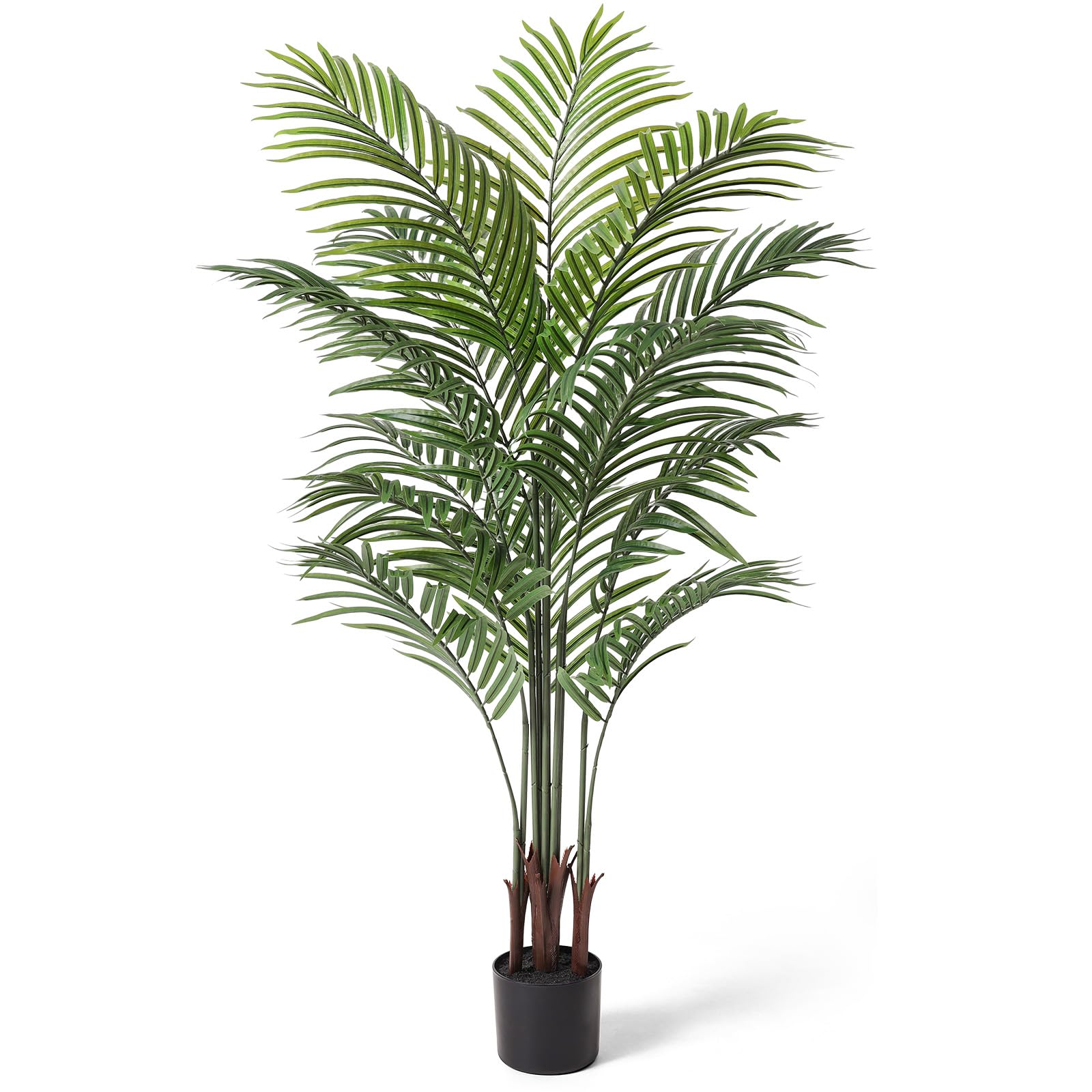
A flexible 5' areca-style palm whose wire stems let me recreate a fuller, more natural crown — but it does take time to pose correctly.
Why I picked it: Flexible wire stems and a lot of detachable fronds make it highly styleable.
Best for: Spaces where you want to custom-shape the palm and repot for scale.
Reasonably priced for an easily styled option.
Pros
- Adjustable wire stems
- Durable polyester leaves
- Detachable fronds for shaping
- Solid cement base
Cons
- Leaf stems can be hard to seat
- Takes time to pose well
My take
I unpacked and assembled this areca palm and spent the first half hour arranging stems to get a convincing fullness — it rewards the extra effort.
Some leaf stems fit tightly into the sockets and others refused to seat easily; my husband needed to apply extra pressure to get a few of them in place.
I swapped the small supplied pot into a wider planter and the whole tree immediately looked more believable. When styled and repotted, it makes a great faux focal point.
If you don’t mind a little hands-on setup, this one gives you the flexibility to create a natural shape in whatever room you place it.
How I Pick Artificial Palm Trees
Key features I check
I look at leaf material, stem adjustability, base weight, and whether the tree is meant for indoor or sheltered outdoor use.
- Leaf material: silk-style or fabric tells you how realistic the texture will be.
- Stem core: wired or metal cores let me pose branches; plastic trunks are less forgiving.
- Base weight: cement or heavy bases reduce tipping; plan to repot into a heavier container if needed.
- Lighting: built-in LEDs create atmosphere but can require troubleshooting or replacement over time.
Indoor vs. outdoor placement
I avoid putting silk-leaf palms in direct sun for long periods because colors can fade. For patios I choose metal-trunk or outdoor-rated models and secure them with stakes or extra bracing.
- Indoor: prioritize realism, small footprint, and a pot that reads to scale.
- Outdoor (covered/sheltered): pick UV-resistant materials and a sturdy base or anchor points.
- Exposed outdoor use: only choose models specified for full outdoor exposure and reinforce against wind.
Styling and maintenance tips I use
I fluff and bend stems after unpacking, repot into a heavier planter for scale, and dust leaves periodically to keep them looking fresh.
- Fluff leaves out and bend stems for a natural silhouette.
- Fill the pot with floral foam or heavy filler and cover with moss for a finished look.
- Wipe leaves with a damp cloth to remove dust — avoid harsh cleaners.
Frequently Asked Questions
Can I use these artificial palms outdoors?
I use fabric- or outdoor-rated palms on covered patios. For exposed balconies I choose metal-trunk models and add internal bracing; otherwise leaves and lights can fade or break in high winds.
How do I make an artificial palm look more realistic?
I repot into a properly scaled planter, bend and layer the stems, and hide the base with moss or decorative filler. Subtle color variation and slightly uneven leaf placement make the tree read more natural.
How should I clean and maintain these trees?
I dust regularly and wipe with a damp cloth for stubborn grime. For lighted models I check the string lights and connections before storing them for the season.
Final Take
I found each of these palms serves a different use: Bagari is the best budget pick, Lightshare shines for lit displays, Fopamtri looks most realistic at a glance, and the Areca palm rewards styling effort.
Decide whether you want instant, low-cost greenery or a more poseable, realistic piece I can style and repot. With a little shaping and the right planter, any of these can deliver the tropical vibe without watering.
