
I tested eight automatic soap dispensers across kitchens, bathrooms, and commercial settings. Here are the ones I kept, with what worked, what didn’t, and who each model is best for.
I put these automatic soap dispensers through everyday use in my kitchen, bathrooms, and a small workshop to see which designs actually made handwashing easier. I focused on sensor reliability, refill convenience, adjustability, battery or charging behavior, and how likely each unit was to clog or drip.
Across the group I found clear trade-offs: premium build and longevity, big-capacity units for the kitchen, rechargeable convenience, and simple replacement pumps for older faucets. My notes below explain when each option makes sense for your sink or workspace.
I compared sensor range and accuracy, dispensing adjustability, tank capacity or refill method, power type (batteries vs rechargeable), splash/water resistance, and ease of maintenance. I prioritized units that stayed drip-free and were easy to refill or repair.
1. simplehuman Touch-Free Sensor Soap Pump – Best Overall
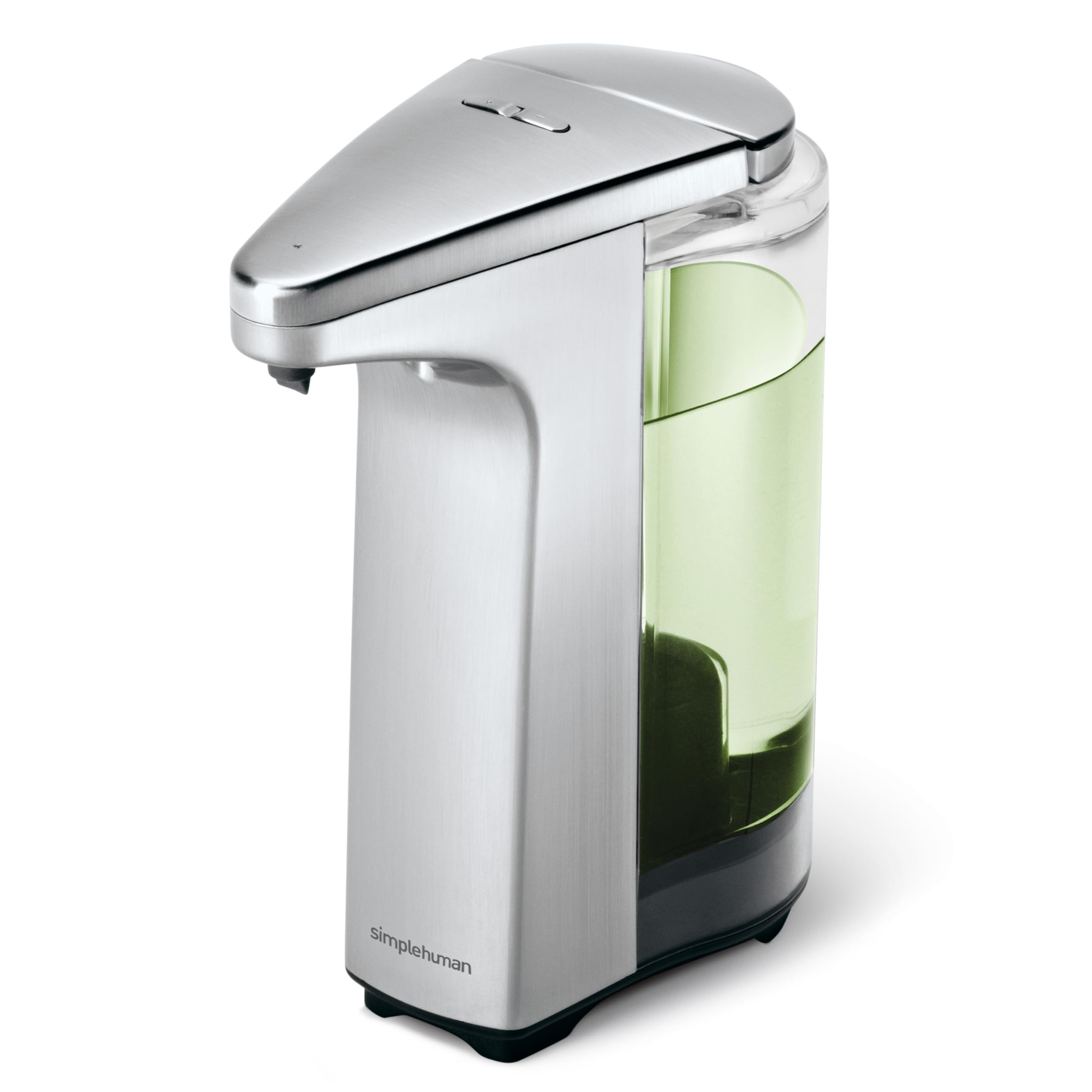
A premium, fast-response touchless pump with a no-drip valve and volume control.
Why I picked it: Reliable, fast dispense and excellent anti-drip engineering.
Best for: People who want a long-lasting, premium countertop dispenser for daily handwashing.
Premium option—built like a long-term kitchen tool.
Pros
- Dispenses in ~0.2 seconds
- Flexible silicone no‑drip valve
- Easy volume control
- Wide refill opening
- Premium, durable design
Cons
- Higher-cost purchase
- Shorter body holds slightly less soap
My take
I’ve owned an earlier model of this exact unit for nearly a decade, which shaped my expectations for the new one. Out of the box the sensor is precise and the pump delivers soap almost instantly—about 0.2 seconds—so I’m never leaving a messy sink while waiting for soap.
The silicone valve is the feature I appreciate most: it snaps shut and stops drips. I refill through a wide opening that makes topping up quick and clean, and the accessible +/− buttons let me dial in just the right volume for thick or thin liquid soaps.
Battery life has been excellent in my experience; my older unit went many months to a year between replacements. The main caveats: the current shape sits a bit shorter than the old model, so it may hold slightly less soap, and you need to bring your hand close to the sensor to trigger it—this keeps accidental activations down but is worth knowing.
2. PZOTRUF Touchless Soap Dispenser 17oz – Best Value for Kitchen
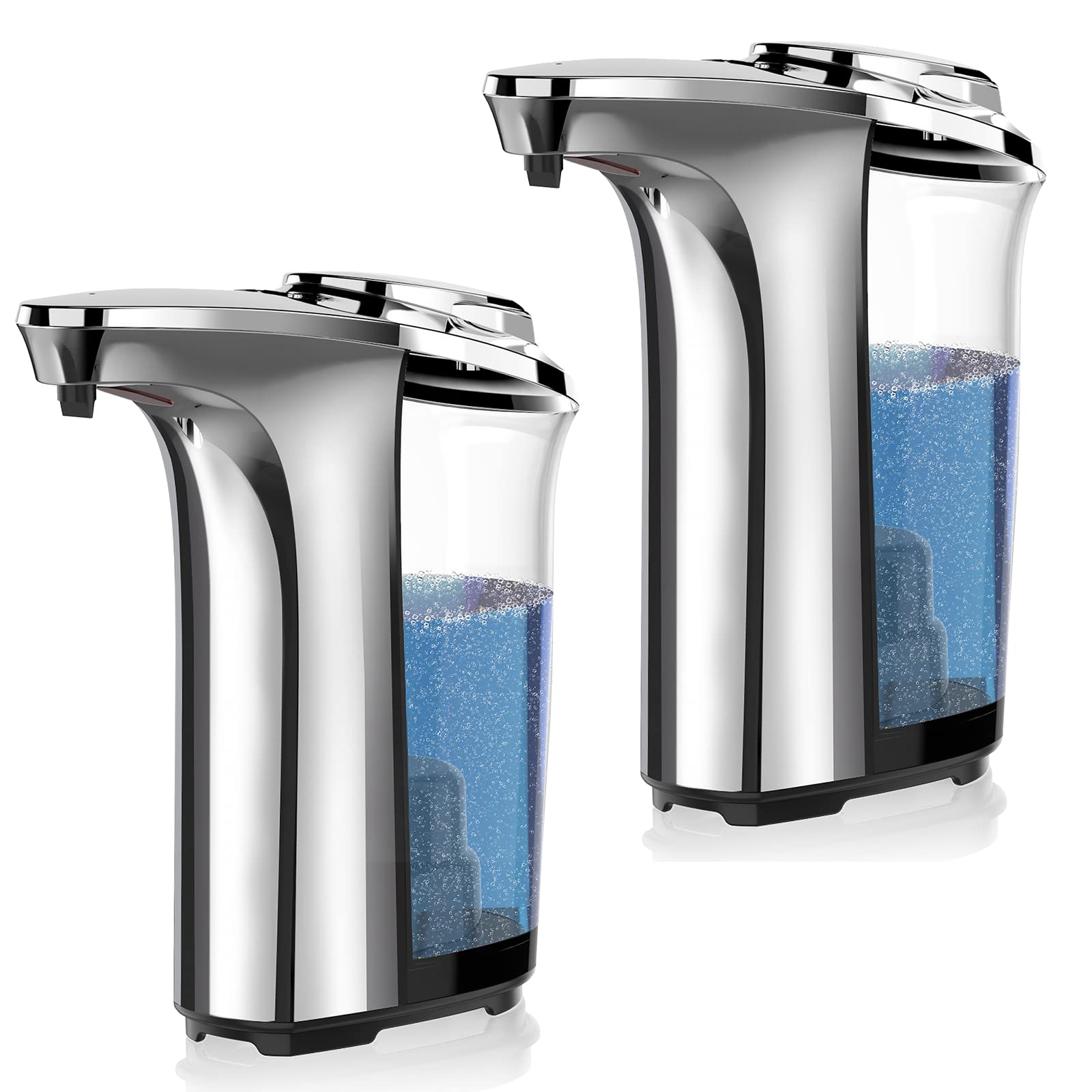
Large-capacity brushed-aluminum dispenser with five output settings and IPX4 protection.
Why I picked it: Generous tank and adjustable output make it great for dish soap duties.
Best for: Kitchens and heavy-use sinks where frequent refills are a nuisance.
Budget-friendly but capable for regular kitchen use.
Pros
- Large 17oz tank
- Five dispensing levels
- IPX4 splash protection
- Sleek brushed-aluminum look
Cons
- Requires 4 AA batteries
- Thicker soaps may need thinning
My take
I used this mostly for dish soap and liked that the tank holds a lot—refilling became a rare chore. The wide visible reservoir lets me see soap level at a glance, and the five output settings are handy: I keep it low for greasy dishes and bump it up only when I need more suds.
The unit’s finish reads high-end on a counter and the no-drip spout helps keep the area tidy. For thicker detergents I dilute them slightly so the dispenser flows reliably; otherwise I only needed to clean the spout occasionally.
I did note accounts of pumps failing after extended heavy use in the product notes, so I pay attention to how the motor sounds over time. For the price and the kitchen-sized tank, this has been my go-to for daytime dish duty.
3. USB Rechargeable Touchless Soap Dispenser 12.8oz – Best Rechargeable
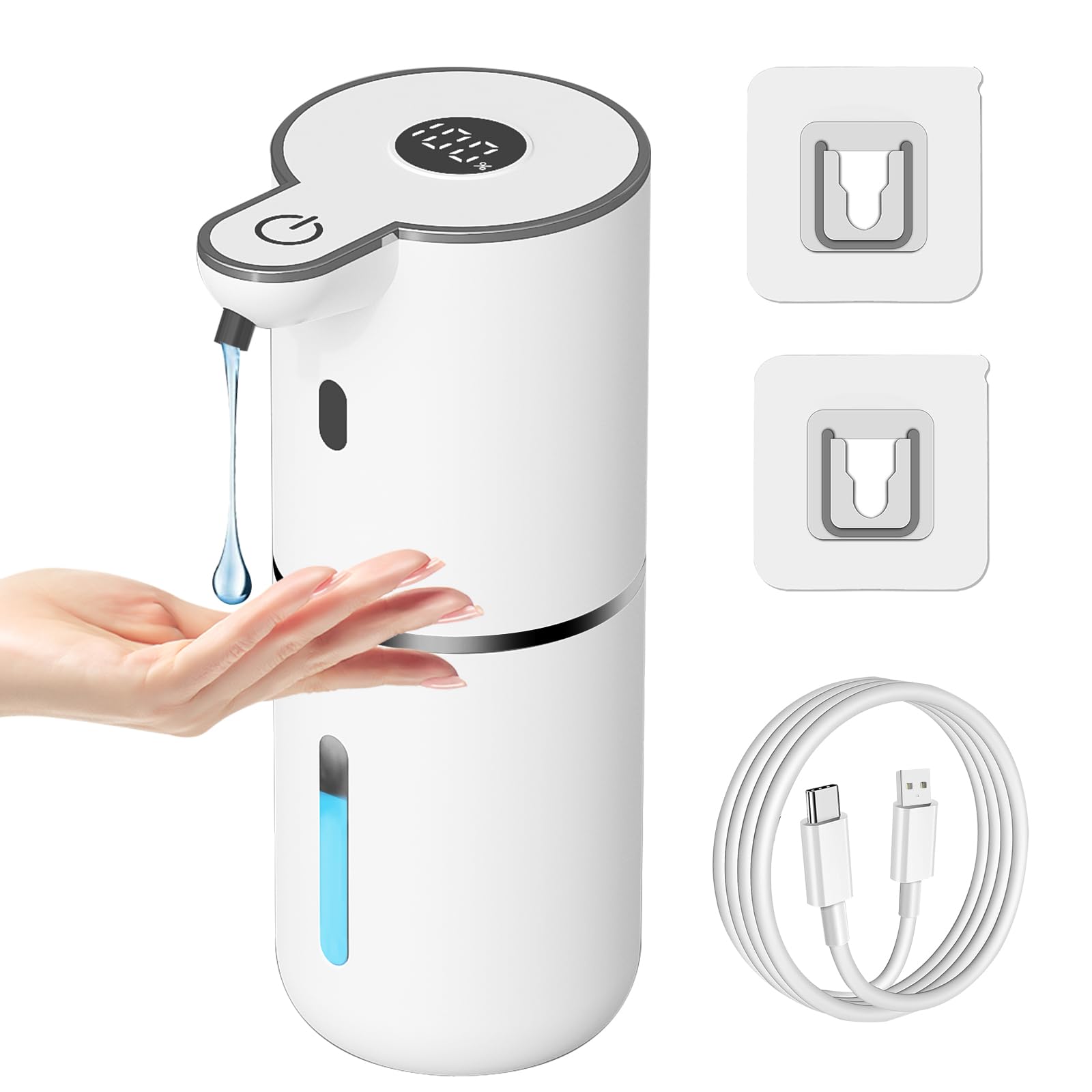
Rechargeable dispenser with USB‑C, six output levels, and an IPX5 rating.
Why I picked it: USB charging and a visible charge indicator make upkeep painless.
Best for: Households that prefer rechargeable models and simple placement options.
Affordable rechargeability without constant battery changes.
Pros
- USB‑C charging
- Six adjustable levels
- IPX5 water resistance
- Charge percentage indicator
Cons
- Makes an audible pumping sound
- Smaller 12.8oz capacity
My take
This one arrived nearly fully charged and was ready right away. The USB‑C rechargeability is what sold me: a full charge in a few hours and many cycles between charges makes it feel low-maintenance compared with battery models.
The six dispensing levels let me tune soap output precisely; I keep it low for handwashing and use the continuous flow option when I need to flush the spout. The unit does emit a firm pumping noise during operation—normal for this motor—but it’s not intrusive in my kitchen or bathroom.
I installed a couple of these around the house and liked the small status window that shows when soap is low and the top indicator for battery percent. A note on mounting: it’s wall‑mountable, but textured walls may complicate hanging.
4. Pfister Replacement Soap Pump – Best Replacement Pump
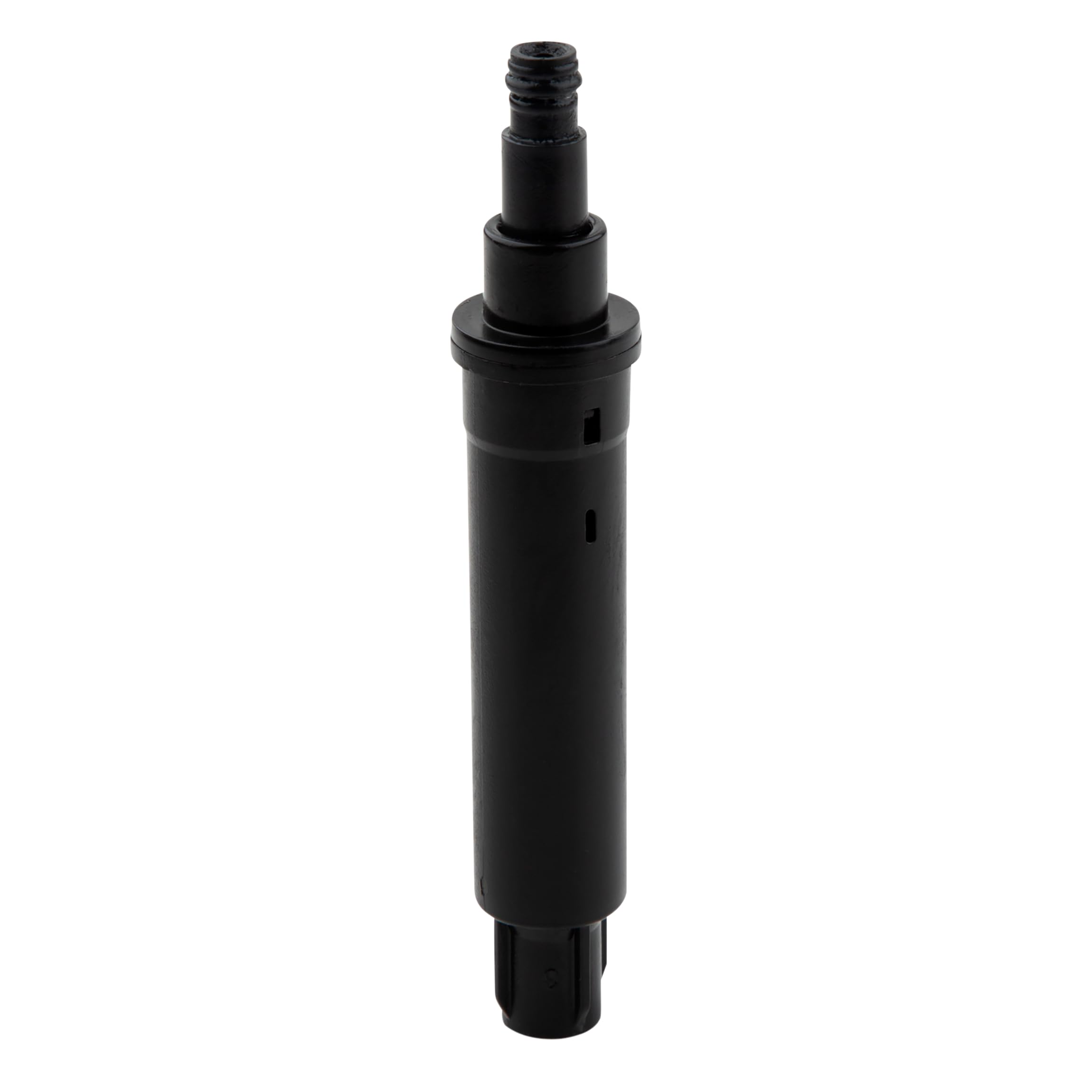
Simple replacement pump compatible with Pfister and some Grohe dispensers.
Why I picked it: Quick, inexpensive way to revive an existing soap dispenser.
Best for: Repairing a broken pump without replacing the whole dispenser.
Low-cost spare part to extend dispenser life.
Pros
- Restores pump action
- Fits Pfister and some Grohe units
- Easy, inexpensive fix
Cons
- May need minor trimming
- No install directions included
My take
When my built-in dispenser stopped pumping, this Pfister replacement pump got the job done. Installation is straightforward: pull the old pump and push the new one into the head. In one case I trimmed the straw slightly and used a small pin to seat the pump fully—simple hacks that made it fit perfectly.
The pump delivered solid squirts and eliminated the double‑pumping problem I’d been getting from the old, clogged unit. If you’re handy and want to avoid replacing the whole fixture, this is an effective, wallet‑friendly repair.
5. BosilunLife Ceramic Soap Dispenser with Sponge Holder – Best Design
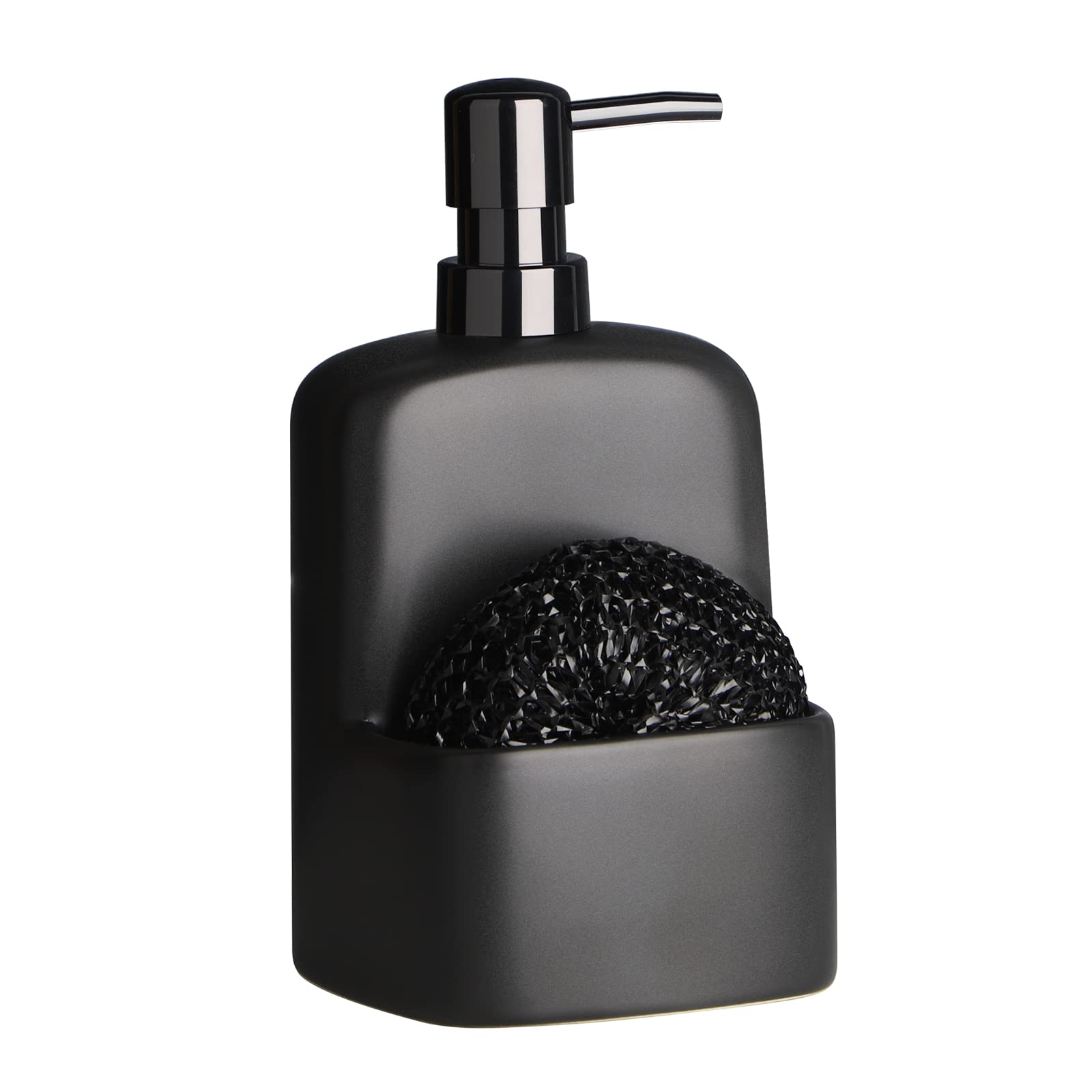
Matte ceramic dispenser with built-in sponge nook and a large 20oz capacity.
Why I picked it: Combines counter storage and a sturdy, attractive dispenser in one.
Best for: Design-conscious kitchens that need a tidy sponge storage solution.
Stylish, mid-range ceramic option.
Pros
- Built-in sponge holder
- Large 20oz capacity
- Durable matte ceramic
- Easy to clean
Cons
- Not ideal for foaming soap
- Heavier and potentially breakable
My take
I liked the way this dispenser declutters my sink: the built-in nook keeps a scrubber handy without crowding the counter. The matte ceramic finish cleans up easily and looks intentional rather than utilitarian.
The pump performs well for liquid dish soap and the included scrubber is a nice touch. I wouldn’t use this with foam soap—this is built around liquid or gel use—and the ceramic body means I treat it with a bit more care when moving or refilling.
6. Rechargeable Foaming Soap Dispenser 15oz – Best Foaming
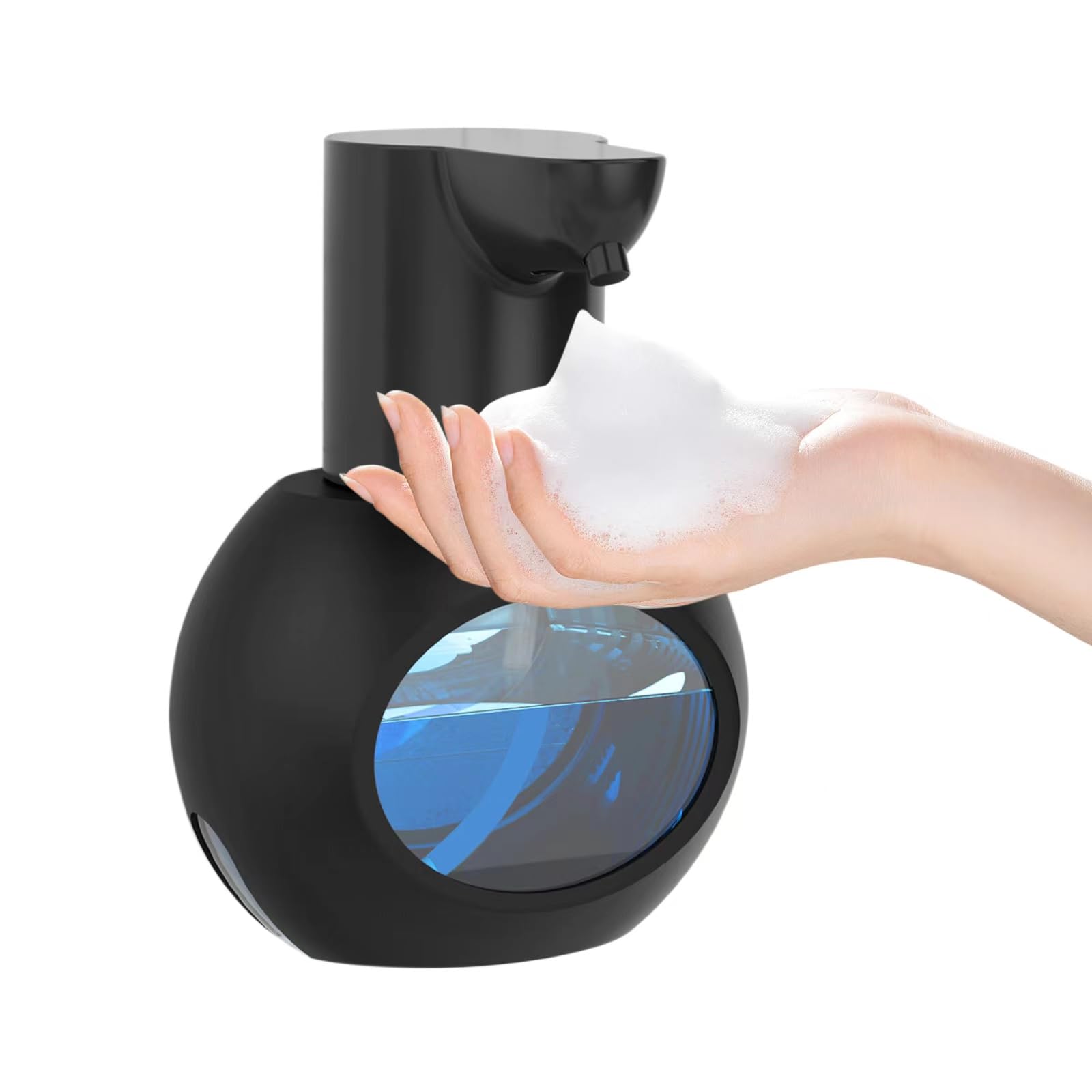
Rechargeable touchless dispenser designed specifically to deliver foaming soap.
Why I picked it: Delivers consistent foam, adjustable output, and strong battery life.
Best for: Homes that prefer foam soap to save product and reduce mess.
Good value if you want foaming functionality.
Pros
- Produces rich foam
- Rechargeable—no batteries
- Adjustable foam levels
- Wall or countertop use
Cons
- Sensor can be very sensitive
- Gel soaps need dilution
My take
I swapped foaming soap into this unit and was impressed by how little product it uses per handwash—foam stretches soap farther than liquid does. The four-level adjustment helps me fine-tune how much foam comes out for guests versus daily family use.
Recharging is convenient and I found the unit charges quickly and runs for weeks between charges. Be aware the sensor is quite sensitive: if you pick it up to clean or reach under it, it will often dispense, so I learned to power it off before relocating.
7. USB Rechargeable Touchless Dispenser 13.5oz – Best Battery Life
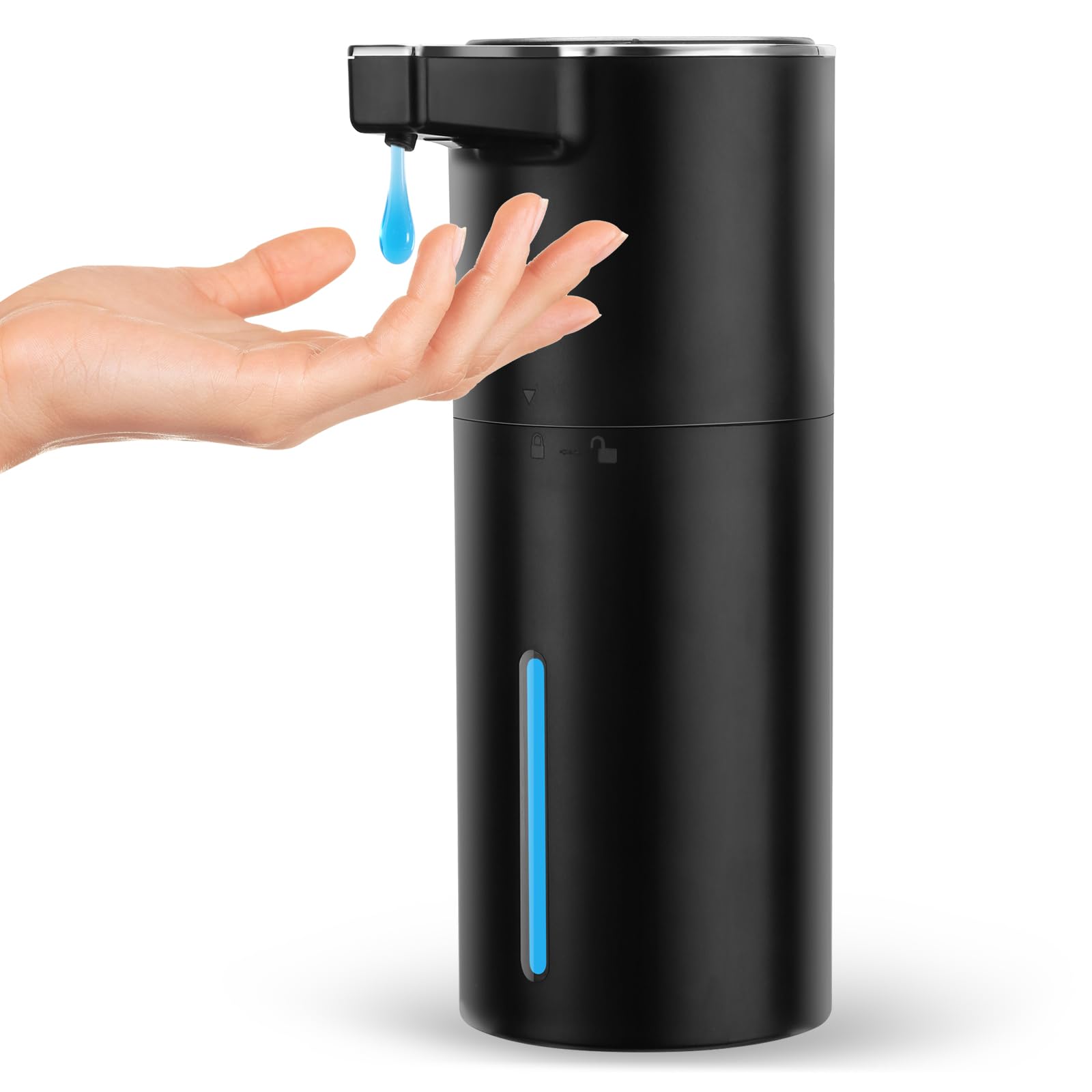
Long-lasting battery, dual mount, digital display, and four dispensing modes.
Why I picked it: Exceptional battery longevity and clear digital status readout.
Best for: Busy households that want long stretches between charges.
Practical choice focused on battery life and convenience.
Pros
- Long 1800mAh battery
- Wall or countertop mount
- Battery percentage display
- Large 400ml reservoir
Cons
- Finish can look cheap
- Feels lightweight plastically
My take
I appreciated the long battery life from the 1800mAh cell—on light daily use it stretches for months before I need to charge. The touch control panel is clear and the digital display makes it easy to monitor battery percentage and dispensing mode.
Installation is tool-free for most surfaces and the dual mount option is handy when counter space is tight. My only gripe is the finish: it reads a bit lightweight in person, so I recommend checking it visually if appearance matters in your kitchen or bathroom.
8. GOJO 800 Series Bag-in-Box Push Dispenser – Best for Commercial Use
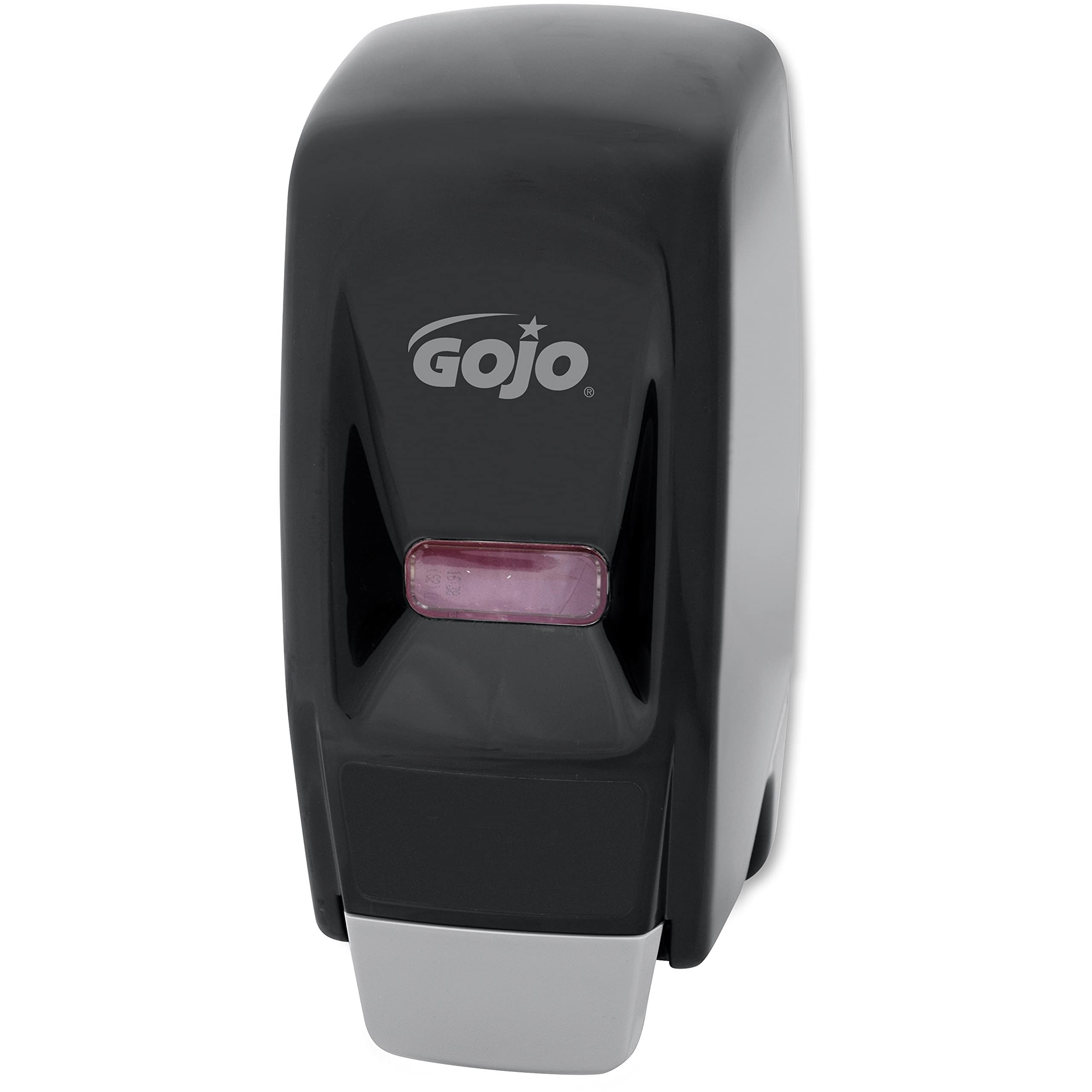
Durable push-style dispenser that uses sanitary sealed 800 mL bag-in-box refills.
Why I picked it: Designed for high-traffic areas and sanitary, portion-controlled refills.
Best for: Workshops, bars, and public restrooms that rely on bulk refills.
Built around commercial refills and maintenance routines.
Pros
- Uses sealed bag-in-box refills
- Portion-controlled dispensing
- ADA-compliant push force
- Sturdy for commercial settings
Cons
- Plastic feels cheaper than older units
- Mounting may require tools
My take
I mounted this in a small workshop restroom and found it very practical: loading an 800 mL sealed bag is quick and sanitary, and portion control prevents overuse during busy shifts.
The unit comes with adhesive pads but I chose to bolt it to the wall for durability; once mounted it stayed put under frequent use. The plastic feels lighter than the commercial units I remember from years ago, but it performs well and keeps refills secure.
How I choose an automatic soap dispenser
Power and charging
I decide between battery and rechargeable models based on placement and convenience. Rechargeable units are great for high‑use family sinks because I don’t have to hunt for AA cells, while battery units can be simpler to swap out in less accessible locations.
- Rechargeable: convenient, fewer long‑term parts to buy.
- AA/AAA: quick swap, good if you avoid chargers.
Sensor accuracy and range
I look for a precise trigger zone so the dispenser doesn’t go off with every passing movement. Shorter sensor ranges reduce accidental dispensing but require a deliberate hand placement.
- Shorter range = fewer false triggers.
- Longer range = easier activation for kids but more accidental pumps.
Soap type and maintenance
Not every dispenser handles thick or foaming formulas. I use liquid soap for most battery pumps, dilute thicker dish soaps, and choose dedicated foaming dispensers if I want rich foam without extra dilution.
- Dilute thick dish soaps for smoother pumping.
- Use foaming‑specific units for consistent foam output.
- Look for no‑drip valves or wide openings to reduce clogs.
Capacity and placement
I match tank size to traffic: larger reservoirs for kitchens and public sinks, smaller ones for powder rooms. Wall‑mountable units free up counter space but check mounting instructions for textured surfaces.
- Large tanks = fewer refills.
- Wall mount saves counter space but needs secure mounting.
- Transparent reservoirs help you avoid surprise empties.
Frequently Asked Questions
Can I use regular dish soap or body wash in these dispensers?
I use regular liquid hand soap in most models. For thicker dish detergents I dilute them slightly so they flow. Foaming dispensers require either a foaming formula or proper dilution; otherwise the pump can clog or underperform.
Do rechargeable dispensers need frequent charging?
From my experience, rechargeable units typically last weeks to months depending on daily uses. I keep an eye on charge indicators and top up when the percentage drops—USB‑C models usually recharge quickly.
How do I prevent clogging and drips?
I rinse the spout periodically and use the unit’s continuous‑flow or self‑clean options when available. Models with silicone no‑drip valves were the cleanest for me; a quick wipe after refilling prevents residue buildup.
Are commercial bag-in-box systems worth it?
If you have high traffic or want bulk refills, I find bag‑in‑box systems very practical. They’re sanitary and reduce refill frequency, though you’ll want a sturdy mounting method if the area sees rough use.
Final Take
I tested these dispensers across different sink types and usage patterns so you can pick what matters most: longevity and premium engineering (simplehuman), a big tank for kitchen duty (PZOTRUF), or the convenience of USB recharge (my rechargeable picks).
Match the dispenser’s strengths to your use case—capacity, power type, and whether you want foam or liquid—and you’ll get a unit that stays out of the way while making handwashing easier.
