
I tested five popular hammocks for backyard and outdoor use — from ultralight travel rigs to double cotton hammocks with stands — and I share which ones I reach for depending on where and how I hang out.
I spend a lot of time outside and have tried dozens of hammocks for backyard lounging, camping, and travel. For this roundup I focused on five models that cover the basics: portability, comfort, setup ease, and durability.
My picks range from ultralight parachute nylon hammocks that fit in a daypack to traditional cotton hammocks with stands that turn a patio into a permanent chill spot. I used each hammock multiple times in different conditions so my notes reflect real-world use.
If I want something I can toss in a pack, I pick the ultralight nylon options; for a porch or patio I prefer a cotton hammock on a steel stand because it feels more like a full-time seat or nap spot.
1. Wise Owl Outfitters Camping Hammock – Best Lightweight
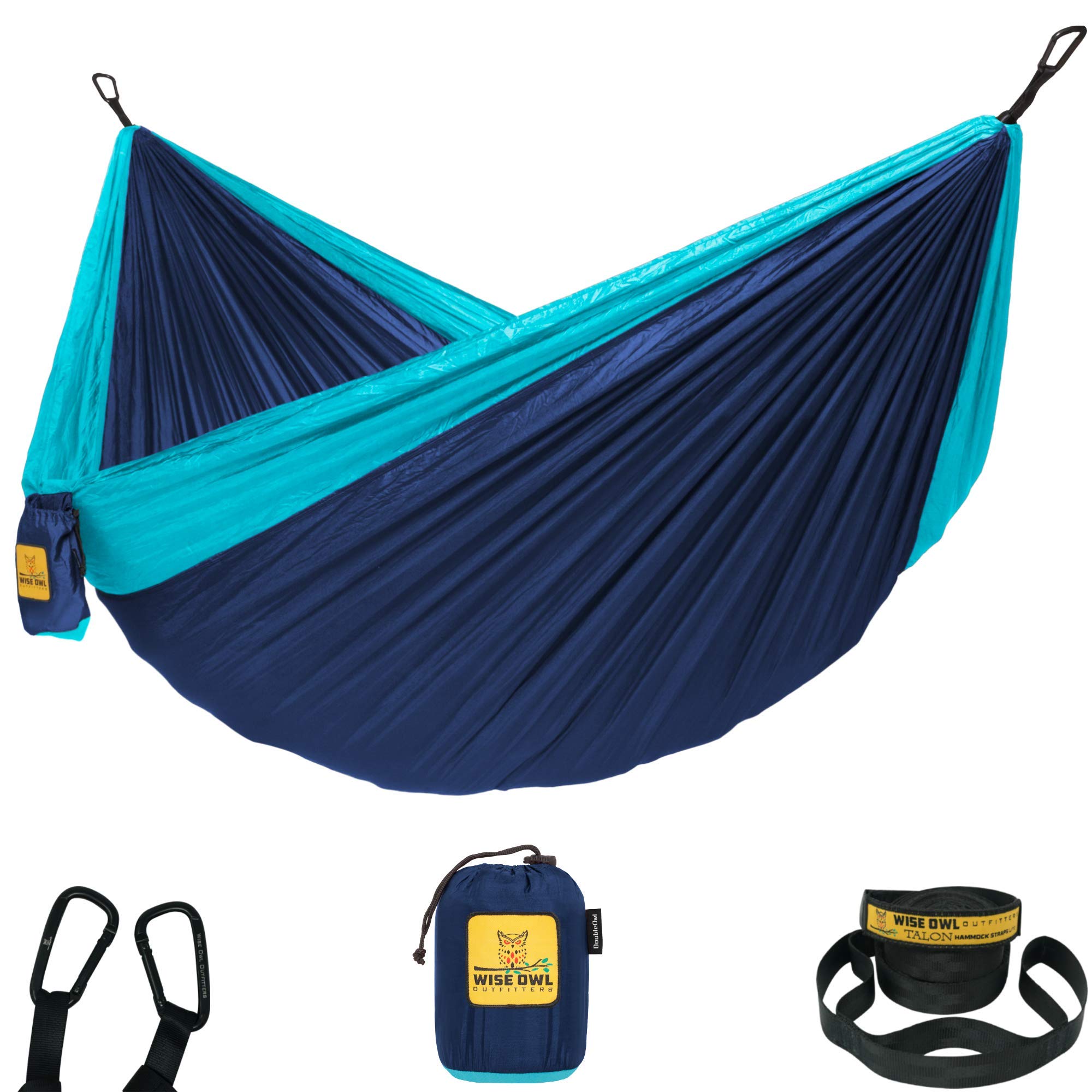
I reach for this Wise Owl when I need an ultralight, packable hammock that still feels robust. It comes with tree straps and carabiners and sets up in minutes.
Why I picked it: Ultralight packability with a complete suspension kit makes it my go-to travel hammock.
Best for: Backpackers, day-trippers, and anyone who wants a fast, compact setup.
Affordable travel hammock option.
Pros
- Very lightweight and packable
- Includes straps and carabiners
- Triple-stitched seams resist tearing
- Breathable parachute nylon fabric
Cons
- Less plush than cotton hammocks
- Not ideal as a long-term porch fixture
My take
I carried this hammock on several hikes and was impressed by how small it packs and how quickly I could hang it. The built-in stuff sack keeps the whole kit tidy in my daypack.
Setup is straightforward: the included 9 ft tree straps have multiple loops so I can dial in hang height without tying knots. The carabiners clipped on in seconds, even when I was fumbling after a long walk.
The parachute-grade 210T nylon lets air circulate, which I like for warm nights. It’s engineered to support substantial weight and felt solid when I tested it solo. Triple stitching at stress points gave me confidence while shifting positions.
For trips where every ounce counts, I prefer this over heavier cotton designs. I don’t expect it to be as cushiony as a full cotton bed, but for portability and quick comfort it delivers.
2. Vivere Double Cotton Hammock with Stand – Best for Porch or Patio
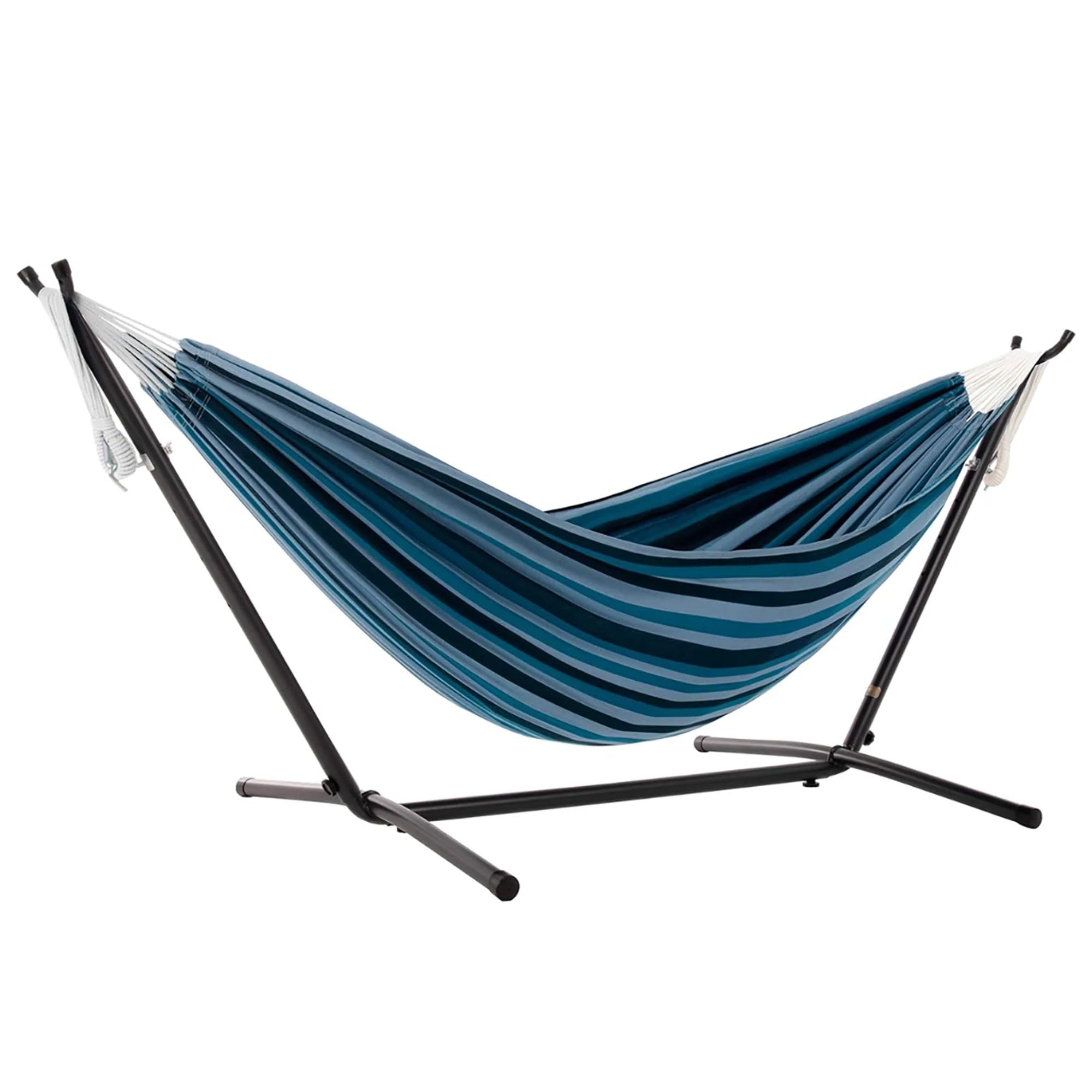
When I want a classic, lounge-ready hammock without relying on trees, I use the Vivere. The steel stand and cotton bed create a relaxed, supportive spot on my deck.
Why I picked it: Stand-included convenience plus soft cotton makes it the easiest way to add a hammock to a patio.
Best for: People who want a permanent porch or patio hammock with tool-free setup.
More of a mid-to-premium option due to the included stand.
Pros
- Soft, USA-grown cotton bed
- Includes steel stand — no trees needed
- Tool-free assembly
- Spacious bed for lounging
Cons
- Heavier to move around
- Cotton needs protection from weather
My take
I set this Vivere up on my patio and appreciated that no tools were required; the whole frame snapped together quickly and felt solid underfoot.
The cotton bed is noticeably softer than nylon and cradles you in a way that invites napping. I used it for long afternoon reads and liked that it felt like a real lounge chair rather than a temporary sling.
The stand’s plastic end caps protect decking and give a finished look, which matters when the hammock is visible on a porch. It supports a generous amount of weight and stays stable while I move around in it.
Because the bed is cotton, I store it when I expect prolonged rain or strong sun. For a permanent outdoor spot that doesn’t require trees, this Vivere setup is the most comfortable option I reach for.
3. Kootek Camping Hammock – Best for Backpacking
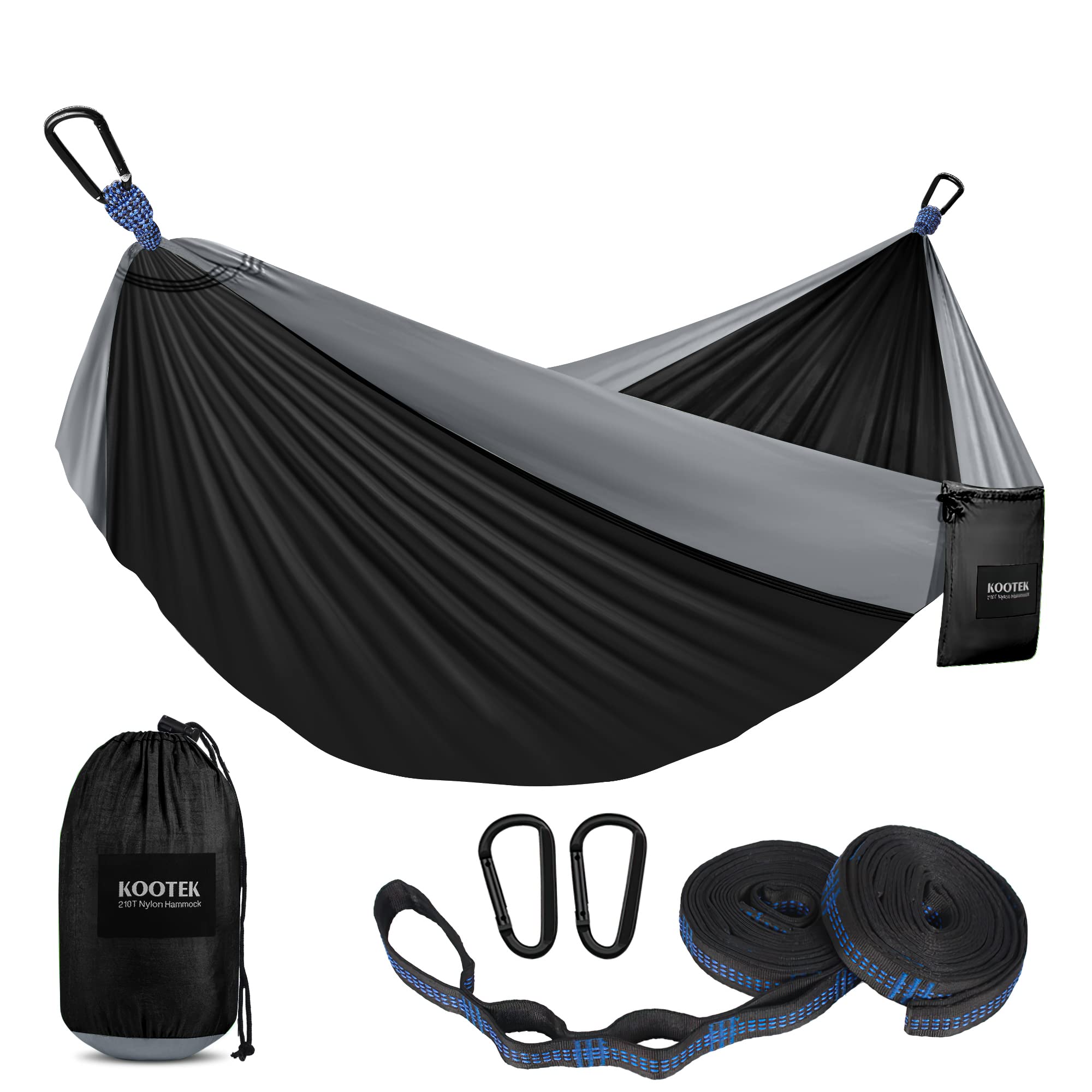
I turn to the Kootek when I want a full-size hammock that’s still extremely affordable and packable. The long straps and wide bed make it easy to get a good hang between trees.
Why I picked it: Big bed size and beefy straps at a very accessible price point.
Best for: Budget-minded campers who still want roomy, durable nylon for two people or a spacious solo lay.
One of the most budget-friendly options I recommend.
Pros
- Large bed size for its price
- Robust straps with many adjustment loops
- Attached carry bag for quick packing
- 210T nylon resists tearing and dries fast
Cons
- Slightly narrower than premium doubles
- Material feels thinner than cotton
My take
I keep a Kootek in my trunk for spontaneous beach trips and hikes because it tucks away small yet unfolds into a roomy hammock.
The straps are the feature I appreciated most — they offer many loop settings so I can find the ideal sag without wrapping around a tree or tying fiddly knots.
The nylon dries quickly after a damp morning and the triple interlocking stitching held up when we used it for two lighter adults. It’s not as luxurious as a thick cotton bed, but it’s lighter and easier to carry.
If I need a cheap, reliable hammock that won’t add much weight to my kit, this is the one I grab.
4. ANYOO Cotton Anti-Rollover Hammock – Best for Stability
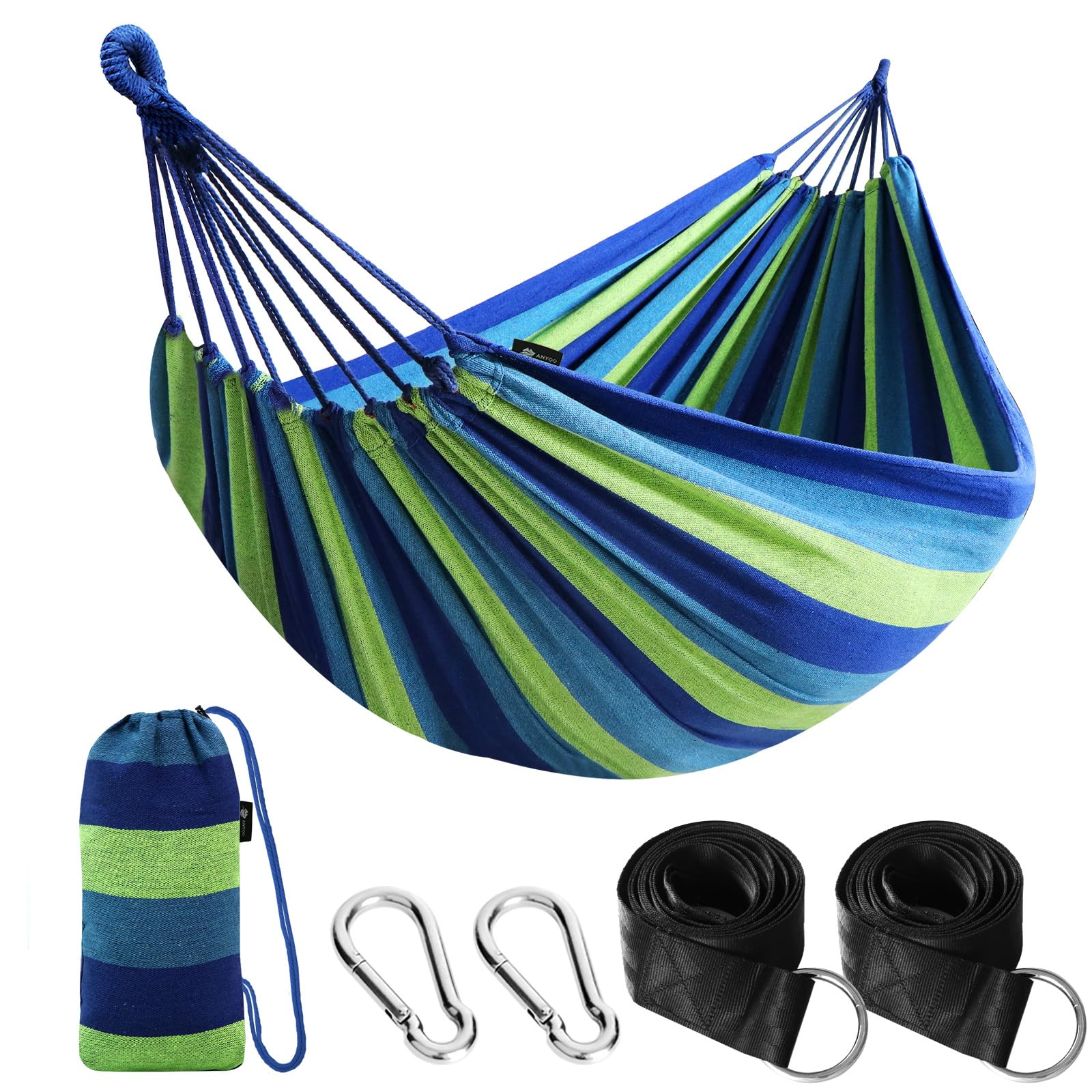
When I want a hammock that minimizes rolling and creates a flatter sleeping surface, I pick the ANYOO. The anti-rollover shape and dense cotton weave make it a comfortable choice for longer rests.
Why I picked it: Anti-rollover design and high weight capacity for secure, longer naps.
Best for: People who nap or sleep in a hammock and want a flatter, more stable surface.
Good value for a cotton-style hammock with strong capacity.
Pros
- Anti-rollover shape for stability
- Tightly woven, supportive cotton fabric
- High stated weight capacity
- Machine-washable and portable
Cons
- Can feel warm in hot weather
- Colors may vary from photos
My take
I used the ANYOO on a shady day and noticed the difference the shape makes — it feels more like a cot than a cradle, and I was less likely to roll when I read or dozed off.
The fabric has enough give to be comfortable while still supporting my weight confidently. The included tree-friendly straps and carabiners made setup around backyard trees fast and tree-safe.
I’ve left a similar cotton bed out occasionally and found that prolonged sun can fade the colors, so I store this one when I’m not using it for extended stretches.
For anyone who values stability and a more traditional cotton feel, this hammock is the model I reach for when I want a secure, sleep-capable hang.
5. Best Choice Products Brazilian-Style Hammock with Stand – Best Cocoon-Style
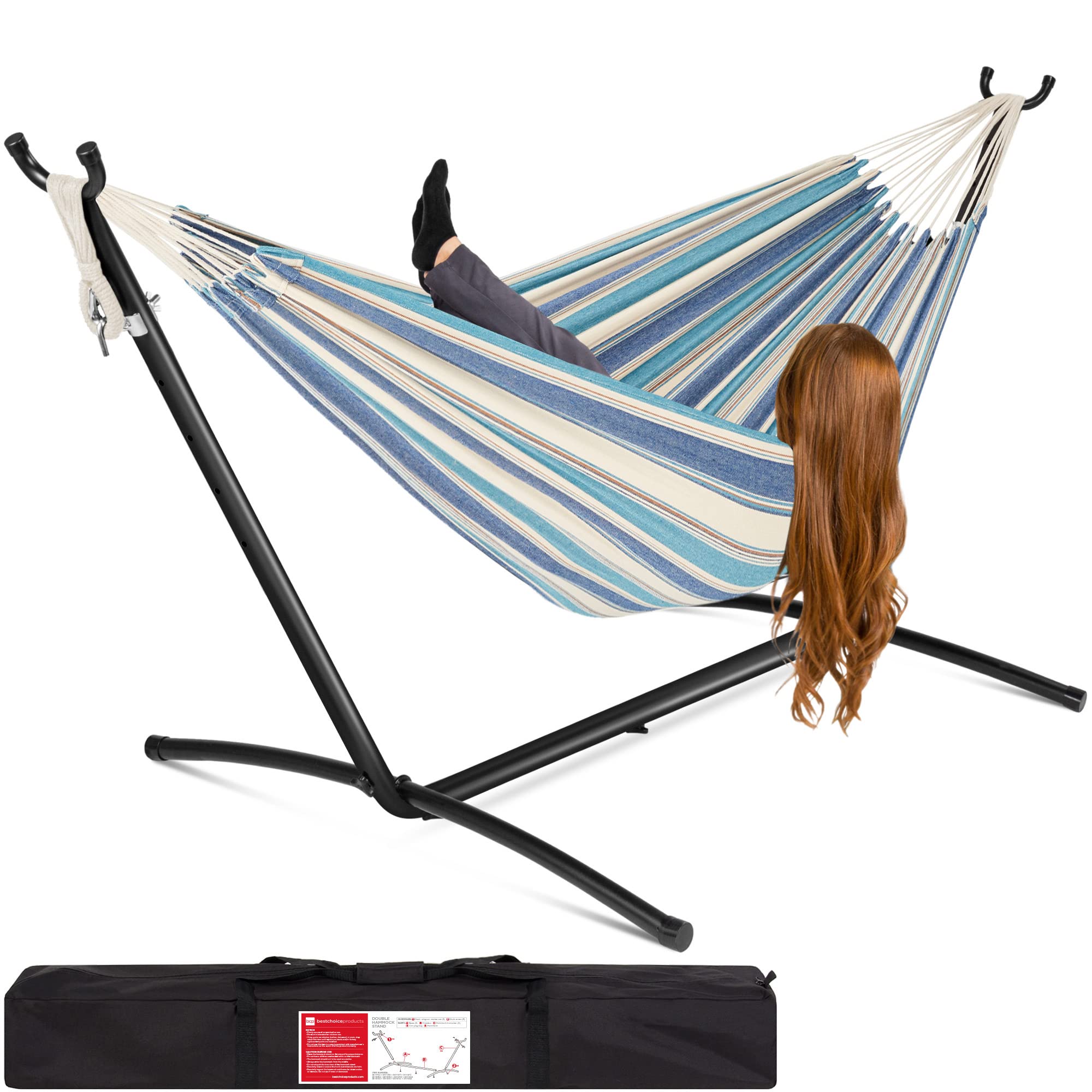
When I want a snug, cocoon-like hammock experience I use this Brazilian gathered-end model. The steel stand makes it a convenient, stable spot for solo lounging and occasional two-person use.
Why I picked it: Cocooning gathered-end design creates a snug, sleep-friendly nest.
Best for: People who want a cocoon-style hammock with a sturdy stand for their yard.
Solid midrange choice with included stand.
Pros
- Cozy gathered-end cocoon feel
- Heavy-duty tempered steel stand
- Weather-resistant cotton blend
- Easy assembly and portability
Cons
- Tight for two adults
- Cotton blend needs storage from sun
My take
I installed the Best Choice Products hammock on my patio during the summer and loved how it wraps you up — great for focused naps or reading without sliding to the side.
The steel frame feels sturdy when I get in and out gently, and assembly really is quick. I treat it as a dedicated lounging station rather than something I’ll move daily.
This is the pick I reach for when I want that 'nest' feeling. I don’t always recommend it as a practical two-person bed unless both people are small or willing to cozy up tight.
For a durable, weather-ready setup that still gives a true hammock cocoon, this model lives on my porch for the season.
How I Choose Backyard Hammocks
My Hammock Selection Checklist
I balance comfort, setup method, and where I’ll use the hammock. Ultralight nylon is my choice for travel; cotton or gathered-end styles feel best for long backyard lounging.
Consider how you’ll hang the hammock: if you don’t have trees, get a hammock with a stand. If you want to backpack, prioritize weight and packed size over plushness.
- Material: nylon for packability, cotton for plush comfort
- Suspension: included straps and carabiners speed setup
- Capacity: choose a hammock rated for more than your usual load
- Stand vs trees: stands add convenience but increase weight
- Weather care: store cotton beds in sun or rain
Frequently Asked Questions
Can I use a travel nylon hammock on my patio?
Yes — I use nylon hammocks on my patio all the time. They’re quick to set up between trees or on a stand, but I store them inside if heavy rain or prolonged sun is expected since nylon dries fast but can degrade with constant UV exposure.
Do I need special straps to protect my trees?
I always use wide tree-friendly straps. They distribute load and prevent bark damage; the models I recommend include such straps so you don’t have to improvise with thin cord.
Which hammock style is best for sleeping overnight?
I prefer cotton or gathered-end designs for overnight use because they cradle and breathe well. If I’m camping overnight, I bring a nylon hammock with an underquilt or pad to manage insulation.
Final Take
I keep at least two hammocks in rotation: a lightweight nylon for travel and a cotton or stand-equipped option for home comfort. Each has its place depending on portability and how plush I want my hang to be.
If you want one do-it-all model, pick the cotton-with-stand options for everyday backyard use; for hiking or travel, prioritize an ultralight nylon with solid straps. Either way, a good suspension system and proper storage will keep your hammock performing longer.
