
I spent time assembling and using a range of adult backyard swings—wood, metal, composite, and standalone frames—to find the models that balance comfort, durability, and value for everyday outdoor lounging.
I tried a variety of porch and patio swings so I could tell you which ones actually deliver on comfort, build quality, and weather resistance. My goal was to include classic wooden options, low-maintenance composite, lightweight metal benches, and a solid freestanding frame so you can mix and match for your space.
Throughout testing I focused on fit (will my feet hang?), construction (how sturdy does it feel?), and longevity (what maintenance will it need?). Below I explain the best pick for several needs and why each made my list.
If you want a long-term, low-maintenance piece, I lean toward the POLYWOOD composite. For classic porch charm I prefer cedar or Amish-made rollback styles. Metal swings are the easiest to install and the VINGLI stand gives flexibility when you don’t have overhead support.
1. Amish Casual 5-Foot Rollback Cedar Porch Swing – Best Overall
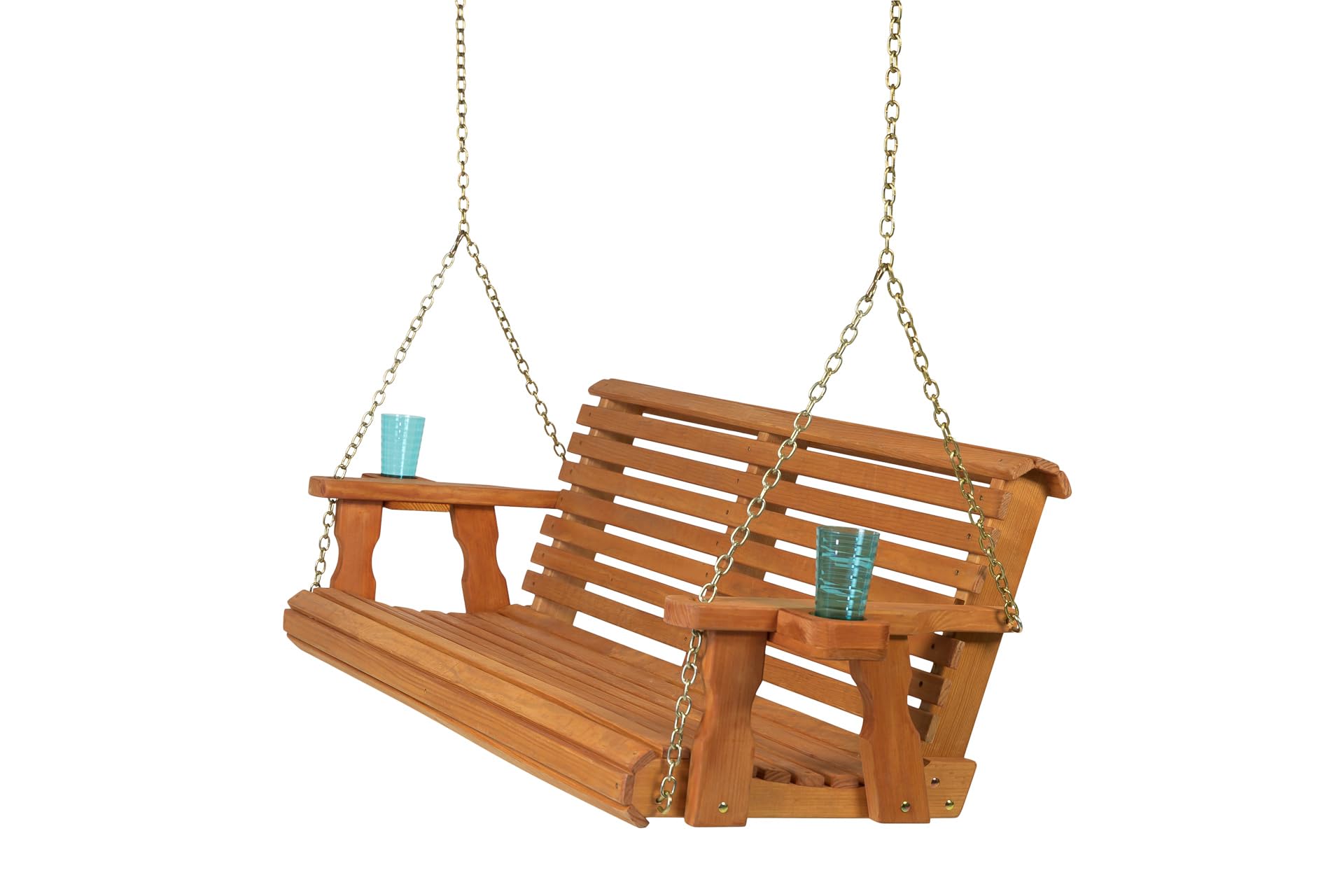
I found this Amish-made rollback swing to be the most balanced pick for comfort and long-term solidity. The rollback contour and lumbar support make it one of my favorite wooden swings for extended sitting.
Why I picked it: Exceptional handmade construction and a genuinely comfortable rollback seat.
Best for: People who want a classic, durable wooden swing for a covered porch.
A premium, longer-lasting wooden swing compared with basic mass-market options.
Pros
- Handcrafted Amish construction
- Rollback design for ergonomic comfort
- Included zinc-plated hanging chains
- Sturdy 700 lb capacity
Cons
- Heavier to install than metal options
- Needs sealer for year-round outdoor exposure
My take
I installed the 5-foot rollback swing on my covered porch and immediately noticed the difference the contoured lumbar and rolling seat make; it’s comfortable enough to sit on for hours without cramping behind the knees.
The build quality stood out—solid treated pine slats, tight joints, and hardware that feels like it will resist rust. Assembly was straightforward and the included chains simplified mounting on an 8-foot ceiling.
Because it’s real wood I treated it with a clear sealer before leaving it outside year-round. That extra step is worth it if you want the grain and feel of wood to last.
2. VINGLI Curved Metal Patio Swing – Best Budget Metal Swing
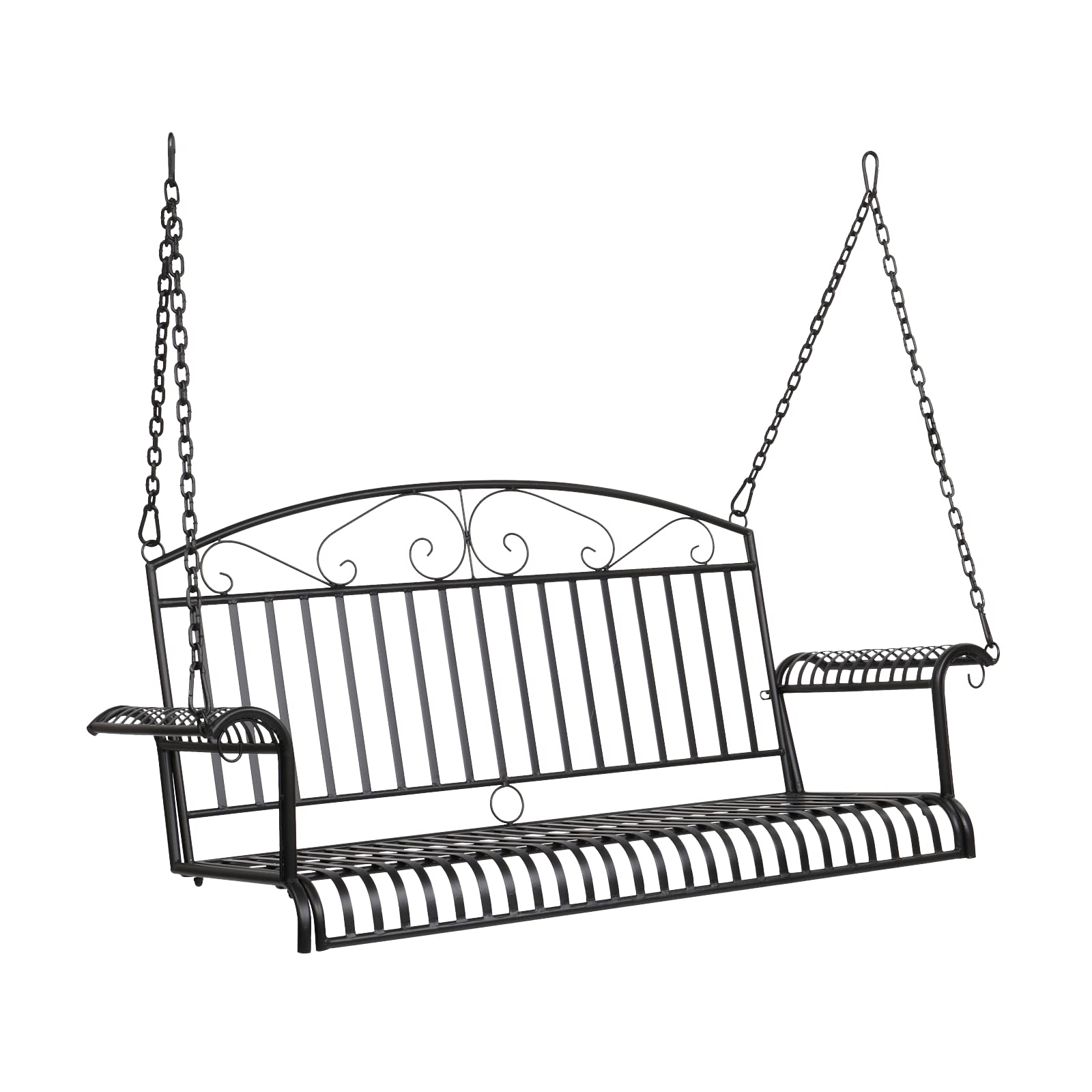
This curved metal bench delivers quick assembly and an unexpectedly comfortable seat for a very accessible option. It’s the easiest bench to drop into an existing frame.
Why I picked it: Fast to assemble and lightweight while still feeling sturdy in everyday use.
Best for: Anyone who wants a quick, affordable metal swing that pairs with existing frames.
An affordable metal option that performs well for the price.
Pros
- Very quick, single-person assembly
- Adjustable chains with loop-locked ends
- Generous weight capacity (claimed)
- Ergonomic knee curve
Cons
- Metal feels thin in spots
- Chains can be short on some frames
My take
I put this swing into an old frame I had and it fit perfectly; the pre-assembled back and seat make the whole setup process five to ten minutes for me.
The curved knee area is a nice touch—my feet don’t touch the ground when I sit—and the loop-locked chain ends gave me confidence when adjusting the height.
It’s lightweight but not flimsy. For very heavy daily use I’d look at thicker-gauge metal, but for a patio where look and convenience matter, this is a solid, affordable choice.
3. VINGLI Steel Swing Stand with Extra Side Bars – Best Stand
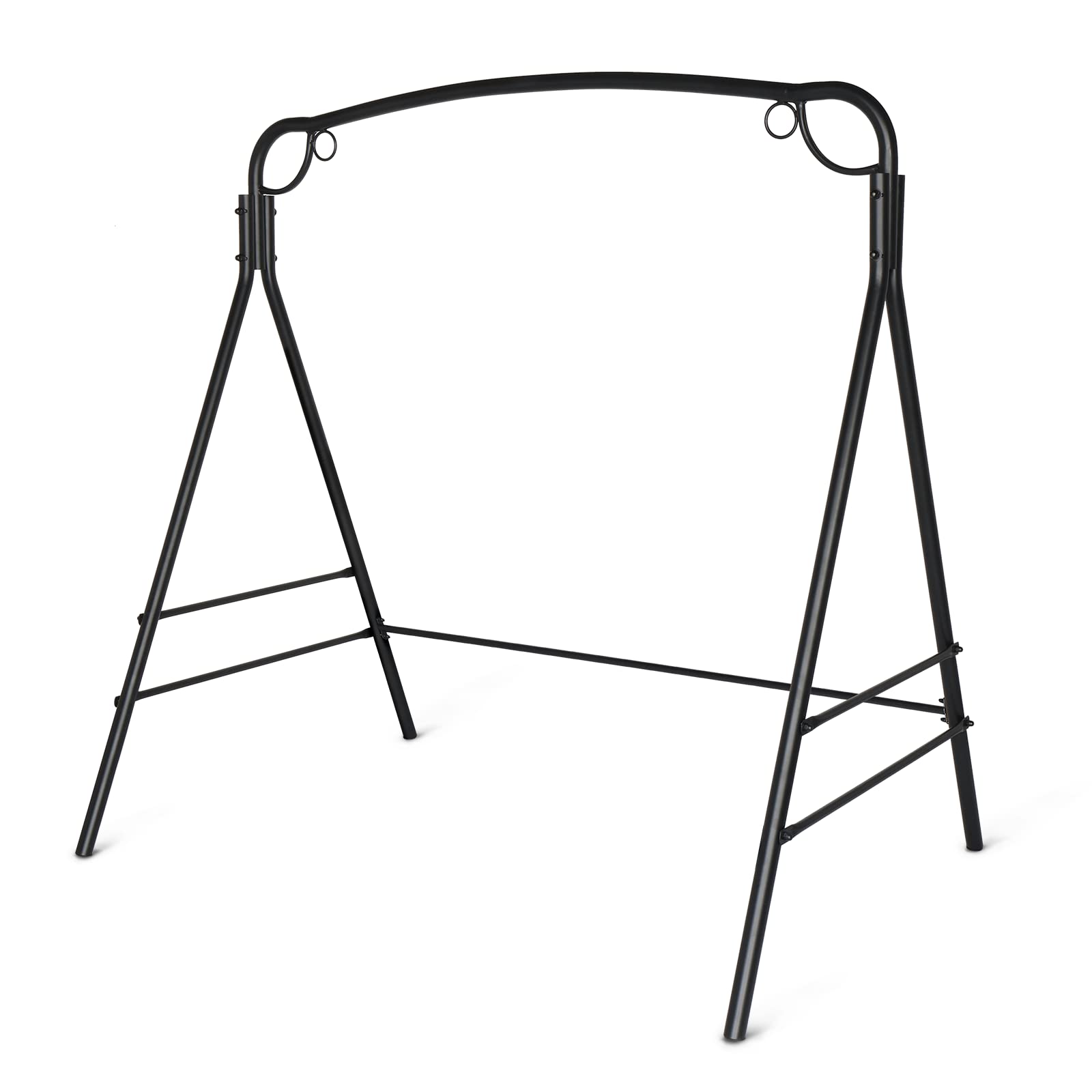
I recommend this stand if you don’t have a porch ceiling. The twin side bars and solid top brace give noticeably more stability than single-bar stands I’ve used.
Why I picked it: Two side connecting bars improve stability over typical single-bar stands.
Best for: People who need a freestanding frame to hang an existing swing.
A midrange stand with a focus on stability and weather resistance.
Pros
- Improved two-bar stability
- Antique bronze finish
- Supports up to around 660 lbs
- Suitable for many swing widths
Cons
- Finish can chip if handled roughly
- Needs two people for easier assembly
My take
I assembled the frame with one other person in about thirty minutes; lining up the top section takes the most time, but the instructions are clear.
Once assembled the stand felt solid under a 4-foot wooden swing and under a heavier bench I tested; the dual side bars noticeably reduce side-to-side wobble compared with simpler stands I’ve tried.
If you plan to keep the stand outdoors year-round I recommend a cover or touch-up paint if the finish gets scratched during moves.
4. Backyard Discovery Cedar Farmhouse Porch Swing – Best Cedar Option
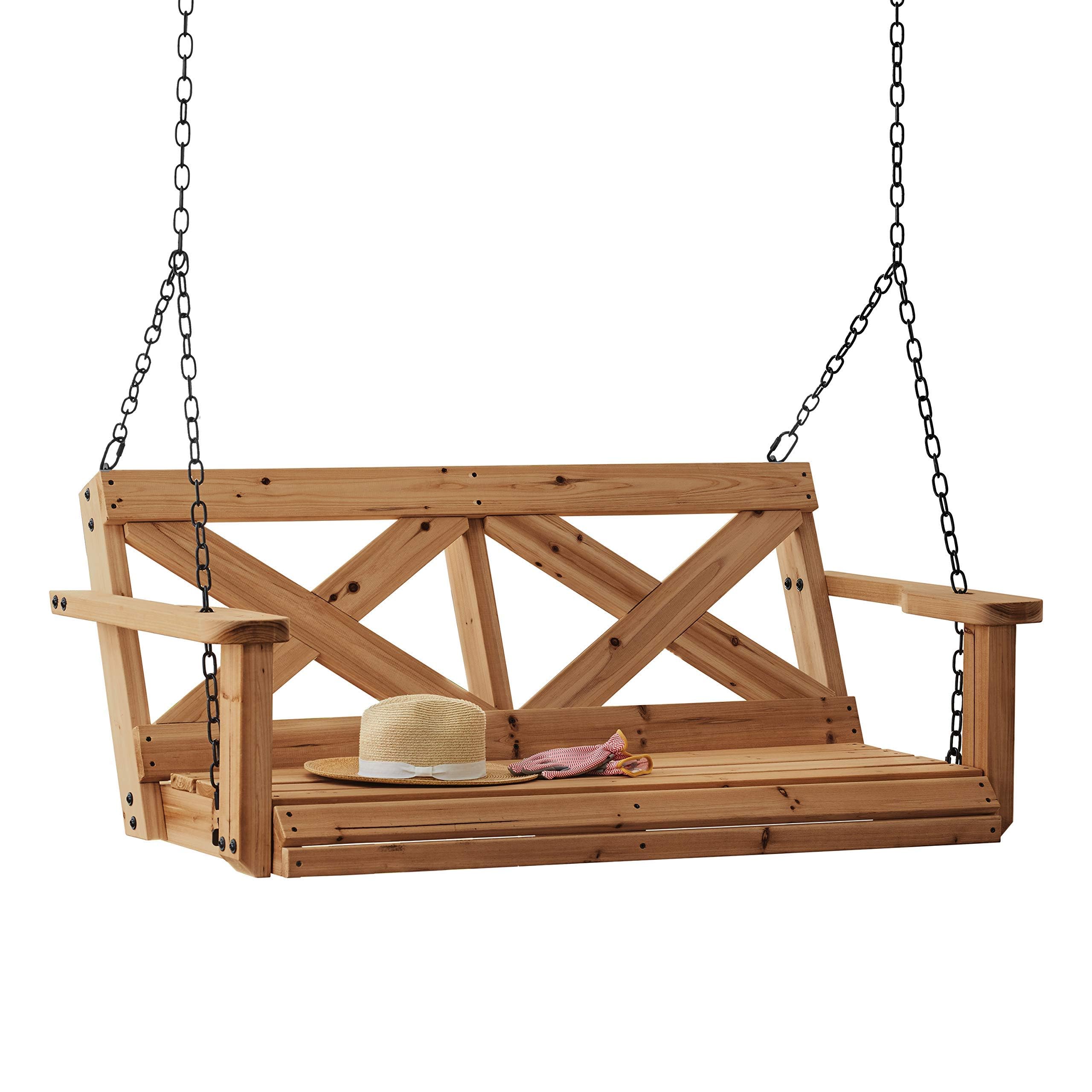
This cedar farmhouse swing strikes a great balance between style and rot resistance. I appreciated the pre-cut, pre-drilled pieces that sped assembly and the included chain length for taller porches.
Why I picked it: Cedar construction for natural weather resistance and a modern farmhouse aesthetic.
Best for: Those who want a lightweight cedar bench with easy assembly and a 5-year warranty.
A good-value cedar swing with manufacturer warranty support.
Pros
- 100% cedar resists decay
- Contemporary farmhouse look
- Pre-cut and pre-drilled parts
- 5-year warranty
Cons
- Needs sealing for long-term exposure
- Assembly takes time with two people
My take
When I built this swing I appreciated the labeled pieces and the BILT app instructions—assembly with two people took about the advertised time and went smoothly.
The cedar has a warm tone and reasonable natural resistance to decay, but I still treated the visible surfaces with a water-resistant sealer for extra protection.
The supplied black chains were long enough for my high porch ceiling, and the overall bench is comfortable for two adults to sit and swing gently.
5. Amish Casual 4-Foot Rollback Porch Swing – Best Small Porch Swing
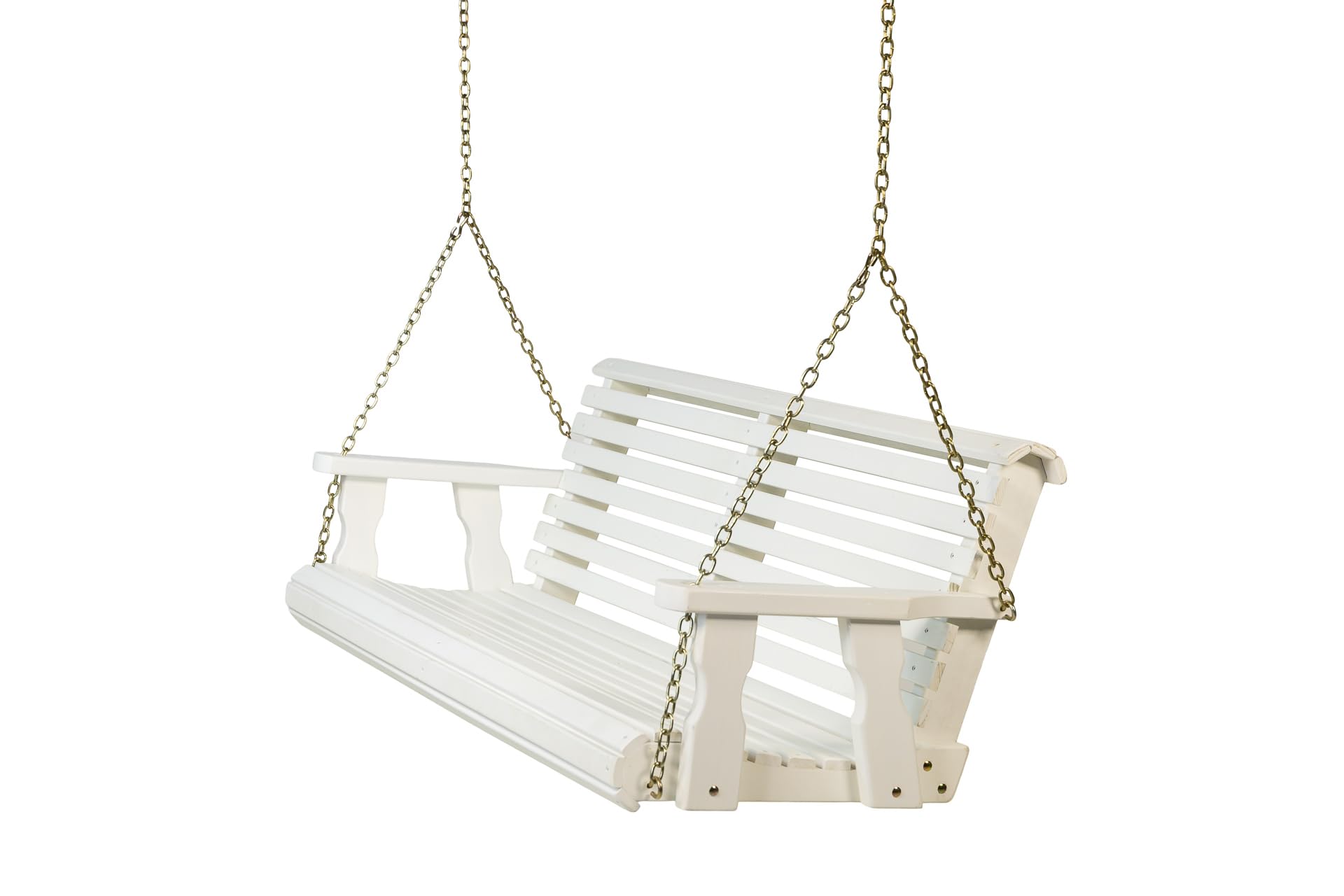
I recommend the 4-foot rollback for smaller porches or tighter spaces where you still want the same handcrafted feel and rollover comfort of the larger Amish model.
Why I picked it: All the comfort and build quality of the 5-foot but sized for smaller porches.
Best for: Narrow porches or spaces that need a compact, comfortable wooden swing.
A compact, handcrafted wooden swing that's a bit more premium than basic economy options.
Pros
- Handcrafted Amish quality
- Rollback contour for comfort
- Custom finish options
- Solid treated pine construction
Cons
- May require re-drilling for perfect fit
- Weight capacity tied to hanging hardware
My take
I used this 4-foot swing where space is limited and still got the same comfortable rollback seating I liked on larger models.
The pieces were pre-sanded and smooth; I did some final finishing with polyurethane before final assembly to preserve the look and protect it from weather.
Assembly was straightforward but I did re-drill two arm holes to get perfect alignment—nothing unusual for handcrafted wood, and it’s a small trade-off for the fit and finish.
6. POLYWOOD Vineyard 60″ Porch Swing – Best Low-Maintenance
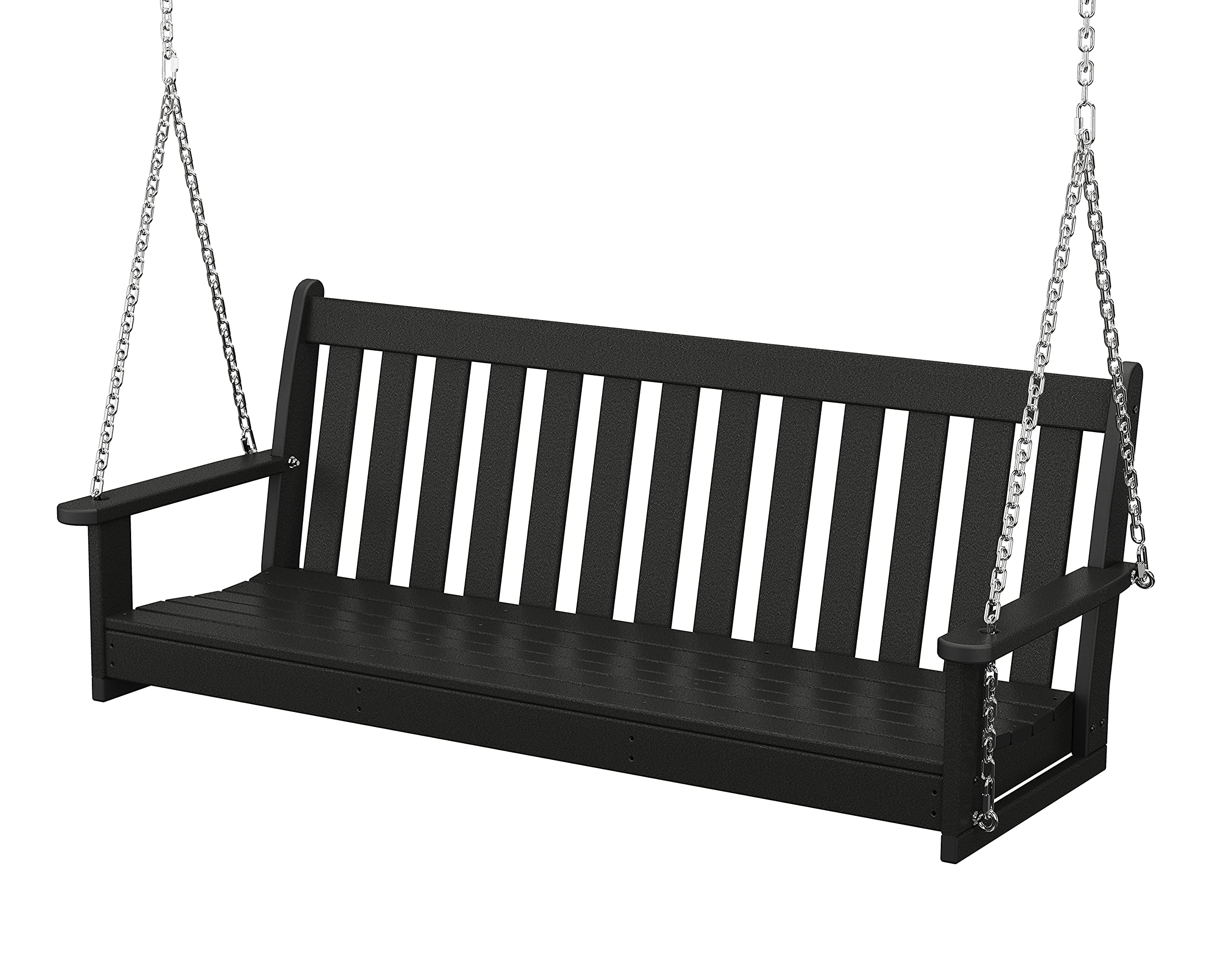
If I want a swing that looks like painted wood but never needs staining, the POLYWOOD composite is my top pick. It’s easy to clean and built to endure all seasons without rotting.
Why I picked it: Composite POLYWOOD material that resists weather, stains, and fading for years.
Best for: People who want a forever-looking swing with minimal upkeep.
A higher initial investment for near-zero long-term maintenance.
Pros
- Weatherproof POLYWOOD lumber
- 20-year backed lumber durability
- Easy to clean with soap and water
- Feels like wood without staining
Cons
- Heavier than wood during installation
- Requires separate ceiling hardware
My take
I assembled the POLYWOOD swing with two people in about twenty minutes; the fit and finish are precise and the bench feels solid when sitting and swinging.
What impressed me most was how little maintenance it demands—no yearly staining or varnish, and a quick soap-and-water wash removes most dirt.
Because it’s heavier than wooden or lightweight metal benches, plan on two people for installation and make sure you have proper ceiling hardware in place.
How I Picked Backyard Swings
Material and Longevity
I evaluate swings by the material because that largely determines maintenance and lifespan. Cedar offers natural rot resistance but still benefits from sealers. Treated pine Amish builds deliver a classic look but need protection if exposed constantly to rain. POLYWOOD composite won’t rot or need staining.
Metal benches are low-cost and quick to install, though gauge and finish determine how long they look good outdoors.
- Cedar: natural decay resistance, requires occasional sealing
- Treated pine: beautiful handcrafted look, apply sealer for outdoor exposure
- Composite (POLYWOOD): near-zero maintenance, heavier to handle
- Metal: light and affordable, paint/finish can chip over time
Weight Capacity and Size
I always check the stated capacity and measure seat depth and width. A properly rated chain or stand is the limiting factor—so match bench width to frame or ceiling supports.
Smaller 4-foot swings are ideal for tight porches; 5- and 6-foot benches give more room for cushions and two people.
- Confirm chain or hardware rating as well as swing rating
- Measure porch ceiling height so feet don’t drag
- Allow 6–12 inches of clearance behind and below the swing
Mounting Options
I prefer two-point hanging for stability and comfort. If you don’t have a solid porch ceiling, a freestanding frame like the VINGLI stand gives flexibility.
For permanent porch installations I use marine-grade eye bolts and double-check anchor points.
- Two-point hangs reduce rocking and twisting
- Freestanding stands let you position swings anywhere
- Use hardware rated for outdoor use and matching weight capacity
Comfort and Design
I sit in each model to judge lumbar support and whether the seat contour keeps knees comfortable. Rollback designs and ergonomic curves make a big difference for long sessions.
Also consider whether you want cushions; some metal benches need thicker cushions for comfort.
- Rollback and contoured seats improve comfort
- Metal often needs cushions, composite and wood can be comfortable alone
- Check armrest design if you plan to read or dine while seated
Maintenance & Weatherproofing
I plan a maintenance schedule based on material. Composite virtually eliminates this chore, while wood benefits from annual sealing or touch-ups. Metal finishes should be checked for chips and touched up to prevent rust.
Covers help all swings last longer if left outdoors in harsh climates.
- Composite: occasional wash
- Wood: annual inspection and sealer/topcoat
- Metal: touch-up paint for nicks and scratches
- Use a breathable cover to prevent mildew
Frequently Asked Questions
Can I hang any swing on a freestanding frame?
I’ve found most swings fit a freestanding frame as long as the frame supports the swing’s width and the chains or hardware are the correct length and rating. Always check the stand’s supported swing width and the weight limits before mounting.
How do I protect a wooden swing from rain and sun?
I apply a water-resistant sealer or outdoor-grade polyurethane after initial assembly and plan on reapplying every couple of years depending on exposure. A breathable cover during heavy winter months also helps extend life.
Do I need professional installation for porch swings?
I’ve installed several swings myself, but for heavy composite benches or when anchoring into uncertain overhead structures I recommend a second person or pro to ensure safe mounting and correct hardware use.
Final Take
After testing different materials and designs I kept returning to a few core truths: material drives maintenance, mounting determines safety, and seat contour drives comfort. Choose a cedar or Amish wood swing for classic looks, POLYWOOD if you want the least upkeep, and metal if you want quick installation on a budget.
Whichever direction you go, plan the mounting and weather protection first—doing that will let your swing be a low-stress spot to relax for years.
