
I tested herb seed packs and edible basil (sabja) seeds so you can pick the right basil seed for planting, smoothies, or daily nutrition.
I buy and test both planting seeds and edible basil seeds, because 'basil seeds' can mean very different things depending on how you plan to use them. Over several months I grew herbs in soil and a Growell hydroponic system, soaked seeds for drinks and puddings, and compared packaging, germination, texture and nutrition claims.
This roundup separates seed packets meant for growing herbs from edible basil/sabja seeds intended for food. I focus on real-world germination, how seeds perform in hydroponics and pots, and how edible seeds behave in smoothies and hydration-based recipes.
I separate planting seed packs (herb seeds for growing basil, oregano, parsley, etc.) from edible basil/sabja seeds. Planting seeds are judged on germination, variety and seed count; edible basil seeds are judged on texture, expansion, and how they blend into drinks or meals.
1. Sereniseed Certified Organic Herb Seeds (10-Pack) – Best Overall Herb Seed Pack
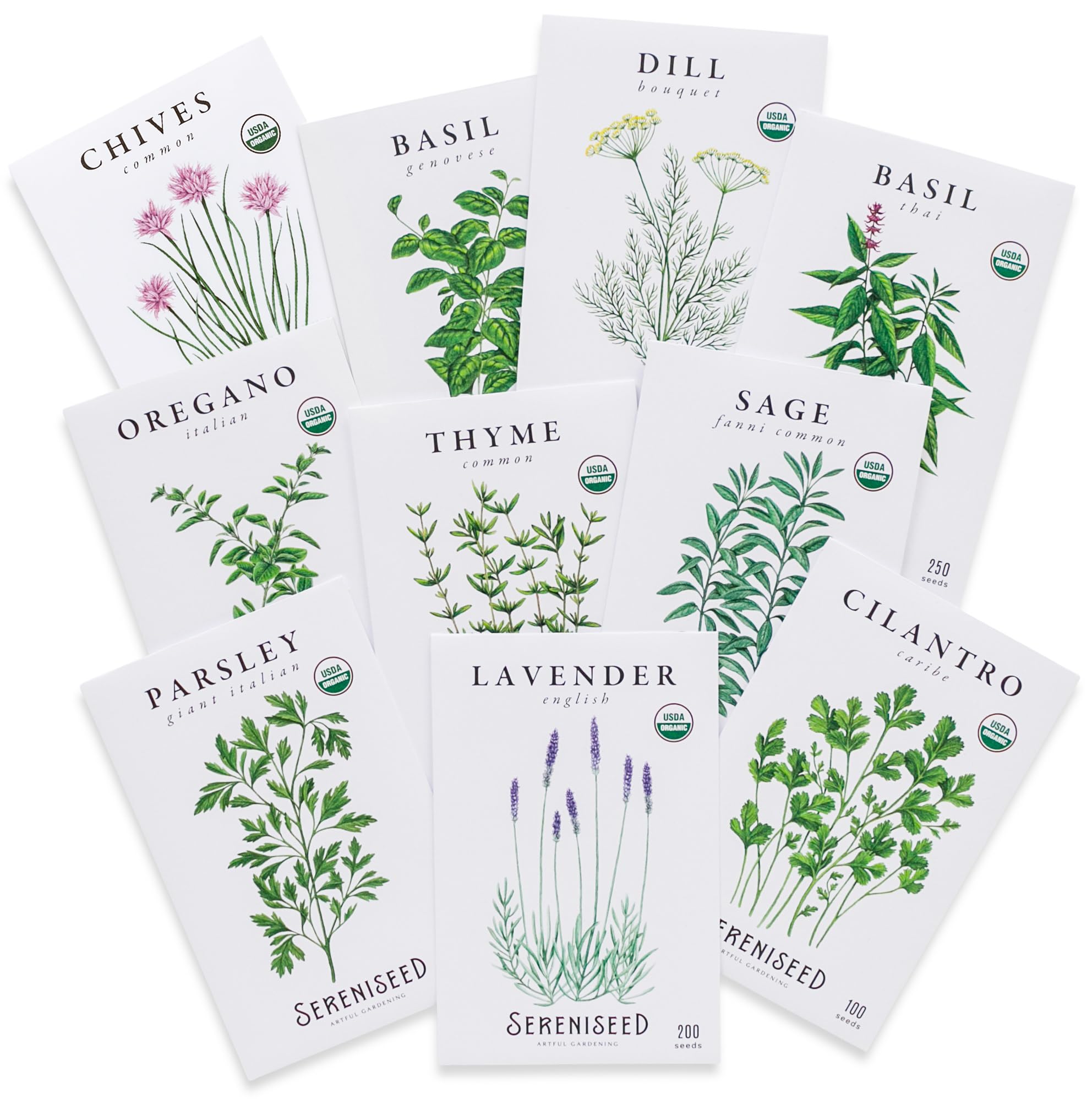
I found this organic 10-pack great for starting a mixed herb garden; packets include seed-starting tips and video access.
Why I picked it: Consistent organic sourcing and helpful seed-starting guidance make germination easier.
Best for: Home gardeners who want a wide herb selection and organic seeds.
Affordable organic seed kit with good value for ten varieties.
Pros
- USDA organic certified
- Ten culinary herb varieties
- Seed-starting video included
- Non-GMO, open-pollinated seeds
Cons
- Some varieties germinated better than others
- Not all seeds suited my hydroponic trials
My take
I planted the Sereniseed 10‑pack across a couple of pots and my Growell hydroponic unit. The packets are clearly labeled and include printed tips plus access to a seed-starting video, which helped when I tried different methods.
In my hydroponic setup I saw near-complete germination for several varieties; dill and lettuce in particular sprouted quickly when I presoaked seeds. A few herbs were slower outdoors, which reminded me that herbs respond to light, temperature and how closely I followed the packet guidance.
I appreciate the USDA organic certification and the open-pollinated non‑GMO promise. For someone building a small kitchen garden, this kit saves me from buying individual packets and gives a good mix of culinary herbs.
2. Nutriwish Basil Seeds (Sabja/Tukmaria) – Best for Smoothies & Drinks
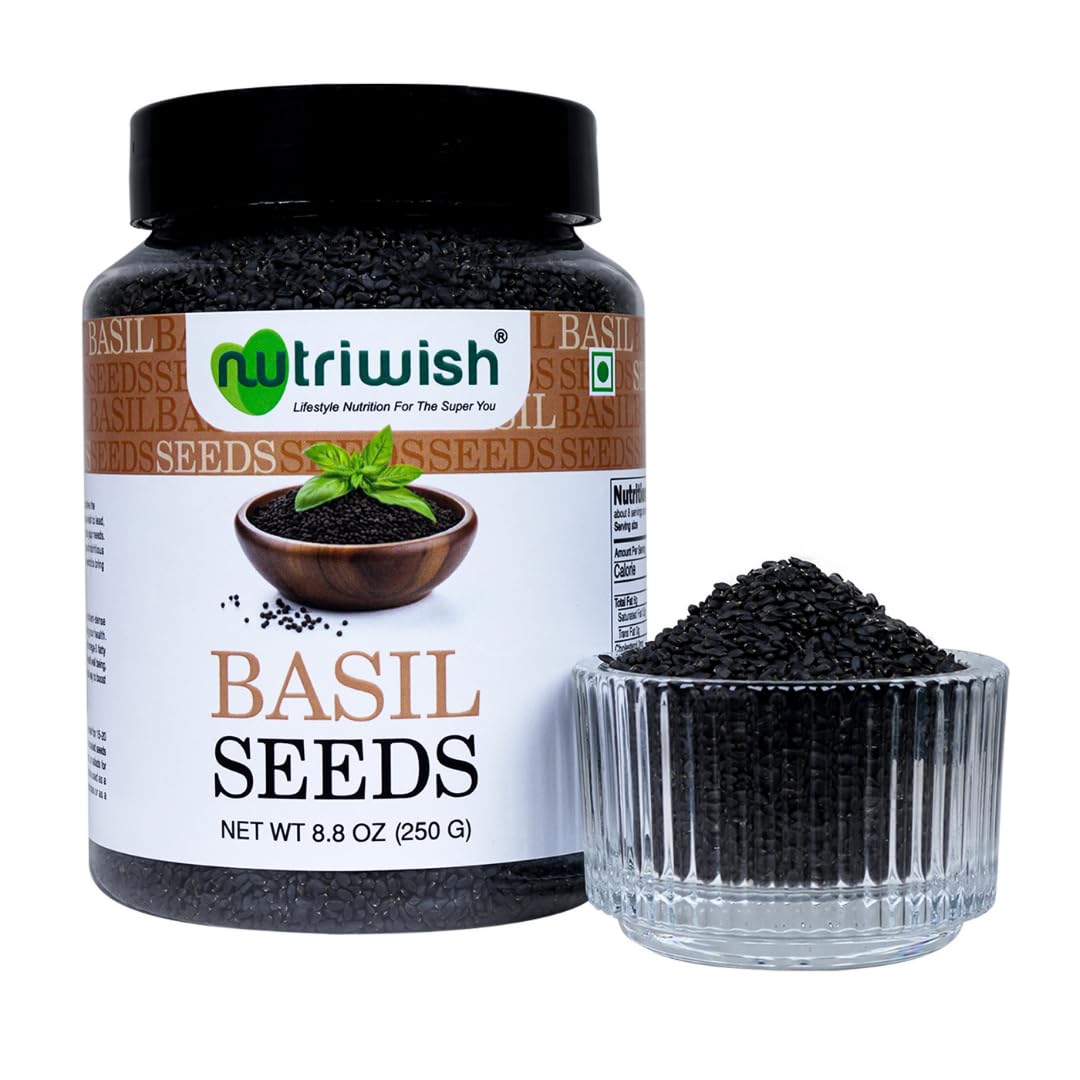
I keep this bag on hand for smoothies, falooda and chilled drinks—seeds are clean, neutral-flavored and soak up liquid well.
Why I picked it: Hygienically packed, raw and gluten-free, they’re convenient for daily nutrition recipes.
Best for: People who want edible basil seeds for beverages, puddings, and smoothies.
Good value for a pantry-sized edible seed bag.
Pros
- 100% natural and raw
- Gluten-free and vegan-friendly
- Neutral flavor, good texture when soaked
- Versatile for many recipes
Cons
- Can feel cooling in sensitive individuals
- No planting guidance (edible seed use only)
My take
I use Nutriwish sabja seeds when I make falooda-style drinks and chilled smoothies. The seeds hydrate quickly and create the classic gel around each seed without adding any odd flavor.
The packaging felt hygienic and the seeds blended into smoothies and puddings cleanly. Because these are food-grade seeds, I didn’t need to rinse them extensively before use.
If you’re sensitive to cooling foods, start with a small amount—I noticed a stronger cooling sensation in one experiment, so I dose them lightly in winter.
3. Carrington Farms Holy Basil Seeds – Best for Daily Nutrition
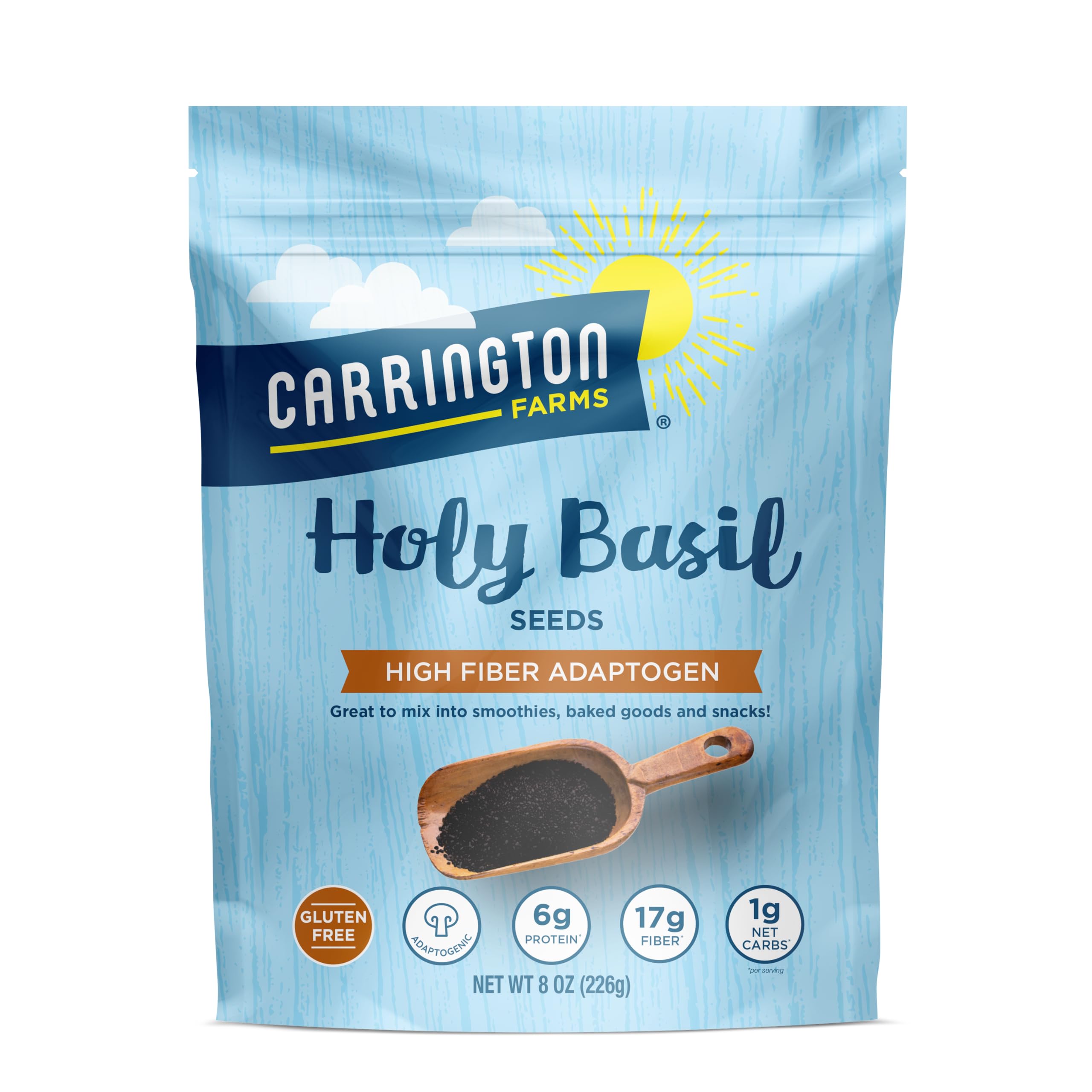
I turn to these holy basil seeds when I want a neutral-tasting nutrition boost with fiber and plant protein.
Why I picked it: High-fiber, diet-friendly profile that easily mixes into meals.
Best for: Anyone wanting a fiber-rich pantry staple for smoothies, yogurt, and puddings.
Good pantry staple for regular use.
Pros
- High prebiotic fiber
- Plant-based protein
- Neutral flavor
- Diet-friendly (gluten-free, vegan)
Cons
- Seeds can stick to teeth
- Texture takes getting used to
My take
I sprinkle Carrington Farms holy basil seeds into my yogurt and overnight oats to boost fiber without changing flavor. The seeds expand when mixed with liquid and create a pleasant 'bubble' texture that I find satisfying in cold drinks and puddings.
Nutritional highlights on the pack—fiber and calcium—match how I use them: as a quick way to add prebiotic fiber and plant protein to breakfasts. They blend well into smoothies and require little preparation beyond soaking.
For everyday use I liked the neutral aroma and adaptability across recipes, though I did notice the seeds can cling to teeth after eating.
4. Seed Needs Italian Herb Seed Collection – Best Budget Herb Pack
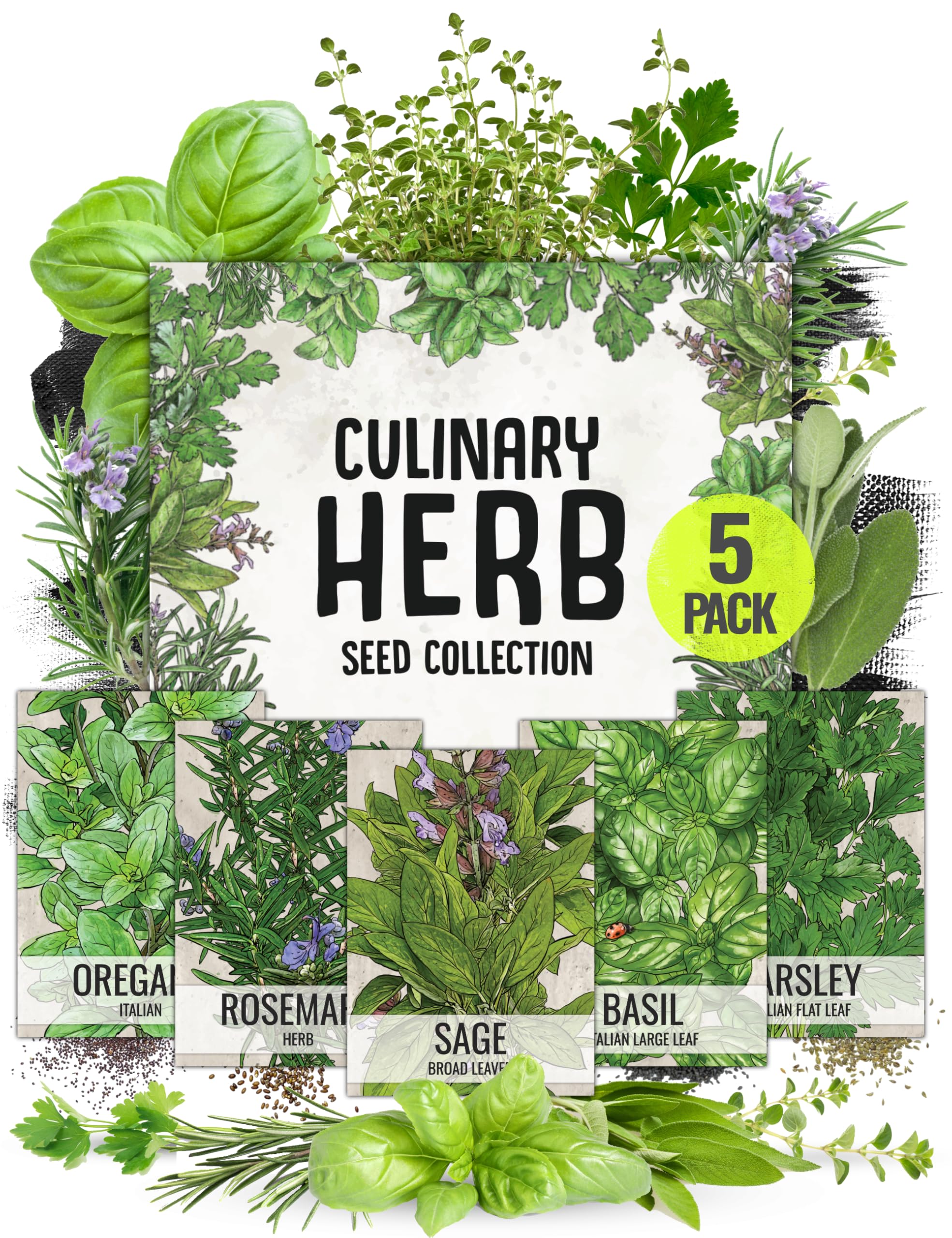
I planted these Italian herb packets for a simple kitchen garden and appreciated the variety and generous seed counts.
Why I picked it: Good selection of classic Italian herbs with solid seed quantities.
Best for: Beginners and budget-conscious gardeners who want core culinary herbs.
Very budget-friendly five-variety kit.
Pros
- Includes essential Italian herbs
- Good seed quantities
- Suitable for indoor hydroponics
- Stored in temperature-controlled facility
Cons
- Occasional patchy germination
- Some herbs slower to establish
My take
I planted the Seed Needs packets in small indoor pots and in a sunny window tray. Basil, oregano and parsley germinated reliably for me; rosemary took longer, as expected with woody herbs.
The pack is clearly aimed at people who want a compact Italian herb garden—labels are clear and the seed counts are generous enough for multiple plantings.
If you need everything to sprout at once, you may see variability between varieties, but for everyday kitchen use this collection gave me plenty of usable herbs across the season.
5. Zen Basil Edible Seeds – Best High-Fiber Edible Seeds
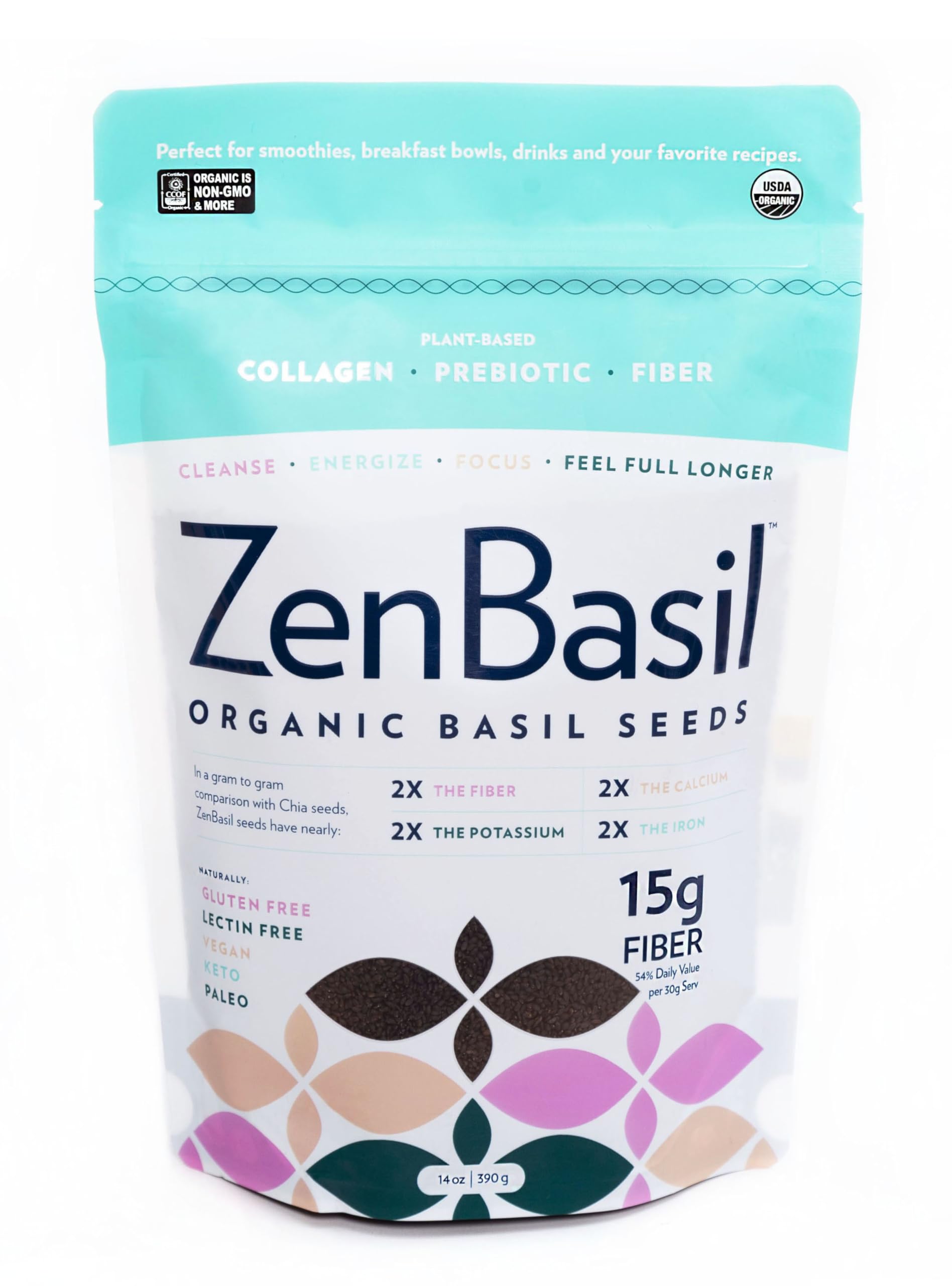
I rely on these when I want a high-fiber edible basil seed that blends smoothly into smoothies and water.
Why I picked it: Very high fiber per serving and certified packing make them a reliable everyday superfood.
Best for: People focused on fiber intake and easy-to-mix edible seeds.
Premium edible seed with higher fiber concentration.
Pros
- High fiber per serving
- Neutral taste in drinks
- Kosher certified and California packed
- Good expansion and texture
Cons
- Higher-cost, premium positioning
- May be overkill if you only use seeds occasionally
My take
Zen's edible basil seeds became part of my morning routine when I wanted a fiber boost without altering flavor. Two tablespoons expand noticeably and add bulk to smoothies and water, and they stay pleasantly gel-like without becoming heavy.
I appreciated the packaging and kosher/California-packed claims; the seeds felt fresh and consistent across multiple bags. They blend cleanly into drinks so I don't get any grit.
Because these seeds deliver a lot of fiber per serving, I treat them like a concentrated supplement and adjust portion sizes depending on how I feel afterward.
6. 5 Herb Seeds Variety Kit – Best Value Seed Variety
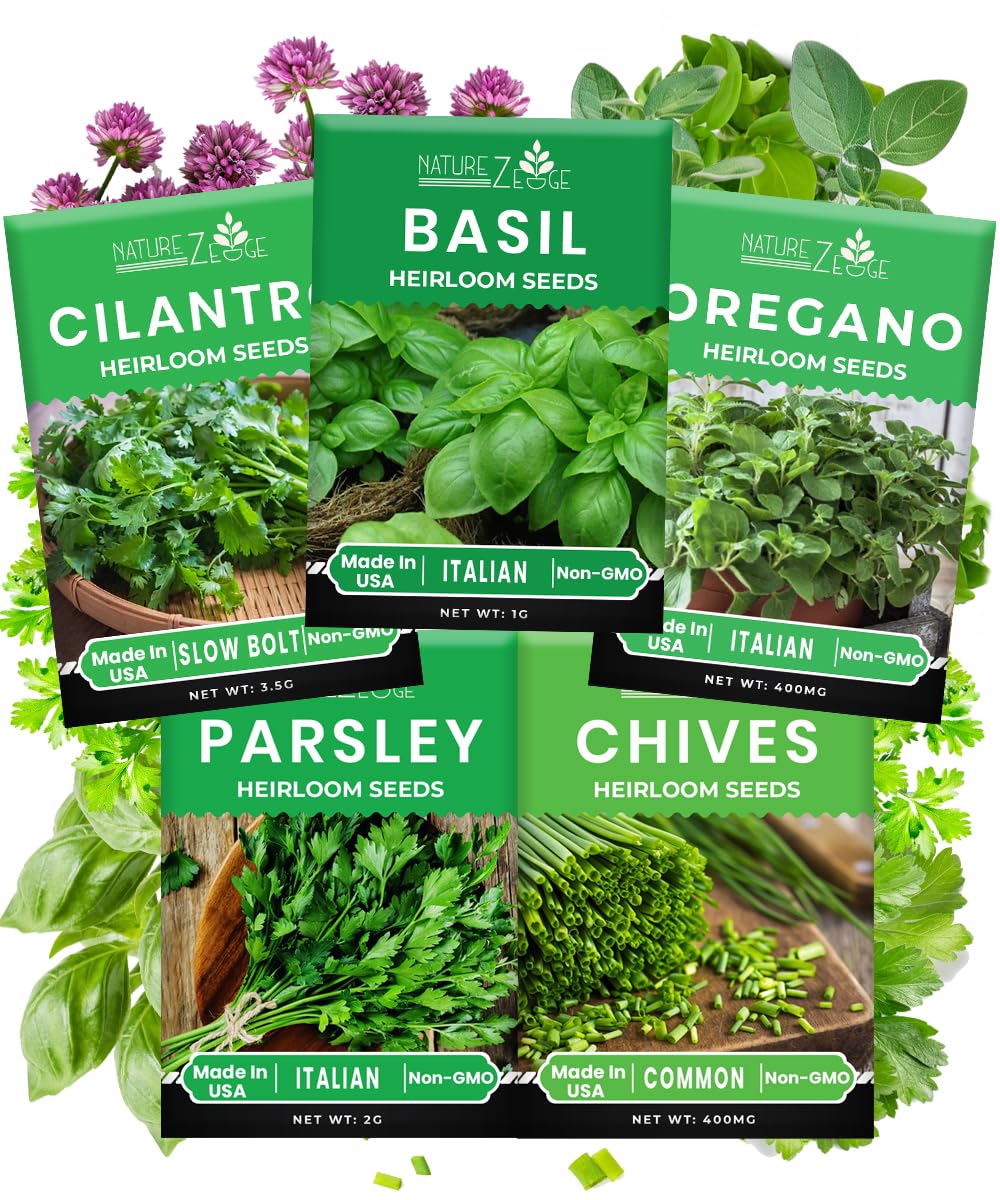
I picked this for generous seed counts and a veteran-owned small business touch—great for multiple plantings or sharing.
Why I picked it: More seeds per packet than many competitors, perfect for repeat plantings.
Best for: Gardeners who want an economical selection and extra seed quantities.
Excellent value with larger-than-average seed quantities.
Pros
- Extra seed quantities
- Five popular herb varieties
- Good for multiple plantings
- Heirloom varieties
Cons
- Some varieties may not sprout uniformly
- Basic packaging
My take
I planted this 5-herb kit across multiple pots and was impressed by the seed volume—one packet yielded several plantings. Basil and cilantro came up quickly in my indoor pots.
The kit feels like a great intro for beginners and hobbyists who want to experiment without repurchasing. Instructions are simple and the heirloom varieties let me save seeds at the end of the season.
Because seed lots vary, I did see occasional misses (one variety failed to sprout in one batch), but overall the quantity and price make this a go-to when I need lots of seedlings.
How I Choose Basil Seeds
Decide planting seeds vs edible basil seeds
I start by defining how I’ll use the seeds. Planting seed packets (herb seeds) are for growing basil or other herbs in pots, beds or hydroponics. Edible basil seeds (sabja/tukmaria) are processed for food and hydration-based recipes.
Mixing the two up can lead to disappointment: garden seeds won’t expand like sabja, and edible seeds aren’t intended for planting.
- Planting seeds: look for variety, germination tips, and seed counts.
- Edible seeds: prioritize food-grade packing, neutral flavor, and expansion behavior.
Germination and testing
I always pre-test a few seeds to check germination. For planting seeds I soak smaller seeds briefly and keep consistent warmth and moisture. Hydroponic setups can speed germination but some varieties prefer soil.
If a packet includes a seed-starting guide or video, I follow those steps and compare results over two weeks.
- Do a small germination paper test first.
- Record which varieties prefer soil vs hydroponics.
Packaging, certifications and sourcing
I prefer certified or clearly sourced seeds when I plan to eat them or want organic herb plants. USDA organic, kosher, and clear origin statements are useful indicators of care in processing.
For planting seeds, look for non‑GMO and open‑pollinated or heirloom labels if you plan to save seed later.
- Check for USDA organic or kosher when relevant.
- Open-pollinated/heirloom for seed saving.
Storage and shelf life
I store seed packets in a cool, dry place and transfer edible basil seeds to airtight jars after opening. Proper storage preserves viability and freshness.
Label opened packets with the date and use older packets for multipacks or test plantings first.
- Airtight container for edible seeds after opening.
- Cool, dark storage extends planting seed viability.
Frequently Asked Questions
Are basil seeds edible?
Yes — edible basil seeds (sabja/tukmaria) are sold specifically for food. I use them soaked in water, smoothies and puddings. They expand into a gel and add texture and fiber without much flavor.
Can I plant edible basil seeds to grow basil plants?
I don’t recommend it. Edible sabja seeds are processed for food and may not be intended for germination. For growing, buy packets labeled as planting or herb seeds.
How do I get a good germination rate?
I pre-soak small seeds briefly, keep consistent moisture and warmth, and follow packet instructions. Doing a small germination test on paper towels helps me avoid wasting a whole tray.
Final Take
I separate my recommendations by use: pick gardening seed packs when you want to grow basil and other herbs, and choose edible sabja/holy basil seeds when you want a nutrition boost in drinks and recipes.
For gardeners, Sereniseed and the Seed Needs or 5‑Herb kits give a broad, economical selection. For eating and daily fiber, Zen and Nutriwish are my go-tos depending on how concentrated I want the fiber boost.
Whichever route you take, I recommend a small germination or soak test so you know how the seeds behave in your climate and in your recipes.
