
I tested a range of battery organizers — from compact AA/AAA cases to high-capacity EVA bags — and picked the ones that kept batteries safe, separated, and easy to find.
I hate digging through junk drawers, so I evaluated seven battery organizers to find solutions that actually make battery storage easier. I focused on capacity, protection, tester inclusion, and portability.
In this roundup I share which cases worked best for different needs: huge capacity for stockpiling, rugged protection for travel, compact options for small households, and specialized holders for AA/AAA-only setups.
I compared these organizers on three practical points: how many batteries they hold, how well they prevent short circuits or moisture damage, and whether the included tester made sorting reusable versus dead cells straightforward. If you need sheer capacity, I favored the double-sided and EVA-foam designs; if you want something compact that fits a drawer, the smaller molded or zippered cases won out.
1. Ontel Battery Daddy Storage Case – Best Overall
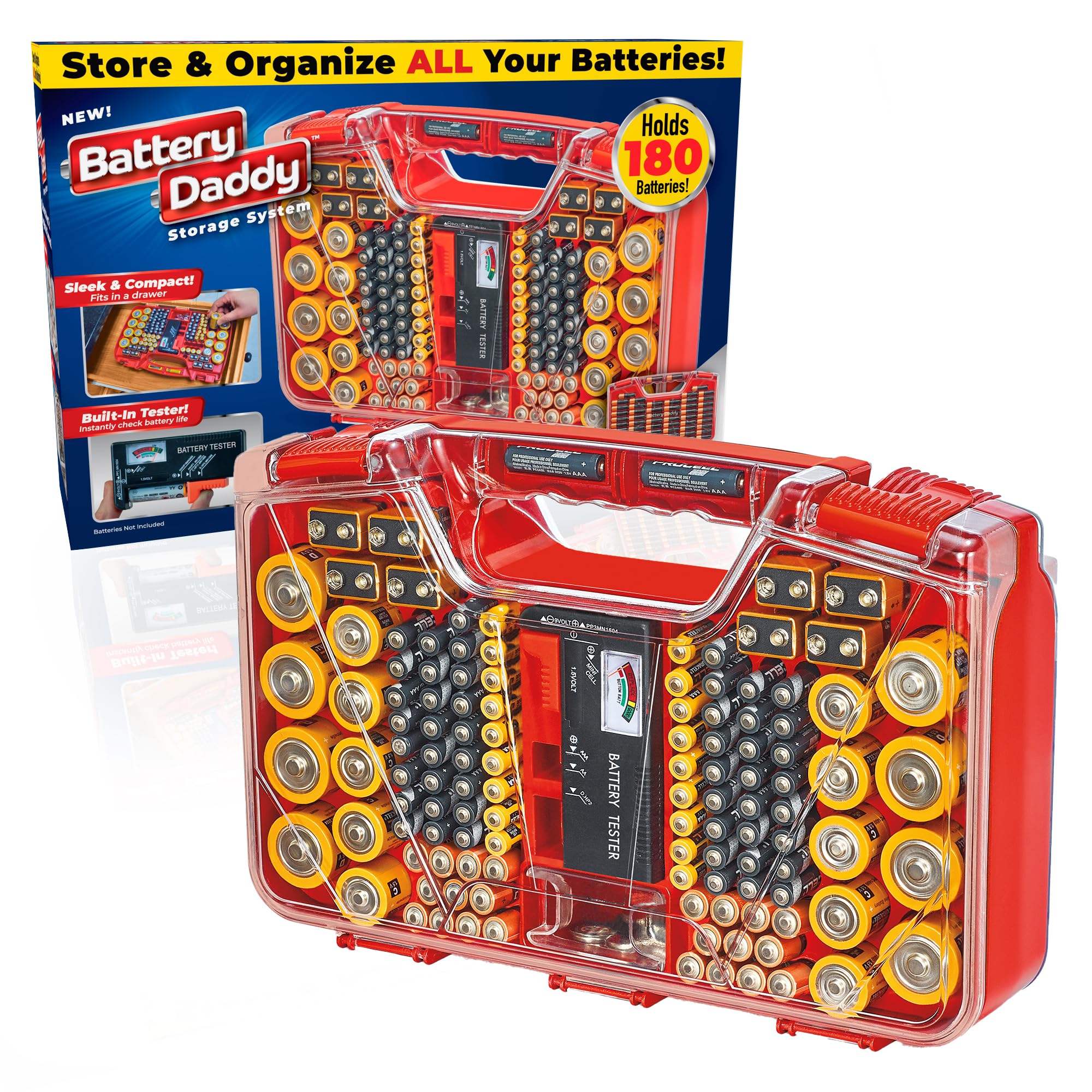
A double-sided, high-capacity plastic organizer with a clear lid and built-in tester that holds a wide variety of battery sizes.
Why I picked it: Highest usable capacity and a simple built-in tester in one compact package.
Best for: Households that want a single, obvious place for all common battery sizes.
Affordable for the capacity and convenience it delivers.
Pros
- Massive double-sided capacity
- Clear lid for quick inventory
- Built-in battery tester
- Secure latches and handle
Cons
- Rigid plastic can be bulky
- No interior pockets for loose items
My take
This is the organizer I reach for when I want one container to solve the whole-house battery mess. The double-sided layout squeezes in a surprising number of cells — AA, AAA, C, D, 9V and coin cells — and the clear locking lid makes it immediate which sizes I have on hand.
The built-in tester is refreshingly usable: I can check single-use and rechargeable batteries without pulling out a separate tool. The heavy-duty latches and carrying handle let me move the unit around the house or tuck it into a closet without the lid popping open.
If you prefer a rigid case and want capacity first, this one delivers. I did miss internal fabric pockets for odd bits, but for straightforward storage and visibility it’s my go-to.
2. Comecase EVA Foam Battery Organizer – Best for Protection
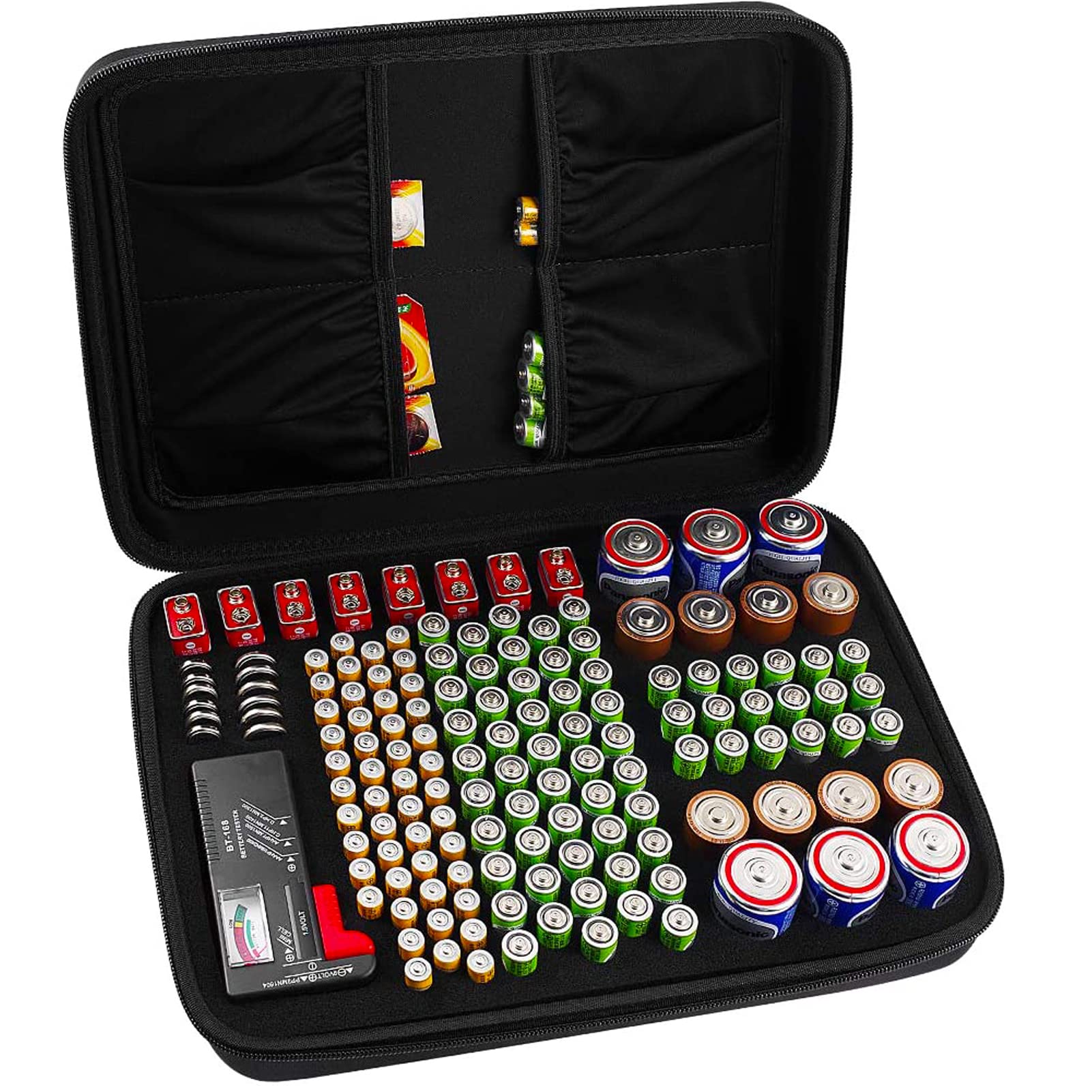
A rugged zippered case with precision foam slots and a removable digital tester that emphasizes protection against shorting and moisture.
Why I picked it: Foam separation and splash-proof shell maximize safety for mixed batteries.
Best for: Photographers, campers, and anyone who travels with batteries.
A midrange option that trades plastic bulk for protective, travel-ready construction.
Pros
- Precision foam keeps batteries separated
- Splash-proof, anti-fall EVA shell
- Removable BT-168 digital tester
- Full-zip portability with handle
Cons
- Foam slots require punching out plugs
- Handle stitching can feel light when full
My take
I liked how the foam insert isolates every battery — that separation eliminates the risk of terminals touching and makes this my pick when safety matters. The exterior EVA material is far less brittle than clear plastic boxes, so I felt comfortable tossing this in a bag for outings.
The included BT-168 tester is removable and doesn’t need batteries, which is handy when I’m away from power. The zip-around construction and interior mesh pocket mean I can carry spare cables or unopened packs without them rattling into the slots.
If you plan to move a fully loaded case often, I recommend easing up on the handle when it’s at capacity, but otherwise this balances storage with protection better than hard plastic boxes.
3. PAIYULE Battery Organizer Case – Best for Portability
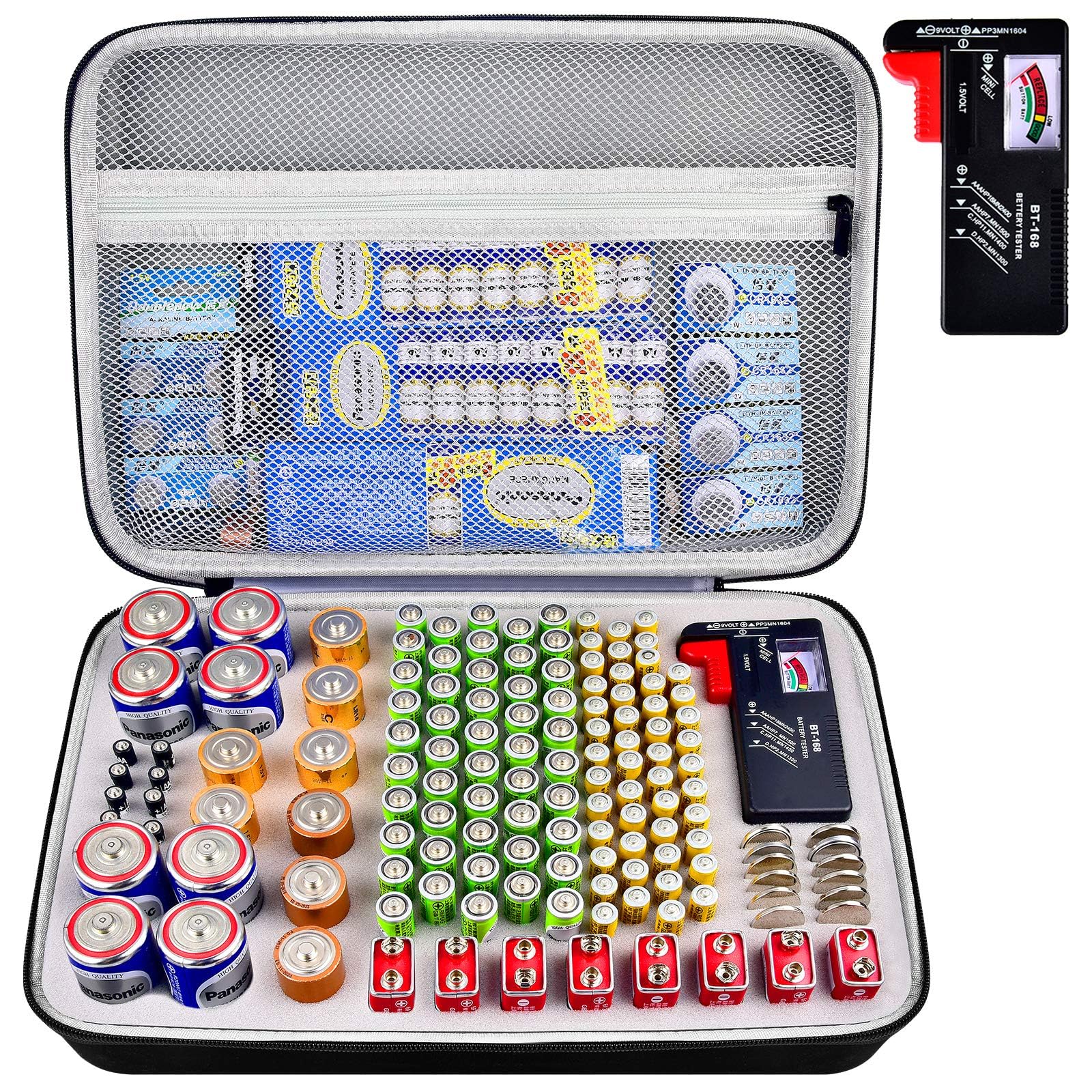
A lightweight, zippered EVA case with detachable foam that fits a wide set of battery types while remaining easy to stow.
Why I picked it: Lightweight construction and a compact footprint make it easy to move and store.
Best for: RV owners, campers, and anyone who needs portable, space-conscious storage.
Budget-friendly and travel-oriented.
Pros
- Lightweight and compact
- Detachable foam insert
- Works for many battery sizes
- 360-degree zipper and handle
Cons
- No internal pockets for small items
- Foam durability varies by use
My take
I used this in my camper where space is tight, and the slim profile slid into a cabinet without issue. The foam insert holds AA, AAA, C, D, 9V and several coin cells snugly, and the zipper feels smooth even after repeated openings.
The BT-168 tester included is practical and I liked that the foam cylinders are removable if I need a custom layout. It’s not the burliest option on the list, but for portability and usable capacity I keep this ready for trips.
If you need a rugged, drop-proof box I’d choose a hard-shell model instead, but for on-the-road convenience this strikes a good balance.
4. Tenergy Battery Organizer Case – Best Compact
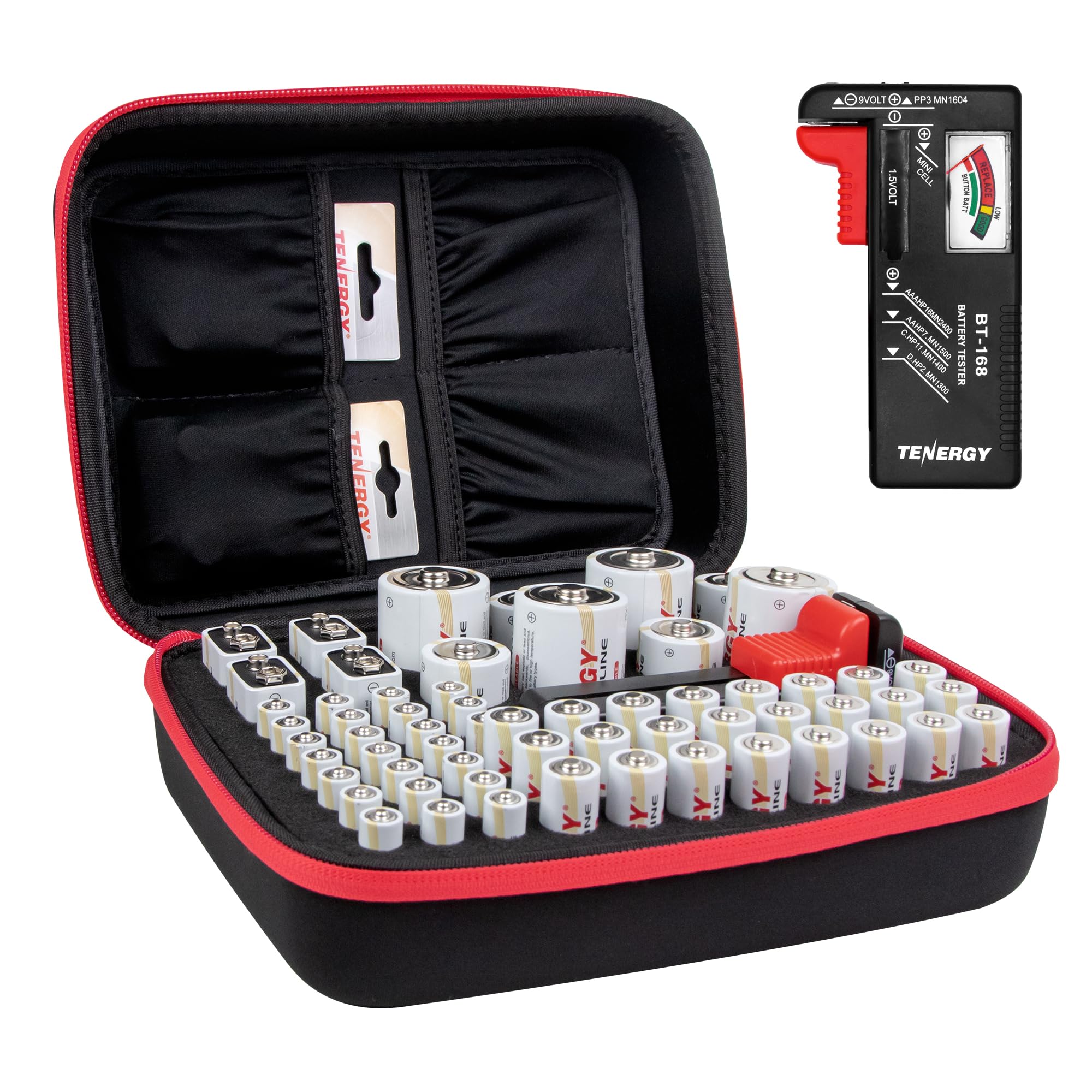
A small-footprint zippered case that holds common sizes and includes foam slots plus extra pockets for loose items.
Why I picked it: Compact footprint and neat organization without taking drawer space.
Best for: Apartment living or anyone who needs a tidy, small battery kit.
Compact and cost-effective for modest storage needs.
Pros
- Small footprint fits drawers
- Foam slots prevent terminal contact
- Extra pockets for loose cells
- Includes battery tester
Cons
- Limited overall capacity
- Not ideal for large households
My take
This was the organizer I reached for when I wanted something that would hide in a drawer but still keep batteries sorted. It holds a dozen-plus AA and AAA cells comfortably and has foam slots that stop terminals from touching.
I appreciated the four interior pockets — they’re perfect for small packs or button cells — and the tester is handy to keep inside so I don’t lose it. Compared to larger options, this is a compact win when I don’t need huge capacity.
If you want a desk- or drawer-friendly solution that still offers protection, this Tenergy case is an efficient choice.
5. Keabys Large Capacity Battery Organizer – Best Heavy-Duty Capacity
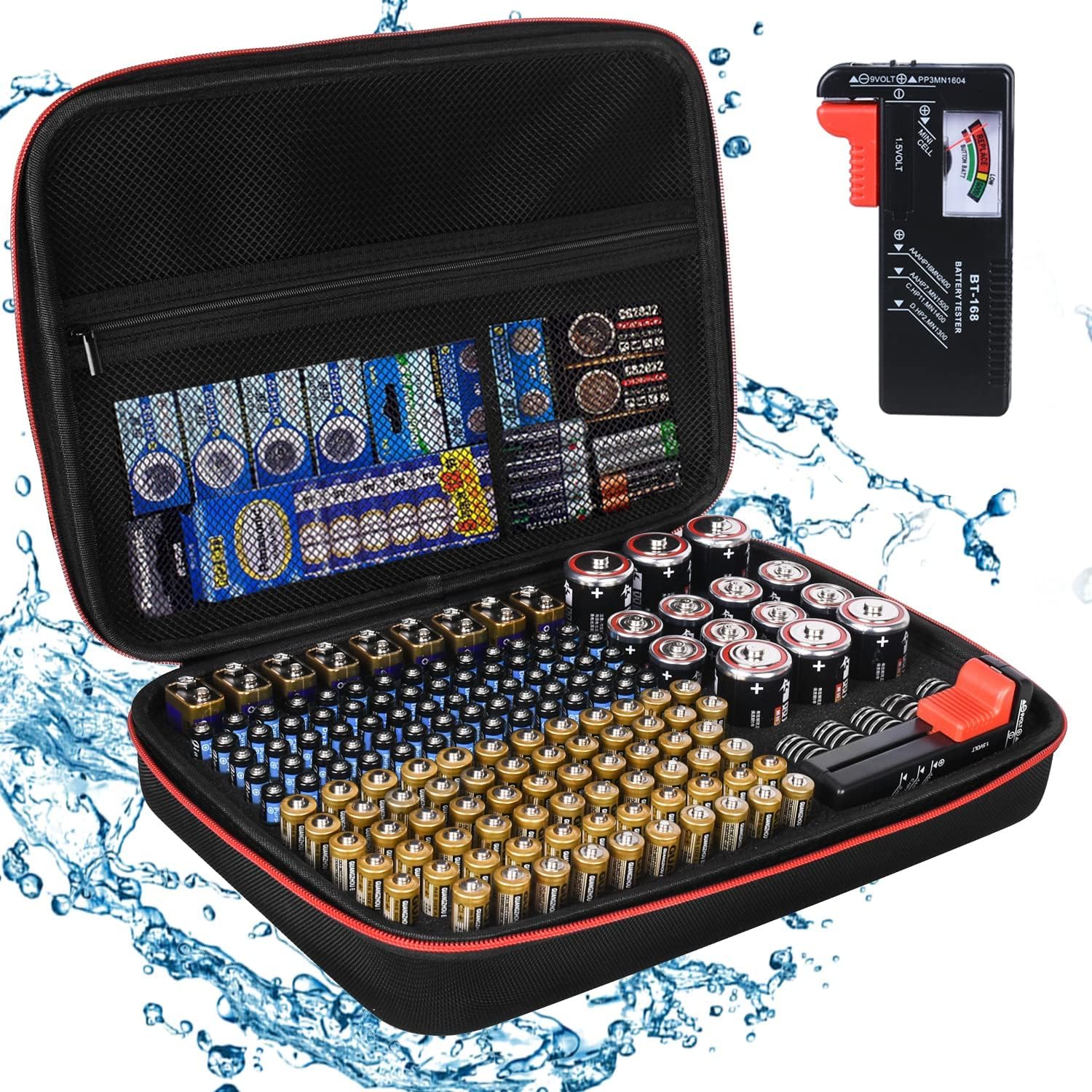
A waterproof EVA-style case that claims very high capacity and includes a BT-168 tester; built to store a household's entire battery stockpile.
Why I picked it: Top capacity and sturdy materials for garage or utility-room storage.
Best for: People who keep an extensive battery inventory and need durable protection.
Great value if you need very large capacity and durability.
Pros
- Huge stated capacity
- Waterproof, shockproof shell
- Removable foam and mesh pocket
- Sturdy handle and double zipper
Cons
- Bulky when fully loaded
- May be oversized for small households
My take
When I wanted a ‘one-and-done’ container for lots of cells, this is the one I filled. The hard EVA exterior and double-zipper feel durable, and the interior layout accommodates a broad mix of AA, AAA, C, D, 9V and many coin cells.
The BT-168 tester gives a quick pass/fail/low reading, which made sorting through older batteries straightforward. I liked the mesh pocket for unopened packs and the removable foam to customize slots.
This is more of a utility-room or garage solution rather than a tidy drawer piece, but if you own many batteries and want them protected, it’s hard to beat for sheer capacity.
6. JJC AA/AAA Battery Case – Best for AA/AAA
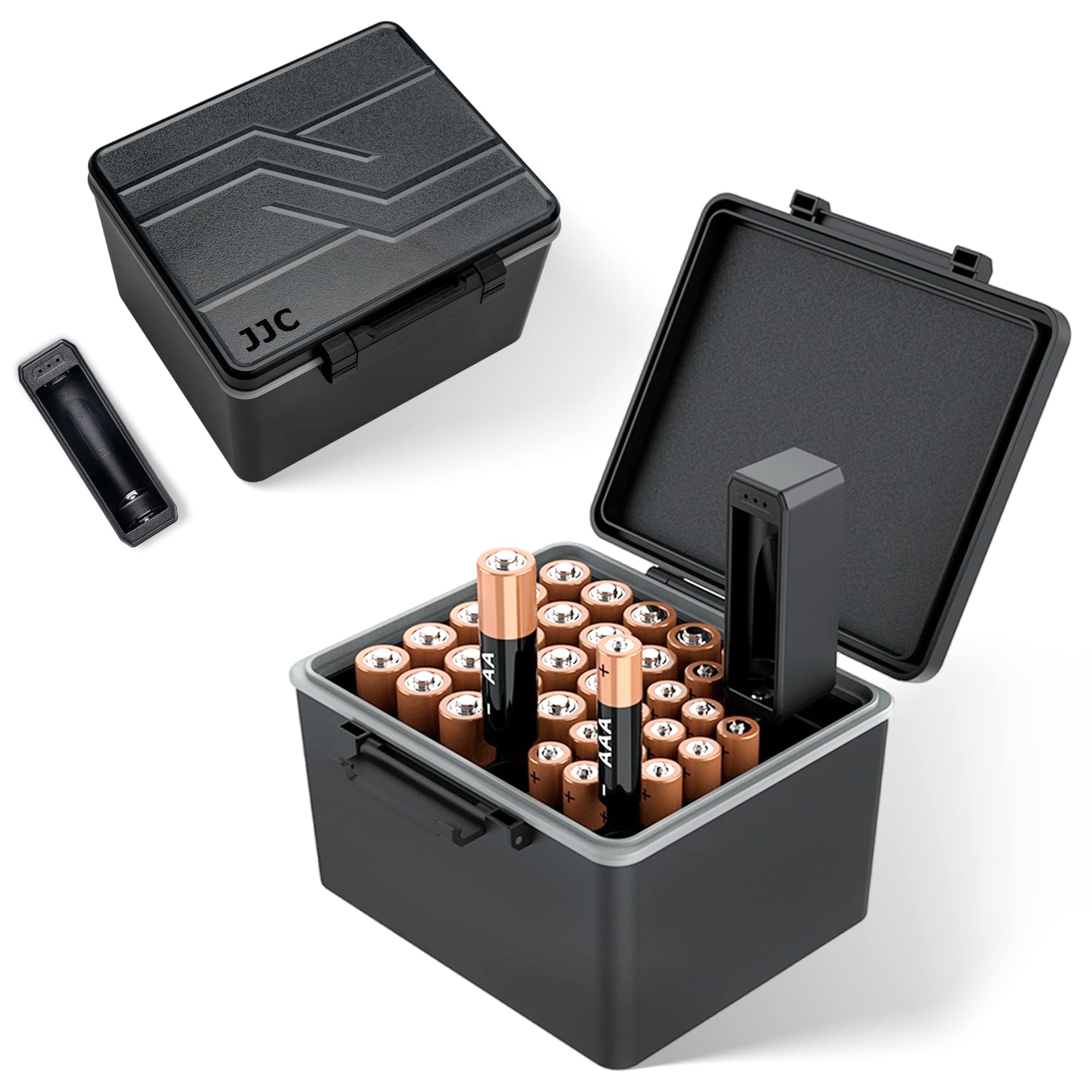
A dedicated AA/AAA hard ABS case with EVA padding and a removable tester, perfect for those who mainly use household AAs and AAAs.
Why I picked it: Specialized, compact design that protects AA and AAA batteries without extra bulk.
Best for: Musicians, photographers, and anyone who primarily uses AA/AAA cells.
A focused, reasonably priced option for AA/AAA organization.
Pros
- Purpose-built for AA and AAA
- Solid snap closure with silicone seal
- Included removable tester
- Sturdy ABS construction
Cons
- Limited to AA/AAA sizes
- Plastic latch may wear with heavy use
My take
I bought this specifically for my wireless microphone batteries and it’s been ideal. The case centers on AA and AAA so there’s no wasted space, and the EVA-lined lid absorbs shocks.
The removable tester gives a quick three-light indication for good/low/replace, which is all I need during quick soundchecks. The silicone sealing ring adds extra protection against dust and moisture.
If most of your battery use is AA/AAA, this streamlined box is a solid, no-fuss keeper.
7. Luxtude Clear Lid Battery Caddy – Best for Drawer Storage
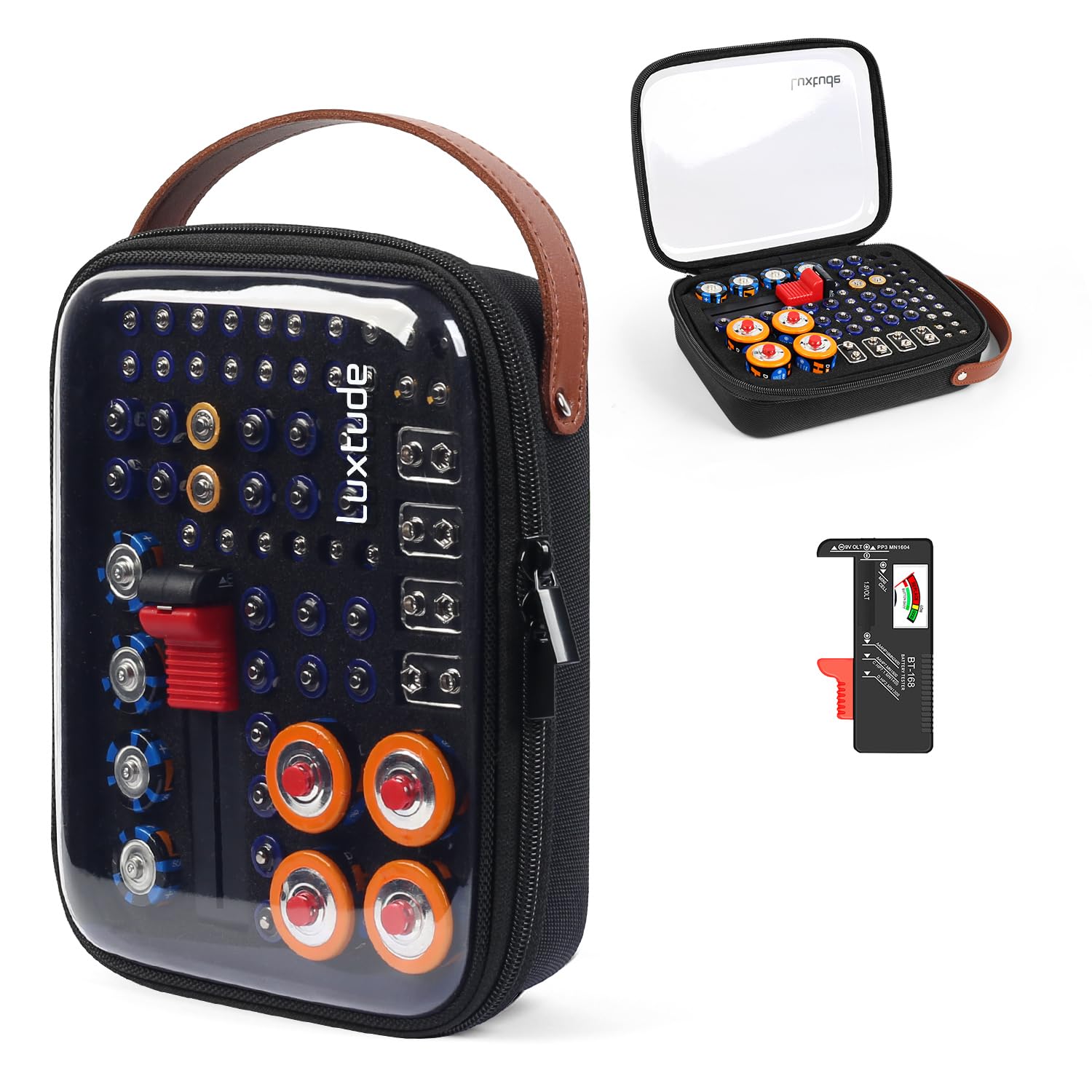
A hard-shell organizer with a transparent lid and modest capacity for everyday household batteries.
Why I picked it: Clear cover and compact size make it easy to keep in a kitchen or utility drawer.
Best for: People who want quick visual checks of common battery sizes.
Affordable and practical for everyday household use.
Pros
- Clear lid for instant visibility
- Hard shell protects contents
- Includes battery tester
- Compact drawer-friendly size
Cons
- Limited capacity compared to larger cases
- Not as rugged as EVA backpacks
My take
I keep this in my kitchen drawer where it serves as the fastest way to see what I have without opening a case. The clear lid saves time whenever I need a single AA or 9V for a device.
The hard outer shell feels protective and the included tester lives in its dedicated spot so I rarely misplace it. It won’t hold every oddball battery I own, but for daily needs it’s concise and useful.
If you want a no-fuss, visible organizer that fits a drawer, this Luxtude caddy is a reliable pick.
How I chose these battery organizers
Capacity
I matched organizers to how many batteries you actually keep. Double-sided and large EVA cases worked best when I wanted to store enough for months or an entire household. Smaller molded or zippered cases are better if you only need a few dozen cells.
- Small: ~60 batteries — fits drawers and small homes
- Medium: ~140–160 — good balance for frequent users
- Large: ~180–200+ — ideal for stockpilers and garages
Protection and Safety
I prioritized designs that separate terminals and limit contact between batteries. Foam inserts, molded slots, or clear lids that lock down cells reduce short-circuit risk and messy leaks.
- Foam slots prevent terminal contact
- EVA shells resist impact and moisture
- Rigid plastic offers visibility but can crack if dropped
Battery Testers
A built-in or included BT-168-style tester saved me time. I tested cells before storing or reusing them so I didn’t hold onto dead batteries that take space.
- Look for a tester that covers AA/AAA and 9V
- Removable testers are handy on the go
- Simple light indicators are perfectly serviceable
Portability vs. Home Storage
I considered where I’d carry the organizer. EVA zip cases travel well and fit backpacks; hard-shell, double-sided organizers stay put in closets or utility rooms.
- Travel: EVA foam and zippered cases
- Home: hard plastic, clear-lid boxes for visibility
- Workshops: rugged cases with high capacity
Materials and Durability
I checked materials for longevity. EVA and heavy-duty fabrics resist drops better than thin clear plastics. Hard ABS is fine for limited use but watch for brittle lids.
- EVA — impact and moisture resistant
- ABS plastic — rigid but can crack if dropped
- Foam — choose precise cut foam for snug fit
Frequently Asked Questions
Can I store rechargeable and single-use batteries together?
I store both together only when each cell is seated in its own slot so terminals can’t touch; separation prevents accidental discharge and shorting.
Do the included testers need batteries?
Most BT-168-type testers included with these cases don’t require batteries; they run passively and gave me quick good/low/replace readings during sorting.
Is it safe to carry a fully loaded battery case in luggage or a backpack?
I’ll transport a loaded foam/EVA case in checked gear or a carry bag because the foam prevents contact; for hard plastic boxes I prefer them partially filled and stowed to avoid lid stress.
Final Take
I keep one organizer for everyday access and a larger EVA case for bulk storage. If you want a single, visible home solution pick the double-sided Ontel; if protection for travel matters, the Comecase EVA foam option was the most reassuring.
Whichever organizer you choose, make sure batteries sit in their own slots and keep the tester handy — that’s the simplest way I’ve found to avoid wasted purchases and last-minute dead cells.
