
I tested a range of feeders for visibility, durability, pest resistance, and ease of maintenance. Here are the ones I kept and why each earned a spot in my yard.
I spend a lot of time trying feeders in different spots around my yard so I can be picky about what actually works. This roundup covers hummingbird glass feeders, a window-mounted option, a truly squirrel-proof seed feeder, suet cages, and a heavy-duty platform tray.
My picks focus on what I value most: birds actually visiting, minimal mess, pest resistance, easy cleaning, and a look I don’t mind hanging on my porch or window.
Below I explain which feeder I reach for depending on the birds I want to attract and the problems I want to solve.
I compared feeders by type (hummingbird vs. seed vs. suet vs. platform), capacity, pest resistance, build materials, and how easy each was to clean and refill.
1. Muse Garden Glass Humming Bird Feeder — 27oz Blown Glass, Ant Moat, Blue Fireworks – Best Hand-Blown Hummingbird Feeder
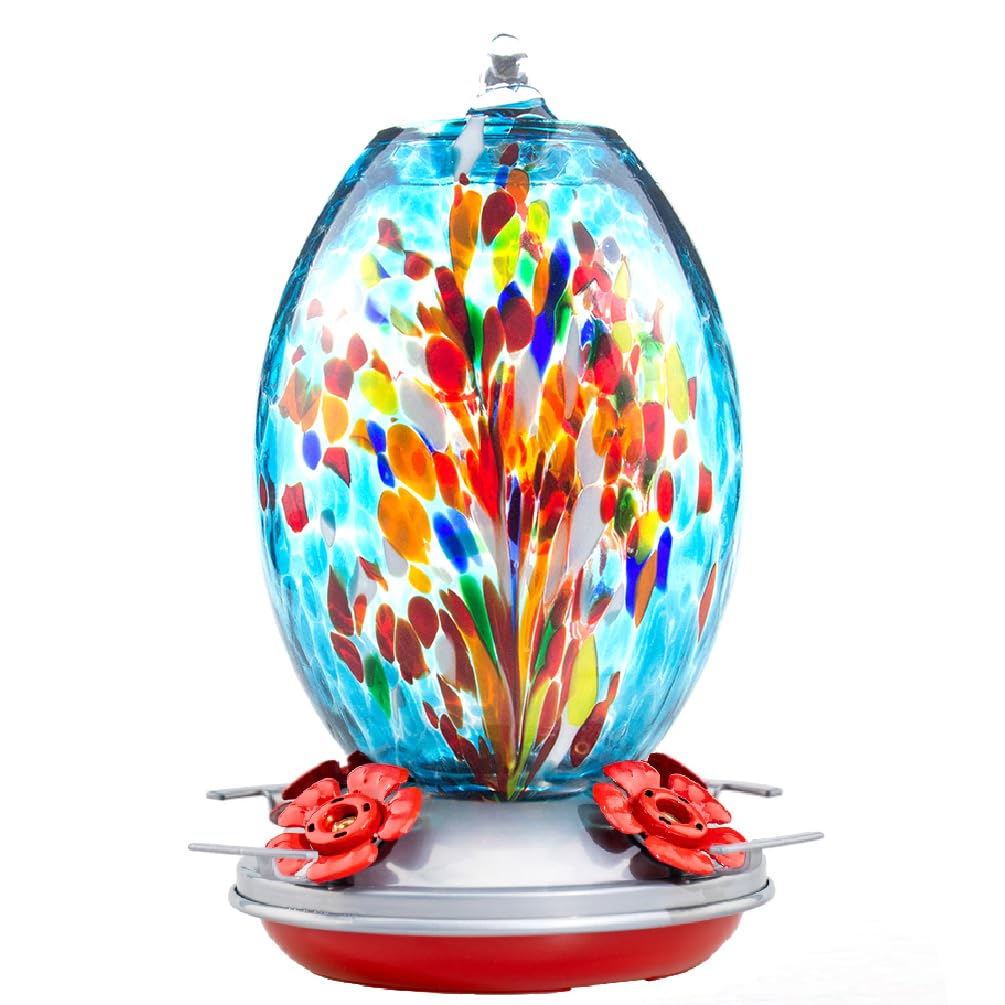
A decorative, hand-blown glass hummingbird feeder with a wide mouth, ant moat, leak-resistant gasket, and seating for multiple hummers.
Why I picked it: Beautiful hand-blown glass that’s practical: wide mouth, ant moat, and reliable gasket.
Best for: Yard owners who want a decorative feeder that hosts multiple hummingbirds.
Stylish midrange option for buyers who want both form and function.
Pros
- Hand-blown, eye-catching glass finish
- Wide mouth for easy refilling
- Ant moat included
- Leak-resistant thicker gasket
- Four perches for multiple birds
Cons
- Glass can be fragile
- Heavier than plastic feeders
My take
I own several of these feeders and they’ve become my go-to hummingbird display. The blown glass is genuinely attractive and the colors have stayed vibrant in sun and weather.
Refilling is fast thanks to the wide mouth, and the detachable base makes cleaning straightforward. The upgraded gasket has kept my nectar from dripping even after repeated use.
I also like that the kit includes an ant moat and a brush so I can keep the ports and bottle sanitary. I regularly see multiple hummers at once — the four perches let several birds feed comfortably without a fight.
2. Nature Anywhere Window Bird Feeder — Transparent Acrylic with Enhanced Suction Grip – Best Window Feeder
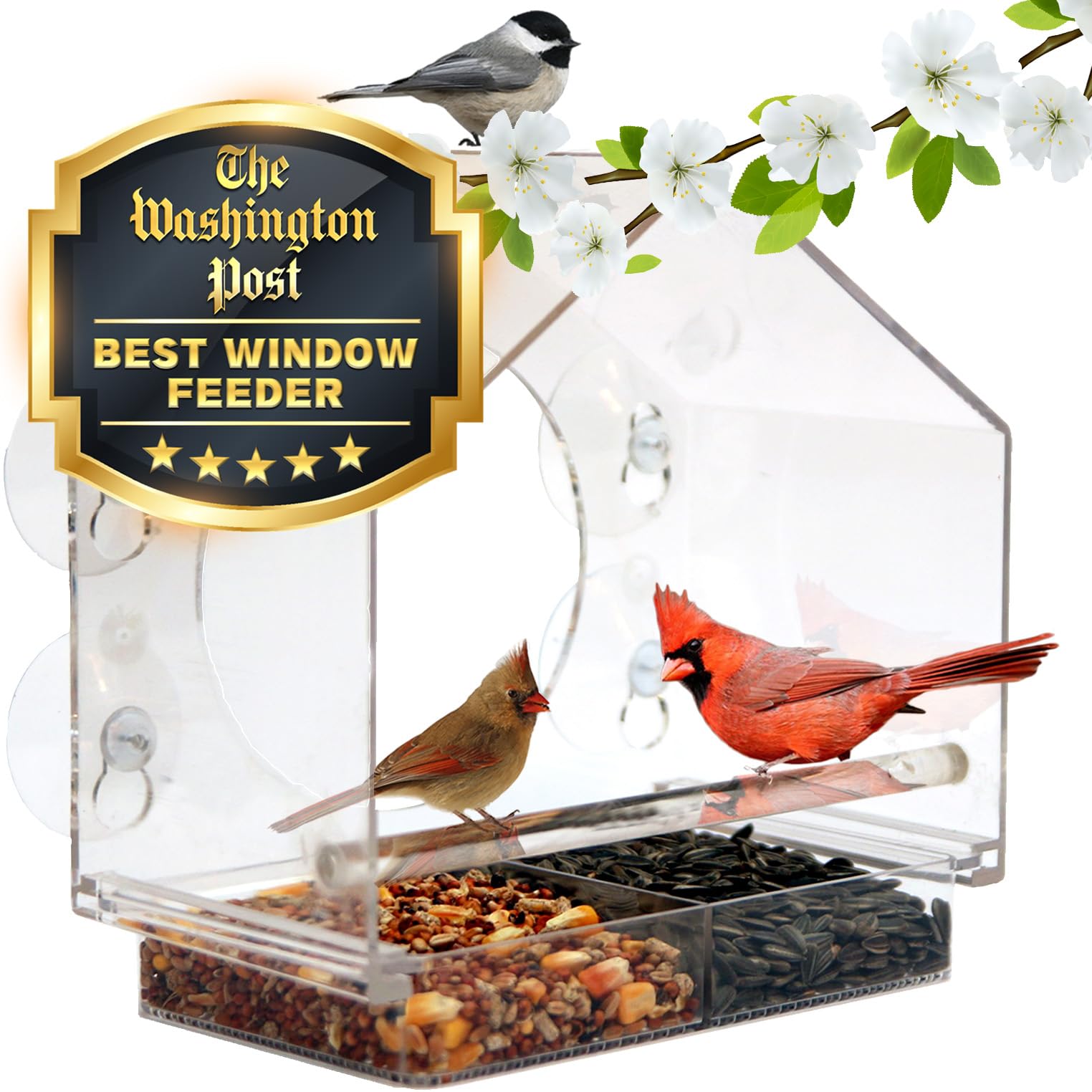
A clear acrylic window feeder that mounts with four heavy-duty suction cups for close-up backyard bird watching and indoor viewing.
Why I picked it: Super-strong suction and a compact, clear design that brings birds inches from the glass.
Best for: Anyone who wants up-close bird watching from inside, or a 'cat TV' setup.
Good value for a window-mounted viewing experience.
Pros
- Four heavy-duty suction cups
- Crystal-clear acrylic for close viewing
- No assembly required
- Easy to clean removable tray
- Weatherproof suction technology
Cons
- Small capacity needs frequent refills
- Not constant action like yard pole feeders
My take
I install this on my kitchen window when I want the birds right up against the glass. The suction cups are impressively strong — once stuck they don’t wobble and the feeder feels secure.
The clear design gives an undistorted view, and the removable tray makes topping off and cleaning trivially easy. My indoor cat spends hours watching; the feeder is frankly excellent 'cat TV.'
Keep expectations realistic: it’s perfect for casual, up-close watching, but if you want non-stop activity you’ll still want a larger yard feeder too.
3. Squirrel Buster Plus — Squirrel-proof Feeder with Cardinal Ring, 6 Ports, 5.1 lb Capacity – Best Squirrel-Proof Feeder
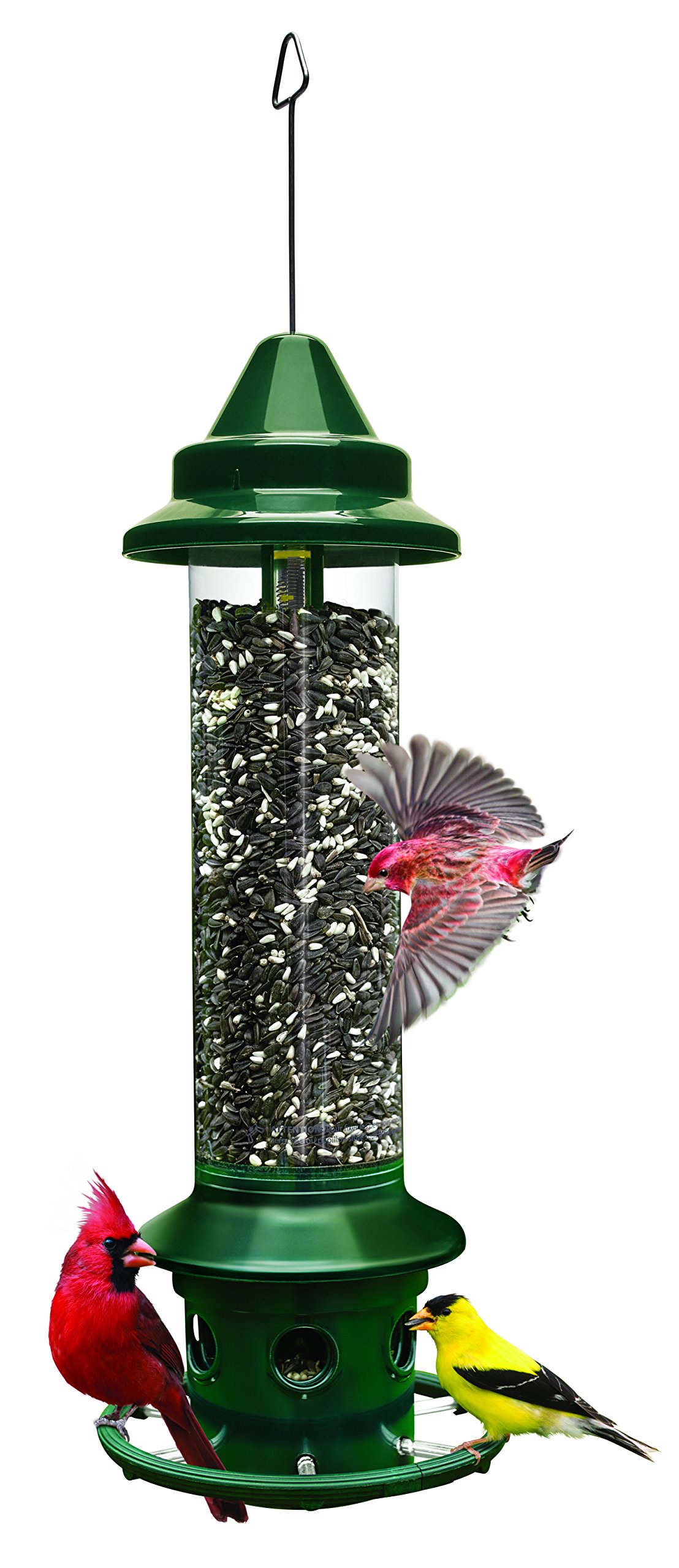
A heavy-duty, weight-adjustable feeder with a spring-activated shroud that closes when squirrels or large birds try to feed.
Why I picked it: Patented weight-adjustable shroud that actually shuts off access to heavier pests.
Best for: People battling persistent squirrels who want a large-capacity, long-lasting feeder.
Higher-end investment that pays back in saved seed and fewer headaches.
Pros
- Truly squirrel-proof shroud
- Large 5.1 lb seed capacity
- Weight-adjustable feeding mechanism
- UV-stable, chew-proof materials
- Durable long-term construction
Cons
- Heavier to handle
- Pole adaptor sold separately
My take
I put this out on a wooded property where every feeder I tried was quickly raided. The Buster’s shroud consistently closes under squirrel weight — they try and fail, and I keep more seed for the birds.
Its 5.1-pound capacity means I don’t refill daily, and the weight-adjustable spring lets me exclude larger birds while welcoming smaller songbirds. The construction feels built to last; materials resist chewing and sun damage.
It’s a bigger upfront solution than a simple tube feeder, but I found it saved time and seed over a season — and the birds returned in better numbers once squirrels were foiled.
4. Kingsyard Double Suet Bird Feeder — Weatherproof Roof, All-Metal, Holds Two Suet Cakes – Best Suet Feeder
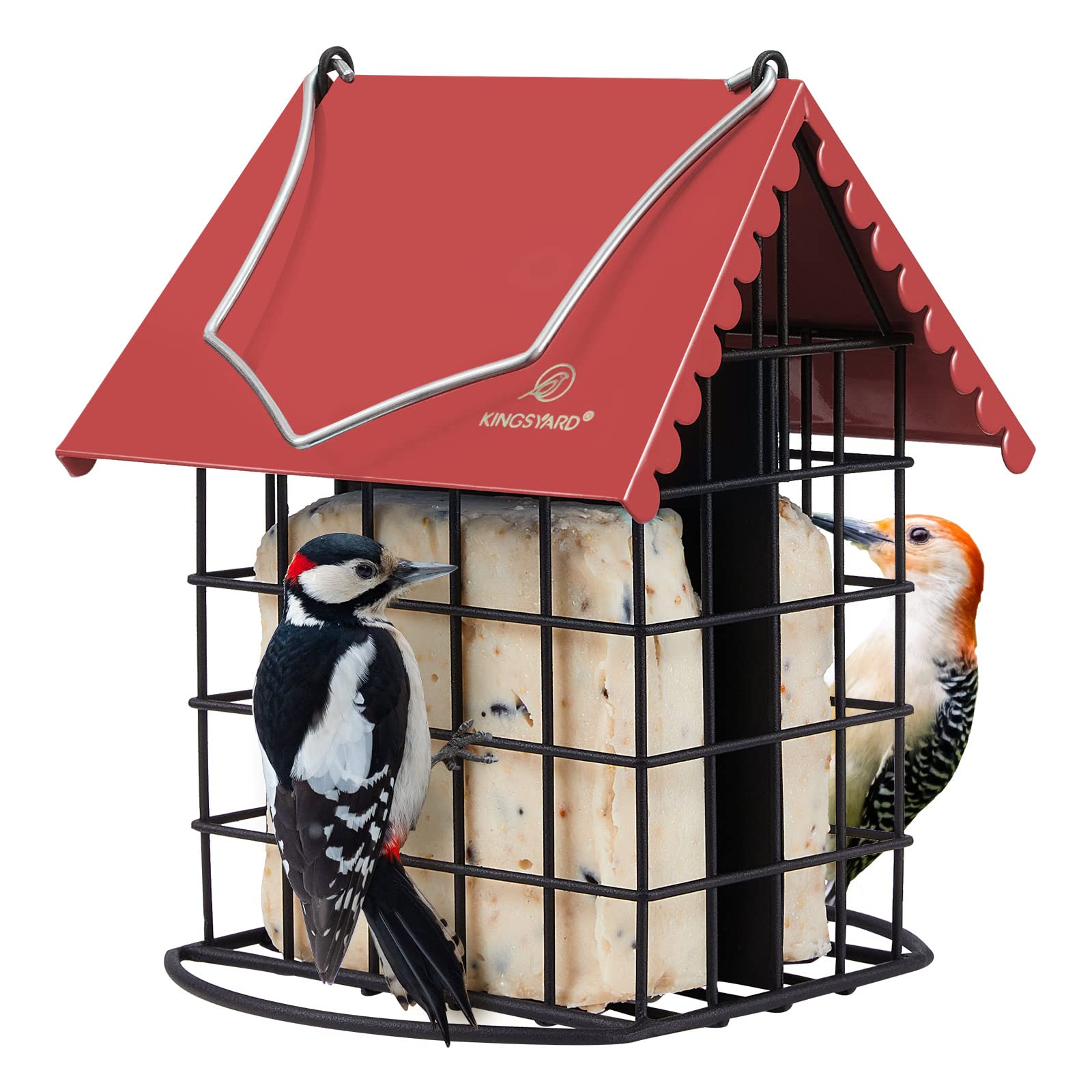
An all-metal suet cage with a removable weatherproof roof and two perches, built for clinging birds like woodpeckers and chickadees.
Why I picked it: Weatherproof roof and removable top make filling and cleaning quick.
Best for: Attracting woodpeckers, nuthatches, chickadees, and other clinging birds.
Budget-friendly suet option that's sturdy and easy to use.
Pros
- Weatherproof roof protects suet
- Holds two standard suet cakes
- Removable roof for easy refills
- Durable powder-coated metal
- Extra perches for more birds
Cons
- Determined squirrels may get access
- Can be noisy in high wind
My take
I hung this suet feeder in a tree and watched woodpeckers and chickadees find it within days. The roof keeps suet from turning to mush in rain, and the removable top makes swapping cakes effortless.
The powder-coated metal feels solid; I didn’t see rust after several wet weeks. A few persistent squirrels have tried creative approaches, but overall the cage design discourages most pests.
This is the feeder I reach for when I want clinging birds to visit without dealing with constant soggy suet or complicated refills.
5. Kingsyard WPC Composite Platform Bird Feeder — Heavy Duty Hanging Tray, 3.5 lb Capacity, Weatherproof – Best Platform Feeder
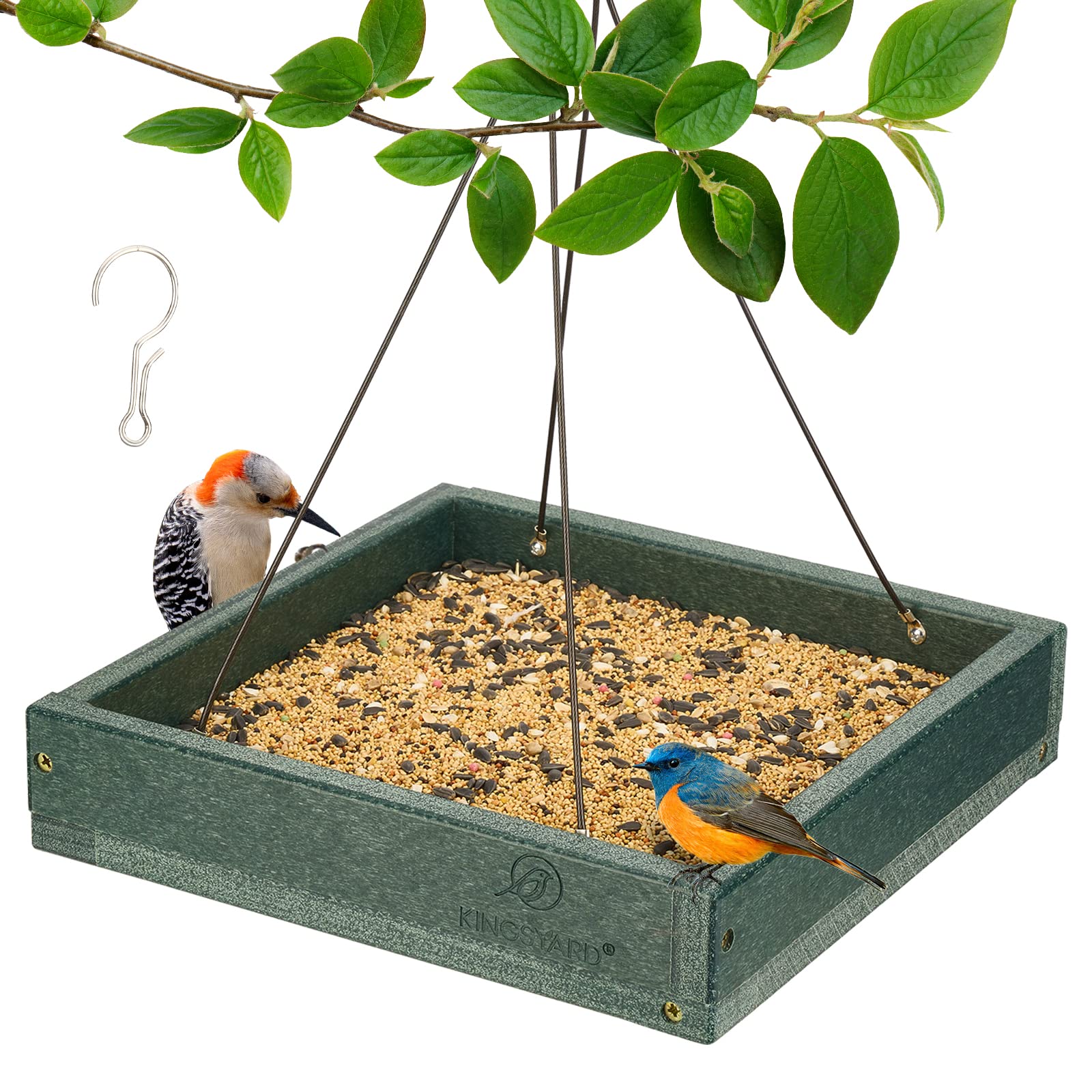
A weatherproof platform tray made from recycled composite that holds seed and mealworms, with a four-chain suspension for stability.
Why I picked it: Roomy, stable platform made from durable recycled composite that lasts season after season.
Best for: Offering seeds and mealworms to a variety of bird species, including larger birds.
Affordable, durable platform feeder that reduces refills.
Pros
- Made from recycled, weatherproof composite
- Large 3.5 lb capacity
- Four-chain suspension prevents tipping
- Pre-assembled out of the box
- Easy to clean and drain
Cons
- Open design attracts squirrels
- May need anti-squirrel strategies
My take
I swapped a worn wooden tray for this composite platform and immediately noticed less warping and fading. It stands up to sun, snow, and heavy use.
The capacity keeps me from refilling every day, and the four-chain suspension means birds don’t send it spinning when they land. I’ve hosted a nice variety of species on this tray — it’s roomy enough for simultaneous feeders.
Cleaning is quick because the tray drains and the material doesn’t absorb oils or odors. My only ongoing task: keeping very determined squirrels off so the smaller birds get a chance.
6. Glass Hummingbird Feeder for Outdoors — 24oz Red Glass, 5 Flower Ports, Leak-Proof Base – Best Value Hummingbird Feeder
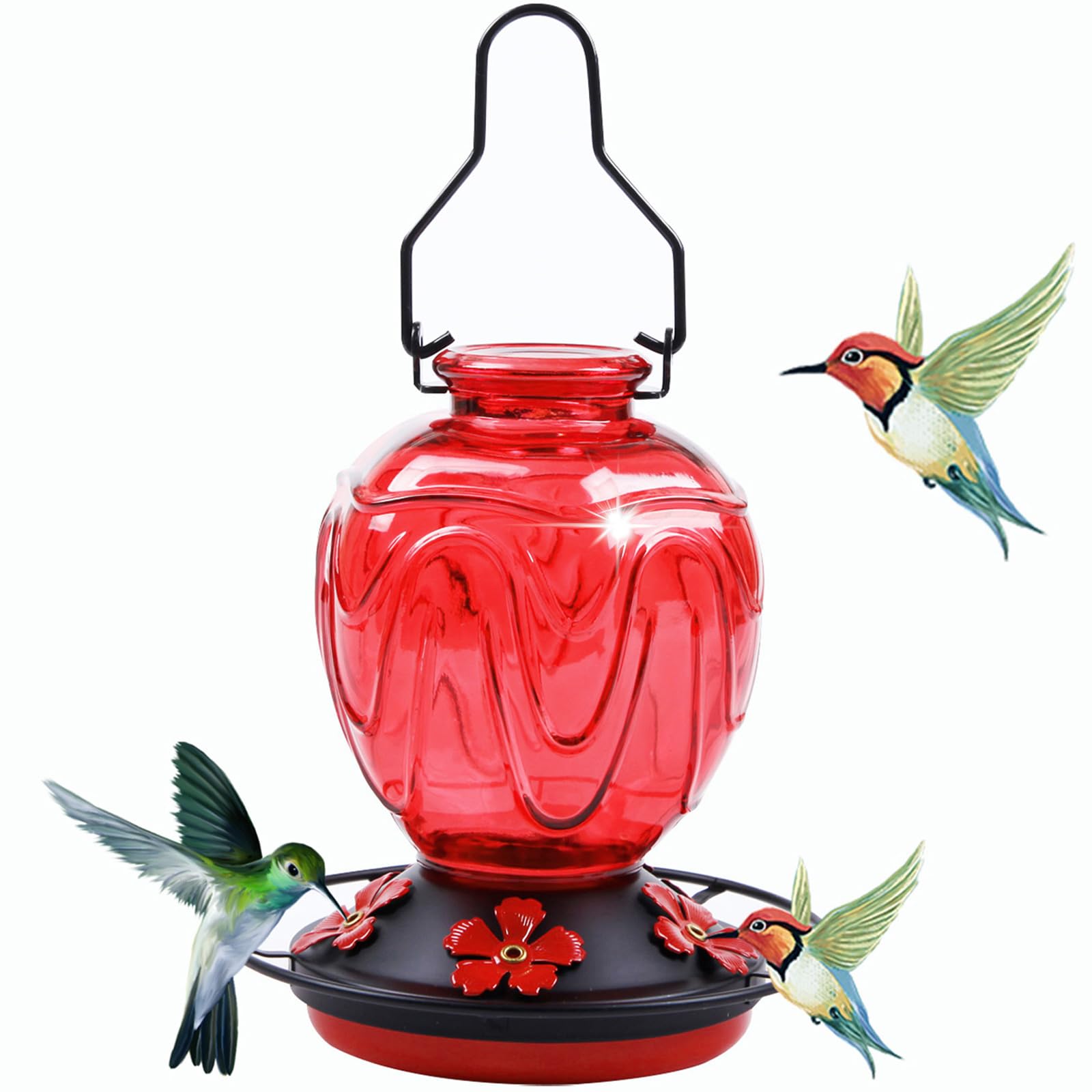
A vibrant red glass hummingbird feeder with five flower-shaped ports, a sturdy hanging bracket, and a leak-proof base.
Why I picked it: Bright red finish draws hummers; simple, sturdy glass design performs well.
Best for: Porch or eave placement where vibrant color attracts hummingbirds fast.
Budget-friendly hummingbird feeder with solid build and easy maintenance.
Pros
- Bright red attracts hummingbirds quickly
- Five feeding ports for multiple birds
- Leak-proof base when sealed properly
- Sturdy metal hanging bracket
- Easy to disassemble and clean
Cons
- Cleaning brush not included
- Seal can be tricky for small hands
My take
I’ve owned several of these and keep buying them for different spots. The red glass really gets hummingbirds’ attention and I regularly see clusters of feeders working side-by-side.
They’re simple to fill and take apart for cleaning. The seal can be a handful to reseat if you have small hands, but once in place it’s snug and drip-free.
Overall, this is the feeder I grab when I want a dependable, attractive hummingbird station without fuss.
How I Choose a Bird Feeder
Match the Feeder to the Birds You Want
I pick feeders based on the species I want to attract. Hummingbirds prefer bright colors and small ports; woodpeckers and nuthatches like suet cages; songbirds and finches are happiest at tube or platform feeders.
- Hummingbirds: glass or red feeders with flower ports
- Clinging birds: suet cages with perches
- Seed-eaters: tube feeders or platform trays
- Large birds: sturdy platform or tray feeders
Think About Pest Control and Placement
When I battle squirrels I choose a weight-activated or baffle-protected feeder and hang it away from launch points. For window feeders, I mount on flat glass with strong suction and keep it several feet from edges that encourage squirrel access.
- Use weight-sensitive shrouds to block squirrels
- Place feeders away from branches or ledges
- Use ant moats for nectar feeders
- Window feeders need strong suction and clear sightlines
Capacity, Maintenance, and Materials
I consider how often I want to refill and how much cleaning I’ll tolerate. Metal and composite feeders last longer outdoors; glass looks great but needs careful handling. Always choose feeders you can disassemble for cleaning.
- Large-capacity feeders reduce refill frequency
- Removable parts make cleaning easier
- UV-stable plastics and metals resist weathering
- Avoid porous materials for nectar feeders
Visibility and Enjoyment
If watching birds from indoors is a priority, I favor window feeders or placing feeders close to windows. For dramatic backyard activity, pole-mounted feeders and platform trays host more birds and bigger species.
- Window feeders for close-up watching
- Pole or hanger setups for more action
- Consider sightlines and seating for viewing areas
Frequently Asked Questions
How often should I clean my feeders?
I clean nectar feeders every 3–5 days in warm weather and seed feeders every 2–4 weeks, depending on humidity and activity.
What can I do about squirrels getting my seed?
I use weight-activated squirrel-proof feeders, hang feeders away from branches, or add baffles on poles to deter most squirrels.
How do I keep bees and ants out of hummingbird feeders?
I rely on an ant moat above the feeder and pick bee-resistant port designs; placing feeders away from flowers also helps reduce bee visits.
Final Take
After testing a range of feeders I keep a mix in my yard: a hand-blown glass unit for hummingbirds, a window feeder for close-up viewing, and a squirrel-proof seed feeder for heavy seed days.
Choose the feeder that solves your biggest problem first — pest proofing, visibility, or attracting a specific species — and the rest will fall into place.
If you want a single recommendation to start with, I’d select a durable, pest-resistant option for seed plus one hummingbird feeder to diversify the visitors.
