
I tested six bladeless tower fans to find the quietest, most powerful, and smartest options for bedrooms and living spaces. Here are the ones I’d recommend based on real use.
I spent time living with each of these bladeless tower fans so I could judge noise, airflow, controls, and ease of cleaning. The candidates range from compact, app‑enabled models to large 42" towers built to move a lot of air.
In the sections below I explain what stood out about each unit, who I think it’s best for, and the small tradeoffs I ran into while using them.
I compared these fans on noise levels, airflow reach, control options (remote, touch, or app), oscillation range, and how easy they were to keep clean. Wherever a model offered smart features or unusually quiet operation, I call that out specifically.
1. DREO Tower Fan (2026 Upgraded DC Motor) — Black – Best Overall
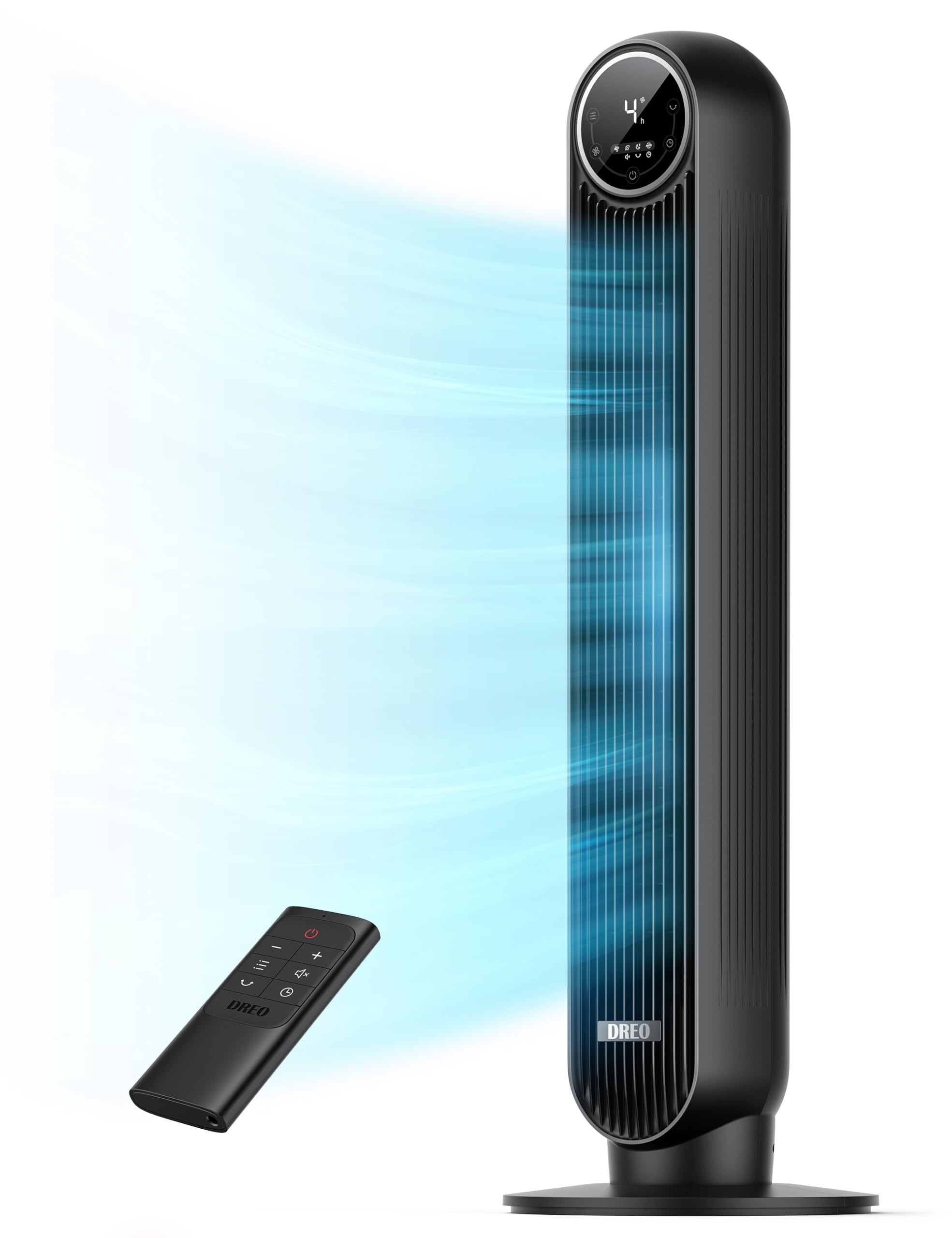
A versatile tower with an upgraded DC motor, eight speeds, four modes, and very quiet operation—good for bedrooms and larger living spaces.
Why I picked it: Strong airflow, whisper‑quiet sleep mode, and easier cleaning than older towers.
Best for: People who want a quiet yet powerful tower for sleeping and everyday use.
Solid midrange option with features usually found on pricier models.
Pros
- Very quiet operation
- Eight speed settings
- 90° wide oscillation
- Removable rear grille for cleaning
- Includes remote control
Cons
- Higher speeds are a touch louder
- Slight learning curve on controls
My take
I brought this DREO into my bedroom during a heatwave and was impressed by how quickly it moved air. The upgraded brushless DC motor really gives it punch—specs advertise wind speeds up to around 28 ft/s and I felt the projection across a large living room.
On low and sleep modes the fan is whisper‑quiet; I left it running overnight and it didn’t wake me. The remote and touch controls both worked reliably, and the extra speed options let me dial in anything from a gentle breeze to a strong push of air.
Assembly was painless and the removable back grille makes cleaning straightforward—something I appreciated after wrestling with older tower designs. Overall this felt like the best balance of quiet, power, and value in my testing.
2. PELONIS 40-inch Bladeless Tower Fan — Black – Best for Whole‑Room Coverage
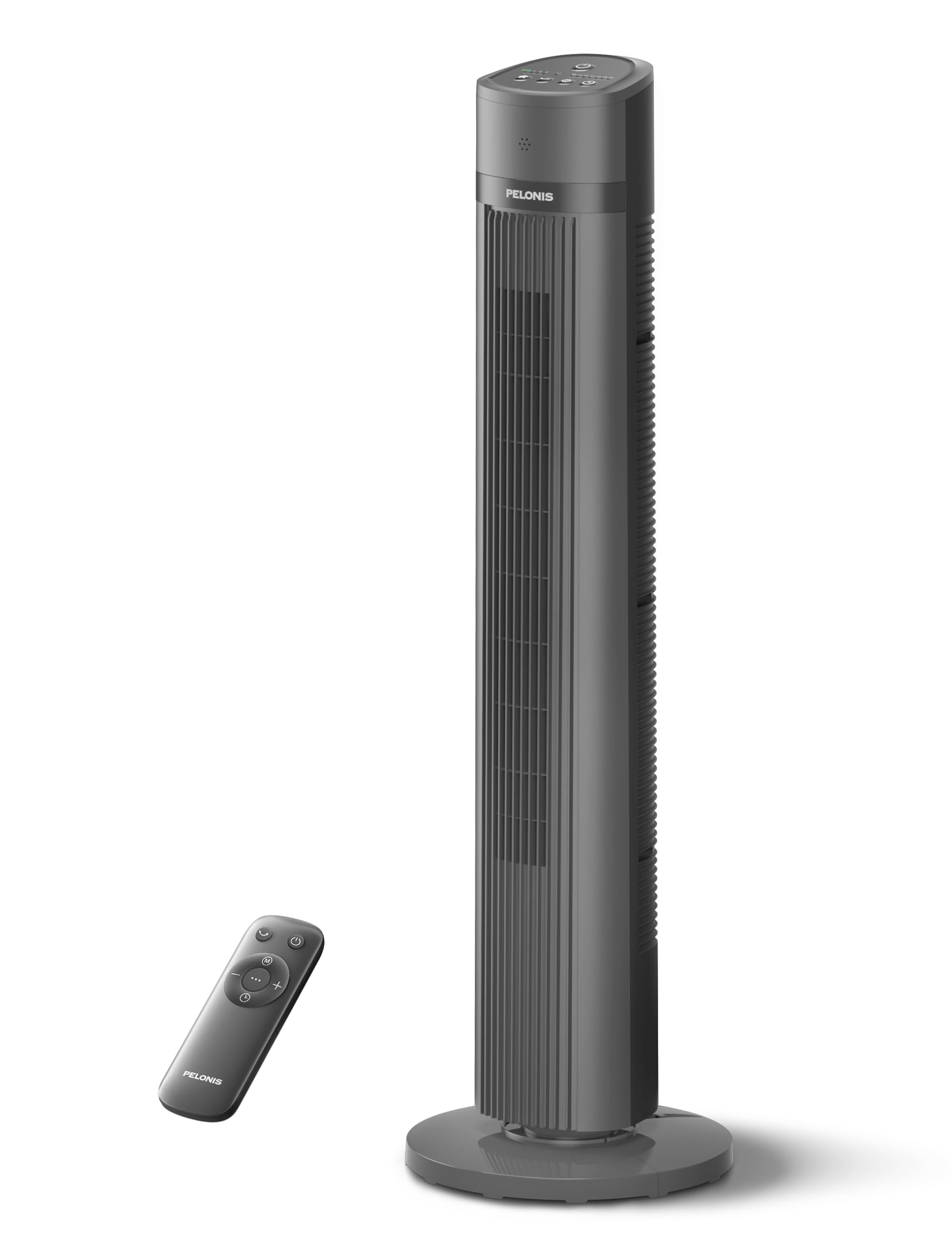
A tall 40" tower that emphasizes wide oscillation and generous airflow for living rooms and offices.
Why I picked it: Large footprint and wide oscillation deliver even circulation across bigger rooms.
Best for: Rooms where reach and consistent circulation matter more than ultra‑quiet operation.
A practical option when you want tall coverage without a premium tag.
Pros
- Tall 40" design
- Wide 93° oscillation
- Top LED control panel
- Remote stores in built slot
- Programmable timer
Cons
- Fewer speed increments
- Not the absolute quietest
My take
I used the Pelonis in a home office and noticed immediate improvement in air movement—its 26 ft/s specification and very wide oscillation gave a more even breeze than shorter towers.
The top LED panel is bright and intuitive, and the remote fits into a storage slot on the unit so it never wandered off. The programmable timer and simple controls made it easy to schedule cooling for daytime use.
It’s not the quietest model in the group, but in return I got a taller profile and stronger sustained airflow that handled hotter rooms well.
3. DREO Tower Fan, 40″ Quiet Bladeless Standing Floor Fan — White – Best Quiet White Option
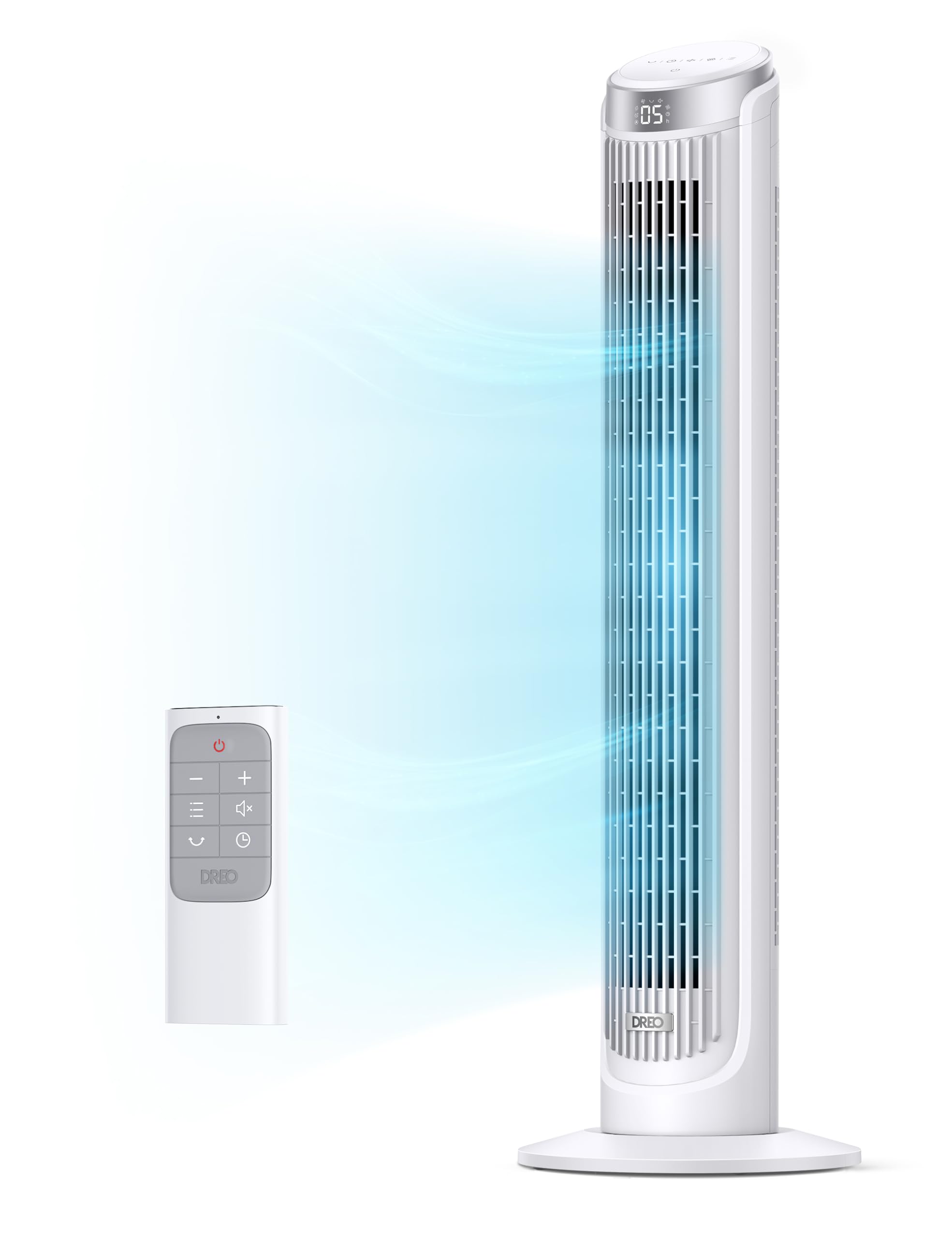
A compact 40" white tower that balances quiet performance with five speeds and a 12‑hour timer.
Why I picked it: Notably quiet with a simple control set and good midrange power.
Best for: Bedrooms and home offices where low noise matters most.
A dependable mid‑tier choice with thoughtful features for sleep.
Pros
- Quiet at night
- Five useful speeds
- 90° oscillation
- 12‑hour timer
- Portable handle
Cons
- Airflow concentrated in specific areas
- Limited advanced features
My take
I moved this DREO between my bedroom and workspace and consistently appreciated how unobtrusive it was. TurboSilent tech keeps noise down to roughly the high‑20 dB range, which made it ideal for sleeping and conference calls.
The five speeds felt practical—more than enough for daily use without overwhelming complexity. Its compact base and carry handle let me tuck it into corners or take it to another room in seconds.
If you want a quiet white tower that still pushes respectable airflow across a room, this one did the job reliably in my tests.
4. DREO Tower Fan (42″ 9 Speeds) — Black – Best for Power Users
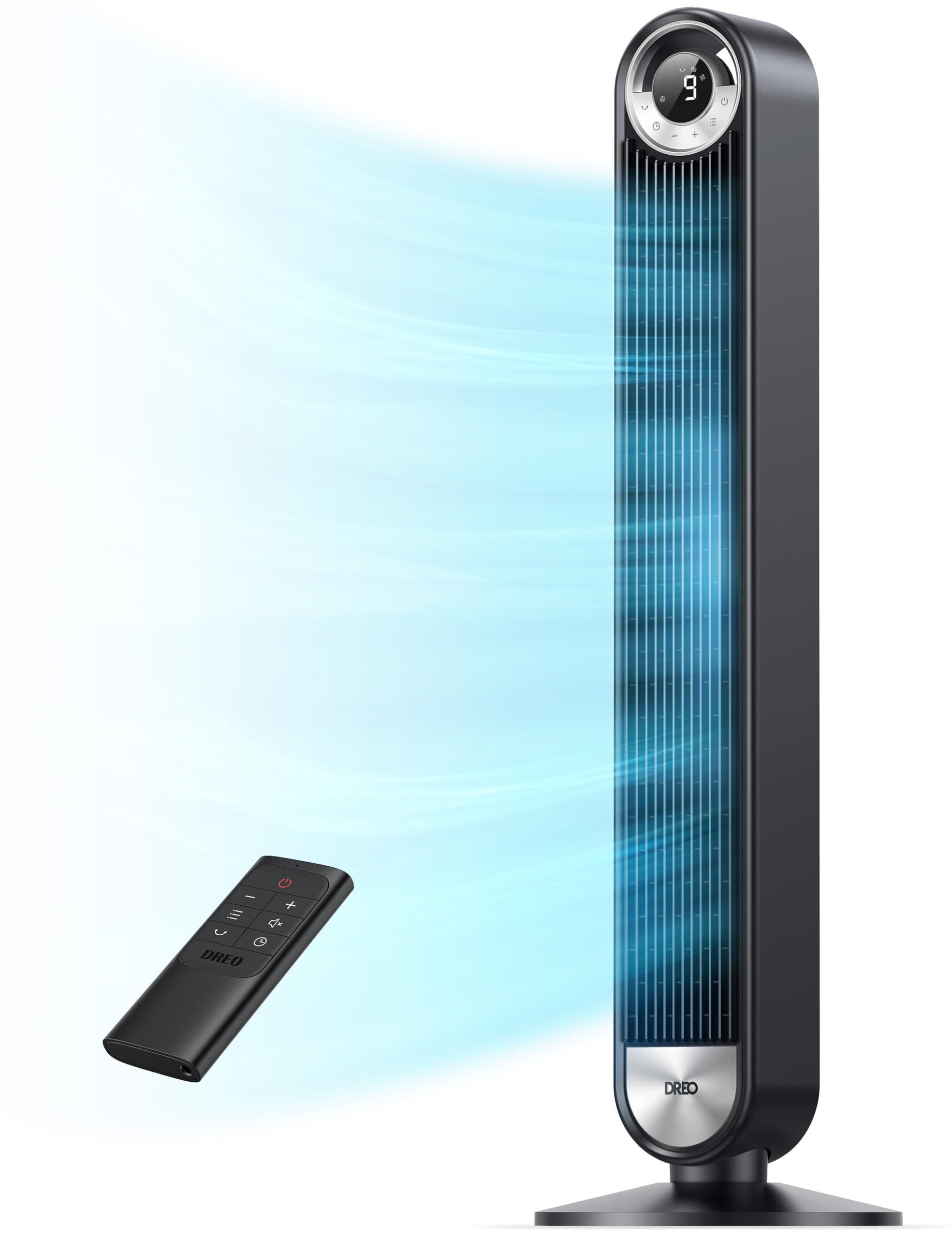
A 42" tower with nine speeds, smart sensing, and very high air volume for people who want granular control and big airflow.
Why I picked it: High CFM and many speeds let me fine‑tune airflow and temperature response.
Best for: Large rooms and users who want app or smart assistant control.
A higher‑feature model aimed at power users who want smart controls.
Pros
- Nine speed levels
- High airflow volume
- Smart temp sensing
- App and Google Home support
- Tool‑free cleaning
Cons
- App adds setup steps
- Can be overkill for small rooms
My take
I put this 42" DREO in my open living area and appreciated the sheer volume of air it can produce—the unit is specified to generate substantially more CFM than the smaller towers, so it cools large spaces much faster.
Smart features are a tangible plus: I connected it to an app and Google Home and enjoyed turning it on or switching modes hands‑free. The option to silence button beeps was a surprisingly nice quality‑of‑life detail.
It’s larger and more feature‑dense, so I’d reach for it when I need strong airflow or want integrated smart control rather than a minimalist bedside fan.
5. DREO Tower Fan (36″ Smart, WiFi & Voice Control) — White – Best Smart/Wi‑Fi Option
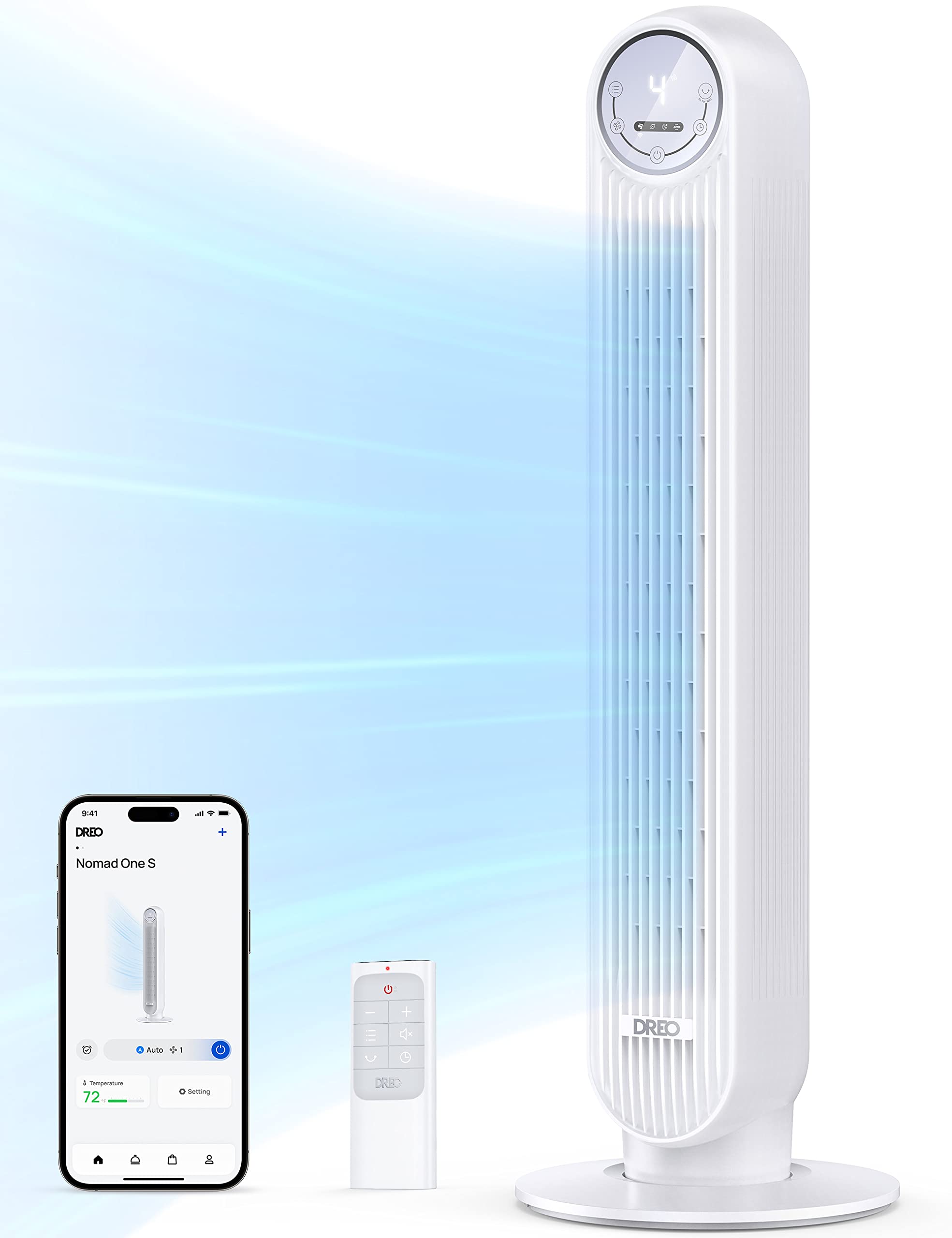
A compact smart tower with Wi‑Fi, voice control compatibility, and auto mode that adjusts based on ambient temperature.
Why I picked it: Seamless app and voice integration plus automatic temperature‑based adjustments.
Best for: Users who want voice or app control for scheduled and remote operation.
Smart features make it a good value for connected homes.
Pros
- Wi‑Fi and voice control
- Auto temp sensing
- Compact and portable
- Removable rear grille
- Hidden remote storage
Cons
- Oscillation range could be wider
- Top speeds less punchy
My take
I set this DREO up on Wi‑Fi and appreciated how fast the app connected; voice control via smart assistants worked without fuss. Auto mode actually adapts speeds based on room temperature, which felt handy during changing daytime heat.
It’s compact yet tall enough to deliver usable airflow; I did move it a bit closer when I needed direct cooling, but the app and remote made adjustments effortless. The removable grille simplified maintenance when dust buildup occurred.
If you want a smart tower that integrates with your home ecosystem without taking up much floor space, this is the one I reached for.
6. LEVOIT Tower Fan (36″, 5 Speeds) — White – Best Budget Quiet Fan
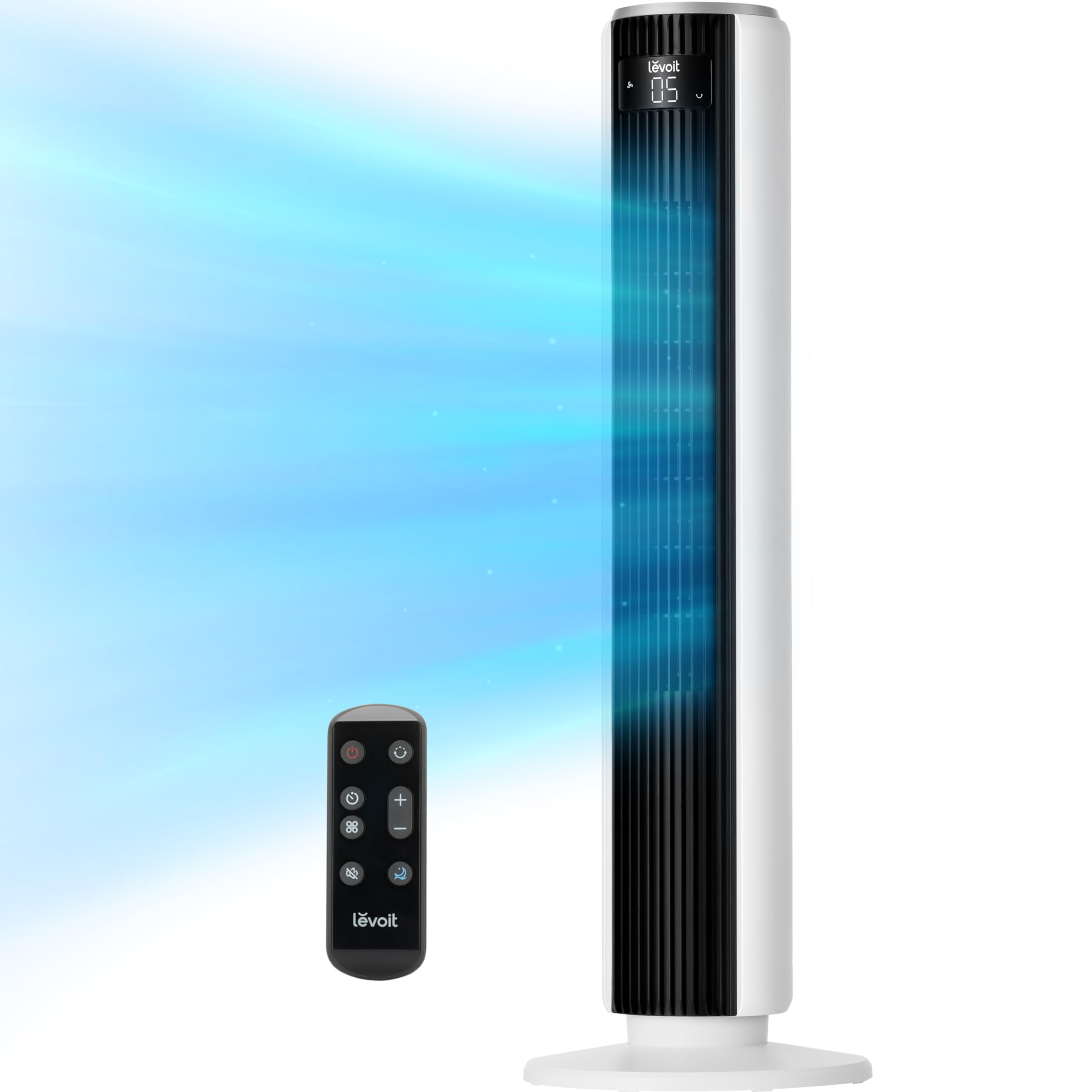
A compact, quiet 36" tower with a temperature sensor, Turbo mode, and a remote holder—great for bedrooms on a budget.
Why I picked it: Quiet baseline noise and intuitive sleep modes at an affordable entry point.
Best for: Budget‑minded shoppers who still want quiet, useful features.
One of the most budget‑friendly quiet towers with smart sensor features.
Pros
- Very quiet operation
- Five speed settings
- Remote holder on unit
- Auto temp adjustment
- Easy tool‑free assembly
Cons
- Occasional oscillation motor noise
- Smaller airflow than big towers
My take
I tested the Levoit mainly in a bedroom and liked how unobtrusive it was—its 28 dB sleep behavior and advanced sleep mode make it easy to forget it’s on.
The temperature sensor and auto adjustments do a good job keeping consistent comfort, and the Turbo mode is there if I need a quick burst of airflow. I also liked the integrated remote slot so the remote didn’t get lost.
For the price and simplicity, it served as a reliable quiet tower option in my home rotation.
How I Picked the Best Bladeless Tower Fans
Key features I tested
I focused on noise, airflow reach, control methods, ease of cleaning, and any smart features. Those factors determined real‑world comfort more than brand names or flashy design.
Noise and airflow are a tradeoff: quieter fans tend to have less brute force, while larger towers or higher CFM numbers move more air but can be louder.
- Noise: I measured perceived quietness during sleep and daytime use.
- Airflow & Reach: I checked how far the breeze projected and how evenly rooms cooled.
- Controls: I evaluated remote, touch, and app functionality and convenience.
- Oscillation: Wide sweep helps a fan cool a whole room rather than a single spot.
- Maintenance: Removable grilles and tool‑free cleaning made upkeep fast.
Which features matter most to me
If I want a fan for my bedroom, low dB and a sleep mode are top priorities. For living rooms I prioritize oscillation range and higher airflow.
Smart features like app control and voice compatibility are convenient, but I didn’t let them override mechanical performance when choosing primary cooling options.
- Bedroom: prioritize quiet operation and a timer.
- Large rooms: prioritize taller units and wide oscillation.
- Smart homes: look for Wi‑Fi, app control, and voice integration.
- Cleanability: removable grilles save time and keep airflow efficient.
Frequently Asked Questions
Do bladeless tower fans actually move enough air?
Yes — in my experience the larger towers put out plenty of airflow for normal rooms. If you need to cool a very large open area, choose a taller model with higher CFM or stronger advertised wind speed.
Are bladeless fans quieter than traditional fans?
Generally yes. I found many bladeless towers run much quieter at low and medium speeds. Higher speeds can still be noticeable, so look for models that advertise low dB levels if silence is essential.
Is the smart/app connectivity worth it?
I appreciate app control for scheduling and voice integration, but it’s a bonus rather than a necessity. I’d choose mechanical performance first and connectivity second.
How hard are these fans to clean?
Most of the units I used have removable rear grilles or tool‑free disassembly—cleaning took a few minutes and restored airflow efficiently.
Final Take
After living with all six towers I picked winners for different needs: the DREO 2026 as my best overall balance of quiet and power, Pelonis for tall whole‑room coverage, and Levoit for a quiet budget pick.
Think about where the fan will live and what matters most—silent nights, app control, or raw airflow—and pick the model that matches that priority. I used each of the fans repeatedly, and I’m confident these choices will cover most rooms and preferences.
