
I tested the most popular hull and deck cleaners so you can spend less time scrubbing and more time on the water. Here are the products I reach for to remove waterline stains, restore aluminum, protect vinyl, and seal up
I spend a lot of time cleaning boats, and over the years I’ve learned which products actually make the job easier and which are mostly marketing. This roundup focuses on cleaners I use on hulls, aluminum, non-skid decks, vinyl, and clear plastics.
My testing priorities were cleaning power, surface safety, ease of use, and whether a product left a protective finish. For each product below I explain why I keep a bottle in my cleaning kit and when I’d reach for it instead of something else.
If you want a heavy-duty aluminum restorer, go with the aluminum-specific formula. For fast wipe-on, rinse-off cleaning on fiberglass or painted hulls I prefer the instant hull formulas. Gel and bottom cleaners are best when you need cling or focused work on scum lines and bottoms.
1. Star brite Ultimate Aluminum Cleaner & Restorer – Best for Aluminum Restoration
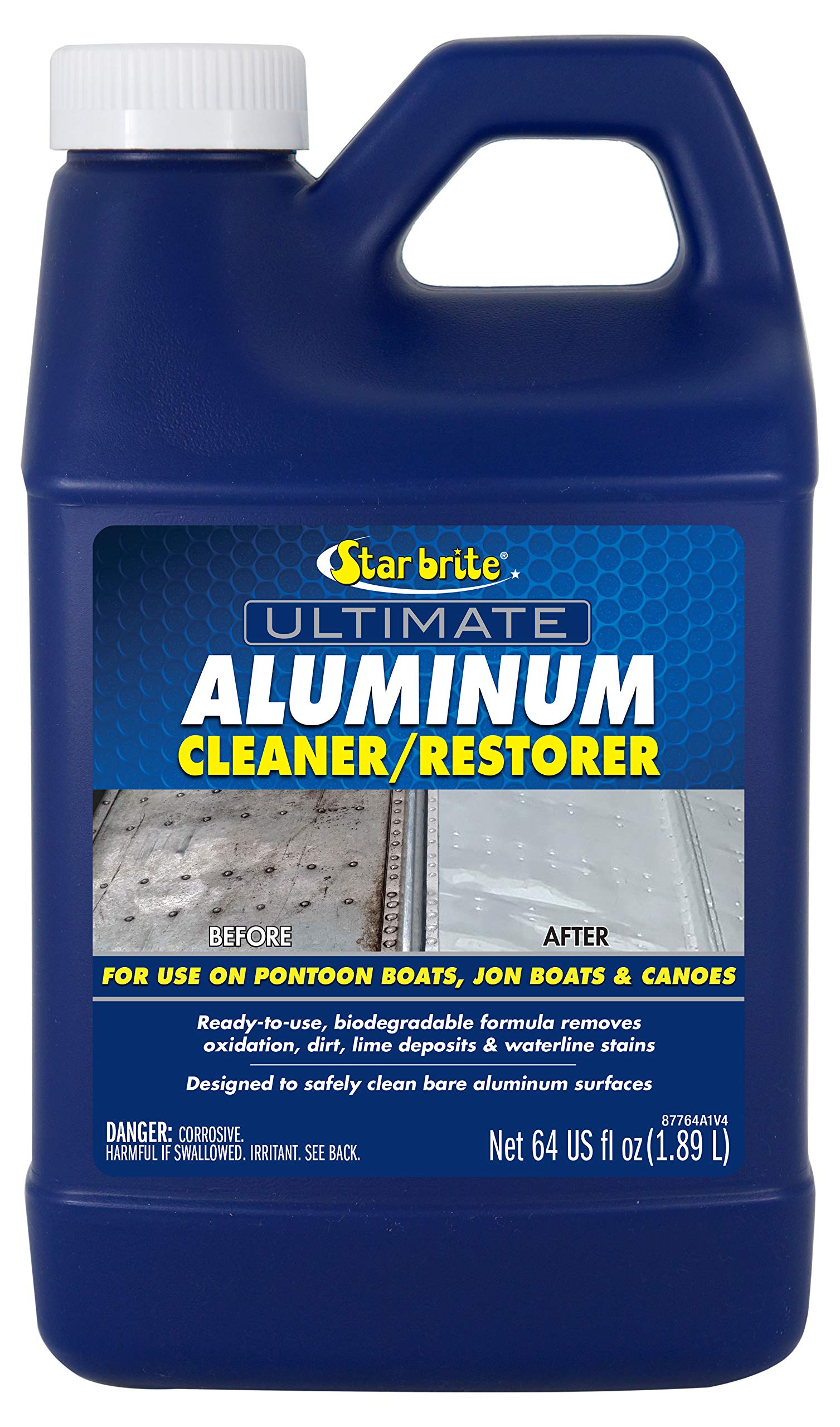
I use this when an uncoated aluminum pontoon, jon boat, or canoe needs real restoration — it strips oxidation and staining without harming the metal.
Why I picked it: Powerful yet aluminum-safe restoration and pairs with a polish for long-term results.
Best for: Unpainted aluminum surfaces with oxidation, waterline stains, and lime deposits.
Professional-grade performance at a reasonable cost.
Pros
- Restores heavy oxidation and haze
- Formulated specifically for unpainted aluminum
- Works on furniture and automotive aluminum
- Instructional video available
- Made in the USA
Cons
- Requires elbow grease on heavy grime
- No sprayer included
My take
When my old pontoon lost its luster I reached for this Star brite aluminum cleaner. It removed the brownish haze and lime build-up that simple soap wouldn’t touch. In several areas I only needed a stiff brush and a single application to get the metal looking like new.
This isn’t a no-effort miracle — heavier oxidation takes a bit of scrubbing — but I liked that the formula is explicitly safe for unpainted aluminum. After cleaning I followed with an aluminum polish and the finish stayed brighter longer.
I also used it on an aluminum trailer and a vintage bicycle frame; both cleaned up nicely. If you want a dedicated aluminum restorer that won’t eat away the metal, this is the one I reach for.
2. Star brite Instant Hull Cleaner (gallon) – Best for Quick Hull Cleaning
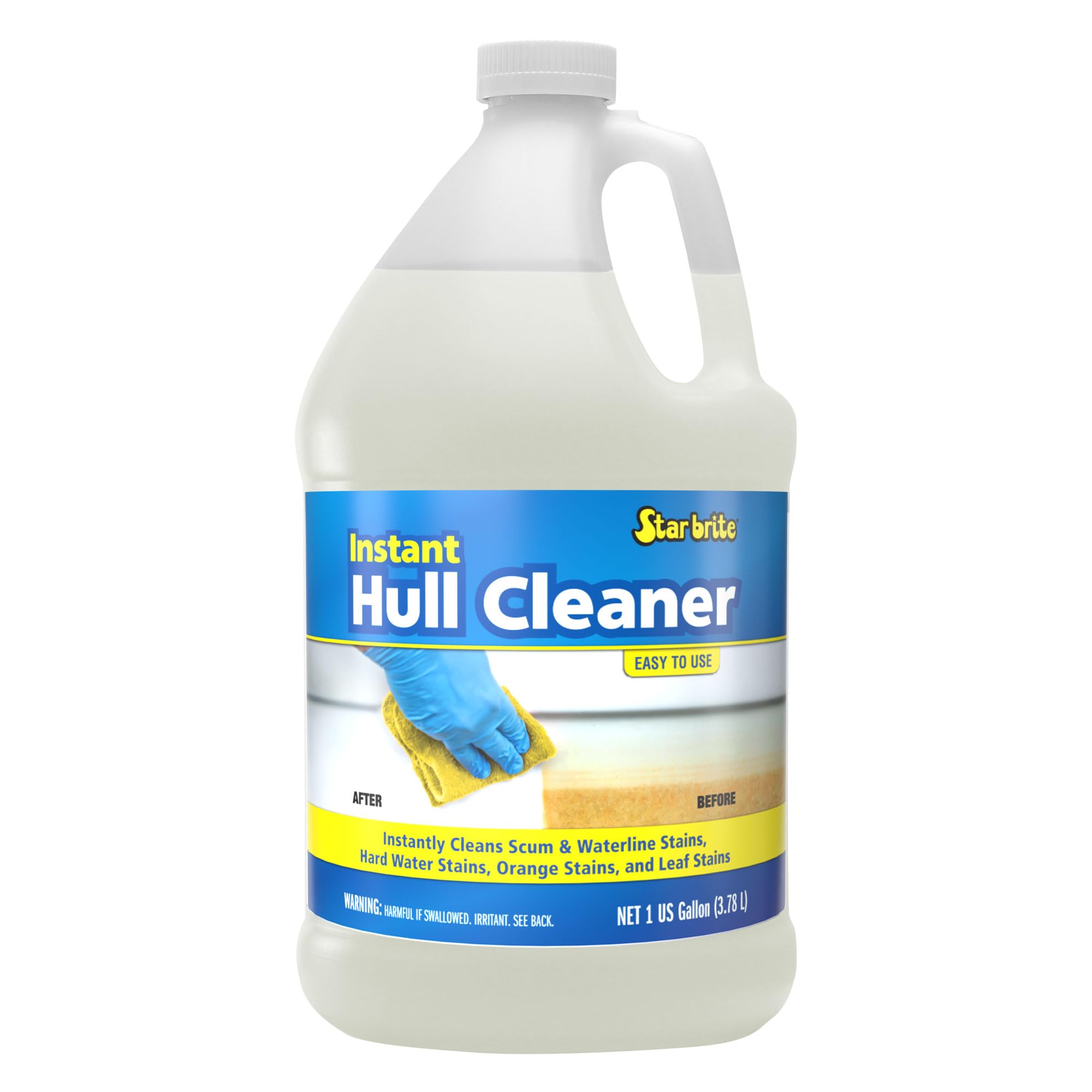
I keep a gallon for fast wipe-on, rinse-off cleaning of fiberglass and painted hulls — it tackles scum lines, tannins, rust marks and fish blood with minimal scrubbing.
Why I picked it: Very fast results on fiberglass and painted surfaces with a user-friendlier oxalic acid formula.
Best for: Waterline stains, yellowing, scum lines, and general hull grime on fiberglass and painted hulls.
Large-format option for regular maintenance and frequent use.
Pros
- Wipe-on, rinse-off convenience
- Dissolves tough stains quickly
- Safer oxalic acid formula
- Covers large areas efficiently
- Made in the USA
Cons
- May need repeat applications
- Packaging can leak occasionally
My take
This is my go-to when I want fast results without a lot of scrubbing. I spray or apply, wait a few minutes, and rinse — scum lines and tannin stains lift surprisingly quickly.
I once emptied most of a gallon into a pump sprayer to hit a heavily soiled hull and it saved hours compared with spot-scrubbing. Some stubborn areas needed a second pass, but overall the work required was a fraction of what I expected.
Be mindful of the bottle on arrival; I’ve encountered a slightly broken seal before. Despite that, the cleaning performance is what keeps this in my cleaning kit.
3. Star brite Non-Skid Deck Cleaner & Protectant – Best for Decks & Non-Skid Surfaces
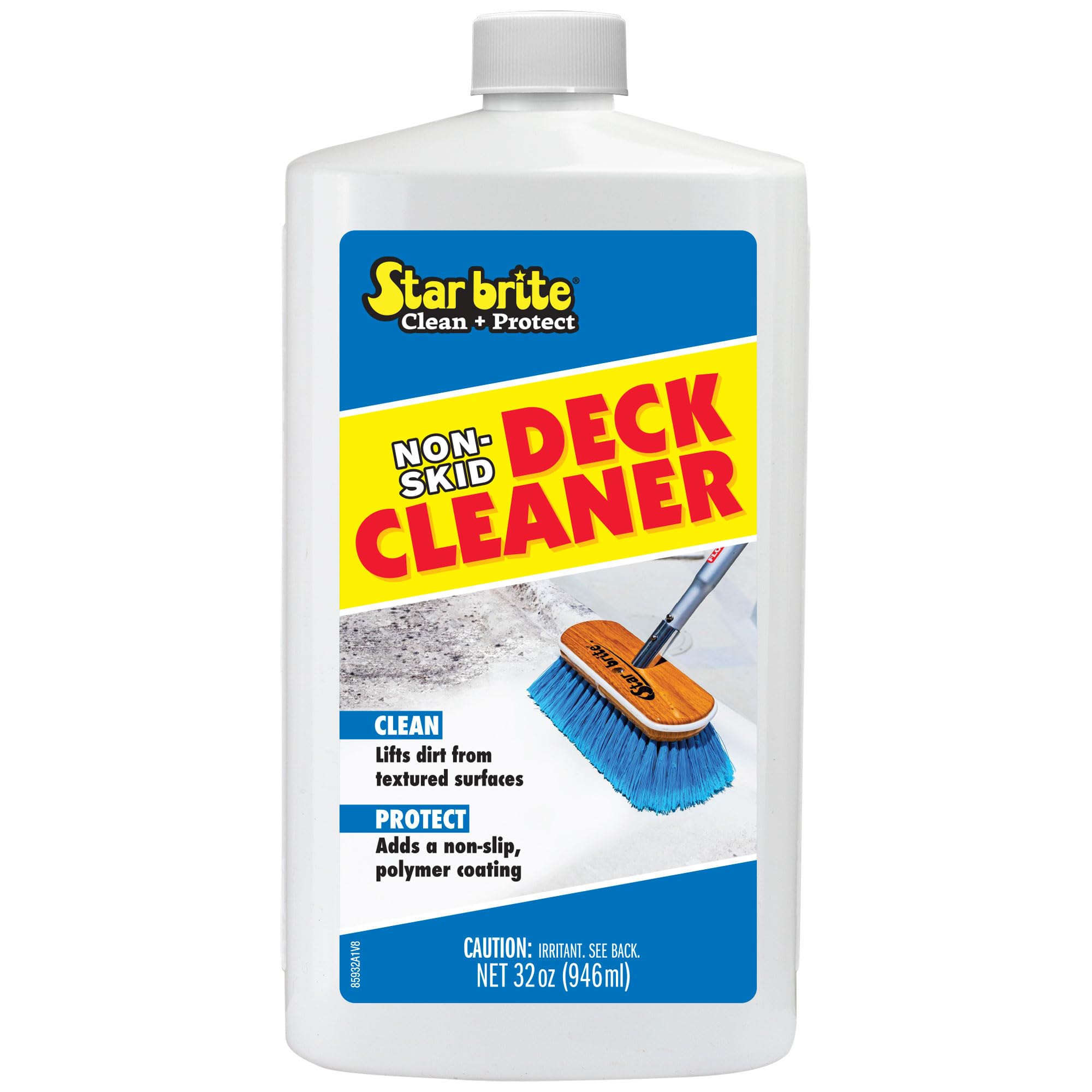
I use this when I want the deck to come clean without aggressive scrubbing and to leave behind a coating that helps repel dirt and UV damage.
Why I picked it: Lifts embedded dirt on non-skid while leaving a protective, UV-repellent finish.
Best for: Non-skid fiberglass decks, vinyl, rubber, composite and Trex surfaces.
Compact bottle for targeted deck work and regular touch-ups.
Pros
- Lifts dirt with minimal scrubbing
- Leaves UV-protective coating
- Safe on many surfaces
- Versatile for decks and composites
Cons
- Smaller volume for large boats
- Tough stains may still need a brush
My take
I was impressed with how much dirt this product lifted without me having to go at the deck with elbow grease. A soft-bristle deck brush and a light pass made the surface look significantly cleaner.
It also left a protective feel that helped repel grime during my next outing. I tested it on a composite swim platform and it removed some rust-colored staining I couldn’t remove with soap alone.
For routine deck care this is one of the easiest, least strenuous options I keep on board.
4. 303 Marine Clear Protective Cleaner – Best for Vinyl & Clear Plastics
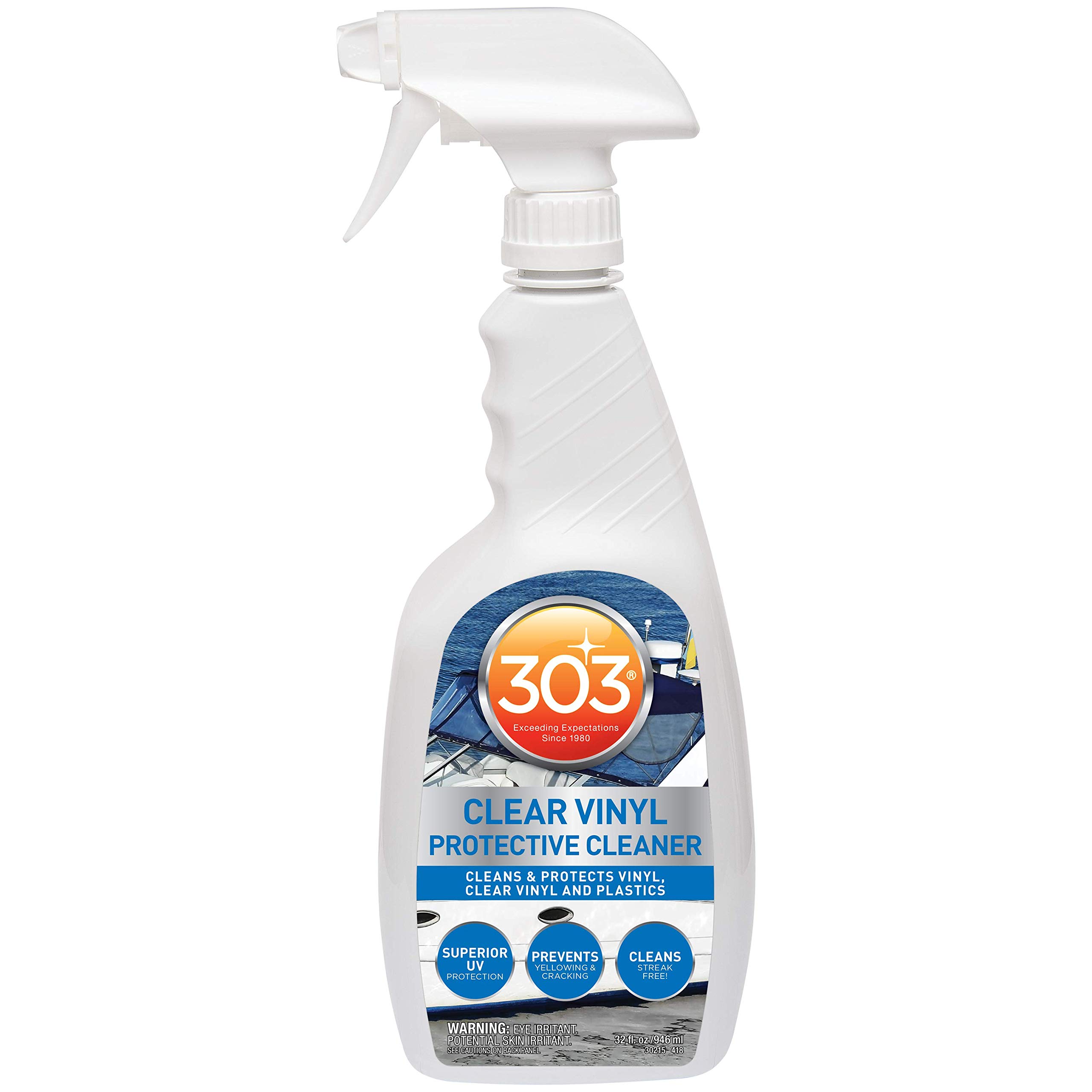
I rely on this when I need streak-free cleaning and UV protection for vinyl, Strataglass, and other clear plastics — it cleans and helps prevent yellowing and cracking.
Why I picked it: Superior UV protection and a matte, non-greasy finish for vinyl and clear plastics.
Best for: Marine vinyl upholstery, clear vinyl windows, trim and plastic surfaces exposed to sun.
Midrange protectant that doubles as a cleaner and barrier.
Pros
- Strong UV protection
- Dries matte, no greasy residue
- Simple spray-and-wipe application
- Helps prevent yellowing and cracking
Cons
- May need frequent reapplication
- Not always more effective than water on light grime
My take
I use 303 when upholstery and clear windows need both cleaning and protection. It wipes off cleanly with a microfiber towel and leaves no oily film, which I appreciate on seating and clear vinyl.
On a sun-exposed canvas I used the product after a basic wash and the finish looked noticeably refreshed. The protective effect gives me confidence the vinyl will resist fading longer between treatments.
It’s simple to apply and dries quickly, so I often use it as a finishing step after a deeper clean.
5. Star brite Instant Hull Gel Cleaner – Best Gel Formula for Vertical Stains
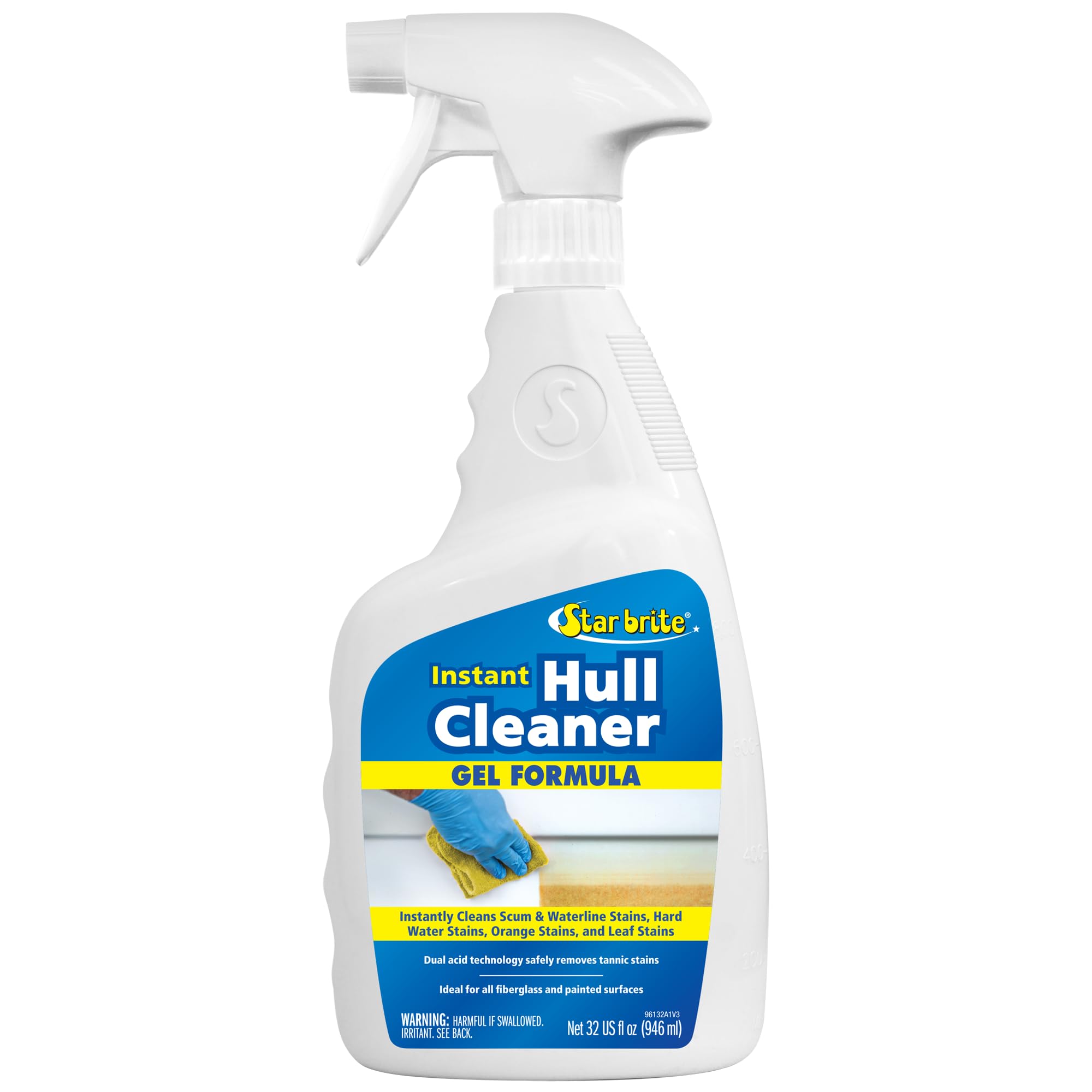
I reach for the gel when I’m dealing with vertical stains like transoms or fenders — the gel clings, penetrates, and dissolves stains without running off.
Why I picked it: Gel cling gives more dwell time on vertical and stubborn stains.
Best for: Vertical hull sections, fenders, transoms, and localized waterline marks.
Convenient spray-gel for spot treatments and vertical surfaces.
Pros
- Gel formula clings to vertical areas
- Effective on rust and fish blood stains
- Safer oxalic acid base
- Easy to rinse off
Cons
- Sprayer can be unreliable
- Can attract insects in warm weather
My take
The gel formula made a big difference on my swim platform and the vertical section of the hull. I sprayed it on, let it dwell, and the stains dissolved without aggressive scrubbing.
I did have one sprayer that stopped working halfway through a bottle, so I keep a spare or transfer to a pump sprayer when I have a lot to do. Despite that, the cleaning power and cling time make this my preferred product for vertical trouble spots.
It’s a great prep step before polish or wax when I need focused stain removal.
6. Boat Juice 2in1 Cleaner & Protectant – Best 2-in-1 Cleaner + Sealant
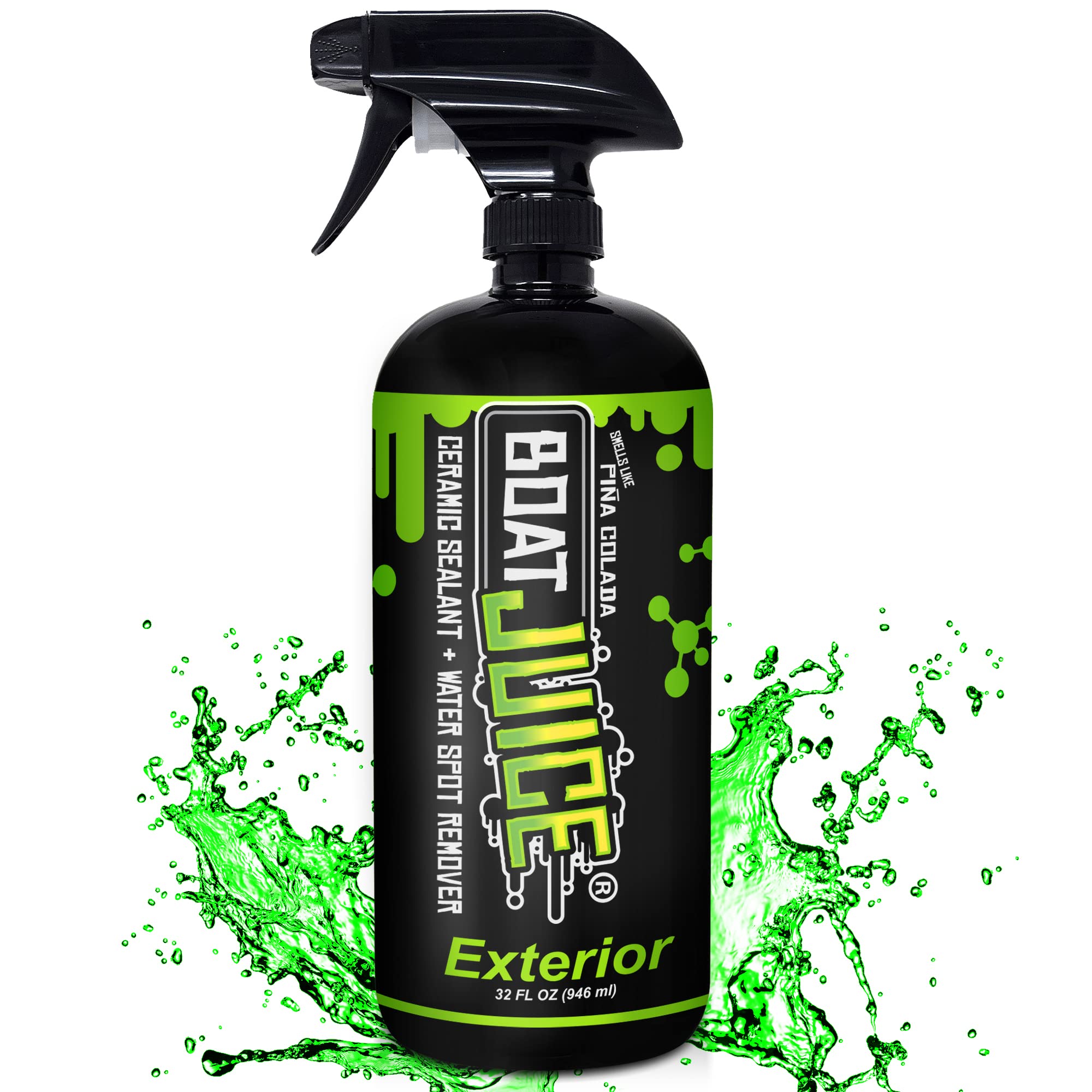
I use Boat Juice when I want a quick clean plus a SiO2 ceramic finish in one pass — it cleans mineral deposits and leaves a glossy seal with a pleasant scent.
Why I picked it: Cleans and leaves a SiO2 ceramic sealant, making quick wipes feel like detailing.
Best for: Fast wipe-downs, removal of water spots, trailers and interior fiberglass areas.
One-step solution for cleaning and short-term protection.
Pros
- Cleans and seals in one step
- Pleasant tropical scent
- Safe on many finishes
- Easy spray-on, wipe-off use
Cons
- Works best on already-clean surfaces
- Ceramic effect is not a permanent coating
My take
Boat Juice saved me a lot of time on a quick pre-launch wipe-down. One spray and a microfiber wipe revealed gloss underneath dirt, and the SiO2 finish left a slick, water-repellent feel.
I liked the tropical scent — it made the chore less unpleasant — and the product behaved well on gelcoat, chrome, and vinyl. For routine touch-ups between professional waxes this is a solid one-step option.
Keep in mind it isn’t a substitute for a full polish when the gelcoat needs real restoration; it’s best as a maintenance product.
7. Star brite EZ‑ON EZ‑OFF Hull & Bottom Cleaner – Best for Bottom Cleaning & Scum Lines
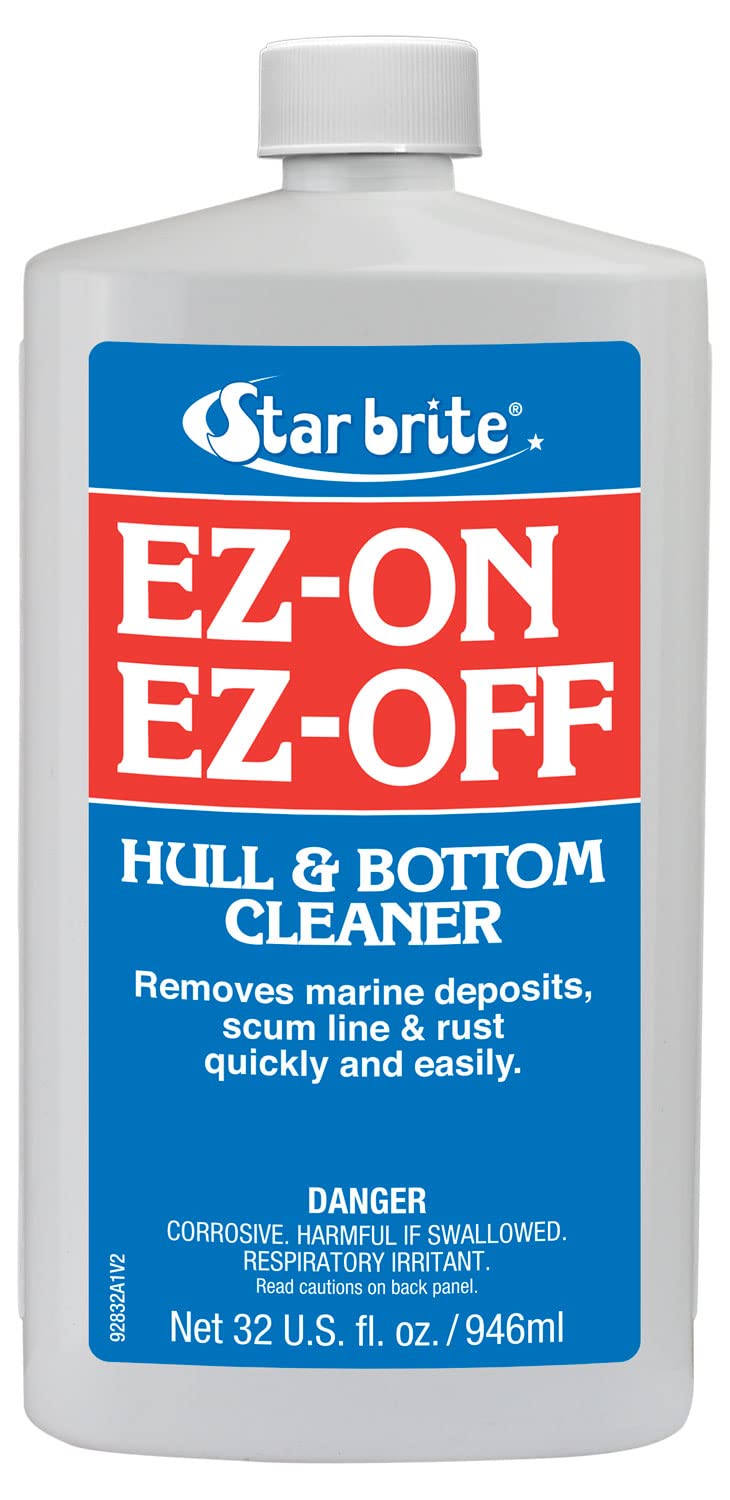
I bring this out for stubborn scum lines and marine deposits on the bottom and lower hull — it loosens marine growth and rinses away with a scrub or power wash.
Why I picked it: Designed to attack scum lines and bottom grime while being non-abrasive.
Best for: Hull bottoms, scum lines, algae and marine deposits on fiberglass and painted surfaces.
Economical, specialized cleaner for bottoms and scum lines.
Pros
- Removes scum lines effectively
- Non-abrasive formulation
- Simple apply, wait, rinse routine
- Works on multiple hull surfaces
Cons
- Requires PPE during use
- Best with prep and power washing
My take
I used the EZ‑ON EZ‑OFF after power washing the hull and it made the remaining staining practically vanish. I applied it with a pump sprayer, let it dwell, and then used a brush — the algae and scum came off with minimal elbow grease.
Because I was treating the bottom I wore proper goggles and gloves; the product is effective but merits caution. Prep matters here: a good rinse and scrub after dwell time gives the best results.
For seasonal bottom cleanings this is one of the most efficient products I’ve used to remove persistent marine deposits.
How I Choose a Boat Hull Cleaner
Match the formula to the surface
I always pick a cleaner formulated for the surface I’m working on. Oxalic-acid-based products are my go-to for fiberglass and painted hulls, while aluminum needs a dedicated aluminum restorer to avoid damage.
For vinyl and clear plastics I favor protectant-cleaner hybrids that provide UV defense and leave no greasy residue.
- Fiberglass/paint: instant hull cleaners (wipe-on, rinse-off)
- Uncoated aluminum: aluminum-specific cleaners and polish
- Vertical stains: gel formulas that cling
- Decks/non-skid: non-skid cleaners with UV protection
- Vinyl/clear plastic: protectant cleaners that dry matte
How to use cleaners safely and effectively
I prepare the surface with a rinse or power wash to remove loose debris first. That makes the cleaner work faster and reduces scrubbing.
Always wear gloves and eye protection, work in a ventilated area, and follow dwell times. I test a small hidden area first to confirm compatibility.
- Rinse the hull before applying cleaner
- Use a pump sprayer for large jobs
- Let products dwell per directions, then rinse
- Use a soft brush on non-skid; avoid abrasive pads on gelcoat
Maintenance strategy I follow
I divide maintenance into quick touch-ups and deep restores. Quick cleaners and 2-in-1 products keep the boat looking great between seasonal polish and wax routines.
For deep oxidation or heavy staining, plan a two-step process: restore, then protect with a polish or sealant.
- Weekly: quick wipe-downs with a 2-in-1 or spray cleaner
- Monthly: treat waterline and deck areas with targeted cleaners
- Seasonally: deep clean aluminum and follow with polish/protection
Frequently Asked Questions
Which cleaner should I use on aluminum?
I always use a product formulated specifically for uncoated aluminum—like the Star brite aluminum cleaner—then follow with an aluminum polish to protect the finish.
Can I use gel hull cleaner on vertical surfaces?
Yes. I prefer the gel formula for vertical spots because it clings and gives more dwell time to dissolve stains without running off.
Do I need protective gear when using these cleaners?
Absolutely. I wear chemical-resistant gloves and goggles, and I work in a ventilated area. Some products are powerful and require basic PPE for safety.
Will a 2-in-1 cleaner replace polishing?
No. I use 2-in-1 products for maintenance and water-spot removal, but a full polish or wax is still necessary when the gelcoat or metal needs restoration and long-term protection.
Final Take
I keep several of these products on board because each has a role: aluminum restorer for metal, gel for vertical stains, instant hull cleaners for fast jobs, and protectants for vinyl and trim.
If you want one bottle to start with, choose based on your most frequent problem: aluminum pitting and oxidation, scum lines on fiberglass, or quick maintenance between details. From there, add a gel or deck cleaner to round out your kit.
With the right cleaner and a small routine, I find maintenance becomes faster and less of a chore — and the boat looks better for more of the season.
