
I've tested these box fans in windows, bedrooms, and workshops. This roundup highlights the models I rely on for raw airflow, portability, and quiet personal cooling.
I spend a lot of hot days swapping box fans between windows, desks, and floors, so I know which designs actually deliver steady airflow and which fall short.
In this guide I focus on real-world use: how loud a fan is at each speed, how easy it is to move or mount, and which models are best for drawing air in or pushing warm air out.
If you want a fan that cools fast, fits a windowsill, or runs quietly all night, I’ll point you to the right pick and explain why.
I compared these fans for raw airflow, portability, and noise. Some are built for brute force and room-scale circulation, others prioritize compact size, light weight, or a quiet bedside hum.
1. Hurricane Classic 20-inch Floor Box Fan – Best for Raw Airflow
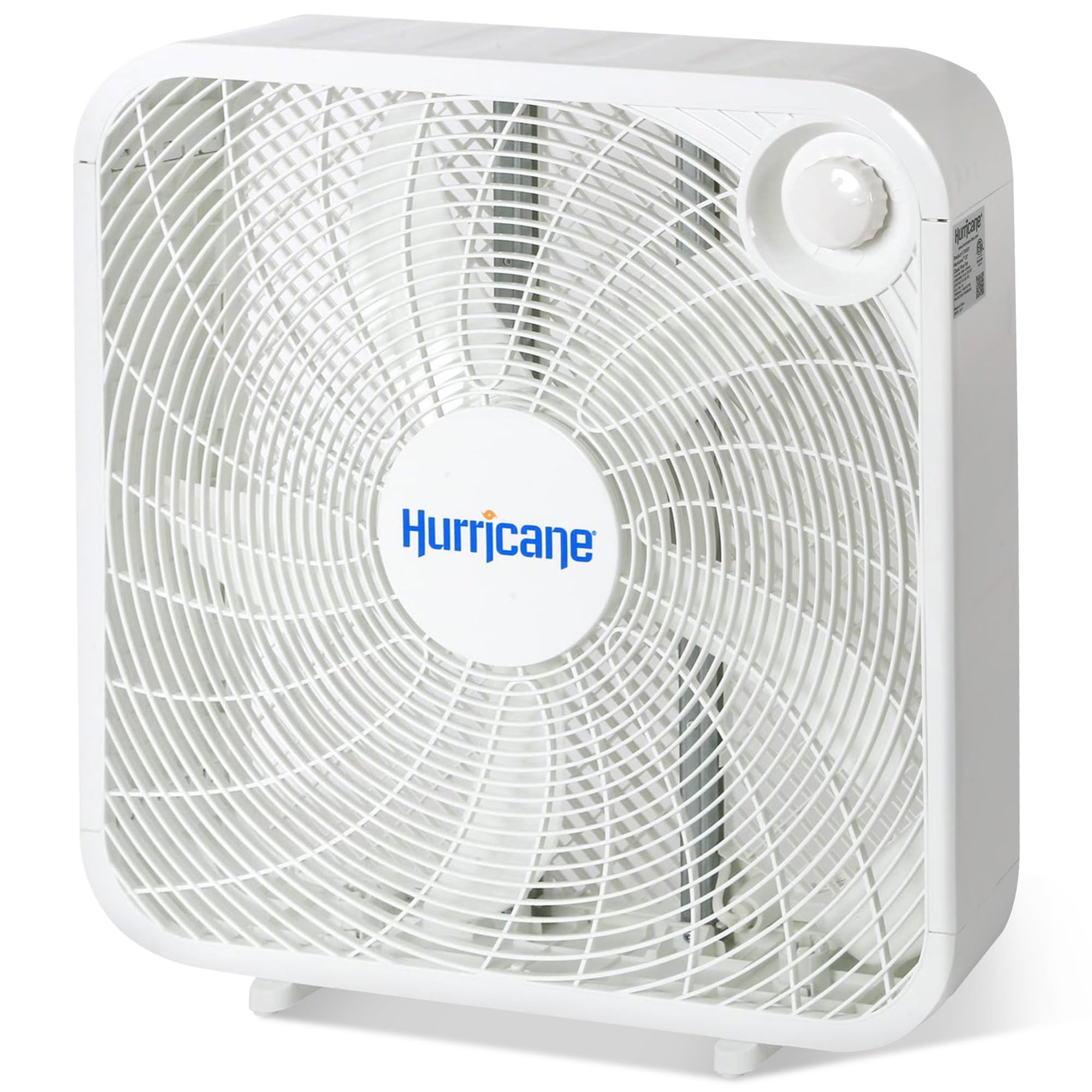
When I need unapologetic airflow to cool a hot room or ventilate a garage, this Hurricane 20" fan is my go-to for steady, high-volume air delivery.
Why I picked it: Delivers massive airflow and stays stable at high speed.
Best for: Pushing a lot of air in large rooms, garages, and window ventilation.
Affordable high-airflow option for heavy-duty use.
Pros
- Very high airflow
- Simple, durable construction
- Stable at full speed
- Three easy-to-use speeds
Cons
- Loud on higher settings
- Basic control interface
My take
I put this Hurricane fan in a bedroom window and under my gaming rig to clear hot air quickly. The 20-inch blade and 2400 CFM capability make a noticeable difference: it pulls and pushes air like a small shop fan.
Build quality feels solid for the price — polymer blades and a sturdy frame that don't wobble when cranked up. I appreciate the adjustable feet that let me angle airflow exactly where I want it.
Noise is the trade-off for that power. I usually run it on the lowest setting for ambient cooling and white noise; when I need real cooling I accept the louder sound on higher speeds.
2. PELONIS 20-inch Box Fan – Best Portable 20-inch
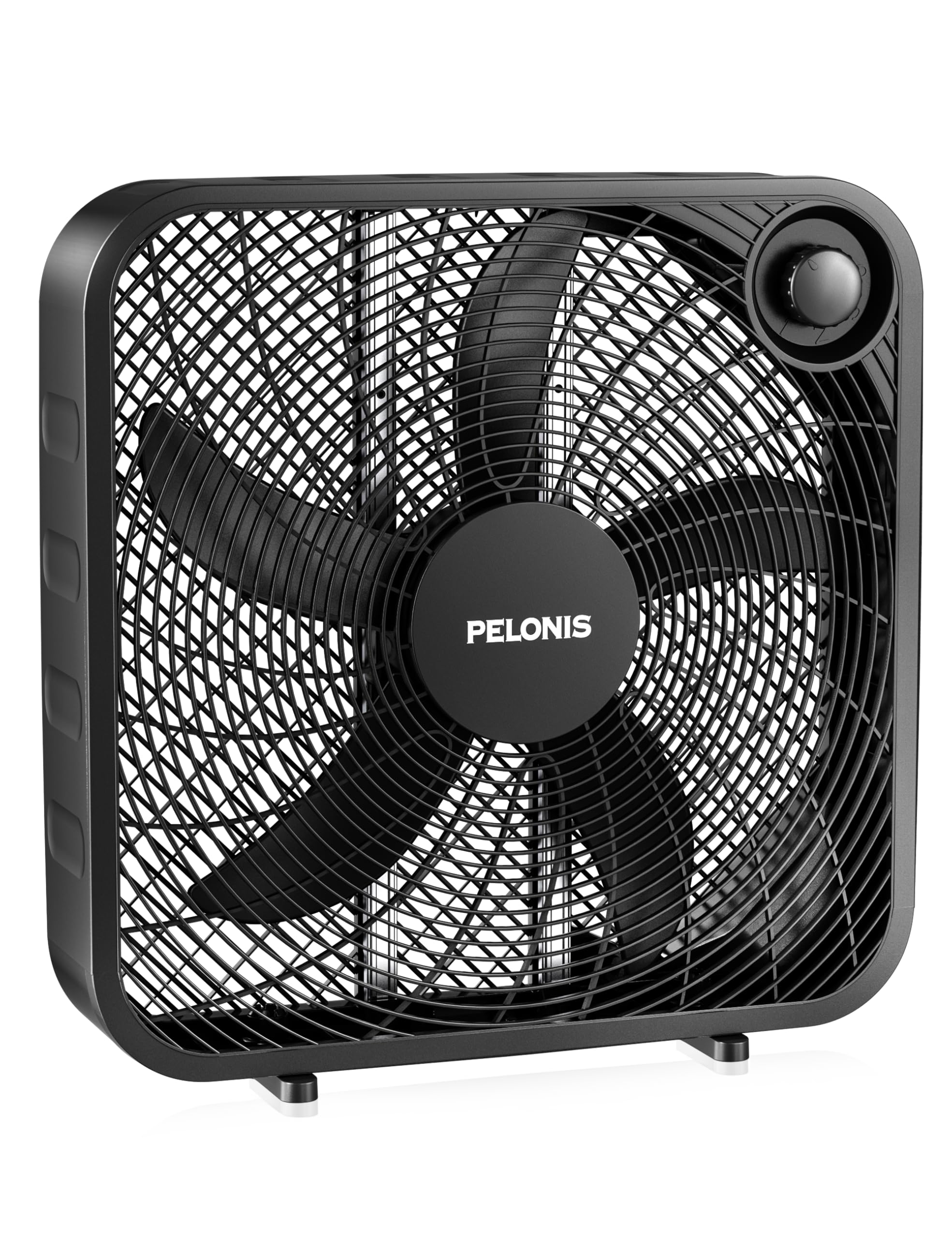
I reach for the Pelonis when I want strong airflow that’s easy to move from room to room or to mount in a window without wrestling the unit.
Why I picked it: Lightweight and easy to reposition without sacrificing air throw.
Best for: Window use, quick spot cooling, and moving between rooms.
Good value for a lightweight, versatile 20-inch fan.
Pros
- Very lightweight and portable
- Strong air throw for size
- Built-in handle for easy carrying
- Works well as a window fan
Cons
- Plastic feel to the build
- Noticeable noise at high speed
My take
I liked how fast I could grab this Pelonis and move it to wherever I needed more ventilation. At about the same width as other 20-inch fans, it’s surprisingly light and the handle makes it effortless to reposition.
Performance-wise it punches above its weight. I used it on a table in front of a window to pull in cool evening air and it made a clear difference in room temperature. Expect motor noise when you push it hard — that’s the trade-off for the airflow it produces.
Assembly was minimal and I found it well balanced; it didn’t wobble on higher speeds like cheaper fans can.
3. BLACK+DECKER 9-inch Frameless Box Fan – Best Compact Desk Fan
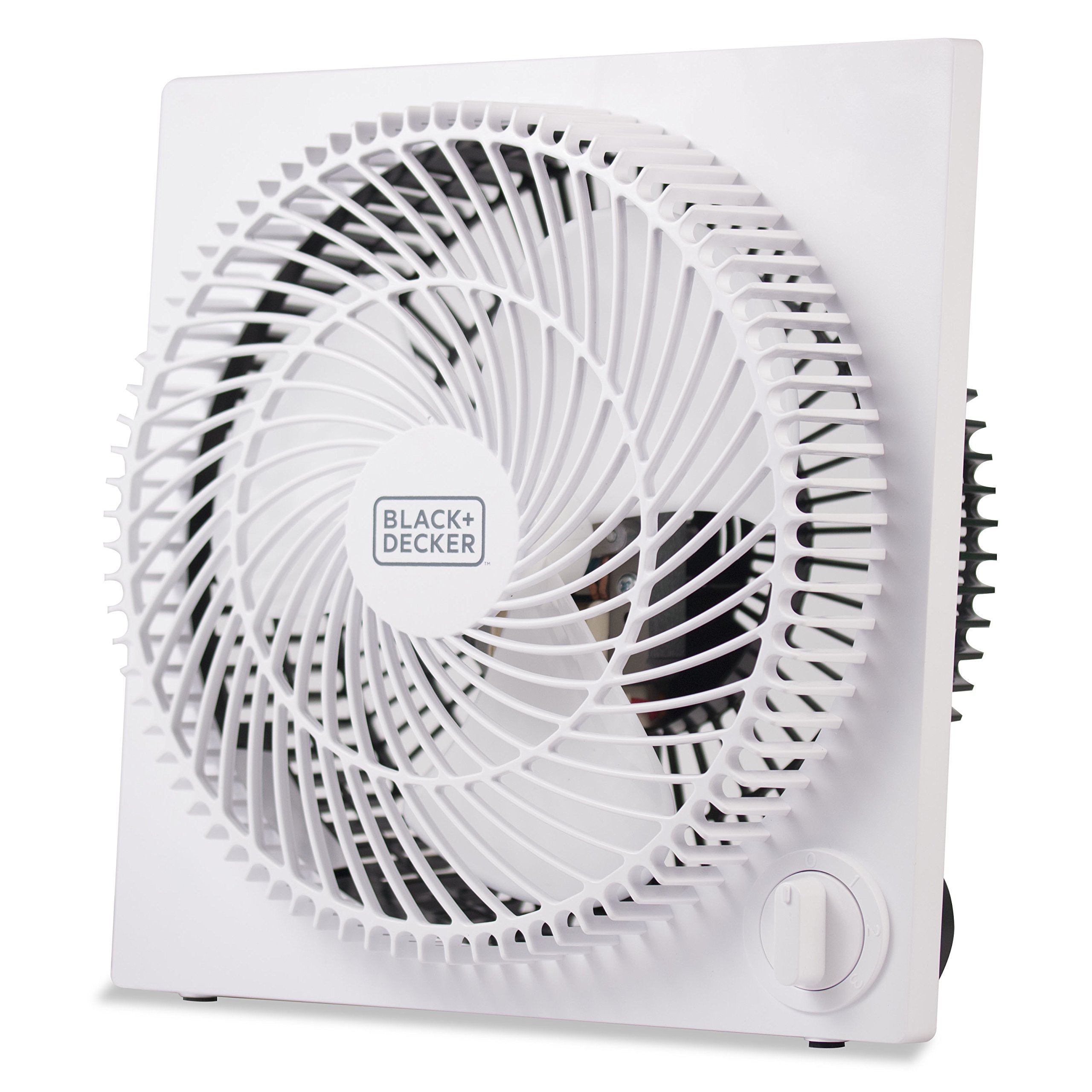
For tight spaces, windowsills, or a desktop, this small frameless fan gives me controllable airflow without the bulk of a 20-inch box fan.
Why I picked it: Compact, quiet, and easy to tuck into small spots.
Best for: Desktops, windowsills, bathrooms, and small rooms.
A compact option that’s easy to justify for personal use.
Pros
- Slim, frameless design
- Quiet operation
- Very portable
- Simple dial control
Cons
- Limited coverage area
- Less raw power than larger fans
My take
I kept this Black+Decker on my windowsill and at my desk — it fits places a 20-inch unit can’t and still moves enough air to be useful. The frameless look is much cleaner in a living space than a chunky box fan.
Noise levels are low enough to work next to without distraction, and the three speeds give me control for everything from a gentle breeze to a focused blast of air.
If you need whole-room circulation, go bigger. For personal cooling or tightening ventilation in a small space, this one is my favorite compact pick.
4. Genesis 20-inch Box Fan – Best for Powerful Bedrooms
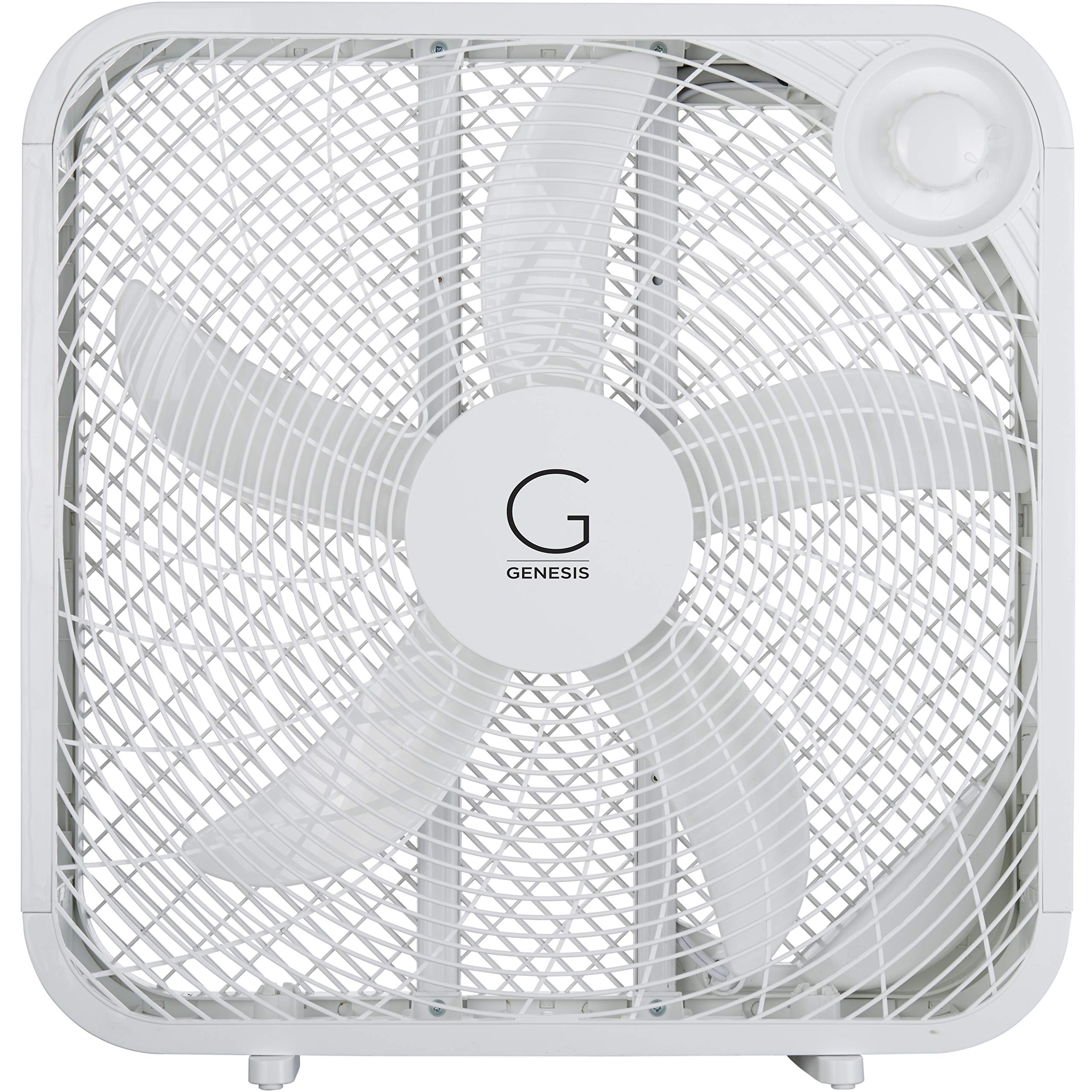
I depend on the Genesis when I want a strong, steady breeze at night — it’s loud enough to cool and provide steady white noise when I need it.
Why I picked it: Powerful airflow with a no-nonsense, minimalist look.
Best for: Bedrooms and spaces where strong, steady airflow and white noise are desired.
A solid midrange option for consistent performance.
Pros
- Strong airflow
- Simple, sturdy design
- Effective for sleep white noise
- Adjustable feet for stability
Cons
- Quieter settings still produce sound
- No top carry handle
My take
I use the Genesis on nights when I want both cooling and a steady background hum; it’s louder than some modern quiet fans, but that’s exactly why it cools so effectively.
The copper motor feels robust and the fan moves air fast enough that speed two often does more for me than other fans’ top settings. It’s lightweight but stable once the adjustable legs are set.
If you prefer a whisper-quiet fan, this might not be your first choice. For me, the airflow-to-noise tradeoff is worth it.
5. Amazon Basics 20-inch Box Fan – Most Stable & Reliable
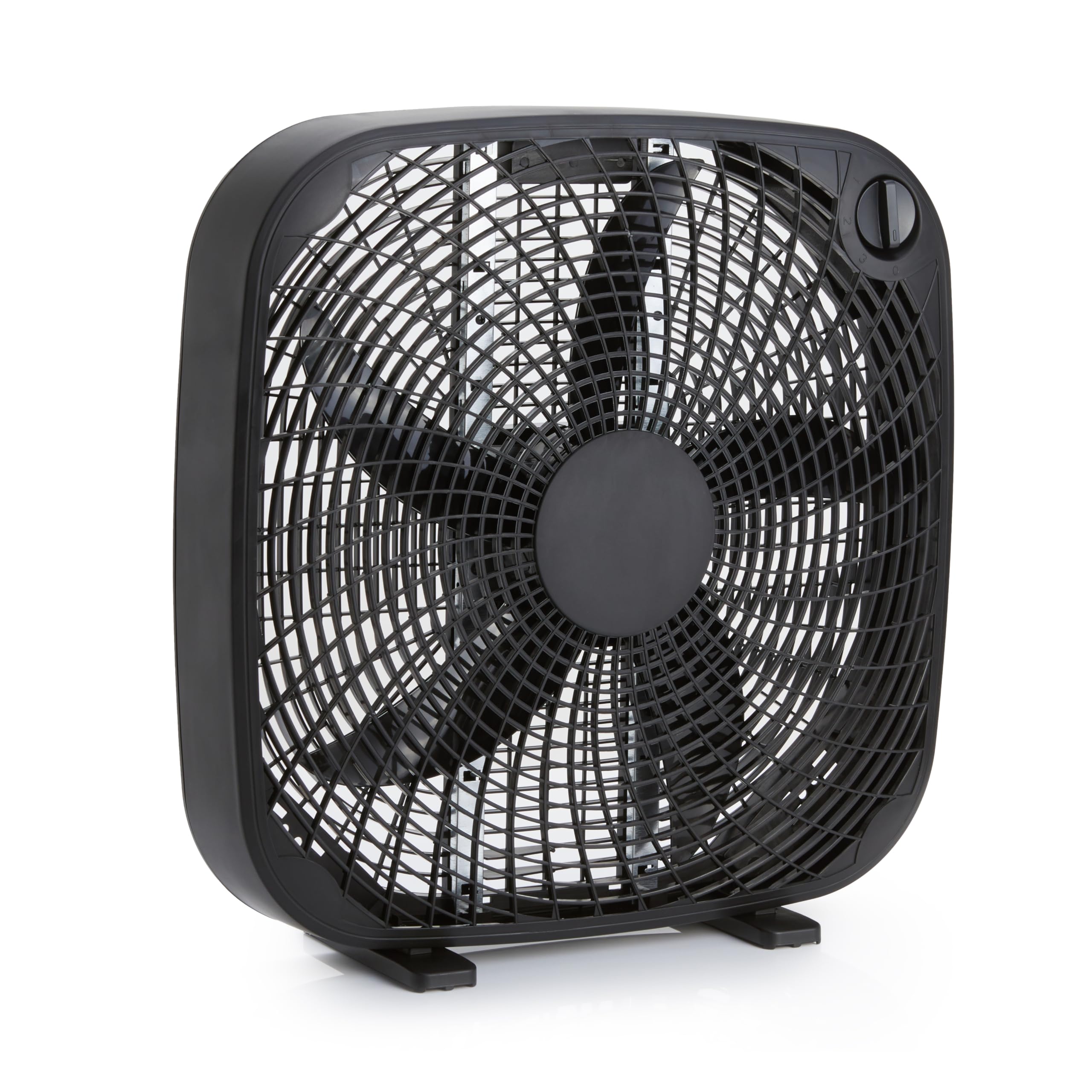
When I want a dependable, well-balanced fan with a sturdy footprint, the Amazon Basics 20-inch model is the one I keep coming back to.
Why I picked it: Stable feet and balanced performance that works overnight.
Best for: Nighttime use, consistent circulation, and a dependable daily fan.
Budget-friendly with surprisingly solid construction.
Pros
- Stable, large feet
- Smooth, balanced airflow
- Lightweight and portable
- Quiet enough for sleep
Cons
- May not last as long as premium units
- Some units show faint ticking
My take
This Amazon Basics fan became my default bedside fan because it stays put and runs without the rattles that plague many inexpensive box fans. The large feet keep it from sliding or tipping, which I value when it runs overnight.
Airflow is well-distributed thanks to the grill design — it cools rooms evenly instead of blasting a narrow column of air. I did notice a couple of units can develop a faint tick, but mine ran smoothly for months before any issue appeared.
Overall, it’s a dependable, no-frills option that balances quiet operation with useful airflow.
How I Choose a Box Fan
Size and Airflow
I decide between 20-inch and compact models based on the area I need to cool. A 20-inch fan moves much more air and is better for whole-room use; a 9-inch or compact fan is ideal for personal cooling or tight spots.
For window ventilation, I prioritize a fan with strong air throw so it can pull fresh air in or push hot air out effectively.
- Choose 20-inch for room-scale circulation.
- Pick a compact model for desks, windowsills, and bathrooms.
Noise vs. Power
I always weigh noise against how much air the fan moves. High airflow inevitably means more sound, so I use lower speeds when I need quiet and reserve high speeds for short bursts of cooling.
If you want white noise to sleep, a fan that’s louder but smooth-running can be a benefit rather than a drawback.
- Run on low for quiet, high for fast cooling.
- Look for stable construction to avoid rattles at higher speeds.
Portability and Placement
I look for a built-in handle, light weight, and slim profiles when I expect to move a fan often. Models with a T-shaped or wide base are easier to position on uneven surfaces.
Placing a fan in a window works best when the unit seals reasonably well; I’ve used simple plastic liners to improve the fit and boost performance.
- Handles and light weight make repositioning easy.
- Adjustable feet help aim airflow without extra stands.
Durability and Safety
I prefer fans with a robust motor and well-balanced blades so the unit doesn’t vibrate or stress the housing over time. Copper motors and solid housings tend to feel more durable.
If you plan to run a fan for long periods or overnight, pick a model with a stable base and secure plug fuse or overload protection.
- Look for stable feet and a sturdy motor.
- Consider models with overload protection for extended use.
Frequently Asked Questions
Can I safely use a box fan in a window?
Yes. I use box fans as window fans regularly — position them to push hot air out or draw cool air in, and seal gaps where possible for better efficiency.
Which fan is best for sleeping?
For sleep I pick a unit that runs smoothly without rattles; lower speed settings on a powerful fan or a compact quiet model work well for steady white noise and cooling.
How do I reduce noise from a loud box fan?
I try tightening fasteners, ensuring it sits on a stable surface, and running it at a lower speed. Sometimes adding a rubber pad under the feet cuts vibration noise.
Final Take
I keep at least two of these fans on hand: a powerful 20-inch for heavy-duty cooling and a compact model for desk or window use. That combo covers every ventilation need I encounter.
If you want sheer airflow, go with the Hurricane or Genesis. If portability and easy window mounting matter most, the Pelonis is my pick. For compact personal use, the BLACK+DECKER is excellent, and the Amazon Basics model is the reliable everyday choice.
Choose the fan that matches how you intend to use it — power, portability, or quiet — and you’ll get far more cooling value from it all summer long.
