
I tested four BPA-free container sets across pantry organization, meal prep, glass options, and leak-prone foods. These picks balance airtight seals, stackability, and daily durability so you can pick the right system to
I organized my pantry and overhauled weekly meal prep with a handful of BPA-free containers. Each set I kept pulled a different strength: bulk pantry storage, meal-prep durability, glass for portioned lunches, and leak-resistant rounds for soups and sauces.
My goal was practical everyday performance — airtight seals that actually hold, lids that are easy to store, and materials that stand up to the microwave, freezer, and dishwasher when applicable. Below I explain what worked, what didn’t, and which container fits the way I cook and store food.
If you need bulk pantry organization reach for the Vtopmart set; for everyday meal prep a Rubbermaid Tritan option is the most versatile; choose the MCIRCO glass containers when I want oven/microwave-safe, non-plastic lunches; and the Ziploc Twist 'n Loc pieces are my go-to for liquids and soups.
1. Vtopmart Airtight Pantry Containers (24-piece) – Best for Pantry Organization
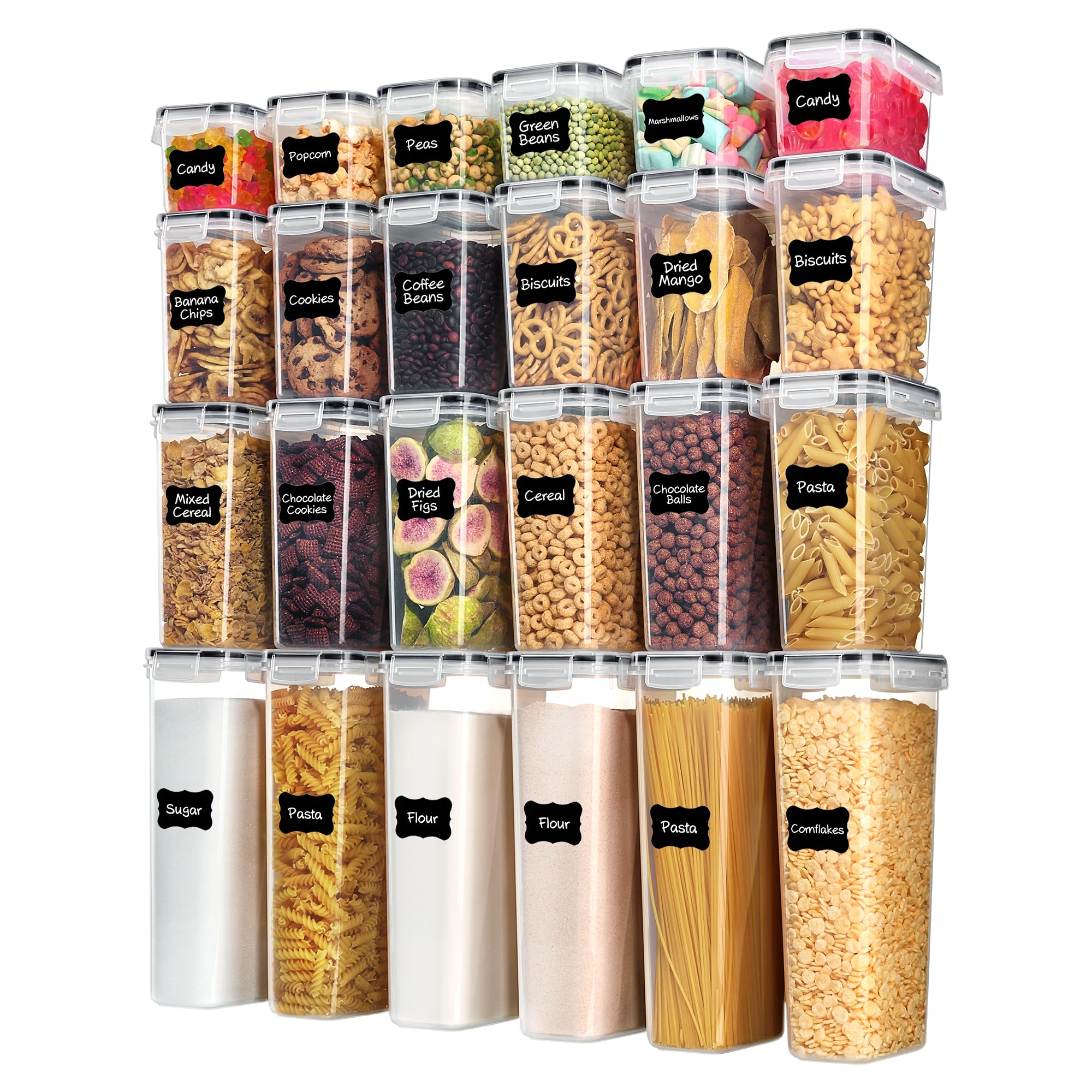
A 24-piece BPA-free plastic set with four sizes, stackable bodies, side-locking lids with silicone gaskets, and reusable labels tailored for bulk dry goods.
Why I picked it: Large mixed-size set, airtight side-lock lids, and reusable labels for pantry decluttering.
Best for: Storing cereal, flour, sugar, pasta, and other bulk dry goods in a tidy pantry.
Affordable, pantry-focused value set.
Pros
- Four useful size options in one set
- Clear bodies for instant identification
- Stackable, space-saving shapes
- Reusable labels included
- Secure side-lock silicone seals
Cons
- Arrive nested and can be hard to separate
- Identical lids mean occasional mix-ups
My take
I replaced unwrapped boxes and plastic bags in my pantry with this 24-piece set and the visual difference was immediate — everything looks and functions neater.
The side-lock lids with silicone gaskets sealed flour, sugar, and snacks well in my week-long tests. I could see contents without opening containers, which sped up meal prep.
Stacking is efficient, and the uniform lids make washing and storage straightforward. The included reusable labels made rotating contents simple.
A practical downside: the containers arrived nested and tightly packed; I needed a tool to separate some of them. Once separated they behaved perfectly, but I treat them as a mostly single-use stack after unpacking to avoid that hassle.
2. Rubbermaid Premier Easy Find Lid Set – Best for Meal Prep
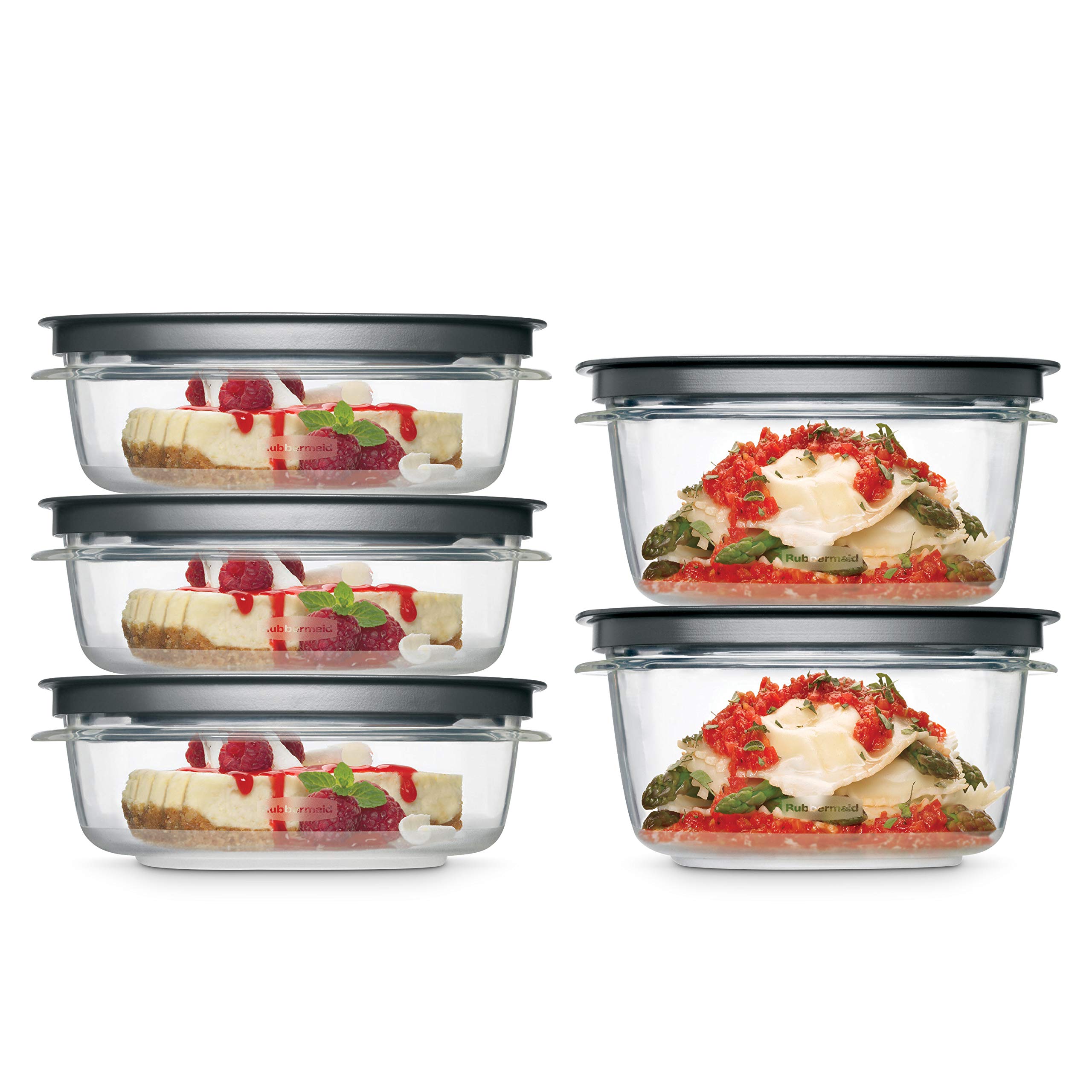
A compact BPA-free Tritan set with crystal-clear, shatter-resistant bases, lids that snap to bottoms and each other, and microwave-safe bases for reheating.
Why I picked it: Tritan bases resist stains and odors; lids snap for tidy storage and quick access.
Best for: Everyday meal prep, reheating leftovers, and compact kitchen storage.
Midrange, durable Tritan construction.
Pros
- Shatterproof Tritan bases
- Lids snap to bases for storage
- Resists stains and odors
- Microwave- and dishwasher-safe bases
- Bases nest to save space
Cons
- Smaller 10-piece set for limited needs
- Bases can develop stress cracks over long use
My take
I keep this Rubbermaid set in rotation for weekday lunches and quick reheats. The Tritan bases stay crystal-clear longer than many plastics I’ve used, and food didn’t pick up lingering odors.
The Easy Find lids snapping to the container bottoms is a small design win — I never hunt for a matching lid. The updated lid profile also dries faster and helps reduce overfill drips.
I rely on these for microwave reheats (I remove lids when reheating as recommended) and toss them in the top rack of the dishwasher. Over several months of daily use I noticed occasional surface stress lines on very old pieces, so I treat them as long-lasting but not indestructible.
3. MCIRCO Borosilicate Glass 3-Compartment Containers – Best Glass Meal Prep
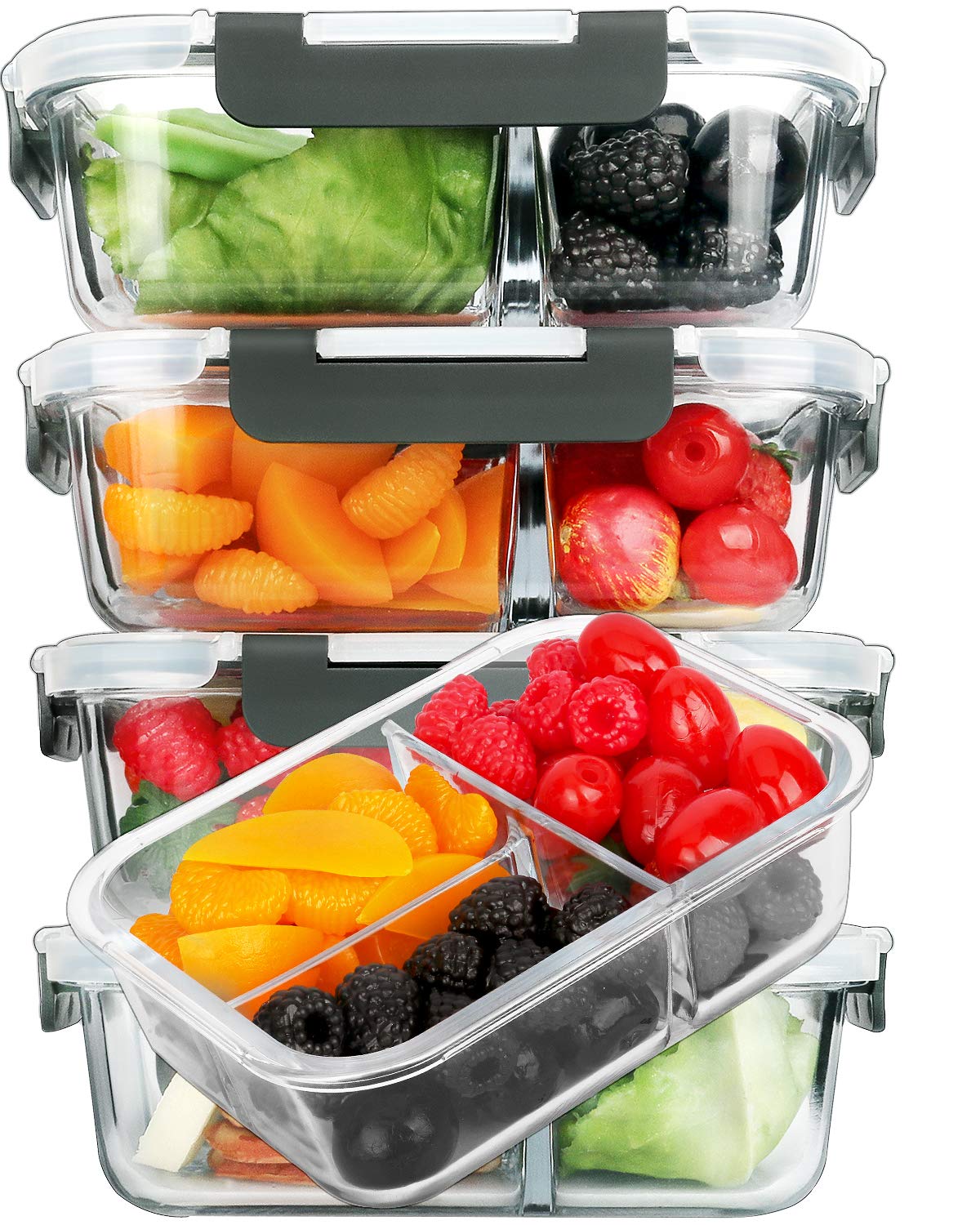
Divided borosilicate-glass meal prep containers with airtight snap-lock lids and silicone seals — oven-, microwave-, freezer-, and dishwasher-safe (remove lids for oven/microwave).
Why I picked it: Premium borosilicate glass plus three compartments for portion control and oven-to-table versatility.
Best for: Portion-controlled meal prep and reheating in oven or microwave.
Higher-end glass option for long-term use.
Pros
- Premium borosilicate glass
- Three compartments for portion control
- Airtight snap-lock silicone lids
- Oven, microwave, freezer safe
- Non-staining and durable
Cons
- Heavier than plastic alternatives
- Lids must be removed for oven use
My take
I bought these when I started shifting away from single-use plastic for lunches, and the borosilicate glass felt noticeably sturdier than standard glass containers.
The three compartments are ideal for portioning proteins, sides, and sauces. Lids sealed tightly in my countertop and fridge tests — I didn’t get leaks when lids were secured.
Heating in the microwave and oven (with lids off) worked great, and cleanup was simple in the dishwasher. They’re heavier in a lunch bag than plastic, but the durability and non-reactive glass are worth it for meals I reheat often.
4. Ziploc Twist 'n Loc Small Round Containers (9-count) – Best for Liquids
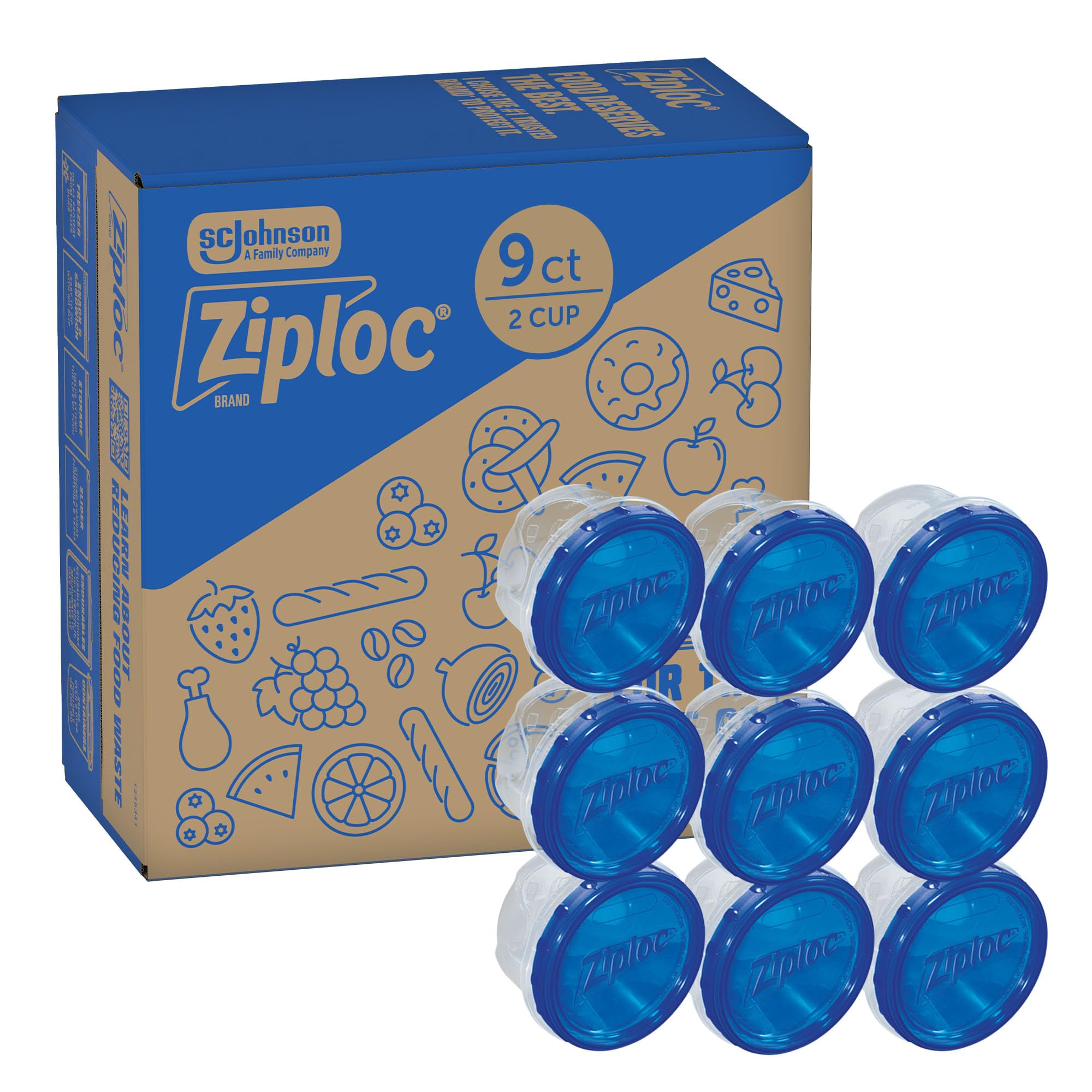
Small round, BPA-free containers with a leak-resistant twist-lock lid design, stackable bodies, and easy-open grip lids for soups, sauces, and snacks.
Why I picked it: Twist-lock lids focus on leak resistance and easy gripping for liquids.
Best for: Soups, sauces, dressings, and portable snacks that need leak protection.
Budget-friendly reusable option.
Pros
- Leak-resistant twist-lock lids
- Microwave and freezer safe
- Easy-open grip lid
- Stackable for tidy storage
- Made without BPA
Cons
- I often double-bag liquids for travel
- Smaller round shapes limit bulk storage
My take
These Twist 'n Loc containers became my go-to for soups and homemade sauces because the twist-lock mechanism feels more secure than a standard press-fit lid.
I pack them for lunch and for freezing small portions; the lids are easy to open but hold tight when stacked. I still sometimes place a container in a zipper bag for extra peace of mind when transporting, though I haven’t experienced leaks in regular use.
They’re lightweight and stack neatly in my fridge. For small-volume liquid storage they hit the sweet spot between convenience and reliability.
How I Choose BPA-Free Food Storage Containers
Material: plastic vs. glass
I pick glass when I want a non-reactive surface and oven-to-table versatility; borosilicate glass is tougher and tolerates thermal changes better than ordinary glass.
I choose Tritan or high-quality BPA-free plastics when weight, shatter resistance, and stain/odor resistance are priorities for everyday use.
- Glass: best for longevity and reheating without plastic contact
- Tritan/plastic: lighter, shatterproof, and resists staining
- Match material to how you transport, heat, and store food
Seal and lid design
I assess lids for true airtight performance: silicone gaskets and side- or snap-lock mechanisms tend to seal better for long-term freshness.
Also consider how lids store — lids that snap to bases save cabinet space and prevent lost parts.
- Look for silicone gaskets on plastic lids for better seals
- Snap-to-bottom lids reduce lid hunting
- Twist-lock designs excel at containing liquids
Set sizes and shapes
I consider the foods I store most. Wide, tall containers work for spaghetti and cereal; divided containers are ideal for meal prep portions.
A larger multi-size set is best for pantry consolidation, while smaller mixed sets suit everyday leftovers and lunches.
- Buy mixed-size sets for pantry organization
- Choose divided or compartmentalized containers for meal prep
- Think stackability to maximize cabinet space
Care and durability
I test whether bases and lids are dishwasher-safe, microwave-safe, and freezer-safe and use products within those limits to extend life.
I avoid frequent high-heat microwave use on some plastics to prevent stress cracking over the years.
- Follow manufacturer guidance for lids in microwave/oven
- Top-rack dishwasher cleaning usually preserves seals
- Expect different lifespans: glass lasts long, plastic may show wear
Frequently Asked Questions
Are all these containers BPA-free?
Yes — each product listing specifies BPA-free materials. I rely on that designation when I choose containers for direct food contact.
Can I microwave food in these containers with the lid on?
Not always. I heat Rubbermaid bases in the microwave but remove lids. For MCIRCO glass I remove lids before microwaving or using the oven. Ziploc states microwave and freezer compatibility for their containers, and I follow the guidance to remove lids or vent when required. Vtopmart is designed primarily for pantry storage of dry goods, so I don’t use those lids in the microwave.
Which set is best for long-term pantry storage?
I prefer the 24-piece Vtopmart set for pantry bulk goods because of the variety of sizes, clear bodies, and reusable labels that keep dry items organized.
Final Take
I chose these four options to cover the most common storage needs: pantry bulk, everyday meal prep, glass meal prep, and leak-prone liquids. Each one performed well in its lane.
If I had to start with one, I’d pick the Vtopmart set for pure pantry consolidation or the Rubbermaid Premier set for everyday meal prep flexibility. For oven- and microwave-safe, non-plastic lunches I reach for the MCIRCO glass containers, and for soups I rely on the Ziploc Twist 'n Loc pieces.
Whichever one I use, paying attention to lid type, material, and how I heat and transport food makes the difference between a set I keep and one that gets retired.
