
I tested four popular bread machines so you don’t have to. Here are the ones I keep reaching for—whether I need a fuss-free loaf, advanced customization, or fast convection baking.
I bake at home regularly and have spent weeks putting these bread machines through their paces. My goal was simple: find machines that consistently deliver great texture and crust, that are easy to use, and that hold up to repeated use.
Below I compare four machines I used for white loaves, whole-grain bakes, dough-only cycles, and specialty programs like sourdough and jam. I explain what each machine does best, the quirks I ran into, and which one I reach for depending on the loaf I want.
I chose these machines because each excels in a different area: the Cuisinart for everyday consistency and compact footprint, the KBS Pro for power and convenience features, the KITCHENARM for deep customization and advanced menus, and the KBS Premium for fast convection baking and a horizontal ceramic pan.
1. Cuisinart Bread Maker – Best Overall
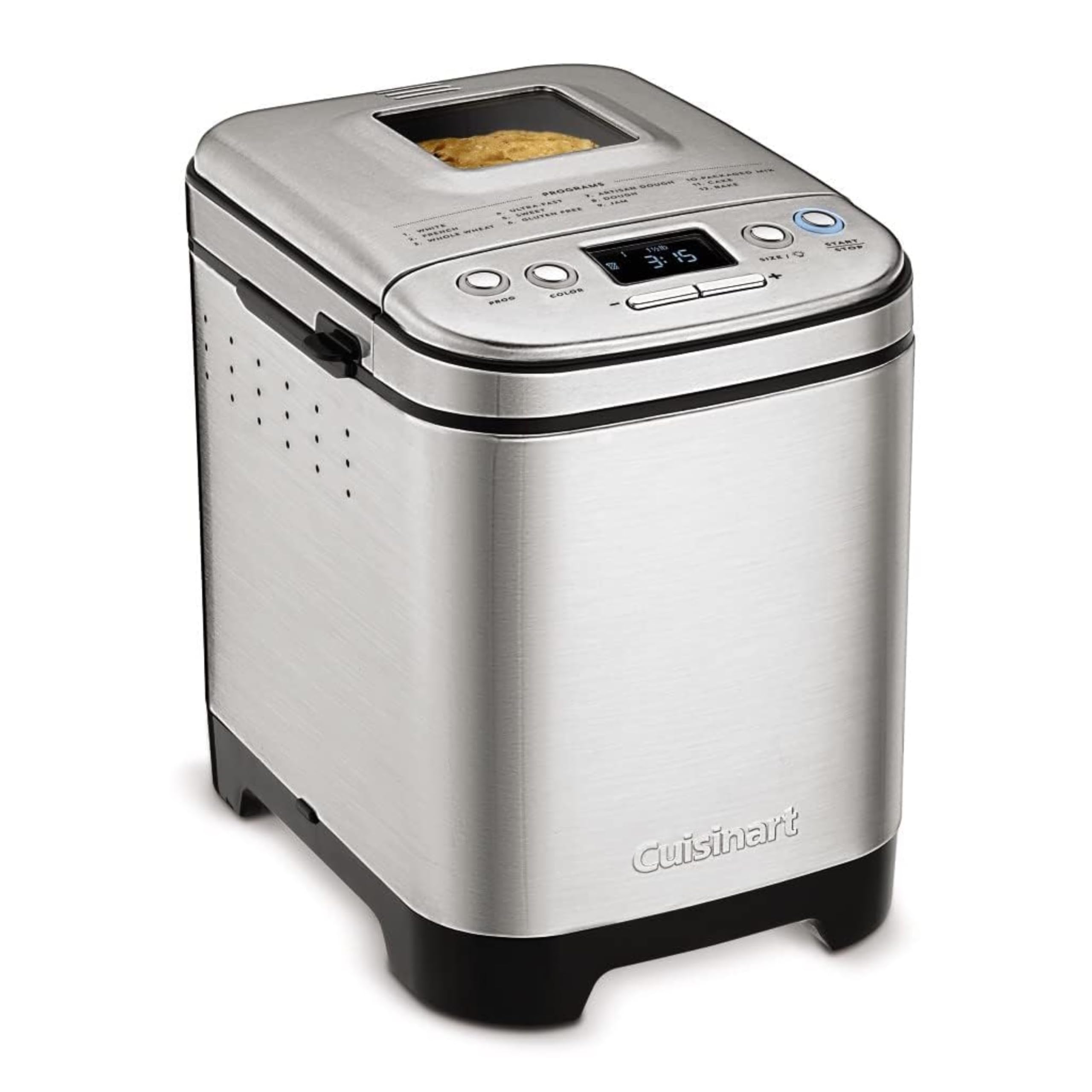
I kept this on my counter because it consistently turns out dependable loaves with a compact footprint and simple controls. The 12 menu options and three loaf sizes fit most household needs without being overwhelming.
Why I picked it: Reliable everyday loaves in a compact machine.
Best for: People who want fuss-free, consistent loaves daily.
Solid midrange value for its features.
Pros
- Compact, counter-friendly footprint
- Three loaf sizes and crust colors
- Removable nonstick pan for easy cleanup
- 13-hour delay start for morning bread
Cons
- Suction feet could hold better
- Whole-wheat results need recipe tweaks
My take
I used the Cuisinart as my go-to everyday machine and appreciated how straightforward it is. The LCD makes it easy to see the cycle and remaining time, and the audible beeps are helpful cues when adding extras or ending a cycle.
The machine handled basic white loaves beautifully—golden crust and a soft crumb—every time. I did run into a consistent learning curve with whole-wheat recipes; my first attempts were dense until I adjusted hydration and rise time. In short, the machine does what it promises, but whole-grain baking required me to tweak recipes.
I also value the removable nonstick pan and paddle: cleanup is quick, and the vertical loaf fits neatly into an apartment toaster or lunchbox. The 60-minute keep-warm and 13-hour delay-start are features I use regularly so I can wake to fresh bread.
The one minor annoyance: the suction cups that are supposed to stabilize the unit aren’t very strong on smooth counters. It never affected baking performance, but I did place a silicone mat underneath for peace of mind.
2. KBS Pro Bread Maker – Best for Power & Convenience
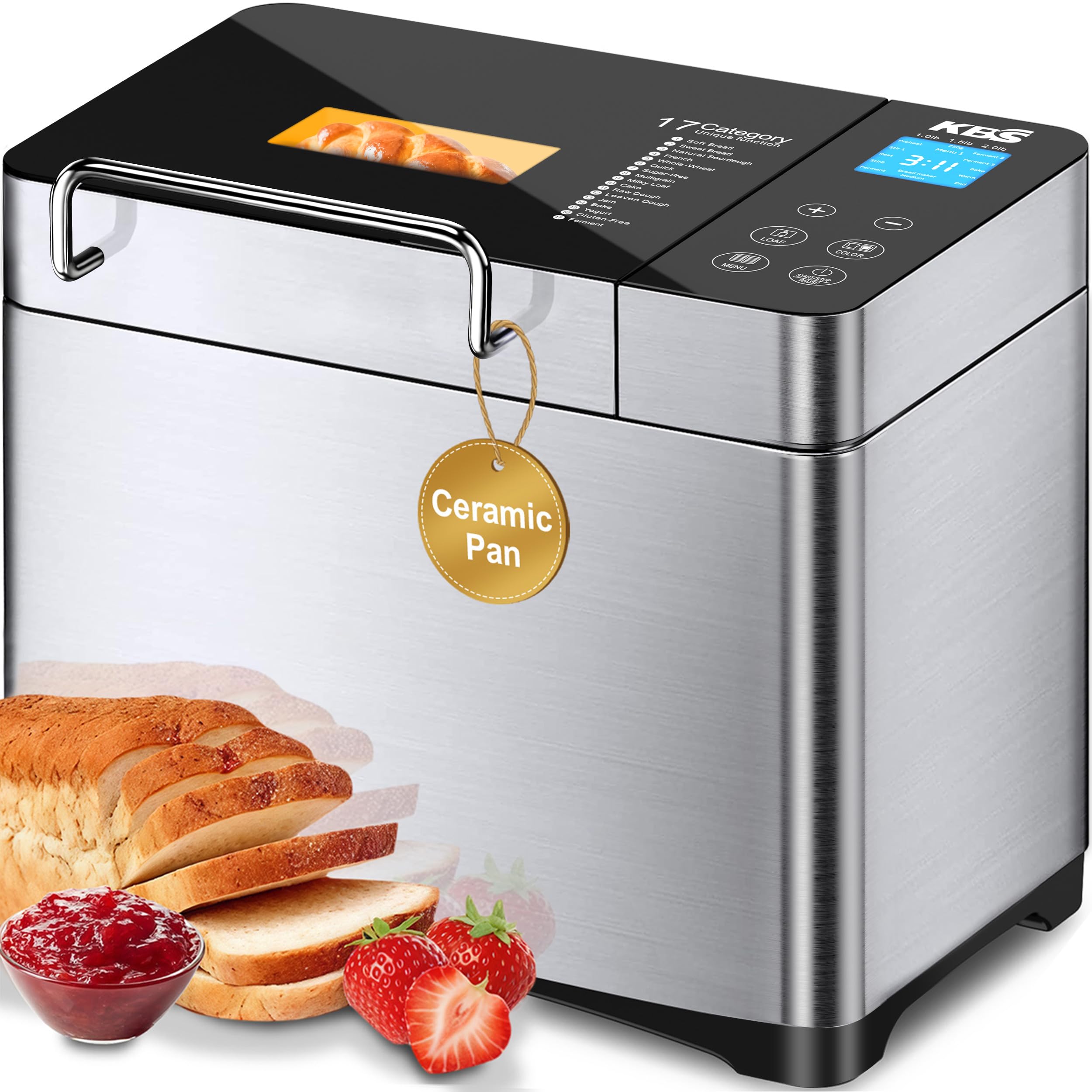
I reach for this machine when I want more motor power and hands-off features like the automatic nut dispenser and a ceramic pan that cleans easily. The 17 programs and 53 recipe book give useful variety.
Why I picked it: Strong motor and automatic mix-in dispenser for hands-off baking.
Best for: People who want high-power kneading and automated add-ins.
Feature-rich option with premium touches.
Pros
- Powerful 710W motor for robust kneading
- Automatic nut/dispenser for add-ins
- Healthy ceramic pan, easy to clean
- Large recipe collection included
Cons
- Some recipes expect milk powder
- Occasional odd recipe measurements
My take
When I need a stubborn dough handled cleanly—think high-hydration or pizza dough—I grab the KBS Pro. The 710W motor and a kneading blade designed to mimic artisan motion make noticeably better gluten development than lower-powered machines I’ve used.
The automatic dispenser is a genuine convenience. I tested several recipes that required nuts and seeds, and the dispenser dropped them in at the right moment for even distribution. That meant fewer timer babysitting sessions for me.
I appreciated the non-toxic ceramic pan; it releases loaves easily and cleans without scrubbing. The glossy tempered glass touch panel looks modern and wipes clean in seconds.
A few real-world notes: some included recipes call for milk powder or have odd fractional measurements—those were easy to fix after a quick web lookup, but new users should be ready to tweak some recipes. Overall, this is my pick when I want hands-off convenience with powerful kneading.
3. KITCHENARM Bread Machine – Best for Customization
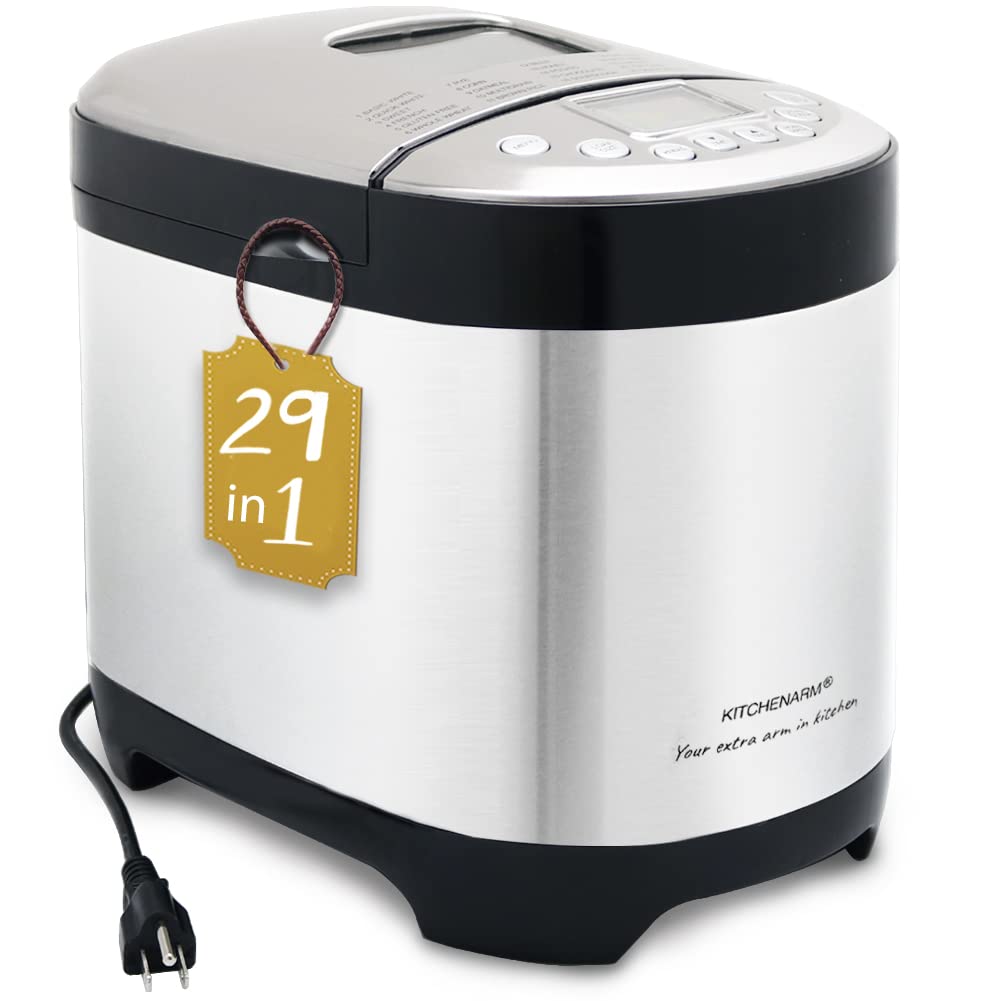
I chose this when I wanted total control over each phase of the bake. With 29 programs and the ability to save personalized menus, it’s the machine I use to experiment and refine recipes.
Why I picked it: Extensive program set and deep customization options.
Best for: Bakers who tweak rise times and temperature frequently.
Great value for advanced programmable features.
Pros
- 29 automatic programs including sourdough
- Save up to four personalized menus
- Supports all-purpose and bread flour
- Strong customer service and extras
Cons
- Paddle leaves a hole without removal
- Takes time to master custom settings
My take
This is the machine I used when I wanted to push beyond basic recipes. The HOME MADE menu lets me program cycle times (knead, rest, rise, bake) and then save them as a one-press routine—perfect for repeat experiments.
I tested whole-wheat, rye, and a sourdough starter cycle and found the machine handled them well once I dialed in temperatures and timing. The ability to adjust a running program on the fly is something I now miss when I use simpler models.
Practical extras matter: KitchenArm ships useful spare parts and accessories, and I appreciated having an extra paddle and clear documentation. One tip I picked up from their support: remove the paddle before the final rise to avoid the large hole in the finished loaf; that improves aesthetics with a tiny extra step.
If you like to customize or are serious about recipe development, this machine rewards the extra time spent learning its capabilities.
4. KBS Premium Convection Bread Maker – Best for Fast Convection Baking
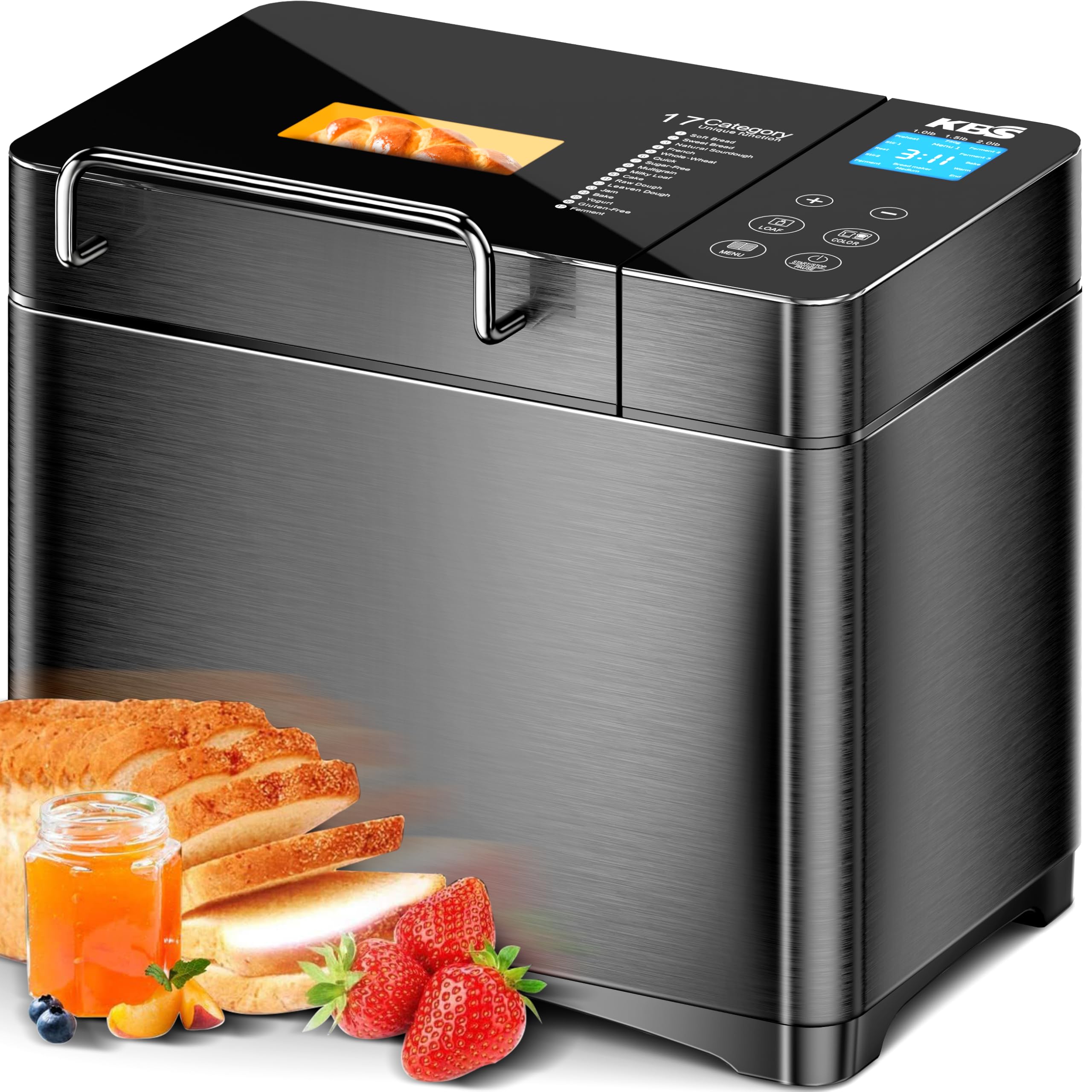
I reach for this machine when I want a bakery-style crust fast. Dual heaters, 360° convection, and a horizontal ceramic pan deliver crisp crust and an even bake—often in under 90 minutes for quick cycles.
Why I picked it: Convection and dual heaters for faster, even baking.
Best for: Bakers who want a crisp crust and fast bakes.
A higher-end-feeling option with advanced heating.
Pros
- 360° convection for even, crisp crust
- Horizontal ceramic pan for rectangular loaves
- Dual heaters for consistent temperature
- Automatic nut dispenser included
Cons
- Recipe booklet could be clearer
- A bit more learning curve to cancel programs
My take
I’m impressed by how quickly this machine can produce a bakery-style loaf. The dual NTC & PID temperature control keeps rising temperatures steady, and the convection system gives a noticeably crisper crust than vertical pans.
The horizontal ceramic pan is my preference when I want sandwich-style loaves that slice neatly. The pan’s nonstick ceramic finish cleans easily and feels more durable than basic coatings.
I used the fast programs to make loaves in under 90 minutes, and while results aren’t identical to long ferment bakes, they’re excellent for weeknights. Kneading is quieter than other machines I’ve used, which is a nice bonus when I bake in the evening.
Two caveats: the included recipe booklet could be easier to follow, and I had to learn the sequence to cancel a running program. Once I understood the controls, it became a reliable, quick option I often recommend to people who want convection performance at home.
How I Choose a Bread Maker
Programs and Controls
I prioritize machines with a clear set of automatic programs and at least one customizable setting. Programs cover basic white, whole wheat, gluten-free, dough-only, and non-bread functions like jam or cake.
Touch panels and straightforward displays make life easier; if the controls are confusing, I’ll avoid experimenting.
- Look for a custom or home-made menu to save your adjustments
- Delay-start and keep-warm are useful everyday features
- Power-failure recovery is handy for long runs
Motor, Kneading and Pan Type
I consider motor wattage and the kneading blade design when I plan to make dense or high-hydration doughs—the stronger the motor, the better the gluten development.
Pans come vertical or horizontal and in Teflon or ceramic finishes. I prefer ceramic for easy release and horizontal pans for sandwich loaves.
- 710W-class motors handle artisan-style doughs better
- Ceramic pans avoid PTFE/PFOA concerns and clean easily
- Horizontal pans yield rectangular loaves that slice cleanly
Capacity and Size
Match loaf sizes to your household. I baked on 1–2 lb settings; 2 lb is great for families but takes longer.
Check the unit’s footprint if your counter space is limited—compact machines can still hold full-size vertical pans.
- 1 lb for singles/couples, 1.5–2 lb for families
- Measure counter space before you buy
Extras and Long-Term Use
Automatic dispensers, extra paddles, and included measuring tools are conveniences I value. Spares and good customer service are worth considering for long-term satisfaction.
Think about noise—if you bake overnight, quieter kneading is a real quality-of-life feature.
- Automatic nut dispensers enable hands-off baking
- Extra paddles and spare parts extend usability
- Warranty and responsive support matter over time
Frequently Asked Questions
Can I make whole wheat loaves successfully in these machines?
Yes—I do whole wheat regularly, but I adjust hydration and rise time. Whole-grain flours typically need more water and sometimes a longer rise; machines with stronger motors and customizable programs handle whole-wheat best.
Do I need to remove the paddle before baking?
Not always, but I often remove the paddle before the final rise when I want a cleaner crumb and smaller hole in the finished loaf. Some machines include an alert to remove the paddle, and a spare paddle helps.
Which machine is best for quick loaves?
I choose convection-equipped models for faster, crispier loaves. Machines with dual heaters and 360° heating produce good results in express cycles while keeping the crumb and crust balanced.
Final Take
Each machine here earned a regular spot in my kitchen for different reasons: the Cuisinart for everyday reliability, the KBS Pro for power and convenience, the KITCHENARM for serious customization, and the KBS Premium for fast, convection-style loaves.
Think about how you bake—daily simple loaves, experimental sourdoughs, or speedy weeknight bakes—and pick the machine that matches that workflow. I used all four enough to form preferences, and whichever path you choose, you’ll be baking better bread at home.
