
I tested a range of brisket knives — from wallet-friendly slicers to high-carbon butcher blades — to find the ones that carve through a rested brisket without tearing. Here are the knives I reach for depending on size of
I’ve spent time cooking and carving whole briskets, sous-vide roasts, and smoked shoulders, and I’ve learned that the right knife makes all the difference. A long, narrow blade that stays sharp and slides in a single stroke keeps slices tidy and juicy.
In this roundup I focused on blade length, edge geometry, handle comfort, and how each knife performed on brisket, roast, and other large cuts. I kept practical details front and center so you can pick the right slicer for the way you cook.
When I choose a brisket knife I look first at blade length and edge angle for long, clean slices; then handle balance and whether the knife includes storage like a sheath. I recommend an 11–12" blade for most home cooks, with higher-carbon steels for edge retention if you want lower maintenance.
1. MAIRICO 11″ Slicing Knife – Best Budget Slicer
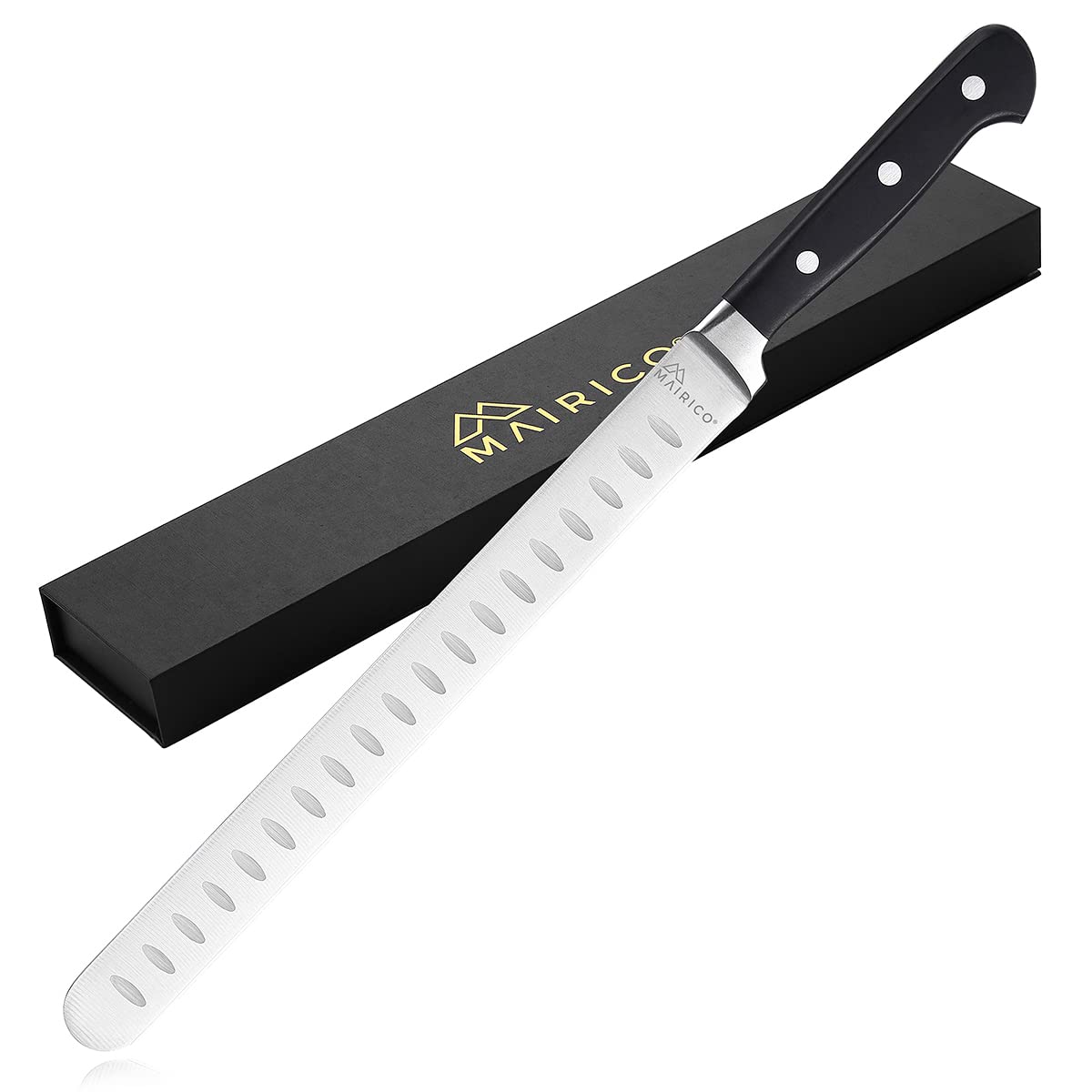
An 11-inch stainless slicer that gave me paper-thin brisket slices without blowing the budget.
Why I picked it: I reached for this when I wanted a long, sharp blade that can slice large roasts cleanly without spending a lot.
Best for: Home cooks who want a long slicer for brisket and roasts on a budget.
Affordable option that performs above its price point.
Pros
- Long 11" blade for single-stroke slices
- Very sharp out of the box
- Comfortable, well-balanced grip
- Versatile for meat, fruit, and veg
Cons
- No protective sheath included
- Basic stainless steel finish
My take
I bought this 11" slicer because I wanted the kind of long, narrow blade I’d seen used for brisket on cooking videos — and it delivered. From the first cut it felt sharp and balanced in my hand, and I could make single long slices through a rested brisket instead of sawing or making multiple passes.
The blade is stainless steel and held a very usable edge for my weekend cooks. I used it on sous-vide roast beef and smoked brisket; thin, even slices were easy to achieve. The ergonomic handle and weight distribution kept my wrist comfortable during longer carving sessions.
This is the knife I reach for when I want reliable performance without fuss. It doesn’t come with a sheath, so I store it safely in my knife block or a sleeve, but for the price and the slicing quality it’s a solid everyday brisket slicer.
2. Cutluxe 12″ Brisket Knife – Best for Holiday Carving
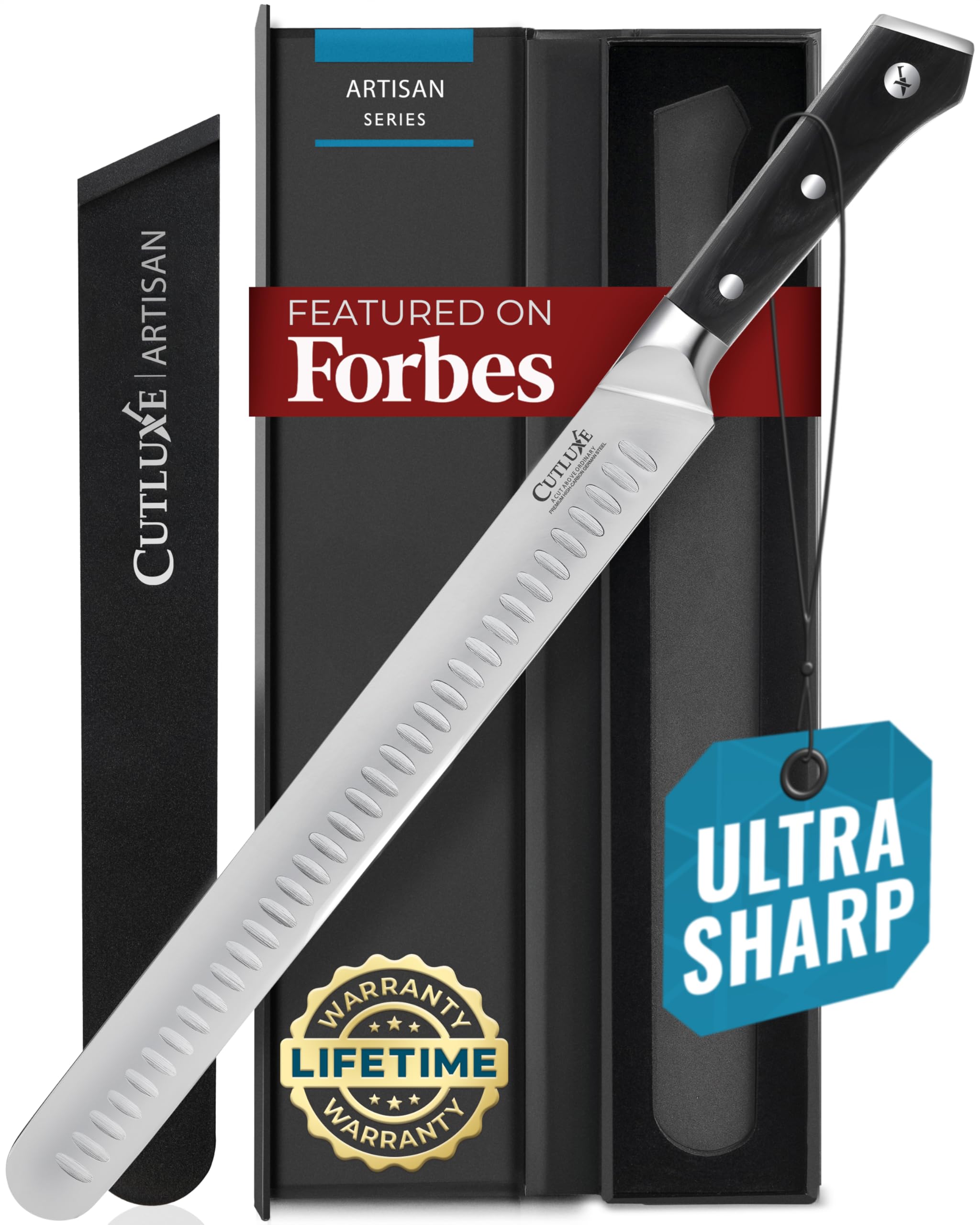
A 12-inch German-steel slicer with a granton edge and a full-tang pakkawood handle that feels like a holiday showpiece.
Why I picked it: I picked this for carving large holiday roasts where a long blade and smooth pull matter most.
Best for: Carving whole briskets, turkey, and large roasts at gatherings.
A step up in build and finish — a midrange option.
Pros
- Long 12" blade for big roasts
- Granton edge reduces sticking
- Full-tang pakkawood handle
- Comes with sheath and warranty
Cons
- Heavier than basic slicers
- Higher-cost option than entry-level blades
My take
I used the Cutluxe 12" knife for a holiday brisket and appreciated how the hand-sharpened edge and granton scallops kept slices clean and nearly friction-free. The blade glided through meat with a single steady pull, which matters when presentation counts.
The pakkawood handle is triple-riveted and gives the knife a solid, balanced feel. It’s heavier than the cheap slicers I own, but that heft helps me make steady long cuts rather than chopping or sawing.
I liked that it arrived sharp and included a sheath for safe storage. For those who carve large cuts regularly, this feels like an upgrade worth the extra investment.
3. Cutluxe 12″ Brisket Knife (Second Pick) – Best for Precision Slices
The same Cutluxe 12" here earns a second spot because its combination of German steel and edge geometry produced reliably thin slices in my tests.
Why I picked it: I picked this again for the times I wanted maximum control and edge retention during heavy carving sessions.
Best for: Serious home chefs who want consistent thin slices across many cooks.
Midrange pricing, but long-term value if you carve often.
Pros
- Consistent thin slicing capability
- Good edge retention
- Solid, ergonomic handle
- Includes protective sheath
Cons
- Requires careful hand-washing
- Slightly heavier for long use
My take
On a busy roast day I reached for this Cutluxe blade when I needed repeatable, paper-thin slices. The hand-honed 14–16° edge sharpened to a keen angle that let me cut without tearing the meat.
The knife’s balance and handle shape gave me confidence during long carving runs; I could maintain a steady stroke instead of having the knife stumble or chatter. The granton edge helped with stickiness on fattier brisket slices.
If you carve often, this knife feels built to last and is one I go to when precision matters more than saving a few dollars.
4. KYOKU 12″ Samurai Series – Best Japanese Steel Option
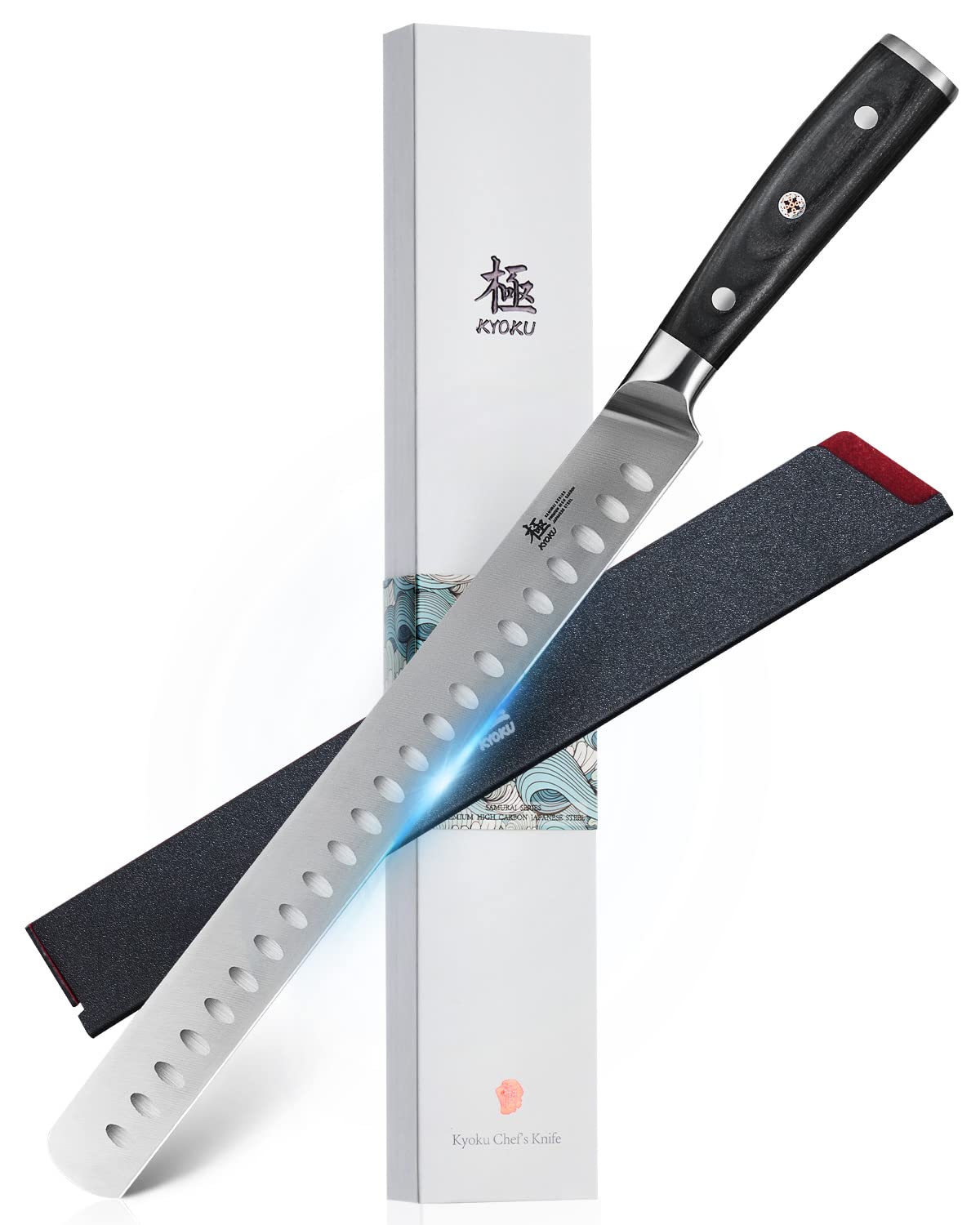
A 12-inch Japanese high-carbon slicing knife with dimples to reduce sticking and a protective sheath for safe storage.
Why I picked it: I took this when I wanted a slightly thinner, harder blade that cuts cleanly with minimal drag.
Best for: Cooks who prefer Japanese-style edges and a slimmer slicing profile.
Reasonably priced for a Japanese high-carbon option.
Pros
- Japanese high-carbon steel
- Dimples reduce food sticking
- Comes with sheath and case
- Comfortable pakkawood handle
Cons
- May need a touch-up steel more often
- Some edges need light final honing
My take
I appreciated the slimmer profile and 13–15° factory edge when slicing brisket and prosciutto. The dimples on the blade noticeably reduced drag and helped keep slices intact, especially on fattier cuts.
It felt well finished in my hand, with a full-tang feel and a polished pakkawood handle that stayed comfortable through long carving sessions. The included sheath and case are practical for storage and transport.
After a few cooks I did a little extra honing to get the exact shave-ready edge I prefer. Once dialed in, the knife is one of my favorites for delicate, single-stroke slices.
5. SHAN ZU 12″ Powder Steel Butcher Knife – Best Heavy-Duty Butcher Knife
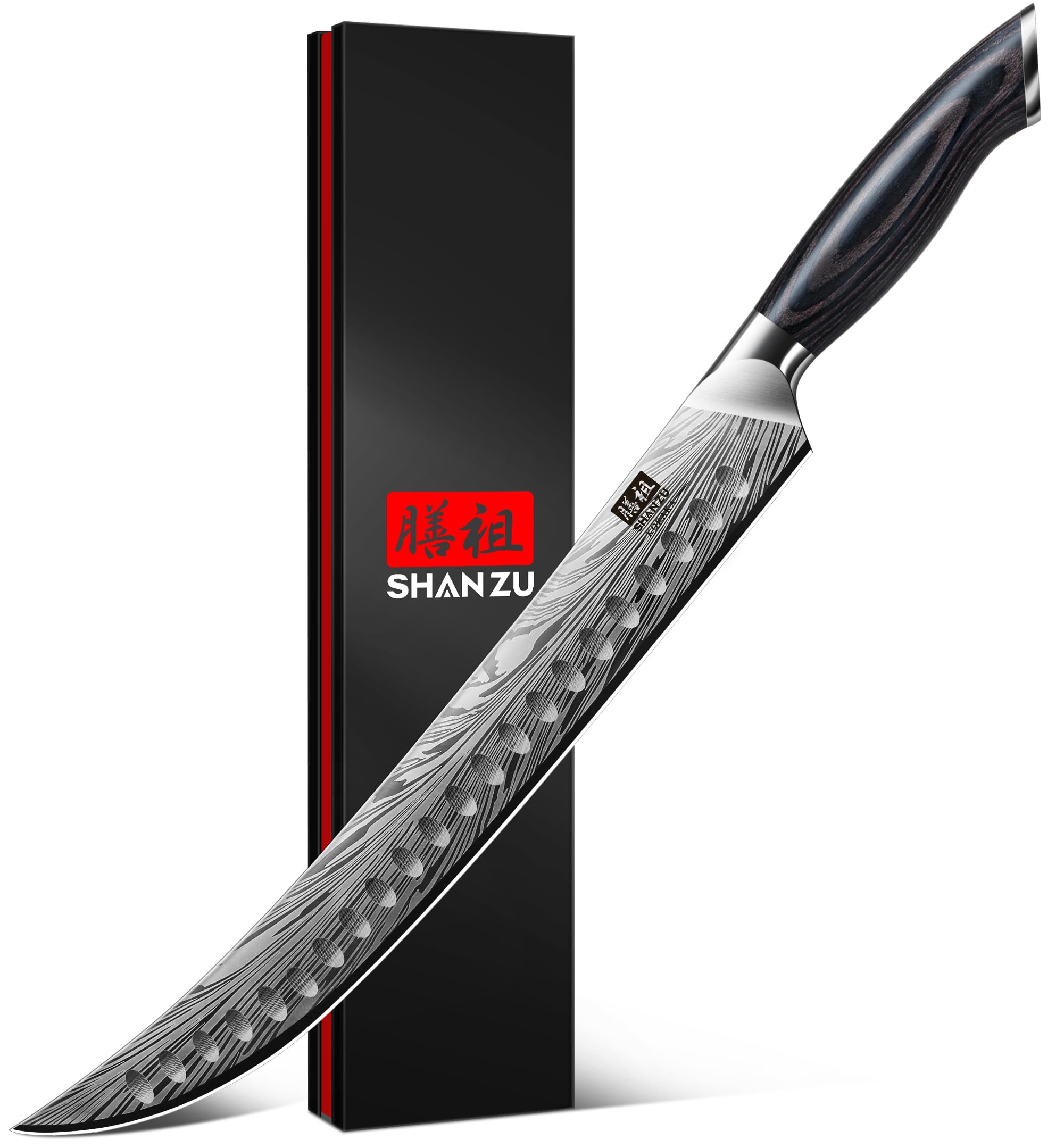
A robust 12-inch breaking knife built from powdered high-carbon steel that impressed me with edge retention and heft for breaking down large primals.
Why I picked it: I used this when I needed durability and a very hard blade that tolerates heavy use and trimming.
Best for: Breaking down whole briskets, trimming fat, and heavy-duty butchery tasks.
Midrange to premium feel for the steel and construction.
Pros
- Very hard powder steel for edge retention
- 2mm thickness handles tough cuts
- Ergonomic pakkawood handle reduces fatigue
- Good balance and heft for breaking down meat
Cons
- Some units reported minor edge chips
- Pattern is laser-etched, not Damascus
My take
This Shan Zu knife felt like a workhorse from the first use. The powder steel and 12° edge produced a keen, long-lasting bite that made trimming a brisket almost effortless compared with my thinner slicers.
The blade thickness and weight give it authority for breaking down primal cuts and tackling tendons or slightly frozen sections — it’s the knife I grab when I don’t want to babysit every stroke.
Be aware that a small number of units may need a light touch-up near the tip out of the box; when mine was checked and honed, edge retention and performance were excellent. For heavy-duty butchery this is the blade I trust.
How I Choose a Brisket Knife
Blade length and shape
I aim for a blade between 11 and 12 inches for most briskets. That length lets me make a single smooth pull across the cut, which preserves juices and produces even slices.
A long, narrow blade is preferable to a thick chef’s knife for slicing — it reduces the need to saw or make multiple strokes.
- 11" — compact and easy to control
- 12" — best for larger briskets and whole roasts
- Slim profile prevents tearing on long slices
Edge geometry and steel
I look for a relatively acute factory angle (around 12–16° per side) for clean slicing. Japanese-style edges tend to be thinner and slice very cleanly; higher-carbon steels hold an edge longer but need a bit more care.
Granton scallops or dimples help reduce sticking on fattier cuts, which makes slicing brisket smoother.
- 12°–15° — very sharp and slice-friendly
- 14°–16° — balanced sharpness and durability
- Granton/dimples — less drag on fatty slices
Handle, balance, and safety
I want a handle that fits my hand and balances the blade so long pulls don’t tire my wrist. Full-tang construction and triple rivets feel more stable in heavy use.
If a knife includes a sheath or case, I value that for safe storage and transport after outdoor cooks and events.
- Full tang and rivets for durability
- Pakkawood or stabilized wood looks great but avoid soaking
- Sheath or case is useful for safe storage
Maintenance and real-world use
I sharpen and hone as part of regular maintenance. Harder steels keep an edge longer but may require more deliberate sharpening technique.
Think about whether you’ll hand-wash and dry the knife — wood handles and high-carbon blades do best with prompt drying.
- Hone often; sharpen when the blade resists taking a fine slice
- Hand-wash and dry wooden handles immediately
- Consider a sheath for transport and blade protection
Frequently Asked Questions
What blade length do I need for brisket?
I prefer 11–12 inches. Eleven inches handles most home briskets, while 12 inches gives extra reach for very large cuts and long single-stroke slices.
Do granton scallops matter for brisket?
Yes — I’ve found scallops or dimples reduce sticking on fatty slices and make the blade glide more cleanly through brisket.
How do I maintain a brisket knife edge?
I hone before each use and sharpen when I notice the blade stops slicing cleanly. Harder steels hold edges longer, but I still check and touch up with a stone or guided sharpener as needed.
Final Take
If I need a reliable everyday slicer that won’t break the bank, the 11" stainless MAIRICO does the job. For bigger roasts and presentation carving I reach for a 12" Cutluxe or the Kyoku Samurai when I want a thinner Japanese profile.
When I’m doing heavy breaking down or trimming, the Shan Zu powder-steel butcher knife is my go-to for durability and edge retention. Choose the blade length and steel that match how often you carve and the cuts you handle most.
